
Reviewed · TEOTIHUACAN TOURS
Unlock Teotihuacan Pyramids: Private Tour & Delicious Local Lunch
Teotihuacan is far more than a quick photo stop. This full-day outing links the ancient city with modern life in the nearby towns, so you see pyramids, obsidian work, cactus products, pulque, and a family kitchen in one long day. The local lunch is the unusual touch, giving the ruins a human setting rather than leaving you at a bus stop with a snack.
In This Article
- Key points to know before booking
- Why this Teotihuacan day trip feels different
- Meeting at Casa de los Azulejos at 8:30 a.m.
- Reaching the archaeological zone
- Walking the Avenue of the Dead
- The Moon Pyramid and the current climbing rule
- The Sun Pyramid and the long open walk
- San Juan Teotihuacán and the local stops
- Lunch in a local family home
- Public transportation, group size, and pace
- Who will enjoy this tour most
- Practical advice for a smoother day
- Should you book this Teotihuacan experience?
- FAQ
- Where does the tour start?
- Where does the tour end?
- Is transportation included?
- Can I climb the Teotihuacan pyramids?
- Is lunch suitable for special diets?
- How much walking does the tour involve?
I like the public transportation format because your guide handles the tricky parts while you see how people actually move beyond Mexico City. I also like the small-group setup, with no more than 12 people, and the guides, including Roy, Rodrigo, Leon, Nathan, and Cesar, have been praised for warmth, humor, and clear English. The main consideration is stamina: expect about 6 kilometers of walking, strong sun, steep routes, and a day that can stretch close to 10 hours in practice.
Key points to know before booking
- Travel by bus and local transit: Fares are included, though a minivan may replace public transport when group size or timing requires it.
- Walk the Avenue of the Dead: Your guide connects the broad ceremonial road with Teotihuacan’s temples, plazas, and changing cultures.
- See the Sun and Moon pyramids: Current rules do not allow pyramid climbing, despite older tour descriptions and past reports saying it was possible.
- Meet local producers: Stops can include obsidian artists, cactus products, pulque, mezcal, tequila, or other regional tastings.
- Eat in a family home: Vegetarian, vegan, and gluten-free meals are available if you request them ahead of time.
- Plan for a full physical day: Wear comfortable shoes, carry water, and bring a hat or light layer for sun and wind.
Why this Teotihuacan day trip feels different
Many Mexico City excursions treat Teotihuacan as a grand archaeological site with a quick lunch afterward. This one tries to connect the old city with the modern communities around it. You start in the Centro Histórico, pass through the ordinary rhythm of buses and stations, then finish at a local family’s table in the town of San Juan Teotihuacán.
That mix is the tour’s real appeal. You get a guide to explain the site, but you also get a look at crafts, food, agriculture, and daily life outside the capital. The experience is not polished into a luxury day out. It is social, active, and at times a little improvised.
At $220 per person, it is not the cheapest way to reach the pyramids. You are paying for a private-style experience, an English-speaking guide, included transport fares, archaeological admission, local visits, tastings, and lunch. If you only want to see the pyramids, a public bus and independent visit will cost much less. If you want help with the route and a meal that takes place in a real home, the price becomes easier to justify.
A few more Mexico City tours and experiences worth a look

Meeting at Casa de los Azulejos at 8:30 a.m.
The tour begins at Casa de los Azulejos, the famous tiled building on Avenida Francisco I. Madero in the historic center. It is a central meeting point, close to major sights and public transportation, but do not confuse it with the tour’s ending at the Palacio de Bellas Artes.
The stated plan includes a short bus ride to the North Bus Station, followed by a roughly 90-minute countryside journey toward the pyramids. Older outings have sometimes used a comfortable minivan instead, especially for larger groups or operational reasons. That can be more comfortable, but it means the public-transit promise is not absolute.
This is a good reason to arrive early. The day has several moving parts, and some past departures have lost time waiting for late arrivals. Once underway, guides such as Nathan and Rodrigo have been praised for filling the ride with useful background on Mexico City and the region.
Do not expect hotel pickup. You must reach the center on your own, and the tour ends at the Fine Arts Museum on Avenida Juárez. The return point is handy if you want to continue sightseeing in the historic center.
Reaching the archaeological zone
The journey out of Mexico City is part of the experience. You leave the capital’s dense streets and head toward the town of San Martín de las Pirámides, about 30 miles, or 48 kilometers, away. The road trip takes time, but it helps explain why a visit to Teotihuacan needs most of a day.
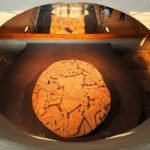
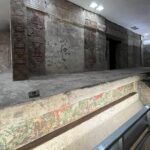
Your guide leads you from the transport stop toward the archaeological complex. The first formal stop is the on-site museum, where reconstructions of houses and objects found in the ruins help you picture the city as a place where people lived and worked, not simply a row of monumental buildings.
The museum is useful because Teotihuacan’s original name and builders remain uncertain. The later Aztecs called the abandoned city Teotihuacan, often translated as the City of the Gods, and attached their own beliefs to the place. A good guide can separate what archaeologists know from what later traditions supplied. Guides Cesar, Roy, and Ulysses have been singled out for giving clear explanations without forcing a religious interpretation.
Walking the Avenue of the Dead
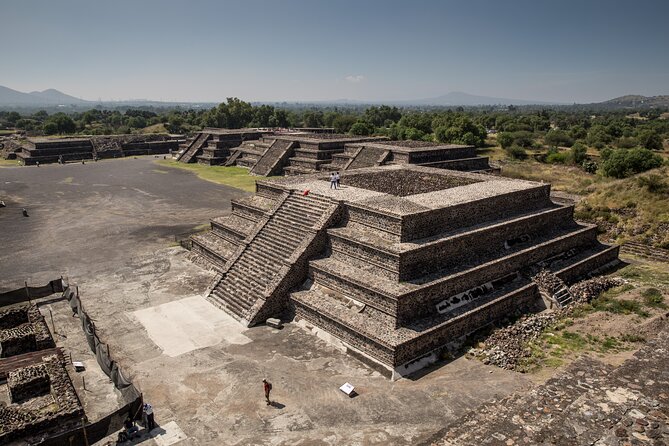
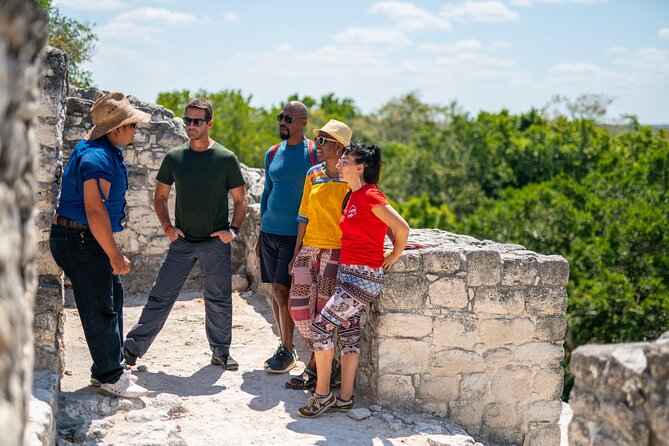
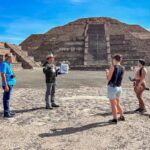
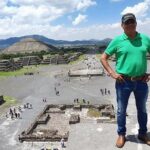
Inside the archaeological zone, the broad Calzada de los Muertos, or Avenue of the Dead, gives the day its main structure. You walk through the ceremonial center, with the Moon Pyramid at one end and the Sun Pyramid along the route.
The scale is hard to grasp from photographs. The avenue is long and open, and the surrounding ruins spread much farther than the familiar pyramid images suggest. This is where your guide adds real value. Without context, you may see steps, platforms, and walls. With explanation, you begin to understand how the city was planned and how later cultures interpreted it.
The itinerary allows about an hour for the main pyramid complex and another hour around the Moon Pyramid, followed by about an hour for the Sun Pyramid and the avenue. Those time blocks are useful as a rough guide, but the actual pace depends on the group, heat, crowds, and how much time people need at each viewpoint.
Bring water and protect yourself from the sun. The site is exposed, and several descriptions of past visits note strong heat, wind, and steep footing. Comfortable shoes matter more than stylish ones.
The Moon Pyramid and the current climbing rule
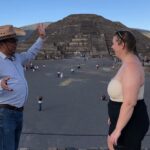
The Moon Pyramid is a natural starting point because it frames the avenue and gives you a strong view into the ceremonial core. Your guide explains its design, role, and relationship to the surrounding plazas.
Older accounts of this same experience describe climbing the Moon Pyramid and the Sun Pyramid, sometimes with a guide offering a hand on the steep stairs. That is no longer something you should count on. The current tour information clearly says that climbing the pyramids is not allowed. Book this outing for the views and explanations at ground level, not for a summit experience.
This change is important because some promotional wording still refers to reaching a pyramid viewpoint or recharging atop the Quetzalcoatl Pyramid. Treat that language cautiously. You can explore the archaeological zone and see the structures up close, but current rules prohibit climbing the pyramids.
The Moon Pyramid area is still one of the best places for photographs and orientation. You can look down the Avenue of the Dead and appreciate the city’s scale without scrambling up fragile ancient steps.
Other private tours in Mexico City
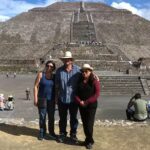



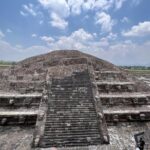
The Sun Pyramid and the long open walk
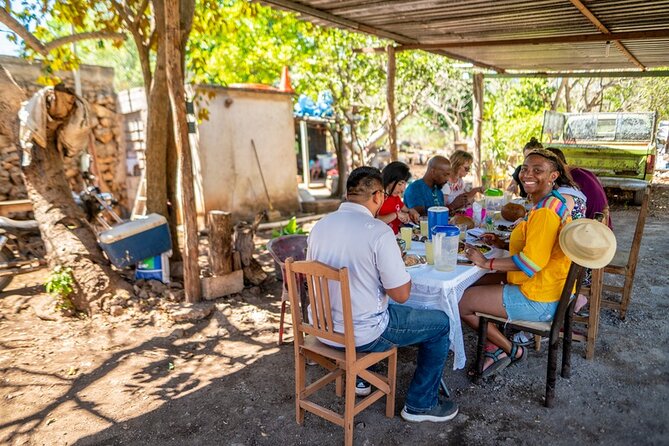
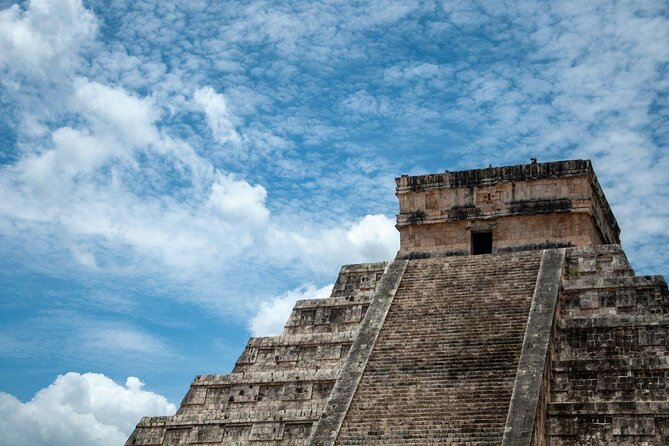
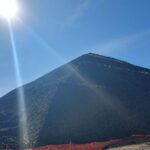
The Sun Pyramid is the site’s most recognizable structure and, at 206 feet or 63 meters, its tallest major pyramid. The route toward it follows the Avenue of the Dead, making the walk itself part of the lesson.
You will not climb to the top under current rules, but the pyramid remains impressive from below. Its mass becomes clearer as you approach, and the open ground around it gives you room to study its terraces and construction.
This section can feel tiring. Six kilometers of total walking may not sound extreme, but the combination of distance, sun, uneven ground, stairs in surrounding areas, and a full day on the move adds up. If you are not used to long walks, tell your guide early. The group can adjust its pace, though you should not expect a relaxed sightseeing stroll.
The tour suits people who want a full day outdoors and can manage moderate physical activity. It is less suitable if you need frequent seated breaks or want a short, low-effort pyramid visit.
San Juan Teotihuacán and the local stops
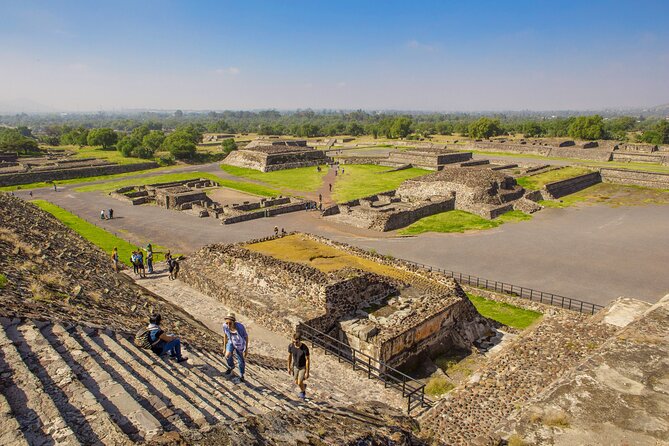
After the ruins, the experience shifts from ancient monuments to present-day craft and food traditions. You may walk through a nearby town and visit two family-run businesses or homes. The exact sequence can vary, but past outings have included an obsidian artisan, agave tastings, cactus products, and local drinks such as pulque, mezcal, tequila, or regional beer.
Obsidian is closely tied to the area’s archaeological story. At a family workshop, you can see how the volcanic glass is shaped into decorative pieces and souvenirs. This is also the point where you may want cash. Handmade items can be tempting, though one past account found some packaged food products unusually expensive. You do not need to buy anything, and a tasting should not be confused with a duty-free bargain.
Cactus is another useful link between culture and everyday life. In Mexico, nopales are a familiar food, and cactus can appear in sweets and other products. The stop helps turn an abstract cultural symbol into something you can taste.
The tastings add character, but they are not the main reason to book the tour. If you dislike sales presentations, be prepared for some products to be offered for purchase. The accounts of the experience describe the hosts as friendly and not aggressively pushy, but the commercial element is present.
Lunch in a local family home
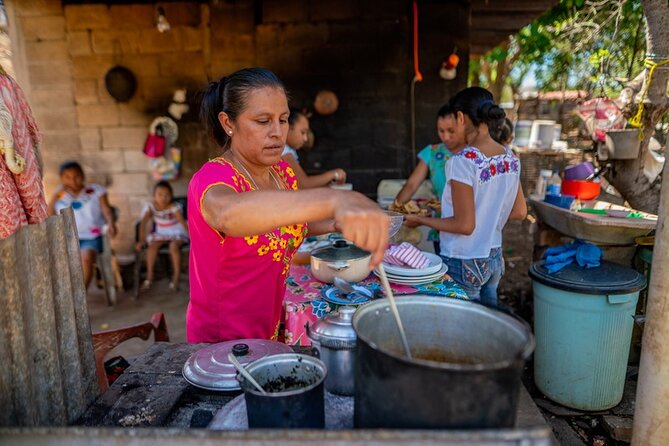
The final major stop is lunch at a local family’s house. This is the most personal part of the day and the clearest difference between this experience and a standard bus excursion.
The food is home-cooked rather than a restaurant buffet. Past meals have included pozole blanco, chicken, nopales, rice, and horchata, though the exact menu can change. Vegetarian, vegan, and gluten-free options are available when requested in advance. Drinks and extra food are not included, so carry some money if you want something beyond the planned meal.
The setting matters as much as the food. You sit down with the group and have a chance to talk about ordinary life in the area. That conversation can be the most memorable part of the tour because it puts the famous ruins into a living community.
Keep your expectations flexible. A family meal is not the same as a formal hosted dinner with a long presentation. One account described a tasty meal but limited interaction with the household, while others found the conversation and welcome especially warm. The value comes from the home setting and the chance to share food, not from a guaranteed performance.
Public transportation, group size, and pace
The group maximum is 12 people, which is small enough for direct questions and easier movement through stations and town streets. It is not a private tour in the sense of having the entire guide and vehicle to yourself, so check the wording carefully. The experience is private-style and personal, but other people may join your group.
Public transportation is included and is part of the design. Your guide handles the transfers, which helps if you do not speak Spanish or feel unsure about reaching Teotihuacan alone. It also gives you a closer look at ordinary travel outside central Mexico City.
That said, transport plans may change. Several past outings used a van instead of the metro or bus. This can be a sensible adjustment, especially with a larger group, but it does reduce the local-transit element promised in the original plan.
The entire day lasts about eight hours, although past outings have run closer to ten. Build in extra time rather than scheduling a fixed evening booking immediately afterward. The return is listed at the Palacio de Bellas Artes, not your hotel.
Who will enjoy this tour most
I would choose this experience if you want more than a monument and a guide with a microphone. It fits:
- First-time Mexico City visitors who want a managed route to Teotihuacan
- Solo visitors who prefer company and help with public transportation
- Couples and friends who enjoy food, crafts, and conversation
- Families with children aged 6 or older who can handle a long day
- People interested in both ancient Mexico and present-day regional life
- Visitors who value a small group and an English-speaking guide
I would choose another option if you only want the archaeological site, dislike long transit days, or need a highly predictable schedule. You can visit Teotihuacan more cheaply on your own, and a private vehicle may suit you better if comfort and control matter most.
The tour also requires a willingness to accept changes. A bus may become a van. A tasting may include shopping. Lunch may be more casual than staged. Those are not dealbreakers for me, but they are part of the bargain.
Practical advice for a smoother day
Wear shoes with good support and bring a hat, sunscreen, water, and a light sweater. The site can be hot in the sun and windy in exposed areas, while the early transport ride may feel cooler.
Expect about 6 kilometers of walking. Tell the guide if you need a slower pace, and do not feel pressured to match the fastest person in the group. Current rules prohibit climbing the pyramids, so plan your enjoyment around the avenue, plazas, museum, and viewpoints.
Bring cash for optional purchases at the artisan and food stops. Drinks and additional food are extra. If you have dietary needs, provide them before the tour rather than waiting until lunch.
The experience has a 4.8 rating from 193 reviews, with 96 percent of customers recommending it. That record matches the strongest features of the day: friendly guides, clear historical explanations, a good mix of activities, and the family meal. The weaker points are also clear: long walking, changing transport plans, and the possibility of sales-focused tastings.
Free cancellation is available if you cancel at least 24 hours before the 8:30 a.m. start time. Changes made inside that window are not accepted, so make your plans early.
Should you book this Teotihuacan experience?
Book it if you want a full, social day that combines Teotihuacan with local food and crafts. Guides such as Roy, Rodrigo, Leon, Nathan, and Cesar have made the experience especially strong through humor, care, and useful explanations. The family lunch gives the day a personal finish that a standard ruins tour usually lacks.
Skip it if your only goal is climbing the pyramids, since current rules do not permit that, or if you want the lowest-cost route from Mexico City. At $220, the value rests in the guidance, included transport and admission, tastings, small group, and home-cooked meal.
For the right person, this is a memorable way to see both the ancient city and the communities around it. Pack light, wear proper shoes, keep your schedule open, and expect a long day with a few moving parts.
FAQ
Where does the tour start?
The tour starts at Casa de los Azulejos, located at Avenida Francisco I. Madero 4 in Mexico City’s Centro Histórico. The start time is 8:30 a.m.
Where does the tour end?
The experience ends at the Palacio de Bellas Artes on Avenida Juárez in the historic center of Mexico City.
Is transportation included?
Yes. Public transportation fares are included throughout the day. Depending on group size or operating conditions, the group may sometimes use a minivan instead.
Can I climb the Teotihuacan pyramids?
No. The current tour information states that climbing the pyramids is not allowed. Older descriptions may mention climbing, but you should plan on viewing the pyramids from the permitted areas.
Is lunch suitable for special diets?
Vegetarian, vegan, and gluten-free options are available. You need to provide dietary requirements in advance. Drinks and additional food are not included.
How much walking does the tour involve?
The tour covers about 6 kilometers of walking and requires a moderate level of physical fitness. Comfortable shoes, sun protection, and water are recommended.
More Lunch Experiences in Mexico City

More Private Tours in Mexico City
More Teotihuacan Tours in Mexico City

More tours in Mexico City we've reviewed


Teotihuacan Tours, compared.
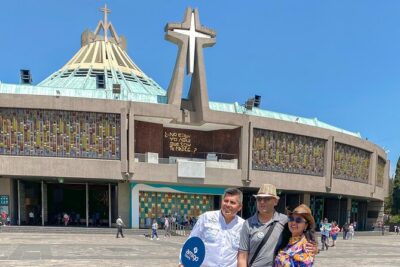 ★ 5.0Teotihuacan, Guadalupe Shrine & Tlatelolco Day Tour with LunchFrom $399 hours (approx.)
 ★ 5.0Balloon flight + Breakfast in cave + Pyramids + Pick up CDMX.From $1722 to 8 hours (approx.)
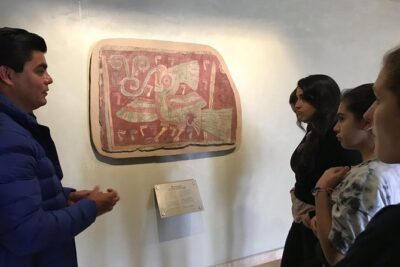 ★ 5.0Teotihuacan pyramids morning or afternoon without tourist trapsFrom $645 hours 30 minutes (approx.)
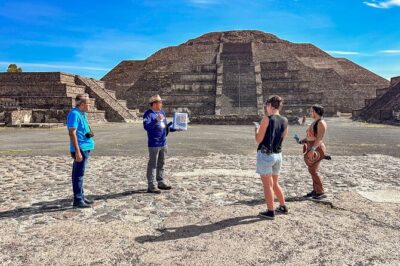 ★ 4.5Teotihuacan Early Access Guided Tour with optional LunchFrom $398 hours (approx.)
 ★ 5.0Balloon flight + pick up in CDMX + Breakfast in Cave + PyramidsFrom $1694 to 7 hours (approx.)
 ★ 4.6Mexico City: Teotihuacan, Tlatelolco & Guadalupe Shrine TourFrom $49
 ★ 5.0Teotihuacan Hot Air Balloon Flight from Mexico City / VolareFrom $1553 to 9 hours (approx.)
 ★ 5.0Hot Air Balloon Flight with Breakfast Cave and Pyramids TourFrom $1408 hours (approx.)
The lists this tour appears in