
Reviewed · CHAPULTEPEC & MUSEUM TOURS
Anthropology Museum Tour: Discover Pre-Hispanic Treasures
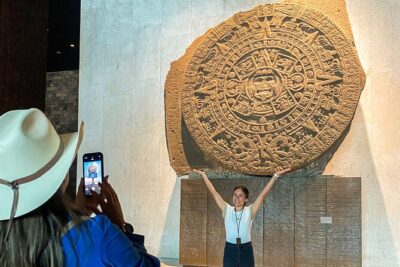
The most powerful part of this Mexico City museum tour is its close look at objects that shaped our understanding of pre-Hispanic Mexico. The 22-ton Aztec Sun Stone is the headline piece, but the Olmec Group of Figures, ancient remains, and Maya displays give the visit much more range.
In This Article
- Key points to know before you book
- Why this museum belongs near the top of your Mexico City list
- The 22-ton Sun Stone and the museum’s major sights
- What three hours actually gives you
- Guides make the biggest difference
- Private or small group: which format fits you?
- Timing, entrance, and meeting point
- Who will enjoy this most
- Booking and cancellation details
- Should you book the Anthropology Museum tour?
- FAQ
- Where does the tour begin and end?
- How long does the museum tour last?
- Is museum admission included?
- Is there a fast-entry line?
- What languages are available?
- How many people can join the tour?
- Can the tour be customized?
I like that you get a guide to connect the objects into a story, and I like the three-hour length, which gives you a focused introduction without trying to conquer every display case. Guides such as Clara, Diana, Maida, Silvia, and Ivan have received praise for clear explanations and personal attention.
The main caution is that guide quality and style can vary. Some guides are warm and adaptable, while one visitor found the commentary too close to the museum signs and another found the presentation too formal for children. Tickets are bought at arrival, so this is not a fast-entry experience.
Key points to know before you book
- The Sun Stone is the star attraction: See the colossal 22-ton Aztec monument and learn about its place in world history.
- Olmec art adds an older layer: The remarkable Group of Figures helps place Aztec and Maya culture within a much longer timeline.
- Three hours is a sensible museum visit: You get an organized introduction without spending an entire day indoors.
- Private and small-group formats differ: Private visits can be adjusted, while small groups have fixed times and up to 12 participants.
- The meeting point is easy to identify: Begin and end at the National Museum of Anthropology in Chapultepec.
- There is no fast line: Admission is included, but tickets are purchased when you arrive and waiting time may occur.
Why this museum belongs near the top of your Mexico City list
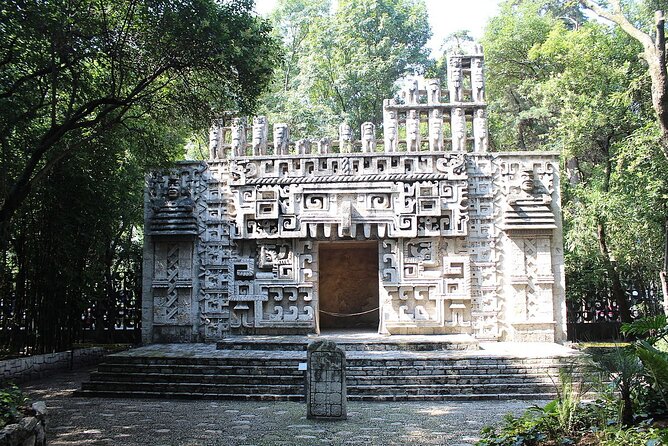
Mexico City’s National Museum of Anthropology is the right place to begin if you want to understand the civilizations that shaped Mexico before Spanish rule. It is not a narrow exhibit about one empire. Its collection covers several cultures, with ethnographic displays that also present the lives and traditions of contemporary Indigenous communities.
That range matters. If you visit on your own, it is easy to spend too long admiring one famous object and miss how the pieces relate to one another. A guide can help you move from the Olmec world to later Maya and Aztec traditions, then explain how those cultures fit into the wider story of Mexico.
I especially like this tour for a first day in Mexico City. One guide, Diana, was praised for putting the country’s past into a broad sequence that reached from the Maya and colonial period to post-Revolution Mexico. That kind of introduction can give the rest of your trip more meaning, particularly when you later visit historic streets, churches, markets, or archaeological sites.
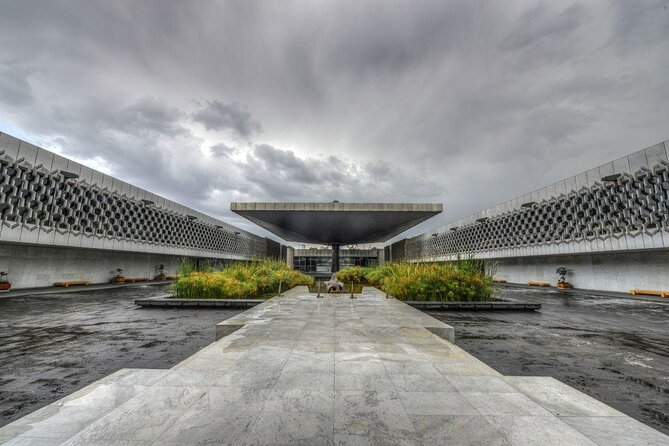
The museum itself is also part of the experience. You are not simply entering a plain hall filled with cases. The building is spacious, and the displays cover two floors. Three hours lets you see major highlights and still keep enough energy for the rest of your day.
A few more Mexico City tours and experiences worth a look
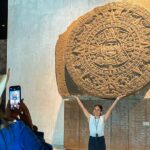
The 22-ton Sun Stone and the museum’s major sights
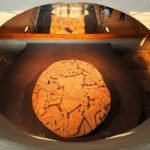
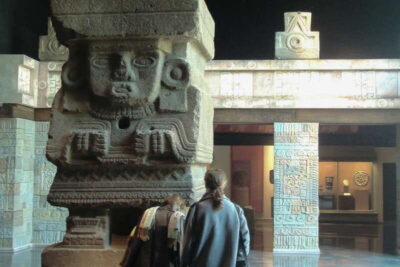
The most famous object here is the Aztec Sun Stone, a massive carved monument weighing 22 tons. Its size alone makes it memorable, but the guide’s explanation is what turns it from a giant stone disk into a key piece of world history.
You can expect the guide to discuss its meaning and place in Aztec thought. The exact amount of detail will depend on the person leading your visit, so listen for the connections between the carvings, religious ideas, calendars, and political culture. This is a good moment to ask questions rather than simply take a quick photograph and move on.
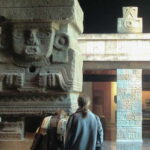
The Olmec Group of Figures gives the tour a very different mood. These works come from an earlier culture and show why the museum cannot be reduced to an Aztec collection. Seeing Olmec material alongside later objects helps you understand that Mesoamerica was not one single civilization with one set of beliefs.
The displays also include ancient human remains. They may not be comfortable for every member of your group, but they add a direct human element to the visit. Instead of seeing only ceremonial objects and monumental art, you are reminded that these cultures were made up of real communities with changing customs, beliefs, and ways of life.
The museum’s Maya and Aztec sections are central to the visit as well. Guides have been praised for explaining religious beliefs and describing the artifacts in approachable terms. You will get the most from these rooms if you ask how a particular object was used, who made it, and what it tells us about daily life rather than focusing only on dates.
What three hours actually gives you
Three hours sounds long until you enter a museum with two spacious floors and one of the world’s largest collections of ancient Mexican art. The advantage of a guided visit is that you do not have to decide on the spot which rooms deserve your attention.
Expect the guide to lead you through major sections and stop at important objects. The pace should feel more purposeful than wandering alone, but the tour is still only an introduction. You will not see every display in depth, and you should not book this experience expecting a full scholarly treatment of every culture represented.
That limit is useful for most people. After three hours, you will have a solid framework for understanding the museum, but you will not be exhausted by every label and side room. If you become fascinated by one section, you can ask your guide for extra explanation. On a private visit, the schedule can be adjusted to spend more time where your interests lie, as long as the total duration and route remain broadly the same.
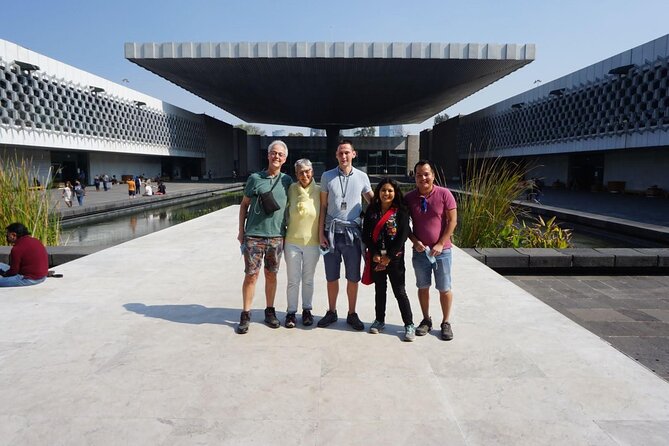
A small-group tour is less flexible. Its departure time is fixed, and the itinerary cannot be customized. The group can include up to 12 people, which is still a manageable size for a museum, though the experience will naturally feel less personal than a private visit.
The activity information also describes a private option in which only your group participates. That choice is confirmed for any group size, while a small-group tour needs at least three participants to operate. If the small group does not reach that minimum, it may be canceled with a full refund two days before the scheduled date.
Guides make the biggest difference
The strongest part of this experience is the human explanation. Several guides have received especially warm feedback, and the names are useful if you want to understand the range of styles you might encounter.
Clara has been praised for being courteous, approachable, and well informed. She has guided in French and Spanish as well as English according to the available feedback, though English and Spanish are the languages clearly offered for the tour. Maida was singled out for adapting the visit to her group’s interests and giving attentive service.
Silvia brought an academic background in Mesoamerican civilization but explained the subject in a charming, relatable way. Ivan was described as extremely well informed and able to teach a great deal, though his style was more formal and almost professorial. That distinction is important if you are bringing children or anyone who prefers a lighter, highly interactive visit.
Diana’s strength was storytelling. Her tour helped one group place the museum within the longer sequence of Maya, Aztec, colonial, and post-Revolution Mexico. That broader framing is exactly what can make an anthropology museum feel relevant rather than like a collection of disconnected objects.
There is a fair warning here. One person felt the guide offered little beyond the written signs. That means you should not assume every visit will have the same depth or personality. If interpretation is the main reason you are booking, use the meeting time to tell your guide what interests you: religion, art, politics, daily life, children’s explanations, or the Maya and Aztec sections.
Private or small group: which format fits you?
At $50 per person, the value depends heavily on the format you choose and how much you want guidance. The price includes the museum entrance and guided visit, so you are paying for both access and interpretation rather than admission alone.
For a first visit, that can be good value. The museum is large, the subject is broad, and the famous objects have layers of meaning that are not always obvious from a short label. A strong guide can save you from wandering without a plan and help you remember what you saw.
A private visit makes the most sense for a couple, family, or small group with specific needs. You can adjust the time spent in different areas, and you can ask for a faster or slower pace within the three-hour framework. The private format is also a better choice if you want to avoid joining another group or need the guide to focus on children, art, religion, or a particular culture.
A small group can offer better value if you enjoy sharing a guide and do not need changes to the schedule. The maximum is 12 people, which is far more personal than a large coach tour. Still, one family booked a private option partly so four children would not distract others, then found the groups were merged. The guide was excellent on content, but the visit was not especially designed for children.
That is a useful lesson: private booking does not always guarantee a child-focused presentation. If you need family-friendly explanations, say so clearly before the tour and confirm the arrangement.
The listed price also includes a commission from the online booking platform, sometimes up to 30 percent. That helps explain why the operator may have limited flexibility on discounts. Group discounts are listed as a feature, but you should check the final price and conditions before paying.
Other museum experiences in Mexico City


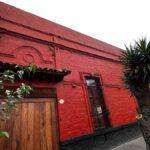

Timing, entrance, and meeting point
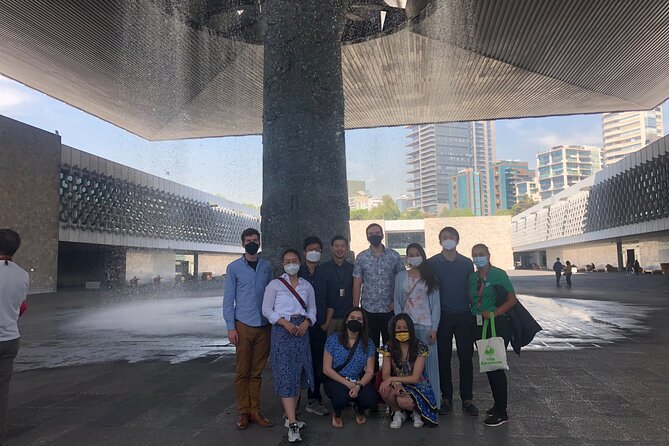
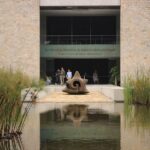
You meet at the National Museum of Anthropology on Avenida Paseo de la Reforma in the Polanco area, within Chapultepec. The tour ends at the same place, and the museum is near public transportation.
The activity does not include transportation. You need to make your own way to the entrance, so allow extra time for Mexico City traffic and for finding the correct meeting area. Your confirmation arrives at booking, and you should provide a phone number with an international prefix that works on the day. The guide may need to contact you about the meeting, and failure to respond can result in a no-show.
Do not count on skipping the entrance queue. The tickets are bought upon arrival, and there is no fast line. Waiting time cannot be controlled by the operator, so arriving early is sensible, especially at a fixed small-group departure.
Private tours have a flexible departure time, according to the available information. Small-group tours have a fixed start. One group had its start time moved from 10 a.m. to 9 a.m. because of expected crowds, only to find the museum was not crowded. That change also created suspicion that the groups were being combined, so confirm your final time before setting your day around it.
Wear comfortable shoes and clothes. Bring a hat, sunscreen, and sunglasses for the walk to and from the museum, along with identification or a copy. Carry some cash if you plan to shop, since not every merchant in Mexico accepts cards.
Who will enjoy this most
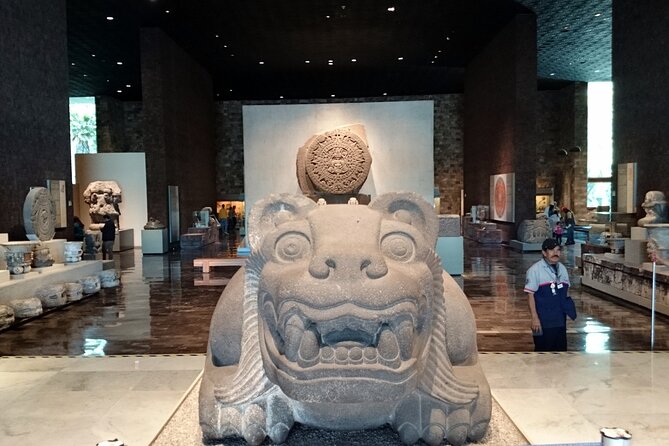
I would choose this tour if you are visiting Mexico City for the first time, care about art and archaeology, or want a clear introduction before visiting other historic sites. It works especially well for adults who appreciate a guide’s interpretation and for groups that want to cover the museum’s main ideas in one morning or afternoon.
It can also suit repeat visitors who want to return with a particular focus. A private guide may be able to spend more time on the Maya rooms, Aztec religion, Olmec art, human remains, or the relationship between ancient and modern Indigenous communities.
I would be more cautious if you prefer to read every label at your own speed. The three-hour structure and guided route may feel restrictive, especially if you already know Mesoamerican art well. You might also want to skip the tour if your main goal is a quiet, child-led visit, unless you confirm that the guide can adapt the presentation.
The tour is offered in English and Spanish for the small-group format, with bilingual guides. Private tours may sometimes be available in French, German, Italian, Portuguese, or another language, but those languages depend on guide availability and are not guaranteed.
Booking and cancellation details
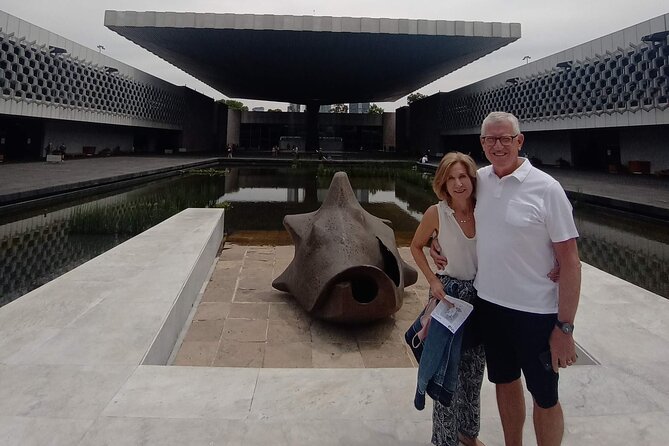
The experience is listed as non-refundable and cannot be changed for any reason after cancellation or an amendment request. The provider states that poor weather can lead to a different date or a full refund, even though the main activity takes place indoors.
There was also an unfortunate case in which a guide did not arrive because of an internal scheduling error. The operator eventually refunded the booking and offered another date, but the missed visit disrupted the group’s plans. This is not a reason to reject the tour outright, but it is a reason to keep your phone available and confirm the meeting details before leaving your hotel.
Should you book the Anthropology Museum tour?
Book it if you want the National Museum of Anthropology to make sense, not just look impressive. The Sun Stone, Olmec figures, Maya and Aztec displays, and ancient remains are worth seeing on their own, but a good guide connects them into a story you can carry through the rest of Mexico City.
At $50, the tour is fairly priced when the guide adds real context and the included admission saves you from arranging the visit yourself. I would choose the private option for families, people with strong interests, or anyone who wants control over the pace. Choose the small group if you want a lower-pressure introduction and can accept a fixed schedule.
Before booking, confirm the format, start time, language, and whether the guide can adapt the visit to children or a special interest. If you do that, this is one of the most useful three-hour introductions to Mexico’s ancient cultures.
FAQ
Where does the tour begin and end?
The tour begins at the National Museum of Anthropology, located at Av. Paseo de la Reforma in Chapultepec, Mexico City. It ends back at the museum meeting point.
How long does the museum tour last?
The visit lasts approximately three hours.
Is museum admission included?
Yes. The price includes entrance tickets and a guided visit to the National Museum of Anthropology.
Is there a fast-entry line?
No. The tour does not include fast-line access. Tickets are bought upon arrival, and you may need to wait.
What languages are available?
Small-group tours are offered in English and Spanish with bilingual guides. Private tours are also led in at least English and Spanish. Other languages may be possible depending on guide availability and must be requested in advance.
How many people can join the tour?
A small-group tour can include up to 12 people and requires at least three participants to confirm. A private tour is confirmed for one or more participants and includes only your group.
Can the tour be customized?
Private tours can be adjusted within the standard duration and route. Small-group tours are not customizable. Changes that extend the duration, alter the route, or add participants may require advance notice and an extra fee.
More Museum Experiences in Mexico City
More Chapultepec & Museum Tours in Mexico City
More tours in Mexico City we've reviewed





Chapultepec & Museum Tours, compared.
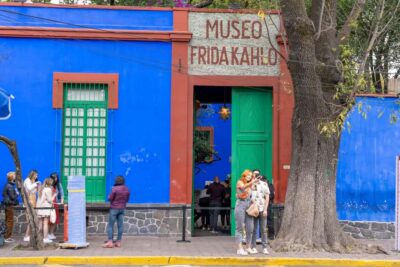 ★ 4.4CDMX: Xochimilco, Coyoacan, Frida Kahlo Museum & Murals TourFrom $89
 ★ 4.5Chapultepec Castle & Anthropology Museum TourFrom $795 hours (approx.)
 ★ 5.0Frida Kahlo VIP [Museum Tickets Included] Bike, Markets & ChurrosFrom $834 hours (approx.)
 ★ 4.5Anthropology Museum Guided TourFrom $392 hours 30 minutes (approx.)
 ★ 5.0Frida Kahlo VIP [Museum Tickets Included] Walk, Markets & ChurrosFrom $833 to 4 hours (approx.)
 ★ 5.0EXCLUSIVE TOUR Frida Kahlo Museum – SMALL GROUPSFrom $862 hours (approx.)
 ★ 4.4Mexico City: Anthropology Museum Guided VisitFrom $672.5 hours
 ★ 4.5Mexico City: Frida Kahlo Museum Entry Ticket w/Digital GuideFrom $34
The lists this tour appears in