
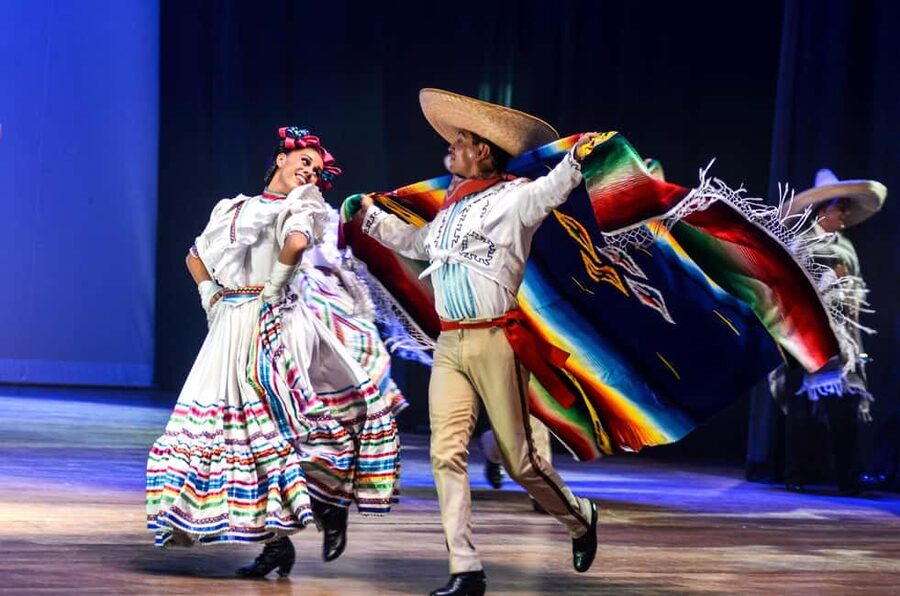
Reviewed · MEXICO CITY
Enjoy the Folkloric Ballet at the Palacio de Bellas Artes
Mexico’s most colorful traditions take the stage in one of its grandest buildings. The Ballet Folklórico de México by Amalia Hernández brings regional dances, live music, elaborate costumes, and old legends together at the Palacio de Bellas Artes. You get a fast, concentrated look at the country’s many cultures rather than a quiet museum visit.
In This Article
- Key points to know
- A one-hour portrait of Mexico through dance
- Entering Palacio de Bellas Artes
- What the performance includes
- Why the architecture and music matter
- Hotel pickup and getting there
- Seats, timing, and the price
- Who should book this experience
- Practical preparation before the curtain
- Should you book the Ballet Folklórico de México?
- FAQ
- How long does the folkloric ballet last?
- Where does the performance take place?
- What dances are included?
- Is live music included?
- Is transportation included?
- What languages does the driver speak?
- Is the activity suitable for wheelchair users?
I like the mix of live traditional music and dances from across Mexico, especially the Jarabe Tapatío, the Dance of the Flyers of Papantla, and the Dance of the Feather from Oaxaca. I also like that the palace itself is part of the experience, with its marble dome, Art Nouveau and Art Deco details, and murals by Diego Rivera and David Siqueiros.
The main caution is value. At $227 per person for a one-hour show, this is expensive, and seating may not always match what you expect. A recent booking also involved a last-minute venue change and first-come seating, so confirm the location and ticket arrangement before you go.
Key points to know
- More than 100 dancers bring Mexican regions to the stage, with large group scenes, costumes, and fast-moving choreography.
- The one-hour format is compact, making this easy to fit into an evening, though it leaves little time for a full story about each dance.
- The Palacio de Bellas Artes adds real weight to the outing, with major murals, a marble dome, and striking architecture.
- Live orchestra music matters here, since the rhythms and regional sounds carry as much meaning as the dance.
- Hotel pickup is limited to certain districts, including Polanco, the Historic Center, Reforma, and Condesa.
- The high price needs careful consideration, particularly if you are offered less desirable seats or an alternate venue.
A one-hour portrait of Mexico through dance
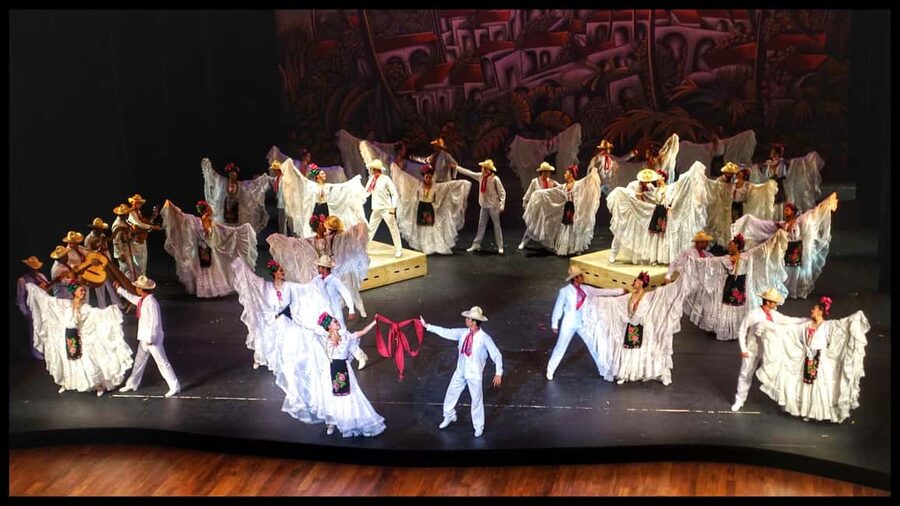
The Ballet Folklórico de México is not a single folk dance stretched into an evening. It is a sequence of scenes drawn from different parts of the country, each with its own music, costumes, steps, and visual mood.
Amalia Hernández founded the ballet and shaped its artistic direction for more than 70 years of performances. Her work turns Mexican traditions and myths into polished stage productions. That means you are seeing folk material presented through professional choreography, not simply a local community dance gathering.
This distinction is useful when you decide what kind of cultural experience you want. The performance gives you a broad introduction to Mexico’s traditions in one sitting. It does not offer the slower pace of visiting a village festival or speaking with individual artisans, but it does show how many regional styles can share one stage.
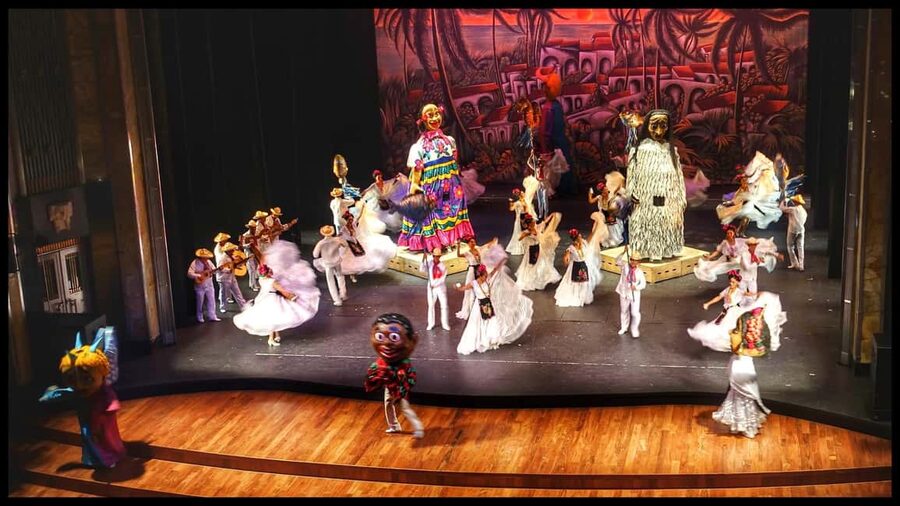
The program includes the Dance of the Flyers of Papantla, the Jarabe Tapatío from Jalisco, the Dance of the Feather from Oaxaca, and other dances linked to Mexican states and traditions. You can expect quick changes in rhythm, large ensemble movements, and costumes designed to be seen from across the theater.
With more than 100 dancers involved, the scale is one of the show’s main attractions. The stage can shift from a tightly arranged group to a sweeping celebration filled with movement and color. If you prefer intimate theater with a small cast, this may feel too grand. If you want a strong first encounter with Mexican dance, the size helps communicate the energy of the traditions.
If you're still narrowing it down, here are other tours in Mexico City we've reviewed.



Entering Palacio de Bellas Artes
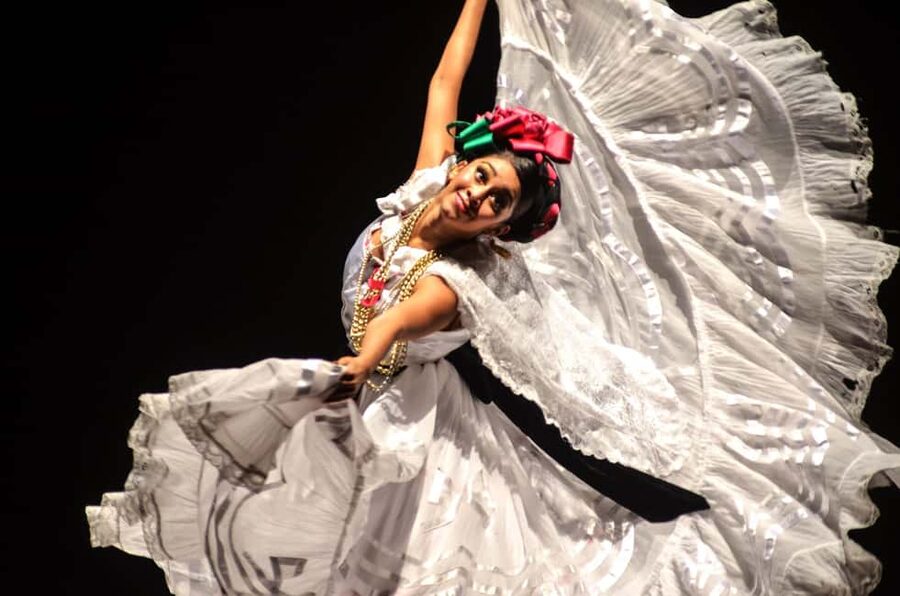
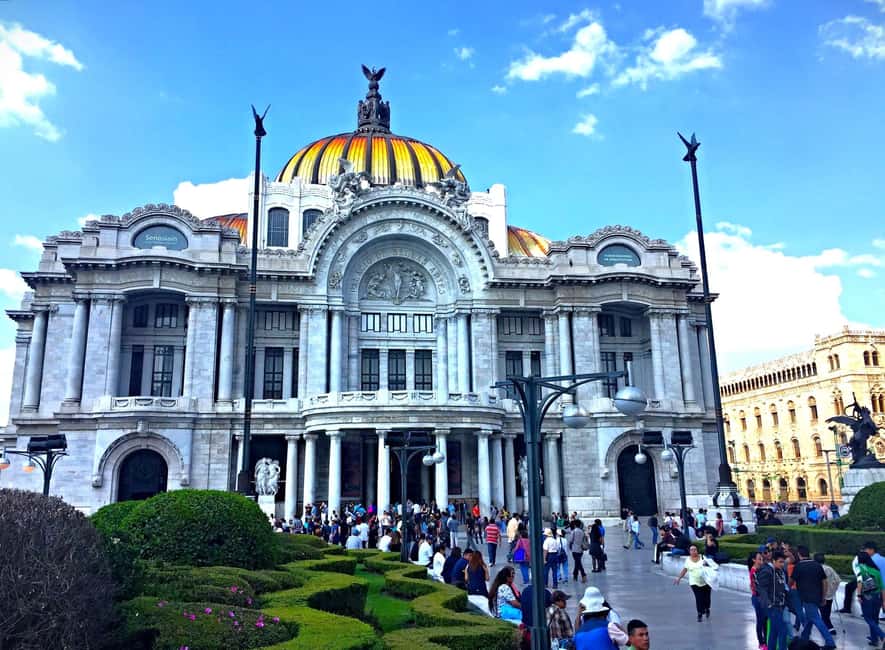
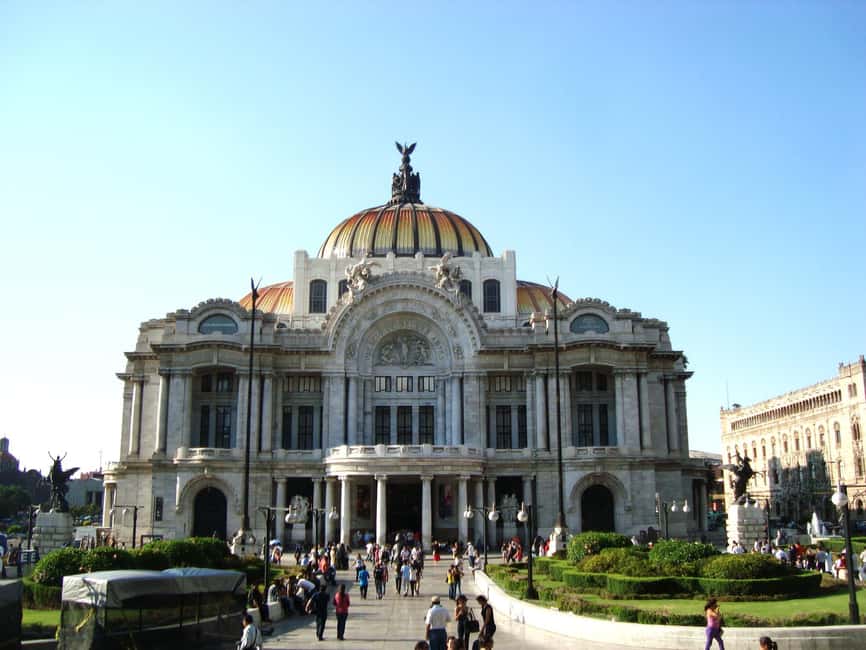
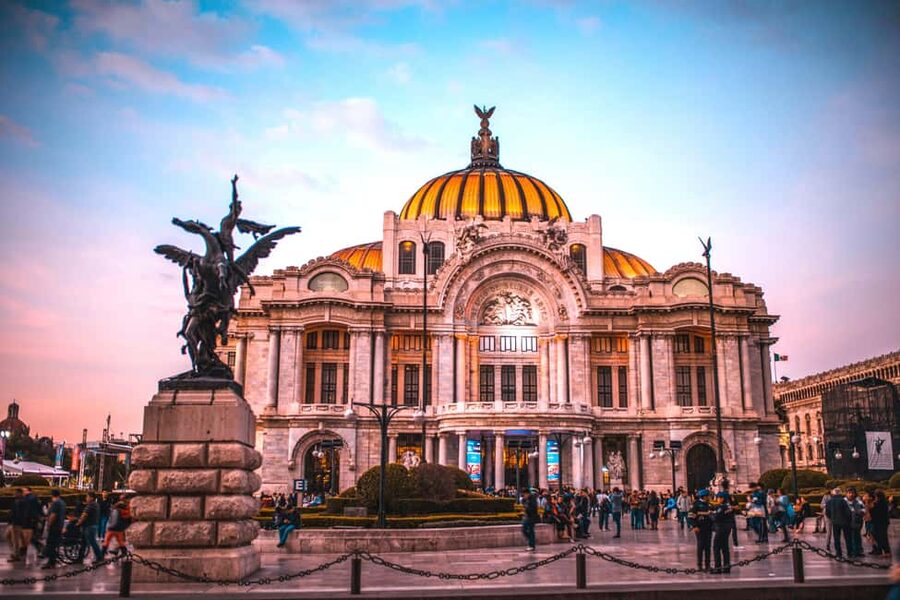
The theater is in Mexico City’s Historic Center, and the building deserves your attention before the curtain rises. Palacio de Bellas Artes combines Art Nouveau exterior details with an Art Deco interior, creating a setting that feels almost as important as the performance.
Look for the marble dome and the large murals associated with Diego Rivera, David Siqueiros, and other major artists. The palace is recognized as a UNESCO World Heritage site, so you are not merely arriving at a convenient theater. You are entering one of the country’s key arts spaces.
That setting gives the ballet a useful sense of place. Mexican history and identity are already present in the walls, then the dancers bring those themes into motion. I especially like this pairing because it prevents the event from feeling like a performance dropped into an ordinary hall.
Allow at least 30 minutes before the show begins. That gives you time to reach the theater, deal with entry, and take in the building without rushing. The palace is easy to reach by public transport, and the Historic Center has many ways to approach it. If you use the included pickup, you still want a cushion, since Mexico City traffic can affect the journey.
What the performance includes
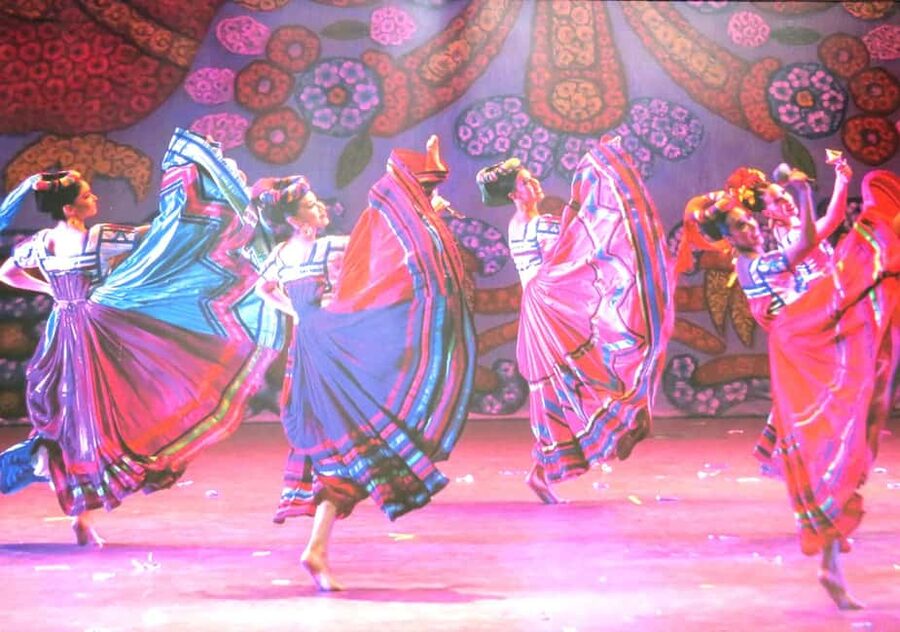
The dances represent pre-Hispanic civilizations, indigenous communities, popular celebrations, and regional customs. You are not given a full academic lesson on every tradition, so pay attention to the visual clues: the costume shapes, the use of hats or skirts, the musical instruments, and the contrast between solemn ceremonial scenes and festive group dances.
The Jarabe Tapatío is among the best-known pieces. It comes from Jalisco and is often associated with the national image of Mexican dance. The Dance of the Feather, from Oaxaca, adds another regional style, while the Dance of the Flyers of Papantla brings a tradition recognized far beyond Mexico.
The variety is the point. One segment may highlight precise footwork, while another depends on flowing fabric, dramatic formations, or the shared rhythm of a large group. You will see a carefully staged presentation rather than a random collection of dances.
Live music accompanies the choreography. A traditional orchestra provides the pulse, and that makes a real difference. Recorded music can support a dance, but live musicians give the show a stronger connection between what you hear and what happens on stage.
The performance lasts one hour. I see that as both a strength and a limit. It is short enough for families, first-time theatergoers, and anyone fitting several Mexico City sights into one day. It is also brief enough that the production moves quickly, with little room to explain the background of each region.
Why the architecture and music matter
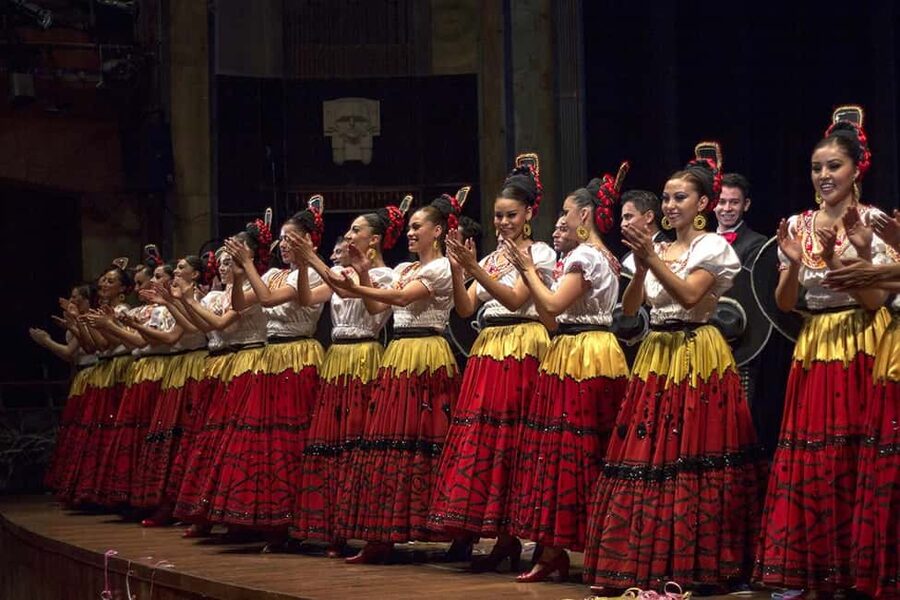
Mexican folkloric dance can be easy to treat as a colorful stage display. The Palacio de Bellas Artes helps push the experience beyond that. The murals, the building’s history as an arts center, and the formal theater setting remind you that these traditions are being presented as an important part of national culture.
The music gives the show another layer. Each rhythm points toward a different place and social setting, even when you do not know the name of the instrument or dance. You can listen for the change in pace and tone as the production moves from one region to another.
I recommend arriving with curiosity rather than the expectation of a detailed historical lecture. The ballet works through sensation first: sound, movement, color, and large visual scenes. You take away an overall sense of Mexico’s cultural variety, then you can explore individual regions in more depth during the rest of your trip.
Bring a camera for the building and permitted moments around the venue, but do not use flash during the performance. Flash photography is not allowed, and it can distract both dancers and other people in the theater.
Hotel pickup and getting there
Transportation is included from hotels or Airbnbs in Polanco, the Historic Center, Reforma, and Condesa. Pickup takes place in the lobby, and you should be ready 15 minutes before the stated time.
The driver speaks Spanish and English. That is useful if you are staying in one of the listed areas and want to avoid working out the route yourself. It also makes the experience more convenient after the show, when traffic, crowds, or a late finish can make transport less appealing.
Still, do not assume pickup covers every Mexico City neighborhood. If you stay outside the listed zones, check the arrangements before booking. Palacio de Bellas Artes is accessible by public transport, so independent arrival may be practical for you, particularly if you are already spending time in the Historic Center.
There is an important point about venue information. One booking in the winter period involved the performance taking place at Castillo de Chapultepec, and another person reported learning about a venue change only a few hours before the event. This may reflect seasonal scheduling, but it creates a real planning issue. Confirm the exact venue and pickup plan close to the performance date.






Seats, timing, and the price
The listed price is $227 per person. That is a premium price for a one-hour performance, even with transportation and access to the palace included.
The value depends heavily on the seat. A booking may be described as assigned seating, yet a recent experience involved first-come seating, which resulted in marginal views. Another person felt that the ticket price should have provided better seats.
I would not book this without asking how seating is allocated. If the location is important to you, find out whether your seat is assigned, what section it covers, and if a venue change affects that arrangement. A grand theater does not guarantee a grand view from every row.
The price makes more sense if you value three things at once: a professionally staged Mexican dance performance, live music, and a visit to Palacio de Bellas Artes. If you mainly want to see traditional dancing and are comfortable arranging your own transport, the cost may feel high.
The 70-year history of the production gives it cultural importance, but it does not automatically make every ticket a good deal. I would judge the purchase by the confirmed seat and venue, not just by the reputation of the ballet.
Who should book this experience
This show suits you if you want a clear introduction to Mexican regional dance without spending several days researching performances. It also works well for a first Mexico City visit, since the palace is one of the city’s major cultural sites.
Families may appreciate the short running time and the strong visual presentation. The live music, costumes, and large cast give children plenty to watch, though the formal theater setting may require them to sit quietly for the full hour.
It is also a good choice for people who enjoy architecture and art. You can pair the performance with time in the Historic Center and treat the palace as both a theater and an art destination.
You may want another option if you need wheelchair access, since this activity is listed as unsuitable for wheelchair users. You may also want to skip it if you dislike staged cultural shows or prefer small, informal performances with more explanation from local performers.
The show presents Mexican traditions with polish and ceremony. That is its appeal, but also its boundary. You get a broad, carefully shaped portrait of the country, not a spontaneous street celebration.
Practical preparation before the curtain
Wear comfortable shoes, especially if you plan to walk around the Historic Center before or after the performance. Bring water for the journey, though drinks are not included with the activity.
Meals, drinks, and souvenirs are not part of the price. Plan those separately rather than expecting a theater package with refreshments.
Arrive at least 30 minutes before showtime. This is particularly important if the venue or seating instructions have changed. Keep your booking details available and confirm where you need to meet the driver.
Weapons, sharp objects, fireworks, and explosive substances are not allowed. Flash photography is also prohibited during the performance.
The experience lasts one hour, but allow extra time for pickup, traffic, entry, and the return journey. The actual show is short, while the surrounding transport can take longer in Mexico City.
Cancellation is flexible up to 24 hours before the activity for a full refund, and you can reserve now and pay later. Those terms help if your itinerary is still shifting, but they do not remove the need to check the final venue and seating details.
Should you book the Ballet Folklórico de México?
Book it if you want a polished, visually strong introduction to Mexican dance and like the idea of seeing it inside Palacio de Bellas Artes. The live orchestra, dances from several regions, and grand setting make this one of Mexico City’s most memorable cultural evenings.
Pause before paying $227 if you are sensitive to seat quality or expect a long performance. Ask about assigned seating, confirm the venue, and make sure hotel pickup applies to your accommodation.
My practical verdict is positive but conditional. The show itself offers beautiful decorations, powerful group dance, and a strong sense of Mexican tradition. The high price and reports of weak communication mean you should verify the arrangements before committing. If the seat and venue are clear, this is a worthwhile splurge. If they are vague, wait for better details.
FAQ
How long does the folkloric ballet last?
The performance lasts one hour.
Where does the performance take place?
It is described as taking place at Palacio de Bellas Artes in Mexico City’s Historic Center. Venue arrangements can vary, and a winter performance has also been held at Castillo de Chapultepec, so confirm the location for your date.
What dances are included?
The program includes the Dance of the Flyers of Papantla, the Jarabe Tapatío from Jalisco, the Dance of the Feather from Oaxaca, and other dances representing regions and traditions across Mexico.
Is live music included?
Yes. A traditional orchestra performs live music during the dance showcase.
Is transportation included?
Yes. Pickup and return transportation are included from hotels or Airbnbs in Polanco, the Historic Center, Reforma, and Condesa.
What languages does the driver speak?
The driver speaks Spanish and English.
Is the activity suitable for wheelchair users?
No. The activity is listed as unsuitable for wheelchair users.
More tours in Mexico City we've reviewed








Mexico City, compared.
 ★ 5.0Teotihuacan, Guadalupe Shrine & Tlatelolco Day Tour with LunchFrom $399 hours (approx.)
 ★ 4.5Xochimilco, Coyoacan and Frida Kahlo with Optional LunchFrom $349 hours (approx.)
 ★ 5.0Balloon flight + Breakfast in cave + Pyramids + Pick up CDMX.From $1722 to 8 hours (approx.)
 ★ 5.0Teotihuacan pyramids morning or afternoon without tourist trapsFrom $645 hours 30 minutes (approx.)
 ★ 4.5Teotihuacan Early Access Guided Tour with optional LunchFrom $398 hours (approx.)
 ★ 5.0Balloon flight + pick up in CDMX + Breakfast in Cave + PyramidsFrom $1694 to 7 hours (approx.)
 ★ 5.0Balloon Flight + Cave Breakfast + Pick Up from CDMX or We FlyFrom $1663 to 9 hours (approx.)
 ★ 4.6Mexico City: Teotihuacan, Tlatelolco & Guadalupe Shrine TourFrom $49