
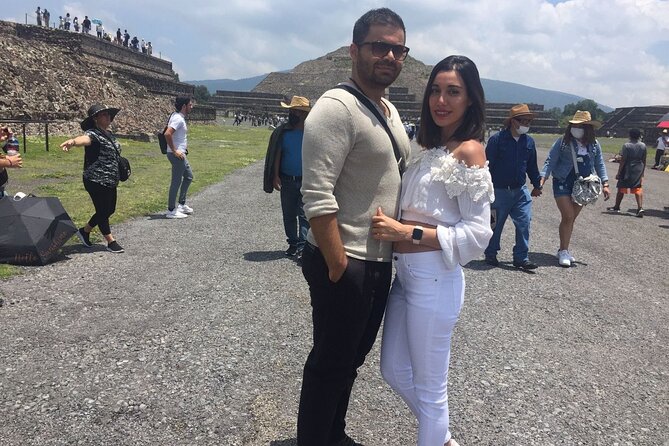
Reviewed · TEOTIHUACAN TOURS
Tour Teotihuacan and Guadalupano Sanctuary
The most compelling part of this Mexico City day is the mix of ancient ruins, Catholic tradition, and living Mexican craft. In one private outing, you move from Tlatelolco’s Plaza de las Tres Culturas to the Guadalupe sanctuary, then finish among the enormous pyramids of Teotihuacan.
In This Article
- Key points to know before booking
- Why this route works in Mexico City
- Tlatelolco and the Plaza of Three Cultures
- A short stop for Mexican silver
- The Guadalupe Basilica at the foot of Tepeyac Hill
- Teotihuacan and the Avenue of the Dead
- Pulque, tequila, and mezcal tasting
- What the $250 group price really buys
- Guide style and private-tour advantages
- Timing, pickup, and what to clarify
- Who will like this tour most
- Should you book the Teotihuacan and Guadalupano Sanctuary tour?
- FAQ
- How long is the Tour Teotihuacan and Guadalupano Sanctuary?
- What locations does the tour visit?
- Is Teotihuacan admission included?
- What is included in the $250 price?
- Is hotel pickup available?
- Can I cancel for a full refund?
I like the private vehicle for your group of up to four, especially since Mexico City traffic can make a long day tiring. I also like the human touch associated with guide Juan Carlos, who is praised for his punctuality, warm manner, and detailed explanations. The main drawback is that Teotihuacan admission is not included, and three hours at the archaeological site can feel short if you want a slow visit.
Key points to know before booking
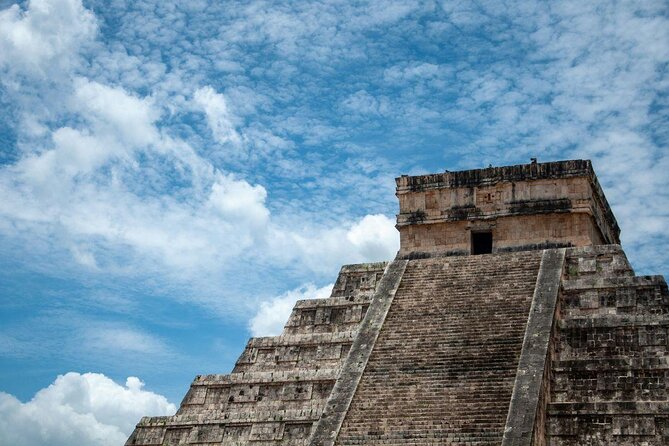
- Four major stops in about seven hours: The schedule covers Tlatelolco, Mexican silver, the Guadalupe Basilica, and Teotihuacan.
- Private tour for up to four people: The $250 group price works out to $62.50 per person for a full group, before the archaeological-site ticket.
- Juan Carlos may be your guide: He is specifically praised for punctuality, kindness, and explaining Mexico’s history and religious traditions clearly.
- The Teotihuacan ticket costs extra: Transportation, water, taxes, and tastings are included, but entry to the archaeological zone is not.
- Three Mexican drinks are part of the day: You receive tastings of pulque, tequila, and mezcal at Teotihuacan.
- Pickup needs confirming: The listed starting point is the Angel of Independence, while hotel-lobby pickup is also described. Confirm the exact meeting arrangement when you book.
Why this route works in Mexico City
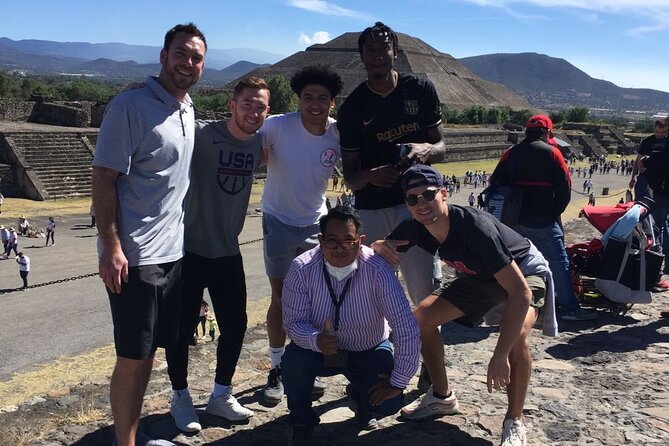
This outing gives you a broad first look at Mexico City rather than spending the whole day at one site. I like the way it joins places that are often treated as separate trips: pre-Hispanic archaeology, colonial and modern religious life, traditional silverwork, and the great ceremonial center of Teotihuacan.
The route also gives you different kinds of history. At Tlatelolco, the focus is layered and urban. At the Guadalupe Basilica, it is religious and personal. At Teotihuacan, the scale changes completely, with a broad ceremonial avenue and monumental pyramids.
The private format matters here. You are not tied to strangers or a fixed group pace. With a maximum of four people, you can ask questions, spend a little longer at a favorite stop, or keep moving if the heat and sun begin to wear you down. The total time is about seven hours, so this is still a full outing rather than a quick half-day hop.
A few more Mexico City tours and experiences worth a look

Tlatelolco and the Plaza of Three Cultures
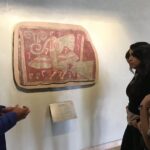
The first stop is Zona Arqueológica Tlatelolco, visited for about 30 minutes with admission included. Its central setting, the Plaza de las Tres Culturas, brings together archaeological remains, colonial buildings, and more recent Mexican history in one compact area.
I find this a smart opening stop because it helps you understand that Mexico City is built in layers. You are not looking at an isolated ruin far from modern life. You are seeing an archaeological zone within the city, surrounded by the capital’s daily activity.
Thirty minutes is enough for an introduction, a look at the main remains, and a few explanations from your guide. It is not enough for a slow archaeological study. If you want long periods for photographs or close attention to every structure, this first visit may feel brisk.
That shorter time also makes sense within the larger plan. Teotihuacan receives three hours, while Tlatelolco works as a concise historical frame before the tour moves on. I would listen closely here, since the guide’s explanation is likely to be more important than simply walking around the site.
A short stop for Mexican silver
The 30-minute visit to Plateria Rafael offers a look at Mexican silverwork. Admission is free, and the stop highlights a craft with centuries of tradition in Mexico.
This is a commercial stop, so you should approach it with realistic expectations. It is not described as a full artisan workshop or a long museum visit. Instead, it gives you a chance to see silver jewelry and learn about the work behind it. If you are interested in Mexican jewelry, it may be a useful addition. If shopping is not part of your plan, the half-hour visit could feel less important than the archaeological and religious stops.
The benefit of a private tour is that you can ask direct questions about the silver, its production, and what makes Mexican pieces distinctive. I would also keep an eye on the clock. The day has a lot packed into it, and the time spent here comes out of a seven-hour schedule.
The Guadalupe Basilica at the foot of Tepeyac Hill
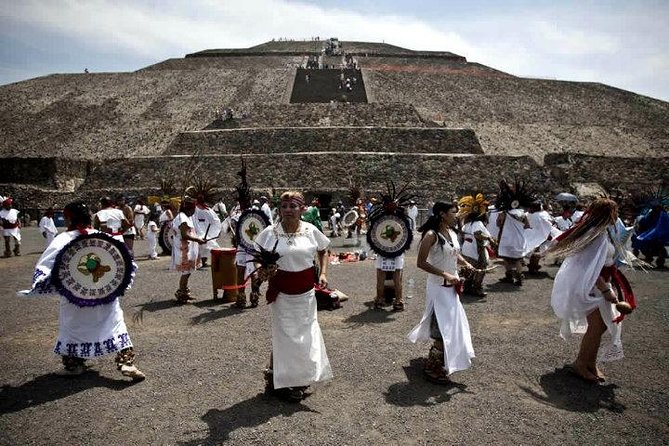
The Basilica de Santa María de Guadalupe receives about one hour. This is the principal religious stop and one of the most meaningful parts of the route for visitors interested in Mexican Catholic identity.
The sanctuary is dedicated to the Virgin of Guadalupe and sits at the foot of Tepeyac Hill in the Gustavo A. Madero area. Even if you are not Catholic, the site helps explain the place of Guadalupe devotion in Mexican culture. I would give this stop a respectful pace and listen to the guide’s explanation of its religious meaning.
One hour gives you time to see the basilica area without turning the visit into a rushed photo stop. Still, the tour description does not promise a specific service, interior program, or extended hill walk. You should think of it as a guided sanctuary visit, not a full religious pilgrimage.
The guide can make a major difference here. Juan Carlos is praised for explaining both history and religious meaning, while also treating visitors with respect. That combination matters at a sacred place. A guide who simply lists dates would miss much of what makes the basilica important.
Teotihuacan and the Avenue of the Dead
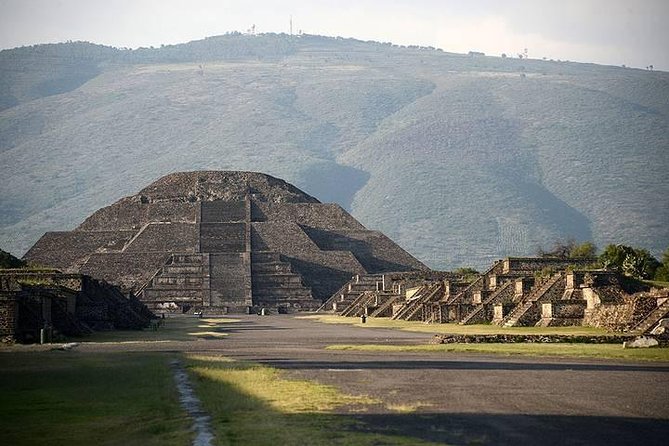
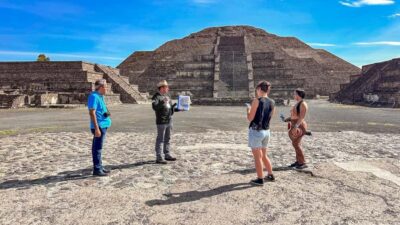
The longest stop is Zona Arqueológica de Teotihuacan, with about three hours on site. This is the centerpiece of the day, and it deserves the largest block of time.
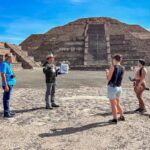
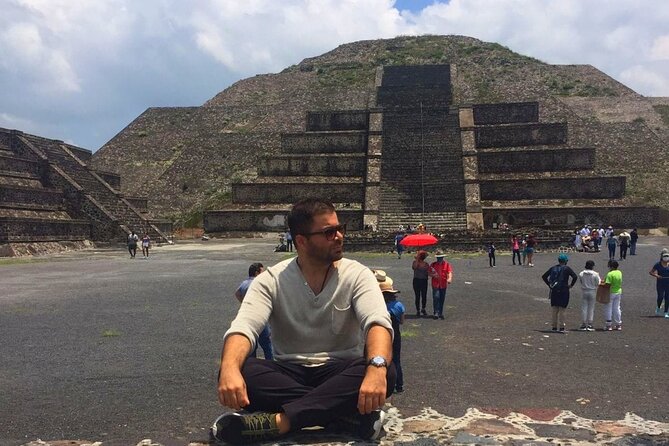
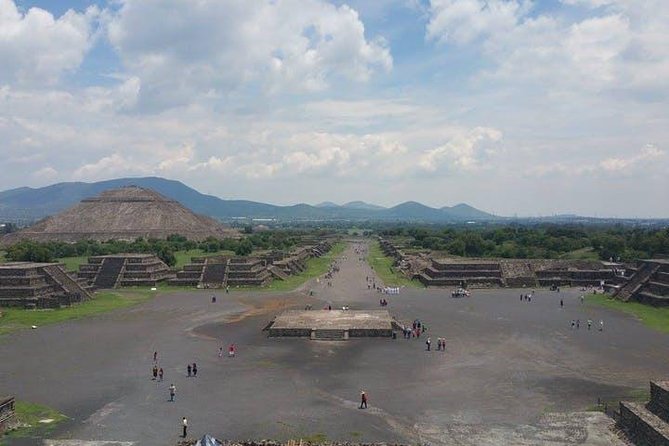
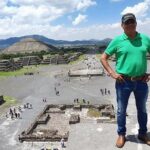
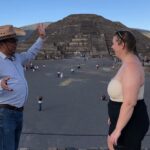
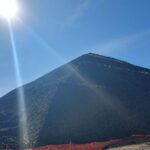
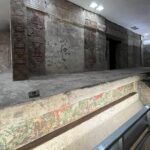
Teotihuacan was once a major pre-Columbian city northeast of Mexico City. The Avenue of the Dead runs through the ceremonial center, linking major monuments including the Temple of Quetzalcoatl, the Pyramid of the Moon, and the Pyramid of the Sun.
The scale is the first thing you notice. The pyramids are not small ruins that you can understand in one glance. You need time to walk, stop, listen, and look back across the site. Three hours lets you cover important parts of the complex, though it may not allow an unhurried visit to every structure and museum display.
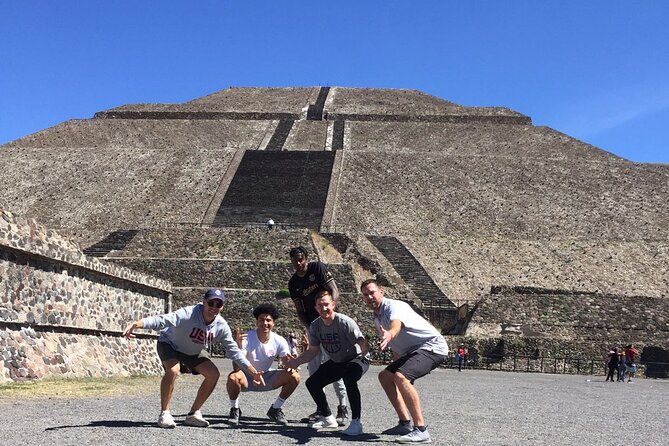
The Pyramid of the Sun and Pyramid of the Moon are described as offering panoramic views from their tops. Access conditions can change, so do not assume every climb will be available on the day of your visit. Even when you cannot climb, the avenue and the surrounding monuments give you a strong sense of the city’s scale.
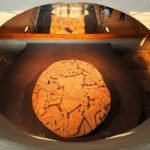
The on-site Museum of Teotihuacan includes pottery and bone work connected with the culture. With only three hours, you may need to choose between more time among the monuments and a museum visit. I would ask your guide how much time is practical once you arrive.




Pulque, tequila, and mezcal tasting
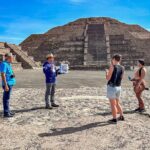
A tasting of pulque, tequila, and mezcal is included at the Teotihuacan stop. This adds a cultural element that many archaeology visits lack.
The three drinks are not interchangeable. Tequila and mezcal are both distilled agave spirits, while pulque is a traditional fermented agave drink. Tasting them side by side gives you a simple way to notice that Mexican drink traditions have different methods, textures, and flavors.
The tour data does not specify the number of samples, serving sizes, or whether food accompanies the tasting. I would treat it as a brief introduction rather than a full tasting experience. Bottled water is included, which is useful during a warm day outdoors.
If you do not drink alcohol, confirm how the tasting can be handled before departure. The description lists alcoholic beverages as included, but it does not state whether nonalcoholic alternatives are provided.
What the $250 group price really buys
The price is $250 per group of up to four, not $250 per person. A full group pays $62.50 per person before the Teotihuacan admission fee. That is a more attractive calculation for four people than for a solo visitor or couple.
Your price includes private transportation in an air-conditioned vehicle, bottled water, all fees and taxes listed by the operator, and the pulque, tequila, and mezcal tasting. The private vehicle is especially useful because the route covers several areas of Mexico City and then continues to Teotihuacan.
The important extra cost is the archaeological-zone ticket. The amount is not supplied, so I would check the current price when booking and budget for it separately. The silver stop and Basilica have no admission charge listed.
For a group of four, I see good value in the format if you want a guide and door-to-door transport. For one person, the cost is much harder to justify unless private service is a priority. You are paying for the vehicle, guide attention, and convenience, not just entrance tickets.
Guide style and private-tour advantages
The strongest human detail connected with this experience is the praise for Juan Carlos. He is described as punctual, attentive, willing to explain each part of the outing, and deeply interested in Mexico’s history and culture.
That tells you what kind of tour this aims to be. It is not simply a driver dropping you at four locations. The intended value is interpretation: understanding why Tlatelolco matters, what the Guadalupe sanctuary represents, and how Teotihuacan fits into Mexico’s pre-Hispanic past.
Another guide named Carlos is also associated with a similar visit to the pyramids and sanctuary, along with a professional driver. Since the booking information does not guarantee which guide will lead your particular departure, I would confirm the guide’s name if that matters to you.
The private setup also helps families and small groups. Most people can participate, and the tour is near public transportation, but private pickup and an air-conditioned vehicle reduce the need to manage several transport changes during a busy day.
Timing, pickup, and what to clarify
The stated duration is approximately seven hours. The four listed visits total about five hours, leaving roughly two hours for driving, pickup, transitions, and the tasting. Mexico City traffic can affect how much time you actually spend at each location, so I would avoid scheduling a fixed appointment immediately afterward.
Pickup information needs a little attention. The listed start point is the Angel of Independence on Paseo de la Reforma. The pickup instructions also say that operators collect guests in their hotel lobby while displaying a banner with the name of the person who made the reservation.
Because both details appear in the booking information, confirm your exact pickup point and time. The activity ends back at the meeting point, so ask whether hotel return is included or whether the official endpoint is the Angel of Independence.
The tour is offered in English and provides a mobile ticket. Confirmation is received at booking. Free cancellation is available up to 24 hours before the start time, with no refund for cancellations or changes inside that window. Poor weather can lead to a different date or a full refund.
Who will like this tour most
I would recommend this outing to first-time Mexico City visitors who want a broad introduction without arranging separate day trips. It is especially suitable for a small family or group of friends that can share the $250 vehicle price.
You will get the most from it if you enjoy history explained in person, want private transport, and are comfortable with a fairly full schedule. The route mixes walking, outdoor archaeological space, religious sites, and a short shopping-oriented stop.
I would be more cautious if your main goal is a slow, specialist visit to Teotihuacan. Three hours is useful, but the other stops take time. An archaeology-focused tour would likely give you more room at the pyramids and museum.
I would also think twice if you dislike commercial stops. Plateria Rafael is only 30 minutes and admission is free, but it is still part of the day. On the other hand, travelers who like Mexican crafts may find it a pleasant change from monuments.
Should you book the Teotihuacan and Guadalupano Sanctuary tour?
Book it if you want one private day covering four different sides of Mexico: archaeology at Tlatelolco and Teotihuacan, religious culture at Guadalupe, and silver craftsmanship at Plateria Rafael. The included vehicle, water, taxes, and drink tasting make the group price easier to defend, especially with four people sharing it.
Before you commit, confirm the pickup location, the current Teotihuacan admission charge, and which guide will lead your group. Choose another tour if you want to spend nearly the entire day at Teotihuacan or prefer to avoid a silver stop.
For a small group seeking a personal guide and a wide cultural overview, this is a practical choice. Its best feature is not any single stop, but the way the day connects Mexico City’s ancient, religious, and everyday traditions.
FAQ
How long is the Tour Teotihuacan and Guadalupano Sanctuary?
The experience lasts approximately seven hours, including transportation between stops.
What locations does the tour visit?
It visits Zona Arqueológica Tlatelolco, Plateria Rafael, the Basilica de Santa María de Guadalupe, and Zona Arqueológica de Teotihuacan.
Is Teotihuacan admission included?
No. Tickets to the Teotihuacan archaeological zone are not included in the tour price.
What is included in the $250 price?
The price includes private transportation in an air-conditioned vehicle, bottled water, all listed fees and taxes, and tastings of pulque, tequila, and mezcal. The price covers a group of up to four people.
Is hotel pickup available?
Pickup is offered from a hotel lobby, where the operator or guide displays a banner with the reservation holder’s name. The listed meeting point is the Angel of Independence, so confirm the exact pickup arrangement when booking.
Can I cancel for a full refund?
Yes. You can cancel at least 24 hours before the experience start time for a full refund. Cancellations or changes made less than 24 hours before the start time are not refunded, and poor weather may result in a new date or full refund.
More Teotihuacan Tours in Mexico City
More tours in Mexico City we've reviewed



Teotihuacan Tours, compared.
 ★ 5.0Teotihuacan, Guadalupe Shrine & Tlatelolco Day Tour with LunchFrom $399 hours (approx.)
 ★ 5.0Balloon flight + Breakfast in cave + Pyramids + Pick up CDMX.From $1722 to 8 hours (approx.)
 ★ 5.0Teotihuacan pyramids morning or afternoon without tourist trapsFrom $645 hours 30 minutes (approx.)
 ★ 4.5Teotihuacan Early Access Guided Tour with optional LunchFrom $398 hours (approx.)
 ★ 5.0Balloon flight + pick up in CDMX + Breakfast in Cave + PyramidsFrom $1694 to 7 hours (approx.)
 ★ 4.6Mexico City: Teotihuacan, Tlatelolco & Guadalupe Shrine TourFrom $49
 ★ 5.0Teotihuacan Hot Air Balloon Flight from Mexico City / VolareFrom $1553 to 9 hours (approx.)
 ★ 5.0Hot Air Balloon Flight with Breakfast Cave and Pyramids TourFrom $1408 hours (approx.)