

Reviewed · FRIDA KAHLO & COYOACAN TOURS
Frida Kahlo Museum and Diego Rivera Studio Tour with Admission Tickets
Casa Azul is more than a museum filled with Frida Kahlo’s paintings. It is her former home, the place where she lived, worked, suffered, entertained, and shaped her public identity. This tour pairs that intimate house with Diego Rivera’s modern studio, giving you a close look at two artists whose lives and work are hard to separate.
In This Article
- Key points to know before booking
- Why these two museums belong together
- Casa Azul: Frida Kahlo’s rooms, clothing, and courtyards
- Diego Rivera’s studio: architecture with a personal story
- A small group makes the art talk more personal
- Getting between the museums in Mexico City
- Timing problems and how to avoid them
- Bags, weather, and museum rules
- Is $94 good value?
- Who should book this Casa Azul and Rivera tour?
- Final verdict: a strong art outing with strict timing
- FAQ
- Where does the tour begin?
- Where does the tour end?
- How long does the experience last?
- Is transportation included?
- Is the tour offered in English?
- How large is the group?
- What happens if I arrive late?
- Can I bring a large bag or suitcase?
- Can the museum order change?
I like the small maximum of 10 people, which gives your guide room to answer questions instead of delivering a speech to a crowd. I also like the included transportation between museums, since the two sites are in different parts of Mexico City and an Uber transfer is simpler than sorting out a ride in the middle of a timed museum visit.
The main concern is timing. The tour lasts about two and a half hours, late arrival can cost you museum entry, and occasional ticket or museum changes can alter the order. Check the meeting address carefully before leaving, carry only a small bag, and allow extra time for city traffic.
Key points to know before booking
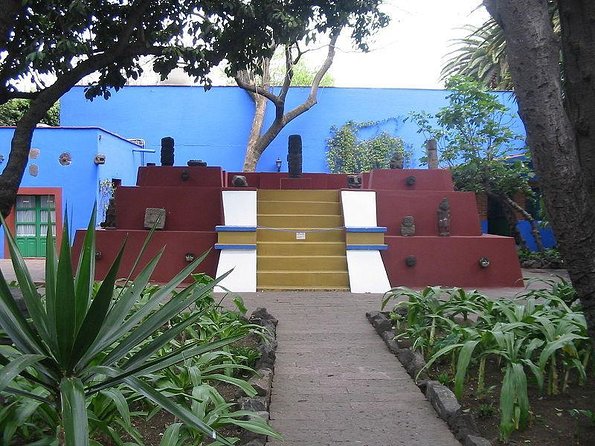
- Casa Azul reveals Frida’s private world: See her rooms, gardens, clothing, photographs, artwork, and medical corsets.
- Diego Rivera’s studio adds a useful second view: His modernist home and work space helps explain his art, politics, and interest in Mexican cultures.
- The group is capped at 10 people: You get a more personal guide experience than on a large coach tour.
- Neene is a particularly praised guide: Her English, warmth, and detailed explanations have earned strong praise, while Mar and Ciudadella have also been singled out for their art knowledge and enthusiasm.
- Uber transport is included between museums: Hotel pickup and return are not included, and you make your own way to the first museum.
- Arrive early and verify the address: A wrong address or late arrival can put your timed Casa Azul ticket at risk.
Why these two museums belong together
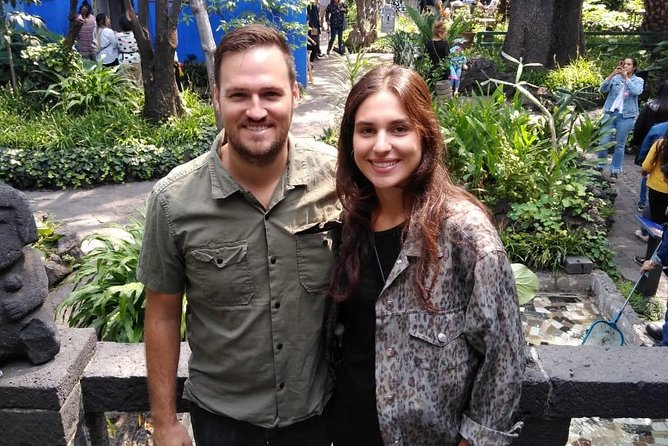
Frida Kahlo and Diego Rivera were not simply famous Mexican artists who happened to be married. Their work, politics, friendships, homes, and public images overlapped for decades. Seeing only one museum gives you part of the story. Seeing both in one outing makes the links easier to follow.
Casa Azul presents Frida through personal objects and domestic spaces. Rivera’s studio presents the couple through architecture, work habits, and the scale of their ambitions. The contrast is useful: Frida’s museum feels personal and inward, while Rivera’s studio points toward his large public murals and his fascination with Mexico’s Indigenous cultures.
You also get a guide to connect details that can be easy to miss on your own. A corset may look like an unusual display item until you understand its connection to Frida’s polio, the 1925 bus accident, and the physical pain that shaped her life and art. A studio building may seem like an interesting modern structure until its design begins to reflect the couple’s separate creative lives.
The tour is offered in English and includes a bilingual art guide. For an art museum visit, that matters. The buildings and objects can be appreciated without commentary, but the personal and artistic connections are where much of the meaning lies.
A few more Mexico City tours and experiences worth a look

Casa Azul: Frida Kahlo’s rooms, clothing, and courtyards
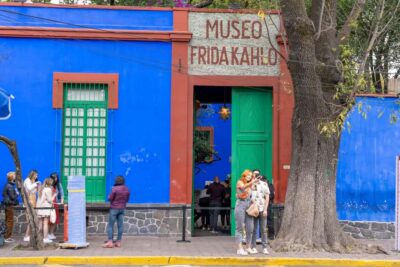
The tour begins at the Frida Kahlo Museum, commonly called Casa Azul because of its blue exterior. This was Frida’s former home, and the museum allows you to see the rooms connected to her daily life and work.
Expect about an hour inside. Your guide leads you through the house, courtyards, gardens, and fountains while explaining the forces that shaped Frida’s art. The visit focuses not only on her self-portraits, but also on her identity as a Mexican woman, her physical injuries, her personality, and her relationship with Rivera.
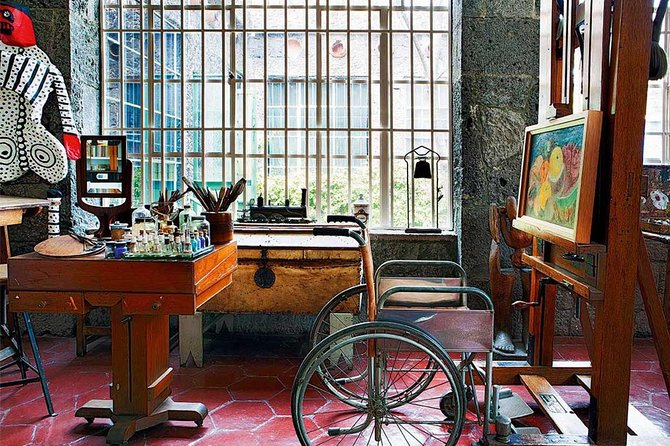
The personal material is what gives Casa Azul its force. You may see photographs, clothing, artwork, and the corsets Frida wore because of childhood polio and the severe injuries caused by the bus accident. These objects bring the physical side of her life into the same rooms as her paintings.
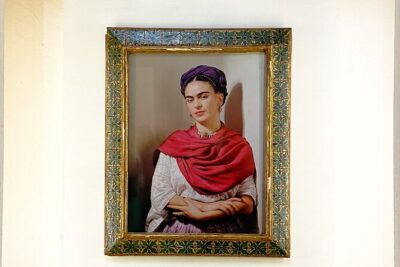
That combination can change how you look at the self-portraits. You are not simply examining a painted face. You are considering how Frida used appearance, dress, symbols, and the Mexican identity she presented to the world. Her home provides the setting for that story.
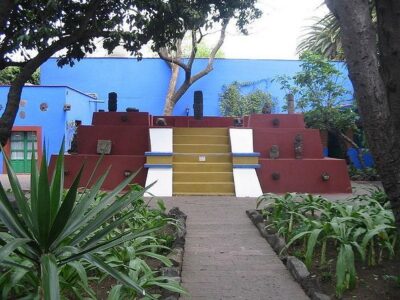
The courtyards and gardens offer a change of pace from the interior rooms. You can expect the guide to use these spaces as part of the story rather than treating them as a quick passage between galleries. Specific collections can vary during the year, so the exact display is not fixed.
Some rooms require a very quiet or restricted approach. Your guide will explain the rules before you enter. This is worth knowing in advance because Casa Azul is not the place for a running conversation or casual wandering with a large daypack.
Diego Rivera’s studio: architecture with a personal story
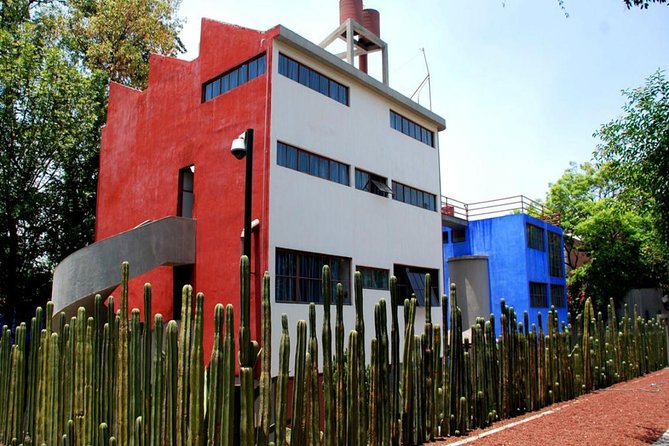
The second stop is the Museo Estudio Diego Rivera y Frida Kahlo in San Ángel. This site contains the linked homes and studios of Rivera and Kahlo, and the architecture gives the visit a different character from Casa Azul.
Plan on about an hour here. Your guide explains the modern design, the objects, and the artwork while placing Rivera’s work in the context of his strong interest in native Mexican cultures. The visit also returns to the couple’s love affair, difficult marriages, and influence on Mexico City and the wider art world.
The studio is valuable because it shows how a working artist’s environment can tell a story. At Casa Azul, you are close to Frida’s personal belongings and medical history. At Rivera’s studio, you get more of a sense of creative work, public identity, and the relationship between domestic life and artistic production.
The two stops are not identical, and that is a strength. If you want only Frida paintings, the second museum may feel less immediately familiar. If you want to understand the pair as artists and public figures, it fills an important gap.
One practical detail caused confusion for at least one booking: admission policies can vary by day, and the studio may be free on Sundays while Casa Azul still requires a paid ticket. The tour price covers the planned tickets, guide service, and transport, so the cost is not simply the sum of two entrance fees. You are also paying for the timed arrangement and the explanation at both museums.
A small group makes the art talk more personal
The maximum group size is 10 people. That is small enough for direct questions and a more relaxed exchange, especially if your group is interested in art, biography, or Mexican culture.
The strongest praise has gone to guides who make the story personal and easy to follow. Neene has been repeatedly singled out for her English, patience, warmth, and detailed understanding of both artists. She has answered many questions without rushing and has helped people who arrived with only a basic idea of Frida and Diego.
Mar has also been praised for her command of the artists’ lives and work. Ciudadella has been noted for her enthusiasm at both houses. Armando received praise for being friendly and informative, though the timing problems on one late arrival prevented the full planned visit.
Guide quality matters here more than it does on a simple sightseeing stop. Casa Azul contains enough objects to fill an independent visit, but without context you can miss why certain rooms, clothes, or photographs matter. A good guide helps you connect the object in front of you with Frida’s body, identity, relationships, and artistic choices.
The experience is not a private tour by default, but the small group gives it a personal feel. On some dates, ticket availability or changes may lead the operator to adjust the schedule or make the arrangement private. Do not assume that will happen for your booking.
Getting between the museums in Mexico City
Hotel pickup and return are not included. You meet your guide at the entrance of the Frida Kahlo Museum at Londres 247 in Coyoacán, then finish at Diego Rivera’s studio on Diego Rivera Street in San Ángel Inn.
The operator includes an Uber ride between the museums. This is a practical feature because you do not have to arrange the mid-tour transfer yourself, and the guide can help keep the group together. Traffic is still traffic, though. The ride can take longer than expected, and the order of the museums may change if ticket times require it.
For the first meeting, use the official address in your confirmation and voucher rather than relying only on an address copied from a booking app. The meeting point is the museum entrance, not a general point in Coyoacán. If you are using Uber, check the destination before you get in.
You should also plan your route to Casa Azul before the tour day. The operator recommends Uber, and the tour does not include a hotel transfer. If you are coming from the airport or another part of the city, build in a generous margin.
At the end, your guide can help arrange a taxi and suggest nearby places for lunch. That is useful because the tour finishes in San Ángel rather than returning you to Coyoacán. You can make the end of the outing part of a wider afternoon plan instead of treating the final museum as your last stop in the city.
A few more Mexico City tours and experiences worth a look


Timing problems and how to avoid them
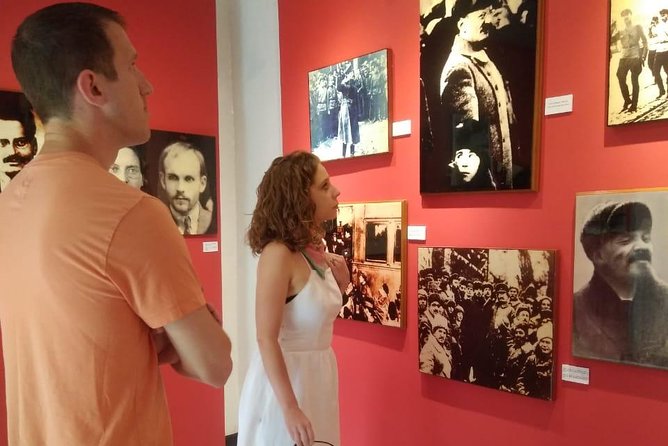
The advertised length is about two hours and 30 minutes. Each museum receives roughly an hour, with the remaining time used for the transfer and practical movement between the sites.
Timed admission is the key issue. If you arrive late, you may lose entry to the museum. In one difficult case, a wrong or unclear navigation address caused a late arrival, and the guide waited well beyond the normal tolerance period. The visitor nearly lost access to Casa Azul and could not complete the studio visit because another tour was scheduled afterward.
That situation offers a clear lesson: do not cut the arrival time close. Reach the first museum early, confirm that you are at the correct entrance, and keep your phone available for messages from the guide.
The itinerary order can change because tickets are tied to availability. You might visit Rivera’s studio first and Casa Azul second, rather than following the order described here. That is not necessarily a problem, but it can affect how long you wait between museums.
A past Sunday schedule also shows why you should read the timing closely. The group arrived early for a later Casa Azul entry and had waiting time before the ticketed visit. The operator offered alternatives such as a Coyoacán walk or coffee stop, but the timing still felt inefficient to the person who left. If you dislike waiting, ask about the exact ticket times before confirming or contact the operator as soon as you see an unusual schedule.
Bags, weather, and museum rules
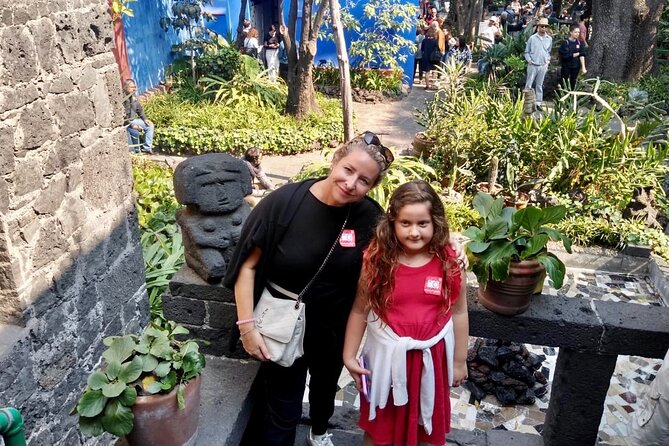
Casa Azul does not allow large bags or suitcases inside. Only a handbag or small, thin backpack is allowed through security. Pack lightly for this outing and leave bulky luggage at your accommodation.
The tour operates in all weather. You move between indoor rooms, courtyards, gardens, and a transfer by car, so dress for the forecast and wear practical shoes. The tour is near public transportation, but the included Uber is the main planned connection between the two museums.
Most people can take part, according to the tour information. Still, the house rules and timed entries make punctuality and attention important. You should be prepared to follow quiet-room restrictions and museum security checks.
Is $94 good value?
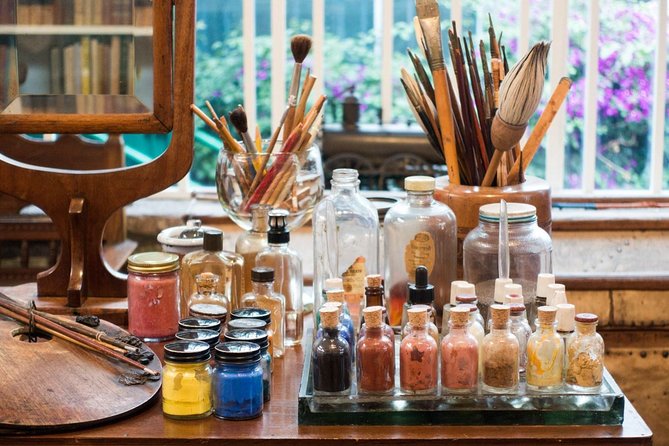
At $94 per person, this is not the cheapest way to see either museum. You are paying for more than admission, though. The price includes both entrance tickets, a bilingual guide, and Uber transportation between the sites.
The value is strongest if you want interpretation in English and prefer not to plan the transfer yourself. A guide can also make the personal material at Casa Azul easier to understand, and the small group allows questions that are not practical on a large group outing.
The value is weaker if you are happy to read on your own, already know Frida and Rivera well, or want to spend several unhurried hours at one museum. The tour is structured around timed entries, and the two-and-a-half-hour format leaves limited room for lingering.
Sunday pricing can also look confusing because some Mexican museums offer free admission on that day. The tour cost still includes the guide, Casa Azul ticket, planned arrangements, and transportation. The fact that Rivera’s studio may be free on Sundays does not mean the entire tour price is reduced.
This experience is non-refundable and cannot be changed for any reason. That makes it especially important to check your date, start time, meeting address, and number of participants before booking.
Who should book this Casa Azul and Rivera tour?
I would choose this tour if you have a strong interest in Frida Kahlo but want a fuller picture of the relationship and artistic setting around her. It also suits first-time visitors who prefer a guide to explain the personal objects rather than simply walk through the rooms.
It works well for couples, solo visitors, and friends who enjoy asking questions. The group cap of 10 helps keep the conversation manageable. English-speaking visitors should also appreciate having a bilingual art guide at both sites.
Families can consider it, but the quiet-room rules and art-focused explanations may suit older children better than very young ones. Anyone with a tight schedule should also think carefully about the fixed museum entries and Mexico City traffic.
You might skip it if you want total flexibility, dislike timed admission, or plan to visit only Casa Azul. In that case, arranging your own ticket and spending extra time in Coyoacán may fit better.
Final verdict: a strong art outing with strict timing
I recommend this tour for the right kind of visitor: someone who wants Casa Azul’s intimate objects and Rivera’s studio in one efficient outing, with a small group and an English-speaking guide.
The best part is the human explanation. Guides such as Neene, Mar, and Ciudadella have helped make the artists’ homes understandable, personal, and connected to Mexican culture. The included Uber is another useful touch.
The main risk is not the museums. It is the clock. Confirm the address, arrive early, pack a small bag, and accept that ticket availability may change the order. Do that, and $94 can be a fair price for two important museums linked by a thoughtful guide rather than a rushed self-guided visit.
FAQ
Where does the tour begin?
It begins at the entrance of the Frida Kahlo Museum at Londres 247, Del Carmen, Coyoacán, Mexico City.
Where does the tour end?
The tour ends at the Museo Casa Estudio Diego Rivera y Frida Kahlo in San Ángel Inn. The guide can help you arrange a taxi or suggest nearby lunch options.
How long does the experience last?
It lasts approximately two hours and 30 minutes. The visit includes about one hour at each museum, plus transportation and movement between the sites.
Is transportation included?
Yes. Transportation between the two museums is included, using Uber. Hotel pickup and hotel drop-off are not included.
Is the tour offered in English?
Yes. The experience is offered in English and includes a bilingual art guide.
How large is the group?
The group has a maximum of 10 participants.
What happens if I arrive late?
Late arrival can cause you to lose museum entry because the tickets are timed. Contact the operator immediately if you are delayed, but do not assume the tour can be extended.
Can I bring a large bag or suitcase?
No. Casa Azul does not allow large bags or suitcases. Only handbags or small, thin backpacks are allowed through security.
Can the museum order change?
Yes. The order may change depending on ticket availability. Casa Azul may also have occasional closures or delayed opening times, in which case an alternative may be provided if the delay exceeds one hour.
More Tickets in Mexico City

More Chapultepec & Museum Tours in Mexico City
More Frida Kahlo & Coyoacan Tours in Mexico City
More tours in Mexico City we've reviewed






Frida Kahlo & Coyoacan Tours, compared.
 ★ 4.5Xochimilco, Coyoacan and Frida Kahlo with Optional LunchFrom $349 hours (approx.)
 ★ 4.4CDMX: Xochimilco, Coyoacan, Frida Kahlo Museum & Murals TourFrom $89
 ★ 5.0Frida Kahlo VIP [Museum Tickets Included] Bike, Markets & ChurrosFrom $834 hours (approx.)
 ★ 5.0Frida Kahlo VIP [Museum Tickets Included] Walk, Markets & ChurrosFrom $833 to 4 hours (approx.)
 ★ 5.0EXCLUSIVE TOUR Frida Kahlo Museum – SMALL GROUPSFrom $862 hours (approx.)
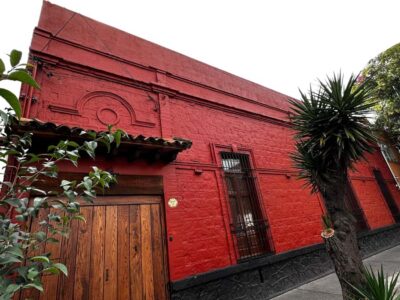 ★ 4.5Mexico City: Frida Kahlo Museum Entry Ticket w/Digital GuideFrom $34
 ★ 5.0Private City Tour in Frida Kahlo, Coyoacan, and XochimilcoFrom $1954 to 6 hours (approx.)
 ★ 5.0PREMIUM Frida Kahlo Museum and Xochimilco (Small Groups)From $806 to 7 hours (approx.)
The lists this tour appears in