
Reviewed · PUEBLA & CHOLULA DAY TRIPS
From Mexico City: Cholula Pyramid & Puebla Small Group Tour
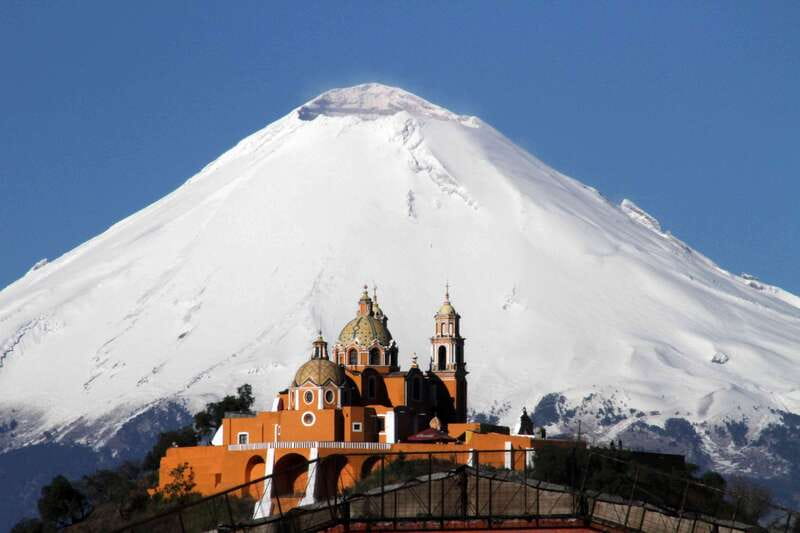
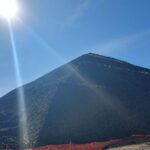
Cholula gives you one of Mexico’s great visual surprises: a huge ancient pyramid hidden beneath a hill, with Our Lady of Remedies Church perched on top. In one day, you also see Puebla’s cathedral, ornate churches, and the city’s famous sweets street.
In This Article
- Key points to know before booking
- Why Cholula makes the strongest first stop
- Santa María Tonantzintla and the art of blending traditions
- San Francisco Acatepec and a shorter church visit
- Puebla de los Ángeles, a colonial city with a big afternoon
- Rosario Chapel, if access is available
- Calle de los Dulces and the edible finish
- What the $192 price includes
- Meeting point, timing, and the walking level
- Who will get the most from this day
- Should you book this Cholula and Puebla tour?
- FAQ
- How long does the tour last?
- Where is the meeting point?
- What languages are available?
- How many people are in the group?
- Is transportation included?
- Is entry to the Cholula Pyramid included?
- Are meals and drinks included?
- Can I cancel for a full refund?
I like the mix of major sights and smaller stops, especially Santa María Tonantzintla, where Indigenous faces and symbols fill a Catholic interior. I also like the small-group limit of 15, plus guides such as Javier, Alberto, and Francisco, who have been praised for care, clear explanations, and safe driving.
The catch is the pace. This is a full 10-hour outing with stairs, walking, traffic, and several stops. If walking is difficult, or if you prefer lingering in one city, this may feel like too much.
Key points to know before booking
- Cholula’s pyramid is a layered surprise: You visit the archaeological site, museum, and church above it.
- Tonantzintla offers unusual Mexican art: Indigenous imagery and Catholic symbols share the same space.
- Puebla adds grand colonial sights: The cathedral and Rosario Chapel give the afternoon a very different tone.
- The tour leaves early and returns around 6 PM: Traffic between Mexico City, Cholula, and Puebla can affect the schedule.
- Small groups keep the day manageable: The maximum group size is 15 people.
- You pay for transport, guiding, and admissions: Meals, drinks, and personal spending are extra.
Why Cholula makes the strongest first stop
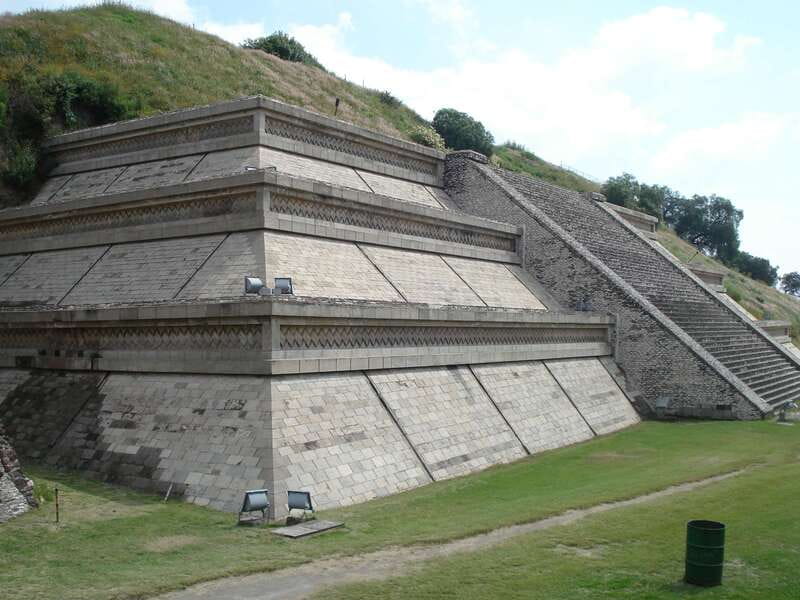
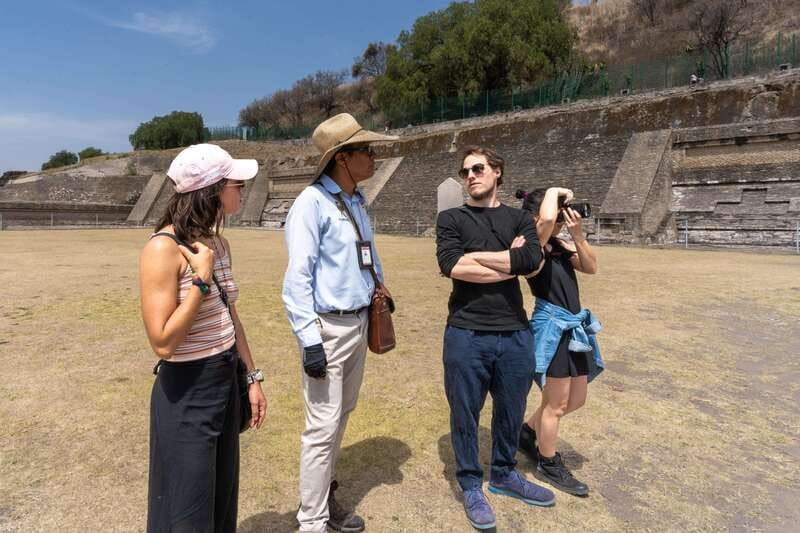
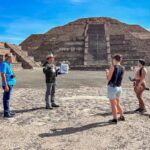
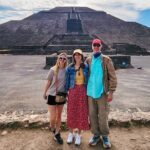
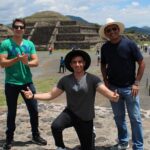
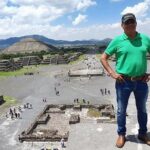
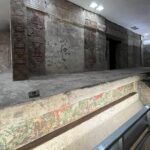
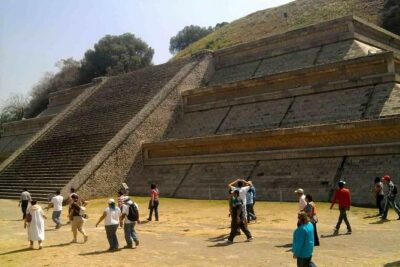
The Great Pyramid of Cholula is not the kind of monument you simply walk up to and view from a distance. Much of its bulk is covered by earth and vegetation, so the first impression can be misleading. Your local guide helps explain what you are seeing at the archaeological site, then takes you through the museum before you climb toward the church above.
The pyramid was built in stages, and the site gives you a sense of that layered construction. You do not need to be an archaeology specialist to enjoy it. The appeal is the clash of views: an ancient ceremonial center below, a Catholic church above, and the volcanoes Popocatépetl and Iztaccíhuatl forming a dramatic backdrop when conditions allow.
The route includes an ascent to Our Lady of Remedies Church. There is no elevator, so you need to be comfortable with stairs and an uphill approach. That detail matters more than it may sound, particularly after a morning of walking. Wear practical shoes and save your energy for the full day.
A local Cholula guide joins this portion of the visit. Alberto has received especially strong praise for his clear explanations and his ability to make the pyramid visit more meaningful. Guide assignments can change, but the structure of the tour gives you focused help at the archaeological site rather than leaving you to decode the ruins alone.
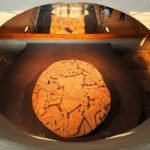
The museum adds useful context. It helps connect the visible remains with the civilizations and religious practices that shaped Cholula. You should expect an interpretive visit rather than a long archaeological seminar, since the day still has several more destinations.
A few more Mexico City tours and experiences worth a look

Santa María Tonantzintla and the art of blending traditions
Santa María Tonantzintla is one of the most distinctive stops on the route. From the outside, it may look like a small church. Inside, the decoration becomes the main event.
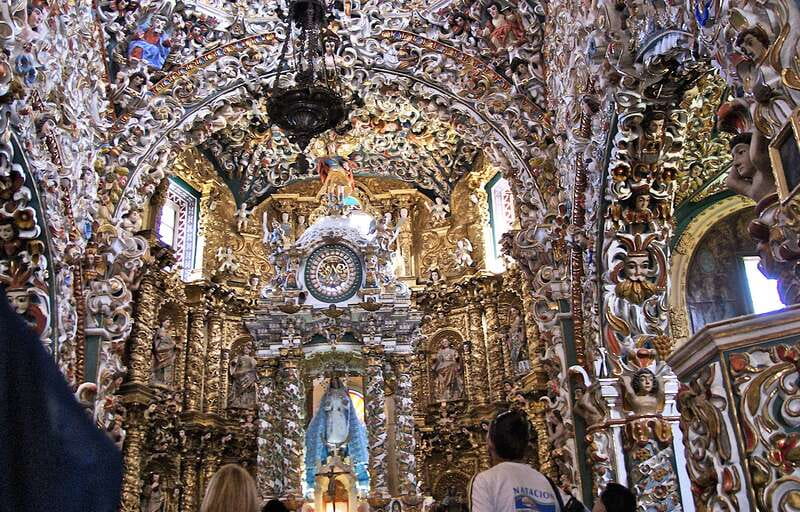
The interior combines Catholic figures with Indigenous imagery. The tour explains how the people of Tonantzintla wanted to represent Tlaloc, the god of rain, in the dome of the sky chapel. Look closely at the carved faces. They are not simply European-style angels. The interpretation presented here identifies them as Indigenous people who died and were reincarnated in the sky.
That idea gives the church more meaning than a quick photo stop. You are seeing local beliefs expressed within a Catholic setting, not a plain replacement of one tradition by another. The carved details reward patience, so listen closely and take time to look upward.
This is also where a good guide matters. The church’s decoration can seem crowded or confusing without explanation. With context, the many faces, figures, and motifs become a record of how local communities shaped religious art in their own image.
Photography and access conditions can vary, so follow the guide’s instructions. The visit is not about racing through the building. It is about noticing small details that are easy to miss when you only see the church from the doorway.
San Francisco Acatepec and a shorter church visit
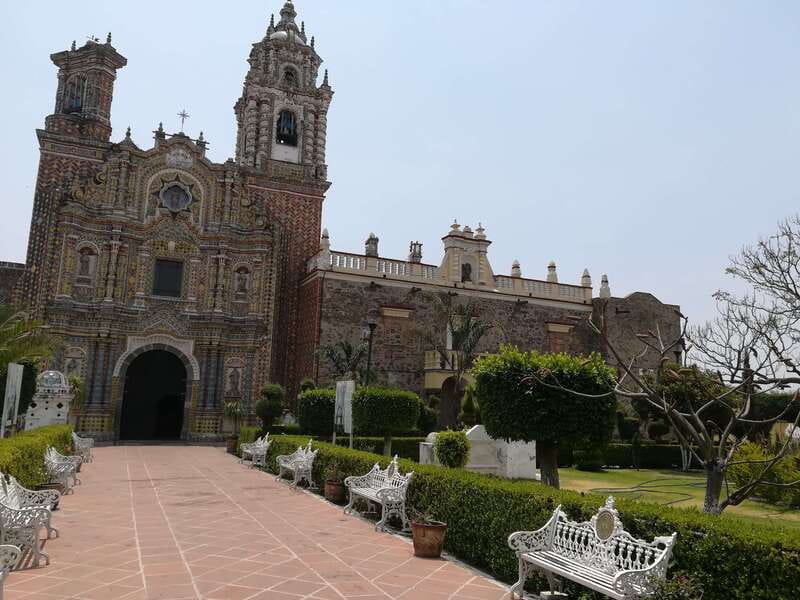
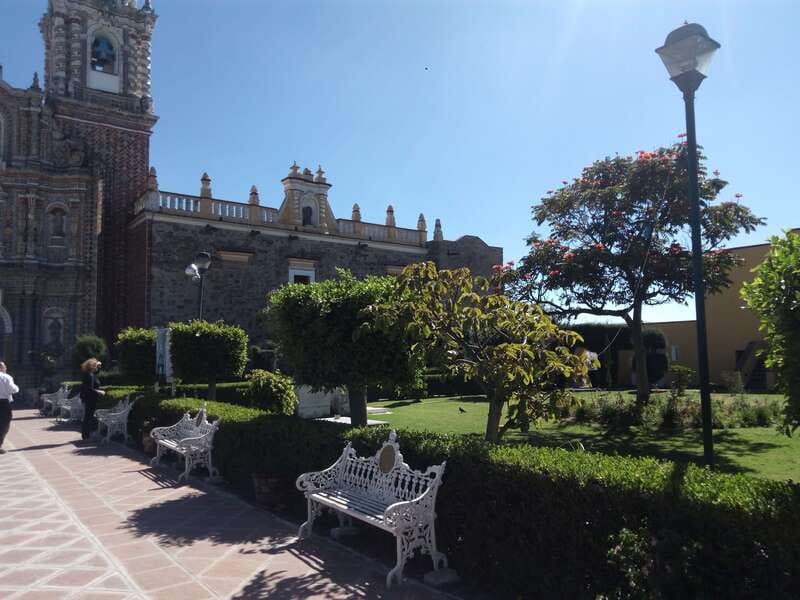
The next church, San Francisco Acatepec, provides another look at Puebla State’s striking religious architecture. The supplied itinerary describes it as beautiful and unforgettable, but gives fewer specific details about the interior than it does for Tonantzintla.
That makes the stop best understood as a visual contrast. Tonantzintla rewards close attention to Indigenous Catholic decoration and symbolic detail. Acatepec gives you another ornate church experience before the grander urban sights of Puebla.
The exact amount of time at each church can depend on traffic, opening conditions, and the group’s pace. That is one reason this tour works better for someone who wants a broad introduction than for someone hoping to study every building at length.
Puebla de los Ángeles, a colonial city with a big afternoon
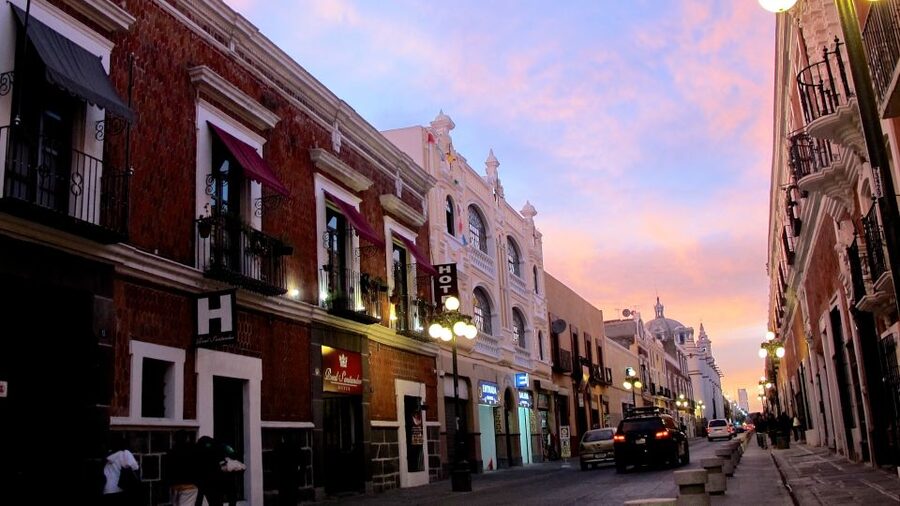
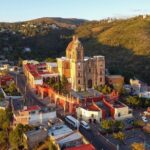
Puebla de los Ángeles changes the mood of the day. After the archaeological site and village churches, you move into a city known for its colonial buildings and formal religious architecture.
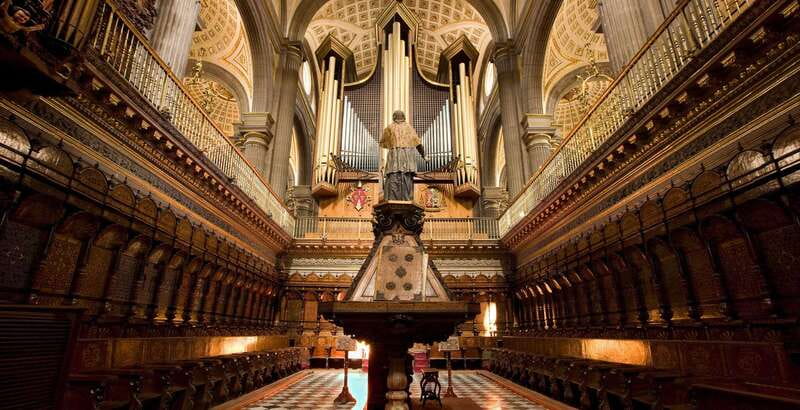
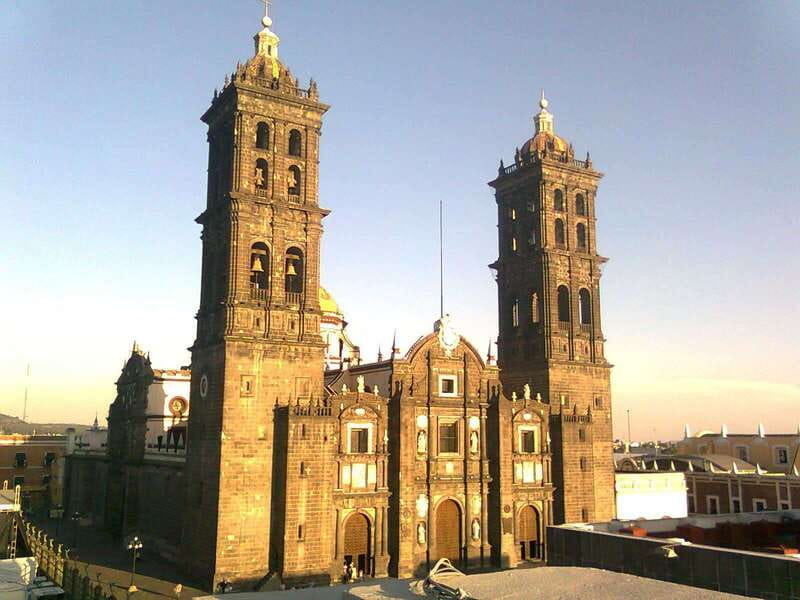
The route includes Puebla Cathedral, a cross-shaped building with five naves. The central altar is octagonal, while the other four altars point toward the compass directions. Those details are easy to miss if you only take a quick look from the main aisle, so listen for the guide’s explanation and look at how the interior is organized.
The bell towers are described as the largest in Mexico. Even if you do not spend long inside the cathedral, the exterior gives you a strong sense of Puebla’s scale and importance. This is one of the stops where a city guide can save time by pointing out what deserves your attention first.
Puebla is also protected by views toward Popocatépetl and Iztaccíhuatl. The volcanoes are not guaranteed to be visible, since weather and haze control the view, but their presence adds a powerful geographic frame to the city when the air is clear.
Guides Francisco and Javier have been praised for keeping the day organized and for paying attention to comfort and safety. Francisco, in particular, has been described as a careful driver. That is useful on a long road day, especially when Mexico City traffic or an accident slows the journey.
Traffic is the main practical uncertainty. One tour group lost time because of a traffic accident, and the guide extended the outing so the group could still have a fuller experience. You should not count on extra time, but it shows why the schedule may shift.
Rosario Chapel, if access is available
The Capilla del Rosario is listed as a visit if available. That wording is important. You should treat it as a possible highlight, not a guaranteed stop.
When open and accessible, the chapel offers an ornate interior centered on a statue of the Virgin of the Rosary. Saints, angels, and martyrs surround the figure, creating a heavily decorated space that contrasts with the larger scale of Puebla Cathedral.
The chapel was once considered one of the eight wonders of the world. That historical reputation helps explain why it is included, but the real reason to visit is the concentration of decoration inside a relatively focused religious space.
If the chapel cannot be visited, the rest of the Puebla program still includes the cathedral, colonial streets, and Calle de los Dulces. Do not book this outing solely for Rosario Chapel, since availability is not promised.
Other city tours we've reviewed in Mexico City


Calle de los Dulces and the edible finish
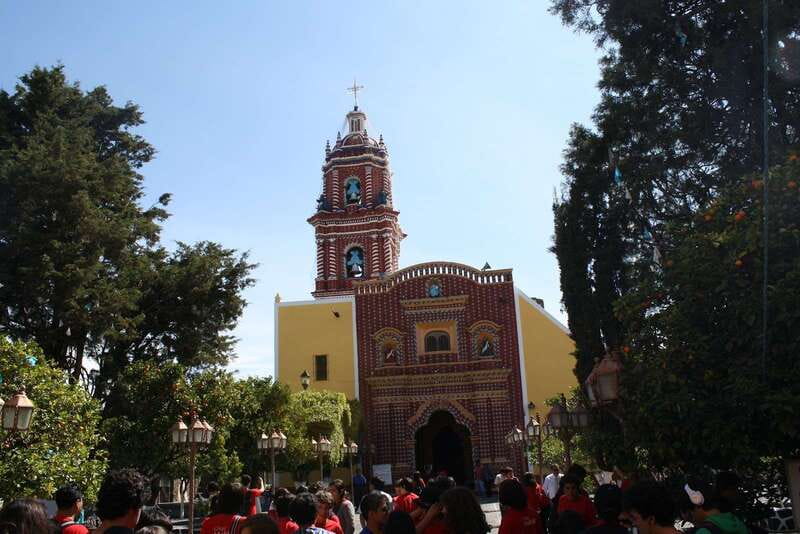
The final Puebla stop is Calle de los Dulces, the city’s well-known sweets street. This is a pleasant way to end the urban portion of the tour because it gives you something more local and informal after the monumental churches.
You can see the typical desserts associated with Puebla and decide what appeals to you. Meals and drinks are not included, and personal purchases are your responsibility, so bring some spending money if you want to buy treats.
The street also gives you a chance to browse rather than simply listen. You are not only looking at architecture. You are getting a small taste of Puebla’s food culture and taking home something that fits easily in a bag.
Because this comes late in a long day, you may appreciate the relaxed pace. It is not a substitute for a full food tour, but it is a useful introduction to a local specialty and a simple way to finish before returning to Mexico City.
What the $192 price includes
At $192 per person, this is not a bargain-basement excursion. The value comes from combining transport between Mexico City, Cholula, and Puebla with a bilingual guide, entry to the Cholula pyramid, and a tightly arranged day of sightseeing.
You are paying for convenience as much as admission. Planning these stops independently would require arranging transport, managing several locations, and working out how to fit Cholula and Puebla into one day. This tour handles that structure for you.
The price does not include meals, drinks, personal expenses, or optional activities. Budget separately for food and sweets on Calle de los Dulces. Since the day lasts about 10 hours, you should not assume that included admissions cover every possible site or activity.
The small-group limit of 15 helps justify the cost. You are not being moved through the day as part of a huge crowd, and the guide can usually communicate more directly with the group. Past guide feedback has repeatedly emphasized organization, friendliness, safety, and personal attention.
Still, value depends on your touring style. If you want independent time, a slow lunch, or long museum visits, you may find the fixed schedule restrictive. If you want to see several important places without handling the transport yourself, the price is easier to defend.
Meeting point, timing, and the walking level
The meeting point is the Maria Isabel Sheraton Hotel, next to the roundabout of the Angel of Independence in Mexico City. Confirm the departure time when you book, since the activity page says to check availability for starting times.
The day ends with a return to Mexico City at about 6 PM. That is the stated plan, but road conditions can affect the exact timing. Keep important evening plans flexible, especially if you have a dinner reservation or another fixed activity.
Walking is a real part of the tour. Cholula includes the ascent to the church on the pyramid, and Puebla involves exploring city sights on foot. One past booking specifically noted that the excursion may not suit seniors, while another advised choosing a different outing if walking is not your thing.
This is not presented as an accessible tour. The absence of an elevator at the pyramid is clearly stated, and the combination of stairs, city walking, and a long day can be tiring. Ask the provider about your particular mobility needs before booking if this is a concern.
The tour is offered in English and Spanish. The guide may be assigned to different sections of the day, as the Cholula and Puebla portions have sometimes been handled by separate guides. Names associated with the experience include Javier, Alberto, Francisco, and Ulysses, but you should not assume a particular guide will lead your departure.
Free cancellation is available up to 24 hours in advance for a full refund, and you can reserve now and pay later. Those terms make the booking less rigid, but you still need to check the current availability and conditions at the time of purchase.
Who will get the most from this day
I would choose this tour if you have limited time in Mexico City and want to add both Cholula and Puebla without changing hotels. It gives you archaeology, religious art, colonial architecture, mountain views, and sweets in one organized outing.
It suits first-time visitors who value interpretation. The pyramid and churches are more rewarding when someone explains the connection between Indigenous traditions and Catholic forms. The guides associated with the tour have also been praised for patience, safety, and organization, all useful qualities on a long excursion.
It is a good fit for active couples, families with older children, and small groups who enjoy a full sightseeing day. The group size of up to 15 is small enough to feel more personal than a large coach outing, though it is still a group tour with a fixed route.
I would think twice if you are traveling with someone who tires easily, dislikes stairs, or needs a slow pace. I would also skip it if Puebla deserves several days of your trip. This outing introduces the city, but it cannot give you the time of a dedicated Puebla stay.
Should you book this Cholula and Puebla tour?
Book it if you want a well-packed day with dependable transport, bilingual guidance, and a strong range of sights. The best parts are the pyramid topped by a church, Tonantzintla’s Indigenous Catholic art, and Puebla’s cathedral and sweets street.
Before paying, accept three conditions: the day is long, the pyramid has no elevator, and Rosario Chapel is included only if available. If those points suit you, $192 buys a practical route through two of Puebla State’s most memorable destinations, with guides who have earned praise for being caring, organized, and safety-minded.
FAQ
How long does the tour last?
The tour lasts 10 hours. The stated return to Mexico City is around 6 PM.
Where is the meeting point?
You meet at the Maria Isabel Sheraton Hotel, next to the roundabout of the Angel of Independence in Mexico City.
What languages are available?
The tour is offered with a live guide in English or Spanish.
How many people are in the group?
The small group is limited to 15 participants.
Is transportation included?
Yes. Transport is included in the tour price.
Is entry to the Cholula Pyramid included?
Yes. Admission to the Pyramid of Cholula is included.
Are meals and drinks included?
No. Meals and drinks are not included, so you need to pay for those separately.
Can I cancel for a full refund?
Yes. You can cancel up to 24 hours in advance for a full refund.
More City Tours in Mexico City
More Puebla & Cholula Day Trips in Mexico City
More tours in Mexico City we've reviewed


Puebla & Cholula Day Trips, compared.
 ★ 4.5Puebla, Cholula & Tonantzintla Day Trip with Optional LunchFrom $4911 hours (approx.)
 ★ 4.3From Mexico City: Puebla, Cholula and Tonantzintla Day TripFrom $89
 ★ 4.0Puebla and Cholula Day Trip from Mexico CityFrom $5410 to 12 hours (approx.)
 ★ 4.2From Mexico City: Puebla and Cholula Day TourFrom $6812 hours
 ★ 4.56-Night Best of Central Mexico Tour: Teotihuacan Pyramids, Taxco, Cuernavaca and Puebla from Mexico CityFrom $6857 days (approx.)
 ★ 4.0Tour to Puebla and CholulaFrom $518 hours (approx.)
 ★ 4.6From Mexico City: One-day adventure: Puebla, Cholula, and TonantzintlaFrom $85
 ★ 4.0Small Group: Discover Puebla and Cholula from Mexico CityFrom $8911 hours (approx.)
The lists this tour appears in