
Reviewed · BUS TOURS & PASSES
Mexico City: Hop-on Hop-off Bus Tour
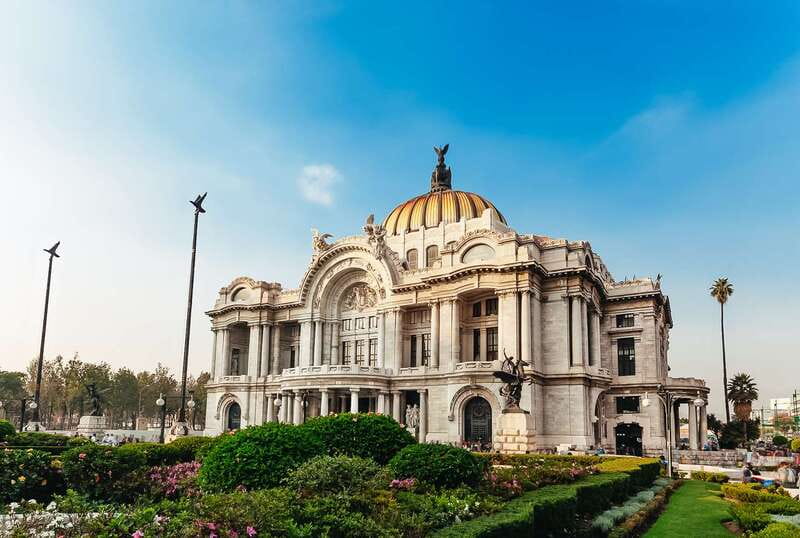
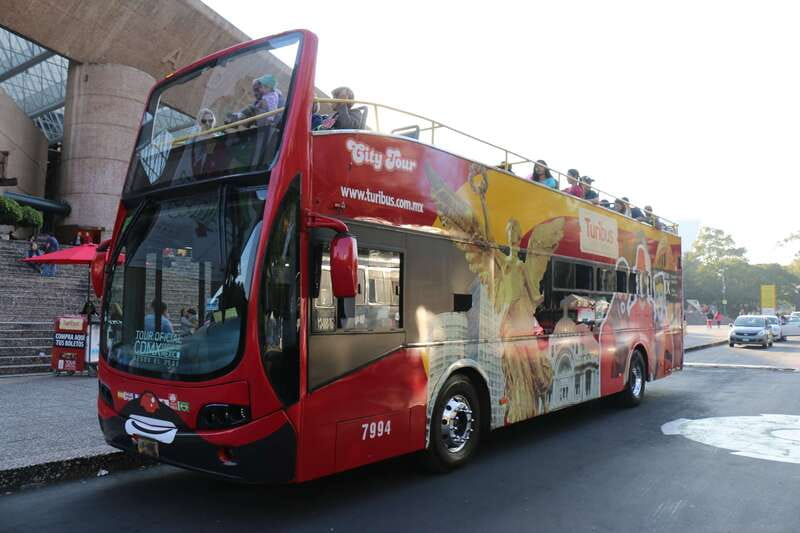
Mexico City’s Turibus is both a sightseeing ride and a practical way to cover a huge city. For about $21 per person, you can use four routes over one or two days, moving between the Historic Downtown, Polanco, southern neighborhoods, and the Basilica of Guadalupe without arranging a new taxi for every stop.
In This Article
- Key points to know before boarding
- What the $21 Turibus pass really gives you
- Historic Downtown route: the best first ride
- Polanco route: museums, shopping, and modern Mexico City
- South route: Coyoacán, Frida Kahlo, and UNAM
- Basilica route: a short ride with a strong focus
- Audio commentary: useful, but bring your own headphones
- Riding upstairs: great views, real sun
- How to fit the routes into one or two days
- Who gets the most from this tour?
- Booking details that matter
- Should you book the Mexico City Turibus?
- FAQ
- How much does the Mexico City Turibus tour cost?
- How many routes are included?
- Can I board at any stop?
- What languages are available on the audio guide?
- What are the operating hours?
- Is the bus wheelchair accessible?
- Are food, drinks, or restrooms included?
I like the freedom to hop off at places such as the Frida Kahlo Museum, Zócalo, Museo Soumaya, or the Basilica. I also like using the first circuit as a moving orientation tour, so you can mark the places worth a longer visit. The main catch is Mexico City traffic, which can turn a short ride into a long one, and the Spanish announcements may overpower the audio commentary in your headphones.
Key points to know before boarding

- Four routes cover very different parts of the city: Historic Downtown, Polanco, South, and Basilica.
- The Historic Downtown route runs most often, roughly every 30 minutes from 9 am to 7 pm.
- The South route needs careful planning: traffic can make the trip to Coyoacán and the Frida Kahlo Museum take much longer than expected.
- Bring your own earphones: the supplied ones may be poor, and some buses have faulty headphone connections.
- A two-day pass is the better choice if you want to ride all four routes and still get off to visit museums.
- The open-top upper deck is fun but exposed: afternoon sun can be fierce, and metal seats may become uncomfortably hot.
What the $21 Turibus pass really gives you
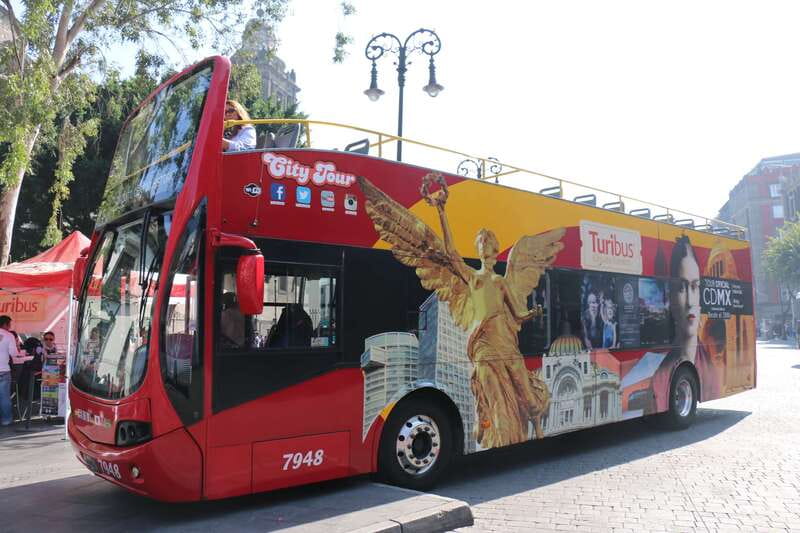
At first glance, this looks like a standard city sightseeing bus. In practice, it can also serve as transportation between several widely separated parts of Mexico City. That is where the price makes sense.
A one-day ticket lets you use all four routes with a single bracelet. A two-day ticket gives you more breathing room, and I think it is the wiser buy if museums, shopping, and Coyoacán are all on your list. You can ride one full circuit to get oriented, then use the bus as a shuttle later.
This is not a fast way to cross town. Mexico City traffic is part of the deal. Still, the bus may be cheaper and less tiring than a series of taxis or ride-hailing trips, especially if you are new to the city and want a clear route between major sights.
You may board at any listed stop by showing a printed or electronic voucher. Stop signs and pickup details can be less clear than expected, so check your route carefully before walking away from a stop. One stop has been reported as moved without clear notice, and the Frida Kahlo Museum stop may leave you about 75 meters from the entrance rather than directly at the door.
A few more Mexico City tours and experiences worth a look


Historic Downtown route: the best first ride
The red Historic Downtown route is the natural starting point. It runs daily from 9 am to 7 pm, with buses roughly every 30 minutes. Its 19 stops connect the center with Reforma, Condesa, Chapultepec, and several major museums.
The route includes:
- Auditorio
- Museo del Arte Moderno
- Condesa
- Plaza Madrid and Cibeles
- Casa Lamm
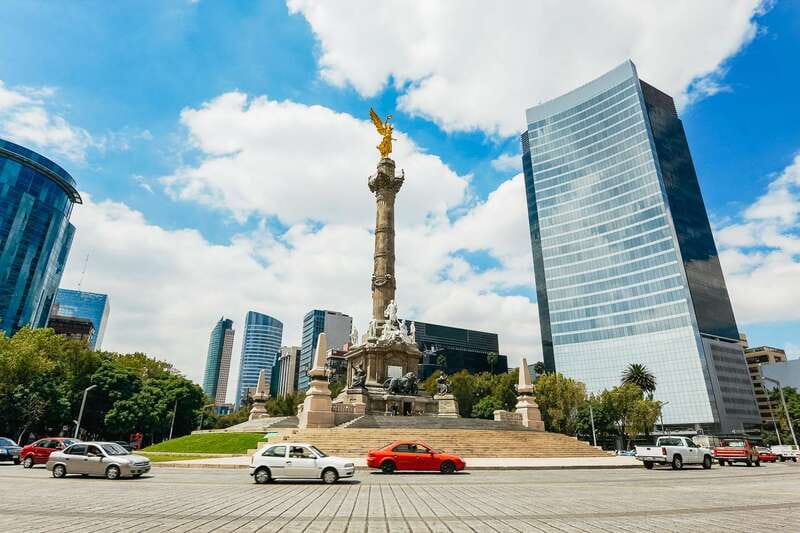
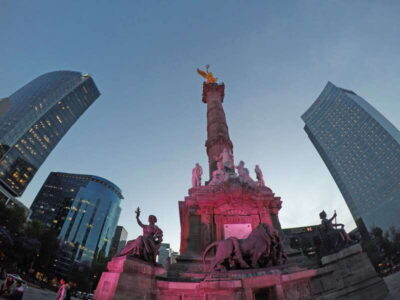
- Monumento a la Independencia
- Reforma 222
- Museo de Cera and Ripley’s
- Glorieta a Colón
- Hemiciclo a Juárez
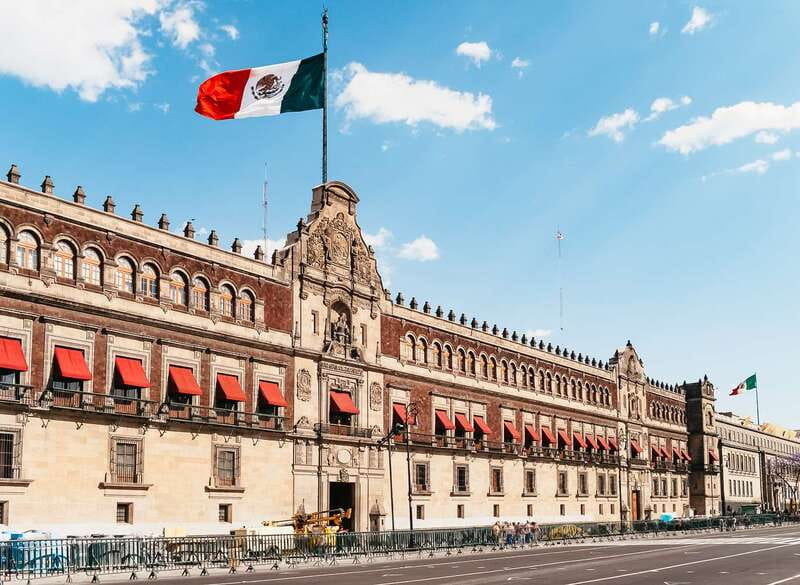
- Zócalo
- Plaza Manuel Tolsá
- Museo Franz Mayer
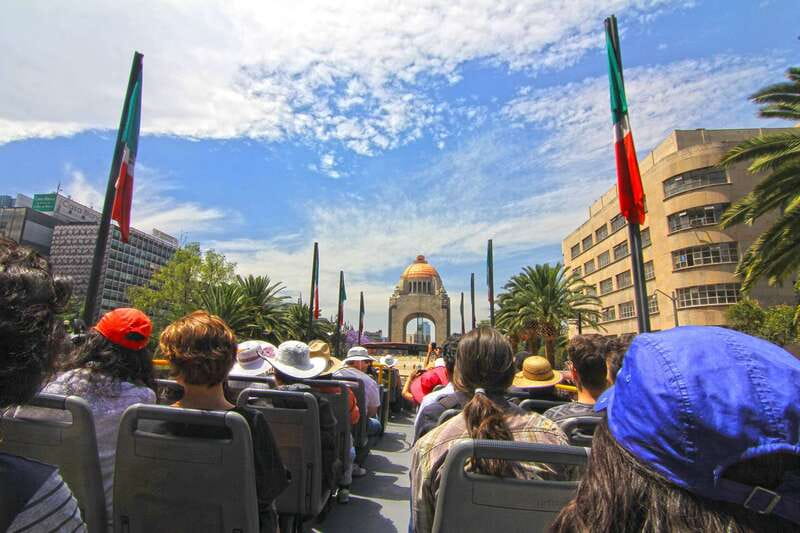
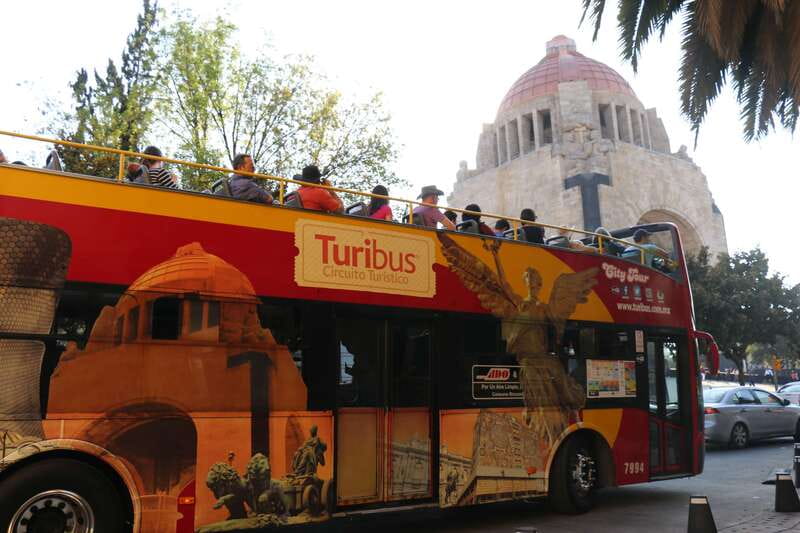
- Monumento a la Revolución
- Museo de San Carlos
- Reforma and Insurgentes
- Reforma and Río de la Plata
- Museo Nacional de Antropología
The most useful section links the Zócalo with the main Reforma corridor. Get off at Zócalo to explore Mexico City’s central plaza and surrounding streets, then use Plaza Manuel Tolsá or Museo Franz Mayer for access to more historic sights. The Monumento a la Revolución and Museo de San Carlos give the circuit a useful mix of public monuments and museums.
For a first look, stay on the upper deck and treat the route as a moving map. You will see where Condesa, Reforma, Chapultepec, and the center sit in relation to one another. Then return to the stops that interest you most.
This route is also the safest bet if you have only a few hours. It runs more often than the other circuits, and the stops are generally easy to locate. Allow extra time during busy periods, since traffic can stretch the ride well beyond the advertised schedule.
Polanco route: museums, shopping, and modern Mexico City
The Polanco route is shorter, with seven stops, but it serves a very different side of the capital. Buses leave Auditorio at approximately 10 am, 11:30 am, 1 pm, 2:30 pm, 4 pm, and 5:30 pm.
Stops include Auditorio, Arquímedes and Campos Elíseos, Masaryk and Moliere, Centro Comercial Antara, Museo Soumaya, Hipódromo and Granja Las Américas, and Museo del Papalote.
This is the route for polished avenues, shopping, newer architecture, and major cultural attractions. Museo Soumaya is the key stop for many people, while Antara serves those interested in the city’s high-end retail side. Museo del Papalote adds a family-friendly option.
The limited departures matter. You cannot treat this line like the Downtown route, where another bus is usually due within half an hour. Write down the departure time before getting off, and give yourself a generous margin. Missing a bus can cost much of your afternoon.
South route: Coyoacán, Frida Kahlo, and UNAM
The South route is the most rewarding and the most demanding. It runs daily from about 11 am to 7 pm, with service listed at roughly hourly to every 30 minutes depending on the section and operating conditions.
Its 19 stops include Fuente de Cibeles, Mercado Roma, World Trade Center, Torre Manacar, Museo Frida Kahlo, Centro Histórico de Coyoacán, Avenida de la Paz, Centro Cultural San Ángel, Estadio de Ciudad Universitaria, Jardín Botánico, Centro Comercial Perisur, KidZania Cuicuilco, Rectoría de la UNAM, Plaza Oasis Coyoacán, Mercado Roma Coyoacán, Fonart, and repeat stops around Coyoacán and the Frida Kahlo Museum.
This circuit takes you into the city’s bohemian southern districts, where old neighborhoods, public art, university buildings, markets, and museums replace the grand central avenues. Coyoacán is the main reason to ride it. You can get off near the historic center, browse the markets, and visit the Frida Kahlo Museum.
Plan carefully. The ride to the Frida Kahlo area can take as long as two hours in heavy traffic. That is not a minor delay if you have timed museum tickets or a tight schedule. I would use the South route early in the day, then do the Historic Downtown route later, or reserve a full day if you want proper time in Coyoacán.
The UNAM stops add another reason to choose this route. Estadio de Ciudad Universitaria, the botanical garden, and the Rectoría area show a more academic and spacious side of Mexico City. Perisur and KidZania Cuicuilco make the route more useful for families, though you will need to check your return timing before getting off.
Basilica route: a short ride with a strong focus
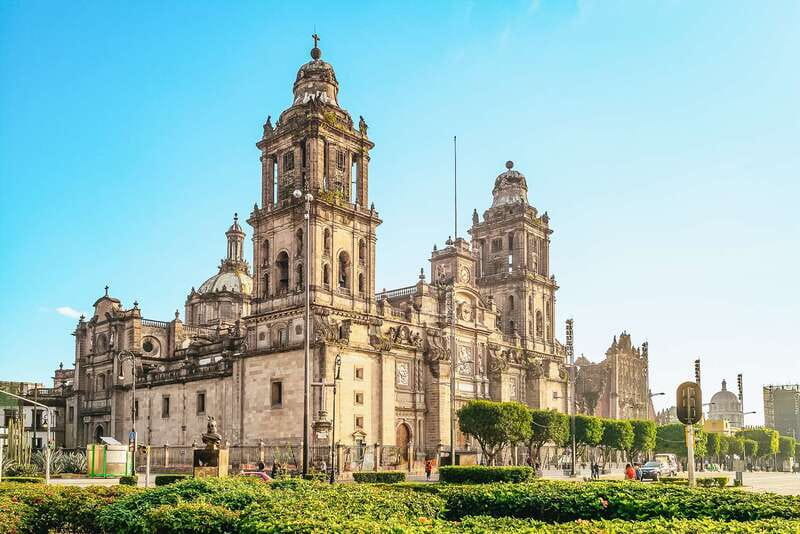
The Basilica route connects Zócalo, Garibaldi, the Basilica of Guadalupe, and Palacio de los Condes de Miravalle. Departures from Zócalo are scheduled at 10 am, 11:30 am, 1 pm, 2:30 pm, 4 pm, and 5:30 pm.
This is the route to choose if the Basilica of Guadalupe is high on your list. It traces a path through pre-Hispanic, colonial, and modern chapters of the capital, with the religious center as its main destination. Garibaldi adds a very different stop, associated with mariachi music and Mexican popular culture.
The route is less useful for casual hop-on hopping because departures are limited. Check the return schedule before leaving the bus. You should also allow time for traffic and avoid assuming that the next bus will appear soon.
Other city tours we've reviewed in Mexico City





Audio commentary: useful, but bring your own headphones
The digital audio system offers English, Spanish, German, French, Italian, Chinese, Japanese, Portuguese, and Russian channels. There is also a special children’s channel.
The commentary gives you context as the city passes by, which is helpful on a first ride. You can learn about landmarks instead of simply watching traffic and buildings. The system also announces upcoming stops and route changes, so it has a practical purpose beyond sightseeing.
The sound quality is the weak point. On some buses, the Spanish announcement played through the main speakers is so loud that it drowns out the English recording in your earphones. Street noise makes this worse, and a few passengers have found that the commentary cuts off before an explanation is complete.
Bring your own standard earphones if possible. Ask for them when you board if none are offered. Avoid sitting directly beside the overhead speakers, and test the headphone jack before settling in. Some buses have connections that do not work, so moving seats may be necessary.
The onboard narration is recorded, but occasional staff-led rides can feel more personal. Guides named Estefania, Cristian, Diane, Lillie, and Ellie have been praised for being friendly and clear. Do not count on a live guide for every departure, though. The audio system is the regular feature.
Riding upstairs: great views, real sun
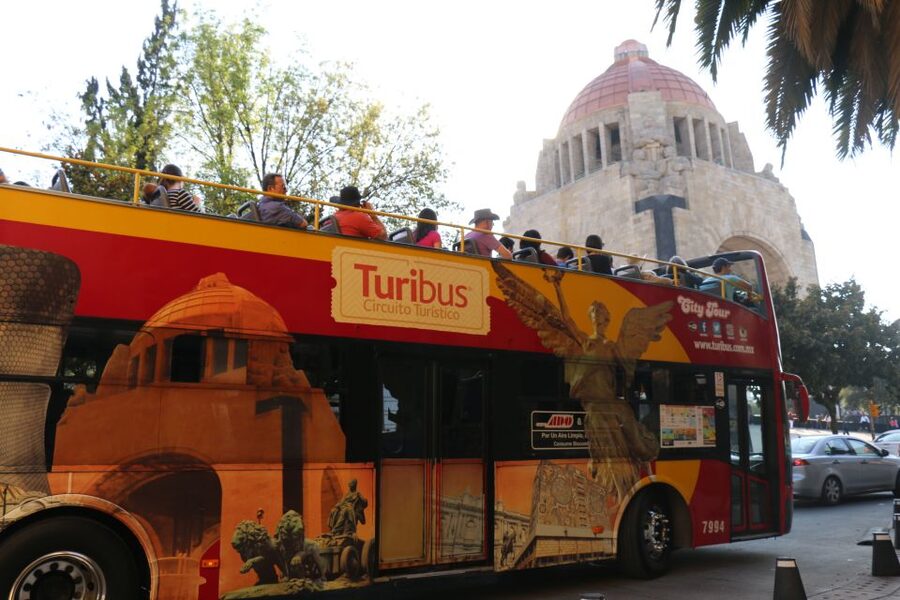
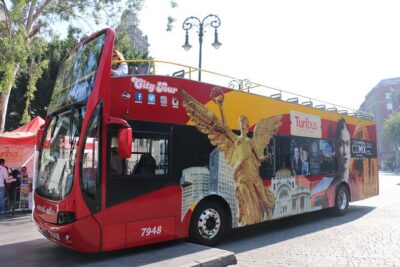
The double-decker buses are open-top, with an enclosed lower level and an upper deck exposed to the weather. The upper deck gives you the best view of monuments, museums, avenues, and street life. It is also the more enjoyable place to sit in the cooler morning or late afternoon.
Mexico City’s high altitude and strong sun make the upper deck less pleasant at midday, especially in warmer months. Metal seats can become hot enough to make sitting uncomfortable. Bring water, use sun protection, and consider moving downstairs if the heat becomes too much.
There are no restrooms onboard. Plan bathroom stops around museums, restaurants, or major attractions rather than expecting to stay on the bus for several hours without a break.
The buses are wheelchair accessible, though the open-top design and busy stops may require extra patience when boarding and changing routes. Children up to age three ride free, but must sit on a parent’s lap.
How to fit the routes into one or two days
Trying to complete all four routes in one day is possible only if you stay onboard for most of the time. Once you add museum visits, meals, and traffic, the schedule becomes tight.
For one day, I would choose one of these plans:
- Ride the Historic Downtown route in the morning, get off around Zócalo, then return to Reforma or Chapultepec.
- Take the South route first if Coyoacán and the Frida Kahlo Museum matter most, then use the Downtown route for an evening overview.
- Choose the Basilica route for a focused religious and cultural visit, then spend the remaining time in the center.
For two days, give the Historic Downtown route its own half-day or day, then combine Polanco and the South route according to your priorities. Use the second day to get off at museums rather than spending the entire time completing circuits.
The route changes are not always obvious. Ask staff where to transfer, and note the approximate time of the next departure before you leave the bus. Traffic can alter the timetable, so treat the stated frequency as a guide, not a promise.
Who gets the most from this tour?
I would recommend the Turibus to first-time visitors, families, older sightseers, and anyone who wants a broad introduction without walking all day. It is especially useful if you are staying near Reforma or Polanco, where several stops are within walking distance of hotels.
It also suits people who want to scout museums and neighborhoods before returning independently. You can pass the National Museum of Anthropology, Museo Soumaya, Frida Kahlo Museum, and several central museums, then decide which deserve more of your limited sightseeing time.
I would be more cautious if you dislike slow transport or have a strict appointment schedule. The South route can lose hours in traffic, and the less frequent Polanco and Basilica services demand planning. This is a sightseeing bus, not an express shuttle.
The overall rating is about 4 out of 5 from more than 1,000 reviews, which fits the experience: strong value and useful coverage, with recurring problems around audio, signage, and traffic.
Booking details that matter
You can cancel up to 24 hours before the activity for a full refund, and the reserve-now, pay-later option keeps your plans flexible. The ticket is valid for one or two days, depending on the option selected.
Service is listed daily, but exact route availability and starting times should be checked before you go. The operator aims to follow its timetable, yet traffic and other city conditions can affect frequency.
The activity is provided by Julia Travel. You can start at any stop by showing your electronic or printed voucher. Since some pickup information has been unclear, I would verify the stop location and route before setting out.
Should you book the Mexico City Turibus?
Book it if you want a low-cost overview of Mexico City, need transport between far-flung districts, or are visiting for only a day or two. The Historic Downtown route is the strongest introduction, while the South route is worth the extra time if Coyoacán and Frida Kahlo are priorities.
Choose two days if you plan to get off often. Bring your own earphones, protect yourself from the sun, and build in traffic time. If you accept that the bus moves at city pace, this is one of the simplest ways to get your bearings and find the places you want to explore more deeply on foot.
FAQ
How much does the Mexico City Turibus tour cost?
The listed price is $21 per person. You can choose a one-day or two-day hop-on, hop-off ticket.
How many routes are included?
One bracelet gives you access to all four routes: Historic Downtown, Polanco, South, and Basilica.
Can I board at any stop?
Yes. You can begin at any listed stop by showing your printed or electronic voucher when boarding.
What languages are available on the audio guide?
The audio system offers Spanish, English, German, French, Italian, Chinese, Japanese, Portuguese, and Russian. A special audio channel is available for children.
What are the operating hours?
The Historic Downtown route runs daily from about 9 am to 7 pm. The South route runs from about 11 am to 7 pm. Polanco and Basilica have scheduled departures during the day, so check the current timetable before riding.
Is the bus wheelchair accessible?
Yes, the activity is listed as wheelchair accessible.
Are food, drinks, or restrooms included?
No. Lunch and beverages are not included, and the buses do not have restrooms.
More City Tours in Mexico City
More Bus Tours & Passes in Mexico City


More tours in Mexico City we've reviewed






Bus Tours & Passes, compared.
 ★ 4.1Mexico City: Hop-on Hop-off City Tour by Turibus 1-Day PassFrom $2010 hours
 ★ 3.0Turibus Hop On Hop Off Mexico City Tour3 hours (approx.)
 ★ 3.9Mexico City: Hop-On Hop-Off Bus City TourFrom $201 day
 ★ 3.0Hop-on Hop-off or Night Tour Tourist Bus in Mexico City1 to 11 hours (approx.)
 ★ 3.4Mexico City: Night Bus TourFrom $11
 ★ 3.9Mexico City: Hop-on Hop-off City Tour with AttractionsFrom $231 day
 ★ 2.5Tourist Bus in Mexico City Night Tour or Hop-On Hop-Off Service1 hour 15 minutes (approx.)
 ★ 4.0Mexico City: Hop-on Hop-off City Tour by Turibus 2-Day PassFrom $25
The lists this tour appears in