
Reviewed · MEXICO CITY
Mexican muralism with a true Art lover
Mexican muralism is far more than Diego Rivera’s famous walls. This 2.5-hour walk connects the work of Rivera, Orozco, and Siqueiros with the Mexican Revolution, the Spanish conquest, modern politics, and the buildings where the movement took shape. The guide, José Vicente Figueroa, leads the conversation in a personal, open style rather than reading a fixed script.
In This Article
- Key points to know
- Why this tour works for art lovers
- Bellas Artes sets the political tone
- Walking from 5 de Mayo to the Zócalo
- San Ildefonso reveals where muralism began
- Museo Vivo del Muralismo finishes with scale
- José Vicente’s guide style is part of the value
- What the $52 price really buys you
- Who should book this experience
- Practical details before you go
- Should you book the Mexican muralism tour?
- FAQ
- How long does the Mexican muralism tour last?
- Where does the tour begin?
- Where does the tour finish?
- Which museums are visited?
- Are museum tickets included in the price?
- What languages are available?
I like the small group of no more than 10 people, which gives you room to ask questions. I also like the route itself: it links Bellas Artes, the Zócalo, San Ildefonso, and Museo Vivo del Muralismo instead of keeping you in one museum. The main consideration is that tickets cost extra, and the tour asks you to stay engaged with art, politics, and history for most of the morning or afternoon.
Key points to know
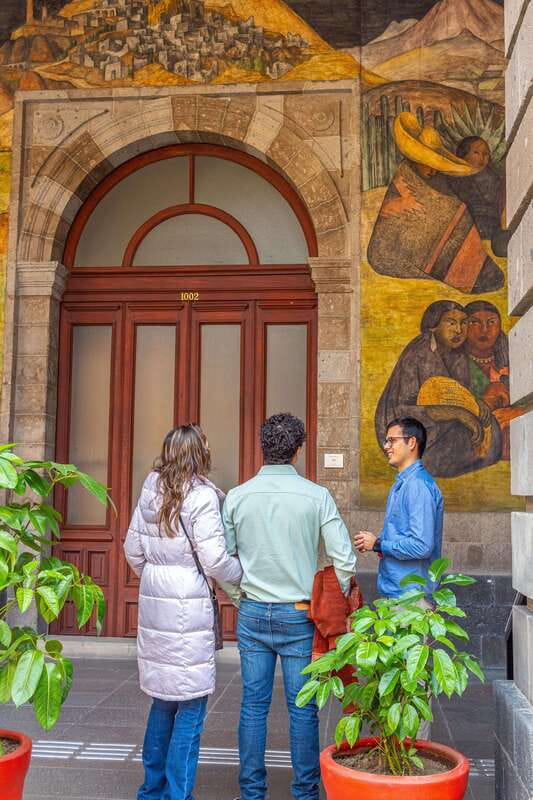
- Rivera, Orozco, and Siqueiros in one focused tour: Compare the three leading figures of Mexican muralism rather than seeing Rivera in isolation.
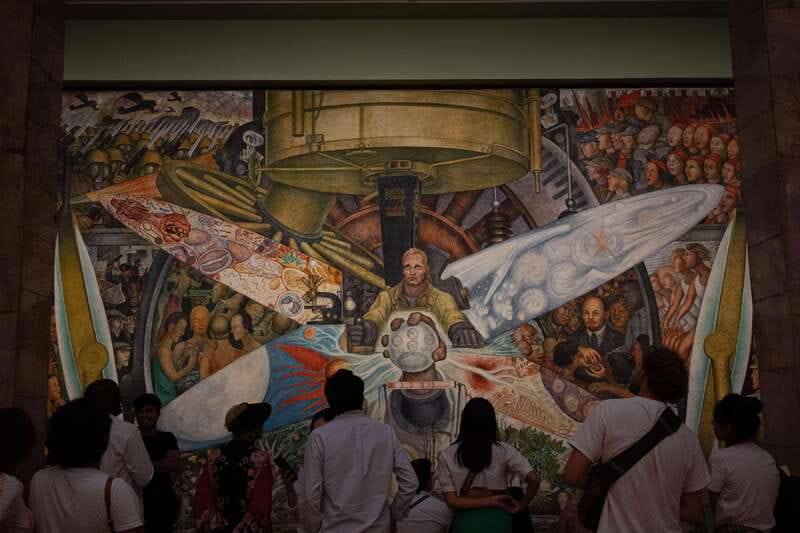
- Bellas Artes starts the story: Discuss Rivera’s Man Controller of the Universe and the political ideas behind the mural.
- A useful walk through the Historic Center: Move along 5 de Mayo and Madero Street toward the Zócalo, with time to look at historic façades.
- San Ildefonso adds the origin story: See where some of the first important murals were painted and learn how the movement developed.
- Museo Vivo del Muralismo broadens the picture: Finish with 248 Rivera murals, newer art, ceramics, and pre-Hispanic murals.
- Good value for art-focused visitors: The tour costs $52, with about $8 more for entrance tickets, and includes a bilingual guide in a group capped at 10.
Why this tour works for art lovers
The best feature here is the conversation. You are not simply shown a mural and handed a date. The experience uses art to discuss how Mexico changed, who held power, and how artists responded to revolution and public life.
That approach matters because Mexican muralism can look confusing at first. The walls are large, the scenes are crowded, and the symbols are not always obvious. A strong guide gives you a way into the work. José Vicente Figueroa is described as an art enthusiast who brings political and cultural subjects into the discussion, including the relationship between Mexico and the United States.
I especially like that the route does not treat Diego Rivera as the only artist worth your time. Rivera is the most famous name, but Orozco and Siqueiros bring different moods and arguments to the movement. You also hear about artists such as Rufino Tamayo and Jorge González Camarena, which gives you a broader view of Mexican art.
The small group helps. With a limit of 10 participants, you have a better chance to ask why a figure appears in a mural, how a political reference fits the scene, or why one artist used a harsher visual style than another. This is a discussion-led tour, so it suits you best if you enjoy asking questions rather than moving quickly from one sight to the next.
If you're still narrowing it down, here are other tours in Mexico City we've reviewed.


Bellas Artes sets the political tone
Meet outside the main gate of Palacio de Bellas Artes, one of Mexico City’s most recognizable cultural buildings. Its neoclassical exterior gives the tour a grand opening, but the real focus is inside, where mural painting meets national identity.
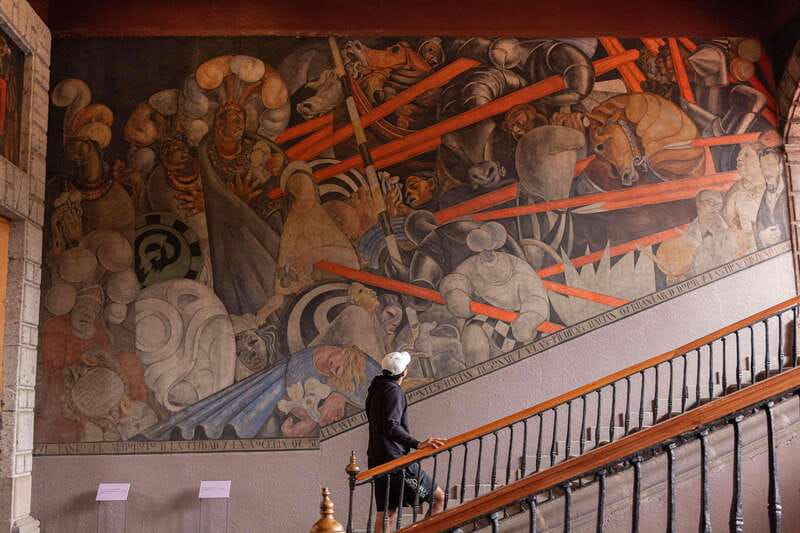
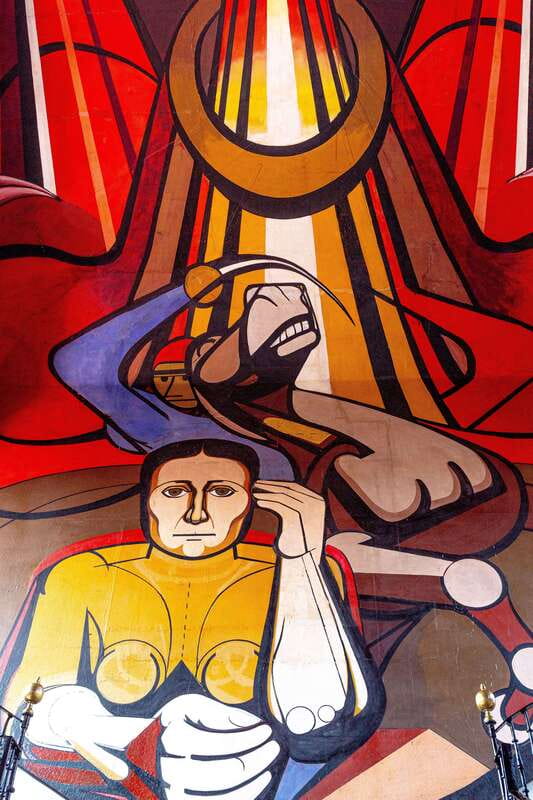
The Bellas Artes visit lasts about an hour. A major subject is Rivera’s Man Controller of the Universe, a work packed with political ideas and historical references. The conversation connects the mural to the Mexican Revolution, the Spanish conquest, and later political debates.
This is a smart place to begin because the building itself frames the question at the center of muralism: who gets to tell the story of a nation? Mexican muralists placed large public works in civic buildings so that art could reach people beyond private galleries. Their paintings were not meant only for quiet contemplation. They argued, taught, celebrated, criticized, and sometimes provoked.
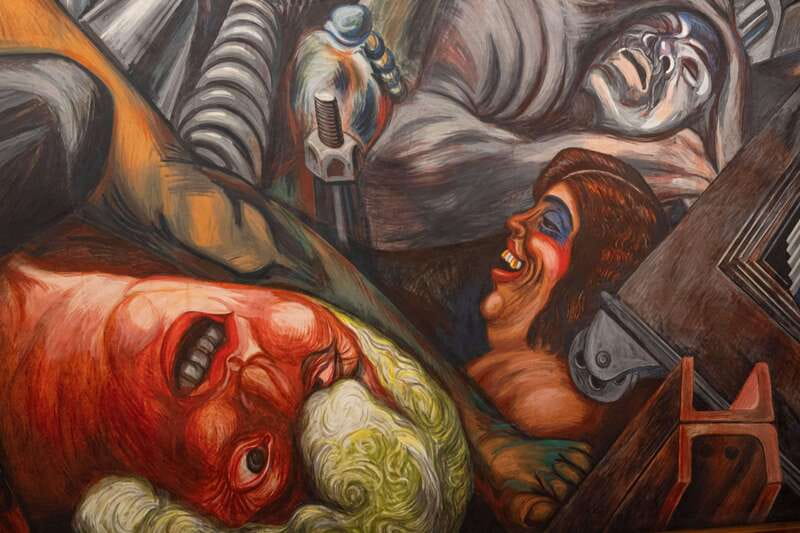
You can expect the guide to compare Rivera with Orozco and Siqueiros here. Rivera often used recognizable historical and political figures in expansive compositions. Orozco is associated with a more severe, dramatic vision, while Siqueiros pushed forceful movement and modern techniques. The point is not to memorize labels. It is to notice how each painter treats power, workers, conflict, and the past.
A practical note: the Bellas Artes entrance ticket is 90 MXN, listed as about $5. That cost is not included in the tour price. Allow a little mental space for the building itself, since the setting can be as impressive as the murals.
Walking from 5 de Mayo to the Zócalo
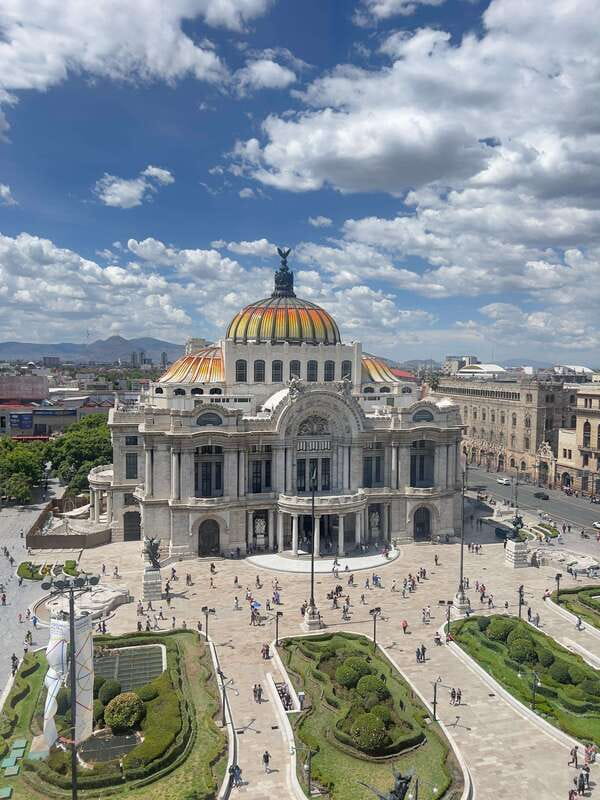
After Bellas Artes, the group walks for about 15 minutes along 5 de Mayo and Madero Street. This section is short, but it gives the tour breathing room and places the murals within the Historic Center of Mexico City.
You pass neoclassical and baroque-style palaces on the way to the Zócalo. The walk is not a separate architecture tour, but it helps you see how muralism fits into a city filled with layers of Spanish colonial, nineteenth-century, and modern Mexican design.
The brief stop in the Historic Center lasts about 10 minutes. That may sound modest, and it is. You should think of it as a connecting chapter rather than a full city tour. The value lies in moving between major cultural sites on foot instead of spending the whole experience indoors.
I like this part because it breaks up the museum visits. You get a chance to look around, reset your eyes, and connect the ideas from Bellas Artes with the civic center of Mexico City. You should still wear comfortable shoes and plan for a walking experience. The supplied details do not describe transportation between stops, so expect the route to rely on walking.
San Ildefonso reveals where muralism began
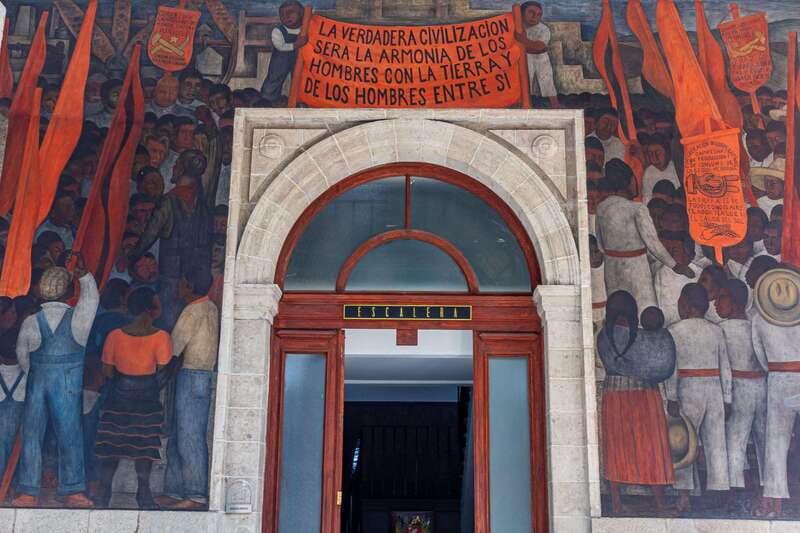
The former College of San Ildefonso is the next major stop. The museum is important here because some of the first murals connected with the Mexican muralist movement were painted in this setting.
This visit gives the tour a needed shift in focus. Bellas Artes presents muralism in a major national arts building. San Ildefonso helps you understand the movement’s earlier setting and its links to education, public culture, and a changing Mexico.
The guide uses the murals to explain the internal dynamics of the movement. That means you are looking not just at individual paintings, but also at the conditions that allowed muralism to become such an important public art form. The building becomes part of the story.
San Ildefonso also helps explain why location matters. A mural in a former college carries a different meaning from one displayed in a major palace of fine arts. The audience, purpose, and political setting all affect how you read the work.
The entrance fee here is 50 MXN, or about $3. It is an affordable extra, but you should remember that the advertised $52 price does not cover museum tickets. The two named admissions total about $8, bringing the basic cost closer to $60 per person before any other personal spending.
Museo Vivo del Muralismo finishes with scale
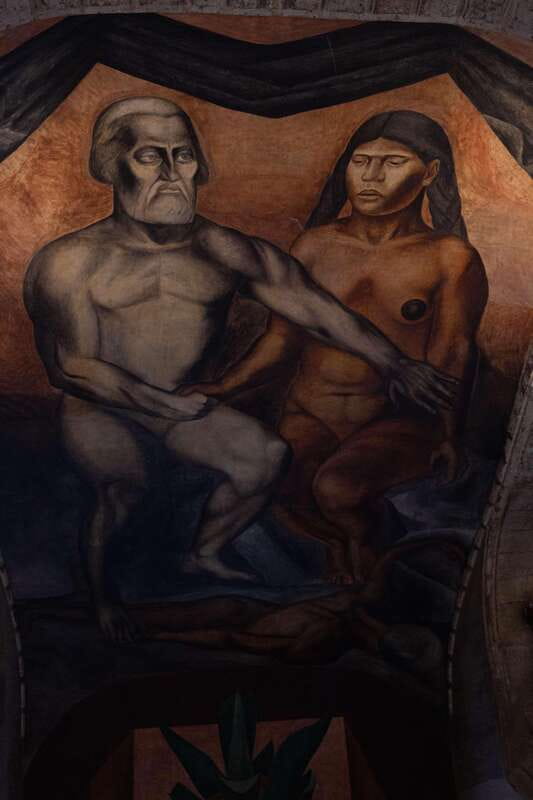
The tour ends at Museo Vivo del Muralismo, translated as the Live Muralism Museum. This final stop lasts about 45 minutes according to the schedule, and it widens the story beyond the three best-known masters.
The museum houses 248 murals by Rivera, along with recent works by various artists, ceramics, and pre-Hispanic murals. That mix makes the final stop useful. You are not left with the idea that muralism ended with Rivera, Orozco, and Siqueiros.
The Rivera collection gives you another chance to consider his approach after seeing his work at Bellas Artes. The newer art pieces point toward the continuing life of mural painting, while the ceramics and pre-Hispanic material place Mexican visual culture in a much longer time frame.
This is also a good ending because you can compare what you have seen. You may notice recurring ideas about conquest, labor, national identity, and the use of public space. You may also come away with a stronger sense that Mexican art cannot be reduced to one famous image or one famous painter.
The supplied information does not list a separate admission fee for Museo Vivo del Muralismo. The stated extra cost is about $8 in total for tickets, specifically identifying Bellas Artes and San Ildefonso. Check the current ticket details when booking if you want to budget exactly.



José Vicente’s guide style is part of the value
The guide can make or break a mural tour. Here, the strongest praise centers on José Vicente’s ability to explain art without turning the experience into a memorized lecture.
The tour is intended for an authentic conversation, and that is an important distinction. You can expect room for discussion about culture, politics, and the connection between Mexico and the United States. The guide’s role is not only to identify artists. It is to help you understand why these murals were made and how they reflect the country that produced them.
The guide is described as engaging, respectful, and able to answer detailed questions. One particularly useful feature is the attention given to artists beyond Rivera, including Tamayo, Camarena, Siqueiros, and Orozco. If Rivera is the only Mexican muralist you currently know, you should leave with a wider list to explore.
Language choice is another strength. The experience is available in English, Spanish, Portuguese, German, Italian, and Russian. That range is useful, though you should confirm your preferred language at the time of booking.
The guide style may not suit someone who wants a quick sightseeing circuit with only short explanations. Political discussion is part of the experience, and the murals are treated as arguments about society. If you prefer a purely visual visit, some of the conversation may feel more detailed than you need.
What the $52 price really buys you
At $52 per person, this is not the cheapest way to see Mexico City’s Historic Center. You also pay about $8 for the listed museum tickets, making the expected total around $60.
Still, the price is reasonable for a small-group, 2.5-hour experience with a specialist guide and several major cultural stops. You are paying for interpretation, not just entry. That difference matters with muralism, where a large painting can be easy to admire and hard to understand.
The group limit of 10 is important to the value. A large coach tour would make it harder to have a genuine discussion, especially when the subject includes politics and artistic choices. Here, the small size gives the experience a more personal feel and may even allow a near-private conversation if other participants cancel.
The tradeoff is that the tour does not include every expense. Bellas Artes and San Ildefonso tickets are separate, and the route is fairly concentrated around central Mexico City. You are not paying for transportation, meals, or a full-day city tour. You are paying for a focused introduction to muralism.
I would consider it good value if you already plan to visit these museums and want help making sense of them. If you only want quick photographs and a broad overview of central Mexico City, the cost may feel high for 2.5 hours.
Who should book this experience
I would recommend this tour to you if you enjoy art with a story attached. It is especially useful if you want to understand how Mexican muralism relates to revolution, conquest, public education, and politics.
It also suits repeat visitors to Mexico City. You may already know the Zócalo or Bellas Artes, but a guide can show you another way to read these places. The route provides a focused theme instead of repeating a standard city-center introduction.
First-time visitors can benefit too, especially if you are willing to spend time with the murals rather than rush through them. The experience gives you a cultural framework that can improve later visits to museums and historic buildings.
You should think twice if you dislike walking, prefer a very quiet museum visit, or want a tour devoted only to Diego Rivera. The route includes discussion, comparisons, and political context. It is also not designed as a full survey of Mexico City’s art scene.
Practical details before you go
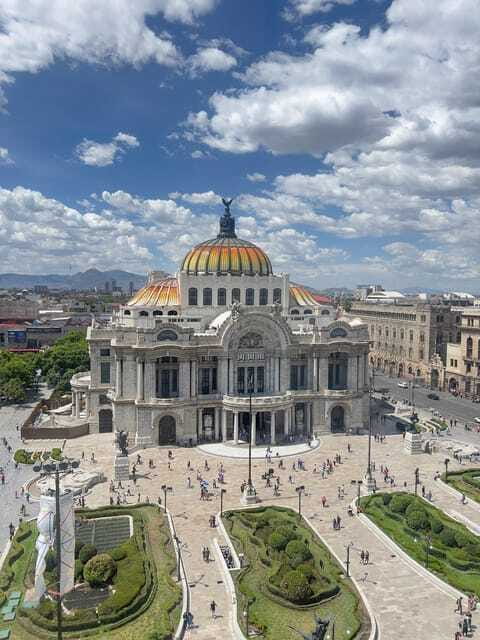
The meeting point is outside the main gate of Palacio de Bellas Artes. Arrive with enough time to identify the entrance, since the building is a busy central landmark and the tour begins there.
The full experience lasts 2.5 hours. The schedule includes about one hour at Bellas Artes, a 15-minute walk on 5 de Mayo and Madero Street, a short Historic Center visit, time at San Ildefonso, and about 45 minutes at Museo Vivo del Muralismo.
The route combines indoor museum visits with outdoor walking. Comfortable shoes are sensible, and you should be prepared for the pace of a walking tour. The supplied details do not specify the exact starting times, so check availability for the day you want.
The tour offers free cancellation up to 24 hours before the start time. You can also reserve now and pay later, which helps if your Mexico City plans are still shifting.
Should you book the Mexican muralism tour?
Book it if you want more than a list of artists and dates. The strongest reason to choose this experience is the link between visual art and Mexican public life. José Vicente Figueroa’s discussion-led approach, the small group, and the range of artists make the tour feel more like an informed conversation than a standard museum escort.
The route is also well chosen. Bellas Artes gives you a famous starting point, San Ildefonso explains the movement’s early setting, and Museo Vivo del Muralismo extends the story into newer art and older Mexican traditions.
Skip it if your main goal is a fast city walk or if you do not want to pay the additional museum fees. For art lovers, curious first-time visitors, and anyone who wants to understand why Mexican murals matter, the roughly $60 total cost is justified.
FAQ
How long does the Mexican muralism tour last?
The experience lasts 2.5 hours.
Where does the tour begin?
It begins outside the main gate of Palacio de Bellas Artes in Mexico City.
Where does the tour finish?
The tour finishes at Museo Vivo del Muralismo.
Which museums are visited?
The route includes Palacio de Bellas Artes, the former College of San Ildefonso, and Museo Vivo del Muralismo.
Are museum tickets included in the price?
No. About $8 per person is needed for tickets, including 90 MXN for Bellas Artes and 50 MXN for San Ildefonso.
What languages are available?
The tour is available in English, Spanish, Portuguese, German, Italian, and Russian.
More tours in Mexico City we've reviewed


Mexico City, compared.
 ★ 5.0Teotihuacan, Guadalupe Shrine & Tlatelolco Day Tour with LunchFrom $399 hours (approx.)
 ★ 4.5Xochimilco, Coyoacan and Frida Kahlo with Optional LunchFrom $349 hours (approx.)
 ★ 5.0Balloon flight + Breakfast in cave + Pyramids + Pick up CDMX.From $1722 to 8 hours (approx.)
 ★ 5.0Teotihuacan pyramids morning or afternoon without tourist trapsFrom $645 hours 30 minutes (approx.)
 ★ 4.5Teotihuacan Early Access Guided Tour with optional LunchFrom $398 hours (approx.)
 ★ 5.0Balloon flight + pick up in CDMX + Breakfast in Cave + PyramidsFrom $1694 to 7 hours (approx.)
 ★ 5.0Balloon Flight + Cave Breakfast + Pick Up from CDMX or We FlyFrom $1663 to 9 hours (approx.)
 ★ 4.6Mexico City: Teotihuacan, Tlatelolco & Guadalupe Shrine TourFrom $49