
Reviewed · MEXICO CITY FOOD TOURS
Tacos 101 Mexico City Taco Experience
Mexico City’s taco culture makes the best introduction to the city’s food scene, and this three-hour walking tour gives you a well-planned route through several classic styles. You begin near the Diana the Huntress Fountain and finish at Cuauhtémoc Market, with tacos, local history, tortillas, and traditional candy along the way.
In This Article
- Key points to know before you book
- Why this taco walk works for first-time visitors
- Starting at Diana the Huntress Fountain
- Al pastor and gringas at Tacos Don Güero
- Birria Colorado and the Jalisco connection
- Quesadillas, flautas, and the cheese debate
- Carnitas at Los Tacos Michigan
- Reforma, Casa Cusi, and the Angel of Independence
- Suadero and campechanos at Taqueria Gabriel
- Finishing at Cuauhtémoc Market
- What the $74.72 price really buys you
- Who should book this experience?
- Should you book the Tacos 101 Mexico City experience?
- FAQ
- Where does the taco experience begin?
- Where does the tour end?
- How long does the experience last?
- What foods are included?
- Is the tour suitable for vegetarians?
- What language is the tour offered in?
- How many people can join the tour?
I like the practical taco cheat sheet and scorecards, which help you remember what you are eating and teach you how to order after the tour. I also like the small maximum of eight people, since that makes it easier to hear the guide and ask questions. The main drawback is simple: this is not a vegetarian tour, and the steady stream of meat-heavy tastings may feel like a lot if you prefer a lighter food walk.
Key points to know before you book
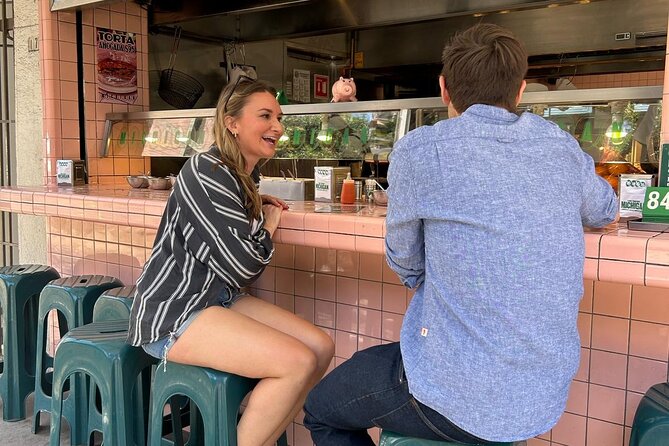
- Six classic taco styles: Try al pastor, gringas, birria, carnitas, suadero, and campechanos.
- A useful first-day activity: You learn how to use salsas, choose toppings, and order tacos for the rest of your stay.
- Food and city history together: The route covers Paseo de la Reforma, the Cuauhtémoc and Juárez neighborhoods, and the Angel of Independence.
- Small English-language group: The tour accepts no more than eight people and is offered in English.
- A full tasting, not a snack stop: Tacos, quesadillas, flautas, drinks, and traditional candy are included.
- A local market finish: You see tortillas being made at an authentic tortilleria inside Cuauhtémoc Market.
Why this taco walk works for first-time visitors
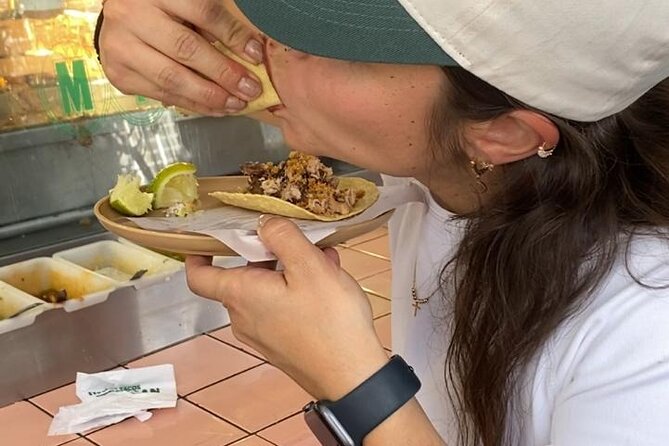
A taco tour is most useful before you have spent several days ordering at random. Here, you learn the names, fillings, cooking methods, and basic customs behind several Mexico City favorites. The goal is not just to feed you. It is to give you enough confidence to walk up to a taqueria later and know what you want.
Tyler is the guide named in the available tour feedback, and he is praised for combining taco instruction with a broad understanding of Mexico City and Mexico. That matters because the food makes more sense when you know where a dish comes from and why a certain neighborhood has its own traditions.
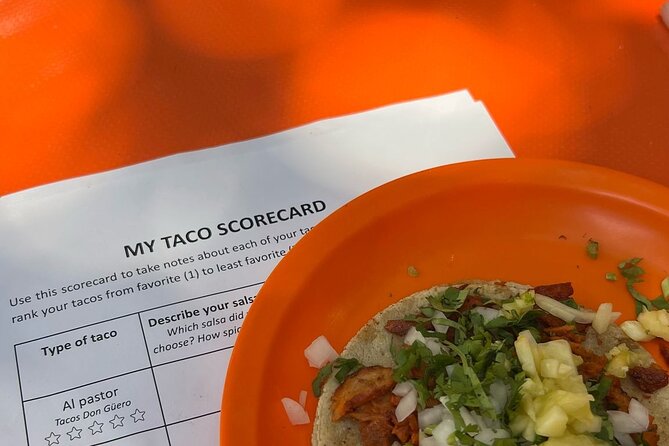
The tour also gives you a simple way to compare the tacos. You receive a taco cheat sheet at the beginning, then use scorecards to rank each sample. I like this idea because it turns a long series of tastings into an active lesson. You are not expected to remember every salsa and filling by the end.
At $74.72 per person, the price is higher than simply buying tacos on your own. You are paying for the guide, the organized route, the included food and drink, and the chance to sample several well-known taco preparations without guessing where to go. If you already know Mexico City’s taco scene, the value may be less clear. If this is your first visit, the ordering tips and food education can pay off during the rest of your trip.
A few more Mexico City tours and experiences worth a look



Starting at Diana the Huntress Fountain
The meeting point is the Diana the Huntress Fountain on Paseo de la Reforma, at Avenida Paseo de la Reforma 21 in the Cuauhtémoc area. The tour opens with an introduction to Reforma, the neighborhood, and the basic vocabulary of tacos.
This is a smart starting point. You get your bearings before eating, and the fountain gives the group a clear landmark. The guide also explains how the tour will work and hands out the taco cheat sheet, which describes the foods you will try.
The first stop lasts about 15 minutes and does not include a food tasting. That may sound like a slow start when you are hungry, but it gives you a useful frame for everything that follows. You begin learning that tacos are not one fixed dish. The meat, cooking method, tortilla, toppings, and salsa all change the experience.
Al pastor and gringas at Tacos Don Güero
The first major tasting is at Tacos Don Güero, where you try tacos al pastor and gringas. These are two of the city’s best-known styles and a good pair for learning how taco variations work.
Al pastor is presented as a classic Mexico City taco, while the gringa offers a different combination of taco ingredients and texture. The important lesson here is not only the filling. You learn how to choose toppings and how to sample the salsas one at a time so you can work out which sauce fits each taco.
That advice is worth remembering. Salsa can improve a taco, but it can also cover the flavor of the meat if you add too much too soon. The scorecard begins here, so you can record your first impressions before your palate becomes crowded with later tastings.
You spend about 30 minutes at this stop, enough time to eat and listen without feeling rushed. It is also the point where you learn that this is a tasting tour rather than a single sit-down meal. Come hungry, but do not eat a heavy breakfast.
Birria Colorado and the Jalisco connection
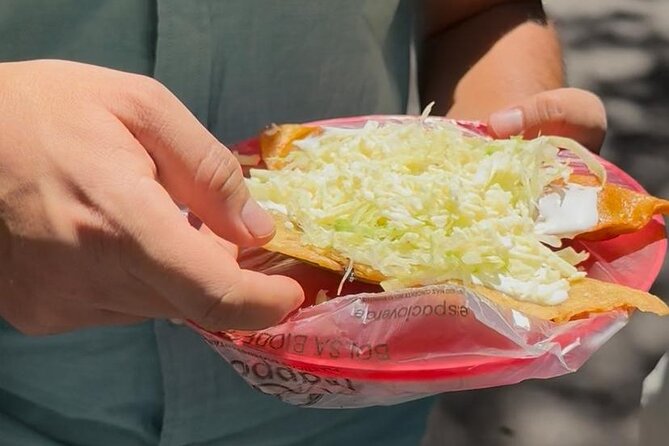
Next comes birria at Birria Colorado. The stop focuses on birria’s connection to the state of Jalisco and introduces tacos dorados, a preparation that gives the tortilla a crisp finish.
This part adds useful regional context to the Mexico City route. Not every taco you eat in the capital began there. Mexico City gathers food traditions from across the country, and birria is a clear example of how a dish associated with another state becomes part of the city’s everyday food life.
The stop is scheduled for about 15 minutes, so expect a focused tasting rather than a long lesson. If you love rich meat dishes, this may be one of the strongest moments of the walk. If you are already feeling full, the compact portion and quick pace may help you keep going.
Quesadillas, flautas, and the cheese debate
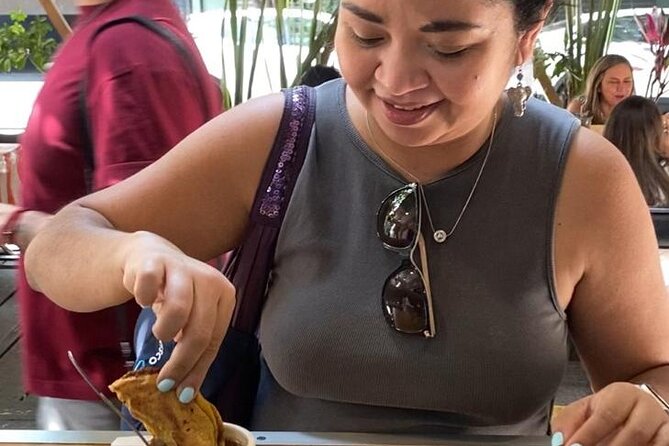
The next stop brings you to a stand serving birria de bistec, quesadillas, and flautas. The lesson here is a famous Mexican food argument: does a quesadilla need cheese to count as a quesadilla?
You get to consider both sides of the debate by trying quesadillas with or without cheese. This is exactly the kind of small cultural detail that makes a food tour more useful than a list of restaurant recommendations. You learn that familiar food words do not always mean the same thing in every part of Mexico.
The flautas add another texture to the meal, while the birria de bistec gives you another way to think about meat and tortilla combinations. This stop lasts about 15 minutes. It is short, but the cheese question is memorable and gives you something practical to ask about when ordering on your own.
Other city tours we've reviewed in Mexico City

Carnitas at Los Tacos Michigan
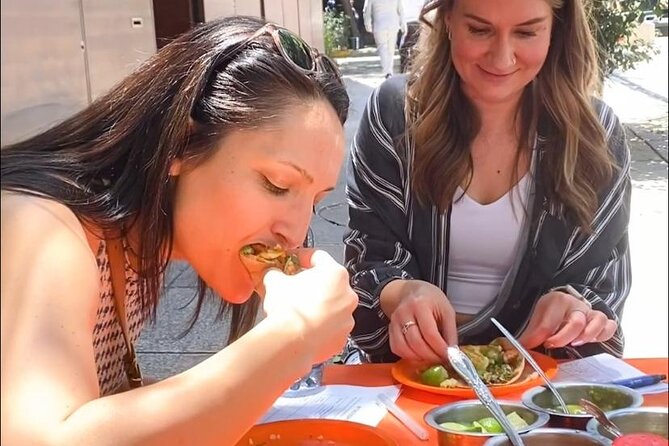
At Los Tacos Michigan, the focus shifts to carnitas. You learn about the different kinds of carnitas and how to order them, which is useful because the word can cover several cuts and preparations.
This is one of the more practical stops for future meals. At a carnitas stand, you may need to make choices about what part of the meat you want. The tour gives you the vocabulary and context to order with more confidence instead of pointing at the first option on the menu.
You spend around 30 minutes here, making it one of the longer food stops. The relaxed timing should give you room to compare the carnitas with earlier tacos and add another score to your card. By this point, the tour is becoming a full meal, not a casual nibble.
Reforma, Casa Cusi, and the Angel of Independence
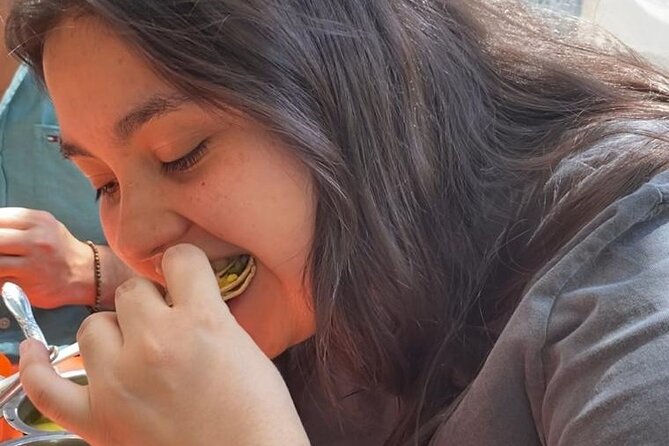
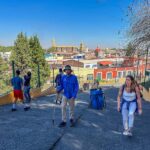
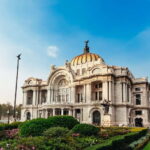
The route includes two non-food sections that break up the tastings. At Casa Cusi, you learn about Paseo de la Reforma and see one of the oldest buildings in this part of the city. The guide also explains the Cuauhtémoc and Juárez neighborhoods.
This pause is welcome. A taco walk can become a blur of plates and sauces, so a short history stop lets you walk, digest, and see more of the city. Reforma also has an important connection to Mexico’s last emperor, and that story helps explain why the avenue looks and feels different from the surrounding streets.
The group then visits the Angel of Independence. You learn about the monument and have time to take the classic Mexico City photograph. The stop lasts about 15 minutes.
These sightseeing sections do not add food to the bill, but they add value to the route. You are not being moved from one anonymous taco stand to another. The walk connects the food to recognizable streets and monuments, making it easier to remember where you were and how the neighborhoods fit together.
Suadero and campechanos at Taqueria Gabriel
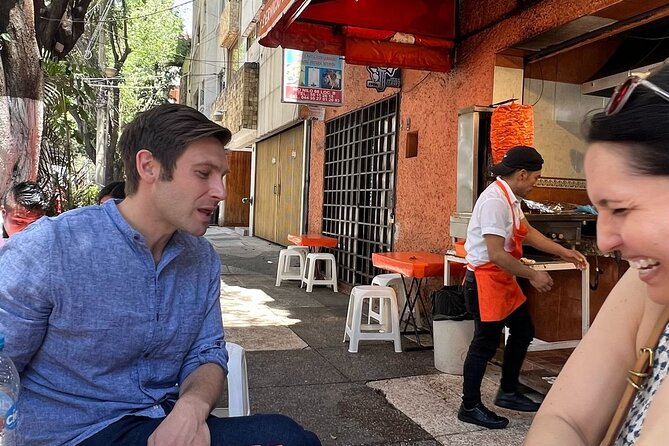
The final major taco stop is Taqueria Gabriel, where you try tacos de suadero and tacos campechanos. These are classic Mexico City choices and give you two more flavors to compare with al pastor, birria, and carnitas.
The guide explains how the tacos are made and why they are so popular in the capital. This is also where the scorecards come back into play. You compare your rankings, discuss which tacos worked best for you, and see how your preferences changed during the walk.
A beer or soft drink is included here. That small addition matters because by this stage you have eaten enough food to want a pause rather than another hurried bite. The 30-minute stop gives you time to talk and settle on your favorites.
The experience is especially strong for people who like food with a side of conversation. The guide’s role is not limited to naming each taco. The strongest feedback about Tyler points to his ability to connect tacos, Mexico City, and broader stories about Mexico. That makes the last stop feel like a discussion as well as a tasting.
Finishing at Cuauhtémoc Market
The tour ends at Cuauhtémoc Market on Río Lerma. Here, you visit an authentic local market and see tortillas being made at a tortilleria.
This is a fitting ending because tortillas are the foundation of the entire meal. After trying many fillings and salsas, you get to see the basic ingredient being produced in a working market setting. It helps you notice the tortilla itself rather than treating it as a disposable wrapper.
The final treat comes from a candy stall, where you try traditional Mexican candy. After a meat-heavy route, a sweet finish gives the meal a clear ending.
The tour does not return to the starting point. You finish at the market, so plan your next activity from that part of the Cuauhtémoc area. The stated route is designed as a walking experience, and the duration is about three hours.
What the $74.72 price really buys you
You can spend far less than $74.72 on tacos in Mexico City. That is not a criticism. Affordable street food is part of the city’s appeal, and you should still eat independently during your trip.
The fee makes more sense if you treat the tour as a guided food class with sightseeing. Included tastings cover al pastor, gringas, birria, tacos dorados, quesadillas, flautas, carnitas, suadero, campechanos, a beer or soft drink, and traditional candy. You also receive instruction on ordering, toppings, salsas, and taco styles.
The small group helps justify the cost. With no more than eight people, Tyler can explain details and respond to questions without addressing a large crowd. The activity is offered in English, which makes the food vocabulary and cultural explanations easier to follow if you are not comfortable discussing food in Spanish.
The strongest value comes when you book near the beginning of your Mexico City stay. You can use the information afterward at local taquerias, markets, and neighborhood stands. The tour is booked an average of 28 days ahead, so it is sensible to reserve early if your dates are fixed.
Who should book this experience?
I would choose this tour for a first visit to Mexico City, especially if you want a gentle introduction to local food without having to research every stop yourself. It also suits people who enjoy learning the story behind a dish, not just eating it.
It is a good match for meat eaters with hearty appetites. It is not suitable for vegetarians, and the amount of food may be more than you expect from a three-hour walk. If you prefer small portions or want a food tour centered on vegetables, this is not the right fit.
Most people can participate, service animals are allowed, and the route is near public transportation. The experience requires good weather and a minimum number of participants. If poor weather or an insufficient group forces cancellation, you are offered another date or experience, or a full refund.
You can cancel for a full refund up to 24 hours before the start time. Changes or cancellations made less than 24 hours before the start are not accepted for a refund.
Should you book the Tacos 101 Mexico City experience?
Book it if you want to learn how Mexico City tacos work, not simply eat a few popular dishes. The combination of al pastor, birria, carnitas, suadero, and campechanos gives you a useful survey, while the cheat sheet and scorecards help you remember the details.
I would especially recommend booking it early in your trip. You leave with practical ordering advice, a better sense of salsa choices, and a list of taco styles to seek out later.
Skip it if you are vegetarian, dislike a meat-focused meal, or would rather spend $74.72 exploring taquerias independently. For everyone else, the small group, the clear route, Tyler’s engaging teaching style, and the market finish make this a strong way to get oriented to Mexico City’s food culture.
FAQ
Where does the taco experience begin?
It begins at the Diana the Huntress Fountain, at Avenida Paseo de la Reforma 21 in the Cuauhtémoc area of Mexico City.
Where does the tour end?
The experience ends at Cuauhtémoc Market on Río Lerma.
How long does the experience last?
The tour lasts approximately three hours.
What foods are included?
You try al pastor, gringas, birria, tacos dorados, quesadillas, flautas, carnitas, suadero, and campechanos. A beer or soft drink and traditional Mexican candy are also included.
Is the tour suitable for vegetarians?
No. The experience is specifically noted as not suitable for vegetarians.
What language is the tour offered in?
The tour is offered in English.
How many people can join the tour?
The maximum group size is eight travelers.
More City Tours in Mexico City
More Mexico City Food Tours in Mexico City


More tours in Mexico City we've reviewed





Mexico City Food Tours, compared.
 ★ 5.0Historic Center Food Tour in Mexico CityFrom $1155 hours (approx.)
 ★ 5.0Xochimilco Barco Fiesta Tentacion 18+ with Open Bar and TacosFrom $592 hours (approx.)
 ★ 5.0Lucha Libre Tickets & Tacos & Beer & Mezcal – BEST NIGHT EVER!From $84
 ★ 5.0Polanco Food Tour: The Bestselling Food Adventure in Mexico CityFrom $1093 hours (approx.)
 ★ 5.0Colonia Roma Food TourFrom $1104 hours (approx.)
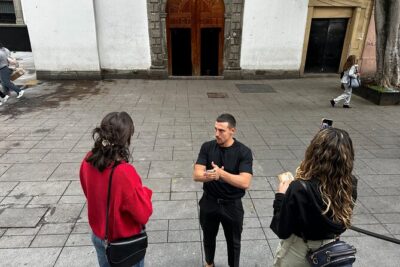 ★ 5.0Mexico City Historical Centre Food Tour with 7 Authentic TastingsFrom $653 hours (approx.)
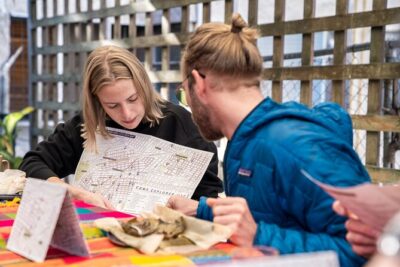 ★ 5.0Street Food Tour with Friends4 hours 30 minutes (approx.)
 ★ 5.0Mexico City: Hidden Markets, Street Food & Salsa-Making TourFrom $695 hours (approx.)
The lists this tour appears in