
Reviewed · CHAPULTEPEC & MUSEUM TOURS
National Museum of Anthropology: a journey into Mexico’s past – English lang.
Ancient Mexican art makes far more sense when you understand the ideas behind the symbols. This three-hour tour with Hector Balderas Iglesias focuses on animals, gods, gender, the sun, the moon, and the way indigenous peoples understood the world, rather than simply marching you from object to object.
In This Article
- Key points to know
- Why symbols matter more than a simple timeline
- Meeting Hector at the Chapultepec museum
- The Mural of Duality and a different way to see the world
- The museum umbrella and the meaning beneath the architecture
- Teotihuacan: architecture, trade, and belief
- The Mexica room and the symbols of power
- Pakal the Great and the Maya connection
- Three hours that pass quickly, with a catch
- Is $75 a fair price?
- Who should book this experience?
- Booking details worth knowing
- Should you book the museum tour?
- FAQ
- Where does the tour meet?
- How long does the activity last?
- Is museum admission included?
- What language is the tour in?
- Who leads the tour?
- Is the tour private?
- Is the museum wheelchair accessible for this tour?
- Is the tour suitable for children?
- What should I wear?
- What is not included in the price?
I like the clear thematic approach, and I like that Hector uses questions, an iPad, reconstructions, historical images, and a laser pointer to help you notice details that are easy to miss. The main drawback is its pace: three hours on foot means plenty of standing, and the tour is not suitable for children under 16.
Key points to know
- A symbolism-first museum visit: Learn why snakes, eagles, jaguars, animals, and celestial signs appear across Mesoamerican art.
- A private English-language tour: Hector Balderas Iglesias leads the visit for your group rather than following a large scheduled crowd.
- Five important stops: See the Mural of Duality, the museum umbrella, Teotihuacan and Mexica rooms, and a replica of Pakal the Great’s tomb.
- Helpful visual tools: Hector may use an iPad with 3D reconstructions, extra images, and historical comparisons to explain what you are seeing.
- A useful first-day activity: The tour gives you a framework that can make later visits to Mexico City’s archaeological sites easier to understand.
- Good value for serious museum-goers: The $75 price includes admission and three hours of private guiding, but food, drinks, and transport are separate.
Why symbols matter more than a simple timeline
The National Museum of Anthropology is enormous, and a quick look at the galleries can leave you with a blur of masks, carved stones, pottery, and monumental figures. You may remember the famous objects but miss the ideas that connect them.
This experience takes a different route. Hector begins with the worldview of ancient Mexican peoples, then uses selected museum pieces to show how those beliefs appeared in daily life, art, clothing, architecture, and ritual. That approach gives you a set of questions to carry through the rest of the museum.
Why does a serpent appear on one object and a bird on another? Why are jaguars linked with power? What role do the sun and moon play? How can a vessel or stone carving express a whole philosophy?
Those are the questions that give the tour its shape. You are not expected to memorize a long list of rulers or dates. Instead, you learn how to look at an image and ask what it meant to the people who created it.
I find this especially useful in a museum where labels alone cannot explain every layer of meaning. A guide can point out a small glyph, gesture, animal, or arrangement of figures and connect it to a larger belief system. That turns the visit from an object checklist into a lesson in how another culture understood life, death, nature, and the heavens.
A few more Mexico City tours and experiences worth a look
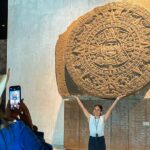
Meeting Hector at the Chapultepec museum
The meeting point is near the Mexican flag at the museum entrance. You will need to make your own way to the National Museum of Anthropology in the Bosque de Chapultepec, since transport to the museum is not included.
The tour is private, which matters here. A private group allows Hector to adjust his explanations to your questions and interests. You can ask for more context about a particular culture, spend longer on a symbol that catches your eye, or keep moving when a section is less relevant to you.
Hector’s teaching style is a major part of the experience. He explains complex ideas in plain language and uses questions to get you interpreting glyphs and images yourself. This is less like listening to a fixed speech and more like taking part in a guided class.
He may also bring an iPad loaded with extra photographs, 3D reconstructions, artwork, and images showing how places looked in earlier periods compared with today. That can help when an artifact is damaged, incomplete, or difficult to picture in its original setting.
One practical point: wear comfortable shoes and clothes. The visit is done on foot, with long stretches of standing while you listen. The museum has wheelchair access, but you should still consider the three-hour duration and discuss any specific mobility needs when booking.
The Mural of Duality and a different way to see the world
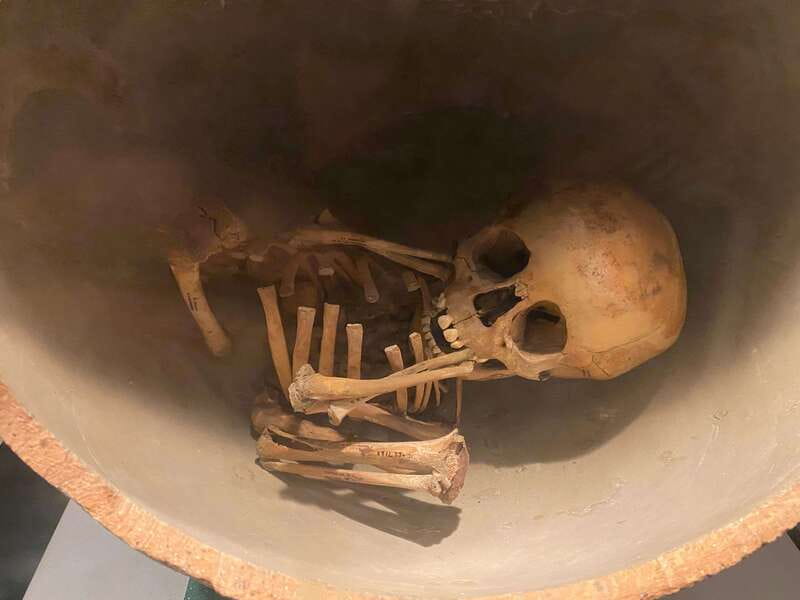
The Mural of Duality is one of the early teaching points. Here, Hector explains the idea of balance and opposing forces within indigenous Mesoamerican thought.
The value of this stop is not just the mural itself. It gives you a lens for understanding later objects. Rather than treating ancient Mexican belief as a collection of unrelated gods and ceremonies, you begin to see relationships between forces such as life and death, night and day, masculine and feminine, earth and sky.
The tour also gives special attention to femininity in Mesoamerica. This is an important detail because many short museum visits focus mainly on warriors, rulers, temples, and warfare. Hector’s approach asks you to consider how feminine power and symbolism fit into the larger system of belief.
Expect cosmological explanations rather than a basic introduction designed for small children. The material asks you to think about how societies explained birth, fertility, death, nature, and the movement of the heavens. That is why the activity has a minimum age of 16.
The museum umbrella and the meaning beneath the architecture
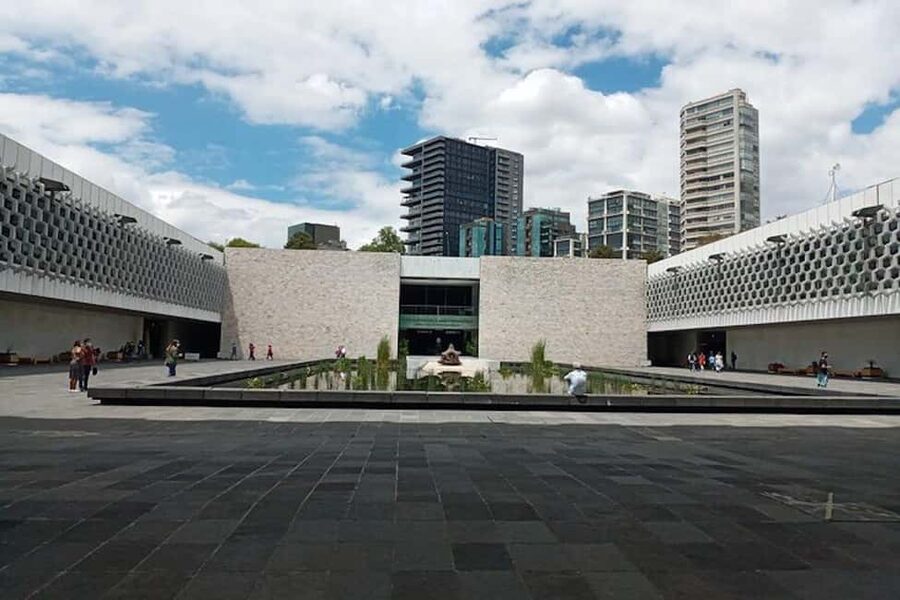
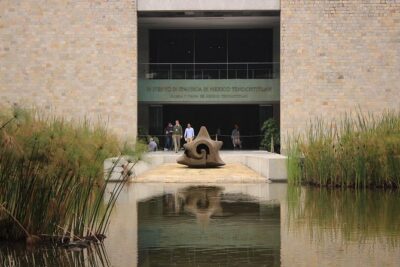
The museum umbrella is another key stop. It is a memorable architectural feature, but Hector uses it for more than a photo opportunity. He explains how the design connects to the worldview presented throughout the museum.
This is a good example of what a guided visit adds. You can walk past a large structure and appreciate its scale, materials, and shape. With an explanation, you can begin to see how the museum itself presents connections between land, sky, water, ancestry, and the cultures of Mexico.
The umbrella also helps orient you within the building. The museum is large enough that first-time visitors can lose track of how the rooms fit together. A clear explanation early in the visit can make the rest of your time there feel less scattered.
Do not expect every gallery to receive equal attention. The tour selects important areas rather than attempting to cover the entire museum. That is a sensible choice in three hours, but you should plan to return during free time if you want a broader look.
Teotihuacan: architecture, trade, and belief
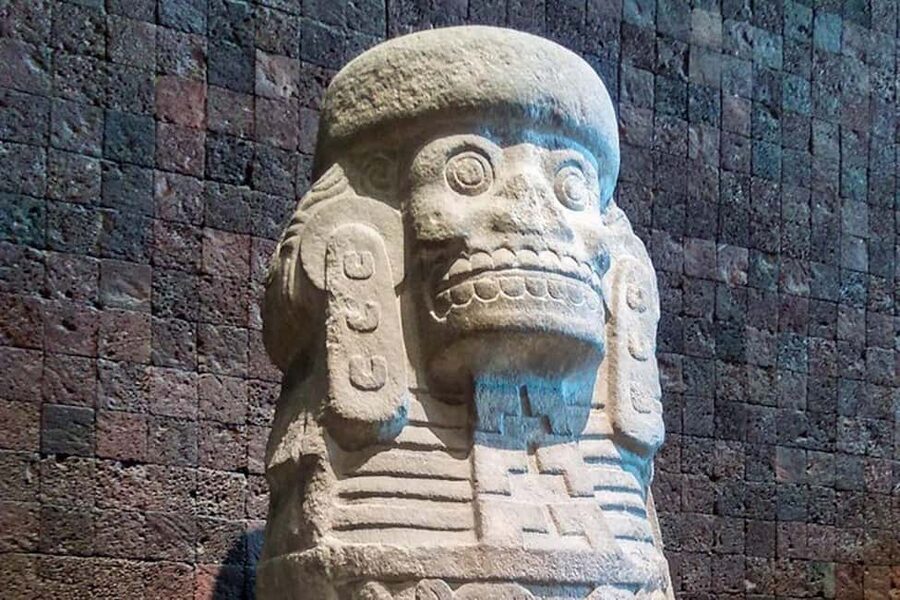
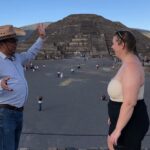
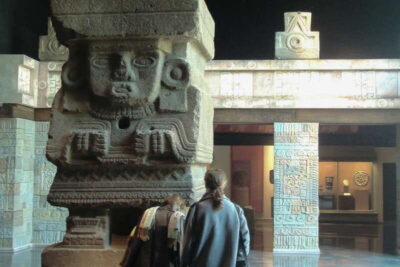
The Teotihuacan room brings the discussion into one of ancient Mexico’s most important cultural centers. Hector explains the objects and ideas presented here, connecting them with the wider system of Mesoamerican thought.
You may encounter architectural models, carved forms, pottery, and images that show how the people of Teotihuacan expressed power and belief. The point is not to turn the room into a list of artifacts. It is to understand how art, urban life, trade, religion, and social organization worked together.
One useful aspect of Hector’s approach is the connection between different indigenous cultures. The tour can include discussion of commerce and trading among native societies, helping you avoid the mistake of treating all ancient Mexicans as one people with one set of beliefs.
That distinction matters. Mesoamerica included many cultures, languages, cities, and political systems. Similar symbols could carry related meanings, but local traditions and historical settings still mattered. A guide who explains those links can help you see both the shared ideas and the differences.
If you later visit Teotihuacan or another archaeological site, the room can give you useful preparation. You will have a better sense of what to look for in carvings, buildings, and representations of animals and deities.
Other museum experiences in Mexico City


The Mexica room and the symbols of power
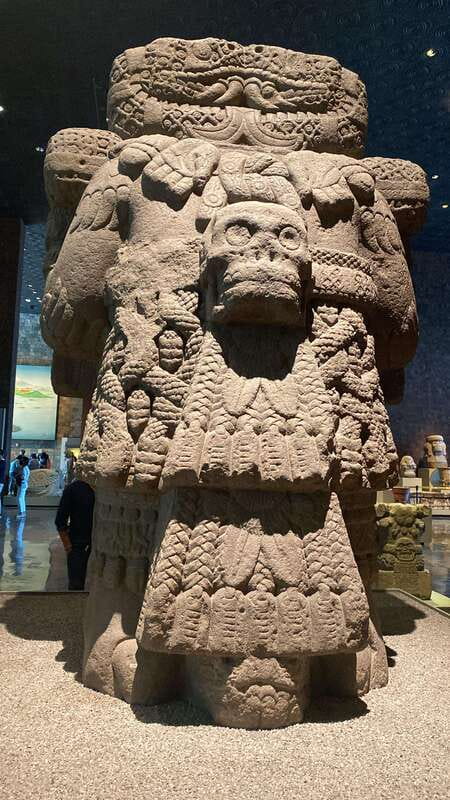
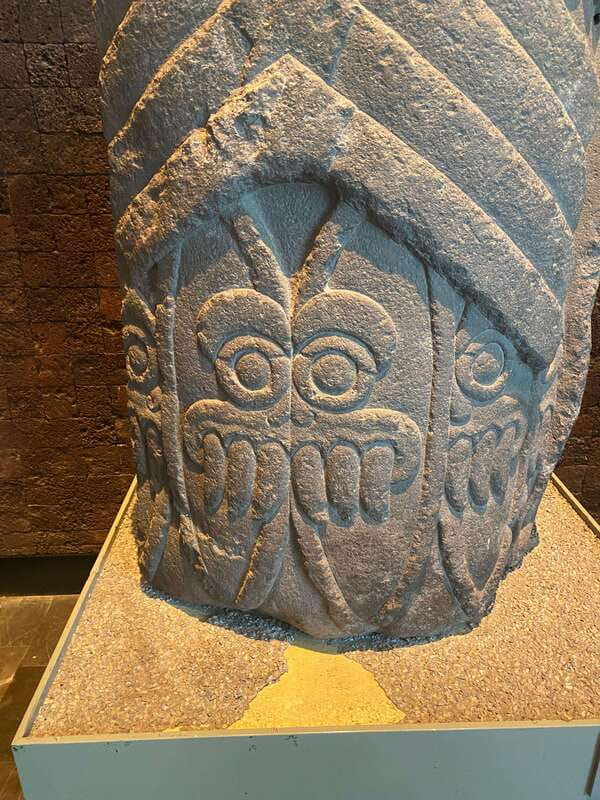
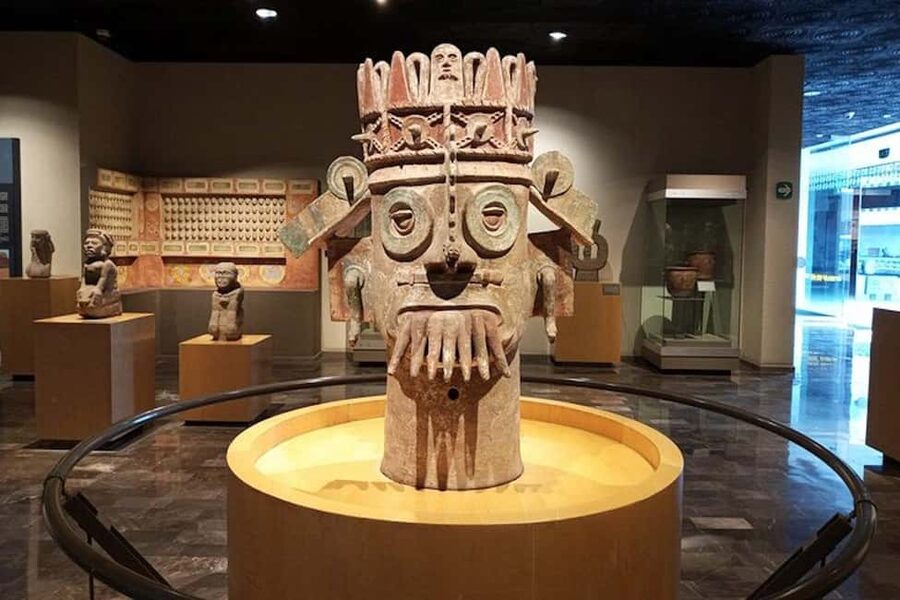
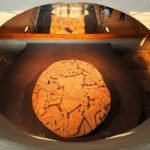
The Mexica room is one of the central stops, especially for anyone interested in the society often called Aztec in English. Hector explains the objects through their symbolism and social setting.
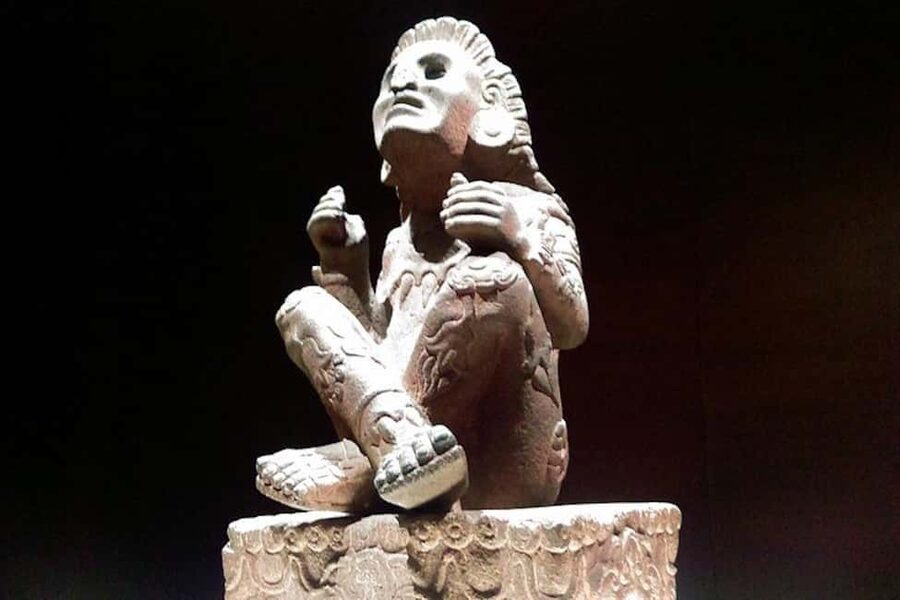
The Mexica used animals such as serpents, eagles, and jaguars in clothing, paintings, carvings, and other forms of representation. On this tour, you learn to ask why a particular animal appears and what qualities it may express within the culture’s belief system.
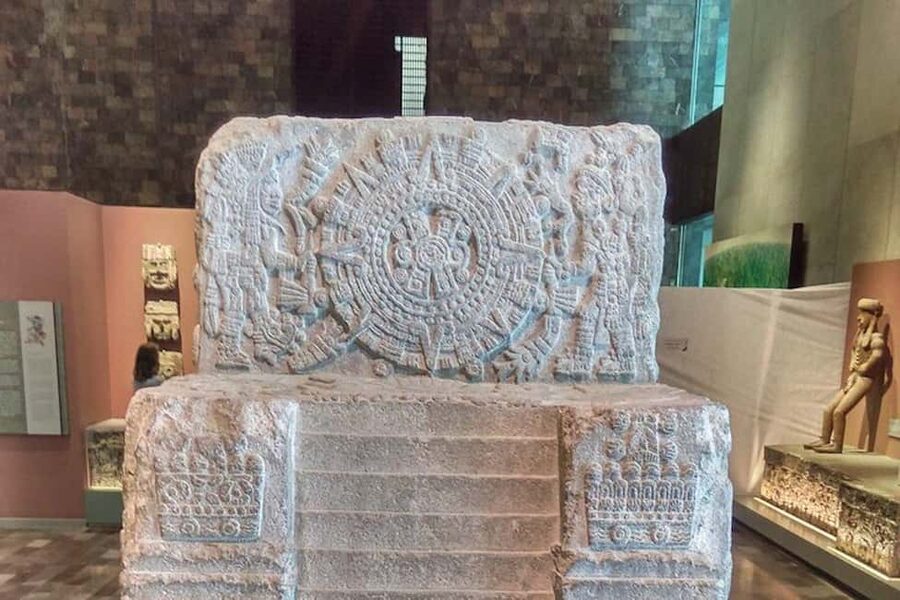
You also examine the importance of the sun and moon. These are not simply decorative images. They relate to time, ritual, creation, and the way people understood their place in the universe.
The tour can also place Mexica society in the wider story of Mexico City, including the way Spanish influence changed later society. That historical bridge helps you connect the museum’s ancient objects with the city you are exploring today.
I appreciate the way this section encourages active looking. Hector may ask you to interpret a glyph or identify a detail before explaining it. That makes the information easier to remember than a long lecture filled with names and dates.
If you plan to visit the site of Tenochtitlan during your stay, taking this museum tour first could be especially useful. The museum cannot recreate the entire ancient city, but it can help you understand the culture that built it and the symbols that still appear in modern Mexico.
Pakal the Great and the Maya connection
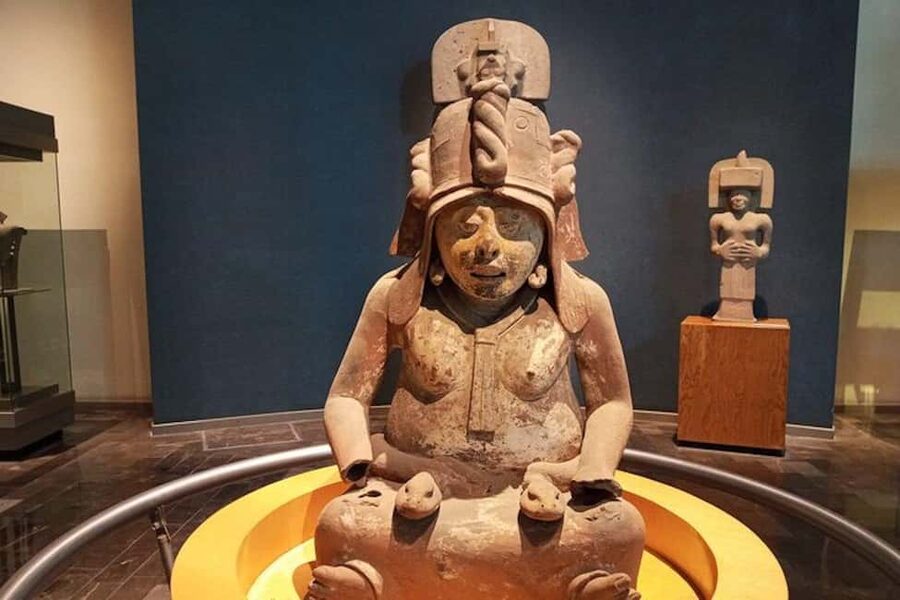
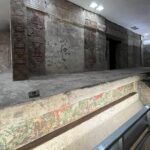
The replica of the tomb of Pakal the Great adds a different cultural and geographic perspective. It brings Maya material into a tour that also covers Teotihuacan and the Mexica, showing that ancient Mexico was not one single civilization.
A replica lets you consider the tomb’s imagery and layout without needing to travel to the original site. Hector explains the significance of the burial chamber and helps you read its visual language.
This stop is useful because tombs can be difficult to understand without context. A carved figure or unusual arrangement may look mysterious to a modern eye. With guidance, you can consider how it relates to rulership, death, ancestry, and the journey beyond life.
The Maya material also reinforces one of the tour’s main lessons: shared symbols do not erase cultural difference. Snakes, celestial signs, animals, and royal images could appear across Mesoamerica, but each society gave them meaning within its own traditions.
Three hours that pass quickly, with a catch
The scheduled duration is three hours, including the guided visit and free time. In practice, you should think of this as a focused introduction rather than a complete survey of the National Museum of Anthropology.
The first portion is guided. Hector leads you through the selected highlights and explains the ideas behind them. The remaining time gives you a chance to look around independently, revisit an object, or see another section at your own speed.
The time can pass quickly because the material is discussion-based. You are not only walking and listening. You may be comparing symbols, studying details, asking questions, and using visual material on the iPad to picture the ancient world.
Still, the physical demands are real. You will be on your feet for much of the activity, and the tour is not intended for children under 16. Food and drinks are not allowed as part of the activity, and there is no meal break included.
The museum also does not permit many common visitor items and behaviors. Leave pets, large bags, backpacks, luggage, drones, selfie sticks, tripods, professional cameras, flash equipment, bikes, scooters, skates, and handcarts at home. Do not bring food, drinks, plastic bottles, chewing gum, or alcohol. Touching exhibits and audio recording are also not allowed.
Is $75 a fair price?
The cost is $75 per person. That includes museum admission, the private English-language walking tour, and access to the permanent exhibitions.
The value depends on how you like to visit museums. If you are happy reading labels and choosing your own route, you may prefer to buy admission separately and explore at your own pace. The museum is large, and independent visitors can spend much longer than three hours.
If you want to understand the symbolism and cosmology behind the objects, the price is easier to justify. You are paying for a private guide, focused interpretation, and a carefully chosen route through a major museum. Hector’s use of an iPad, reconstructions, historical photos, and close attention to small details adds more than simple directions from one room to the next.
The experience may be particularly good value early in a Mexico City visit. The ideas you learn here can serve as background for later visits to Tenochtitlan-related sites, archaeological areas, and buildings where ancient symbols still appear.
Remember to budget separately for getting to the museum, food, drinks, and souvenirs. Those are not included.
Who should book this experience?
I would choose this tour if you want cultural context more than a quick collection of famous objects. It suits adults and older teens aged 16 and above who enjoy asking why an image exists, not only what it is called.
It is also a strong choice if you feel intimidated by large museums. Hector gives you a route and a framework, so you do not have to decide on your own which rooms deserve your limited time.
History students, art lovers, and visitors planning to see Teotihuacan or Tenochtitlan should find the background useful. The private format is also a good fit if your group has specific interests or prefers conversation over a standard group lecture.
I would think twice if you want a fast, self-guided visit, dislike standing, or mainly want to see every room. This tour makes a deliberate selection, and its focus on cosmology may feel demanding if you are looking only for a light introduction.
Booking details worth knowing
The activity is conducted in English with a live guide. Some content is presented in its original language, which can be useful when you want to see how names, inscriptions, or cultural terms appear in their original form.
You meet near the Mexican flag at the museum entrance. Transportation is not provided, so plan your route before the start time.
The booking allows cancellation up to 24 hours before the activity for a full refund. You can also reserve now and pay later, which gives you some flexibility while arranging a Mexico City itinerary.
Should you book the museum tour?
Book it if you want the National Museum of Anthropology to make sense rather than simply look impressive. Hector’s strength is his ability to connect small visual details with large ideas, and the private format gives you room to ask questions.
The best use of the tour is early in your trip, before visiting other ancient sites. You will leave with a clearer way to read animals, glyphs, celestial images, burial art, and ideas about masculine and feminine power.
Skip it if you want a broad, unhurried museum day or if three hours of walking and standing is not comfortable. For everyone else, $75 is a reasonable price for a focused private lesson in Mexico’s ancient cultures, with admission included and free time at the end.
FAQ
Where does the tour meet?
You meet near the Mexican flag at the entrance of the National Museum of Anthropology.
How long does the activity last?
The activity lasts three hours, including the guided visit and free time in the museum.
Is museum admission included?
Yes. The price includes an admission ticket to the museum and its permanent exhibitions.
What language is the tour in?
The live guided tour is in English. Some content is shown in its original language.
Who leads the tour?
The experience provider and guide is Hector Balderas Iglesias.
Is the tour private?
Yes. It is offered as a private group activity.
Is the museum wheelchair accessible for this tour?
The activity is listed as wheelchair accessible. Because the visit involves walking and standing for long periods, consider your specific mobility needs before booking.
Is the tour suitable for children?
No. It is not suitable for children under 16 because of its cosmological explanations.
What should I wear?
Wear comfortable shoes and comfortable clothes, since the activity is done on foot and includes extended periods of standing.
What is not included in the price?
Food, drinks, souvenirs, and transportation to the museum are not included.
More Museum Experiences in Mexico City
More Chapultepec & Museum Tours in Mexico City
More tours in Mexico City we've reviewed



Chapultepec & Museum Tours, compared.
 ★ 4.4CDMX: Xochimilco, Coyoacan, Frida Kahlo Museum & Murals TourFrom $89
 ★ 4.5Chapultepec Castle & Anthropology Museum TourFrom $795 hours (approx.)
 ★ 5.0Frida Kahlo VIP [Museum Tickets Included] Bike, Markets & ChurrosFrom $834 hours (approx.)
 ★ 4.5Anthropology Museum Guided TourFrom $392 hours 30 minutes (approx.)
 ★ 5.0Frida Kahlo VIP [Museum Tickets Included] Walk, Markets & ChurrosFrom $833 to 4 hours (approx.)
 ★ 5.0EXCLUSIVE TOUR Frida Kahlo Museum – SMALL GROUPSFrom $862 hours (approx.)
 ★ 4.4Mexico City: Anthropology Museum Guided VisitFrom $672.5 hours
 ★ 4.5Mexico City: Frida Kahlo Museum Entry Ticket w/Digital GuideFrom $34
The lists this tour appears in