
Reviewed · COOKING CLASSES
Private Mexican Cooking Class with Gastronomic Historian, Lucia
Mexico’s best food lesson may happen far from a restaurant kitchen. In Lucía’s home, you learn recipes while hearing how Indigenous ingredients, Spanish influence, and later changes in Mexican life shaped the food on your plate. The setting is personal: a working kitchen, a garden, and a meal shared at home.
In This Article
- Key points to know
- A Mexico City cooking class with a personal address
- Entering Lucía’s home in San Ángel
- Choosing hands-on cooking or a live demonstration
- What might appear on your table
- Why the food history adds real value
- The meal is part of the lesson
- Vegetarian and dietary needs
- Is $145 per person a fair price?
- Who will enjoy this most?
- Practical details before you reserve
- Should you book Lucía’s cooking class?
- FAQ
- How long does the Mexican cooking class last?
- Where does the experience take place?
- Is this a private activity?
- Is the class offered in English?
- Can I choose between cooking and watching?
- Can the menu be adapted for vegetarians or allergies?
- Are drinks included?
- Can I cancel for a full refund?
I like the custom menu, which can include vegetarian dishes and accommodate food restrictions when you give notice. I also like the choice between cooking alongside Lucía and watching her demonstrate. The main consideration is price: at $145 per person, this costs more than a standard group class, and a hands-on lesson may feel crowded with more than four people.
Key points to know
- Lucía teaches from her own home, not a commercial studio, so the experience feels more like being invited to cook with a local friend.
- You can help prepare the meal or watch closely, depending on your comfort and interest.
- The menu changes with the season and can be adjusted for vegetarian diners, allergies, and cooking preferences.
- Expect several dishes, from soups and salsas to stuffed peppers, rice, desserts, and regional specialties such as pipián verde.
- The finished meal is served in the garden or patio, with Mexican beer, tequila, coffee, or tea included.
- The location is in the San Ángel area, at Santo Desierto, Tizampampano. Use the supplied address carefully when arranging a ride.
A Mexico City cooking class with a personal address
The first thing to understand is that this is not a polished cooking school with rows of workstations and a timed demonstration. You visit Lucía at home. Her kitchen and garden provide the setting, and your group is the only group taking part.
That difference matters. A studio class can be efficient, but Lucía’s format gives the afternoon a more relaxed rhythm. You can ask about an ingredient as you use it, pause over a technique, or shift the menu toward your interests. You are not simply following a fixed recipe card while a chef races through the steps.
Lucía is a gastronomic historian as well as a cook. Her teaching connects food with Mexico’s cultures and changing society. That context gives familiar dishes more meaning. A soup, salsa, or stuffed chile becomes a way to understand ingredients, regions, and old cooking practices, not just something to eat before the next activity.
The experience lasts about three hours. That is long enough to prepare several dishes and sit down for a proper meal, but short enough to fit into a full Mexico City day. I would place it early in your visit if you want cooking ideas to guide later meals, or near the end if you want a calm, memorable send-off.
Other cooking classes in Mexico City


Entering Lucía’s home in San Ángel
The meeting point is listed at Santo Desierto, Tizampampano, in Mexico City. The home is in the San Ángel area, a part of the city known for cobblestone streets and colonial architecture. Several people found it easy to reach by ride-hailing car from central Mexico City, but pay close attention to the exact supplied address.
One particularly useful warning: a Google Maps search can point to a different location. Use the address provided with your booking rather than relying on an automatic map result. That small bit of preparation can prevent an awkward start.
Once inside, the setting becomes part of the experience. Lucía’s home has a garden and patio where the meal is served. The outdoor space is not just a pretty backdrop. It gives the class a natural second act: work in the kitchen, then sit down together and eat what you made.
Families should take note of this arrangement. A group with a 13-month-old found the garden useful while the adults cooked, and Lucía provided toys for the child. She has also been described as patient with children, including a six-year-old and groups with several kids. That does not turn the class into childcare, but it makes the home setting more workable for families than a formal restaurant lesson might be.
Choosing hands-on cooking or a live demonstration
Lucía gives you a choice. You can take an active role, chopping, shaping, stirring, and assembling dishes, or you can watch her work and focus on the explanation. I recommend the hands-on option if you enjoy cooking and your group is small.
The kitchen layout allows you to see, listen, and participate without the feel of a large production. Lucía explains techniques as she goes and shares practical tips that you can use at home. The value is not just in learning what goes into a dish. You also see how ingredients are handled and how separate preparations come together into a meal.
The choice is especially helpful for mixed groups. One person may want to cook every course, while another may prefer to watch with a drink and ask questions. Families can divide the work according to age and interest.
Group size affects the experience. This is private, so only your party participates, but a large private party is not automatically ideal for hands-on work. A group of three or four is probably the best fit if everyone wants a turn at the counter. Larger groups can still enjoy the visit, but you may spend more time observing.
What might appear on your table
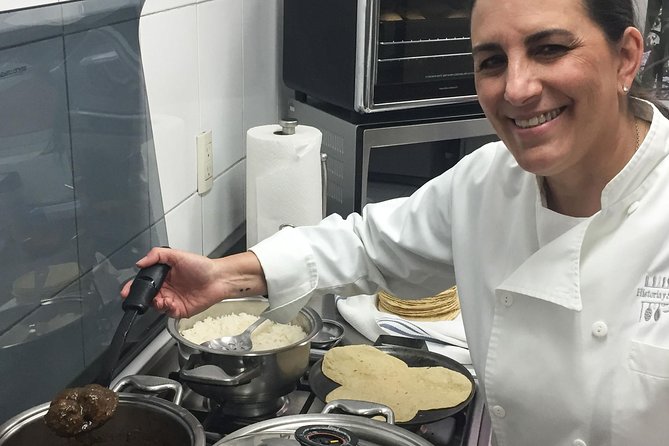
The menu varies by season and by the preferences you share in advance. The sample choices give you a good sense of the range.
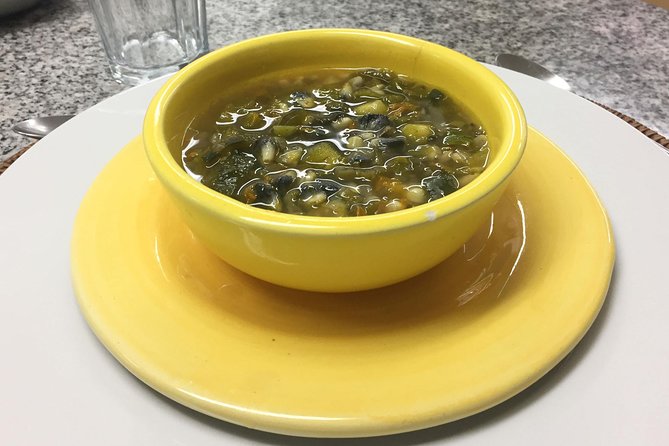
A starter might be nopalitos soup in bean broth, lima soup, tortilla soup, or Aztec soup. These are not interchangeable filler courses. Each offers a different introduction to Mexican flavor, from cactus and beans to tortilla and chile-based broths.
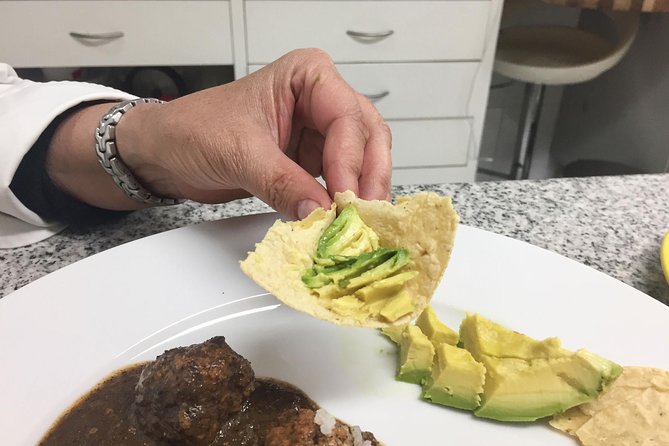
Main dishes may include albóndigas in smoky chile chipotle meco sauce, chiles en nogada, chicken in encacahuatado peanut sauce, or pork with verdolagas. Chiles en nogada is an especially interesting choice for anyone curious about a dish with a strong place in Mexican culinary tradition. The peanut sauce offers a different route, showing how nuts can give a savory dish body and depth.
Rice can be Mexican white rice, red rice, or black rice with plantain. Dessert options include guava sweets, mamey sweets, flan de cajeta, or gollorias, followed by coffee or tea.
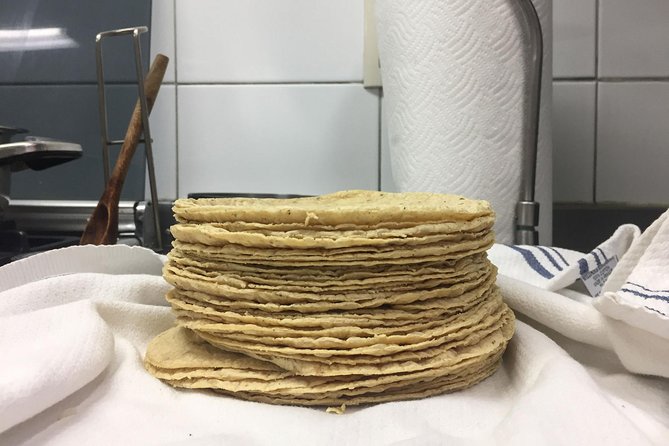
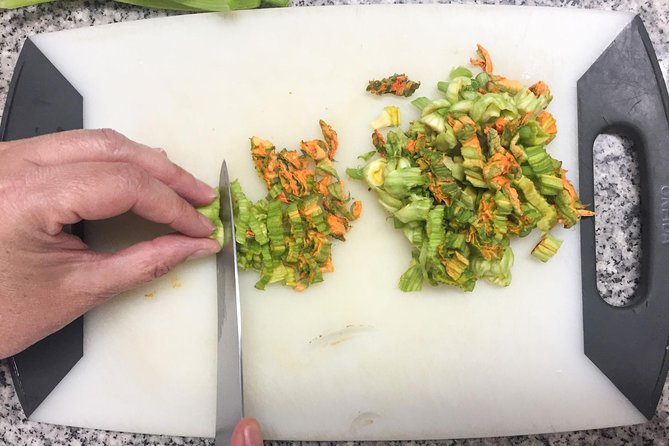
The actual class may go beyond those examples. Menus described in the experience include salsa verde, guacamole, quesadillas with squash blossoms or huitlacoche, sopes with chorizo, stuffed poblano peppers, Mexican rice, and poached guava dessert. One menu featured three kinds of fried quesadillas, an ancient pumpkin-seed mole called pipián verde, and a cactus pear dessert.
You may also encounter less familiar tastes. One meal included ant-egg tostadas, a vegan mole taco, a corn cake with rompope sauce, and a particularly memorable green salsa. These additions are part of what makes the class useful for adventurous eaters. You are not limited to the Mexican restaurant staples you already know.
Why the food history adds real value
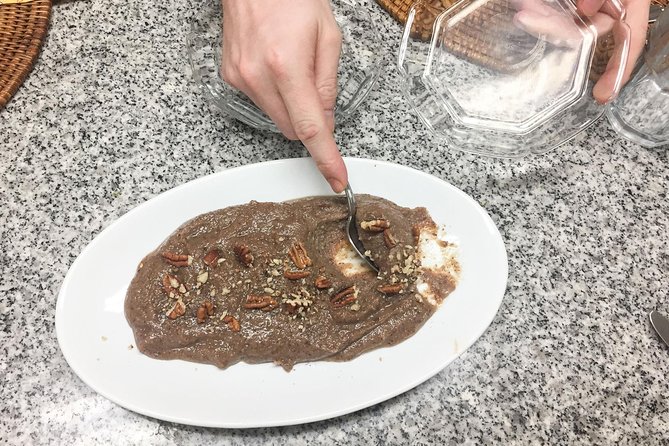
Lucía’s historical background changes the pace and purpose of the cooking. She explains how ingredients connect to Mexico and how food has shifted with the cultures that have shaped the country.
That lesson can help you read a menu later in your trip. You may recognize the role of pumpkin seeds in pipián, understand why cactus appears in everyday cooking, or appreciate how a dish combines techniques from different periods. You are learning a way of thinking about Mexican food, not only a list of ingredients.
Her broader conversations can also reach beyond recipes. She has discussed aspects of life in Mexico City, including education and health care, and has offered ideas for other distinctive places to visit. I would welcome that kind of conversation, but remember that the focus remains food. If you want a formal lecture on Mexican history, choose a museum or specialist walking tour instead.
The lesson also has a practical side. Several dishes are manageable at home, especially salsas, quesadillas, rice, and guacamole. The techniques are explained as part of the cooking, so you leave with more than a pleasant meal. You have a better chance of repeating at least some of it in your own kitchen.
Other private tours in Mexico City





The meal is part of the lesson
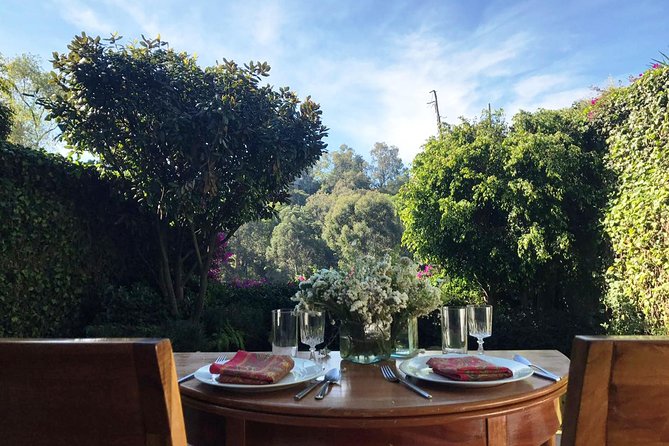
After the cooking, you sit down to eat together. The patio or garden gives the meal a slower, more social feel than eating over the counter. This is where the home visit pays off most clearly.
Alcoholic drinks are included, such as Mexican beer or tequila. A margarita may also appear, depending on the menu and Lucía’s choices. Coffee and tea are included with dessert. If you do not drink alcohol, tell the host when arranging your menu so expectations are clear.
The food is served as a complete meal rather than as scattered samples. That means you should arrive ready to spend time at the table. The class is not designed for someone who wants to rush through a cooking technique and leave.
I like the way this format links effort with reward. You have handled the ingredients, heard their stories, and then tasted the finished dishes in the same home. It gives the meal a sense of occasion without turning it into a formal performance.
Vegetarian and dietary needs
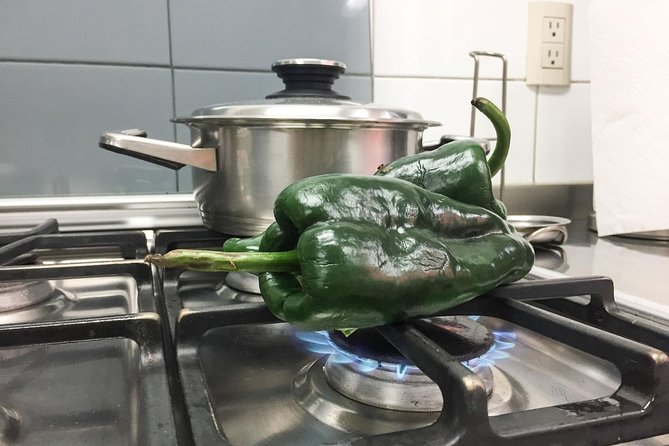
Vegetarian cooking is available, but you must request it when booking. The same applies to allergies, dietary restrictions, and cooking preferences. Do not wait until you arrive.
Lucía has created special vegetarian menus that include dishes such as salsa verde, quesadillas, stuffed peppers, and guava dessert. She can also adjust the menu around a stated allergy. One carefully planned meal included lime soup because it had been requested in advance.
This flexibility is one of the strongest reasons to choose a private class instead of a fixed group activity. Still, you should communicate clearly. List every allergy and restriction, and explain whether you want to avoid an ingredient entirely or simply replace it. The menu may change with the season, so ask what Lucía has planned if a certain dish matters to you.
Is $145 per person a fair price?
At $145 per person, this is a splurge. You are paying more than you would for a casual cooking lesson, but the comparison is not really with a basic class.
The price covers about three hours of private attention, a customized meal, several courses, alcoholic drinks, and the setting of Lucía’s home and garden. You also receive cultural background, cooking guidance, and a meal prepared by your own group. For a couple or a small group that values personal contact and food education, the package can make sense.
The value drops if you mainly want to watch someone cook while eating a large meal. It also becomes harder to justify if your group is large and only a few people get hands-on time. In that case, the private format is still pleasant, but the cooking instruction is spread across more people.
I would compare it with the cost of a special restaurant meal. The class may not replace a refined tasting menu, but it offers a different kind of evening. You get access to a home, a personal conversation, and recipes you can try later. For many people, that memory is worth more than another restaurant table.
Who will enjoy this most?
This suits couples, families, and small groups of friends who want food to be the center of a Mexico City day. It is especially good for people who ask questions, enjoy trying unfamiliar ingredients, and want a local connection rather than a standard tourist activity.
Families can benefit from the private setting and flexible pace. Children can participate at a simple level, and the garden offers some room for younger ones while adults work. Keep your expectations sensible: this is a cooking visit, not a dedicated children’s program.
Vegetarians should consider it, provided they request the right menu in advance. Adventurous eaters will also find plenty to like, from huitlacoche and verdolagas to pipián and cactus pear.
I would be less enthusiastic if you dislike social meals, cannot spend three hours around food, or want a highly technical professional cooking course. The emphasis is on Mexican culture, shared cooking, and conversation. You should not expect a certificate or restaurant-style training.
Practical details before you reserve
Confirmation is provided at booking, and the activity ends back at the meeting point. It is offered in English and uses a mobile ticket.
The experience is private and personalized. Service animals are allowed, and the meeting point is near public transportation. Since the menu can change by season, treat the sample dishes as possibilities rather than promises.
This experience is often reserved about 31 days ahead. That is useful planning information if your Mexico City dates are fixed, especially if you want a particular day or need a special menu.
Free cancellation is available when you cancel at least 24 hours before the start time. Cancellations or changes made inside that window are not refunded or accepted, and the cut-off follows Mexico City local time.
Should you book Lucía’s cooking class?
I would book this if you want a personal food experience that combines cooking, history, and a relaxed meal at home. The strongest reasons are Lucía’s ability to shape the menu, the chance to taste dishes you may not meet on a standard restaurant menu, and the garden setting for the final meal.
For the best value, book for two to four people, request hands-on participation, and send dietary needs well ahead of time. Use the exact meeting address, and leave enough time to reach San Ángel without rushing.
Skip it if your budget is tight or if you want a large, highly structured class with individual workstations. But if you see food as one of the best ways to understand Mexico, this is a thoughtful and unusually personal choice.
FAQ
How long does the Mexican cooking class last?
The experience lasts approximately three hours, including cooking, cultural conversation, and the shared meal.
Where does the experience take place?
It takes place in Lucía’s home in Mexico City. The listed meeting point is Santo Desierto, Tizampampano, Ciudad de México, CDMX, Mexico, in the San Ángel area.
Is this a private activity?
Yes. Only your own group participates.
Is the class offered in English?
Yes. The experience is offered in English.
Can I choose between cooking and watching?
Yes. You can choose a hands-on cooking experience or watch Lucía give a live cooking demonstration.
Can the menu be adapted for vegetarians or allergies?
Yes. Vegetarian options are available, and dietary restrictions, allergies, and cooking preferences can be accommodated when you advise them at booking.
Are drinks included?
Yes. The meal includes local alcohol such as Mexican beer or tequila. Coffee or tea is served with dessert.
Can I cancel for a full refund?
Yes, if you cancel at least 24 hours before the experience start time. Cancellations made less than 24 hours in advance are not refunded, and changes inside that period are not accepted.
More Cooking Classes in Mexico City

More Private Tours in Mexico City
More Cooking Classes in Mexico City
More tours in Mexico City we've reviewed









Cooking Classes, compared.
 ★ 5.0Mexican Cooking Class with Food Market Visit in Mexico CityFrom $1243 hours 30 minutes (approx.)
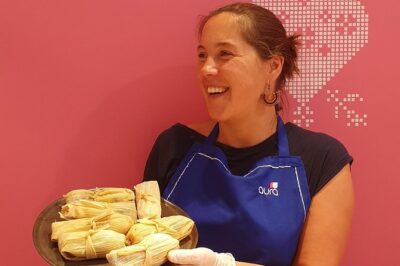 ★ 5.0Essence of Mexico: Authentic Mexican Cooking Class & Market TourFrom $1784 hours 30 minutes (approx.)
 ★ 5.0Mexican Cooking Class & Cocktails in Mexico CityFrom $1323 hours 30 minutes (approx.)
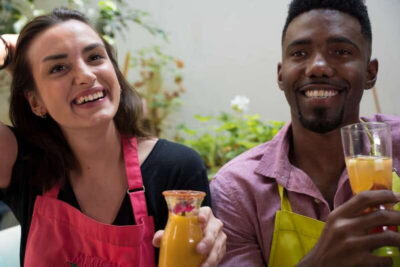 ★ 4.8Mexico City: Mexican Cooking ClassFrom $1213 hours
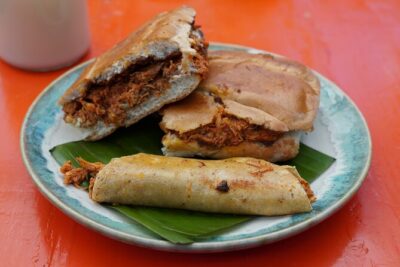 ★ 5.0México City: Street Food to Home Cooking Food TourFrom $1104 hours
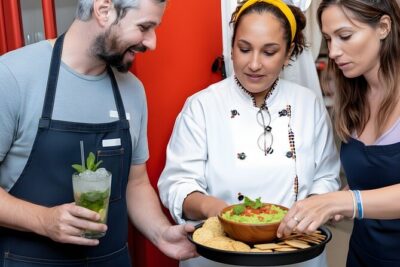 ★ 5.03h Cooking Class in Mexico City: 8 Recipes & Bottomless DrinksFrom $1104 hours (approx.)
 ★ 5.0Private San Angel Tour & Cooking Class in Mexico City with LuciaFrom $1555 hours (approx.)
★ 5.0Mexico City : Street Food to Home Cooking Food TourFrom $1133 hours (approx.)
★ 5.0Private San Angel Tour & Cooking Class in Mexico City with LuciaFrom $1555 hours (approx.)
★ 5.0Mexico City : Street Food to Home Cooking Food TourFrom $1133 hours (approx.)
The lists this tour appears in