
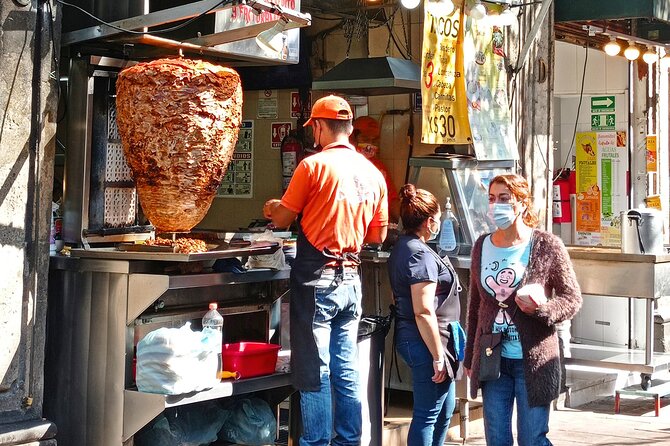
Reviewed · MEXICO CITY FOOD TOURS
Private Street Food & Mural Art Tour in Mexico City
Mexico City’s old center makes more sense when art, politics, architecture, and food share the same walking route. This private tour connects Diego Rivera’s powerful murals with the Palacio de Bellas Artes, Palacio Postal, the House of Tiles, the Cathedral, and the Zócalo, then spends about three hours tasting classic street foods.
In This Article
- Key points
- A mural before the meal
- Bellas Artes and Mexico’s mural movement
- Palacio Postal, the House of Tiles, and changing Mexico
- Three hours of Mexico City street food
- Cathedral and Zócalo, the city’s central story
- What the private format changes
- Is the experience good value?
- Who should book this half-day tour?
- Should you book it?
- FAQ
- How long does the Mexico City street food and mural tour last?
- What time does the tour start?
- Is this a private tour?
- Is the tour offered in English?
- What food is included?
- Are drinks such as beer and soda included?
- Is museum admission included?
- Can I cancel for a full refund?
I like the art-to-food structure, which gives you a useful introduction to Mexico rather than a string of disconnected sights. I also like that lunch is built around local staples such as tacos al pastor, tlacoyos, fresh juices, pan dulce, and chocolate. The main concern is reliability: one booking ended with the operator failing to appear or communicate, so confirm the meeting details before setting aside your day.
Key points
- Diego Rivera sets the tone: Begin with Sueño de una Tarde Dominical en la Alameda Central, one of Mexico’s best-known murals.
- Four or five food stops: Expect tacos al pastor, tlacoyos, juices, chocolate, pan dulce, coffee, and tea.
- A private format: Only your group participates, with an English-language guide.
- A broad history lesson: The route moves from Aztec foundations and colonial rule to Porfirio Díaz, the Mexican Revolution, and modern Mexican art.
- About five to six hours: The food portion takes roughly three hours, so this is not a quick snack walk.
- Check the pickup carefully: Pickup is offered, but the exact meeting arrangement is not specified in the supplied details.
A mural before the meal
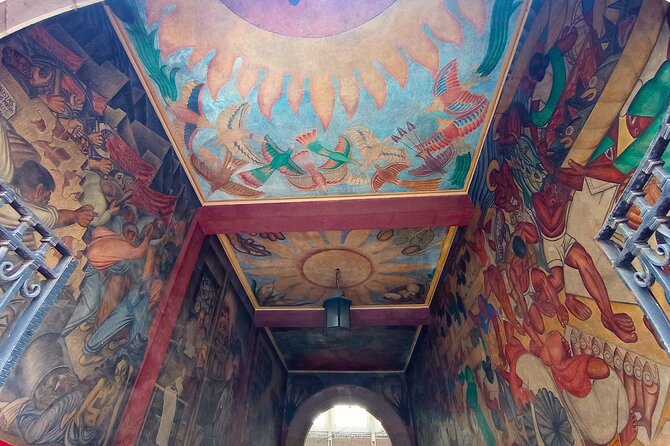
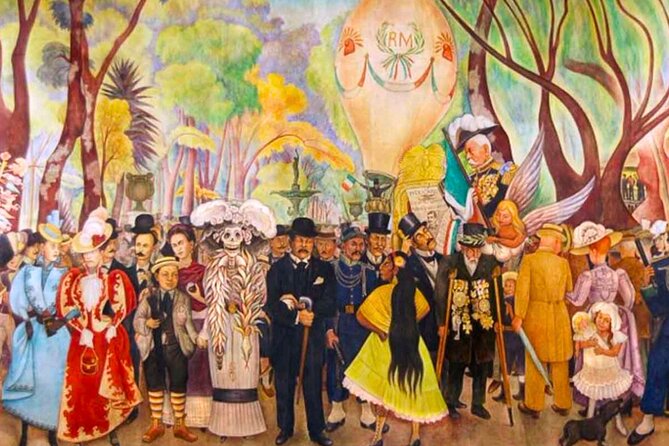
The tour opens at Museo Mural Diego Rivera, where you spend about 20 minutes with Sueño de una Tarde Dominical en la Alameda Central. The mural presents a crowded procession of Mexican figures from different eras, and the guide explains its symbols, characters, and place in Rivera’s career.
This is a smart first stop. Instead of seeing public buildings as pretty backdrops, you begin with a visual lesson in how Mexico tells its own story. Rivera’s work brings together Indigenous traditions, colonial figures, political leaders, workers, artists, and ordinary people. That makes the later stops easier to understand.
Admission to the museum is included. Twenty minutes is enough for an introduction, but it is not a long museum visit. If you enjoy art, you may want extra time before or after the tour to return to the mural at your own pace.
From the museum, the route continues into Alameda Central for about 10 minutes. This park appears in Rivera’s mural, so the walk creates a direct link between the painted city and the real one. The guide uses the park to discuss Mexican customs across different historic periods.
The short stop is more about orientation than close study. You will not have time for a full park tour, but you will see how a central public space fits into the city’s story. The setting also gives you a break between indoor sights.
A few more Mexico City tours and experiences worth a look



Bellas Artes and Mexico’s mural movement
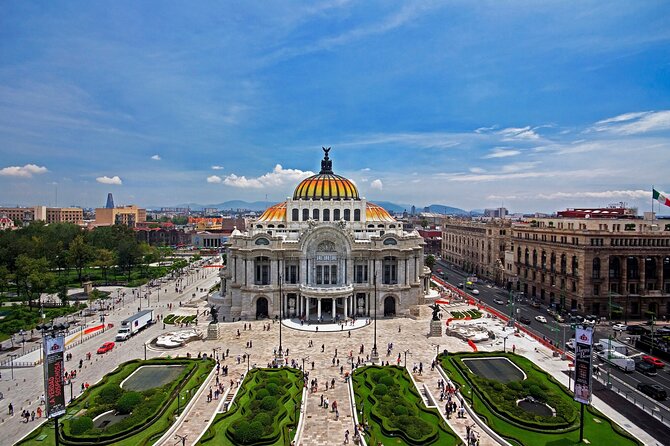
The 40-minute visit to Palacio de Bellas Artes is one of the tour’s strongest cultural sections. Here you learn about Mexico’s mural movement and see important works by its leading artists.
Bellas Artes is also worth attention as a building. Its design mixes architectural styles, reflecting the long period of its construction and the changing tastes of Mexico’s ruling class. The guide explains how the palace was built and why its appearance feels different from the streets around it.
The mural rooms give the tour political weight. Mexican muralism was not simply decoration for grand walls. It used public art to present national identity, social struggle, workers, Indigenous culture, and the country’s past to a broad audience.
Admission is included, which helps the value of the tour. You get a guided introduction without having to arrange a separate visit. Still, 40 minutes goes quickly in a building with major murals and detailed architecture. I would treat this as a strong overview, not a complete study of Bellas Artes.
Palacio Postal, the House of Tiles, and changing Mexico
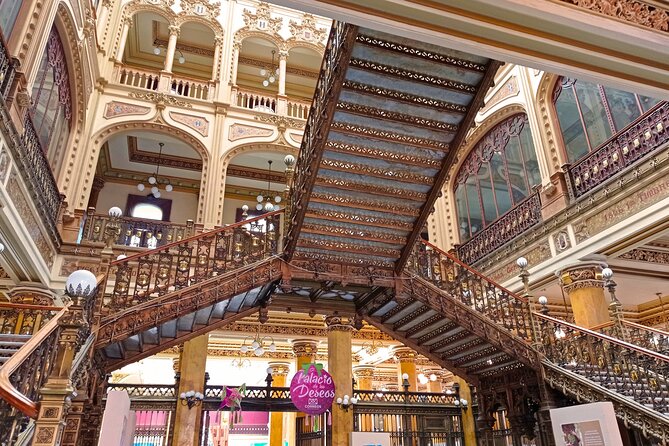
The next two stops shift from mural art to architecture and political history. At Palacio Postal, you spend about 20 minutes learning about colonial and pre-revolutionary design, as well as the role of Porfirio Díaz in Mexico’s modernization.
This stop also sets up the question of what caused the Mexican Revolution. The tour connects grand public projects and modernization with the tensions that shaped the country at the start of the twentieth century. That context helps you see the historic center as more than a collection of attractive facades.
Palacio Postal is a free stop, so the visit focuses on the exterior or shared public areas available during the tour. The details provided do not promise a full interior visit or special access. Keep that in mind if you are expecting an extended architectural tour.
The House of Tiles follows, with another 20-minute stop. The guide explains how this colonial palace became a restaurant, as well as the difference between azulejos and Talavera. The building’s tiled exterior is a clear example of how European materials and Mexican craft traditions came together.
This is a compact but useful lesson. Azulejos generally refers to decorated ceramic tiles, while Talavera is a Mexican pottery tradition with its own techniques and regional identity. The House of Tiles gives those terms a place you can actually see.
You will have time to admire the building and hear its story, but not necessarily to sit down for a meal there. The food portion comes later, at several street-food locations.
Three hours of Mexico City street food
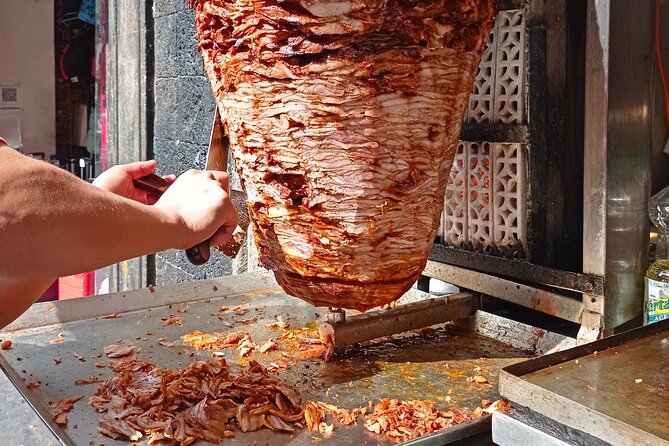
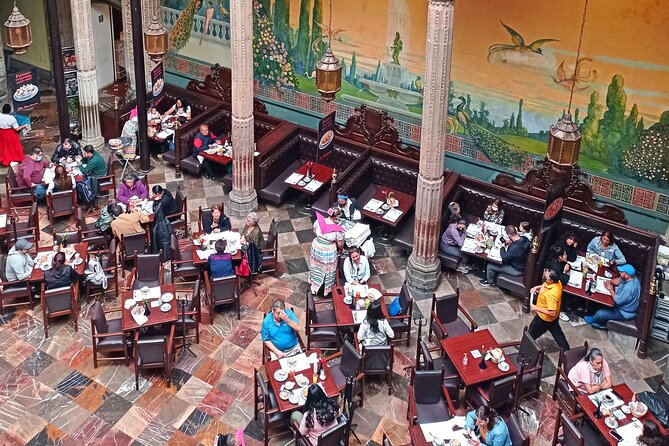
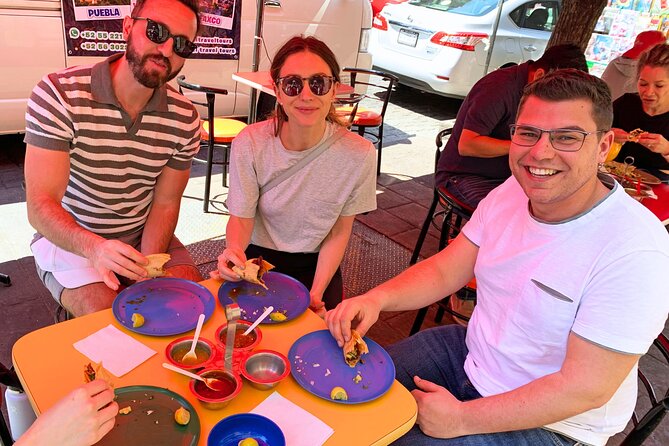
The food section takes about three hours, making it the center of the experience. You stop at four or five gastronomic spots in Centro Histórico and taste a range of Mexican staples.
The included lunch features tacos al pastor, tlacoyos, pan dulce, and juices, with snacks, bottled water, coffee, and tea also provided. Beer and soft drinks are not included, so bring some extra money if you want one.
Tacos al pastor offer a useful introduction to Mexico City’s street-food culture. The tour promises more than a quick bite, since the guide explains the ingredients and the traditions behind the food. The stated goal is to show why Mexican cuisine has UNESCO recognition as Intangible Cultural Heritage.
Tlacoyos add a different texture and style to the meal. They are made from masa and commonly shaped into an oval, giving you a chance to try something beyond the more familiar taco. Fresh juice, chocolate, and sweet bread widen the picture further, showing how Mexican eating habits move from savory food to drinks and dessert.
I like the long food block because it leaves room for explanation and comparison. A rushed tasting can give you a full stomach but little understanding. Three hours gives the guide time to explain how the dishes fit into Mexican cooking and to help you make sense of unfamiliar flavors.
The tradeoff is timing. The tour begins at 11:00 a.m., and the food portion may run through the middle of the day. If you prefer a light breakfast or a quick lunch, this schedule may feel slow. If you want a substantial meal and a food lesson in one, it makes better sense.
The tour does not provide a detailed list of vendors, exact dishes at each stop, or allergy information. If you have food restrictions, ask before booking. The supplied details confirm the general foods included, but they do not promise substitutions.
Cathedral and Zócalo, the city’s central story
After the food stops, the route reaches Catedral Metropolitana de la Ciudad de México. The visit lasts about 20 minutes and covers one of the city’s most important religious buildings.
The Cathedral was built on the site of the Aztec temples and the Templo Mayor area. That physical location makes the building a useful place to discuss conquest, colonial rule, and the reshaping of Mexico City under New Spain.
Twenty minutes allows for a focused explanation, not a full examination of every chapel, altar, or architectural detail. The tour is designed to show how the Cathedral fits into the larger story of the city. You may want a separate visit if religious art or architecture is a major reason for your trip.
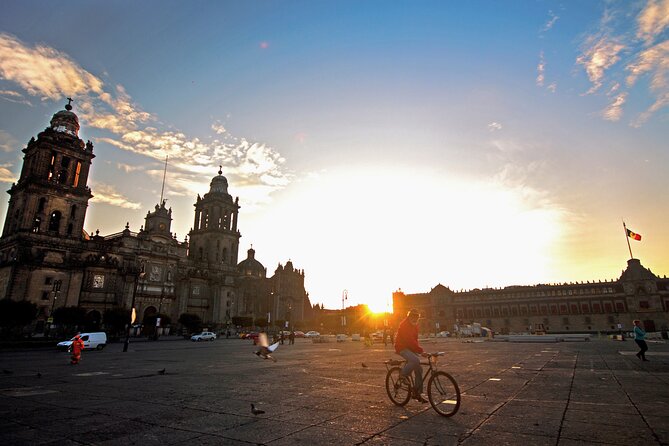
The final stop is the Zócalo, Mexico City’s central square. The 10-minute visit covers Mexico-Tenochtitlan, the Conquest, colonization, New Spain, and the later formation of Mexico.
The short stop works as a conclusion because so many of the tour’s themes meet here. Indigenous foundations, Spanish rule, national identity, religion, government, and public life all overlap around the square. Ten minutes is enough to get the main timeline, but you will not receive a complete history of Mexico in that time.
A few more Mexico City tours and experiences worth a look





What the private format changes
This is a private activity, so only your group participates. That can make a real difference in the historic center, where narrow sidewalks, busy public spaces, and noisy streets can make a large group awkward.
A private guide can adjust the pace, spend longer on a mural, or give more attention to the food stops. The supplied information does not name the guide, so you should not book this expecting a particular person. The tour is offered in English.
Pickup is offered, and the tour uses an air-conditioned vehicle. At the same time, much of the route is built around walking through the Centro Histórico. Comfortable shoes matter more than anything else you pack for the day.
The listed start time is 11:00 a.m. The full experience lasts about five to six hours. Plan for a half day that may stretch toward late afternoon, especially if food stops take their full scheduled time.
The tour is near public transportation, which gives you another way to reach the area if pickup details are unclear. Confirmation is sent at booking. Still, because one customer was left waiting when the operator did not arrive or communicate, I would verify the pickup time, location, and contact method shortly before the tour.
Is the experience good value?
No price is provided here, so I cannot judge the exact cost. The value depends on how much you would otherwise pay for museum admission, food, transport, and a private guide.
The included items are substantial: museum and Bellas Artes admission, lunch foods, snacks, bottled water, coffee or tea, and an air-conditioned vehicle. You are also paying for interpretation across art, architecture, politics, religion, and cuisine.
A private tour generally costs more than a group walk, but it can suit you if you want flexibility and do not want to manage several separate bookings. The experience is less convincing if you only want street food, since nearly two hours are given to murals, buildings, the Cathedral, and the Zócalo before and around the meal.
The biggest value question is dependability. A well-run private tour can be an efficient first look at central Mexico City. But if the operator does not show or communicate, the value disappears entirely. Confirming the arrangements is not a minor step here.
Who should book this half-day tour?
I would recommend it to a first-time visitor who wants a broad introduction to Mexico City’s center. You get major sights, a long food tasting, and a basic timeline from the Aztec period through colonial rule, Porfirio Díaz, the Revolution, and modern muralism.
It also suits you if you like learning through contrasts. A Rivera mural, an ornate post office, a tiled colonial palace, a Cathedral, and a taco stop reveal different sides of the same city.
Families and mixed-interest groups may find the private format useful because the guide can balance art, food, and history. Most people can participate, according to the supplied details, and the tour is near public transport.
I would be more cautious if you need guaranteed punctuality, have strict dietary requirements, or want a slow, specialist visit to every museum and church. The route covers a lot, so each cultural stop is an introduction rather than a long examination.
The cancellation policy allows a full refund if you cancel at least 24 hours before the 11:00 a.m. start time. Changes or cancellations inside that period are not accepted for a refund. The experience requires good weather, and a weather cancellation offers a different date or a full refund.
Should you book it?
Book this tour if you want one private day of food, murals, and central Mexico City history instead of arranging several shorter activities. Its best feature is the way the subjects connect: Rivera helps explain national identity, architecture shows political change, and street food brings the story back to daily life.
Before paying, confirm that the operator has your correct phone number and that you know exactly where pickup will occur. That extra check matters because the only detailed customer account describes a complete failure to appear or communicate.
If the operator confirms promptly, this can be a useful first-day orientation. If communication remains unclear, choose another tour. The food and cultural plan are appealing, but a good plan only has value when the guide arrives.
FAQ
How long does the Mexico City street food and mural tour last?
The experience lasts approximately five to six hours.
What time does the tour start?
The listed start time is 11:00 a.m.
Is this a private tour?
Yes. Only your group participates in the activity.
Is the tour offered in English?
Yes. The tour is offered in English.
What food is included?
Included food includes tacos, tlacoyos, pan dulce, juices, and snacks. Coffee and tea are also included.
Are drinks such as beer and soda included?
No. Beer and sodas are not included. Bottled water, coffee, and tea are included.
Is museum admission included?
Admission is included for Museo Mural Diego Rivera and Palacio de Bellas Artes. The other listed stops have no admission charge.
Can I cancel for a full refund?
Yes, if you cancel at least 24 hours before the local start time. Cancellations or changes made less than 24 hours before the start are not refunded or accepted.
More City Tours in Mexico City

More Food Experiences in Mexico City
More Mexico City Food Tours in Mexico City
More tours in Mexico City we've reviewed



Mexico City Food Tours, compared.
 ★ 5.0Historic Center Food Tour in Mexico CityFrom $1155 hours (approx.)
 ★ 5.0Xochimilco Barco Fiesta Tentacion 18+ with Open Bar and TacosFrom $592 hours (approx.)
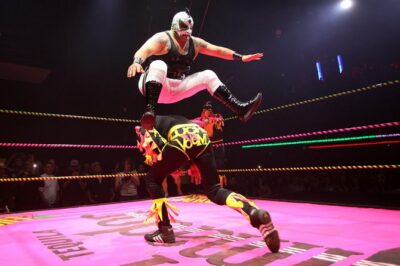 ★ 5.0Lucha Libre Tickets & Tacos & Beer & Mezcal – BEST NIGHT EVER!From $84
 ★ 5.0Polanco Food Tour: The Bestselling Food Adventure in Mexico CityFrom $1093 hours (approx.)
 ★ 5.0Colonia Roma Food TourFrom $1104 hours (approx.)
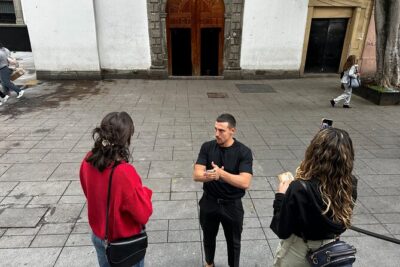 ★ 5.0Mexico City Historical Centre Food Tour with 7 Authentic TastingsFrom $653 hours (approx.)
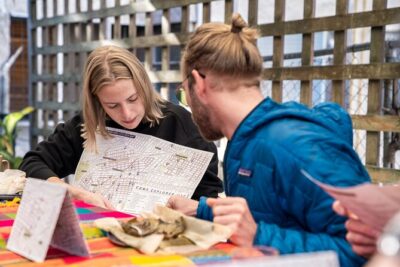 ★ 5.0Street Food Tour with Friends4 hours 30 minutes (approx.)
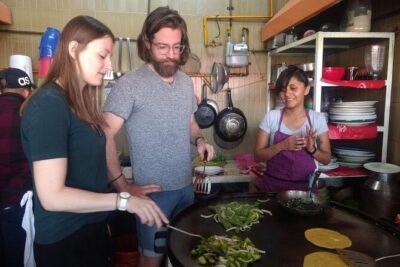 ★ 5.0Mexico City: Hidden Markets, Street Food & Salsa-Making TourFrom $695 hours (approx.)
The lists this tour appears in