

Reviewed · TOURS
Special Pre-Hispanic Day of the Dead Tour
Mexico City’s Day of the Dead story is much bigger than painted skulls and cemetery visits. This two-hour to two-and-a-half-hour walk links Diego Rivera’s view of Mexico, colonial power, grand civic buildings, and Aztec ideas about life and death. It is a compact way to make sense of the historic center.
In This Article
- Key points before you book
- Why this Day of the Dead walk works
- Starting with Diego Rivera’s mural
- Alameda Central and the city’s oldest public park
- Palacio Postal and Mexico City’s grand architecture
- The theater linked to Esperanza Iris
- The Palace of Medicine and the Holy Office
- Ending at Museo del Templo Mayor
- What the $58.51 price really covers
- Group size, language, and physical demands
- Who will get the most from this tour
- Should you book the Special Pre-Hispanic Day of the Dead Tour?
- FAQ
- Where does the tour start?
- Where does the tour end?
- How long does the tour last?
- Is the tour offered in English?
- What is included in the price?
- Are meals included?
- Are tips included?
- How large can the group be?
- Can I cancel for a full refund?
I like the clear route from the Diego Rivera Mural Museum to Templo Mayor, and I like that the guide explains history as you move through the streets rather than keeping you inside one museum. Ana, one named guide associated with the tour, is praised for making a large amount of history easy to follow. The main drawback is the pace: several stops receive only 15 minutes, so this is an overview rather than a slow museum visit.
Key points before you book
- A 2 to 2.5-hour walk connects Spanish, modern Mexican, and Aztec history.
- The Diego Rivera mural gives you a visual starting point for Mexico’s political past.
- Alameda Central and Palacio Postal add sculpture, legends, and ornate architecture.
- The route explains the former Palace of the Inquisition and the present Palace of Medicine.
- Templo Mayor is the final stop, with attention to Aztec beliefs and rituals around death.
- The $58.51 price includes the guide and tickets, while tips and meals cost extra.
Why this Day of the Dead walk works

The smartest feature of this experience is its structure. You do not begin with an isolated explanation of Aztec religion and then jump randomly through the city. Instead, you move through several periods in order, with the guide using art and buildings to explain how Mexico changed.
That matters during Day of the Dead season, when it is easy to focus only on decorations and costumes. This tour gives the celebration a wider setting. You hear about the people who shaped Mexico, the Spanish institutions that controlled colonial life, and the Aztec view of death before ending at Templo Mayor.
I also like the manageable length. At about two hours to two-and-a-half hours, the walk can fit into a morning or afternoon in Mexico City’s Centro Histórico. You finish at Templo Mayor Museum, close to other major sights in the historic center.
The tradeoff is that you should not expect a full museum tour at every stop. The scheduled visits are short, especially at Alameda Central and Palacio Postal. If you want time to study every display or photograph each architectural detail, you will need to return on your own.
If you're still narrowing it down, here are other tours in Mexico City we've reviewed.
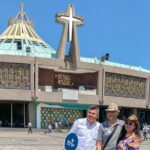


Starting with Diego Rivera’s mural
The tour begins at Museo Mural Diego Rivera on Calle Colón Balderas. This is a strong opening because Rivera’s mural presents Mexican history through a crowded cast of political and social figures.
The guide uses the mural to explain characters who changed the country. That gives you a visual map before the walking portion begins. Instead of memorizing a long list of names, you can connect historical figures to a single work of art and then recognize their influence as the tour continues.
The visit here lasts about 25 minutes, and admission is included. That is enough time for an explanation of the mural’s main figures and themes, though not necessarily enough for a careful independent study of every detail.
I would pay close attention to the guide’s larger story rather than trying to identify every person in the painting. The point is to see how Mexico’s past is presented through art, conflict, and national memory. The transition from mural to street also works well: you move from a painted version of Mexico to the real buildings and public spaces where that story unfolded.
Alameda Central and the city’s oldest public park

From the mural museum, the route continues to Alameda Central. The park was ordered by Viceroy Luis de Velasco in 1592 and is described as the first public park in the Americas.
The stop lasts about 15 minutes. That is brief, but the guide uses it to explain the park’s original purpose, its classic sculptures, and the changes it has gone through. You get a useful reminder that this is not simply a pleasant patch of greenery. It is a public space shaped by colonial authority and later city life.
I like this stop because it lets you see history at street level. You are not only looking at a museum object. You are standing in a place that has been used and altered over centuries.
Still, the short timing means you should expect a focused explanation rather than a full circuit of the park. If Alameda Central interests you, leave time before or after the tour to explore it at your own speed. The park itself has no separate admission charge as part of this visit.
Palacio Postal and Mexico City’s grand architecture
The next listed stop is Palacio Postal, one of the city’s most striking buildings. The guide explains its legends and points out details of its eclectic architecture.
This is where the tour shifts from broad history to close observation. Look up, look across the halls, and notice how many decorative elements compete for your attention. The value of the stop is not just learning that the building is beautiful. It is understanding how architecture can express status, ambition, and the city’s changing identity.
You have about 15 minutes here. That makes the guide especially useful, since you need someone to direct your eyes to the details that might otherwise blur together. The stop is included in the walking route, with no separate admission charge stated.
The limitation is obvious: Palacio Postal deserves more than a quick look. You may leave wanting additional photographs or a longer architectural inspection. I would treat this as an introduction and plan another visit if ornate historic buildings are high on your list.
The theater linked to Esperanza Iris

The route also includes one of Mexico City’s early important theaters, created by operetta queen Esperanza Iris. The supplied schedule does not give this stop a number or a separate duration, so the guide appears to cover it as part of the walk between the other main locations.
This adds another layer to the city’s story. You move from political murals and colonial spaces to performance and popular culture. Esperanza Iris gives the stop a specific human figure, rather than leaving the theater as just another old facade.
Because no admission detail or exact timing is provided for this part, you should think of it as a guided exterior or short interpretive stop unless your guide explains otherwise. The tour’s main strength here is context: you learn why the theater mattered and how it fits into Mexico City’s cultural past.
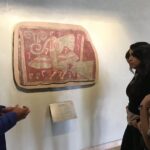
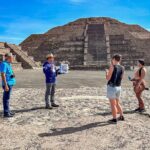



The Palace of Medicine and the Holy Office

Another stop covers the building that was the Palace of the Inquisition during colonial times and is now the Palace of Medicine. The guide explains the Holy Office, giving you a look at the institutions behind colonial religious control.
This portion may be one of the most serious sections of the tour. It connects architecture with authority, fear, and the ways religious courts affected colonial society. The building’s present identity as the Palace of Medicine also shows how the same space can take on a very different role over time.
The schedule does not provide a separate duration or admission detail for this stop. That makes it hard to know how much time you will spend inside or outside. I would listen for the guide’s explanation of the building’s changing purpose, since that is the key point rather than simply viewing another historic facade.
This stop also helps prepare you for Templo Mayor. The tour moves from one belief system and system of power to another, without pretending that Mexico’s history is a simple straight line.
Ending at Museo del Templo Mayor
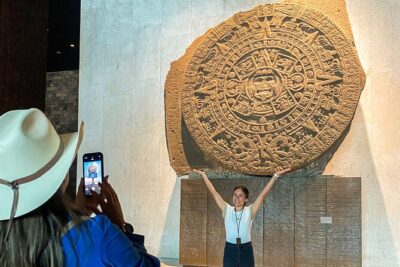
The final stop is Museo del Templo Mayor, at Seminario 8. The tour ends here, with about 30 minutes devoted to the Aztec worldview concerning life and death and to rituals organized for the gods.
That ending fits the Day of the Dead theme better than a quick stop at a decorated plaza would. You receive an explanation of how the Aztecs understood death, ritual, and the relationship between human life and the gods. The focus is on worldview, not just spectacle.
The half-hour is long enough for a useful introduction, though you should not confuse it with a complete museum visit. The Templo Mayor site and museum can hold your attention well beyond the tour’s final explanation. If you want to inspect the collection in detail, plan a separate visit and check the time you have available after the walk.
Ending here is also practical. You are already in the Centro Histórico, and the tour does not leave you back at the starting point. That one-way route saves time if Templo Mayor is your next sight.
What the $58.51 price really covers

At $58.51 per person, this is not the cheapest way to walk around central Mexico City. The value depends on how much historical explanation you want.
The price includes tickets and a guide. That matters because the tour covers several periods and subjects that are easy to mix up: Rivera’s historical figures, colonial government, public parks, theater, the Inquisition, and Aztec ritual. You are paying for the connections between these places, not simply for transportation or entry.
Meals are not included, and tips are not included. Since the activity lasts only two to two-and-a-half hours, you will need to handle food separately. I would pair it with lunch or another museum visit in the Centro Histórico rather than expect a full-day outing.
For a first visit to Mexico City, the price can make sense if you want a guided foundation. If you already know the historic center well or prefer to read museum labels at your own pace, you may find the cost harder to justify. The short format gives you a useful overview, but it does not replace independent sightseeing.
Group size, language, and physical demands
The tour is offered in English and can include a maximum of 25 people. That is a moderate group size. You should be able to hear the guide more easily than in a very large group, though the experience will not feel private.
The route is a walking tour through central Mexico City. The available information says most people can participate, and service animals are allowed. It is also near public transportation, which is helpful for reaching the starting point and continuing after the tour ends.
The meeting point is Museo Mural Diego Rivera, at Calle Colón Balderas s/n in Colonia Centro. The finish is Museo del Templo Mayor. Since the start and end points differ, check your plans carefully. The one-way design is useful, but it means you should not assume you will return to the mural museum.
The activity is booked, on average, 12 days ahead. That does not guarantee it will sell out, but it is a sensible reason to reserve early if your Mexico City dates are fixed. Confirmation arrives at booking, and free cancellation is available up to 24 hours before the start time. Inside that 24-hour window, the payment is not refunded and changes are not accepted.
Who will get the most from this tour
I would recommend this experience to you if you want a short, guided introduction to Mexico City’s historic center and need help connecting different eras. It suits first-time visitors, people interested in Day of the Dead traditions, and anyone who prefers history explained in plain language while walking.
It also fits a busy schedule. You can use the tour as an opening lesson, then return to the places that caught your attention. The final stop at Templo Mayor makes it especially useful if that museum is already part of your plans.
I would hesitate to recommend it if you want a slow architectural walk, a detailed art lecture, or a full museum experience. The number of stops is high for the time available. You will see several important places, but some explanations must stay concise.
The praise for the guide’s clarity is important here. Ana is specifically noted for giving a thorough summary of Mexican history while walking through the city. That is exactly the skill this route needs. The guide must keep the story moving without turning it into a string of disconnected dates.
Should you book the Special Pre-Hispanic Day of the Dead Tour?
Book it if you want context more than ceremony. This experience does not appear to be a parade or a hands-on Day of the Dead event. Instead, it explains how Mexican history, colonial power, Aztec belief, art, and public spaces shape the meaning behind the season.
At $58.51, I see the strongest value in the English-speaking guide and the carefully linked route. You get the mural museum, Alameda Central, Palacio Postal, the Esperanza Iris theater, the former Palace of the Inquisition, and Templo Mayor in one compact walk.
Go in expecting an overview, not a set of long museum visits. If that suits your plans, this is a practical and focused way to begin exploring Mexico City’s center.
FAQ
Where does the tour start?
The tour starts at Museo Mural Diego Rivera, Calle Colón Balderas s/n, Colonia Centro, Centro, Cuauhtémoc, 06040 Ciudad de México, CDMX, Mexico.
Where does the tour end?
The tour ends at Templo Mayor Museum, Seminario 8, Centro Histórico de la Ciudad de México, Centro, Cuauhtémoc, 06060 Ciudad de México, CDMX, Mexico.
How long does the tour last?
The estimated duration is two hours to two hours and 30 minutes.
Is the tour offered in English?
Yes. The tour is offered in English.
What is included in the price?
Tickets and a guide are included.
Are meals included?
No. Meals are not included.
Are tips included?
No. Tips are not included.
How large can the group be?
The maximum group size is 25 people.
Can I cancel for a full refund?
Yes, if you cancel at least 24 hours before the experience starts. Cancellations made less than 24 hours before the start time are not refunded.
More tours in Mexico City we've reviewed


Tours, compared.
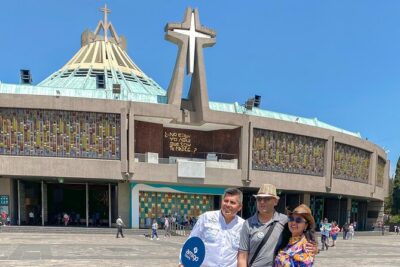 ★ 5.0Teotihuacan, Guadalupe Shrine & Tlatelolco Day Tour with LunchFrom $399 hours (approx.)
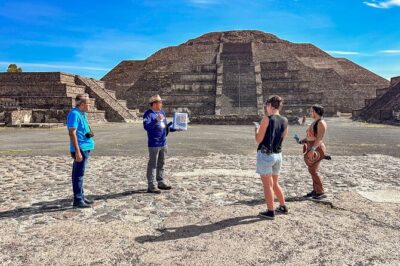 ★ 4.5Teotihuacan Early Access Guided Tour with optional LunchFrom $398 hours (approx.)
 ★ 4.6Mexico City: Teotihuacan, Tlatelolco & Guadalupe Shrine TourFrom $49
 ★ 4.4CDMX: Xochimilco, Coyoacan, Frida Kahlo Museum & Murals TourFrom $89
 ★ 5.0Hot Air Balloon Flight with Breakfast Cave and Pyramids TourFrom $1408 hours (approx.)
 ★ 5.0Teotihuacan Private Tour from Mexico CityFrom $1401 to 5 hours (approx.)
 ★ 5.0Balloon flight with breakfast in Cave and Pyramids tour from CDMXFrom $1483 to 9 hours (approx.)
 ★ 4.5Chapultepec Castle & Anthropology Museum TourFrom $795 hours (approx.)