
Reviewed · TEOTIHUACAN TOURS
Teotihuacan Archaeology Tours
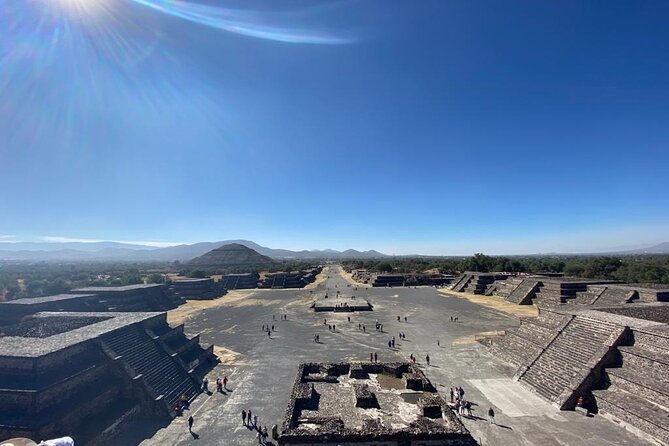
Teotihuacan is most striking in the quiet morning, when early light spreads across the pyramids and the Avenue of the Dead is not yet crowded. This private walking tour puts an archaeologist or anthropologist beside you, with Jorge Archer and David among the guides who lead the experience.
In This Article
- Key points to know before you book
- Why an archaeologist changes the Teotihuacan visit
- Meeting Teotihuacan in the early morning
- Walking the Citadel and Street of the Dead
- Climbing the Sun Pyramid
- The Moon Pyramid and the city’s grand axis
- Quetzalpapalotl Palace and Wall Paint Palace
- The museum as an optional final stop
- What the $100 price really buys
- Time, pace, and physical effort
- Who will get the most from this tour
- Booking, cancellation, and practical planning
- Should you book Teotihuacan Real Archaeology Tours?
- FAQ
- How much does the Teotihuacan archaeology tour cost?
- How long does the tour last?
- Where do I meet the guide?
- Can transport from Mexico City be arranged?
- Which places are visited?
- Who guides the tour?
- Is the tour private?
- Can I cancel the booking?
I like the site-based expertise and the chance to ask real questions about excavation, evidence, and competing theories. I also like the private format, which lets you set the pace and spend more time at places such as the Citadel and Wall Paint Palace.
The main catch is price. At $100 per person, plus admission, parking, and transport, this costs more than a basic group outing. It makes the most sense if you care about archaeology and want serious interpretation rather than a quick pyramid photo stop.
Key points to know before you book
- Sunrise timing: Start early for softer light, cooler walking conditions, and a quieter archaeological zone.
- Archaeologist-led visit: Jorge Archer and David bring field experience and explain not only what is known, but how researchers know it.
- Private group format: Only your party takes part, so questions and pacing are more flexible than on a large coach tour.
- Major monuments included: Walk the Street of the Dead, Citadel, Sun Pyramid, Moon Pyramid, Quetzalpapalotl Palace, Wall Paint Palace, and possibly the museum.
- Transport is separate: You meet at Teotihuacan, though transport from Mexico City can be arranged for an additional fee.
- Expect real walking: The visit lasts about two to four hours, with pyramid climbing and a moderate fitness requirement.
Why an archaeologist changes the Teotihuacan visit
Teotihuacan is easy to see and surprisingly hard to understand. You can walk along its broad ceremonial avenue, climb a pyramid, and take impressive photographs without learning much about the people who built the city.
That is where this tour earns its keep. Jorge Archer is described as a researcher with more than 12 years of experience, and David is also a trained archaeologist with a strong interest in Mesoamerican history. Their role is not simply to point out buildings. They explain the structures, artwork, urban plan, excavation process, and theories about the city’s people.
I especially value the way this kind of guide can separate firm evidence from interpretation. Teotihuacan was an enormous city, but many parts of its political and social life remain uncertain. A good specialist can tell you what archaeologists have found, what those finds may mean, and what is still debated.
That approach suits you if you enjoy asking why. Why was the city arranged this way? What do the murals show? How did researchers identify different uses for the buildings? What can bones, pottery, paint, and architecture reveal about daily life? A standard sightseeing guide may cover the main names and dates. This tour aims at the questions behind them.
The private format matters here. You are not trying to hear over a large group, and you can pause when something catches your attention. One couple spent close to six hours at the site with David because the conversation and additional walking kept developing. The advertised visit is shorter, but you may be able to arrange an expanded version.
A few more Mexico City tours and experiences worth a look
Meeting Teotihuacan in the early morning
The tour begins at the archaeological zone rather than with hotel pickup. The listed starting point is in the Tuxpan area near Teotihuacan, and the tour ends at Palacio de Quetzalpapalotl in Teotihuacan Centro.
That means you need to plan the first part of your day carefully. From Mexico City, you can reach the site by taxi or bus, including buses from Terminal del Norte. Transport can also be arranged through the provider for an added cost, but you need to request it when booking.
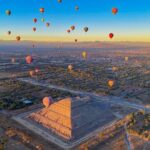
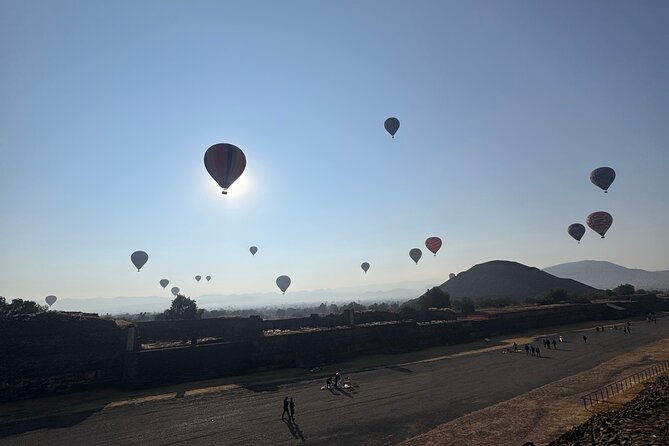
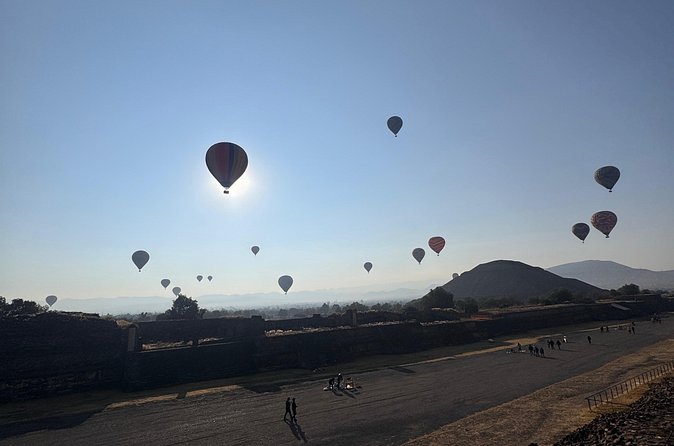
An early start takes more effort, but it gives you two useful advantages. First, the morning light makes the pyramids and long avenue especially photogenic. Second, the site can feel calmer before the busiest part of the day. The precise sunrise view will depend on the season and the day’s weather, so treat it as a strong possibility rather than a guaranteed sunrise spectacle.
One useful practical detail is communication before the tour. David has been described as contacting participants through WhatsApp a day or two before the visit, particularly when helping with transport. Confirmation itself is sent within 48 hours of booking, subject to availability.
Walking the Citadel and Street of the Dead
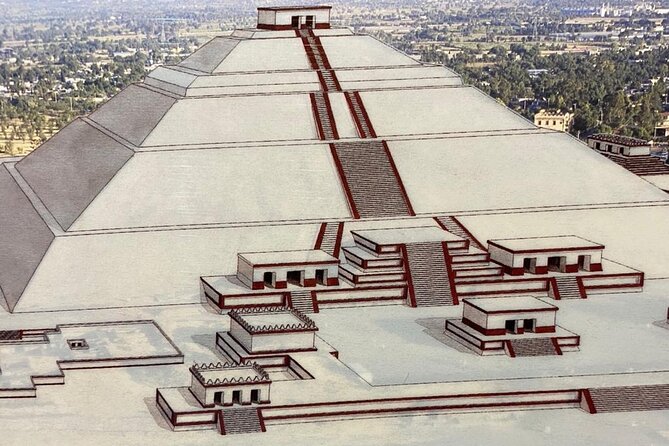
The Citadel is one of the first major areas on the route. This broad complex helps you see Teotihuacan as an organized ceremonial and civic center, not merely a collection of isolated pyramids.
From there, the route continues along the Avenue of the Dead, also called the Street of the Dead. This is the central axis of the site, and walking it gives you a sense of the city’s scale. The name can sound dramatic, but the important point is its role as a planned avenue linking major compounds and monuments.
I would pay close attention here to the relationship between open plazas, platforms, stairs, and the distant pyramids. A guide with archaeological training can help you read the site horizontally, by showing how buildings relate to one another, and vertically, by explaining how height, procession, and ceremony shaped the experience.
This is also a place where a private tour can slow down. You can ask about the city’s layout, the people who lived there, or how modern archaeologists reconstruct its past. The guide may use the architecture and excavation evidence to build a picture of how the area functioned, rather than rushing on to the next famous monument.
Climbing the Sun Pyramid
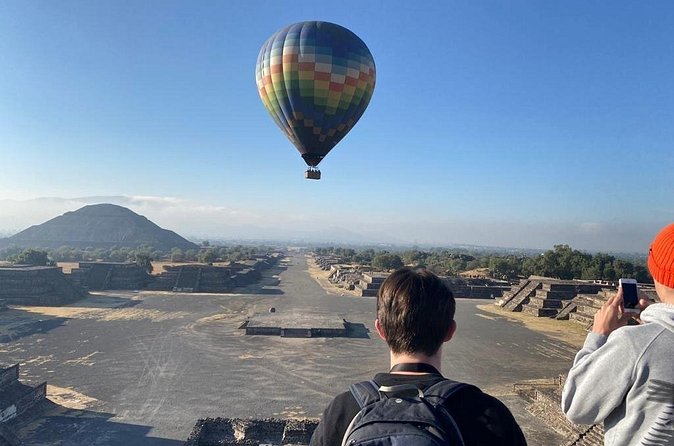
The Pyramid of the Sun is the largest and most visually dominant structure on the route. Climbing it gives you a broad view over the archaeological zone and a better sense of how the avenue, platforms, and surrounding compounds fit together.
The climb is also the tour’s clearest physical challenge. The information provided recommends a moderate fitness level and warns that the experience is not suitable for people with heart complaints or other serious medical conditions when climbing the pyramids. Even if you are generally active, the combination of stairs, morning exertion, and direct sun can make the ascent harder than it looks from below.
Take the climb at your own pace. The value is not only reaching the top. It is seeing the city from above and understanding the scale of the building program. If you prefer not to climb, ask the guide what portions of the route can be enjoyed from ground level.
Rules and access at archaeological sites can change. Some comments refer to access on the Moon Pyramid steps reopening shortly before a particular visit, so do not assume every pyramid climb will be available on your date. Confirm current access with the provider or guide.
The Moon Pyramid and the city’s grand axis
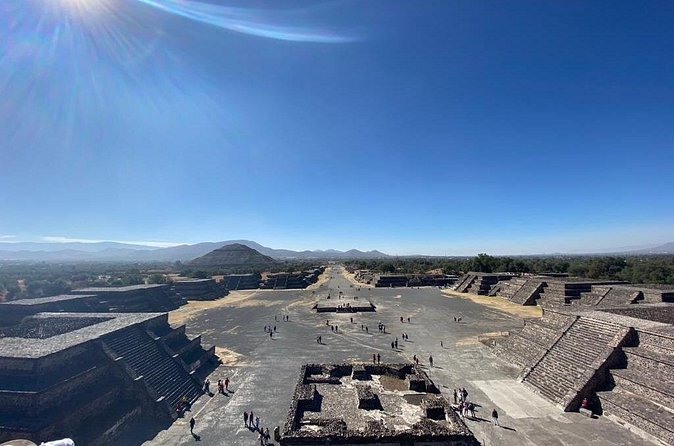
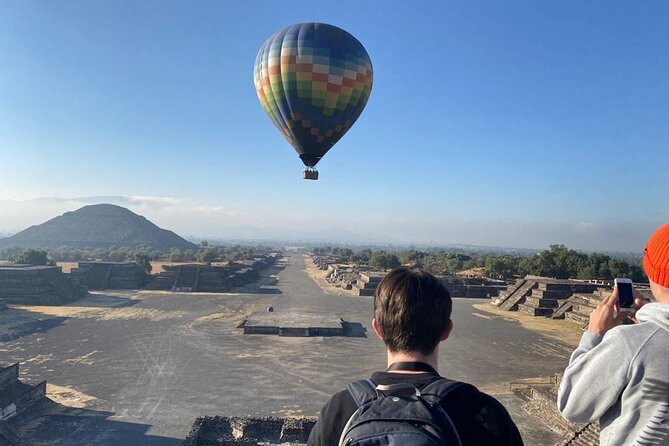
The Pyramid of the Moon anchors the northern end of the Avenue of the Dead. Its position creates one of the most memorable views at Teotihuacan, with the avenue stretching south toward the rest of the ceremonial center.
The Moon Pyramid is valuable even if climbing access is limited. From below, you can study its layered construction and its connection to the plaza in front of it. From higher ground, when access is permitted, the avenue becomes easier to read as a carefully ordered ceremonial route.
This is a good point to ask your guide about changes in interpretation. Teotihuacan has produced major archaeological discoveries, but it does not come with a complete written record explaining every building. A specialist can help you understand why archaeologists draw certain conclusions and where uncertainty remains.
That is one of the strongest reasons to choose Jorge or David instead of a general guide. Their commentary is designed for people who want more than a list of monument names. You can ask about architecture, ritual, social structure, art, and excavation methods without turning the guide into a walking encyclopedia on unrelated subjects.




Quetzalpapalotl Palace and Wall Paint Palace
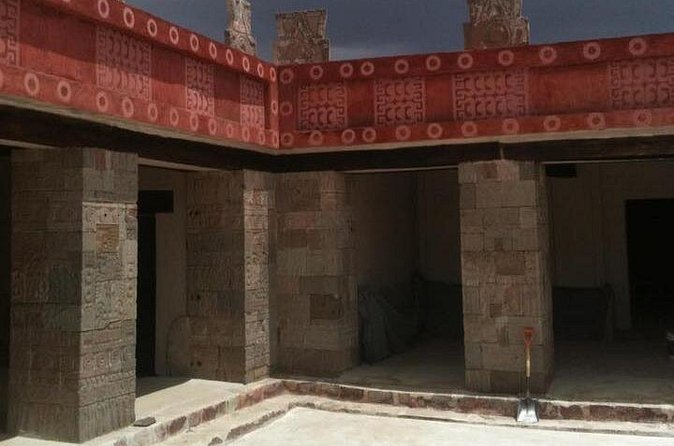
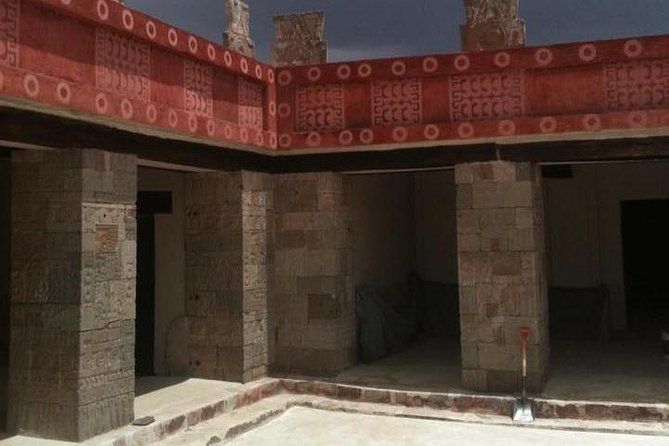
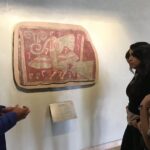
The palaces add welcome detail after the huge pyramids. Quetzalpapalotl Palace is associated with carved and decorative elements, while Wall Paint Palace offers a closer look at Teotihuacan’s painted surfaces and artistic program.
These areas often reward patience more than scale. The pyramids impress you from a distance, but the palaces help you think about the city’s visual world. Painted walls and ornamental details can reveal ideas about animals, ritual, status, and the way different spaces were used.
The Wall Paint Palace is also one reason to ask for an expanded tour if time allows. David has been described as arranging visits to additional palaces, and one extended outing found these smaller architectural areas more rewarding than simply moving from one giant pyramid to another.
The exact sequence may vary, especially if the guide adjusts for light, crowds, access, or your interests. That flexibility is an advantage of a private outing, but it also means you should discuss your priorities early. If murals and palaces matter most to you, say so before the walk begins.
The museum as an optional final stop
The museum is listed as optional. That gives you a choice based on energy, interest, and the amount of time you have left.
If you want more objects and archaeological context after seeing the ruins, the museum can round out the visit. It may also help you connect architectural features to artifacts and artistic traditions. If your main goal is the open-air site, you may prefer to spend your remaining time walking or return to Mexico City.
The important point is that the museum is not presented as a required part of the core tour. Ask whether admission and time at the museum fit your plan. The listed entrance fee is separate from the tour price, and food and drinks are not included.
What the $100 price really buys
The tour costs $100 per person. Entrance fees are listed separately at $5, and there is also a $3 parking fee payable at check-in. Hotel pickup, drop-off, transport to the site, food, and drinks are not included.
At first glance, that is a high price for a two to four hour walking tour. You can find cheaper ways to reach Teotihuacan, and a basic group tour may cover the main monuments for less.
The value here is the guide rather than the vehicle or included extras. You are paying for private attention and specialist interpretation from an archaeologist or anthropologist. That can be worthwhile if this is your only visit to Teotihuacan, if you have a strong interest in ancient cultures, or if you want to understand the site before visiting Mexico City’s Anthropology Museum.
I would not book it solely for transportation convenience. Transport is extra, and the meeting point requires planning. I would book it for the quality of the conversation and the chance to shape the visit around your interests.
The private format can also improve the value for couples, families, or small groups. Since only your group participates, the per-person price may feel more reasonable when several people share the experience and can ask questions freely.
Time, pace, and physical effort
The standard duration is approximately two to four hours. In practice, the visit can run longer if you arrange additional areas or continue exploring independently. One visitor spent three hours with the guide, then another two hours walking around the site alone. Another extended the guided visit to nearly six hours.
Do not schedule a tight connection immediately afterward. The listed duration is an estimate, and the size of the archaeological zone makes it tempting to keep walking once the formal tour ends.
Wear practical walking shoes and bring what you need for a morning outdoors. The tour includes stairs and pyramid climbs, and the site requires a moderate fitness level. Serious heart conditions and other medical concerns are specifically flagged for the climbing portion.
The experience is private, but the guide may be multilingual. If language is important to your booking decision, confirm the available guide and language in advance.
Who will get the most from this tour
I would recommend it most strongly to:
- People who enjoy archaeology, anthropology, and ancient urban sites
- First-time visitors who want more context than a standard group excursion provides
- Couples or small groups who prefer private discussion
- Visitors planning to see Mexico City’s Anthropology Museum and wanting background first
- Anyone who wants to focus on palaces, murals, excavation, or current research
- Active visitors comfortable with extended walking and pyramid stairs
It may be less suitable if you want a low-cost visit, hotel-to-hotel convenience, or a short photo stop. It is also not the best fit if climbing and moderate walking are difficult for you.
The guides are the strongest part of the experience. Jorge Archer receives particular praise for explaining not only established interpretations but also how archaeological evidence is gathered. David, also called Pakelito in one account, is described as friendly, passionate, and able to make detailed information easy to follow.
Booking, cancellation, and practical planning
The tour is often reserved about 23 days ahead, so popular morning dates may require advance planning. Confirmation arrives within 48 hours, subject to availability.
Free cancellation is available until 24 hours before the start time. Cancellations or changes made later are not refunded or accepted under the stated policy. Since the experience depends on good weather, poor conditions may lead to a new date or a full refund.
Ask about transport when you book if you do not want to arrange the trip from Mexico City yourself. Also confirm the exact meeting instructions, since the tour begins at the archaeological zone rather than at a central Mexico City hotel.
Should you book Teotihuacan Real Archaeology Tours?
Book this tour if you want Teotihuacan explained by someone who works with archaeological ideas, not just monument labels. The morning start, private format, pyramid views, and access to major palaces make it a strong choice for a serious first visit.
Skip it if your main concern is the lowest possible price or included transport. In that case, arrange your own bus or taxi and visit independently, perhaps hiring a less expensive guide at the site.
For most history-focused visitors, the extra cost is easiest to justify when you request a longer visit with time for the palaces and museum. Bring questions, allow more time than the minimum estimate, and be ready for stairs. That is when this becomes more than a morning among impressive ruins. It becomes a clearer lesson in how archaeologists piece together an ancient city.
FAQ
How much does the Teotihuacan archaeology tour cost?
The tour costs $100 per person. A $5 entrance fee and a $3 parking fee are listed separately. Food, drinks, hotel pickup, hotel drop-off, and transport to the site are also extra.
How long does the tour last?
The listed duration is approximately two to four hours. Some visits can last longer when additional palaces are included or when you continue exploring the site after the guided portion.
Where do I meet the guide?
The listed starting location is in the Tuxpan area near Teotihuacan. The tour ends at Palacio de Quetzalpapalotl in Teotihuacan Centro. Confirm the exact meeting instructions before the visit.
Can transport from Mexico City be arranged?
Yes. Transport to the pyramids can be arranged for an additional cost, but you should request it when booking. You can also reach the site by taxi or bus from Mexico City.
Which places are visited?
The route includes the Citadel, Street of the Dead, Pyramid of the Sun, Pyramid of the Moon, Quetzalpapalotl Palace, and Wall Paint Palace. The museum is optional.
Who guides the tour?
The experience includes a professional archaeologist or anthropologist. Guides named in the tour information include Jorge Archer and David. The tour may be operated by a multilingual guide.
Is the tour private?
Yes. Only your group participates in the activity, allowing the guide to answer questions and adjust the pace for your party.
Can I cancel the booking?
You can cancel up to 24 hours before the start time for a full refund. Later cancellations and changes are not accepted. If poor weather causes the tour to be canceled, you will be offered another date or a full refund.
More Teotihuacan Tours in Mexico City
More tours in Mexico City we've reviewed

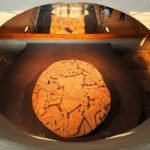
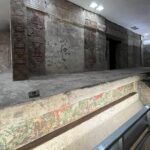
Teotihuacan Tours, compared.
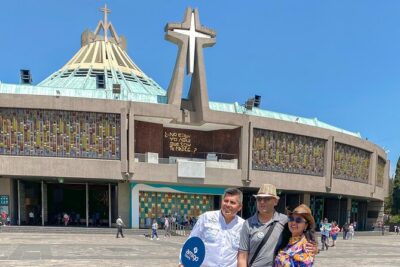 ★ 5.0Teotihuacan, Guadalupe Shrine & Tlatelolco Day Tour with LunchFrom $399 hours (approx.)
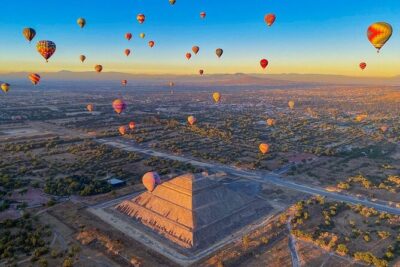 ★ 5.0Balloon flight + Breakfast in cave + Pyramids + Pick up CDMX.From $1722 to 8 hours (approx.)
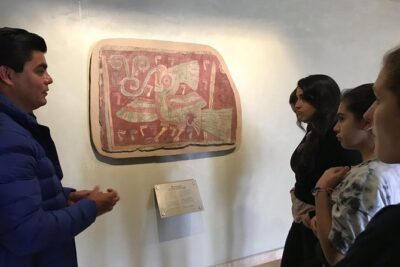 ★ 5.0Teotihuacan pyramids morning or afternoon without tourist trapsFrom $645 hours 30 minutes (approx.)
 ★ 4.5Teotihuacan Early Access Guided Tour with optional LunchFrom $398 hours (approx.)
 ★ 5.0Balloon flight + pick up in CDMX + Breakfast in Cave + PyramidsFrom $1694 to 7 hours (approx.)
 ★ 4.6Mexico City: Teotihuacan, Tlatelolco & Guadalupe Shrine TourFrom $49
 ★ 5.0Teotihuacan Hot Air Balloon Flight from Mexico City / VolareFrom $1553 to 9 hours (approx.)
 ★ 5.0Hot Air Balloon Flight with Breakfast Cave and Pyramids TourFrom $1408 hours (approx.)