
Reviewed · TEOTIHUACAN TOURS
Teotihuacan & Guadalupe Shrine + Xochimilco, Coyoacán & Frida Kahlo Combo Tour
Teotihuacan’s huge pyramids, Frida Kahlo’s intimate blue house, and a slow ride through Xochimilco’s flower-painted canals make this a strong first look at Mexico City. In two long days, you move from Aztec ruins and Catholic pilgrimage sites to murals, art, and modern Mexican culture.
In This Article
- Key points to know
- Why this two-day route works for a first visit
- Tlatelolco and the Plaza of Three Cultures
- The Guadalupe Basilica and Mexico’s living faith
- Teotihuacan’s Avenue of the Dead and giant pyramids
- Coyoacán and the blue walls of Casa Azul
- Xochimilco by trajinera
- UNAM’s murals and Mexico City’s modern identity
- Shopping stops, meals, and the parts to watch
- How demanding are the two days?
- Who should book this Mexico City combo?
- Is the $149 price worth it?
- FAQ
- How long is the tour?
- What time does the tour start?
- Is transportation included?
- Is the tour offered in English?
- Are Teotihuacan admission tickets included?
- Is the Frida Kahlo Museum ticket included?
- Is the Guadalupe Basilica admission free?
- Is food included?
- Is the tour suitable for most people?
- What happens if I need to cancel?
I like the way the tour joins major sights that are spread far across the city. I also like having Frida Kahlo Museum admission included, since Casa Azul tickets can be hard to secure independently. The main drawback is the pace: traffic, large groups, restaurant stops, and occasional shopping presentations can reduce your free time.
Key points to know
- Teotihuacan comes with a guide, transport, admission, and tequila tasting, making the first day easy to organize.
- The tour runs over two consecutive days, with Teotihuacan and Guadalupe on day one, then Coyoacán, Casa Azul, and Xochimilco on day two.
- Frida Kahlo Museum tickets are included, a useful advantage when the museum’s own site is sold out.
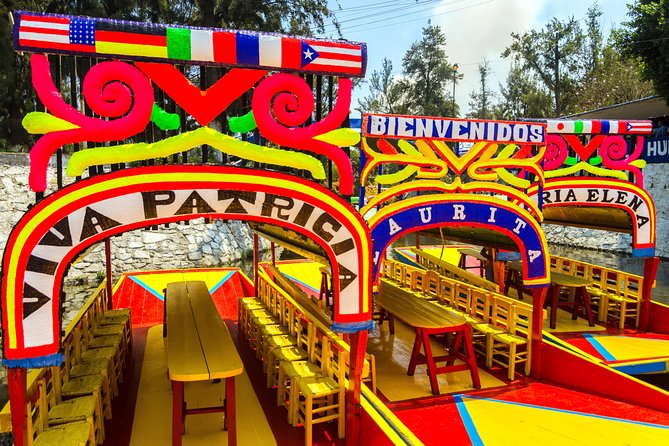
- Xochimilco is the relaxed highlight, with about an hour on a colorful trajinera among food sellers and passing boats.
- Tlatelolco and UNAM add context, showing Mexico City’s pre-Hispanic, colonial, artistic, and modern sides.
- The days are long and can involve heavy traffic, so wear walking shoes, carry water, and avoid scheduling this near a flight.
Why this two-day route works for a first visit
At $149 per person, this is a sightseeing-heavy package rather than a relaxed neighborhood tour. You get roundtrip transport from central meeting points, a professional guide, admission to Teotihuacan and Casa Azul, a Guadalupe visit, Tlatelolco, Xochimilco, Coyoacán, and UNAM.
That is a lot of ground for the money. Mexico City is enormous, and these stops are scattered from the north and east to the southern districts. Organizing all of them alone would mean arranging separate transport and museum tickets, especially for Casa Azul.
The tour is offered in English, and the guide team may change between days. Guides praised in past departures include Alexa, Diana, Yair, Salvador, Héctor, Mario, Alicia, Ruben, and Emmanuel. Their style can vary, but the strongest pattern is clear: the experience depends heavily on the person leading your group.
You should expect a group of up to 50 people. That size keeps the price down, but it can make boarding, head counts, and movement through busy areas slower. The 7:30 a.m. start also matters. You will see more before the city’s traffic becomes a bigger problem, but you need to be ready for two demanding days.
A few more Mexico City tours and experiences worth a look

Tlatelolco and the Plaza of Three Cultures
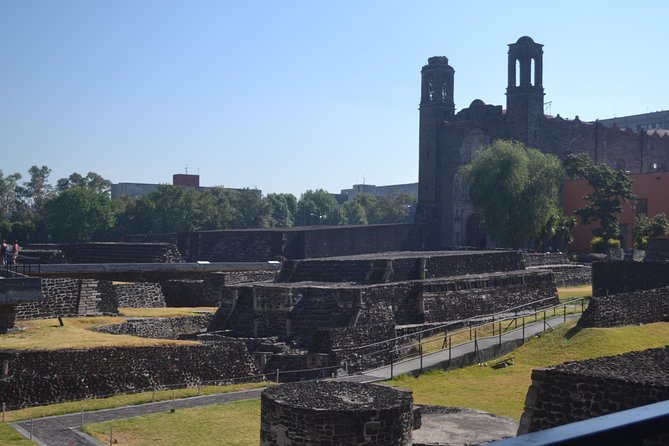
Day one begins at Tlatelolco, one of Mexico City’s key archaeological sites. The area was founded by the Tlatelolcas in 1337 on an islet in Lake Texcoco. It later became a major market where goods arrived from distant parts of Mesoamerica.
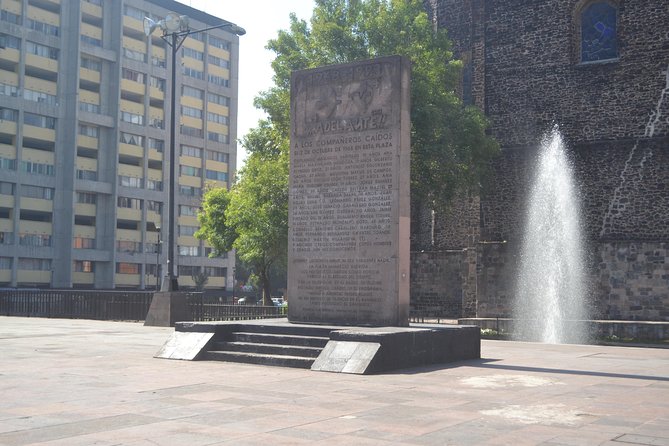
The best-known section is the Plaza of the Three Cultures. Here, pre-Hispanic ruins, Spanish colonial buildings, and modern Mexican architecture face one another. The setting gives you a quick lesson in how Mexico City was built in layers rather than replacing one era with another.
You have about 50 minutes here. That is enough for an explanation and a look around, but not enough for a slow archaeological study. I see Tlatelolco as an excellent orientation stop, especially if you are new to Mexico’s past. It prepares you for Teotihuacan without using up the morning.
The site also asks for a thoughtful visit. This is not just a scenic plaza. The guide’s explanation is important because the meaning of the three architectural periods is easy to miss if you rush through with a camera.
The Guadalupe Basilica and Mexico’s living faith
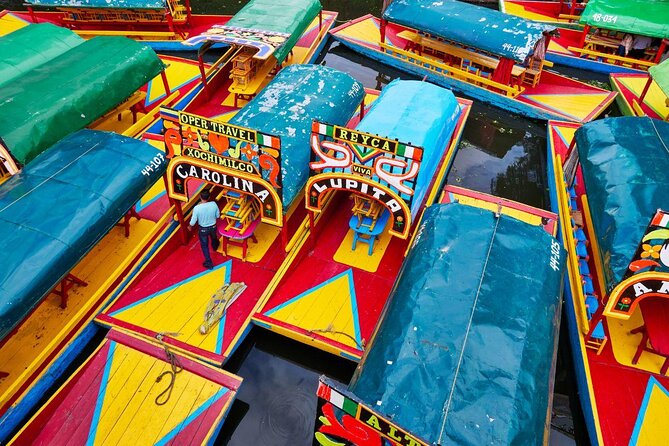
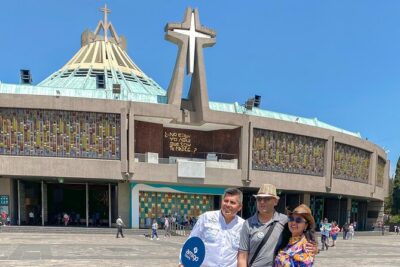
The next major stop is the Basilica of Our Lady of Guadalupe, Mexico’s most important Catholic pilgrimage site. More than 20 million pilgrims visit each year, so this is not simply a church added for sightseeing. It remains a powerful religious center.
You get roughly an hour and a half here, with no admission charge. The extra time helps because the complex includes more than one structure and can be busy. Your guide can explain the importance of the Virgin of Guadalupe and the role the basilica plays in Mexican religious life.
Even if you are not Catholic, this stop is useful. It shows how faith, national identity, and public life overlap in Mexico. The experience is more meaningful when you listen to the guide rather than treating it as a quick photo stop.
The time can feel long if you prefer archaeological sites to religious buildings. Still, the basilica gives the first day a useful balance. You see both the remains of an older civilization and a living tradition that continues to shape Mexico.
Teotihuacan’s Avenue of the Dead and giant pyramids
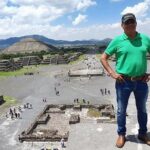
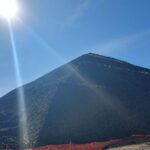
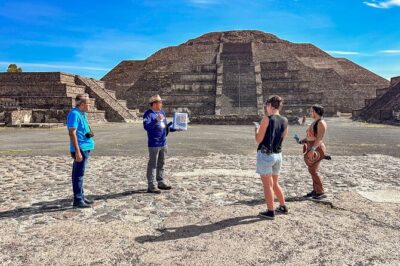
Teotihuacan is the main event on day one. Its name is commonly translated as Place where the gods were made, and it was once one of the largest cities in Mesoamerica. The site is a UNESCO World Heritage Site and remains one of the most impressive ancient cities in Mexico.
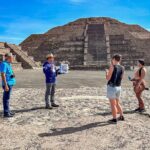
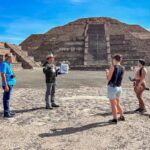
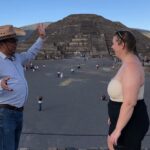
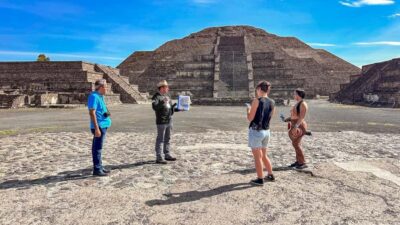
You have about two hours among the ruins. The guide leads you through the major buildings and explains how the city was arranged. The Avenue of the Dead, the large ceremonial structures, and the scale of the site help you understand that this was a carefully planned urban center, not just a pair of isolated pyramids.
The tour description says you can climb the famous Sun and Moon pyramids for wide views. Access rules can change, however, and some parts of Teotihuacan have been restricted at times. Check the conditions on the day and do not assume every upper section will be open.
The site is exposed, with little relief from the sun. Bring sunscreen, a hat, sunglasses, water, and shoes that can handle uneven walking. Several people specifically praised the guides at Teotihuacan, including Alexa, Diana, Alicia, and Emmanuel, for making the history clear and keeping the explanations lively.
Timing is the biggest practical concern. One past departure reached the pyramids around 2:30 p.m., when the heat made walking difficult. Since traffic and the order of stops can affect the day, prepare for the possibility of visiting later than expected. Teotihuacan is worth the effort, but you will enjoy it more if you treat the two hours as active sightseeing rather than a gentle stroll.
A tequila tasting is included on this day. It adds a distinctly Mexican touch, though it is best viewed as a short extra rather than a central reason to book the tour.
Coyoacán and the blue walls of Casa Azul
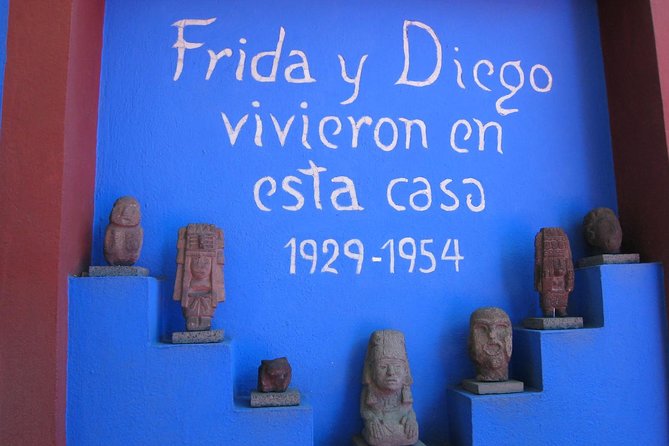
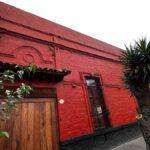
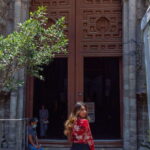
Day two begins in Coyoacán, a southern Mexico City district with pre-Hispanic roots, cobblestone streets, and colorful houses. You get about 70 minutes in the area, followed by roughly one hour inside the Frida Kahlo Museum, also called Casa Azul.
The neighborhood visit gives you a chance to see the setting around the museum, but free time can be tight. Traffic, group movement, and any added stop may leave less time than you expect to wander or eat in Coyoacán.
Casa Azul is where Frida Kahlo lived with Diego Rivera. The house gives you a direct look at her world, including personal spaces and artwork. The museum is intimate rather than grand, and the limited one-hour visit means you should enter ready to focus.
I consider the included ticket one of the package’s best practical features. Casa Azul often sells out, and one family booked this tour mainly because museum admission was unavailable through the museum’s own website. If Frida Kahlo is high on your list, this inclusion can make the $149 price much easier to justify.
The museum can involve waiting before entry, even when your ticket is arranged. Keep your expectations realistic: one hour is enough for a meaningful visit, but not for a leisurely look at every detail.
The tour reminds visitors that Casa Azul is closed on Mondays. Make sure your selected dates do not place the Frida Kahlo portion on that day.
A few more Mexico City tours and experiences worth a look





Xochimilco by trajinera
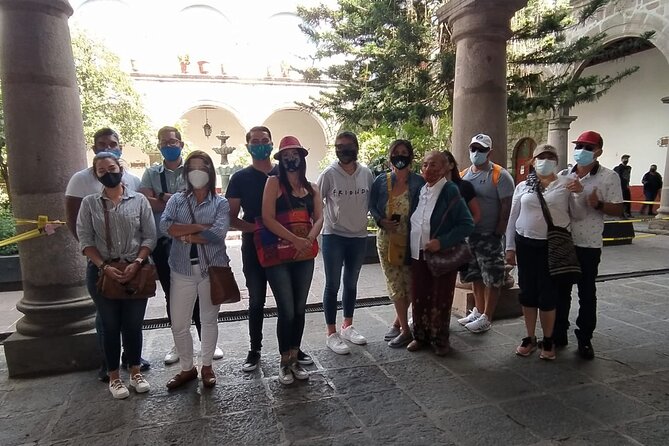
Xochimilco is the most playful stop on the second day. Its canals are the last remains of the extensive water transport system created by the Aztecs. Today, the area is also an ecological reserve and UNESCO World Heritage site.
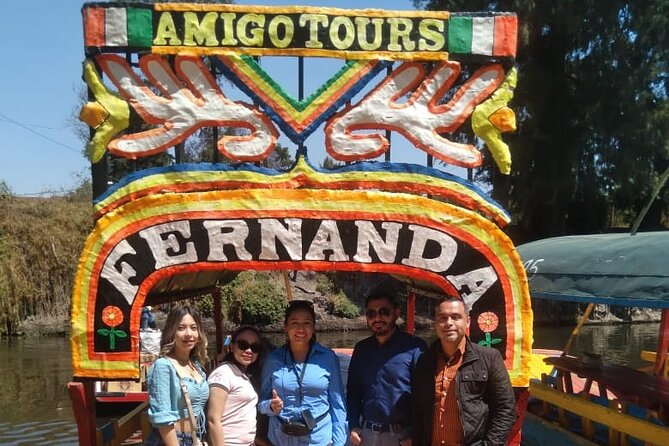
You spend about 80 minutes at Xochimilco, including approximately an hour on a brightly painted trajinera. The boats move through the canals while other boats pass with music, food sellers, and drinks. Snacks are available for purchase, but food and drinks are not included in the tour price.
This is the point where the schedule loosens up. You are still part of a guided day, but the boat ride gives you room to sit, take photos, and watch local life pass by. Bring small spending money if you want to buy something from the vendors.
Xochimilco can be noisy and commercial, and the boat traffic is part of the experience. Do not expect a quiet nature trip. I would book this tour specifically for the colorful, social atmosphere, not for solitude.
Many people consider the boat ride the best part of the second day. That makes sense. After the tight museum schedule and city traffic, an hour on the water provides a welcome change of rhythm.
UNAM’s murals and Mexico City’s modern identity
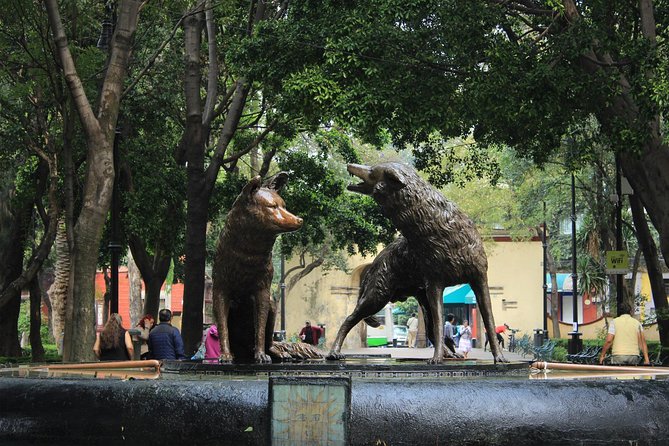
The final listed stop is the Central Campus of the National Autonomous University of Mexico, known as UNAM. The university was founded in 1551, while the campus you see today is associated with major Mexican muralists.
You have about 30 minutes to see the Central Library and its large exterior artwork, including work connected with Juan O’Gorman and Diego Rivera. The stop is short, but the murals make it worthwhile. They present Mexican history and identity on a huge public scale.
This is not a full university tour. Think of it as a focused photo and explanation stop that rounds out the package. After ancient ruins, colonial faith, and Frida Kahlo’s private world, UNAM shows how art became part of Mexico’s public spaces.
Shopping stops, meals, and the parts to watch
Food is not included, so budget for lunch and snacks. The schedule can place lunch around 2 p.m., making a substantial breakfast a smart move. Carry water and a snack, especially on the pyramid day.
Some departures have included restaurant meals or buffet stops. Food quality can vary, and the available choice may be limited because the group needs to stay together. One useful point from past experience is that you may prefer more free time to eat in Coyoacán instead of taking a fixed restaurant stop.
You should also be prepared for retail presentations. Past itineraries have included a silver shop, a tequila or artisan stop, and a visit to a shop associated with Rafael. Some people found these visits enjoyable, especially when they explained Mexican crafts. Others felt that an hour in a jewelry store took time away from Coyoacán and the museum.
You are paying for a packed route, not complete control over every minute. If you dislike shopping stops or fixed meals, ask about the day’s schedule at the start and decide how much patience you have for the tradeoff.
How demanding are the two days?
The walking pace has worked for families and for people traveling with older parents, but the tour is not effortless. Teotihuacan involves open-air walking and possible pyramid climbs. Tlatelolco, Coyoacán, museum entry, and UNAM add more time on your feet.
Wear comfortable walking shoes. Sunscreen, a hat, sunglasses, and water are basic equipment, especially at Teotihuacan. The group may be large, so stay alert for meeting times and keep close to the guide when moving between the bus and major sites.
Traffic is an unavoidable part of Mexico City. A driver may need to adjust the route, and a protest or road closure can delay the bus. For that reason, do not schedule the tour on the day you fly out. The return time is affected by roads, and the activity ends back at the meeting point rather than at your hotel.
Who should book this Mexico City combo?
I recommend this for a first-time visitor who wants the major sights handled in one package. Families, solo visitors, and couples can all benefit from the transport and prearranged museum ticket. The bilingual guide teams are generally warm and clear, and several guides have been praised for answering questions and keeping a large group organized.
It is also a good match if you want historical range. In two days, you see an ancient city, an Aztec market site, a major Catholic shrine, a famous artist’s home, an ecological canal district, and one of Mexico’s best-known university campuses.
I would choose another format if you want long meals, quiet museum time, or the freedom to linger in one neighborhood. The group may reach some places later than planned, and shopping stops can reduce free time. The rating of 4.4 from 345 reviews reflects that balance: strong guides and excellent coverage, with occasional complaints about pacing, food, traffic, and retail visits.
Is the $149 price worth it?
For $149, you receive two days of transport, a professional guide, Teotihuacan admission, Casa Azul admission, the Guadalupe visit, Tlatelolco, Xochimilco’s boat ride, UNAM, and a tequila tasting. Buying separate transport and securing Frida Kahlo tickets could easily make an independent plan less simple, even before adding the value of guided explanations.
The value is strongest when you want coverage. You are not paying for luxury or a small private group. You are paying to remove much of the planning burden and connect far-flung sights.
My advice is simple: book it if you want a practical introduction and accept long days, fixed stops, and possible shopping presentations. Skip it if Casa Azul or Teotihuacan deserves a full day by itself. For most first visits, this is a solid way to get your bearings fast, as long as you bring patience, water, and comfortable shoes.
FAQ
How long is the tour?
The experience lasts approximately two days. The Teotihuacan and Guadalupe portion takes place on the date selected at booking, and the Xochimilco and Frida Kahlo portion takes place the following day.
What time does the tour start?
The tour starts at 7:30 a.m.
Is transportation included?
Yes. Roundtrip transportation from central meeting points is included, and the activity ends back at the meeting point.
Is the tour offered in English?
Yes. The experience is offered in English. Guide teams may vary between the two days.
Are Teotihuacan admission tickets included?
Yes. Admission to Teotihuacan is included.
Is the Frida Kahlo Museum ticket included?
Yes. Admission to the Frida Kahlo Museum, also known as Casa Azul, is included.
Is the Guadalupe Basilica admission free?
Yes. The tour lists admission to the Basilica of Our Lady of Guadalupe as free.
Is food included?
No. Food and drinks are not included. Snacks and food can be purchased during the Xochimilco boat ride.
Is the tour suitable for most people?
Yes. Most people can participate, though the itinerary includes walking, particularly at Teotihuacan. Comfortable shoes, sunscreen, water, a hat, and sunglasses are useful.
What happens if I need to cancel?
You can cancel for a full refund if you cancel at least 24 hours before the experience start time. Changes or cancellations made less than 24 hours in advance are not accepted for a refund.
More Frida Kahlo & Coyoacan Tours in Mexico City


More Xochimilco Boat Parties in Mexico City
More Teotihuacan Tours in Mexico City

More tours in Mexico City we've reviewed


Teotihuacan Tours, compared.
 ★ 5.0Teotihuacan, Guadalupe Shrine & Tlatelolco Day Tour with LunchFrom $399 hours (approx.)
 ★ 5.0Balloon flight + Breakfast in cave + Pyramids + Pick up CDMX.From $1722 to 8 hours (approx.)
 ★ 5.0Teotihuacan pyramids morning or afternoon without tourist trapsFrom $645 hours 30 minutes (approx.)
 ★ 4.5Teotihuacan Early Access Guided Tour with optional LunchFrom $398 hours (approx.)
 ★ 5.0Balloon flight + pick up in CDMX + Breakfast in Cave + PyramidsFrom $1694 to 7 hours (approx.)
 ★ 4.6Mexico City: Teotihuacan, Tlatelolco & Guadalupe Shrine TourFrom $49
 ★ 5.0Teotihuacan Hot Air Balloon Flight from Mexico City / VolareFrom $1553 to 9 hours (approx.)
 ★ 5.0Hot Air Balloon Flight with Breakfast Cave and Pyramids TourFrom $1408 hours (approx.)
The lists this tour appears in