
Reviewed · TEOTIHUACAN TOURS
Teotihuacan, Guadalupe, Xochimilco Coyoacan & Frida Kahlo
Teotihuacan’s giant pyramids are the main event here, but this two-day outing gives you a useful sweep of Mexico City’s past and present. You’ll climb the Pyramid of the Sun, stand where three eras meet at Tlatelolco, and ride a colorful boat through Xochimilco’s old canals.
In This Article
- Key things to know before booking
- Why this two-day route works
- Day one: three versions of Mexico at Tlatelolco
- The Basilica of Guadalupe and Mexico’s most important shrine
- Teotihuacan: the day’s grand finale
- Day two: cobblestones, colorful houses, and Casa Azul
- UNAM and Mexico’s public art tradition
- Xochimilco by trajinera
- Guides, transport, and the pace of the days
- What the $131 price really buys you
- Who should book this experience?
- Should you book it?
- FAQ
- How long is the tour?
- What attractions are included?
- Can I climb the pyramids at Teotihuacan?
- How long is the Xochimilco boat ride?
- Is food included?
- Is hotel pickup included?
- Where are the meeting points?
- What languages are available?
- Are entrance fees included?
- Can I cancel for a refund?
I like the smart pairing of major sights and the chance to see places that are far apart without sorting out several bus routes. I also like the guides, including Lillian Gomez, Alexa, Leonardo, and Iam, who have been praised for making the history lively and the days friendly. The main caution is time: long stops at cooperative shops can leave you with only 45 to 60 minutes at places such as the Basilica and Frida Kahlo Museum.
Key things to know before booking
- Six major sights over two days: The plan covers Teotihuacan, Tlatelolco, the Basilica of Guadalupe, Coyoacán, Casa Azul, UNAM, and Xochimilco.
- Teotihuacan includes pyramid climbs: You’ll walk among the ruins and climb the stairs at the Sun and Moon pyramids for broad views.
- Frida Kahlo’s Casa Azul gets about an hour: That is enough for a focused visit, but not a slow one.
- Xochimilco includes a one-hour trajinera ride: Expect music from nearby boats and vendors selling snacks on the canals.
- The tour does not include meals: Bring money for food and drinks, especially during the long first day.
- Pickup is from central meeting points: You meet near MIGA CAFE or behind the Palace of Fine Arts, not at your hotel.
Why this two-day route works
At $131 per person, this tour offers good value if you want a guided introduction to several major sites in and around Mexico City. Entrance fees, transport between stops, and a professional guide are included, which matters in a city where Teotihuacan, Xochimilco, Coyoacán, and Tlatelolco sit in different parts of the region.
The route also gives each day a clear theme. Day one focuses on Indigenous, colonial, and religious Mexico, while day two turns toward art, university culture, and the canals of Xochimilco. You get a broad picture rather than a single museum or one archaeological site.
The tradeoff is pace. This is not a leisurely neighborhood walk with long café breaks. You’ll leave early, ride between sites, and follow a fixed schedule. I’d choose it if you want coverage and context. If you prefer to spend half a day at Casa Azul or linger over every pyramid, separate day trips will suit you better.
A few more Mexico City tours and experiences worth a look

Day one: three versions of Mexico at Tlatelolco
The first morning begins at either MIGA CAFE on Calle Liverpool at 8:20 a.m. or behind the Palace of Fine Arts on Avenida Hidalgo at 8:50 a.m. The second pickup is later than the first, so check your meeting point carefully. Day two starts earlier, at 7:50 or 8:20 a.m.
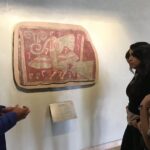
Tlatelolco is a strong opening because it gives you historical context before the larger ruins at Teotihuacan. The site was part of the Aztec capital, and the Plaza of the Three Cultures brings together pre-Hispanic remains, colonial structures, and modern Mexico in one place.
That mix is the point. You are not looking at an isolated ruin with no connection to the city around it. You can see how different periods occupy the same ground, which helps explain why Mexico City feels layered at nearly every turn.
The stop is also practical for first-time visitors. A guide can explain the importance of Tlatelolco while you walk, rather than leaving you to piece together a few signs on your own. The tour includes admission and a visit here, so you are not paying extra for this first archaeological stop.
The Basilica of Guadalupe and Mexico’s most important shrine
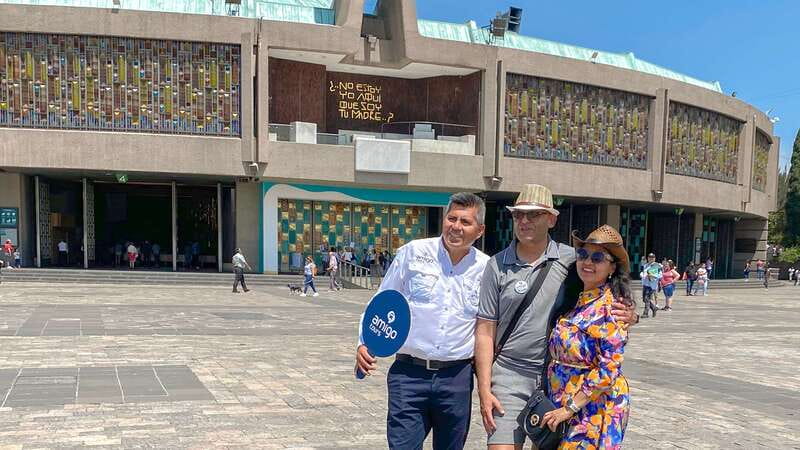
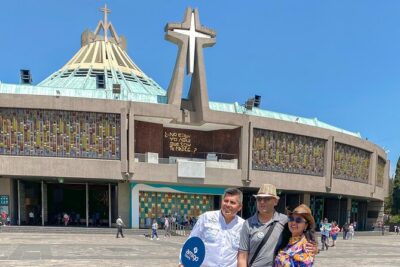
From Tlatelolco, the group continues to the Basilica of Our Lady of Guadalupe. This is the most important Catholic shrine in Mexico and one of the most visited religious sites in the world, with more than 20 million pilgrims arriving each year.
Even if you are not Catholic, the stop helps explain a major part of Mexican public life and identity. The site is not just a church visit. It is a place of devotion, pilgrimage, art, and national feeling.
Plan to be respectful and ready to move with the group. The schedule can feel tight here. One booking experience included only about 45 to 60 minutes at the Basilica after a lengthy shop stop, so I would not count on having a great deal of quiet time inside or around the complex.
That issue is worth considering before you book. A cooperative shop visit is included as part of the day, and its purpose is to support local Mexican artisans. You may find appealing crafts there, but the stop can run long. If your priority is religious art and the Basilica itself, ask your guide how much time remains before you start browsing.
Teotihuacan: the day’s grand finale
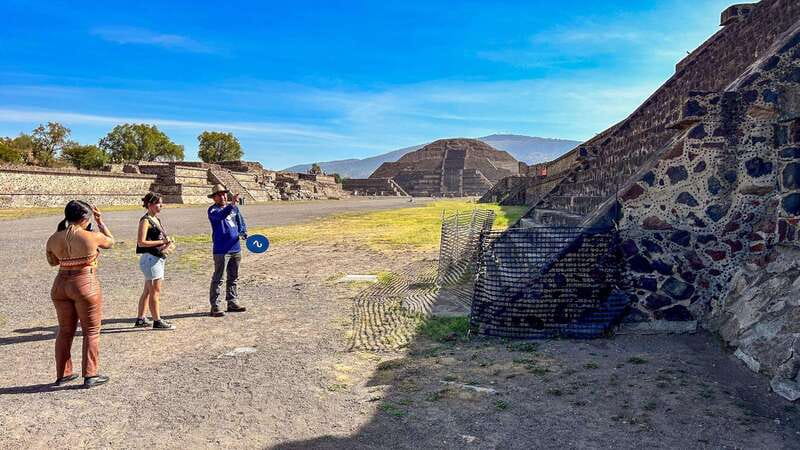
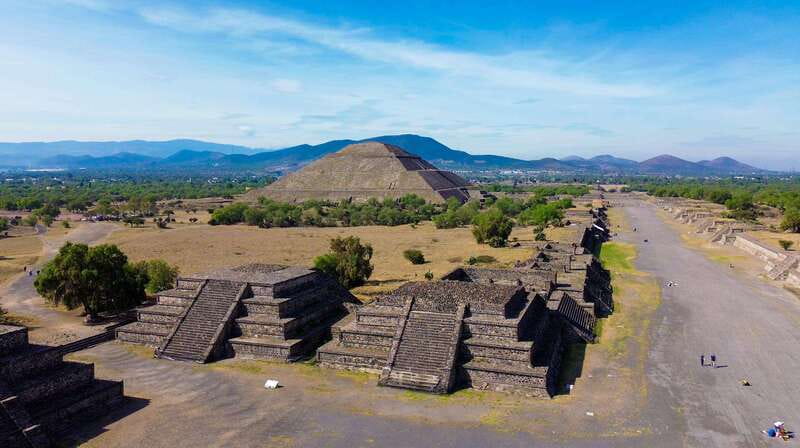
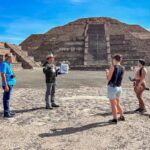
Teotihuacan is the largest and most dramatic stop on day one. Known as the City of the Gods, this ancient site spreads across a monumental ceremonial center marked by enormous pyramids and broad avenues.
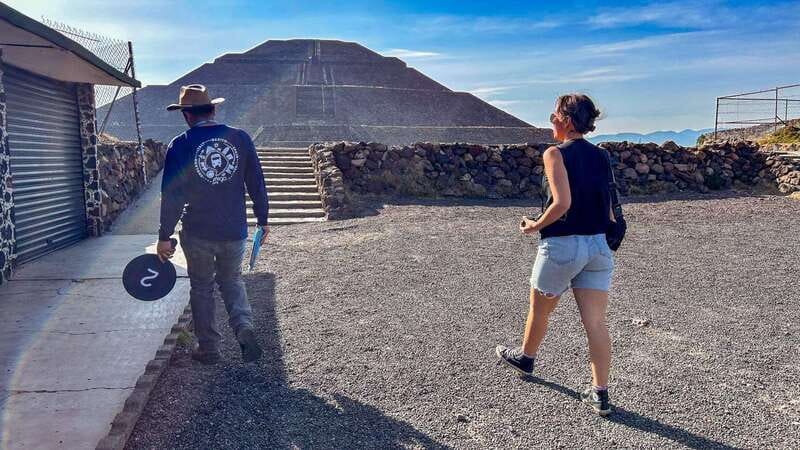
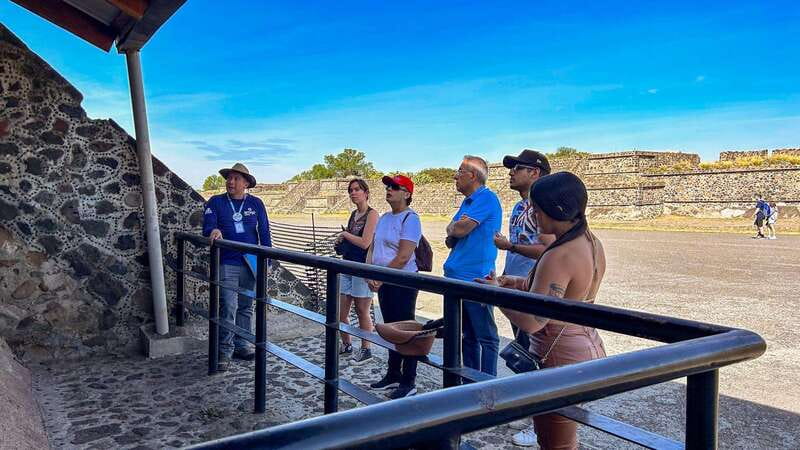
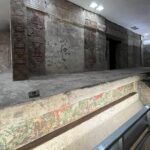
The guide leads you through the ruins and explains the story of this mysterious city. The value of having a guide here is clear: the scale can be hard to grasp without some explanation of how the buildings relate to one another. You’ll walk between the pyramids and see the site from ground level before tackling the stairs.
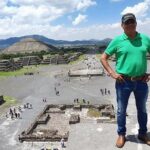
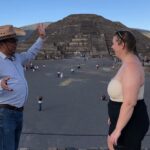
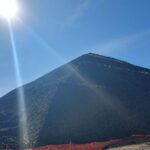
The tour specifically includes climbs at the Pyramid of the Sun and Pyramid of the Moon. Reaching the top gives you wide views across the archaeological site and a better sense of its size. The climb is one of the tour’s most memorable features, but it also makes comfortable shoes and water sensible choices.
I like placing Teotihuacan after Tlatelolco and Guadalupe. You first see the city’s Aztec setting and modern religious importance, then encounter an older ceremonial center on a much larger scale. It makes for a packed day, but the progression gives the stops some shape.
You’ll return to the meeting point after Teotihuacan. Food and drinks are not included, so plan for your own meals and snacks during the day.
Day two: cobblestones, colorful houses, and Casa Azul
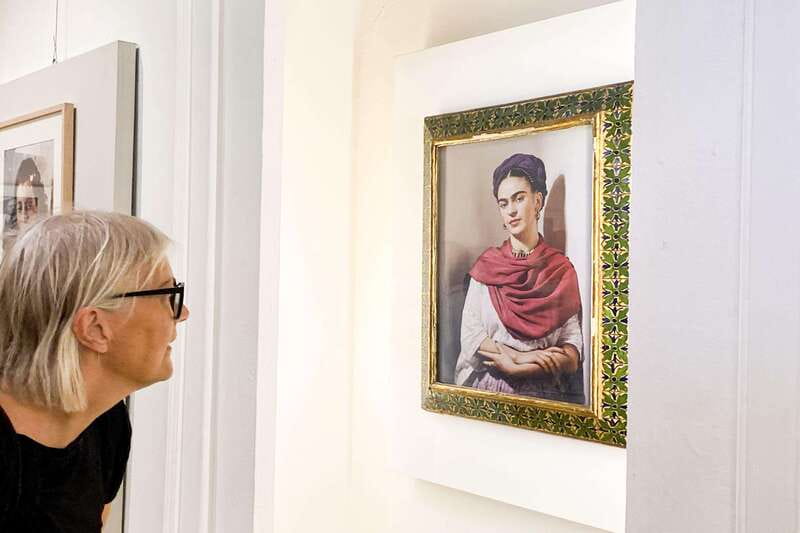
Day two begins in Coyoacán, a district with pre-Hispanic roots and a slower feel than the major avenues of central Mexico City. You’ll walk along cobblestone streets and see colorful houses before visiting the Frida Kahlo Museum, known as Casa Azul.
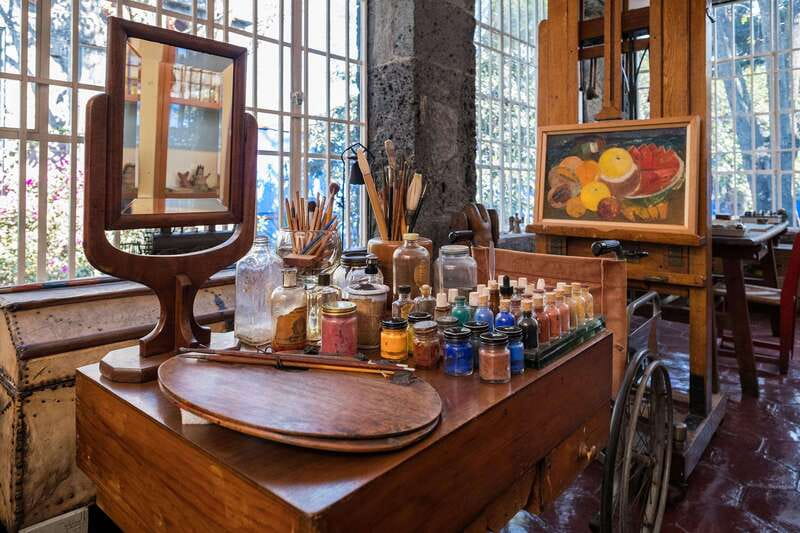
The setting matters. Frida Kahlo lived here with her husband, Diego Rivera, and the building connects her personal life with her work. Instead of visiting a standard gallery filled with paintings from different collections, you are entering the house tied to the artist’s daily life.
You’ll have about one hour of free time inside the museum. Use it with a plan. Focus first on the rooms and works that matter most to you, since an hour can pass quickly. If you want to examine every object or take your time with each painting, this visit may feel short.
Coyoacán itself adds balance to the museum. You get time to see the district’s houses and streets rather than being delivered straight to Casa Azul and back to the bus. The cooperative shop also appears on this day, giving you another chance to buy crafts that support local artisans.
Again, keep an eye on the clock. A 90-minute shop stop was considered too long in one account of the experience, especially when the museum visit was shortened. I would treat any shopping as optional and ask early about the schedule for Casa Azul.
A few more Mexico City tours and experiences worth a look





UNAM and Mexico’s public art tradition
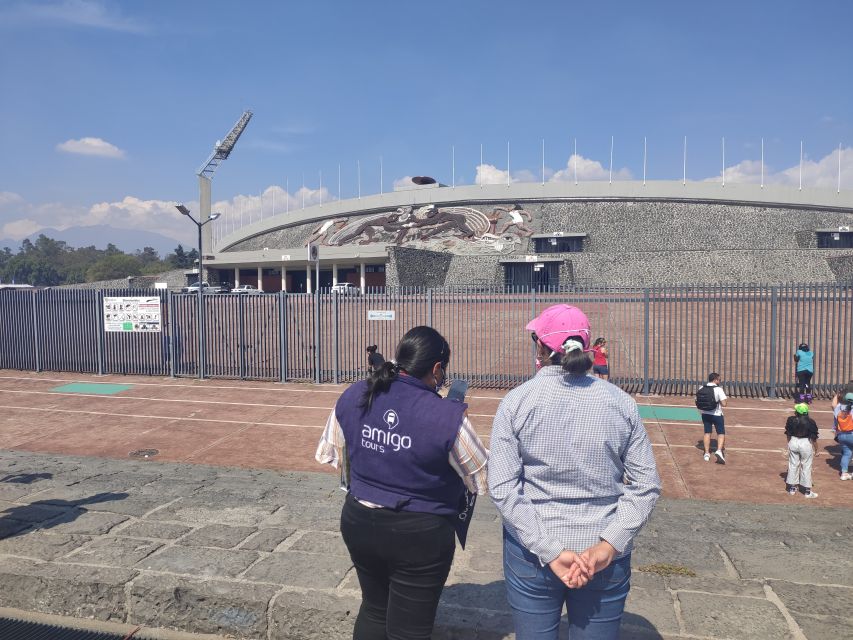
The next stop is the National Autonomous University of Mexico, founded in 1551. You’ll visit its central campus, which is listed as a UNESCO World Heritage Site and includes mural work by Diego Rivera and Juan O’Gorman.
This is a different kind of cultural stop from Casa Azul. Here, art is woven into a major educational institution and its public buildings. The campus shows how mural painting can speak to a broad audience rather than staying inside a private gallery.
The visit also adds useful context to the Frida Kahlo portion of the day. You see more of the artistic world associated with Rivera and Mexican muralism, then place Kahlo’s work within that wider setting.
The campus is best approached as a guided overview rather than a full university tour. The schedule includes a visit to the central campus and its art, but the available information does not promise time to explore the university at length. If you are especially interested in architecture or mural history, stay close to the guide and use the stop efficiently.
Xochimilco by trajinera
The final major stop is Xochimilco, about 17 miles south of Mexico City. This ecological reserve preserves a canal system dating back to Aztec times and is recognized as a UNESCO World Heritage Site.
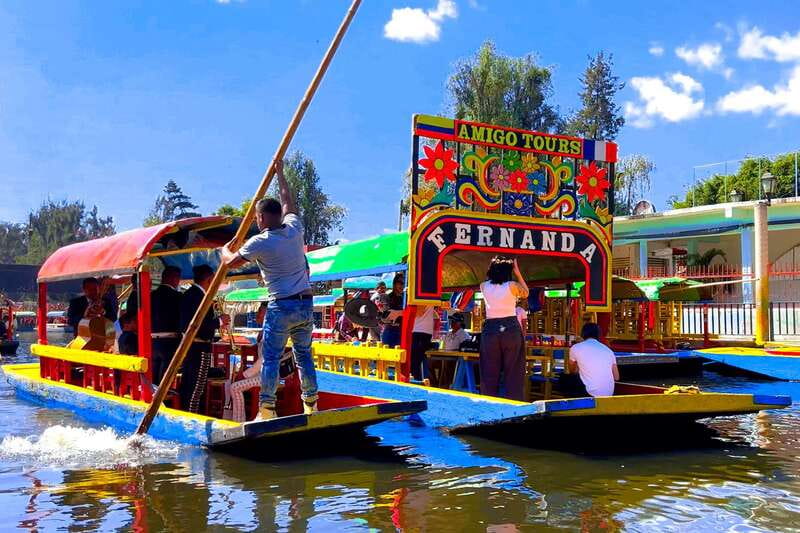
You’ll spend one hour on a colorful boat called a trajinera. The ride is social and festive rather than quiet. Other boats pass by with music, and vendors offer snacks that you can buy during the trip.
This is a welcome change after two days of ruins, churches, museums, and murals. You sit back, watch the canals, and experience a living tradition rather than a formal monument. The boat ride also gives you a chance to talk with your group and enjoy Mexico City at a gentler pace.
Bring cash for snacks if you want to buy from the vendors. Food and drinks are not part of the tour price. The ride lasts an hour, which is long enough to get a feel for Xochimilco without taking over the whole day.
At the end of the boat trip, transport takes you back to the meeting point.
Guides, transport, and the pace of the days
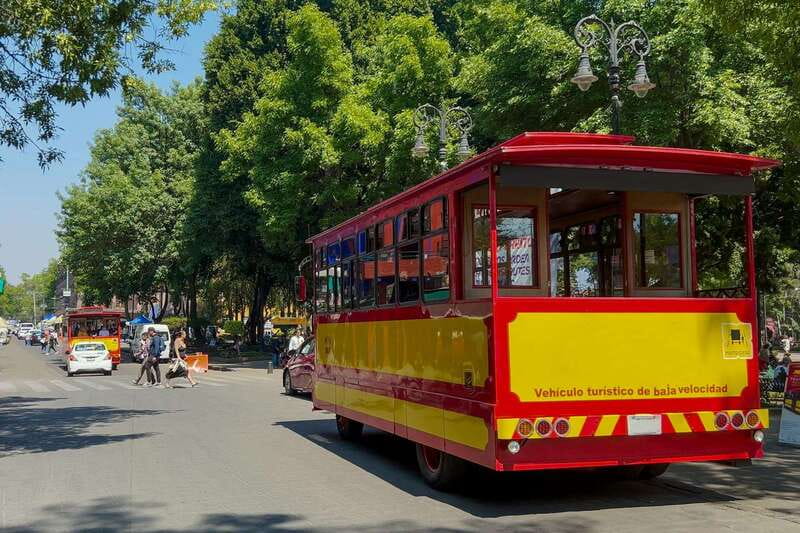
The tour operates in English and Spanish, with professional guides and transport included from the central meeting points. Specific guides can vary, but guides named in positive accounts include Lillian Gomez, Alexa, Leonardo, and Iam. Drivers mentioned include Salvador and Macgiver.
The strongest praise has focused on friendly staff, clear historical explanations, and helpful service. One person found that some information was lost in translation, so your experience may depend partly on the guide assigned to your group and the language you select.
You should expect a full schedule rather than a small private outing. The pickup times are fixed, and the route covers a lot of ground. That is the reason to book it, but also the reason not to expect unlimited time at each stop.
Wear shoes suitable for archaeological paths and pyramid stairs. Carry water, sun protection, and money for food, drinks, and possible purchases at the artisan cooperative or Xochimilco vendors. These are simple preparations, but they make a long day much easier.
What the $131 price really buys you
The $131 price is reasonable if you value convenience and a guide. You are paying for two days of transport, entrance fees, and organized visits to sites that would otherwise require separate planning.
The best value comes from the first day. Reaching Tlatelolco, Guadalupe, and Teotihuacan in one organized route saves time and removes the need to work out connections between Mexico City and the archaeological site. Day two also links destinations that are not naturally close together, especially Coyoacán, UNAM, and Xochimilco.
The price is less attractive if you want maximum freedom. You do not get hotel pickup or drop-off, and you must reach one of the listed meeting points. Meals and drinks are extra. The shop stops may also take time away from the headline sights, so make sure the included structure matches your priorities.
Free cancellation up to 24 hours before the activity and the option to reserve now and pay later make planning easier. Those terms are useful if your Mexico City schedule is still changing.
Who should book this experience?
I would recommend this tour to first-time visitors who want a broad introduction to Mexico City and its surrounding cultural sites. It suits you especially well if you prefer learning from a guide, want transport handled for you, and would rather see six major attractions than spend two days in one neighborhood.
It also works for couples, families, and solo visitors who want a ready-made plan. The two-day format is less tiring than forcing all the stops into one huge day, even though both mornings start early and the schedule remains active.
I would be more cautious if Frida Kahlo’s museum is your main reason for visiting Mexico City. One hour at Casa Azul may feel rushed, and a long artisan shop stop could make that visit shorter. In that case, consider a separate Frida Kahlo entry ticket or a focused Coyoacán tour.
Should you book it?
Book this tour if you want breadth, transport, and historical guidance at a sensible price. The pyramid climbs at Teotihuacan, the Three Cultures Plaza, Casa Azul, UNAM’s murals, and the Xochimilco boat ride give you a strong first look at the area.
Skip it if you want slow museum visits or dislike fixed schedules and shopping stops. Before setting out, confirm how much time is planned for the Basilica and Casa Azul. If the answer works for you, this is a practical way to cover a lot of Mexico City in two well-organized days.
FAQ
How long is the tour?
The experience lasts two days. Day one covers Teotihuacan, Tlatelolco, and the Basilica of Guadalupe. Day two covers Xochimilco, Coyoacán, Casa Azul, and the National Autonomous University of Mexico.
What attractions are included?
The tour includes Tlatelolco, the Basilica of Our Lady of Guadalupe, Teotihuacan, Coyoacán, the Frida Kahlo Museum, the central campus of the National Autonomous University, and Xochimilco.
Can I climb the pyramids at Teotihuacan?
The tour description includes climbing the stairs at the Pyramid of the Sun and Pyramid of the Moon.
How long is the Xochimilco boat ride?
The trajinera ride lasts one hour.
Is food included?
No. Food and drinks are not included in the tour price. You can buy snacks from vendors during the Xochimilco boat ride.
Is hotel pickup included?
No. Hotel pickup and drop-off are not included. You must meet the tour at one of the listed central meeting points.
Where are the meeting points?
Day one pickup is at MIGA CAFE, Calle Liverpool 174, at 8:20 a.m., or behind the Palace of Fine Arts at Avenida Hidalgo 2, at 8:50 a.m. Day two pickup is at MIGA CAFE at 7:50 a.m., or behind the Palace of Fine Arts at 8:20 a.m.
What languages are available?
The tour is available in Spanish and English.
Are entrance fees included?
Yes. Entrance fees and a professional guide are included.
Can I cancel for a refund?
Yes. You can cancel up to 24 hours in advance for a full refund. You can also reserve the tour and pay later.
More Frida Kahlo & Coyoacan Tours in Mexico City


More Xochimilco Boat Parties in Mexico City
More Teotihuacan Tours in Mexico City

More tours in Mexico City we've reviewed


Teotihuacan Tours, compared.
 ★ 5.0Teotihuacan, Guadalupe Shrine & Tlatelolco Day Tour with LunchFrom $399 hours (approx.)
 ★ 5.0Balloon flight + Breakfast in cave + Pyramids + Pick up CDMX.From $1722 to 8 hours (approx.)
 ★ 5.0Teotihuacan pyramids morning or afternoon without tourist trapsFrom $645 hours 30 minutes (approx.)
 ★ 4.5Teotihuacan Early Access Guided Tour with optional LunchFrom $398 hours (approx.)
 ★ 5.0Balloon flight + pick up in CDMX + Breakfast in Cave + PyramidsFrom $1694 to 7 hours (approx.)
 ★ 4.6Mexico City: Teotihuacan, Tlatelolco & Guadalupe Shrine TourFrom $49
 ★ 5.0Teotihuacan Hot Air Balloon Flight from Mexico City / VolareFrom $1553 to 9 hours (approx.)
 ★ 5.0Hot Air Balloon Flight with Breakfast Cave and Pyramids TourFrom $1408 hours (approx.)
The lists this tour appears in