
Reviewed · TEOTIHUACAN TOURS
Teotihuacan Pyramids Morning Tour With Me, Angela!
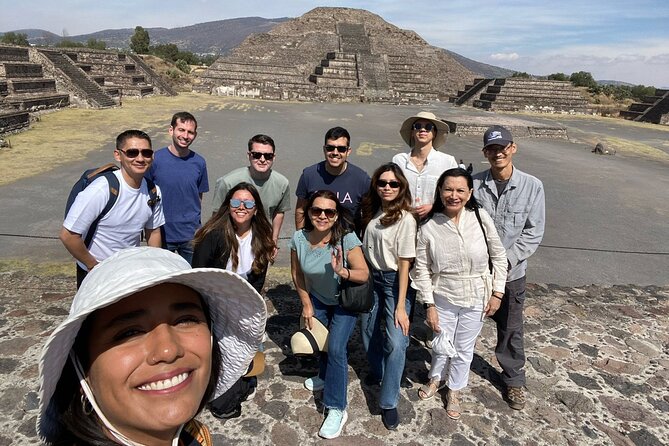
Teotihuacan is at its best before the big tour buses arrive, and this early start is the key. Angela picks you up between 6:15 and 7 a.m., gets you to the archaeological site ahead of the crowds, and leads you through the Avenue of the Dead, the Moon Pyramid, the Sun Pyramid, and the Quetzalcoatl complex.
In This Article
- Key points to know before booking
- Why the early start makes Teotihuacan better
- Walking into the ancient city
- The Moon Pyramid and the Avenue of the Dead
- The Sun Pyramid and Quetzalcoatl complex
- Angela’s guiding style
- Lunch and the local feel of the day
- What the $77.43 price buys you
- Practical preparation for the pyramids
- Who should book this morning tour
- Should you book it?
- FAQ
- How much does the Teotihuacan morning tour cost?
- How long does the tour last?
- What time does pickup begin?
- Where is hotel pickup available?
- What language is the tour offered in?
- Which Teotihuacan sites are included?
- Is lunch included?
- How large is the group?
- Can people with mobility or knee problems join?
I like the small-group format, capped at 15 people, and the fact that the tour avoids souvenir-shop detours. I also like Angela’s use of visual materials, questions, and clear archaeological evidence instead of loose legends. The drawback is the early pickup and a fair amount of walking on uneven ground, with steep stone stairs that can be hard on knees and balance.
Key points to know before booking
- Early arrival matters: You can reach the site before the largest crowds, with a better chance of quiet views around the Moon Pyramid.
- Angela leads in English: Her style is friendly, energetic, and built around facts, questions, sketches, and visual aids.
- The main monuments are covered: Expect the Avenue of the Dead, Moon Pyramid, Sun Pyramid, and Quetzalcoatl Pyramid area.
- No shopping stops are built into the day: The focus stays on the archaeological site, followed by lunch at a local restaurant.
- Transportation is handled for you: Pickup is offered in Roma, Condesa, Centro Histórico, Juarez, and Polanco, with a meeting point for other areas.
- Plan for stairs and sun: Sunscreen, water, snacks, and comfortable shoes are practical necessities.
Why the early start makes Teotihuacan better
Teotihuacan is about an hour outside Mexico City, depending on traffic and pickup arrangements. Leaving early is not just a scheduling quirk. It helps you reach the pyramids before the site fills with large groups, and it leaves much of your afternoon free after returning to the city.
The pickup window runs from 6:15 to 7 a.m., with the exact time based on group size and your location. That means you should be ready before sunrise or soon after it, but the tradeoff is useful: the tour generally returns to central Mexico City around the middle or later part of the afternoon, leaving room for another meal, museum, or neighborhood walk.
The ride is in private transportation arranged for the group. It is a practical benefit in Mexico City, where reaching Teotihuacan on your own means sorting out a long bus journey or arranging a separate driver. The ride also gives Angela time to introduce the site and talk about Mexico City, its culture, and its place in Mexican history.
Pickup is offered from hotels and Airbnbs in Roma, Condesa, Centro Histórico, Juarez, and Polanco. If you stay outside those areas, you receive a meeting point instead. Check this detail before paying, since door-to-door pickup is one of the tour’s most useful conveniences.
A few more Mexico City tours and experiences worth a look
Walking into the ancient city
Teotihuacan is not a single pyramid surrounded by empty ground. It is a huge ancient city organized around the Avenue of the Dead, with major ceremonial buildings, broad open spaces, platforms, and smaller structures extending along the route.
Angela’s role is important here. Without a guide, you can see the stone and plaster remains, take photos, and climb the monuments where permitted, but much of the meaning is easy to miss. She explains how archaeologists interpret the city, what is known about its people, and where popular assumptions go beyond the evidence.
That distinction matters. Teotihuacan was built roughly 2,000 years ago by a civilization whose original name and language are not fully known. The later Aztecs gave the city the name Teotihuacan, often translated as a place connected with the birth of the gods, but the people who built it were not Aztec.
A good guide helps you keep those periods separate. Angela’s approach uses archaeological facts while still leaving room for unanswered questions. She encourages you to think about how the city worked, how ordinary people may have lived, and why the civilization eventually declined.
The tour is structured as a story rather than a string of disconnected facts. The result is easier to follow, especially if you have children or if ancient American archaeology is new to you.
The Moon Pyramid and the Avenue of the Dead
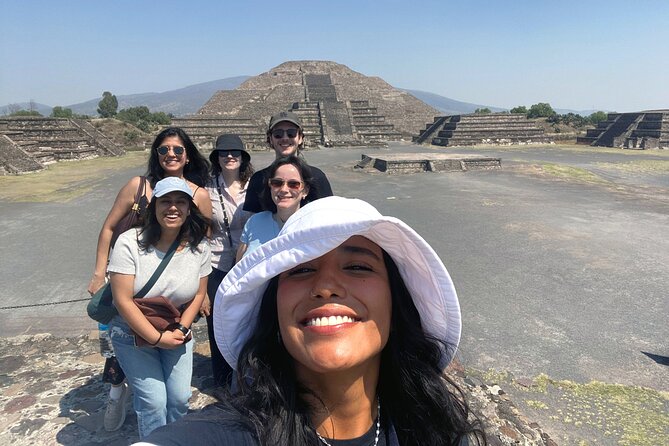
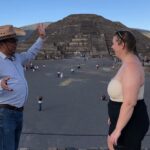
The Moon Pyramid is often the first major climb of the day. Arriving early gives your group a better chance to reach it before the busiest period, and the view from the upper sections looks down the Avenue of the Dead toward the Sun Pyramid.
The climb is not a casual stroll. The steps are steep, narrow in places, and made of old stone. You should use care, especially if you have knee problems, limited balance, or trouble with stairs. One part of the monument may be accessible even if you decide not to climb all the way.
You do not need to climb every pyramid to benefit from the tour. Angela can continue explaining the site from below and share the same archaeological context with you. Still, if reaching the upper sections is important to you, assess your mobility honestly before booking.
The Avenue of the Dead gives the visit its scale. Walking along it helps you understand that Teotihuacan was planned on a citywide scale, not built as a small ceremonial outpost. Angela uses the route to connect the monuments, the political power of the city, and the daily life that once surrounded its temples.
This is also where timing helps. A quiet avenue makes it easier to listen and take photographs without large groups pressing around you. Later, the site can feel much more crowded and exposed.
The Sun Pyramid and Quetzalcoatl complex
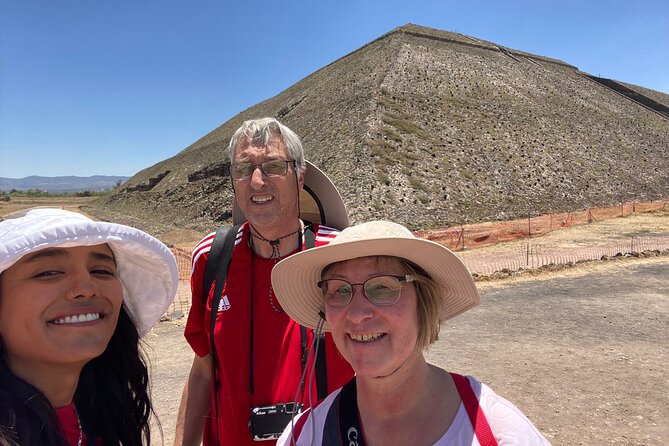
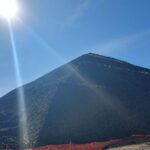
The Sun Pyramid is the most famous structure at Teotihuacan and one of the largest monuments in the ancient Americas. Its size is easier to grasp from the Avenue of the Dead or from nearby platforms than from the base alone.
Climbing involves a sustained set of steps and can be tiring under the sun. Bring water, use sunscreen, and take breaks. You should not feel pressured to reach the top. The tour is about understanding the whole city, not collecting a personal summit.
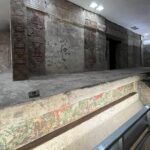
The Quetzalcoatl complex, also called the Feathered Serpent area, brings a different kind of detail. Here, carved serpent heads and other sculptural elements give you a closer look at the art and political symbolism of Teotihuacan.
This is where Angela’s visual aids can be especially helpful. A sketchbook or collection of images lets you compare worn carvings with what they may have looked like when painted and complete. That sort of support helps you see details that can disappear into weathered stone.
The route includes time to explore and take pictures, not only time standing beside the guide. That balance suits people who want a clear explanation but also want to pause, look around, and make their own record of the place.
The tour has been planned so that the final major stop brings several earlier ideas together. You hear about the city’s design, its symbols, and its people as you move through the site, rather than receiving a rushed lecture at one monument.
Angela’s guiding style
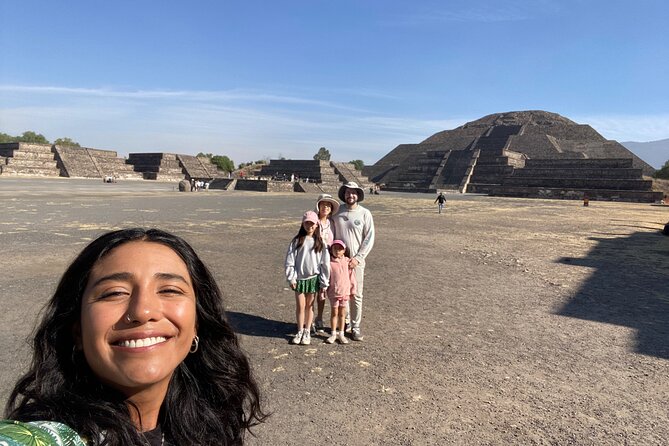
Angela is the main reason this experience feels different from a basic transport-and-entry package. She presents information in a lively way, asks questions, welcomes interruptions, and responds to different levels of interest within the group.
You can expect a guide who talks about more than the pyramids. The drive and the site visit include context about Mexico City, Mexican culture, local people, and the role Teotihuacan plays in the country’s past.
Her use of visual material is a practical strength. Ancient buildings are difficult to interpret when only foundations and partial carvings remain. Sketches and images give you a clearer sense of scale, decoration, and possible daily life.
She also appears attentive to comfort. The day may include a coffee break, and the group can stop for lunch after the archaeological visit. If you need to conserve energy, a bus between the Pyramid of the Sun and the Feathered Serpent area may be possible, depending on the circumstances and group arrangements.
This is a good match for you if you enjoy asking questions and learning how archaeologists separate evidence from speculation. It is less ideal if you want only transportation, a few quick photos, and no extended explanation.
A few more Mexico City tours and experiences worth a look




Lunch and the local feel of the day
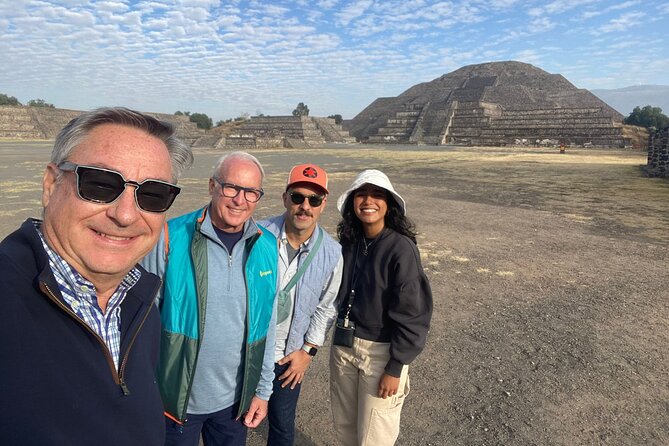
Lunch is not included in the $77.43 price, but the group stops at a local restaurant after the site visit. You pay for your own meal, so bring enough cash or confirm the accepted payment method during the tour.
The meal adds a useful change of pace after several hours outside. You can sit, eat, and talk with the others before the return drive. The food is part of the local flavor of the excursion, but keep your expectations sensible: the restaurant is chosen for its place in the day and local setting, not presented as a formal culinary tour.
One account described the meal as excellent, while another found it simply okay. That is a fair way to approach it. Enjoy the chance to eat locally, but judge the tour mainly by its guiding, timing, transportation, and time at Teotihuacan.
The tour does not include built-in shopping stops. If you dislike excursions that steer you toward stores, this is a meaningful advantage. Your paid time remains focused on the pyramids and the meal rather than sales pitches.
What the $77.43 price buys you
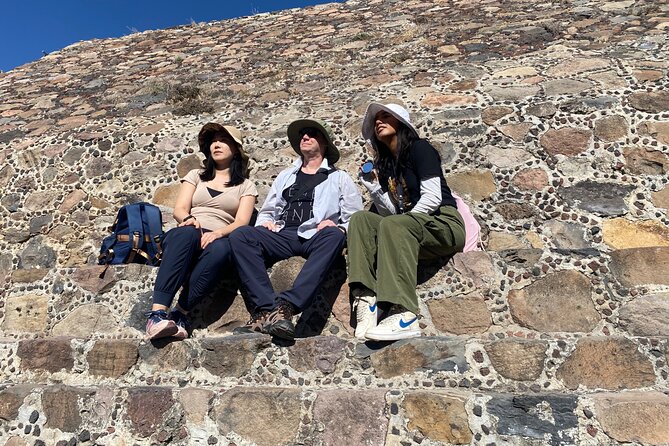
At $77.43 per person, this is not the cheapest way to reach Teotihuacan. You can spend less by taking public transportation or choosing a large coach excursion, but those options may give you less control over timing and less personal attention.
Here, the price includes private transportation and entry tickets. It also covers an English-speaking guide who plans the route, explains the archaeology, manages the schedule, and helps the group avoid the worst crowd conditions.
For me, the value comes from the combination. You are not paying only for a ride to the gate. You are paying to start from a central neighborhood, arrive early, enter with tickets handled, follow a coherent explanation, and return without having to solve the transport problem yourself.
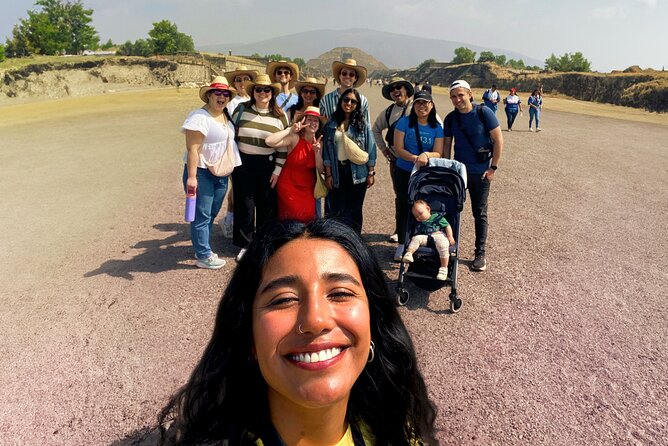
The small-group limit also matters. A maximum of 15 people is not private touring, but it is far more workable than a large bus group. You can hear the guide, ask questions, and move through the site without waiting for dozens of people at every stop.
Still, the price may not suit every budget. If you are comfortable arranging buses, buying admission separately, and visiting without a guide, a self-guided day costs less. I would choose this tour when the archaeological context and early access matter more than finding the lowest possible price.
Practical preparation for the pyramids
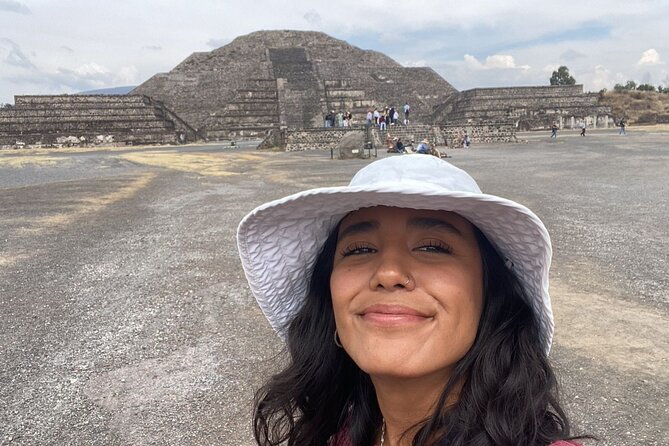
Bring water, sunscreen, and snacks. Lunch comes later, and the walking can make you hungry before then.
Wear shoes with a firm grip. The route includes a fair amount of walking, uneven surfaces, and steep stone stairs. There is no need to climb every monument, but you should be ready for an active morning.
The site is open and exposed, so sun protection is important even when the morning begins cool. Keep your phone or camera ready, but do not let photos distract you from the broad views along the Avenue of the Dead.
If you have knee, balance, or mobility concerns, tell Angela early. She can explain the route and may be able to help you save energy by using the site’s transport between certain areas. The tour is not presented as fully accessible, and the stone steps remain a real limitation.
Families can do well on this outing if children can manage the walking and early start. Angela’s question-based style and visual materials can make a difficult ancient site easier for younger minds to grasp. For older adults, the decision depends less on interest than on comfort with stairs and outdoor walking.
Who should book this morning tour
I would recommend it to first-time Mexico City visitors who want to see Teotihuacan without spending the whole day arranging buses and tickets. It also suits anyone who cares about accurate archaeology and wants a guide who can explain both the known facts and the remaining mysteries.
It is especially useful for people staying in Roma, Condesa, Centro Histórico, Juarez, or Polanco, since pickup is offered in those areas. Couples, families, solo visitors, and small groups can all fit the format.
You may want another option if you dislike early mornings, cannot manage uneven paths, or prefer to explore entirely alone. The day begins early, and the site visit is active even when you skip the climbs.
Should you book it?
Book this tour if you want Teotihuacan explained properly, reached early, and handled with simple transportation from central Mexico City. Angela’s friendly presentation, visual aids, attention to group comfort, and refusal to pad the day with shopping stops make the price easier to justify.
Before booking, check your pickup area, prepare for the early start, and decide how comfortable you are with stone stairs. If those points work for you, this is a strong choice for a focused, informative morning at one of Mexico’s most important ancient sites.
FAQ
How much does the Teotihuacan morning tour cost?
The price is $77.43 per person. Entry tickets and private transportation are included, but lunch, sunscreen, snacks, and water are not.
How long does the tour last?
The full experience lasts about eight hours. The visit inside Teotihuacan itself is listed as four hours, with transportation and the restaurant stop making up the rest of the day.
What time does pickup begin?
The stated start time is 7 a.m., with hotel or Airbnb pickup scheduled between 6:15 and 7 a.m. The exact pickup time depends on group size and location.
Where is hotel pickup available?
Pickup is offered in Roma, Condesa, Centro Histórico, Juarez, and Polanco. If you are outside those areas, a meeting point will be provided.
What language is the tour offered in?
The tour is offered in English and is led by Angela.
Which Teotihuacan sites are included?
The route includes the Avenue of the Dead, the Quetzalcoatl or Feathered Serpent complex, the Sun Pyramid, and the Moon Pyramid. Admission is included.
Is lunch included?
No. The group stops at a local restaurant, but you pay for your own meal.
How large is the group?
The activity has a maximum of 15 people. Transportation is arranged for the group.
Can people with mobility or knee problems join?
Most people can participate, but the site includes substantial walking and steep stone stairs. You do not have to climb every pyramid, and Angela may be able to help you conserve energy with transport between some areas.
More Morning in Mexico City
More Teotihuacan Tours in Mexico City

More tours in Mexico City we've reviewed


Teotihuacan Tours, compared.
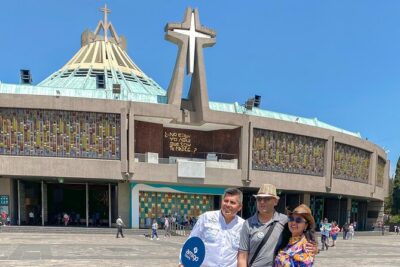 ★ 5.0Teotihuacan, Guadalupe Shrine & Tlatelolco Day Tour with LunchFrom $399 hours (approx.)
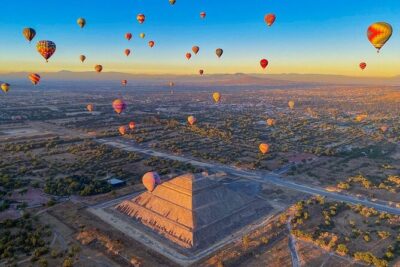 ★ 5.0Balloon flight + Breakfast in cave + Pyramids + Pick up CDMX.From $1722 to 8 hours (approx.)
 ★ 5.0Teotihuacan pyramids morning or afternoon without tourist trapsFrom $645 hours 30 minutes (approx.)
 ★ 4.5Teotihuacan Early Access Guided Tour with optional LunchFrom $398 hours (approx.)
 ★ 5.0Balloon flight + pick up in CDMX + Breakfast in Cave + PyramidsFrom $1694 to 7 hours (approx.)
 ★ 4.6Mexico City: Teotihuacan, Tlatelolco & Guadalupe Shrine TourFrom $49
 ★ 5.0Teotihuacan Hot Air Balloon Flight from Mexico City / VolareFrom $1553 to 9 hours (approx.)
 ★ 5.0Hot Air Balloon Flight with Breakfast Cave and Pyramids TourFrom $1408 hours (approx.)
The lists this tour appears in