
Reviewed · XOCHIMILCO BOAT PARTIES
The City Green Exploring the Urban Eco Reserve of Xochimilco
Xochimilco is best understood from the water, but this small-group food tour gives you the missing context first. You begin with coffee and pastries, walk through the local market, meet the food traditions of the neighborhood, and then trace those ingredients back to working chinampas by trajinera.
In This Article
- Key points to know before booking
- Why this Xochimilco tour feels different
- Coffee and pastries at Hagamos Composta
- A first look at Xochimilco’s old center
- Eating your way through Mercado de Xochimilco
- From market stalls to working chinampas
- A quieter trajinera ride through the reserve
- Guides who shape the day
- What the six to seven hours feel like
- Who will get the most from this experience
- Is $150 a fair price?
- Final recommendation: book it for context, not just canals
- FAQ
- Where does the tour begin and end?
- How long does the experience last?
- What food and drinks are included?
- How large is the group?
- Is the trajinera ride included?
- What happens if the tour is canceled?
I like two things right away: the maximum group size of six keeps the day personal, and the experience avoids the loud party-boat circuit. Guides such as Ana, Nacho, Victor, Liz, and Jacinto bring their own interests to the day, from canal history to sustainable farming. The main drawback is that this is more food-focused than boat-focused, so anyone expecting several hours on the canals may find the water portion shorter than expected.
Key points to know before booking
- Seven or more food stops may fill your day: Expect coffee, pastries, market dishes, snacks, drinks, and a full meal made with local ingredients.
- The boat ride is peaceful rather than party-centered: You travel by trajinera through part of Xochimilco’s protected ecological reserve.
- The market comes before the canals: This order helps you understand where the food comes from and how the chinampas still support local agriculture.
- The group never exceeds six people: That makes it easier to ask questions, linger at a food stall, and hear your guide clearly.
- Private transport connects the pieces: A private van takes you from Roma Sur to Xochimilco and back to the starting point.
- Arrive hungry, but bring an open mind: The tour cannot accommodate a vegan diet, and the tastings include foods you may not recognize.
Why this Xochimilco tour feels different
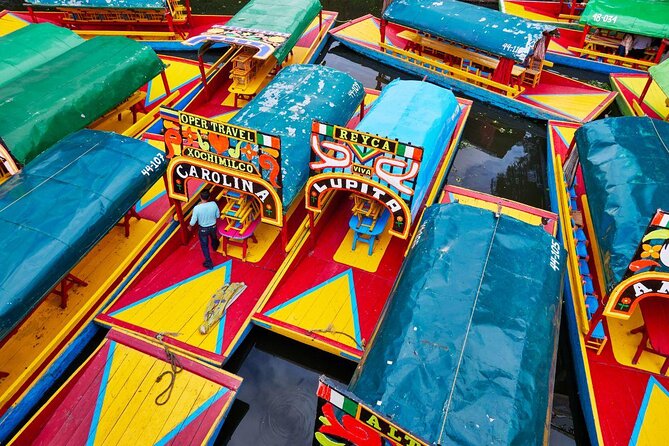
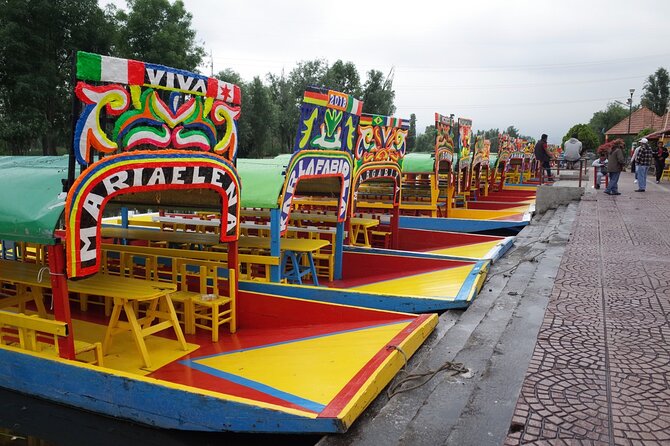
Many people picture Xochimilco as a colorful boat ride with music, drinks, and floating decorations. That scene exists, but it is only one part of the area. This experience spends less time on entertainment and more time explaining why the canals, farms, markets, and food traditions matter.
Xochimilco is a UNESCO-listed area with an agricultural system that reaches back to the chinampas, the raised growing plots created in the shallow lake environment. The canals are not just a backdrop for a leisurely cruise. They connect farms, carry produce, support birdlife, and preserve a way of working that has survived inside a huge modern city.
I like the way the day follows the food from table to source. You taste local dishes in the market, then ride toward the places where some of the produce is grown. That simple structure turns a food outing into a lesson about water, land, family farming, and Mexico City’s Indigenous and colonial past.
The price is $150 per person, which is not cheap for Mexico City. Still, you are paying for about six to seven hours, an English-speaking guide, private transportation, a trajinera ride, snacks, lunch, bottled water, and a very small group. If you tried to arrange the market, transport, boat, and chinampa visit separately, you would spend time sorting out details and might miss the connections that make the day worthwhile.
A few more Mexico City tours and experiences worth a look

Coffee and pastries at Hagamos Composta
The meeting point is Hagamos Composta Café Comunitario at C. Manzanillo 114 in Roma Sur. The day begins with coffee and baked goods, along with an introduction to the places you will visit.
This is not just a random café stop. Hagamos Composta is a community center known for having the country’s largest independent composting project. Starting there gives the tour an environmental frame before you reach Xochimilco. Food waste, local production, and city ecology are already part of the conversation.
You can choose a coffee and eat pastries while your guide explains the plan. Guides such as Nacho, Ana, and Jacinto have been praised for making this opening feel relaxed rather than like a formal lecture. That matters because the day contains plenty of information, and the café is a comfortable place to get oriented.
Plan to eat only lightly here. The coffee and pastry are included, but they are also the first course in a day that keeps offering food. Several dishes follow at the market, then more snacks and lunch appear around the boat ride.
After the briefing, you travel by private van to Xochimilco. The drive is about 45 minutes according to the experience details shared by participants, though traffic in Mexico City can affect the timing. Private transport is a real advantage here. Xochimilco is well outside the central neighborhoods, and you avoid arranging a separate taxi or public transport connection.
A first look at Xochimilco’s old center
The published plan centers on the market, but the route can also include the Catedral de Xochimilco, or San Bernardino de Siena. The 1500s church helps place the neighborhood in time, showing the colonial layer built over an older Indigenous agricultural region.
This brief stop adds useful context. You are not simply arriving at a market and being handed unfamiliar food. You begin to see Xochimilco as a place shaped by several eras, with religion, farming, waterways, and commerce still close together.
The group size helps here. With no more than six people, your guide can explain details and answer questions without losing half the group in a crowded street. You should still expect walking on uneven surfaces, including market aisles and, on some outings, cobblestone streets.
Eating your way through Mercado de Xochimilco
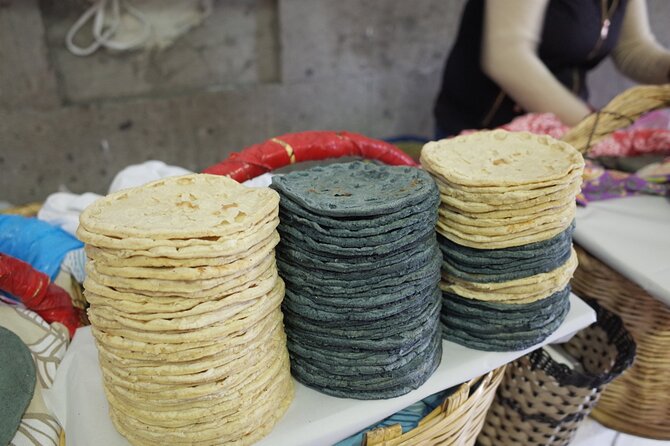
The market is the most food-heavy part of the day. Come hungry, because the tastings can add up quickly. You may try tlacoyos, tamales, tacos, quesadillas, fresh tortillas, fish soup, fried fish, agua fresca, chicharrón, local olives, and different mole mixtures, depending on the day’s route and available ingredients.
Tlacoyos are a good example of what makes this stop useful. These oval cornmeal patties can be filled with fava beans, cheese, refried beans, spinach, potatoes, or other ingredients. Local women prepare them in the market, and your guide can explain both the dish and the ingredients rather than treating the food as a quick sample.
The market is large and can feel intense. There are strong smells, close aisles, unfamiliar cuts of meat, piles of produce, and vendors working at full speed. That is part of its appeal, but it may be tiring if you prefer quiet sightseeing. The guide helps by choosing specific stalls and keeping the group together.
On some routes, the market portion includes around seven tasting stops. That does not mean seven tiny bites and nothing more. The food may be substantial, so pace yourself even if every dish looks worth trying. I would skip a large breakfast and avoid planning a major dinner afterward.
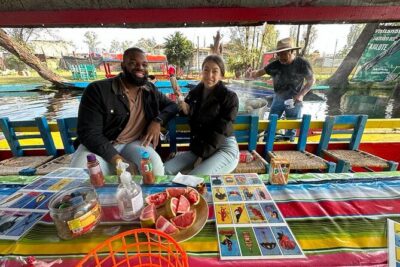
You may also buy or gather food for the boat, such as guacamole and chips, cheeses, fava bean dip, drinks, and mezcal. The precise selection changes, but the idea is important: the trajinera is not an isolated sightseeing ride. It becomes a moving table supplied by the market.
This is also where the tour makes the strongest connection between food and farming. Your guide points out the produce grown in the chinampas and explains how local food reaches the market. Instead of seeing the market as a collection of exotic dishes, you begin to understand it as part of a working food network.
From market stalls to working chinampas
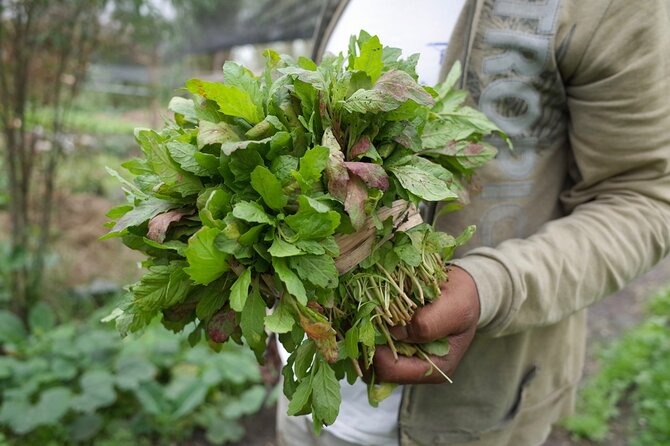
The chinampas are the heart of the experience. These cultivated plots were built in the shallow lake area using layers of organic material and soil. The system allowed farmers to grow food among the canals, and parts of it still operate today.
The tour visits a working agricultural area and introduces you to people who maintain this tradition. That contact gives the ecological subject a human face. You learn not only how the plots were made, but also why protecting them matters now.
Some guides bring a particular focus. Victor is associated with work on agricultural technology and productivity, while Jacinto has been especially attentive to low-waste details such as bringing reusable utensils and cups. Paco has also been praised for taking care with guests who need extra support while walking.
The visit is not a polished museum display. You might see cultivated plots, talk about current conservation work, and notice the practical challenges of keeping family land productive. That makes the stop more useful than a quick explanation from the boat. You see that Xochimilco is both an ecological refuge and a living neighborhood with economic pressures.
Other city tours we've reviewed in Mexico City




A quieter trajinera ride through the reserve
The boat portion lasts about two hours, but the full day is not a two-hour cruise from the start. The market and farm discussion come first, and the trajinera provides the calmer final chapter.
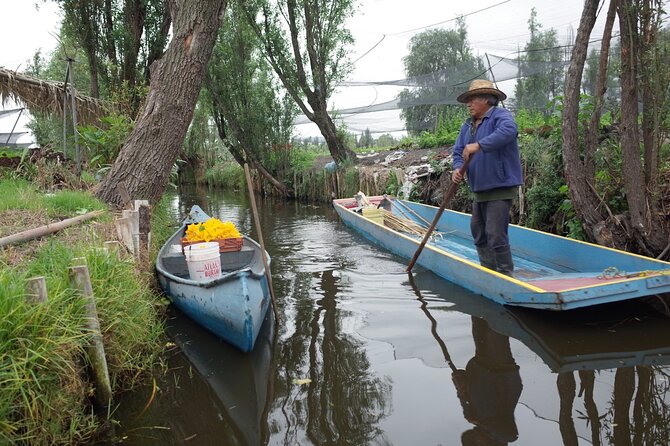
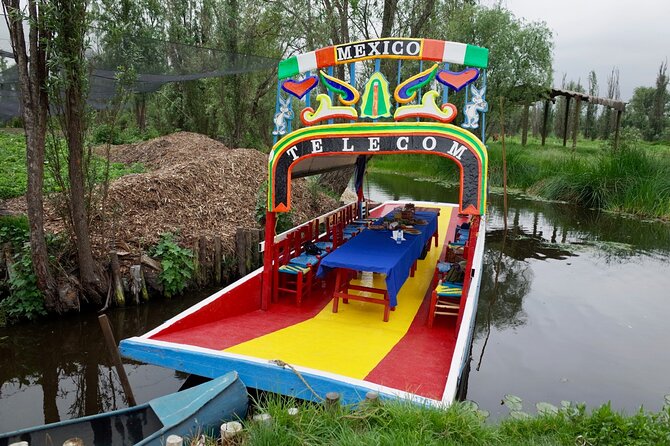
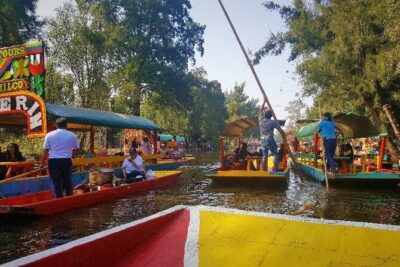
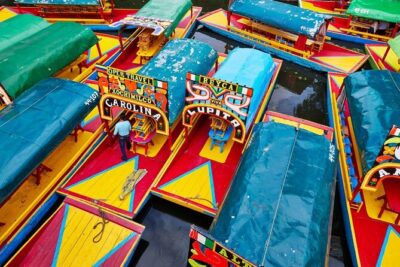
You ride through canals connecting the chinampas, often passing the more colorful party boats before moving into quieter sections of the ecological reserve. The change in mood is one of the best reasons to choose this experience. Instead of focusing on loud music and drinks, you have time to watch the water, cultivated plots, and birds.
Herons and egrets are among the birds you might see close to the canals. The route is also known for peaceful views and a different sense of Mexico City, one that feels far removed from traffic and high-rise streets.
The boat ride includes more eating. Seasonal ingredients from the market are served onboard, and you may stop at a small farm to learn what a working chinampa looks like. In one account of the route, fresh chard was picked and turned into a salad on the boat. That kind of moment explains the tour’s appeal: the meal is tied directly to the place around you.
You may also hear about the Island of the Dolls, a famous and unsettling Xochimilco attraction. It is not the main purpose of this outing, so do not book the tour expecting a dedicated visit there. The focus is the ecological reserve, food production, and a calmer section of the canals.
The water portion can be affected by weather. The tour requires good conditions, and a cancellation caused by poor weather results in the choice of another date or a full refund. The same applies if the minimum group size is not reached.
Guides who shape the day
Because the group is so small, your guide matters a great deal. This is not a scripted hop-on, hop-off outing. You spend most of the day with one person, and the best guides make the history, food, and ecology feel connected.
Ana has been described as funny without putting on a forced show, and she brings strong background on the market, canals, and local history. Nacho is a good match if you want a guide who enjoys questions and treats the food as a way into Mexican culture.
Victor brings a clear connection to the chinampas and current farming work. Liz has a strong food and historical focus, while Jacinto is especially careful about the details of the tastings and the environmental side of the outing. Other guides, including Raul and Paco, have been praised for warmth, storytelling, and personal care.
Guide assignments can change, so you should not book solely to meet one named person. Still, the range of guides suggests that the experience depends on people who care about Xochimilco rather than simply escorting a group from one stop to another.
What the six to seven hours feel like
The day has a full schedule, but it is broken into different kinds of activity:
- Coffee and orientation at Hagamos Composta
- Private van transfer to Xochimilco
- A possible look at the cathedral and historic center
- Market walking and repeated tastings
- Transfer toward the canals
- A trajinera ride through the ecological reserve
- A chinampa or farm visit
- Lunch and seasonal food
- Private van return to the Roma Sur meeting point
You should expect walking, standing, sitting on a boat, and a great deal of eating. Most people can participate, and service animals are allowed. The experience is near public transportation, but the tour itself includes private transport to and from Xochimilco.
The exact balance can vary. One day may place extra weight on the market, another may allow more time for farm discussion or the canals. That flexibility is part of a small-group outing, but it also means you should not expect a rigid schedule down to the minute.
Who will get the most from this experience
I would choose this tour if you want to understand Xochimilco beyond its party boats. It suits people who enjoy local food, neighborhood markets, environmental subjects, Indigenous agriculture, and conversations with a guide.
Families can do well here, especially with older children and teenagers who are open to unfamiliar food. The small group makes it easier for a guide to adjust explanations and keep everyone involved.
You do not need to consider yourself a serious food fan. The cultural and ecological material gives the day plenty of substance. Still, you should be willing to taste dishes you may not recognize, and you should not expect standard tourist fare at every stop.
This is less suitable if you want a long, leisurely boat-only outing, a nightlife atmosphere, or a strictly vegetarian or vegan menu. The tour explicitly cannot accommodate a vegan diet. If you have other dietary needs, confirm them before booking rather than assuming the market route can be changed.
Is $150 a fair price?
At $150, this is a premium day outing by Mexico City standards. Its value comes from the combination of parts: a six-person limit, an English-speaking guide, private van service, a substantial food program, bottled water, a trajinera ride, and access to a side of Xochimilco that is harder to arrange alone.
You are also paying for interpretation. A boat rental by itself can show you the canals, but it will not necessarily explain how the chinampas work, where the food came from, or how the reserve fits into Mexico City’s past and present.
If your goal is simply to take colorful photographs from a boat, you can likely find a simpler and less expensive option. If you want the market, the food system, the farms, and the canals tied into one day, the price is easier to justify.
The tour is often booked well ahead, with an average booking lead time of about 38 days. That suggests you should reserve early if your Mexico City dates are fixed, especially because the group is limited to six.
Final recommendation: book it for context, not just canals
I would book The City Green if you want Xochimilco to make sense. The best part is not any single taco, church, bird, or boat view. It is the way the day connects them: coffee and composting, market food and local women, canals and farms, ancient farming methods and current conservation work.
Book it if you want a personal guide, abundant food, and a quieter alternative to the party-boat scene. Skip it if your priority is a long cruise with music, or if you cannot eat the menu offered.
For most curious first-time visitors to Mexico City, this is a strong use of a full day. Arrive at C. Manzanillo 114 hungry, wear comfortable shoes, keep your schedule open, and expect to leave with both a full stomach and a clearer idea of why Xochimilco still matters.
FAQ
Where does the tour begin and end?
It begins and ends at Hagamos Composta Café Comunitario, C. Manzanillo 114, Roma Sur, Cuauhtémoc, Mexico City. Private van transport to and from Xochimilco is included.
How long does the experience last?
The full experience lasts approximately six to seven hours. The listed activities include about two hours at the opening stop, one hour at the market, and two hours on the Xochimilco portion, in addition to transport and transitions.
What food and drinks are included?
Coffee, pastries, snacks, lunch, seasonal products, and bottled water are included. Market tastings can include dishes such as tlacoyos and other local foods. The tour cannot accommodate a vegan diet.
How large is the group?
The maximum group size is six people. This keeps the experience small and allows more direct interaction with the guide.
Is the trajinera ride included?
Yes. A ride on a trajinera through part of Xochimilco’s ecological reserve is included in the price.
What happens if the tour is canceled?
If poor weather causes a cancellation, you can choose another date or receive a full refund. If the minimum number of participants is not reached, you are offered another date or experience, or a full refund. You can also cancel for a full refund up to 24 hours before the start time.
More City Tours in Mexico City
More Xochimilco Boat Parties in Mexico City



More tours in Mexico City we've reviewed










Xochimilco Boat Parties, compared.
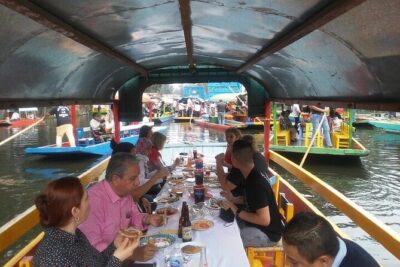 ★ 4.5Xochimilco, Coyoacan and Frida Kahlo with Optional LunchFrom $349 hours (approx.)
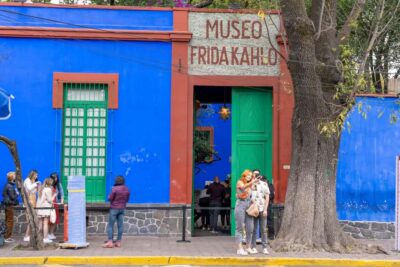 ★ 4.4CDMX: Xochimilco, Coyoacan, Frida Kahlo Museum & Murals TourFrom $89
 ★ 5.0Xochimilco Barco Fiesta Tentacion 18+ with Open Bar and TacosFrom $592 hours (approx.)
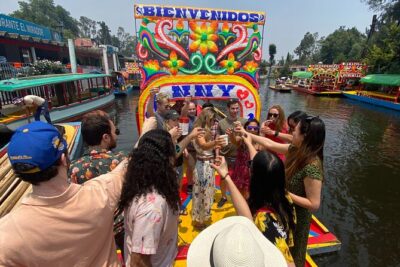 ★ 5.0Xochimilco & Mexican Party with Guacamole & Unlimited DrinksFrom $632 hours 30 minutes (approx.)
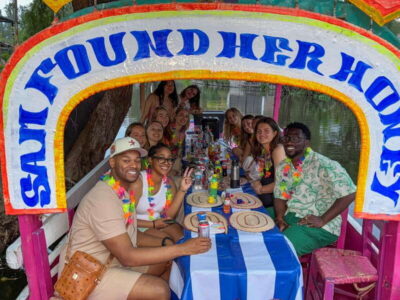 ★ 5.0Mexico City: Xochimilco Boat Party with Unlimited DrinksFrom $482 hours
 ★ 5.0Mexico City Boat Tour Food and Unlimited Drinks Priority BoardingFrom $632 hours 30 minutes (approx.)
 ★ 5.0Private City Tour in Frida Kahlo, Coyoacan, and XochimilcoFrom $1954 to 6 hours (approx.)
 ★ 5.0PREMIUM Frida Kahlo Museum and Xochimilco (Small Groups)From $806 to 7 hours (approx.)
The lists this tour appears in