
Reviewed · TEOTIHUACAN TOURS
Teotihuacan Pyramids Tour, small group in Van, from Mexico City
Teotihuacan is the kind of place that rewards a guide. Its huge ceremonial avenue and pyramids are easy to admire, but the carved serpents, layered buildings, painted surfaces, and city planning mean far more when someone explains what you are seeing. This tour takes you from central Mexico City to the UNESCO-listed site and covers the main monuments in roughly five to six hours.
In This Article
- Key points to know before booking
- Why Teotihuacan deserves a full morning
- Starting at Palacio de Bellas Artes
- The ride out in a small van
- Temple of Quetzalcoatl and layered buildings
- Walking the Avenue of the Dead to the Sun Pyramid
- Moon Plaza and the end of the ceremonial avenue
- Palace of Quetzalpapalotl
- What the guide can add
- Food, clothing, and practical preparation
- Is $89.42 a fair price?
- Returning beside Alameda Central
- Should you book this Teotihuacan tour?
- FAQ
- Where does the tour begin?
- Where does the tour end?
- Is transportation included?
- Is the entrance fee to Teotihuacan included?
- Is food included?
- How much walking is involved?
- Can I cancel for a full refund?
I like the private minibus transport, since you avoid arranging your own trip across the city and out to the ruins. I also like the focused route: there are no souvenir-shop or restaurant stops, so your time is spent on Teotihuacan itself. The main caution is that timing and group size can vary. Some departures have been delayed or expanded beyond the advertised small-group feel, and the return to Mexico City can run well past 1:00 PM.
Key points to know before booking
- Private transport from central Mexico City: Meet at Palacio de Bellas Artes at 8:00 AM and return near Alameda Central.
- Main Teotihuacan monuments included: See the Sun Pyramid, Moon Pyramid, Avenue of the Dead, Temple of Quetzalcoatl, and Palace of Quetzalpapalotl.
- English-speaking guide: Guides have included Luis, Laura, Carmina, David, Juan, and Ulysses, also called Warrior in some departures.
- No shopping or restaurant detours: This is an archaeology-first outing, not a mixed sightseeing and shopping trip.
- A physically active morning: Expect extensive walking, open sun, uneven ground, and little shade.
- Good value at $89.42: Transport, admission, taxes, and guiding are included, but food is not.
Why Teotihuacan deserves a full morning
Teotihuacan was already ancient by the time the Aztecs encountered it. They called it the City of the Gods, and the name has stuck because the site feels oversized even before you reach the main pyramids.
The central Avenue of the Dead runs through the ceremonial city, with temples and platforms arranged over a broad plain. The scale is the first thing you notice. The second is the precision. This was not a loose collection of monuments, but a carefully planned urban center with religious, political, and residential areas.
I recommend seeing Teotihuacan with some historical help rather than simply arriving, climbing what is open, and taking photographs. A good guide can point out traces of color, explain how later buildings were constructed over earlier ones, and help you understand why the Pyramid of the Moon and Pyramid of the Sun were placed where they are.
The quality of the guiding is important here. English-language guides have included Luis, Laura, Carmina, David, Juan, Alejandro, Guillermo, Sophia, and Ulysses. Strong departures have been praised for clear explanations, good English, patience, and a willingness to answer questions. Ulysses, known as Warrior on some tours, has been especially praised for bringing the ancient city to life with historical images and lively explanations.
That variation matters. A great guide can turn a monumental walk into a readable story. A weak or hard-to-follow presentation can leave you with little more than photographs of large stones.
A few more Mexico City tours and experiences worth a look
Starting at Palacio de Bellas Artes
The tour begins at 8:00 AM at Palacio de Bellas Artes on Avenida Juarez in the Historic Center. This is a practical meeting point near public transportation, but you should allow extra time to find the correct spot and your guide.
Bellas Artes itself is one of Mexico City’s most important cultural buildings. Its marble exterior and murals by Diego Rivera, David Alfaro Siqueiros, and José Clemente Orozco make it worth seeing even if you are only using it as a starting point.
The schedule gives this stop one hour, but admission is not included. That means you should not assume you will have a full museum visit as part of the Teotihuacan package. Treat it as the meeting area and a chance to admire the building unless your tour instructions clearly say otherwise.
The early departure is sensible. Teotihuacan sits outside Mexico City, and traffic can be unpredictable. You will also get more useful time at the ruins by leaving in the morning rather than trying to make the journey later in the day.
The ride out in a small van
The advertised transport is private transportation by minibus, with a maximum of 13 people. At its best, this makes the trip easy: you meet in the center, settle into the van, and leave the driving to someone else.
The transport is one of the clearest reasons to consider paying $89.42 rather than arranging the visit independently. You do not need to work out the route, buy site admission separately, or coordinate a return trip after several hours on your feet.
There is one practical point to keep in mind. Past departures have not always followed the same transport arrangement. Some earlier experiences involved public transportation, while more recent information describes private vans. One recent departure also had to use an extra vehicle after the group was overbooked. If the exact vehicle and group size matter to you, confirm those details before setting out.
The return ride is described as about an hour, but Mexico City traffic can add substantial time. The planned end point is Hilton Mexico City Reforma on Avenida Juarez, opposite Alameda Central, only a few blocks from the starting point. Some departures have arrived much later than planned, so do not schedule a tight afternoon flight, museum ticket, or restaurant reservation.
Temple of Quetzalcoatl and layered buildings
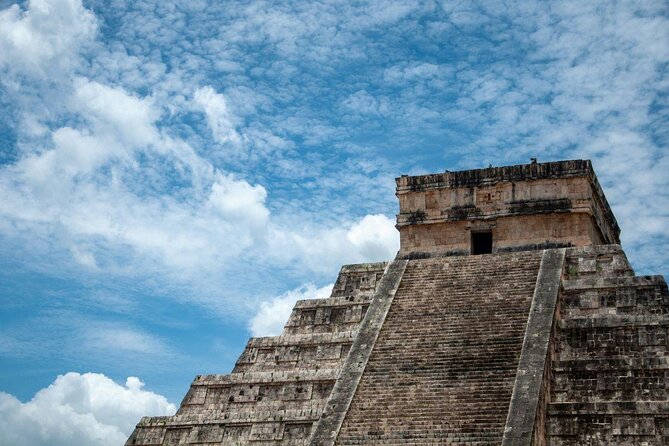
At Teotihuacan, the route first includes the Temple of Quetzalcoatl, also called the Temple of the Feathered Serpent. This monument is decorated with carved serpent heads and other sculptures tied to Mesoamerican religious ideas.
It is a strong early stop because the details are easier to appreciate at close range than the giant pyramids. Look for the repeating stone forms and ask your guide about the meaning of the feathered serpent and the role of the temple within the city.
The itinerary allows about an hour here, followed by a short visit to Edificios Superpuestos, or the superimposed buildings. These structures show how new generations built over earlier construction. You are not just looking at one frozen city. You are seeing layers of development preserved in stone.
This is where a guide adds real value. Without explanation, a rebuilt or overlaid wall can look like an ordinary ruin. With context, it becomes evidence of how Teotihuacan changed over time.
Walking the Avenue of the Dead to the Sun Pyramid
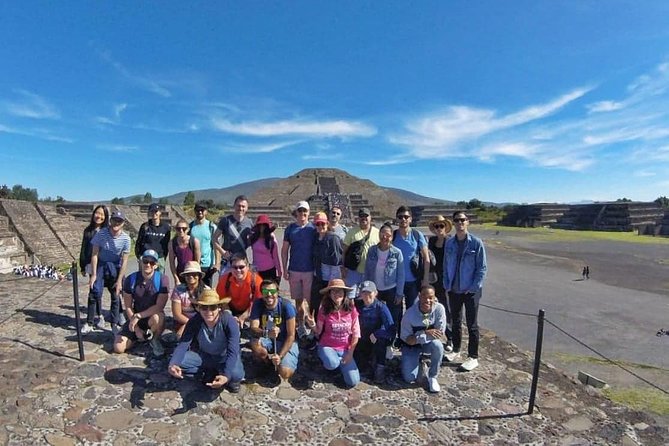
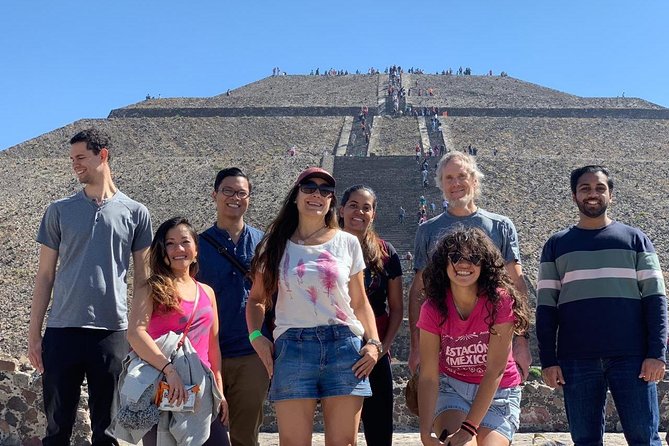
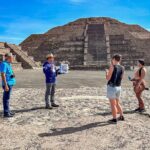
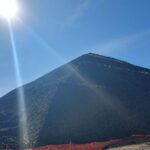
The Pyramid of the Sun is the largest pyramid at Teotihuacan and the visual centerpiece of the visit. The tour allows about an hour in this area, including time for views and photographs.
You will spend much of the day outside, walking across exposed ground. The Avenue of the Dead is broad and impressive, but it offers little protection from the sun. Bring a hat, sunscreen, water, and comfortable sports shoes. The advice to carry snacks or fruit is worth following because brunch is not included and the route is long.
The pyramid itself creates the day’s biggest physical question. Conditions and access can change, so do not assume every section will be available for climbing. Even from the surrounding area, the monument is enormous and gives you a clear sense of the city’s scale.
I would plan on frequent stops for water rather than trying to keep pace with the guide. Several successful departures were praised for guides who allowed older participants to rest when needed, but you should still be honest about your own limits. The experience involves physical activity and is not recommended for people with blood pressure problems. A minimum age of 12 is suggested.
The open setting is excellent for photographs. From the Avenue of the Dead, you can frame the pyramids, platforms, and long central axis in a way that shows how carefully the city was organized.
Other city tours we've reviewed in Mexico City



Moon Plaza and the end of the ceremonial avenue
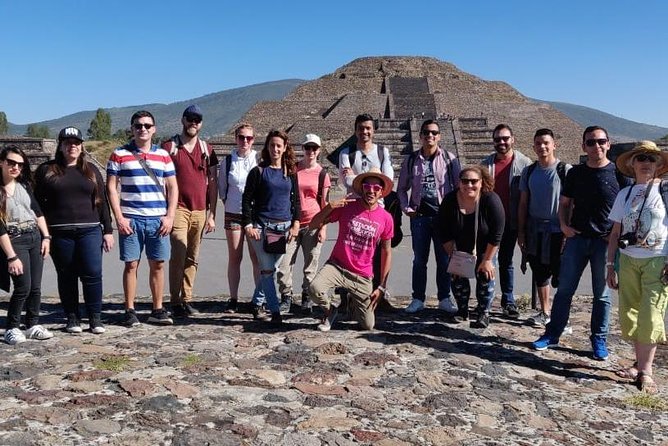
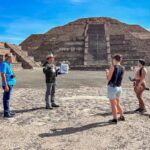
The Pyramid of the Moon sits at the northern end of the Avenue of the Dead. The tour gives this stop about 30 minutes, which is enough for an explanation, photographs, and views back down the avenue.
The Moon Plaza helps you understand the relationship between the monuments. The pyramid is smaller than the Pyramid of the Sun, but its position gives it strong visual control over the ceremonial route. From here, you can look across the plaza and back toward the central part of the city.
This is one of the best places to pause and take in the full setting. The surrounding valley and distant hills help explain why Teotihuacan feels so monumental. The view is not only about height. It is about the way the buildings direct your eye across the entire site.
You may find the stop brief if you want extended time for photography. The tour is designed to cover several major areas in one morning, so it favors broad coverage over a slow, private pace.
Palace of Quetzalpapalotl
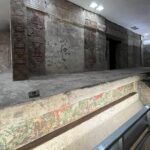
Near the Pyramid of the Moon, the Palace of Quetzalpapalotl offers a welcome change from the huge open spaces. This ceremonial complex has carved stone columns with feathered butterfly designs and murals that retain traces of vivid pigment.
The name refers to the quetzal butterfly, and the decoration gives you a close look at Teotihuacan’s artistic skill. The palace was linked to elite priests or rulers, and its patios and corridors feel more enclosed and controlled than the main avenue.
The scheduled visit is only about 10 minutes, so listen closely and use the time well. This is a small stop with a lot packed into it. Ask your guide to point out the carvings and surviving color before moving on.
For me, this is one of the most useful parts of the route because it balances the grand scale of the pyramids with fine detail. You get a sense that Teotihuacan was not only about massive construction. It also had carefully designed ceremonial interiors.
What the guide can add
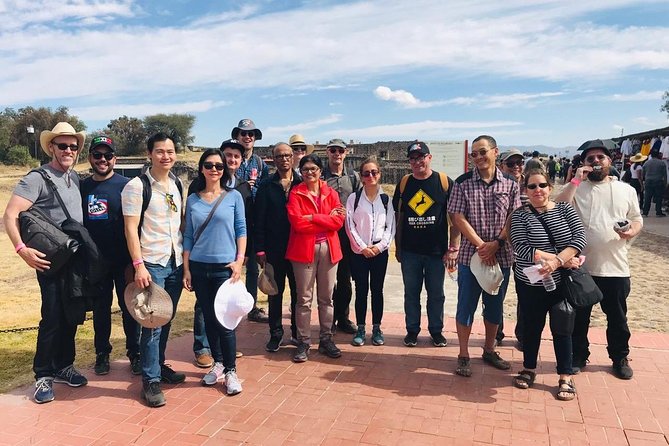
The strongest part of this experience is the human explanation. Guides such as Laura and Carmina have been praised for clear English, thoughtful answers, and strong command of the site. Luis has been singled out for patience and excellent English, while Ulysses has been praised for making the history feel personal and engaging.
Guides have also shared historical images, connected the ruins to the wider story of Mexico City, and encouraged questions. Some departures included explanations of how ancient pigments were produced, adding a useful link between the faded surfaces you see today and the color the city once had.
But you should understand the risk. Guiding quality is not identical on every departure. One English-language guide was difficult for the group to understand, and long explanations combined with poor group management caused delays. If you lose sight of your guide, speak up quickly. In a larger group, it can be easy to drift behind.
The advertised maximum is 13 people, which is a comfortable size for questions and movement. Some departures have been larger than expected, including one that grew to about 19 after an additional family joined. That is no longer the same experience as a genuinely small group.
Food, clothing, and practical preparation
The tour does not include brunch, and it does not stop at a restaurant. That is a benefit if you want every minute at the ruins, but it means you need to bring food.
Pack:
- A full bottle of water
- Fruit or snacks
- Sunscreen
- A hat or cap
- Comfortable walking shoes
- Tissues
- Light, comfortable clothing
There is little shade, and the walking can be tiring even for fit visitors. Wear shoes that can handle uneven archaeological ground rather than casual sandals.
The tour is offered in English and most people can participate, but the physical demands are real. You should be comfortable walking for much of the morning and spending long periods outdoors. This is not a relaxed bus ride with occasional photo stops.
Is $89.42 a fair price?
At $89.42 per person, the price is reasonable if you value convenience and guiding. Your fee includes transportation, archaeological-site admission, local guiding, taxes, and handling charges. You avoid the work of reaching Teotihuacan on your own and receive a structured route through the main monuments.
The value is strongest when your guide is good and the vehicle runs on time. A strong explanation can help you notice details you would otherwise pass, especially at the Temple of Quetzalcoatl and Palace of Quetzalpapalotl.
The value drops if the group is larger than promised, the English presentation is hard to follow, or the return is badly delayed. You are paying for organization as much as admission, so group management matters.
Independent public transportation may cost less, but it will not provide the same built-in explanation or door-to-site coordination. This tour makes more sense for a first visit, a short stay in Mexico City, or anyone who prefers not to manage the route alone.
Returning beside Alameda Central
The final stop is Hilton Mexico City Reforma, near Alameda Central. The guide may offer suggestions for lunch, museums, street food, shopping, and other things to do in the Historic Center.
This ending is useful because you are not left at a distant suburban drop-off. Alameda Central is a convenient place to continue your day, but allow flexibility. The planned arrival is around 1:00 PM, while traffic, waiting, and group delays can push the return much later.
Free cancellation is available up to 24 hours before the start time. Changes or cancellations inside that window are not accepted for a refund.
Should you book this Teotihuacan tour?
I would book it if you want the major monuments covered in one organized half-day, prefer private transport, and care about hearing the site explained in English. The route gives you the big views at the Sun and Moon pyramids, smaller carved details at Quetzalcoatl and Quetzalpapalotl, and a useful introduction to Teotihuacan’s planning and construction.
I would hesitate if you need a strict return time, cannot manage a long walk in full sun, or want a truly guaranteed group of no more than 13 people. Ask about the vehicle, current group size, and expected return time before booking.
For the best chance at a rewarding day, arrive early, bring your own food and water, stay near your guide, and ask questions. When the guide is as strong as Luis, Laura, Carmina, or Ulysses, the $89.42 price feels well spent. The ruins are spectacular on their own, but the right explanation helps you see the city rather than just its pyramids.
FAQ
Where does the tour begin?
The tour begins at Palacio de Bellas Artes, Av. Juarez S/N, in Mexico City’s Historic Center. The stated start time is 8:00 AM.
Where does the tour end?
The tour ends at Hilton Mexico City Reforma on Avenida Juarez, near Alameda Central. This is only a few blocks from the starting point.
Is transportation included?
Yes. Private transportation by minibus is included in the tour details, along with taxes, handling charges, site admission, and a local guide.
Is the entrance fee to Teotihuacan included?
Yes. The archaeological-site admission is included. Admission to Palacio de Bellas Artes is not included.
Is food included?
No. Brunch is not included, and the experience does not stop at restaurants or souvenir shops. Bring water, snacks, or fruit.
How much walking is involved?
The tour involves substantial physical activity and walking across an open archaeological site. Comfortable sports footwear, sunscreen, and a hat are recommended.
Can I cancel for a full refund?
Yes, if you cancel at least 24 hours before the experience starts. Cancellations or changes made less than 24 hours before the start time are not eligible for a refund.
More City Tours in Mexico City
More Teotihuacan Tours in Mexico City

More tours in Mexico City we've reviewed


Teotihuacan Tours, compared.
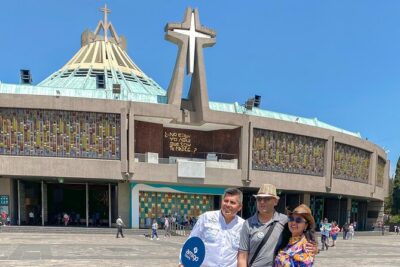 ★ 5.0Teotihuacan, Guadalupe Shrine & Tlatelolco Day Tour with LunchFrom $399 hours (approx.)
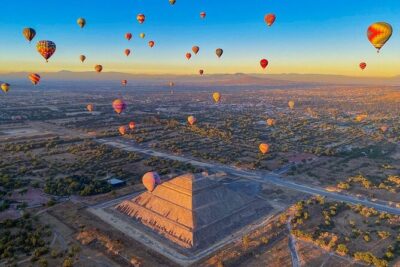 ★ 5.0Balloon flight + Breakfast in cave + Pyramids + Pick up CDMX.From $1722 to 8 hours (approx.)
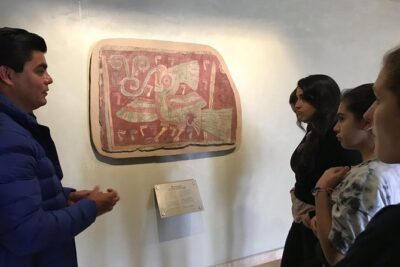 ★ 5.0Teotihuacan pyramids morning or afternoon without tourist trapsFrom $645 hours 30 minutes (approx.)
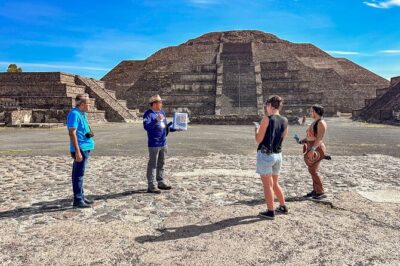 ★ 4.5Teotihuacan Early Access Guided Tour with optional LunchFrom $398 hours (approx.)
 ★ 5.0Balloon flight + pick up in CDMX + Breakfast in Cave + PyramidsFrom $1694 to 7 hours (approx.)
 ★ 4.6Mexico City: Teotihuacan, Tlatelolco & Guadalupe Shrine TourFrom $49
 ★ 5.0Teotihuacan Hot Air Balloon Flight from Mexico City / VolareFrom $1553 to 9 hours (approx.)
 ★ 5.0Hot Air Balloon Flight with Breakfast Cave and Pyramids TourFrom $1408 hours (approx.)