
Reviewed · TEOTIHUACAN TOURS
Teotihuacan, Shrine of Guadalupe & Tlatelolco Day Tour
Teotihuacan is the main event here: a vast ceremonial city with monumental pyramids, broad avenues, and plenty of sun. This tour also ties together three very different parts of Mexico City, from the pre-Columbian ruins of Tlatelolco to the deeply important Catholic shrine of Guadalupe.
In This Article
- Key points to know before booking
- Three sides of Mexico City in one day
- Tlatelolco: a short stop with a big story
- Teotihuacan and the Avenue of the Dead
- The Guadalupe Basilica and Mexico’s most famous shrine
- What the transport and schedule really mean
- Lunch, liquor tasting, and the true cost
- Who will enjoy this Mexico City day tour?
- Booking details and cancellation
- Should you book it?
- FAQ
- How much does the Teotihuacan, Shrine of Guadalupe and Tlatelolco tour cost?
- How long does the tour last?
- Is hotel pickup included?
- What time does pickup take place?
- What does the tour include?
- Is food included?
- How much time is spent at each main stop?
- Can you climb the pyramids at Teotihuacan?
- What is the cancellation policy?
I like the practical setup. Hotel pickup, an air-conditioned van, admission to Teotihuacan, and a small group make a busy day easier to manage. I also like the guides’ range, with people such as Marcos, Francisco, Katya, and Fernando praised for clear explanations and easy switching between English and Spanish.
The main caution is time. You cover a lot of ground in roughly seven hours, sometimes closer to a full 9 a.m. to 6 p.m. day once pickup and traffic are included. The Basilica receives about an hour, and some people will wish that time came from the liquor tasting or lunch stop.
Key points to know before booking
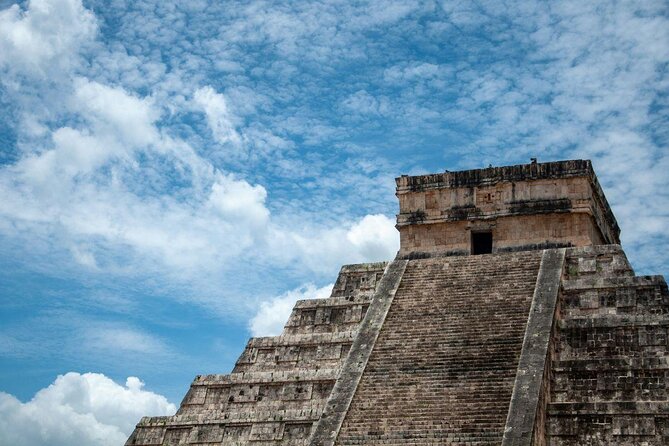
- Teotihuacan gets about two hours: Enough to see the major structures, but not enough for a slow archaeological visit.
- The pyramids may not be climbable: Conditions can change, and one visitor specifically noted that the temples could not be climbed.
- Guadalupe is a major Mexican pilgrimage site: The stop has strong meaning for Catholic visitors, but the one-hour visit may feel brief.
- Tlatelolco is a short panoramic stop: You get an important history lesson, not a long archaeological exploration.
- Small groups improve the day: The van holds no more than 15 people, and some departures have had only four to ten people.
- Bring sun protection and walking shoes: Teotihuacan can be hot, dusty, and exposed, with plenty of walking.
Three sides of Mexico City in one day
This excursion is useful because it does not treat Mexico City as only a colonial or modern capital. In one outing, you see an ancient ceremonial center, a major indigenous and commercial site, and the country’s best-known Catholic shrine.
That mix gives the day more shape than a simple pyramid trip. Tlatelolco introduces conflict and continuity, Teotihuacan provides the grand scale, and Guadalupe shows how faith remains woven into Mexican identity.
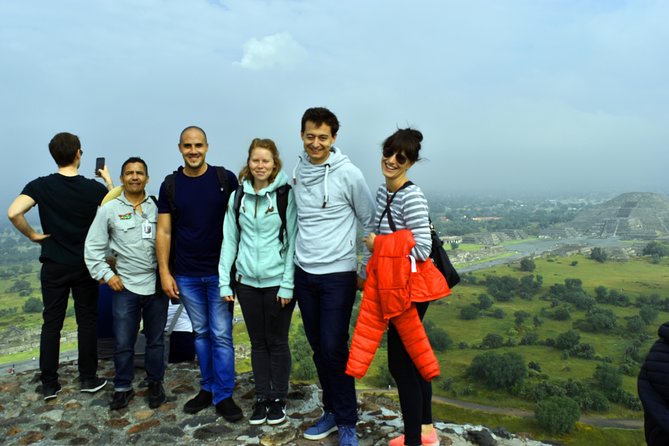
You travel with a bilingual guide and a maximum group size of 15. That is a good middle ground. You avoid the cost of a private tour, but the group should still be small enough for questions and conversation.
The strongest guides bring real energy to the history. Marcos was repeatedly singled out for explaining pre-Columbian and post-Columbian Mexico with care. Francisco was praised for answering questions and translating quickly between English and Spanish. Katya and Fernando also received warm marks for making the day clear and enjoyable.
Do keep one thing in mind if you book an English departure. The group may include Spanish speakers, and the guide may present information in both languages. That can add time, though one English-only participant said the guide still took care to provide the full explanation.
A few more Mexico City tours and experiences worth a look

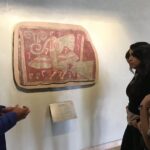
Tlatelolco: a short stop with a big story
Tlatelolco is the first listed archaeological stop, with about 20 minutes for a panoramic visit. That is short, so you should treat it as an introduction rather than a full site tour.
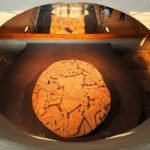
The attraction is the idea of three cultures in one place. The pre-Columbian trading center, the colonial and Catholic presence, and modern Mexico all meet here. Your guide helps connect the ruins to later events in Mexican history, including clashes that shaped the country’s modern story.
This stop works best when you want context before reaching Teotihuacan. It reminds you that Mexico City is built in layers, with present-day life often close to ancient foundations.
The drawback is simple: 20 minutes will not satisfy anyone who wants to study the ruins at length. You may spend much of the time listening to the guide and taking a quick look around. Still, as a compact opening stop, it gives the day a useful historical frame.
Paseo de Reforma is also included among the city sights covered during the outing. Since the tour moves between several locations, you should expect this to be a passing or panoramic look rather than a long walk along the avenue.
Teotihuacan and the Avenue of the Dead
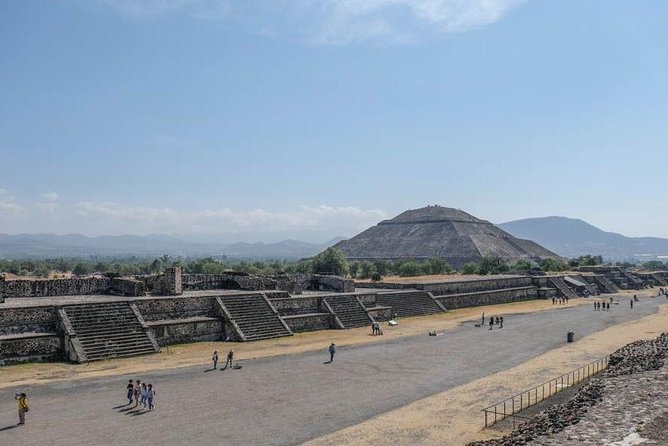
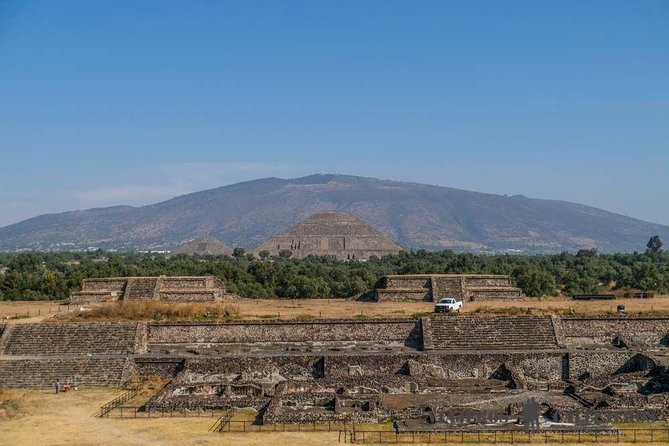
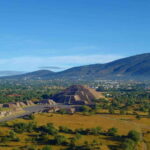
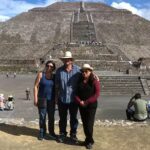
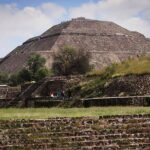
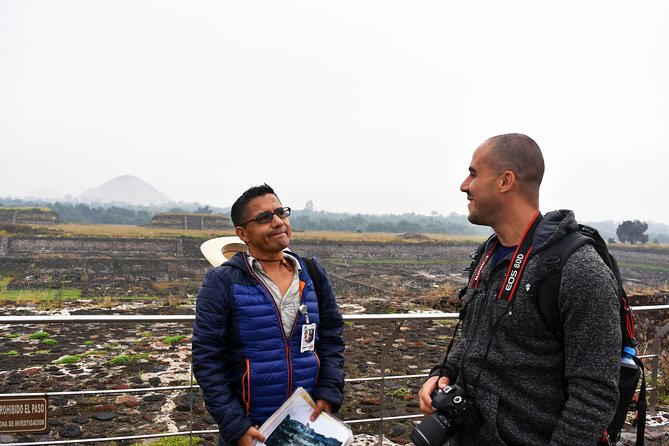
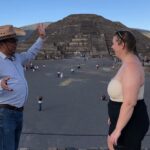
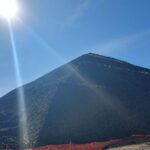
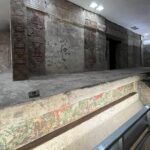
Teotihuacan receives about two hours, making it the heart of the excursion. The site is famous for the Pyramid of the Sun, the Pyramid of the Moon, temples, and the long central avenue often called the Avenue of the Dead.
The name Teotihuacan is commonly translated as the city of the gods. Although the later Aztecs gave the city that name and regarded it with awe, the monumental center was built centuries before the Aztec Empire. A good guide makes that distinction clear, and guides such as Marcos and Francisco were praised for explaining the site beyond a string of dates and names.
Two hours gives you enough time to see the main structures and understand the site’s layout. You can listen to the guide, take photographs, and have some time to look around on your own. The balance matters, since a nonstop lecture can make a large archaeological site tiring.
Do not count on climbing the pyramids. The tour description asks if you dare to climb them, but conditions can change, and a visitor specifically noted that the temples were closed to climbing. Treat the pyramids as grand structures to view from the ground unless your guide confirms otherwise.
Wear sneakers or other sturdy walking shoes. The ground is hot, dusty, and uneven in places, and you will spend time outdoors with limited shade. Sunscreen, a hat, and an umbrella are sensible additions. One practical note from the day’s feedback was especially clear: heat can make the visit harder than the walking itself.
Teotihuacan is also where guide quality matters most. The site can look like a collection of giant stone platforms if you do not understand its purpose and planning. A skilled guide points out how the ceremonial spaces relate to the pyramids and explains the beliefs and societies that shaped them.
You should also expect sales activity or a stop connected to local crafts and liquor tasting. The included local liquors tasting adds a cultural element, but it takes time from the main sites. If you are focused on archaeology, you may prefer a longer Teotihuacan visit instead.
The Guadalupe Basilica and Mexico’s most famous shrine
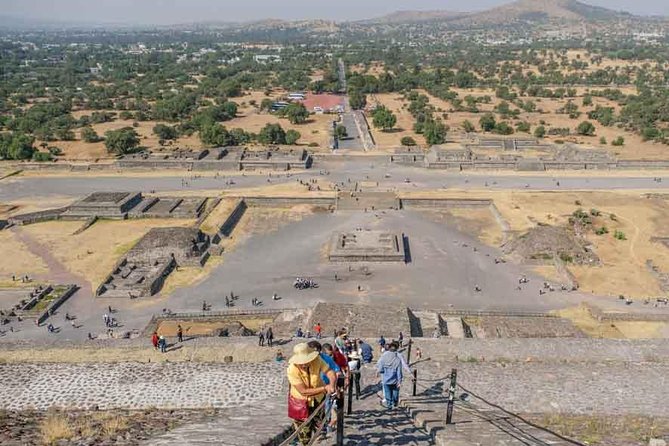
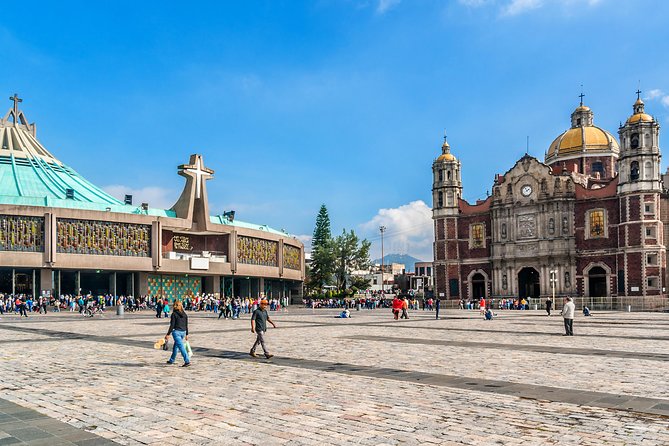
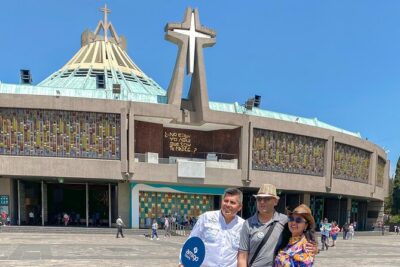
The Basilica of Our Lady of Guadalupe receives about one hour, with free admission. The visit centers on the story of Guadalupe’s appearance to Juan Diego, an Aztec peasant, and the role she holds in Mexican Catholic life.
For Catholic visitors, this may be the emotional center of the day. The shrine is not simply another church on a sightseeing route. It is a major place of devotion, and the image of Guadalupe has enormous cultural and religious importance in Mexico.
The basilica can also be meaningful if you are interested in the meeting of indigenous and Spanish traditions. Your guide explains how the Guadalupe story became part of Mexican identity, not only church practice.
The time limit deserves attention. One hour is enough for an introduction and a look inside, but it may not allow a slow visit, quiet prayer, or much time around the wider complex. If Guadalupe is your main reason for booking, this schedule may feel compressed.
The order of stops can also affect your energy. After walking around Teotihuacan, you may want more than an hour at the shrine. On the other hand, the compact visit keeps the whole day moving and allows the tour to include all three major places.
What the transport and schedule really mean
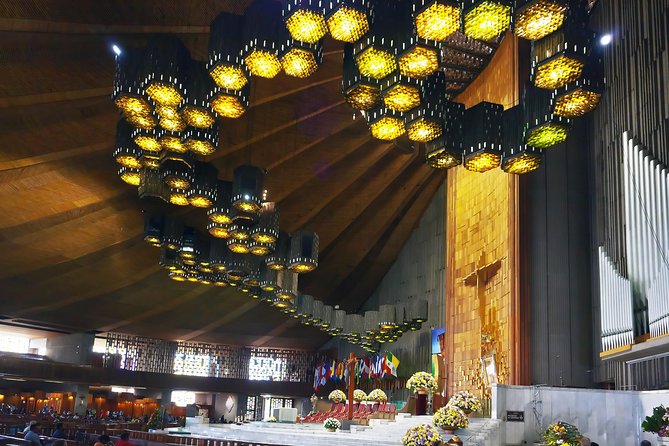
The advertised start time is 9 a.m., but pickup can generally happen between 7:30 and 9 a.m., depending on your hotel. You receive a message with the exact time, so keep an eye on your email. For a last-minute booking, the instructions ask you to check at 7 a.m. on the day of the tour.
Hotel pickup and drop-off are valuable in Mexico City. You do not need to find a distant meeting point, and you can finish the day without arranging a separate ride back. Traffic can be difficult, so having a driver who knows the routes makes a real difference.
The vehicle is described in the feedback as clean, comfortable, and air-conditioned. That matters after time outside at Teotihuacan. Drivers such as Gilberto, Hugo, Joel, Juan, Moises, and Gil were praised for safe or capable driving, though one account raised a concern about a driver using a phone on a busy highway. As with any road tour, pay attention to your comfort and safety.
The schedule may run longer than the stated seven hours. One detailed outing ran from about 9 a.m. to 6 p.m., with pickup timing, traffic, lunch, and several stops included. You should not book this on a day when you have a tight evening plan.
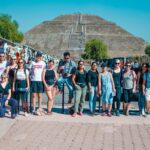
The group limit is 15, but actual numbers can be lower. A Tuesday departure reportedly had only four people in a 16-passenger van, while another group had nine. Monday through Thursday may be a smart choice if you want fewer people at the ruins, though crowd levels can vary.
A few more Mexico City tours and experiences worth a look

Lunch, liquor tasting, and the true cost
The price is $66 per person. That includes hotel pickup and drop-off, transport, a bilingual guide, travel insurance, the Teotihuacan admission ticket, and a local liquors tasting.
For a full day covering sites in different parts of the Mexico City area, that is a fair package price. You are paying for convenience as much as for admission. A private vehicle and private guide would cost far more, while arranging each stop independently would require more planning and leave you to manage transport.
Food and drinks are not included. Lunch is part of the day, but you pay separately. One detailed account described the food as good but priced for tourists, with a meal for two costing about MX$1,300 including drinks and tips. Another person wished for more lunch choices and felt the stop was aimed at tourists.
That is worth planning for. Bring water and a snack, but do not assume you can skip lunch without affecting the schedule. If you want a low-cost day, ask the guide what options are available before ordering.
The liquor tasting is also a matter of taste. It may introduce you to local products and crafts, but not everyone wants alcohol during a hot day with a lot of walking. If you would rather spend every spare minute at the archaeological sites, this is the part you may find least useful.
Who will enjoy this Mexico City day tour?
I would choose this tour if you have limited time in Mexico City and want an organized introduction to major sights. It works especially well for first-time visitors who want history, religion, and archaeology in one day without arranging several separate trips.
Families can benefit from the included transport and clear structure. Couples and solo visitors may appreciate the small group, especially when the van has fewer than 10 people. The social side can be pleasant without the scale of a large coach trip.
This is also a good fit if you want a guide to explain the sites. Teotihuacan rewards context, and Tlatelolco can be hard to understand from a quick look alone. The best guides, including Marcos, Francisco, Katya, and Fernando, add value through explanations, translation, and answers to questions.
I would hesitate if you want a slow archaeological day. Two hours at Teotihuacan and 20 minutes at Tlatelolco leave little room for wandering. I would also think twice if the Guadalupe Basilica is your central goal, since one hour may not be enough for a reflective visit.
The walking and heat are not minor details. Bring sunscreen, water, comfortable shoes, and protection from the sun. The tour is manageable for most people, but it is not a sit-back-and-watch-the-view outing.
Booking details and cancellation
The experience is offered in English, with bilingual guides who may also explain parts of the day in Spanish for the rest of the group. Confirmation is received at booking, and most people can participate.
Free cancellation is available up to 24 hours before the start time for a full refund. Cancellations or changes made within 24 hours are not accepted for a refund.
Should you book it?
Book this tour if you want a practical, good-value introduction to Teotihuacan, Guadalupe, and Tlatelolco, and you prefer a guide and transport to going it alone. The strongest parts are the small group, hotel pickup, capable guides, and the chance to see three very different places in one outing.
Skip it if you want to devote most of your day to the pyramids or Basilica. In that case, a more focused tour would give you extra time at the site that matters most. For everyone else, this is a well-priced way to cover a lot of Mexico City history in one long, busy day.
FAQ
How much does the Teotihuacan, Shrine of Guadalupe and Tlatelolco tour cost?
The tour costs $66 per person.
How long does the tour last?
The listed duration is about seven hours, though pickup, traffic, lunch, and stop timing can make the full day longer. One reported schedule ran from about 9 a.m. to 6 p.m.
Is hotel pickup included?
Yes. Hotel pickup and drop-off in Mexico City are included.
What time does pickup take place?
The stated start time is 9 a.m., but pickup can generally occur between 7:30 and 9 a.m., depending on your hotel location. You receive a message with your exact pickup time.
What does the tour include?
The price includes transportation, hotel pickup and drop-off, a bilingual guide, travel insurance, a local liquors tasting, and admission to Teotihuacan.
Is food included?
No. Food and drinks are not included in the tour price.
How much time is spent at each main stop?
The Basilica of Santa Maria de Guadalupe receives about one hour. Teotihuacan receives about two hours. Tlatelolco is a 20-minute panoramic visit.
Can you climb the pyramids at Teotihuacan?
The tour information asks about climbing the pyramids, but access can vary. One account noted that the temples could not be climbed, so you should not assume climbing is available.
What is the cancellation policy?
You can cancel at least 24 hours before the start time for a full refund. Cancellations or changes made less than 24 hours before the start time are not accepted and are not refunded.
More Guadalupe Shrine Tours in Mexico City
More Teotihuacan Tours in Mexico City

More tours in Mexico City we've reviewed





Teotihuacan Tours, compared.
 ★ 5.0Teotihuacan, Guadalupe Shrine & Tlatelolco Day Tour with LunchFrom $399 hours (approx.)
 ★ 5.0Balloon flight + Breakfast in cave + Pyramids + Pick up CDMX.From $1722 to 8 hours (approx.)
 ★ 5.0Teotihuacan pyramids morning or afternoon without tourist trapsFrom $645 hours 30 minutes (approx.)
 ★ 4.5Teotihuacan Early Access Guided Tour with optional LunchFrom $398 hours (approx.)
 ★ 5.0Balloon flight + pick up in CDMX + Breakfast in Cave + PyramidsFrom $1694 to 7 hours (approx.)
 ★ 4.6Mexico City: Teotihuacan, Tlatelolco & Guadalupe Shrine TourFrom $49
 ★ 5.0Teotihuacan Hot Air Balloon Flight from Mexico City / VolareFrom $1553 to 9 hours (approx.)
 ★ 5.0Hot Air Balloon Flight with Breakfast Cave and Pyramids TourFrom $1408 hours (approx.)
The lists this tour appears in