
Reviewed · TEOTIHUACAN TOURS
Teotihuacan: The myth of the gods + secret murals (New route)
Teotihuacan is more than two famous pyramids. This six-hour tour adds the quieter Palacio de Zacuala, where murals and traces of daily life help explain the people behind the monuments, then finishes with myths, pigments, and artisan work. Guides such as Jose, Ricardo, and Dani bring a strong storytelling angle to the ancient city.
In This Article
- Key points to know before booking
- Why this Teotihuacan route feels different
- Meeting at Frontón México and leaving Mexico City
- The Moon Pyramid before the crowds
- Walking the Avenue of the Dead to the Sun Pyramid
- Palacio de Zacuala and the secret murals
- The Citadel and the Temple of Quetzalcoatl
- Cochineal, plant pigments, and the color of ancient murals
- What the six-hour schedule means for value
- Who will enjoy this route most
- Small details that make the day easier
- Should you book the Teotihuacan myth and murals tour?
- FAQ
- How long does the Teotihuacan tour last?
- Where does the tour start and end?
- What time does the tour begin?
- Is transportation included?
- Is the Teotihuacan entrance fee included?
- Is lunch included?
- How far in advance can I cancel for a full refund?
I like the early start because the Moon Pyramid is scheduled first, when the area is less crowded and better for photos. I also like that round-trip transport, admission, and a grana cochinilla and plant-pigment workshop are included. The main drawback is the physical effort: you will walk for hours, climb the Moon Pyramid, and spend time in the open sun. Lunch is not included, so bring food.
Key points to know before booking
- The Moon Pyramid comes first: The tour begins with a 45-minute visit and climb while the area is expected to be quieter.
- The murals are a major reason to go: Palacio de Zacuala offers a look at homes, religion, and painted decoration beyond the headline monuments.
- The Avenue of the Dead connects the big sights: You walk from the Moon Pyramid to the 65-meter Pyramid of the Sun.
- Quetzalcoatl brings the myths into focus: The Citadel includes one of Teotihuacan’s best-preserved areas.
- The workshop adds a hands-on local angle: You learn about cochineal and plant pigments used to make mural colors.
- You need your own lunch: Convenience stores are available at the meeting point, but food is not part of the tour.
Why this Teotihuacan route feels different
Many day trips from Mexico City concentrate on taking a photo at the Pyramid of the Sun, then moving on. This route gives you more layers. You see the major structures, but you also visit a lesser-known palace and hear how people lived, worshipped, and decorated their surroundings.
That matters because Teotihuacan can otherwise feel like a grand set of stone platforms. The size is easy to grasp. The daily life is harder to picture. Palacio de Zacuala helps fill that gap with murals and rooms connected to ordinary community life.
The tour also links several periods and cultures. You learn about Teotihuacan itself, its later connection with the Aztecs, and the myths tied to Quetzalcoatl. The program also presents a connection between the pyramids and Egypt. Treat that comparison as a discussion point from the guide, not as a reason to assume the two civilizations built the same way or had direct contact. The useful part is hearing how different cultures have interpreted these enormous monuments.
The overall approach is story-led rather than simply photographic. Jose is described as connecting the ceremonial and commercial centers of the Mexica and Teotihuacano peoples with modern Mexico City. Ricardo has a similar role, offering historical introductions at each stop, while Dani is also named as part of a highly praised guiding team. Your exact guide may vary, but the experience is designed around explanation, mythology, and local context.
A few more Mexico City tours and experiences worth a look
Meeting at Frontón México and leaving Mexico City
The meeting point is in front of Frontón México at Av. de la República 17, in the Tabacalera area of Cuauhtémoc. The scheduled start is 8:15 a.m., and the activity returns to that same meeting point.
Private round-trip transportation is included. That is a useful feature in Mexico City, where reaching Teotihuacan on your own can add planning, transfers, and uncertainty. It also keeps the day together. You meet the group, ride out, tour the site, and return to the same central location.
The group can have up to 19 people. That is not a private tour, but it is small enough for a guide to keep the group moving and answer some questions. A group of this size can still spread out around a pyramid, especially when the site is busy, so stay close when the guide begins an explanation.
One practical point deserves attention: there was a pickup misunderstanding on one booking, although the staff handled it kindly. Confirm the exact meeting point and arrive early. Frontón México is a clear landmark, but a city-center meeting area can still be confusing if you arrive at the last minute.
Use the convenience stores near the meeting point to buy something for breakfast or lunch. The tour lasts about six hours, and lunch is not included. A small meal and water will make the long walking sections more comfortable.
The Moon Pyramid before the crowds
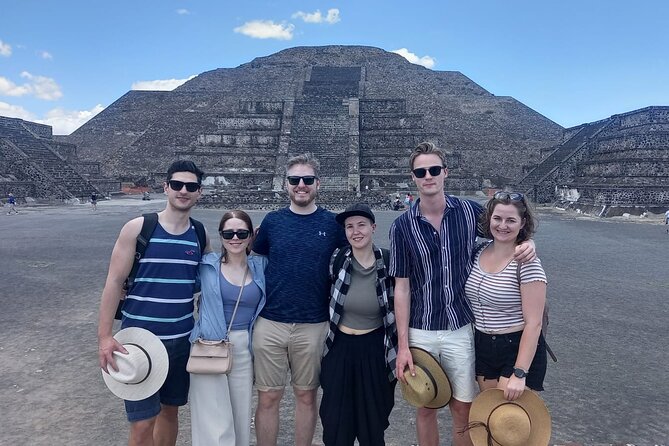
Your first main stop is the Pyramid of the Moon, with about 45 minutes scheduled here. The timing is one of the best features of the route. Starting at this end of the complex gives you a chance to see the pyramid before the site becomes more crowded.
The plan includes climbing the Moon Pyramid. That makes the stop more active than a simple viewpoint visit, and it gives you a strong sense of the ceremonial setting. The structure faces the Avenue of the Dead and the mountains beyond the site, so the position matters as much as the stone itself.
This is also where a guide can set up the larger story. You learn why the pyramids mattered, how later Aztec traditions connected the city to their own myths, and how modern ideas about ancient civilizations have shaped the way people see Teotihuacan.
Bring shoes with a firm sole and expect steps. The tour requires a moderate level of physical fitness, and the combination of climbing, walking, and heat can be tiring. If you have trouble with stairs, ask the guide what portions you can enjoy without making the climb. The tour description specifically includes the climb, so it is worth considering your comfort before booking.
Walking the Avenue of the Dead to the Sun Pyramid
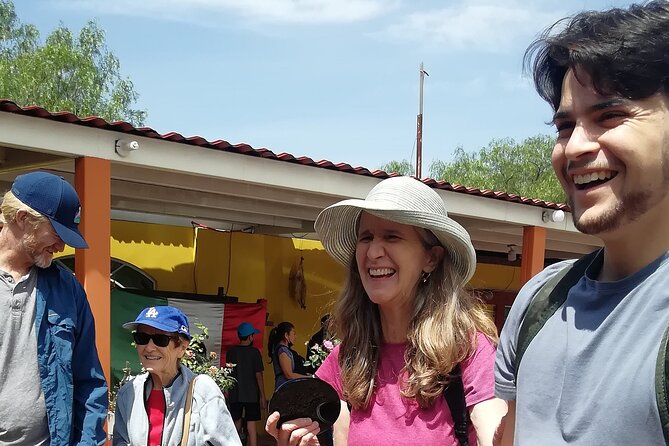
From the Moon Pyramid, you walk along the Avenue of the Dead toward the Pyramid of the Sun. The walk lasts much of the next 45-minute section, and it is an important part of understanding Teotihuacan’s design.
Instead of seeing the pyramids as separate attractions, you see how the avenue ties the ceremonial center together. Your guide can point out the scale of the city and explain why this broad route mattered to religious and civic life.
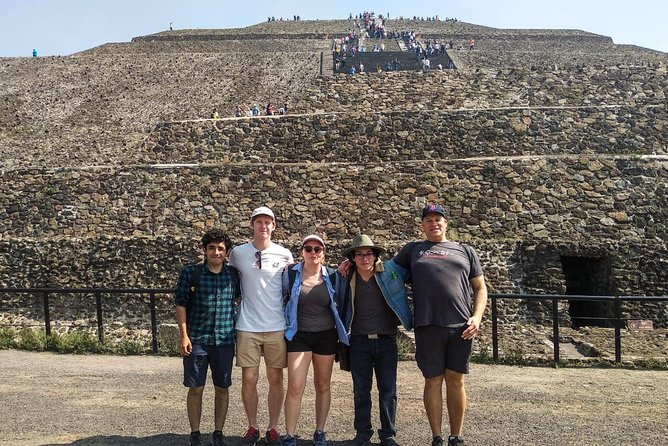
The Pyramid of the Sun reaches about 65 meters high and is one of the site’s key buildings. Its size is the obvious attraction, but the walk toward it gives you time to notice how the ancient planners used distance, alignment, and open space to shape the experience.
The program includes admission here, as it does at the other archaeological stops. Still, entry does not mean you should expect a leisurely pace. The full tour has several stops, and the guide needs to keep the group on schedule. Take photos as you go, but listen for the explanation before rushing ahead.
Sun and heat are real considerations. Much of the appeal comes from the open scale of the site, but that also means limited shade in some areas. Wear a hat, use sunscreen, and carry water. These are simple preparations, yet they make the difference between enjoying the avenue and merely enduring it.
Palacio de Zacuala and the secret murals
The 45-minute stop at Palacio de Zacuala is the route’s most distinctive feature. It takes you away from the two monuments everyone already knows and toward a part of Teotihuacan that helps explain how its residents lived.
You learn about domestic spaces, religious ideas, and painted decoration. The murals are especially valuable because they bring color and imagery into a site that can look overwhelmingly gray and monumental. They also give the guide a chance to explain belief through pictures rather than only through dates and names.
This is the kind of stop I value on an archaeological tour. A giant pyramid tells you that a society had organization and labor power. A palace with living spaces and murals helps you imagine how people used the city day by day.
The stop is not a separate museum visit with unlimited time. You have about 45 minutes, so the guide’s explanation will shape what you notice. Ask questions if you want more detail about the mural designs, the people who occupied the palace, or how archaeologists interpret the spaces.
Calling this the secret-mural part of the route does not mean you should expect a completely empty or mysterious site. It means the stop focuses on details many first-time visitors miss when they stay only on the central avenue. That makes it a good match for anyone who has already seen photographs of the two main pyramids and wants more context.




The Citadel and the Temple of Quetzalcoatl
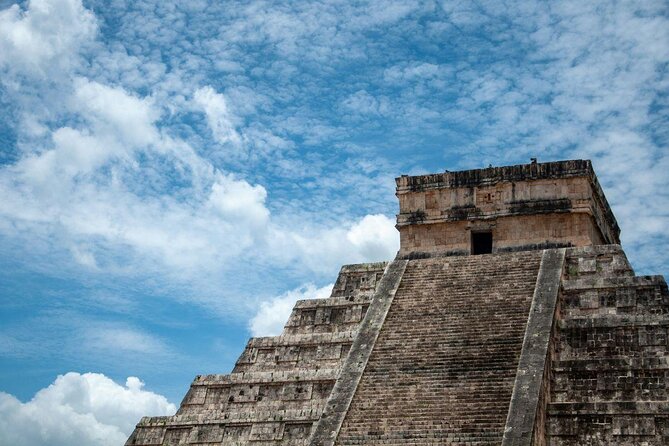
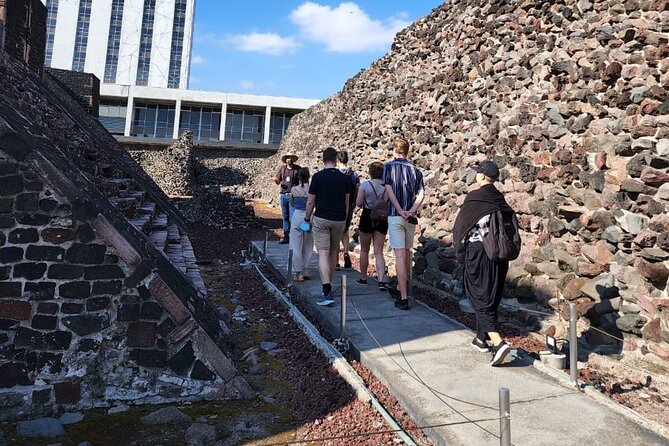
The tour then spends about an hour in the Citadel, where the Temple of Quetzalcoatl is located. This is one of the best-preserved areas in the complex and the main setting for the tour’s mythic side.
Quetzalcoatl is one of the most important figures in Mesoamerican religious traditions. The guide uses the temple and its decoration to discuss the stories that shaped Teotihuacan and influenced later interpretations of the city.
The Citadel also helps balance the scale of the larger pyramids. Here, the focus shifts toward carved details, temple design, and the ideas that gave the city meaning. You are not simply looking at old stone. You are considering how architecture, religion, and power worked together.
An hour is a useful amount of time for this stop. It allows room for a substantial explanation without turning the visit into a long academic lecture. The value depends heavily on your guide’s ability to tell the story clearly. The accounts connected with Jose, Ricardo, and Dani point to guides who enjoy the history and communicate their enthusiasm well.
If you prefer to explore independently, this format may feel guided at times. The advantage is that you do not have to arrive with a background in Teotihuacan archaeology. The guide supplies a framework, and you can spend your free moments looking closely at the temple details and taking photos.
Cochineal, plant pigments, and the color of ancient murals
The final scheduled stop lasts about 30 minutes and focuses on grana cochinilla and plant pigments. A local artisan explains how native materials were used to create colors for murals.
This is more than a souvenir stop if you pay attention to the process. The lesson connects directly with Palacio de Zacuala, where painted surfaces are part of the story. After seeing murals, you learn how colors could be produced from insects and plants. That makes the earlier visit more meaningful.
Cochineal is especially interesting because it shows how a small natural source can produce a strong red pigment. The workshop also covers vegetable pigments, giving you a basic look at the materials behind ancient and traditional color work.
The experience may also include local artisan products. The program highlights obsidian and silver workshops as places to find unusual souvenirs, and one account describes seeing artisans make onyx sculptures in a workshop. Consider this part carefully when budgeting your time and money. You can look, ask questions, and buy something if you wish, but the value is in learning how the object is made, not feeling obliged to purchase.
A workshop can be a welcome change after several hours among monumental ruins. It gives you a closer connection to present-day craft traditions and offers a tangible reminder of the visit. Just remember that tips are not included, and lunch is also your responsibility.
What the six-hour schedule means for value
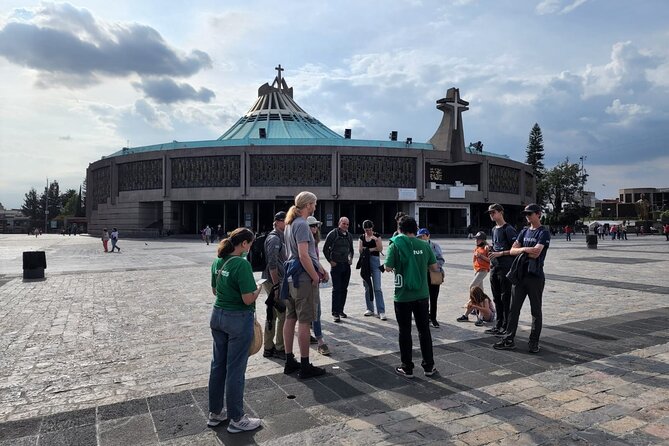
The tour includes transportation, archaeological entry, and the pigment workshop, which makes the package easier to budget than a day built from separate tickets and rides. The exact price is not provided here, so I cannot call it a bargain based on cost alone. Its value comes from the number of moving parts handled for you and from the extra stops beyond the main pyramids.
You are paying for a structured day rather than just a ride to the ruins. The schedule includes five substantial sections: the Moon Pyramid, the Sun Pyramid and Avenue of the Dead, Palacio de Zacuala, the Citadel, and the pigment workshop.
The balance is strongest for first-time visitors. You get the essential architecture, then enough side material to understand the city as more than a pair of pyramids. If you already know Teotihuacan well and want long periods for independent photography, a shorter or more flexible visit may suit you better.
The group limit of 19 keeps the cost and organization more manageable than a fully private excursion, while still avoiding the very large coach format. You should expect a shared pace and a set route. That is a fair trade if you value a guide’s stories and want transport arranged from central Mexico City.
Who will enjoy this route most
I would choose this experience if you want a clear introduction to Teotihuacan with plenty of explanation. It suits you especially well if mythology, archaeology, murals, and traditional crafts all sound appealing.
It is also a good choice for families with older children or adults who want more than photo stops. The Moon Pyramid climb and long walks require reasonable fitness, so it is less suitable for anyone who needs a slow, mostly seated outing.
The tour is offered in English. Service animals are allowed, and the meeting point is near public transportation. Those details make the experience easier to fit into a Mexico City itinerary, although the overall day still involves substantial walking and outdoor exposure.
The tour may also work well for a multigenerational group. One account describes a mother enjoying the churches along the broader day, which suggests the experience can appeal beyond archaeology fans. Still, the central activity is an ancient site visit, not a church-focused tour, so make sure everyone in your group is comfortable with that emphasis.
Small details that make the day easier
Arrive early at Frontón México, especially because pickup instructions can be misunderstood. Keep the meeting point address on your phone and confirm it before the morning of the tour.
Buy food before departure. The only clear food guidance is that convenience stores are available at the meeting point and that you should take something with you. Do not count on lunch being arranged at Teotihuacan.
Wear comfortable shoes for the Moon Pyramid climb and the Avenue of the Dead. Pack water, sun protection, and a light layer for the early start. The tour begins at 8:15 a.m., then continues through several active stops.
Keep some money available for tips and possible crafts. Tips are not included, and the artisan portions may offer obsidian, silver, or onyx pieces. You can treat these as optional shopping, not as part of the required cost.
The cancellation policy is simple: cancel at least 24 hours before the local start time for a full refund. Changes or cancellations within 24 hours are not accepted for a refund. If the minimum number of participants is not reached and the tour is canceled, you are offered another date or experience, or a full refund.
Should you book the Teotihuacan myth and murals tour?
Book it if you want the major pyramids with a stronger cultural frame. The Palacio de Zacuala murals, the Citadel, and the pigment workshop give this route more variety than a basic pyramid visit. Early access to the Moon Pyramid and included transport are also practical advantages.
Skip it if you want a completely independent day, dislike scheduled group walking, or cannot manage stairs and several hours outdoors. You should also plan your own lunch and arrive prepared for heat and physical effort.
For most first-time visitors to Teotihuacan, this is a well-rounded choice. The main monuments supply the scale, the murals supply the human detail, and the guide’s stories connect the ruins with Aztec mythology and present-day Mexico. If you book, arrive early, bring food, listen closely at Zacuala, and keep an open mind when the guide compares Teotihuacan with Egypt.
FAQ
How long does the Teotihuacan tour last?
The activity lasts approximately six hours, including the scheduled visits and round-trip transportation from Mexico City.
Where does the tour start and end?
It starts at Frontón México, Av. de la República 17, Tabacalera, Cuauhtémoc, Mexico City. The activity ends back at the same meeting point.
What time does the tour begin?
The scheduled start time is 8:15 a.m.
Is transportation included?
Yes. Private round-trip transportation is included.
Is the Teotihuacan entrance fee included?
Yes. The Teotihuacan entrance fee is included in the activity.
Is lunch included?
No. Lunch is not included. Convenience stores are available at the meeting point, and you are advised to buy food to take during the tour.
How far in advance can I cancel for a full refund?
You can cancel at least 24 hours before the experience start time for a full refund. Cancellations within 24 hours are not refunded.
More Teotihuacan Tours in Mexico City
More tours in Mexico City we've reviewed



Teotihuacan Tours, compared.
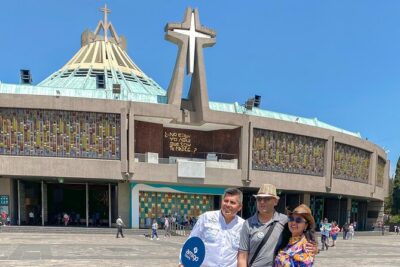 ★ 5.0Teotihuacan, Guadalupe Shrine & Tlatelolco Day Tour with LunchFrom $399 hours (approx.)
 ★ 5.0Balloon flight + Breakfast in cave + Pyramids + Pick up CDMX.From $1722 to 8 hours (approx.)
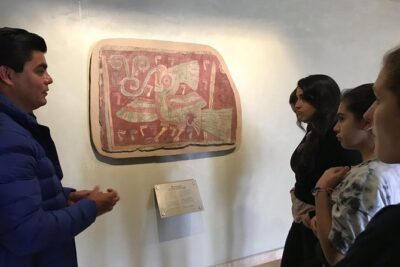 ★ 5.0Teotihuacan pyramids morning or afternoon without tourist trapsFrom $645 hours 30 minutes (approx.)
 ★ 4.5Teotihuacan Early Access Guided Tour with optional LunchFrom $398 hours (approx.)
 ★ 5.0Balloon flight + pick up in CDMX + Breakfast in Cave + PyramidsFrom $1694 to 7 hours (approx.)
 ★ 4.6Mexico City: Teotihuacan, Tlatelolco & Guadalupe Shrine TourFrom $49
 ★ 5.0Teotihuacan Hot Air Balloon Flight from Mexico City / VolareFrom $1553 to 9 hours (approx.)
 ★ 5.0Hot Air Balloon Flight with Breakfast Cave and Pyramids TourFrom $1408 hours (approx.)