
Reviewed · TOURS
Tour Evolution of Muralism paints your Grafiti
Mexico City’s mural story ends with a can of spray paint in your hand. This 3.5 to 4-hour tour links grand political murals with working-market art and a repurposed flour factory covered in graffiti. It is a lively way to see how Mexican public art moved from revolutionary walls to today’s urban scenes.
In This Article
- Key things to know before you book
- Why this tour tells Mexico City’s mural story well
- San Ildefonso: where the mural movement took shape
- Abelardo L. Rodríguez Market and its working-class message
- Public transportation is part of the experience
- Ex Fábrica MX: from flour factory to graffiti space
- What the $71.36 price really covers
- Who will enjoy this tour most
- Small details that will improve your day
- Should you book Evolution of Muralism Paints Your Graffiti?
- FAQ
- Where does the tour begin?
- Where does the tour end?
- How long does the tour last?
- What language is the tour offered in?
- Is admission to San Ildefonso included?
- Do I pay admission at Abelardo L. Rodríguez Market?
- Is public transportation included?
- Is food included?
- Can I participate in graffiti painting?
- How many people can join the tour?
- Can I cancel for a full refund?
I like the careful art explanations, especially the way guide Jorge breaks down symbols and political messages. I also like the route by metro and bus, which gives you a more local look at the city than a sealed tour vehicle. The main drawback is the amount of walking and standing, so wear good shoes and expect a full outing rather than a quick gallery visit.
Key things to know before you book
- San Ildefonso is tied to the birth of Mexican muralism, with works by Diego Rivera, David Alfaro Siqueiros, José Clemente Orozco, and other major artists.
- Abelardo L. Rodríguez Market contains about 1,450 square meters of murals across walls and ceilings.
- The route uses public transportation, including the metro and bus, with a certified guide leading the way.
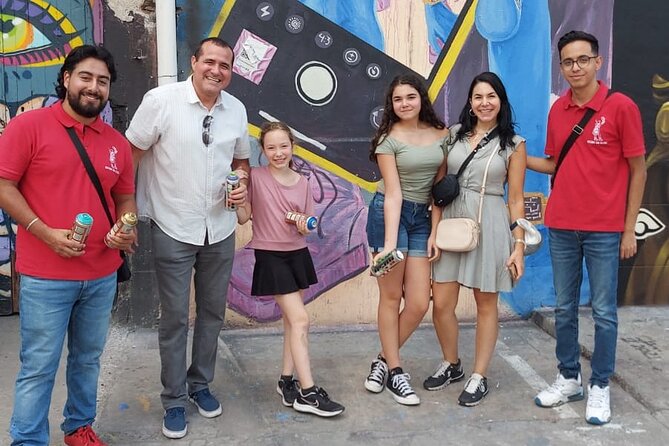
- Ex Fábrica MX is the hands-on finale, where you can see extensive graffiti and spray your own design.
- The small group has a maximum of 12 people, useful for asking questions and keeping the art talk personal.
- The $71.36 price includes admission to San Ildefonso and transport, but not food, drinks, or tips.
Why this tour tells Mexico City’s mural story well
Many art tours stop at the famous names and leave you with a few grand paintings to photograph. This one follows a clearer thread. You begin in a former colonial school where Mexican muralism gained force, continue to a public market filled with social and political scenes, and finish in a former factory where graffiti covers the walls.
That progression matters. It lets you see public art not as one fixed style, but as a changing way for artists to speak to ordinary people. The first murals connect to education and national identity. The market murals focus on workers, peasants, miners, and the promises of the Mexican Revolution. The final stop shifts toward urban expression and personal participation.
I especially like that the route does not remain inside polished museum spaces. The market still functions as a market, and the former factory has been turned into a public art district with bars and shops. You get art in places where people live, shop, work, and relax.
The guide makes a big difference here. Jorge is specifically praised for explaining how to read the parts of a mural and understand the messages behind them. Jaime is also named as a guide for this experience. Since the tour depends heavily on interpretation, a guide who can connect art, architecture, culture, and politics will make the four hours far more useful than simply walking past painted walls.
If you're still narrowing it down, here are other tours in Mexico City we've reviewed.

San Ildefonso: where the mural movement took shape
The tour begins at Mexico City Metropolitan Cathedral in the Centro Histórico, then heads to the Antiguo Colegio de San Ildefonso. This former colonial college is one of the city’s major historic buildings, but its importance here is artistic rather than simply architectural.
San Ildefonso is widely associated with the beginning of the Mexican muralism movement. Its walls carry work by Diego Rivera, José Clemente Orozco, David Alfaro Siqueiros, and other artists linked to the country’s great public-art tradition.
Plan to spend about 90 minutes here. That is enough time to look closely instead of rushing from one painting to the next. You will want to pay attention to the guide’s explanation of composition, symbolism, and political meaning. A mural can look impressive at a glance, but the figures, gestures, and placement often tell a more pointed story.
This is also the part of the tour best suited to anyone who wants more than attractive photographs. The guide explains how public murals communicated ideas to people who might never enter a formal art gallery. You can begin to see why scale, location, and subject matter mattered so much.
The building itself adds weight to the visit. You are not viewing the murals in a modern white room. The colonial setting places several periods of Mexican history in one space, and the contrast helps show how artists used old walls to express new national ideas.
If you have trouble remembering Spanish names, take clear photos of the artists’ signatures and details of the artwork when permitted. One useful trick is to photograph a full mural and then a close-up of the signature or a striking figure. That makes it easier to recognize related work elsewhere in Mexico City.
Abelardo L. Rodríguez Market and its working-class message
The second stop takes about 90 minutes and costs nothing extra. Abelardo L. Rodríguez Market was built in the early decades of the 20th century as a modern public market, following the earlier Dos de Abril market.
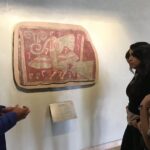
Its major attraction is the art spread across roughly 1,450 square meters of walls and ceilings. The murals were painted by students of Diego Rivera, under his direction. That connection gives the market a useful place in the larger story, but the paintings are not merely Rivera imitations.
The subject matter reflects the politics of the period. You will see concerns about workers, peasants, miners, and exploitation, along with ideas tied to the Mexican government’s effort to promote the benefits of the 1910 Revolution.
This is where the tour’s social focus becomes clearest. The paintings were placed in a public market, not hidden away for art specialists. Their audience included people buying food and going about daily business. The setting reminds you that muralism was meant to communicate in public and speak directly to everyday life.
The market also changes the mood. San Ildefonso feels like a major cultural site. Abelardo L. Rodríguez feels more immediate and grounded in ordinary city activity. The contrast helps you understand why location is part of the meaning.
You should keep your eyes up. Some of the art is on ceilings, so the best details are not always at eye level. The guide can point out scenes and symbols that you could easily miss on your own.
There is a practical tradeoff. Because this is a functioning public market, the surroundings may feel less controlled than a museum. That is part of its appeal, but anyone expecting quiet galleries and uninterrupted viewing should adjust expectations.
Public transportation is part of the experience
The tour includes public transportation, with metro and bus travel described as part of the route. This is not just a way to get from one art stop to another. It gives you a brief look at how Mexico City works beyond the historic center’s main monuments.
I like this choice because it keeps the tour tied to the city itself. You are not moved around in a private bubble. You use the same basic system that residents use, while the guide handles the route.
The tradeoff is comfort and pace. Public transport can mean more walking, stairs, crowding, and time spent moving between stops. The total tour lasts about three and a half to four hours, and the route covers a lot of ground. Wear walking shoes, carry water, and avoid treating this as a dressed-up indoor museum visit.
The group is limited to 12 people. That size should make it easier to hear the guide and ask questions, especially when studying a crowded mural. It also keeps the route more manageable on public transportation than a large coach group would be.
The meeting point is the Mexico City Metropolitan Cathedral, at Plaza de la Constitución in the historic center. The tour ends at Ex Fábrica MX on Primavera in the Tacuba area. Since the start and finish are in different parts of the city, think about your plans afterward before booking. The end point is not the same as the meeting point.
Ex Fábrica MX: from flour factory to graffiti space
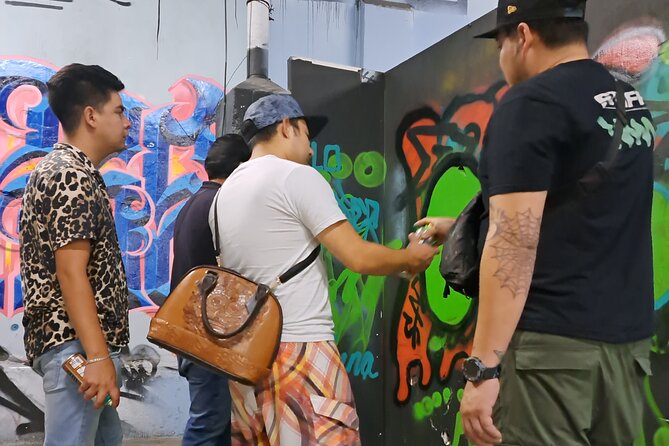
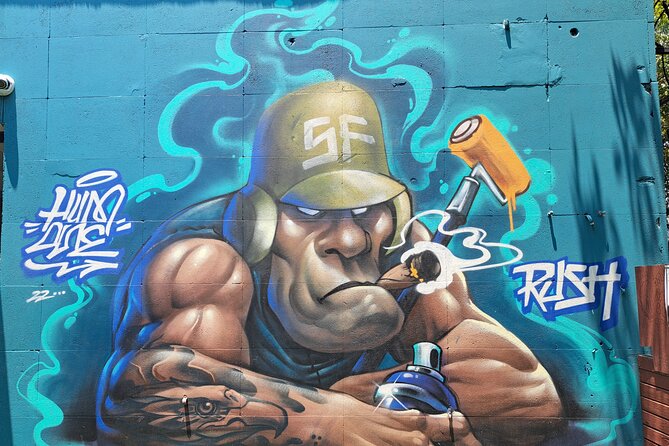
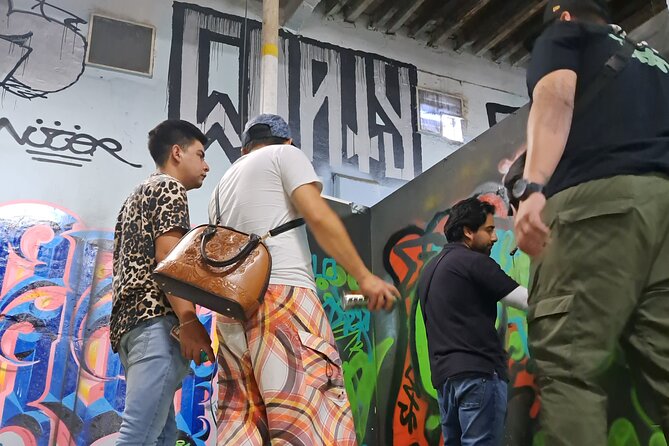
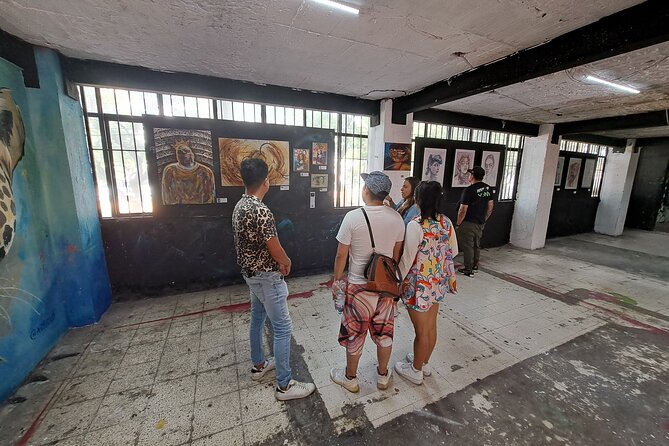
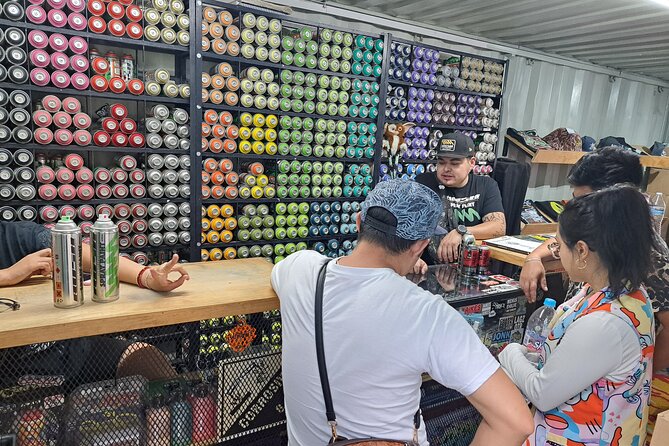
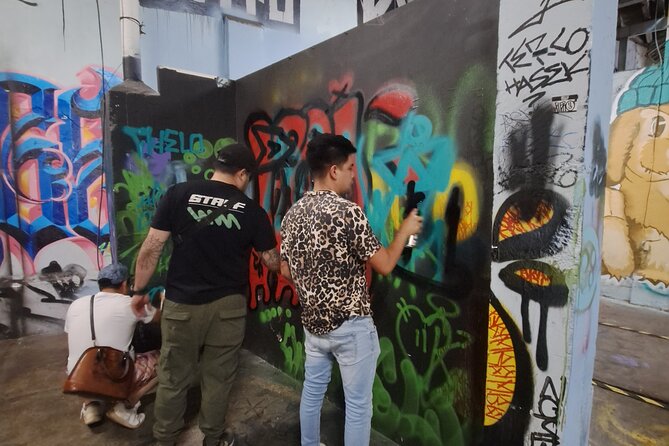
The last stop lasts about 40 minutes, but it may be the part your family remembers best. The building once operated as a flour factory in the 1940s. After years of abandonment, it was rehabilitated as Ex Fábrica MX, an art district filled with urban art, bars, shops, and colorful painted surfaces.
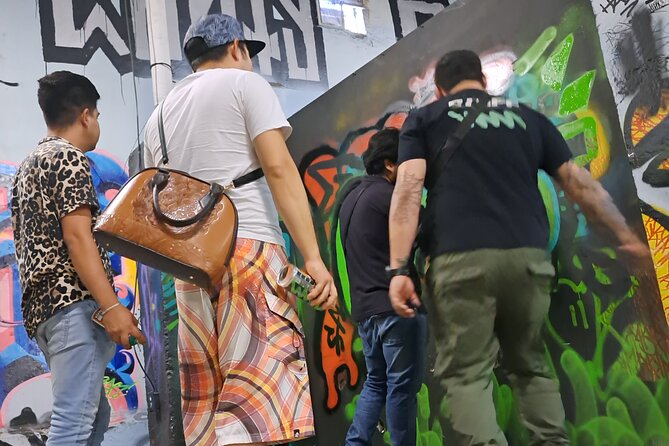
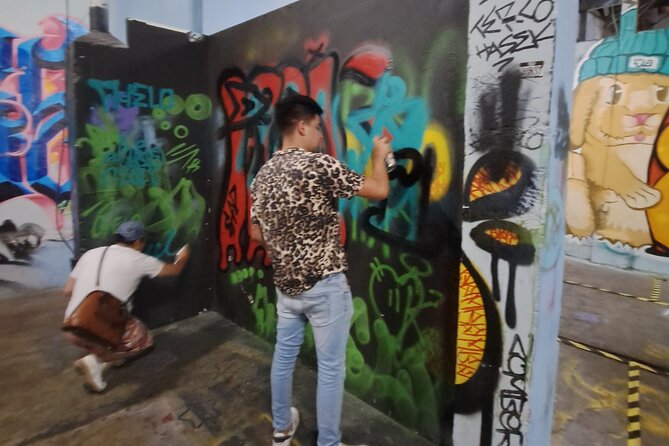
This is more than a final photo stop. You get the chance to spray your own graffiti. That hands-on element gives the tour a playful finish after several hours of looking, listening, and thinking.
The former factory is described as a relaxed place where people can spend time. Its many colors and figures make it highly photogenic, but the stronger point is the change in atmosphere. You move from historic murals with formal political programs to modern graffiti that feels more immediate and personal.
The tour does not provide a full explanation of every graffiti artist or guarantee a particular style of workshop. What it does offer is access to a space where urban art covers walls and other surfaces, plus the chance to make your own mark.
For families with older children and teenagers who already like art or graffiti, this final activity can keep the tour from feeling too academic. An 11-year-old has participated successfully, asked questions, and enjoyed painting. Still, the first two stops require attention, so young children who dislike art interpretation may not get as much from the full route.



What the $71.36 price really covers
At $71.36 per person, this is not the cheapest way to see public art in Mexico City. The value depends on how much guidance you want and how easily you could organize the route yourself.
The price includes a certified guide, public transportation, and admission to San Ildefonso. Entry to Abelardo L. Rodríguez Market and Ex Fábrica MX is free. Lunch, snacks, drinks, and tips are not included.
For an independent visitor, the buildings and market may be inexpensive or free to visit, but the challenge is finding them, understanding what you are seeing, and connecting the sites. The guide adds the most value at San Ildefonso and the market, where political symbolism and artistic context can be hard to grasp from a quick look.
I would consider the price fair if you are genuinely interested in Mexican muralism, public art, or modern graffiti and want one organized route. It is less compelling if you only want a short graffiti photo session, since the tour spends most of its time on mural history before reaching the former factory.
The small group also matters. With a maximum of 12 people, you are paying for a more focused outing rather than a large crowd following a flag. Ask questions as you go. The tour is at its best when the guide helps you notice something you would otherwise miss.
Who will enjoy this tour most
I would recommend it to art lovers who want political and social context, not just famous names. It also suits visitors who enjoy seeing how a city uses ordinary public spaces for art.
Families with teenagers are a good match, especially if they like drawing, graffiti, or street culture. The spray-paint activity gives the final stop a clear purpose, and the guide’s explanations can be adjusted for younger participants.
It also works for visitors who want to use public transportation with a guide. If you are curious about the metro and bus system but would rather not work out every connection yourself, this route offers a practical introduction.
You may want to skip it if you have limited mobility or strongly dislike walking and public transport. The tour covers substantial ground, and the day includes several different environments. The supplied information says most people can participate, but it does not promise a fully step-free route.
Service animals are allowed. The tour is offered in English, and confirmation is received at booking.
Small details that will improve your day
Wear comfortable walking shoes. This is the clearest practical tip, since the route covers a lot of ground and includes public transportation.
Bring a phone or small camera. Photographing mural details can help you remember names and compare the artists’ work later in your Mexico City visit. Do not rely only on wide shots. Close-ups of signatures, faces, tools, and symbols will be more useful.
Plan to buy food before or after the tour. No lunch, drinks, or snacks are included, and the outing can last up to four hours.
Keep your schedule flexible after the final stop. The tour ends at Ex Fábrica MX, not back at the cathedral. Since the former factory has bars and shops, you can continue there, but any food or drinks are your own expense.
Cancellation is free up to 24 hours before the start time. A cancellation made within 24 hours is not refunded, and changes during that period are not accepted.
Should you book Evolution of Muralism Paints Your Graffiti?
Book this tour if you want a guided explanation of Mexico City’s mural tradition and like the idea of finishing with your own graffiti. The strongest parts are the art interpretation at San Ildefonso, the unusual market murals, and the link between historic public art and present-day urban expression.
I would be especially keen to book with a guide such as Jorge if you want help reading symbolism and political messages. The route offers more than a list of buildings, and the market and public transportation add a useful sense of place.
Skip it if your priority is a short, easy outing with little walking or if you only want contemporary street art. Most of the tour is devoted to mural history before the spray-paint activity.
For the right visitor, the $71.36 cost buys a well-shaped story, a small group, transport between hard-to-link sites, and a creative ending. That is a worthwhile package for anyone who wants to understand why Mexico City paints its walls.
FAQ
Where does the tour begin?
It begins at Mexico City Metropolitan Cathedral in Plaza de la Constitución, in the Centro Histórico.
Where does the tour end?
It ends at Ex Fábrica MX, located at Primavera 106 in Tacuba, Mexico City.
How long does the tour last?
The experience lasts approximately three hours and 30 minutes to four hours.
What language is the tour offered in?
The tour is offered in English.
Is admission to San Ildefonso included?
Yes. Admission to the Antiguo Colegio de San Ildefonso is included.
Do I pay admission at Abelardo L. Rodríguez Market?
No. Admission to Abelardo L. Rodríguez Market is free.
Is public transportation included?
Yes. Public transportation is included, and the route uses the metro and bus.
Is food included?
No. Lunch, food, and drinks are not included.
Can I participate in graffiti painting?
Yes. The final stop at Ex Fábrica MX includes the chance to spray your own graffiti.
How many people can join the tour?
The maximum group size is 12 people.
Can I cancel for a full refund?
Yes, if you cancel at least 24 hours before the experience start time. Cancellations made less than 24 hours before the start time are not refunded.
More tours in Mexico City we've reviewed


Tours, compared.
 ★ 5.0Teotihuacan, Guadalupe Shrine & Tlatelolco Day Tour with LunchFrom $399 hours (approx.)
 ★ 4.5Teotihuacan Early Access Guided Tour with optional LunchFrom $398 hours (approx.)
 ★ 4.6Mexico City: Teotihuacan, Tlatelolco & Guadalupe Shrine TourFrom $49
 ★ 4.4CDMX: Xochimilco, Coyoacan, Frida Kahlo Museum & Murals TourFrom $89
 ★ 5.0Hot Air Balloon Flight with Breakfast Cave and Pyramids TourFrom $1408 hours (approx.)
 ★ 5.0Teotihuacan Private Tour from Mexico CityFrom $1401 to 5 hours (approx.)
 ★ 5.0Balloon flight with breakfast in Cave and Pyramids tour from CDMXFrom $1483 to 9 hours (approx.)
 ★ 4.5Chapultepec Castle & Anthropology Museum TourFrom $795 hours (approx.)