
Reviewed · CHAPULTEPEC & MUSEUM TOURS
Tour Museum of Anthropology a trip to the past-Small groups
The best reason to book this tour is simple: Mexico City’s National Museum of Anthropology is far too large to understand by wandering through it quickly. A guide such as Jorge or Delta gives the objects a clear timeline, explains their symbols, and links cultures that can otherwise seem like unrelated displays.
In This Article
- Key points to know before booking
- Why a guide changes the National Museum of Anthropology
- Beginning with Mexico’s long timeline
- The Sun Stone and the meaning behind famous objects
- Rituals, restoration, and objects beyond the usual highlights
- What three hours really covers
- Small-group value at $98.57
- Meeting at Chapultepec and finishing where you began
- The guide’s teaching style is the main attraction
- Who should book this museum experience
- Practical tips for getting the most from the visit
- Should you book it?
- FAQ
- How long does the museum tour last?
- Is admission to the National Museum of Anthropology included?
- Is the tour offered in English?
- Where does the tour start and end?
- How many people can join the tour?
- Can I cancel for a full refund?
I especially like the small maximum of 15 people and the guides’ interactive style. Jorge uses questions, maps, and visual details to build a story, while Delta brings a warm, personal grasp of Mexico’s past. The main drawback is that three hours covers only highlights, perhaps three-quarters of the museum remains for another visit.
Key points to know before booking
- A three-hour route through a huge museum: You see important rooms and major objects without trying to absorb every gallery.
- Jorge and Delta are the guides to hope for: Both are praised for clear English, strong storytelling, and a lively teaching style.
- The Sun Stone and Pakal Sarcophagus are central highlights: The tour uses famous works to explain larger ideas about power, belief, and society.
- English help matters here: Much of the museum’s written material is in Spanish, with only limited English text.
- Small groups make questions possible: A maximum of 15 people allows more contact than a large coach-style visit.
- Plan extra museum time only if your schedule allows: A three-hour guided route is focused, not a complete museum visit.
Why a guide changes the National Museum of Anthropology
Mexico City’s National Museum of Anthropology can be hard to tackle on your own. Its scale is impressive, but scale alone does not tell you what matters. You can walk past a carved figure, a ceremonial object, or a wall of symbols without knowing what to look for.
That is where this experience earns its price. The guide gives you a working timeline and shows how the pieces connect. Instead of treating the Teotihuacan, Maya, and Mexica worlds as isolated subjects, the tour places them within a longer story of changing societies across Mexico.
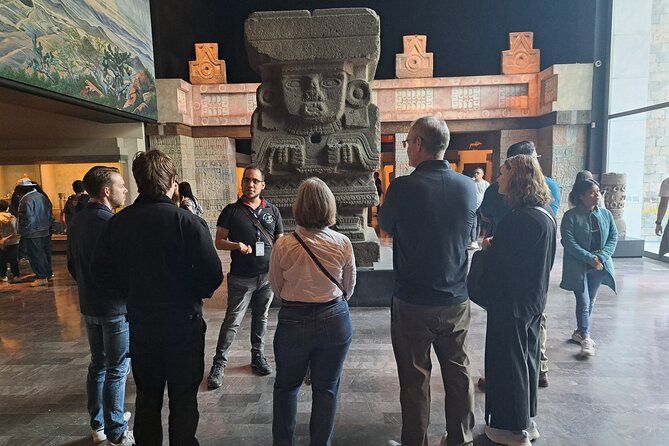
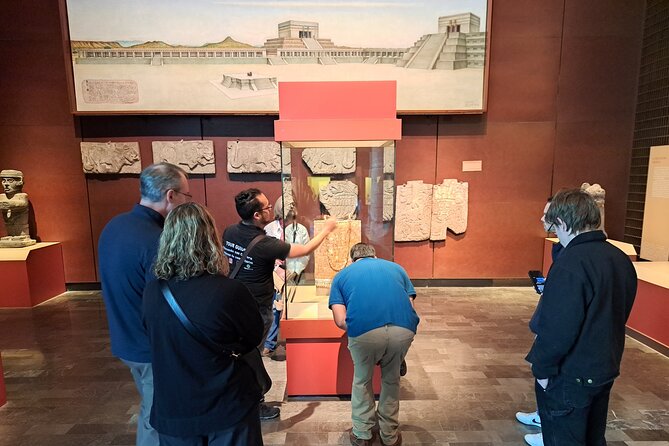
I like that the guiding style goes beyond dates and labels. Jorge, in particular, uses questions to make you study an object before he explains it. One activity begins at a large pillar, asking you to name what you see. Later, you return to it with enough context to understand its symbols. That simple method turns passive looking into active learning.
Delta takes a similarly personal approach. She is especially good at connecting different peoples and periods, while also separating archaeological evidence from popular legends. That distinction matters in a museum where dramatic stories can easily overshadow what researchers can actually support.
A few more Mexico City tours and experiences worth a look
Beginning with Mexico’s long timeline
The route is designed as a focused introduction to pre-Hispanic Mexico. You should expect the guide to move between rooms rather than spend equal time in every gallery. This is the right approach for a first visit, since trying to cover everything in three hours would leave you tired and confused.
Maps and large charts help establish place and time. They show how regions relate to one another and give you a sense of the distances involved. This is useful because the museum’s objects come from different parts of Mexico, not from one single civilization or period.
The tour also places emphasis on how archaeologists work. You may hear about the way scholars piece together evidence from objects, sites, images, and written accounts. That is a valuable lesson because ancient history is not always a neat sequence of proven facts. Some ideas remain debated, and the best guides make that uncertainty part of the story rather than hiding it.
You will also encounter discussion of how history is often recorded by those with the most power. Jorge has been praised for asking thoughtful questions about history told by victors. That adds a modern layer to the visit without turning it into a lecture about present-day politics.
The Sun Stone and the meaning behind famous objects
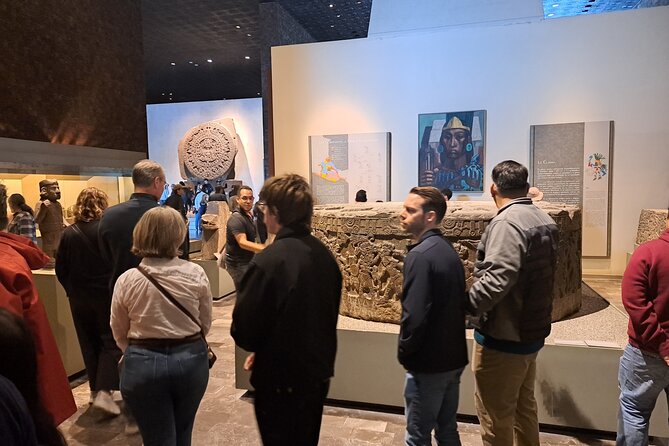
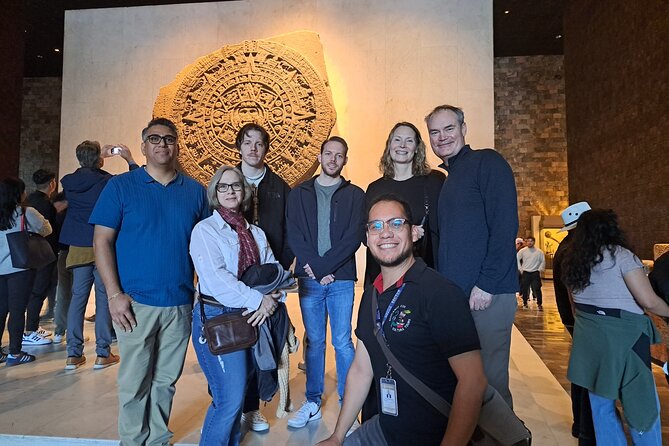
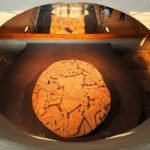
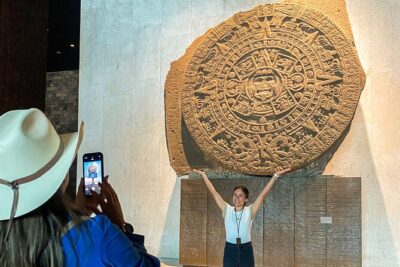
The Sun Stone is one of the museum’s essential sights, but seeing it is not the same as understanding it. A guide can direct your attention to the patterns, figures, and layers of meaning that make the object more than a famous photograph.
The value here is interpretation. You learn to look at how symbols work together and how a single object can reflect beliefs about time, ritual, authority, and the universe. The guide can also explain what is established by archaeological study and what belongs more properly to later interpretation or legend.
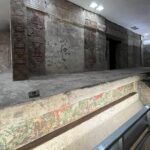
Pakal’s Sarcophagus provides another anchor. Rather than treating it as an isolated royal burial, the tour connects it to Maya society and the way rulers were represented. The object becomes a doorway into questions about status, death, power, and the relationship between a ruler and the wider community.
These famous pieces are not the whole point of the museum. They give you reference points. Once you understand why they matter, smaller objects and less familiar displays become easier to read.
Rituals, restoration, and objects beyond the usual highlights
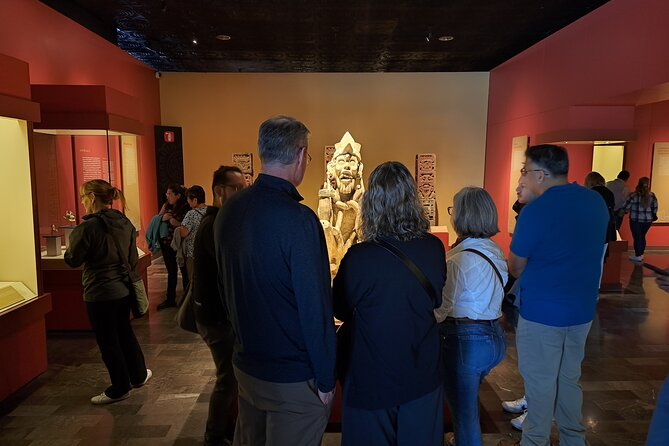
The experience also promises multimedia material related to ancient rituals. This gives the visit a more active quality than a standard walk past glass cases. You are not simply reading labels. You are given another way to picture how objects may have functioned in ritual life.
Another useful feature is attention to conservation and restoration. The finished artifact is only part of the story. Learning about the work behind its preservation helps you see why museum care matters and why an object’s present condition may not tell you how it looked when it was found.
There may also be access to objects not regularly displayed to the public. The exact items are not specified, so I would not book this expecting one particular hidden piece. Still, the possibility adds appeal, especially for anyone who has already visited the museum and wants a different angle.
The strongest benefit remains the guide’s judgment. In a building this large, someone has to decide which works deserve your limited time. A good guide keeps the route from becoming a random collection of famous names.
What three hours really covers
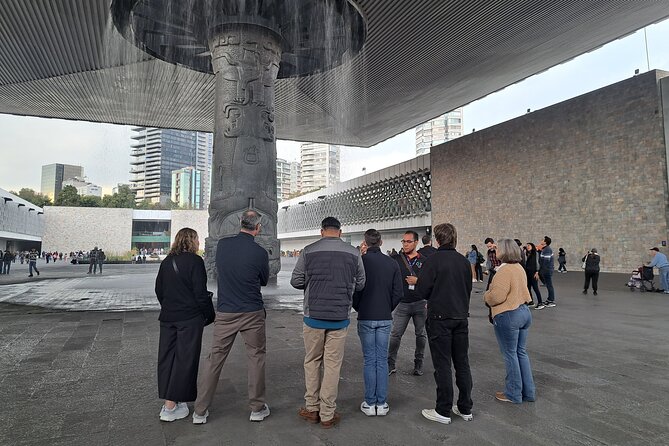
Three hours is long enough for a serious introduction, but not long enough to see every room in detail. One useful way to think about it is as a framework for the museum. You leave with a sense of the major periods, the central cultures, and the ideas that help you interpret the displays on your own.
If you choose a 2 pm start, the museum may feel less crowded than it does in the morning. The tradeoff is important: the museum closes at 5 pm, so you may have little or no time afterward to explore independently. If you want both the guided route and a self-guided look at other galleries, check the timing carefully before booking.
The pace appears active but manageable. One guide included a break during the three-hour visit, which can help when you are concentrating on complex material. Still, fuel up before you arrive. This is a listening-and-thinking tour, not a quick photo stop.
I would treat the three hours as the main event, then add your own museum time only if the schedule permits. The guided route may leave much of the collection unseen, but that is a limitation of the clock, not a flaw in the museum or the tour.
Other museum experiences in Mexico City



Small-group value at $98.57
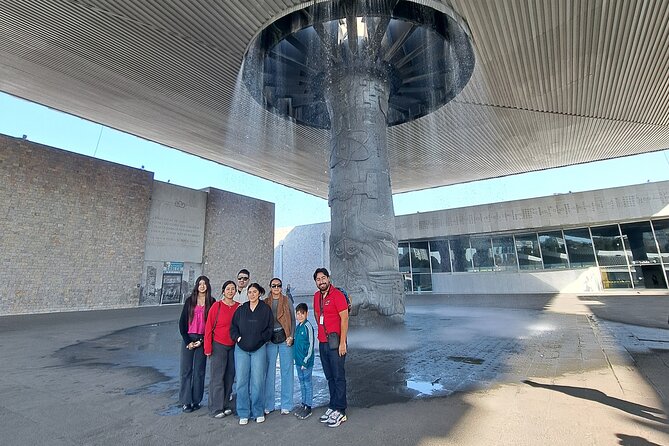
At $98.57 per person, this is not the cheapest way to enter a museum. Admission and a guide are included, but lunch and tips are not. The real question is how much you value interpretation and saved time.
For someone who reads little Spanish, the price makes more sense. Several museum signs are mainly in Spanish, and the limited English material may not explain enough for a first-time visitor. A fluent English guide can convey far more than a short translated caption, especially when explaining links among different regions and centuries.
The small-group limit also affects value. With no more than 15 people, the guide can ask questions and respond to the group. That is a better setup for an object-focused museum than a huge group where you only hear fragments of the explanation.
I would be less quick to recommend the cost to someone who already speaks Spanish well, has studied Mesoamerican history, or plans to spend several days examining the museum alone. For most first-time visitors with only one afternoon, the focused route can prevent a great deal of aimless walking.
The perfect guide also matters. Jorge and Delta receive especially strong praise for their English, energy, and ability to explain difficult material without making it dull. Since the guide shapes much of the experience, ask at booking if a preferred guide can be confirmed, though that is not guaranteed by the information provided.
Meeting at Chapultepec and finishing where you began
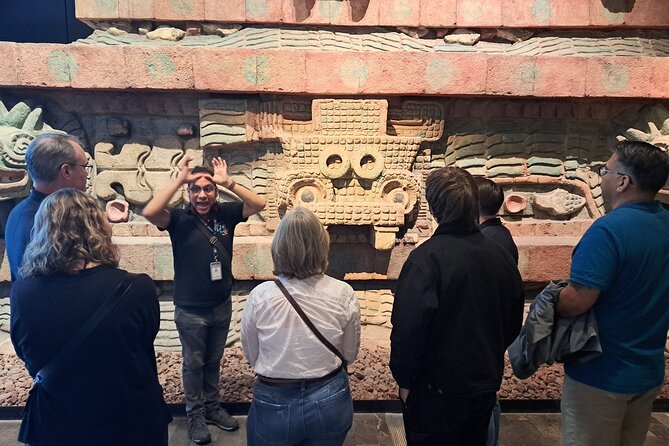
The tour starts at the National Museum of Anthropology on Avenida Paseo de la Reforma, in the Chapultepec area of Mexico City. It ends back at the same meeting point, so you do not need to arrange a separate drop-off.
The museum is near public transportation, which helps if you are staying elsewhere in the city. You should allow enough time to reach the entrance and meeting point, especially since this is a fixed-time experience. The tour includes the admission ticket and guide, so you do not need to purchase a separate museum ticket in advance.
Confirmation arrives when you book. Service animals are allowed, and most people can take part. Since the experience requires a minimum number of participants, the operator may offer a different date or experience, or a full refund, if that minimum is not met.
There has been one serious practical complaint about tickets that could not be downloaded, forcing the purchaser to buy four replacement tickets and then find no guide inside. This is not the normal pattern in the available feedback, but it is worth taking seriously. Save your confirmation, check the ticket details before leaving for the museum, and contact the provider promptly if the admission instructions are unclear.
The guide’s teaching style is the main attraction
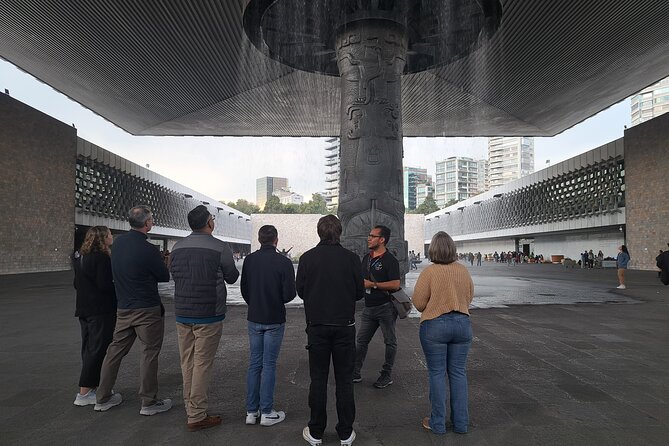
Jorge’s strongest quality is structure. He can connect roughly 4,000 years of history in a way that feels orderly rather than like a list of names. He uses questions, maps, charts, and nearby objects to build one answer from the next.
That method suits you if you enjoy learning by making connections. It also works well for families. A family with two teenagers found the three-hour route held their attention, which is no small feat in a museum filled with dense material.
Delta’s style is warm and direct. She explains major pre-Hispanic communities, points out essential objects, and gives the history a human scale. She also brings a clear connection to Mexican culture, which can make the visit feel more personal without losing its academic value.
Both guides appear comfortable with people who are new to the subject. You do not need to arrive with a background in archaeology. Come ready to ask questions and look closely. The tour is built to give you the basic framework first, then add detail as you go.
Who should book this museum experience
I would recommend this tour most strongly to a first-time visitor who has three hours and wants to understand what they are seeing. It is also a smart choice for anyone who does not read Spanish with ease, since the guide fills a real information gap.
It suits solo visitors, couples, and families. The small group keeps the experience more personal, and the interactive approach gives younger people something to do beyond listening to a long lecture.
It is less suitable if you want a slow, complete museum visit. You will see selected highlights, not every gallery. It may also frustrate you if you prefer to linger at one object for a long time, since the guide has a set route and a large amount of material to cover.
People interested in how history is interpreted will get extra value. The discussion of evidence, legends, archaeology, and accounts shaped by power adds thought beyond the basic sightseeing list.
Practical tips for getting the most from the visit
Read the meeting instructions carefully and arrive at the museum rather than assuming hotel pickup is included. The listed meeting point is the museum itself, and the activity returns there at the end.
Choose your start time with the closing hour in mind. A 2 pm visit may offer a quieter experience, but it leaves no useful window for an independent look afterward if the museum closes at 5 pm.
Wear something comfortable for three hours of standing and walking. Bring water and eat beforehand, since lunch is not included. Tips are also separate.
Use the guide’s questions as part of the experience. If Jorge or Delta asks what you notice, take a moment before waiting for the explanation. You will remember more when you make your own first reading of an object.
If you want more time in the museum, plan that before booking. The guided experience ends at the meeting point, and the available timing may not allow an extra circuit afterward.
Should you book it?
Book this tour if you want the National Museum of Anthropology to make sense, not merely look impressive. At $98.57, it asks more than a basic museum admission, but the English interpretation, small group, and carefully chosen route address the museum’s biggest challenges.
I would book it especially for a first visit, a short stay in Mexico City, or a trip where you want cultural context rather than a fast collection of photographs. I would skip it only if you speak Spanish comfortably, prefer a completely self-guided visit, or have enough time to study the museum at your own pace.
The one ticket problem deserves a little caution, so verify your admission details before setting out. Aside from that practical concern, the strongest choice is clear: three focused hours with Jorge or Delta can give you the framework you need to return to the museum and see much more on your own.
FAQ
How long does the museum tour last?
The experience lasts approximately three hours.
Is admission to the National Museum of Anthropology included?
Yes. The museum ticket and guide are included in the price.
Is the tour offered in English?
Yes. The activity is offered in English.
Where does the tour start and end?
It starts at the National Museum of Anthropology on Avenida Paseo de la Reforma in Mexico City and ends back at the same meeting point.
How many people can join the tour?
The group has a maximum of 15 participants.
Can I cancel for a full refund?
Yes, if you cancel at least 24 hours before the experience starts. Cancellations made less than 24 hours before the start time are not refunded, and changes within that period are not accepted.
More Museum Experiences in Mexico City
More Chapultepec & Museum Tours in Mexico City
More tours in Mexico City we've reviewed





Chapultepec & Museum Tours, compared.
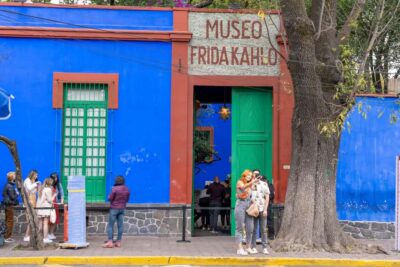 ★ 4.4CDMX: Xochimilco, Coyoacan, Frida Kahlo Museum & Murals TourFrom $89
 ★ 4.5Chapultepec Castle & Anthropology Museum TourFrom $795 hours (approx.)
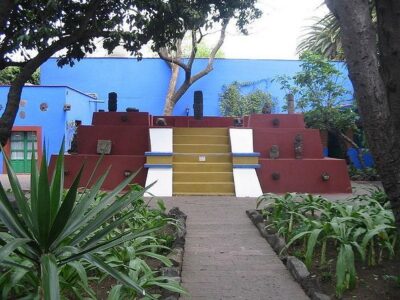 ★ 5.0Frida Kahlo VIP [Museum Tickets Included] Bike, Markets & ChurrosFrom $834 hours (approx.)
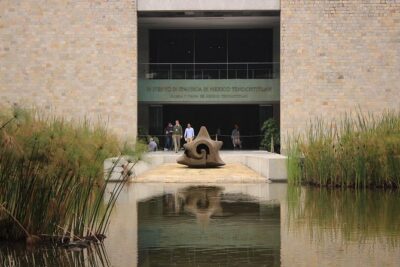 ★ 4.5Anthropology Museum Guided TourFrom $392 hours 30 minutes (approx.)
 ★ 5.0Frida Kahlo VIP [Museum Tickets Included] Walk, Markets & ChurrosFrom $833 to 4 hours (approx.)
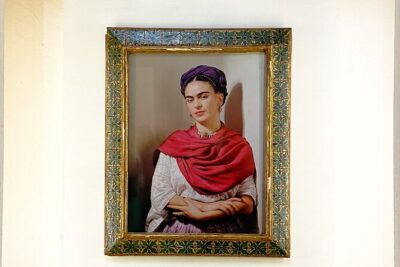 ★ 5.0EXCLUSIVE TOUR Frida Kahlo Museum – SMALL GROUPSFrom $862 hours (approx.)
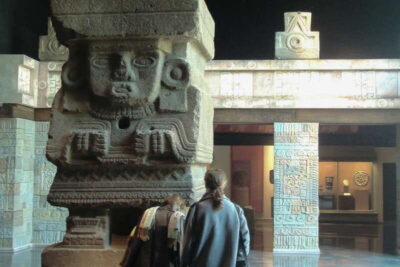 ★ 4.4Mexico City: Anthropology Museum Guided VisitFrom $672.5 hours
 ★ 4.5Mexico City: Frida Kahlo Museum Entry Ticket w/Digital GuideFrom $34
The lists this tour appears in