
Reviewed · CHAPULTEPEC & MUSEUM TOURS
Anthropology Museum Ticket with Digital Guide included
Mexico City’s National Museum of Anthropology is the main event here. Its enormous collection traces Indigenous cultures through sculpture, paintings, reconstructions, videos, and archaeological objects, with the Mayan, Toltec, Mexica, and Olmec halls among the biggest draws. The ticket promises skip-the-line entry, leaving you more time for the galleries and the famous central courtyard fountain.
In This Article
- Key points to know before you book
- Why this museum deserves a half-day
- What you see inside the National Museum of Anthropology
- The digital guide: useful extra or weak substitute?
- Does skip-the-line entry work?
- Is $28 per person good value?
- Planning your time inside
- Getting there and choosing your arrival time
- Who will like this experience?
- Who should choose another option?
- My recommendation
- FAQ
- How much does the Anthropology Museum ticket cost?
- What does the ticket include?
- Is transportation included?
- Is this a private tour?
- Is the digital guide an audio guide?
- What languages are available?
- How long should I plan for the museum?
- When is the museum open?
- Can I cancel for a full refund?
I like the freedom of a self-guided visit, especially when you want to spend five hours on one section and breeze through another. I also like that this is a private experience, so your group is not folded into a larger tour. The main caution is the digital guide: it is not a traditional audio tour, and some visitors have found the PDF or app difficult to access or too thin to add much.
Key points to know before you book
- The museum is huge: Plan at least three to four hours, and five hours if you want a serious look at the collection.
- The Mayan and Toltec displays are major attractions: You will also find important Mexica, Olmec, and other cultural sections.
- The digital guide is not an audio guide: It is described as a digital guide in English and Spanish, but it may not connect closely to each exhibit.
- Skip-the-line access can be useful: Lines may grow after opening, though the separate entrance has not worked smoothly for everyone.
- The price buys convenience, not a bargain: At $28 per person, compare that fee with the museum’s direct admission before booking.
- Arrive early and prepare for limited English signage: A translation app can make a big difference.
Why this museum deserves a half-day
I would put the National Museum of Anthropology near the top of any Mexico City visit. This is not a quick room of display cases. The museum presents the cultures of Mexico across a large, well-planned complex, and the scale changes how you experience it.
You move from monumental stone carving to small objects, painted surfaces, recreated settings, and explanatory displays. The material gives you a way to connect archaeological remains with the people and societies that made them. Even a short visit can be powerful, but the museum rewards patience.
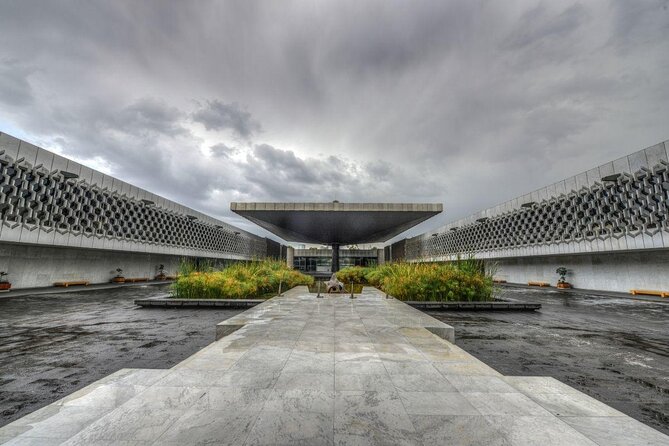
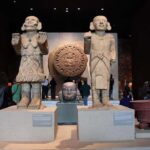
The building itself helps. Galleries open toward courtyards and outdoor areas, and the central fountain is one of the memorable features of the visit. The exterior spaces offer a pause between rooms, which matters when you are trying to absorb several thousand years of culture in one morning.
Many people underestimate the time needed. Two hours will let you see important highlights, but it will feel selective. Three to four hours is a better target for a solid first visit. If you want to read labels, compare cultural sections, and see both floors, allow about five hours.
A few more Mexico City tours and experiences worth a look

What you see inside the National Museum of Anthropology
The single listed stop is the Museo Nacional de Antropologia, but it contains enough material for several separate visits. Your ticket is intended to get you inside so you can explore independently.
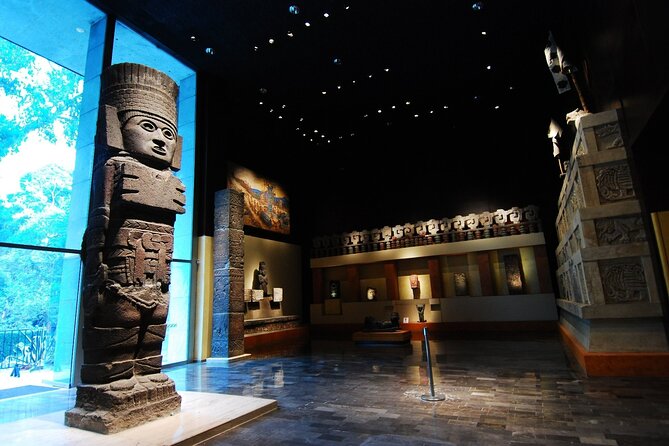
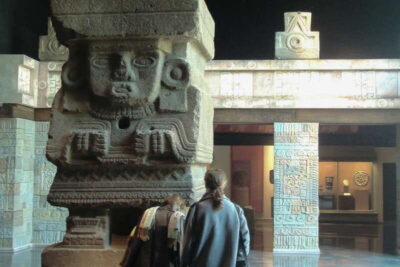
The Mayan displays are a central reason to book this experience. You can expect art and archaeological material connected to one of Mexico’s best-known pre-Hispanic cultures, presented within a larger story about regional development and Indigenous life.
The Toltec section also receives special attention. One particularly interesting detail is the collection of obsidian vessels carved from a single piece of stone. Objects like these reward a slow look. Their importance is not only visual; the workmanship shows how much information can be held in a relatively small artifact.
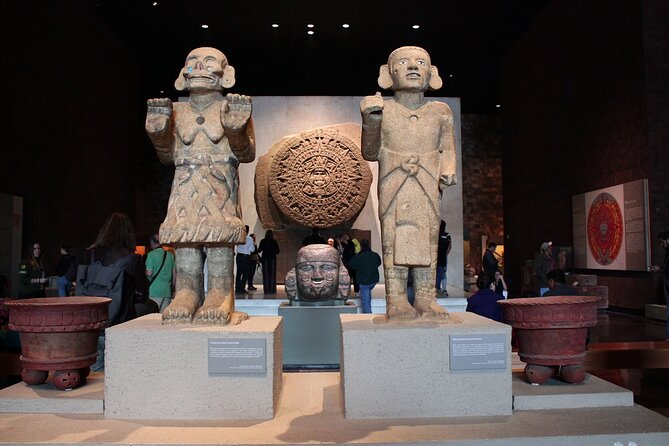
The Mexica halls are another strong choice if your time is limited. One practical approach is to begin with the Mexica and Teotihuacan sections, then move to the cultures that interest you most. The museum is too large for a rushed attempt to see every label.
The Olmec section is worth keeping on your route as well. Visitors with a particular interest in early Mesoamerican art may want to give it extra time rather than treating it as a quick passage to the better-known halls.
Displays include sculpture, paintings, videos, and reconstructions. That mix helps break up the visit. You are not looking at rows of nearly identical objects for hours, although the amount of material can still become tiring.
The digital guide: useful extra or weak substitute?
The digital guide is included in English and Spanish. That sounds appealing, especially because many gallery labels have limited or no English translation. In practice, you should treat it as a supplement, not as a full spoken tour.
It is described by some users as a PDF-style guide rather than an audio experience. One important point is that the digital component does not necessarily match each exhibit as you move through the rooms. If you expect numbered stops, narration, and a clear route, this product may disappoint.
Access has also been uneven. Some people have had trouble downloading the tickets, opening the digital assistant, or getting the app to recognize the booking. That is a serious issue because the guide is one of the main reasons to pay more than the museum’s basic admission.
I would download everything before leaving your hotel or rental. Save the ticket on your phone, open any guide links in advance, and keep a translation app ready. The translation app may be just as important as the included material once you are inside.
If you want detailed interpretation, an in-person guide is likely the better choice. Several people who heard live guides in the museum felt that format offered more useful context. This ticket does not include an in-person guide, and the provider does not guarantee that one will be available on the day.
Does skip-the-line entry work?
The ticket is sold with skip-the-line access through a separate entrance. That can be worthwhile at a popular museum, particularly after the doors open and the queue begins to build.
Timing matters. Arriving at 10:00 AM, when the museum opens, has often meant a quieter start. By later in the morning, the line may be longer and the galleries more crowded. A late-afternoon visit can also be calmer, but you will have less time before the 5:00 PM closing.
You should keep expectations sensible. The separate entrance has not always worked as a true fast pass. Some people were sent to the normal line, while others found the inside queue short enough that the paid priority access did not save much time.
That makes the ticket’s value depend on your schedule. If you have only one chance to visit and want to reduce the risk of a long wait, the convenience may be worth paying for. If you are already planning to arrive at opening and can tolerate a queue, buying directly from the museum may cost less.
Make sure the ticket instructions are clear before you go. There have been reports of tickets being mistaken for tour-operator vouchers or links failing to produce a usable admission document. I would not wait until you reach the museum entrance to solve a download problem.
Is $28 per person good value?
At $28 per person, this is a convenience purchase rather than the cheapest way into the museum. The listed price includes the admission ticket and the digital guide, but not transportation or a live guide.
A price comparison is essential. Two people reported paying about $45 in total through the booking service, while quoting direct admission of 100 Mexican pesos per person at the door. Prices can change, and the information available here does not establish the museum’s current direct rate, but the gap is large enough to check before you commit.
You are paying for advance booking, a possible queue advantage, and the digital material. You are not paying for a full guided explanation. If the skip-the-line process works and your visit falls on a busy day, that convenience may justify the markup.
If the museum is quiet, the digital guide fails, or you are directed to the ordinary queue, the value drops quickly. I would book this only after deciding that advance access is worth more to you than the lowest admission price.
The free cancellation policy helps. You can cancel up to 24 hours before the start time for a full refund. Changes or cancellations made less than 24 hours in advance are not accepted for a refund, and the cut-off follows local time.
A few more Mexico City tours and experiences worth a look



Planning your time inside
The stated duration is about one to four hours, but the museum itself can easily hold you longer. I would not let the advertised upper limit dictate your schedule. The building and collection deserve more flexibility.
For a short visit of about two hours, focus on the Mexica and Teotihuacan halls, then choose either the Mayan or Toltec displays. Leave time for the courtyard and outdoor pieces. This gives you a clear sense of the museum without racing through every room.
For three to four hours, add the Olmec section and spend more time with the objects that catch your eye. You can also stop for food. The on-site Salas Gastronómicas restaurant has been singled out for its regional approach, making it a practical break rather than an afterthought.
For five hours, take the visit slowly. Some people finish the lower level in about two and a half hours and still have the entire upper floor ahead. Bring water, eat beforehand, and wear comfortable shoes. The museum’s size makes simple preparation more important than any clever touring trick.
A wheelchair has also been used successfully during a visit, which may be helpful for anyone who needs one. The provided information does not give a full accessibility guide, so contact the operator directly if you need specific details about routes or equipment.
Getting there and choosing your arrival time
Transportation is not included. You are responsible for reaching the museum, so allow extra time for Mexico City’s traffic. A late arrival can cost more than the ticket saves if you have a fixed schedule.
The published hours are Tuesday through Sunday, 10:00 AM to 5:00 PM, for the stated periods through December 10, 2026. The available information does not list Monday opening, so plan around the published Tuesday to Sunday schedule.
Opening time is my first choice for a full visit. You can start with less crowding and make your way to the popular halls before they fill. If you prefer a shorter, quieter visit, late afternoon may work, but check the closing time carefully.
The museum is close to Chapultepec Castle, so the two can be paired on the same day. I would do that only if you are comfortable with a long day. Trying to give both sites proper attention may be too much for anyone who wants time to read and pause.
Who will like this experience?
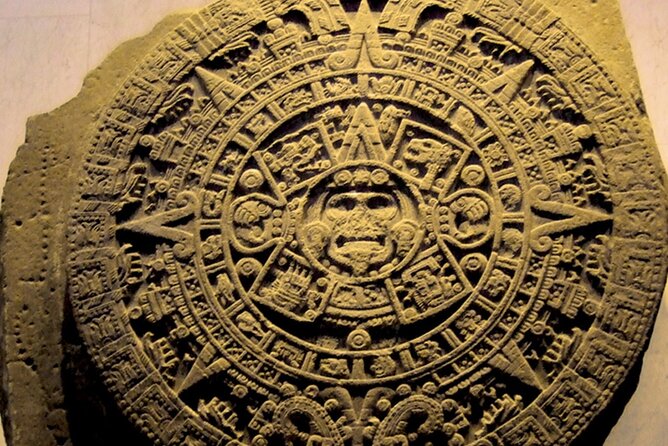
This ticket suits an independent visitor who wants to set the pace. You can spend extra time in the Toltec or Olmec rooms, skip a section that does not interest you, and stop for lunch without keeping up with a group.
It also suits couples and families who prefer privacy. Since only your group participates, you do not have to share a guide’s schedule with strangers. Keep in mind, though, that private does not mean personally guided here. The included product is the ticket and digital guide.
English speakers should prepare for uneven translation. The digital guide may help, but many signs reportedly lack English text. Download Google Translate or another translation tool before arrival, and do not rely on a strong internet connection inside.
History fans who want a clear narrative may be happier with an in-person guide. Independent museum visitors, photographers, and people with a strong interest in one culture may prefer this flexible format.
Who should choose another option?
I would look elsewhere if the digital guide is the main reason you are booking. Its format may be a PDF or app, not spoken narration, and its information may not line up neatly with the objects in front of you.
I would also hesitate if you are highly price-sensitive. Direct admission may be much cheaper, and the skip-the-line benefit has not been consistent for every visitor. Check the museum’s current ticket price before paying the premium.
Finally, do not choose this experience expecting transportation, a live guide, or a guaranteed audio device. None of those is included. The strongest part is access to an exceptional museum, not the digital technology wrapped around it.
My recommendation
I would book this ticket if you have limited time, value advance arrangements, and want the possibility of avoiding the main queue. Arrive early, save the ticket offline, and bring a translation app. Plan at least three hours, and preferably half a day.
I would buy directly from the museum if saving money matters most and you can arrive at opening. I would choose a live guided tour if you want the objects explained in a connected story. The museum is unquestionably worth seeing, but this particular $28 package is best judged as a convenience ticket with a modest digital extra, not as a full tour.
FAQ
How much does the Anthropology Museum ticket cost?
The listed price is $28 per person. The price includes skip-the-line admission and a digital guide in English and Spanish.
What does the ticket include?
It includes a skip-the-line entrance ticket and a digital guide of the museum in English and Spanish.
Is transportation included?
No. You must make your own way to the National Museum of Anthropology in Mexico City.
Is this a private tour?
Yes. Only your group participates. However, the product does not include an in-person guide.
Is the digital guide an audio guide?
The information describes it as a digital guide, not specifically as an audio guide. The digital component may be a PDF or app-based resource.
What languages are available?
The experience is offered in English. The included digital guide is available in English and Spanish.
How long should I plan for the museum?
The stated experience lasts about one to four hours, but the museum can require three to five hours if you want to see a large part of the collection.
When is the museum open?
The published hours are Tuesday through Sunday from 10:00 AM to 5:00 PM for the listed dates through December 10, 2026.
Can I cancel for a full refund?
Yes, if you cancel at least 24 hours before the experience start time. Cancellations or changes made less than 24 hours in advance are not refunded.
More Guided Tours in Mexico City




More Tickets in Mexico City
More Chapultepec & Museum Tours in Mexico City

More tours in Mexico City we've reviewed










Chapultepec & Museum Tours, compared.
 ★ 4.4CDMX: Xochimilco, Coyoacan, Frida Kahlo Museum & Murals TourFrom $89
 ★ 4.5Chapultepec Castle & Anthropology Museum TourFrom $795 hours (approx.)
 ★ 5.0Frida Kahlo VIP [Museum Tickets Included] Bike, Markets & ChurrosFrom $834 hours (approx.)
 ★ 4.5Anthropology Museum Guided TourFrom $392 hours 30 minutes (approx.)
 ★ 5.0Frida Kahlo VIP [Museum Tickets Included] Walk, Markets & ChurrosFrom $833 to 4 hours (approx.)
 ★ 5.0EXCLUSIVE TOUR Frida Kahlo Museum – SMALL GROUPSFrom $862 hours (approx.)
 ★ 4.4Mexico City: Anthropology Museum Guided VisitFrom $672.5 hours
 ★ 4.5Mexico City: Frida Kahlo Museum Entry Ticket w/Digital GuideFrom $34
The lists this tour appears in