
Reviewed · GUADALUPE SHRINE TOURS
Basilica of Our Lady of Guadalupe Visit
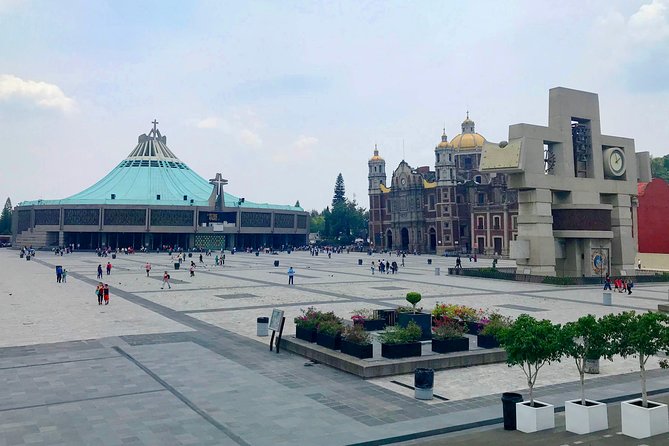
The Basilica of Guadalupe is not just one church. It is a whole hilltop complex of basilicas, chapels, parish buildings, religious art, and pilgrimage spaces tied to the story of the Virgen de Guadalupe. This half-day tour gives you a useful way into that large site, with an English-speaking guide explaining why each building matters instead of leaving you to sort it out alone.
In This Article
- Key points to know before you book
- Why this Guadalupe visit is worth your time
- Starting at the Old Basilica and Cristo Rey
- The sixteenth-century Indian parish
- The Well Chapel and its unusual setting
- Climbing toward Capilla del Cerrito
- Spending an hour with the Basilica Museum
- Visiting the New Basilica
- What the guides add to the morning
- Timing, crowds, and the weekend schedule
- Is $98 a fair price?
- Who should book this experience?
- Should you book the Basilica of Guadalupe visit?
- FAQ
- How long does the Basilica of Guadalupe visit last?
- Where does the tour begin?
- Where does the tour end?
- Is the tour offered in English?
- How many people can join the tour?
- Which places are visited?
- Is museum admission included?
- Are food and souvenirs included?
- Does the tour operate every day?
- Can I cancel for a full refund?
I like the small maximum of 13 people, which makes it easier to ask questions and move at a sensible pace. I also like the six-stop route, especially the hour set aside for the Basilica Museum. The main thing to consider is the amount of walking, including a visit to a chapel at the top of Tepeyac Hill, so this is best for anyone with at least a moderate level of fitness.
Key points to know before you book
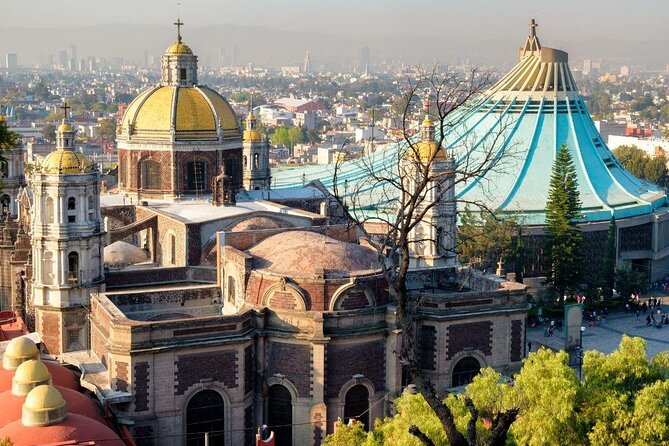
- Six different parts of the Guadalupe complex: See the Old Basilica, the first Indian parish, two chapels, the museum, and the New Basilica.
- A guide adds essential context: Alejandro, Efrain, Mariana, Silvia, and Alejandra Paredes Carrera are among the guides praised for clear explanations in English or Spanish.
- A small group keeps the visit personal: The maximum is 13 people, and some departures may feel almost private.
- The museum receives a full hour: This is the best stop for viewing the complex’s religious art at an unhurried pace.
- The route connects faith and Mexican identity: The tour explains the Virgin’s apparitions and the place they hold in Mexican culture.
- Plan for a weekend morning: The listed operating hours are Saturday and Sunday from 10 a.m. to 2 p.m.
Why this Guadalupe visit is worth your time
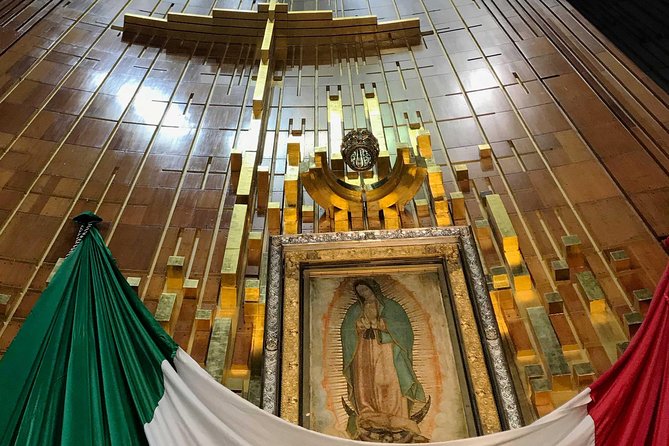
The Guadalupe complex can feel confusing at first because several important buildings sit close together, each with its own role and story. A guide gives the visit a clear shape. You move from the older structures connected with the apparitions to the museum and then to the modern basilica where you can pay your respects to the Virgin.
I especially value the way this experience treats the site as both a religious destination and a place tied to Mexico City’s cultural life. You do not need to be a pilgrim to appreciate it. The tour is designed for the pious and the curious alike, and the explanations cover the buildings, artwork, apparitions, and wider changes in Mexican society.
At $98 per person, this is not a cheap sightseeing stop. The price makes the most sense if you want a guided interpretation in English and prefer a small group rather than a quick look around on your own. You are paying for nearly four hours of attention, a planned route through six locations, and admission to the Basilica Museum.
If you only want to enter the New Basilica, you can do that without booking a tour. The added value here is the context. Guides such as Alejandro and Efrain are repeatedly praised for explaining each site clearly, answering questions, and adjusting the pace for breaks, photos, shopping, or mobility needs.
A few more Mexico City tours and experiences worth a look
Starting at the Old Basilica and Cristo Rey
The meeting point is the Expiatory Temple to Christ the King, in the Atrio de las Americas in Villa Gustavo A. Madero. This first stop is the Templo Expiatorio a Cristo Rey, also called the Old Basilica, and the planned visit lasts about 30 minutes.
This is where the guide introduces the story of the Virgin’s apparitions. That opening matters because the rest of the complex makes more sense once you understand the religious story connecting the buildings. Rather than treating the Old Basilica as an isolated church, the guide uses it to establish the meaning of the entire site.
You can expect the first explanations to set the tone for the rest of the morning. Alejandro is particularly praised for presenting the story in a clear way and connecting it to the history of Mexico City. Efrain is also described as an engaging guide who brings the subject to life through stories and careful explanation.
The Old Basilica is a strong first stop, but it is not the place where you spend most of the tour. Thirty minutes is enough for an introduction, though you may want more time if you are interested in studying the architecture or praying quietly. This is a guided visit, not an open-ended church afternoon.
The sixteenth-century Indian parish
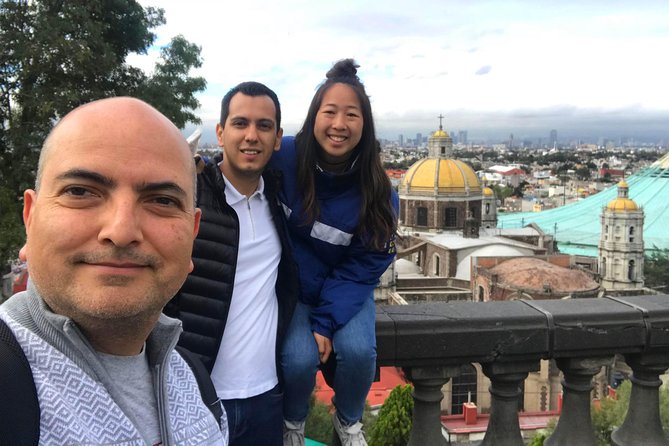
Next comes the Antigua Parroquia de Indios, described as the Virgin’s first temple from the sixteenth century. The scheduled stop is short, about 15 minutes, but it gives you another piece of the complex’s early story.
This building helps show how devotion to the Virgin developed through more than one church. Your guide can explain why this parish is important and how it fits beside the later structures. On your own, it would be easy to walk past it without understanding its place in the sequence.
The short timing has a practical benefit: the tour keeps moving. It also means you should listen closely and ask questions while you are there. If you prefer lingering in every chapel, the pace may feel brisk. If you want a focused overview in half a day, the fifteen-minute stop works well.
The Well Chapel and its unusual setting
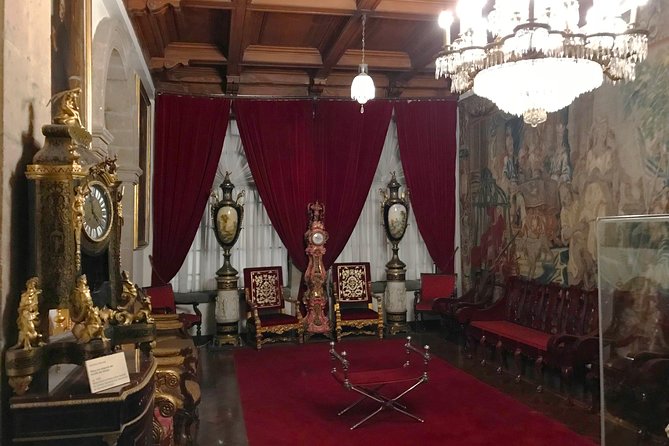
The Capilla del Pocito is known as the Well Chapel, and the tour connects it with one of the Virgin’s apparitions. You spend about 15 minutes here.
This stop adds a different setting to the visit. Instead of seeing only the large basilicas, you encounter a smaller chapel linked to a specific part of the apparition story. The guide’s role is important because the significance of the well and chapel may not be obvious from the building alone.
The schedule leaves limited room for wandering, so I would treat this as a listening and orientation stop. You get the story, see the chapel, and continue rather than spending a long stretch inside. That makes the overall tour manageable, but you should not expect every location to receive the same amount of time.
Climbing toward Capilla del Cerrito
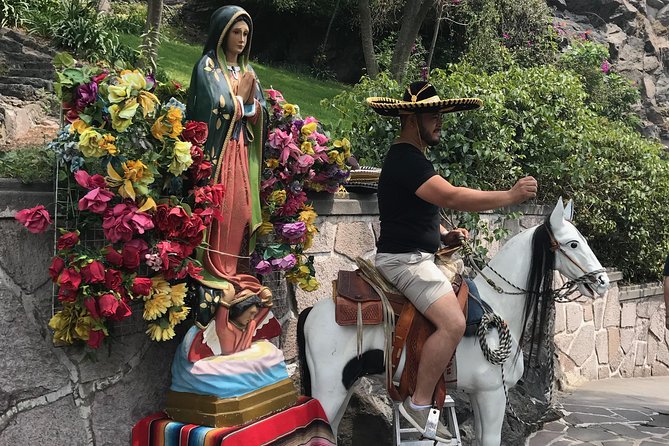
The Capilla del Cerrito is the chapel at the top of Tepeyac Hill, connected with the Virgin’s first apparition. The planned visit lasts about 15 minutes.
This is the part of the route that deserves the most thought before booking. The experience requires a moderate level of physical fitness, and the hill adds effort to a morning that already includes movement between several buildings. The tour information does not promise a flat or fully accessible route.
At the same time, the hilltop chapel gives the story a strong sense of place. You are not only hearing about the first apparition. You are visiting the chapel associated with it, above the main complex. That physical connection is one of the reasons the tour feels more meaningful than a simple visit to the modern basilica.
If you need mobility help, mention it before the tour. Alejandro arranged wheelchair service for one person with a disability, and guides are praised for being considerate about rest breaks. That is encouraging, but it should not be treated as a guarantee of a particular accessibility setup. Confirm your needs in advance.




Spending an hour with the Basilica Museum
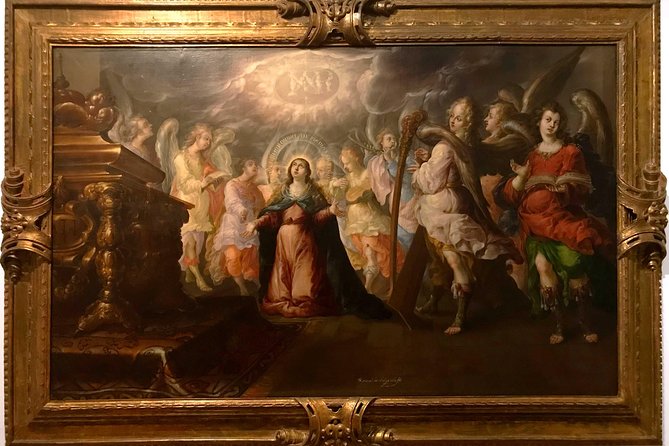
The Museo de la Basilica de Guadalupe receives the longest scheduled stop, one full hour. It is described as a religious art gallery, and the museum is included in the tour price.
This is a major advantage. The churches provide the setting and devotional experience, while the museum gives you time with the art connected to the site. An hour allows the guide to explain selected works and themes without reducing the museum to a quick hallway visit.
Silvia, one of the guides, is praised for using pictures to make the story easier to follow. Other guides are described as having a strong interest in art, which can make this part especially rewarding if you want more than a basic religious overview.
The museum also offers a change of pace. After walking among chapels and basilicas, you can spend a longer period indoors, looking carefully and asking questions. If you are mainly interested in worship and less interested in art, the hour may feel long. If you enjoy paintings and religious objects, it is likely to be one of the tour’s best sections.
Visiting the New Basilica
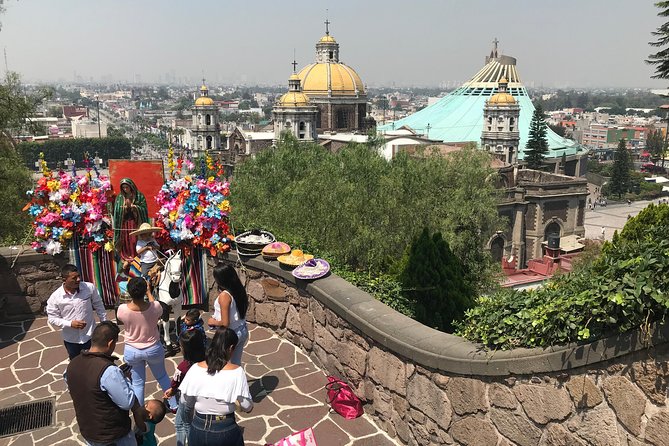
The final stop is the Basilica de Santa Maria de Guadalupe, commonly known as the New Basilica. The planned visit lasts about 30 minutes, and admission is free.
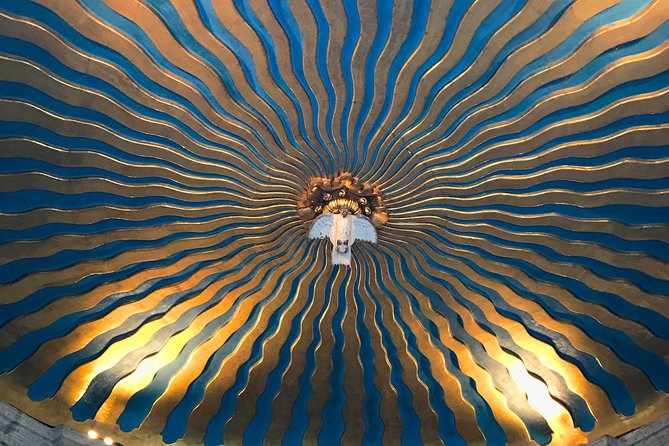
This is the modern center of the complex and the place where the tour ends its main religious sequence. The purpose here is not simply to admire a building. You have already heard the story and visited the older sites, so the final visit gives you a chance to pay your respects to the Lady with a fuller sense of what the complex represents.
The thirty-minute schedule gives you time to take in the basilica and participate in the atmosphere without turning the stop into an extended service. One Spanish-language account describes participating in Mass during the broader visit, but you should not assume that Mass is part of every tour or that the schedule will allow it on your date.
The guides also help with the practical flow of the visit. Past guests have appreciated being shown the best way around the complex and being given time for photos. Still, remember that this is an active religious site. Services, prayer, and local activity may affect how quietly or quickly you can move through some areas.
What the guides add to the morning
The strongest feature of this experience is the guiding. Alejandro receives especially warm praise for his explanations of the basilica, the apparitions, Mexican history, and the surrounding area. He is also described as patient with photos, shopping stops, and individual questions.
Efrain is another highly regarded guide, praised for an in-depth approach and for adjusting the outing when people needed a rest, restroom break, or time at shops. Mariana has been described as helpful with food and activity suggestions after the tour, while Silvia uses visual aids to clarify the story. Alejandra Paredes Carrera is recommended for Spanish-language visits.
Guide assignments can change, so you should not book expecting one particular person unless the operator confirms it. What you can reasonably expect is a small-group experience offered in English, with the potential for a more personal pace than a large coach tour.
The small group also matters for sound. In a crowded religious complex, it is easier to hear a guide when the group is limited to 13 people. It is also easier to ask about the Tilma, the buildings, or the history of the area without holding up dozens of people.
Timing, crowds, and the weekend schedule
The experience lasts about four hours and is listed for Saturday and Sunday from 10 a.m. to 2 p.m. The morning schedule is useful because the Basilica complex can draw large crowds, especially at popular pilgrimage times.
Starting at 10 a.m. may help you avoid some of the later rush, but you should still expect other people at a major religious site. One practical advantage of a guide is that you keep moving from one location to the next instead of getting stuck in one busy spot.
The tour ends back at the meeting point, so plan the rest of your day from there. Bottled water is included, but snacks are not. Eat before you arrive or carry something suitable if you need food during the four-hour outing. Souvenirs are also your responsibility.
The meeting point is near public transportation. The tour does not list hotel pickup, so make your own way to the Expiatory Temple to Christ the King. Confirmation is sent within 48 hours of booking, subject to availability, and the experience is often booked well in advance, with an average lead time of 44 days. I would not leave this one until the last minute if your Mexico City dates are fixed.
Is $98 a fair price?
At $98, this is best viewed as a specialist guided visit rather than a bargain attraction. The basilicas and chapels do not charge a separate admission fee, but the museum admission is included, along with bottled water and facility fees.
The real value is the interpretation. You see six parts of the complex in a logical order and receive explanations about the apparitions, art, buildings, and Mexican culture. That can save you from arriving at the New Basilica, taking a few photos, and missing most of what makes the site important.
The price is easier to justify for first-time visitors, English-speaking travelers, families, solo visitors, and anyone with a strong interest in religious art or Mexican culture. It is harder to justify if you already know the story well, speak Spanish comfortably, or only want a brief visit to the main basilica.
A private departure can also change the value. With a small booking, the outing may feel close to private, and the guide may be able to slow down for questions or mobility needs. You should not assume a private tour is included, but the group limit gives you a better chance of personal attention.
Who should book this experience?
I would choose this tour if you want to understand the whole Guadalupe complex rather than see only its most famous church. It suits a solo visitor who wants a clear introduction, a family that prefers a guided route, or a pilgrim who wants time for both explanation and respect.
It is also a good match for anyone interested in how religious places shape national culture. The guides do more than recite the apparition story. They have been praised for discussing Mexico City, politics, cultural change, and art when those subjects help explain the site.
You should think twice if you have difficulty walking uphill or standing for extended periods. The route is not presented as effortless, and the visit to Capilla del Cerrito may be the hardest part. Ask ahead about wheelchair assistance rather than relying on arrangements made on the day.
Free cancellation is available if you cancel at least 24 hours before the start time. Changes or cancellations inside that window are not accepted for a refund. The experience also requires good weather, with a different date or full refund offered if poor weather causes cancellation.
Should you book the Basilica of Guadalupe visit?
Book it if you want the Basilica of Guadalupe to make sense. The buildings are close together, but their connections are not always clear without help. This tour gives you the Old Basilica, the sixteenth-century Indian parish, the Well Chapel, the hilltop chapel, the museum, and the New Basilica in one organized morning.
The best reasons to book are the small group, the full hour in the museum, and the quality of the guiding associated with names such as Alejandro and Efrain. Bring water beyond the included bottle if you need it, wear comfortable shoes, allow for the hill, and plan breakfast before the 10 a.m. start.
Skip it only if you want a quick, independent church visit or if $98 feels too high for guided interpretation. For everyone else, this is a thoughtful way to see one of Mexico City’s most important religious and cultural sites without rushing through it.
FAQ
How long does the Basilica of Guadalupe visit last?
The experience lasts approximately four hours, although the listed stop times add up to slightly less than that, leaving room for walking between locations and transitions.
Where does the tour begin?
It begins at the Expiatory Temple to Christ the King, at Atrio de las Americas in Villa Gustavo A. Madero, Mexico City.
Where does the tour end?
The activity ends back at the same meeting point where it begins.
Is the tour offered in English?
Yes. The experience is offered in English and uses an English-speaking guide.
How many people can join the tour?
The maximum group size is 13 people.
Which places are visited?
The route includes the Old Basilica, Antigua Parroquia de Indios, Capilla del Pocito, Capilla del Cerrito, the Basilica Museum, and the New Basilica of Santa Maria de Guadalupe.
Is museum admission included?
Yes. Admission to the Museo de la Basilica de Guadalupe is included in the tour price.
Are food and souvenirs included?
No. Bottled water is included, but snacks and souvenirs are not.
Does the tour operate every day?
The listed operating hours are Saturday and Sunday from 10 a.m. to 2 p.m.
Can I cancel for a full refund?
Yes, if you cancel at least 24 hours before the experience starts. Cancellations or changes made less than 24 hours before the start time are not accepted for a refund.
More Guadalupe Shrine Tours in Mexico City
More tours in Mexico City we've reviewed



Guadalupe Shrine Tours, compared.
 ★ 5.0Teotihuacan, Guadalupe Shrine & Tlatelolco Day Tour with LunchFrom $399 hours (approx.)
 ★ 4.6Mexico City: Teotihuacan, Tlatelolco & Guadalupe Shrine TourFrom $49
 ★ 4.7Mexico City: Teotihuacan, Tlatelolco & Basilica of GuadalupeFrom $579 hours
 ★ 5.0Private Tour: Teotihuacan and Guadalupe ShrineFrom $1896 hours (approx.)
 ★ 4.5Teotihuacan Tour with Basilica of Guadalupe & TlatelolcoFrom $408 hours 30 minutes (approx.)
 ★ 5.0Teotihuacan, Shrine of Guadalupe & Tlatelolco Day TourFrom $667 hours (approx.)
 ★ 4.5Pyramids of Teotihuacan, Guadalupe Shrine & Tlatelolco TourFrom $638 hours (approx.)
 ★ 4.5Teotihuacan & Basilica Guadalupe Tour with lunchFrom $598 to 9 hours (approx.)
The lists this tour appears in