
Reviewed · TOURS
Iztapalapa: Cable Car Tour and Urban Art From the Heights
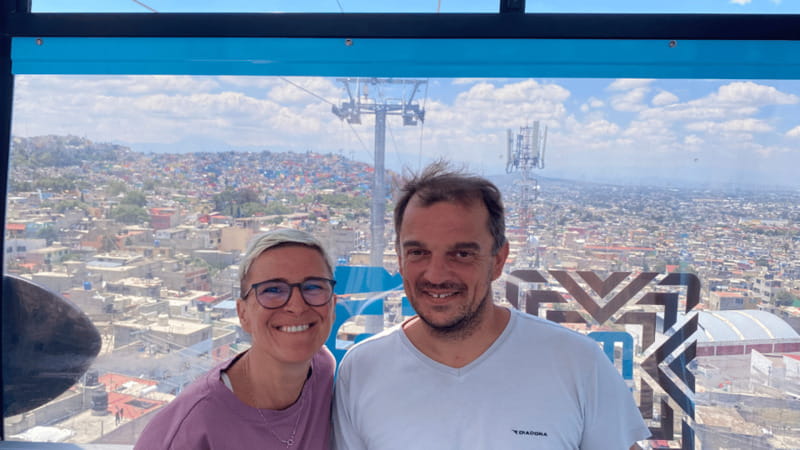
The best part of this Iztapalapa Cablebús tour is the view: you glide above rooftops, narrow streets, murals, and distant volcanoes in a part of Mexico City most visitors skip. The ride gives you a new way to read the city, not from a museum or bus window, but from the daily transport used by local residents.
In This Article
- Key points
- Why the Cablebús gives you a different Mexico City
- Meeting at Bellas Artes and learning the metro
- The Cablebús ride over rooftops and murals
- Seeing Iztapalapa from the ground
- Local food, tortillas, and the 15-peso decision
- What four hours really means
- Is $24 a good value?
- Clothing, health, and meeting-day advice
- Who should book this Iztapalapa experience?
- Should you book it?
- FAQ
- Where does the tour meet?
- How long does the activity last?
- Is transportation included?
- What languages are available?
- Is food included?
- Should I bring cash?
- Is the tour suitable for people with vertigo or motion sickness?
- Can I cancel the booking?
I like two things here. First, your guide helps you handle the huge Mexico City metro system, which can feel confusing at first. Second, the tour connects the scenery to local life, from rooftop art and neighborhood music to tortillas and market food. The main drawback is that about half of the four hours is spent getting to and from Iztapalapa by metro, so this is not a walking tour with long stops on the ground.
Key points
- A high view of Iztapalapa: Ride the Cablebús above streets, homes, mountains, and large murals.
- A useful metro lesson: Guides such as Eduardo, Benjamin, Oscar, and Gabi explain how to use Mexico City public transport.
- Art with a local purpose: Hear how the murals were made and what they mean to people commuting below.
- A neighborhood beyond the usual route: Visit a less touristy part of the city and learn how Iztapalapa has changed.
- Food is part of the story: Make tortillas and bring cash for snacks, drinks, or a 15-peso gordita.
- Small-group format: Groups are limited to nine people, with English and Spanish guiding available.
Why the Cablebús gives you a different Mexico City

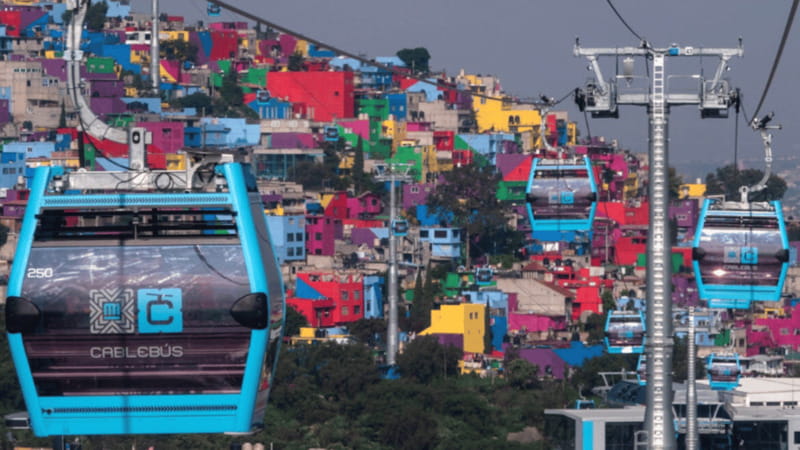
Mexico City is so large that its neighborhoods can blur together when viewed from street level. On the Cablebús, you see the city in broad strokes: blocks of colorful homes, tangled streets, public buildings, murals painted across rooftops, and mountains at the edge of the view.
The cable car is not just a sightseeing ride. It is public transport built to connect outlying communities. That makes the trip more useful than a simple look-at-the-view excursion. You get a glimpse of how the city moves, how residents travel, and how public art can change the feel of a daily commute.
The tour uses the Iztapalapa line, described as the world’s longest public transport cable car. The ride lasts about 40 minutes on the way into the neighborhood and about 25 minutes on the return, though the full timing can vary with transfers and group movement.
I especially like the way the murals work from this height. Paintings that might seem ordinary from the street become large, readable scenes from the gondola. Your guide explains their stories and cultural meaning, helping you see the art as part of the neighborhood rather than as decoration added for tourists.
If you're still narrowing it down, here are other tours in Mexico City we've reviewed.


Meeting at Bellas Artes and learning the metro
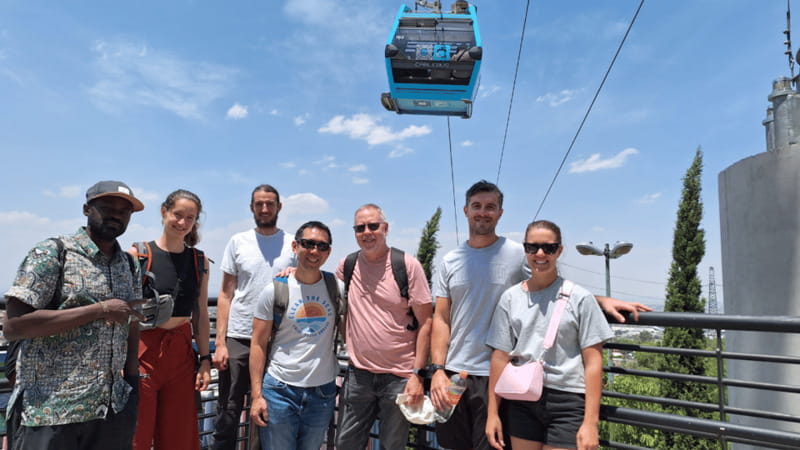
The tour begins at the Parisian entrance of the Bellas Artes subway station, on the left side of the palace. Look for a guide wearing a green shirt and carrying a green umbrella. This meeting point deserves extra care, since Bellas Artes has several entrances and the area can be busy.
One useful tip is to save the meeting instructions and keep WhatsApp available. The operator asks you to provide a WhatsApp number with the correct area code for quick contact. One person had trouble finding the guide, so arriving early and standing directly at the Parisian entrance is wise.
From Bellas Artes, you spend about 45 minutes on the metro. That may sound like a long approach, but it is part of the point. Your guide shows you how the system works, explains transfers, and helps you feel less hesitant about using it later in your trip.
Guides including Eduardo, Benjamin, Oscar, Alexia, Gabi, Tomas, and Gabriella have been praised for making the transport section clear and friendly. Benjamin, in particular, has helped first-time users gain confidence with the system. If you already use the London Underground or another large metro network, you may find the explanations longer than needed. In that case, tell your guide you are comfortable with public transport so more time can go to Iztapalapa.
The public transport card is included, along with the metro and Cablebús rides. That saves you the trouble of figuring out fares and transfers at the start of your Mexico City visit.
The Cablebús ride over rooftops and murals
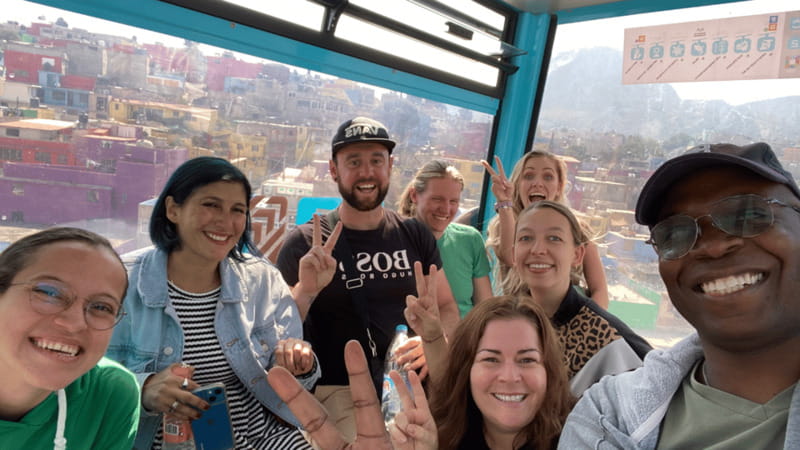
Once you reach the cable car, the tour shifts from practical transport lesson to moving viewpoint. The ride lasts roughly 40 minutes on the outbound journey, giving you time to study the city below without walking through it.
From the gondola, you see the architecture and street pattern of Iztapalapa from an angle that ground-level sightseeing cannot match. The streets form a dense web, with homes packed across the slopes and public art spread across walls and rooftops.
The views change as the car moves. At one point, your attention may settle on a mural below. A few minutes later, the city opens toward the mountains and volcanoes. The scale of Mexico City becomes clearer from above, along with the way neighborhoods stretch far beyond the historic center.
This is also the best time to ask questions. Guides explain the history of the cable car, why it was built, and how it affects people who use it every day. Alexia, Oscar, and Tomas are among the guides whose storytelling has helped connect the ride to the wider story of Mexico City.
You are not simply passing over a poor neighborhood for a quick photograph. The tour presents Iztapalapa as a place with its own history, music, art, and community life. That distinction matters. Look down respectfully, listen to the explanations, and remember that people live and work beneath the route.
The gondola ride is smooth and quiet according to the experience details shared by the operator, but you should still bring motion sickness prevention if you are prone to nausea. People with vertigo or motion sickness may not enjoy this activity.
Seeing Iztapalapa from the ground
The guided section in Iztapalapa lasts about 20 minutes, followed by a 15-minute photo stop and about 30 minutes of scenic views along the route. This is not a long walking visit, and the tour is designed for people who want to see the area without covering it on foot.
That makes the experience appealing if you have limited walking stamina or simply want a different kind of city tour. At the same time, you should not expect a full neighborhood walk, extended shopping time, or several hours inside a market.
The stop gives your guide room to explain how Iztapalapa has grown and dealt with its challenges. You hear about the community, local identity, and the way transportation has connected areas that are far from Mexico City’s central sights.
Music is part of the explanation too. Your guide may discuss cumbia, sonidero, and urban rock, rhythms tied to the social life of the area. These details help you understand Iztapalapa as more than a view from a cable car.
The photo stop is useful, but keep your expectations realistic. The main attraction is the combination of transport, art, and context. If you want a long series of formal viewpoints, this may feel brief. If you enjoy seeing how a city works, 15 minutes can be enough to make the place feel more familiar.
Local food, tortillas, and the 15-peso decision
Food adds a welcome hands-on part to the outing. You have the chance to make tortillas and learn why this simple food matters so much in Mexican daily life. The tortillas are included, so you do not need to budget extra for that activity.
The tour may also include time at a local market or food stop. Several tour descriptions refer to fresh tortillas, tacos, gorditas, fruit juice, sweets, and other local specialties. Food is not included as a full meal, however, so bring cash if you want to try more.
Gorditas cost 15 pesos, and drinks and other food are extra. I would carry small bills or coins for easier purchases. The market stop can be one of the most rewarding parts of the tour, but it is also where your final cost may rise beyond the $24 booking price.
The food lesson works because it links an everyday item to culture. You are not just eating a snack. You are learning how tortillas fit into Mexican meals and seeing how local stalls serve the surrounding community.
If you have dietary restrictions, the provided information does not specify alternatives, so ask the operator before booking. The tour does not include a formal meal, and you should not arrive expecting lunch to be covered.



What four hours really means
The full activity lasts about four hours, beginning and ending at Bellas Artes. The listed travel times add up to most of the morning or afternoon:
- About 45 minutes by metro to the Cablebús area
- About 40 minutes on the outbound cable car
- About 20 minutes of guided touring
- About 15 minutes for photographs
- About 30 minutes of scenic views and neighborhood travel
- About 25 minutes on the return cable car
- About 40 minutes by metro back to Bellas Artes
The timing shows why this tour feels more like a city orientation than a standard attraction visit. You spend substantial time in transit, but the transit is the attraction. You learn the metro, ride a major piece of public infrastructure, and watch the city change as you move away from the center.
A small group of no more than nine people helps the guide keep everyone together during transfers. It also makes it easier to ask questions. The tradeoff is that the pace depends on the group, especially in metro stations and during boarding.
Allow a little flexibility around the four-hour estimate. The guide must move the group through several stages of public transport, and a larger group can take longer to organize. The tour is not a good choice if you have a tight appointment immediately afterward.
Is $24 a good value?
At $24 per person, the price is fair for what is included. Your public transport card, metro fares, Cablebús rides, guide, educational material, and tortilla activity are covered. You are also paying for help with a transport system that can save you time and money during the rest of your stay.
The strongest value comes if you are new to Mexico City. A guide can explain the metro in real time, show you how transfers work, and give you the confidence to use it independently later. That practical lesson may be worth as much as the sightseeing.
The value is slightly weaker if you already know Mexico City’s metro well and mainly want a cable car ride. You could find the transport explanation repetitive, and some of the four hours will be spent traveling rather than exploring on foot.
There is also a small extra cost for food. Gorditas are 15 pesos, while meals and drinks are not included. Still, the basic price remains modest for a guided trip into a part of the city that many visitors never see.
Free cancellation is available up to 24 hours before the activity, and you can reserve now and pay later. Starting times vary, so check availability before planning the rest of your day.
Clothing, health, and meeting-day advice

The clothing rules are stricter than on most sightseeing outings. Wear comfortable closed shoes and discreet clothing. Avoid high heels, sandals, flip-flops, shorts, short skirts, sleeveless shirts, and bright colors. Sunglasses and hats are also discouraged.
Do not bring oversize luggage, large bags, drones, bikes, skateboards, scooters, or non-folding wheelchairs and strollers. Smoking and drinks are not allowed in the vehicle. Assistance dogs are allowed, but pets are not.
The activity is not suitable for children under five, people with vertigo, or people prone to motion sickness. The operator also lists respiratory issues, altitude sickness, and a weight limit of 220 pounds, or 100 kilograms, as concerns.
These rules may feel fussy, but they reflect the use of crowded public transport and a cable car. Keep your belongings light, bring cash, wear practical clothes, and use motion sickness prevention if needed.
Who should book this Iztapalapa experience?
I would choose this tour if you want to understand Mexico City beyond Centro Histórico, Roma, Condesa, and the usual museum circuit. It is especially useful during your first days, since learning the metro early can make the rest of your visit easier.
The tour also suits anyone interested in public transport, community art, city planning, local music, and everyday food. You get a look at how infrastructure links outlying neighborhoods and how murals can turn a commute into a moving art exhibit.
It is less suitable if you dislike public transport, feel uneasy with heights, want extensive walking time, or prefer a private vehicle. It also may not satisfy you if your main goal is a full meal or a long market visit.
The guide quality is a major part of the experience. Names frequently associated with strong tours include Eduardo, Benjamin, Oscar, Gabi, Alexia, Tomas, Gabriella, and Sam. The exact guide is not guaranteed, but the format depends on someone who can explain both the transport system and the neighborhood with care.
Should you book it?
Book this tour if you want an affordable, well-organized look at a side of Mexico City that is easy to miss. The Cablebús views, rooftop murals, metro training, and local food make it more useful than a simple sightseeing ride.
Skip it if four hours of public transport sounds tiring, or if you need a fully accessible activity with fewer restrictions. For everyone else, this is a smart choice for seeing Iztapalapa respectfully and gaining the confidence to use Mexico City’s transport on your own.
FAQ
Where does the tour meet?
Meet at the Parisian entrance of the Bellas Artes subway station, on the left side of the Palacio de Bellas Artes. Guides wear a green shirt and carry a green umbrella.
How long does the activity last?
The tour lasts about four hours, including the metro journeys from Bellas Artes, the Cablebús rides, the guided visit, photo stop, and scenic views.
Is transportation included?
Yes. The experience includes a public transport card, metro rides, and Cablebús rides.
What languages are available?
The live tour guide is available in English and Spanish. Some content may be presented in its original language.
Is food included?
Tortillas are included, along with the tortilla-making activity. Meals and drinks are not included. Gorditas cost 15 pesos, and other market food is extra.
Should I bring cash?
Yes. Cash is recommended for gorditas, snacks, drinks, and typical local food.
Is the tour suitable for people with vertigo or motion sickness?
No. The activity is not suitable for people with vertigo, motion sickness, or a strong tendency toward seasickness. Motion sickness prevention is recommended.
Can I cancel the booking?
Yes. You can cancel up to 24 hours in advance for a full refund. You can also reserve now and pay later.
More tours in Mexico City we've reviewed







Tours, compared.
 ★ 5.0Teotihuacan, Guadalupe Shrine & Tlatelolco Day Tour with LunchFrom $399 hours (approx.)
 ★ 4.5Teotihuacan Early Access Guided Tour with optional LunchFrom $398 hours (approx.)
 ★ 4.6Mexico City: Teotihuacan, Tlatelolco & Guadalupe Shrine TourFrom $49
 ★ 4.4CDMX: Xochimilco, Coyoacan, Frida Kahlo Museum & Murals TourFrom $89
 ★ 5.0Hot Air Balloon Flight with Breakfast Cave and Pyramids TourFrom $1408 hours (approx.)
 ★ 5.0Teotihuacan Private Tour from Mexico CityFrom $1401 to 5 hours (approx.)
 ★ 5.0Balloon flight with breakfast in Cave and Pyramids tour from CDMXFrom $1483 to 9 hours (approx.)
 ★ 4.5Chapultepec Castle & Anthropology Museum TourFrom $795 hours (approx.)