
Reviewed · MEXICO CITY
Learn to Cook Mexican Salsas
Mexico City has plenty of food tours, but this one puts you to work. You meet at the old San Gabriel Arcangel Church in Tacuba, shop for ingredients at the nearby market, then walk five minutes to a host’s home to prepare four salsas in four different ways: raw, fried, boiled, and roasted. The class includes quesadillas, totopos, hibiscus agua fresca, and a jar of salsa to take home.
In This Article
- Key points to know before booking
- Why this salsa class feels different
- Starting at San Gabriel Arcangel Church in Tacuba
- Shopping for ingredients at Tacuba Market
- Four salsas, four ways to cook
- Quesadillas, totopos, and jamaica water
- Meeting the different hosts
- What you take home
- Practical details that affect your decision
- Who will enjoy this most
- Should you book Learn to Cook Mexican Salsas?
- FAQ
- Where does the salsa cooking experience begin?
- Where does the activity end?
- How long does the experience last?
- How much does it cost?
- What kinds of salsa will I prepare?
- Is food included?
- Is a vegan option available?
- Is the activity private?
- Is the class offered in English?
- Can I cancel for a refund?
I like the market stop, where you learn how to choose the produce rather than simply seeing it on a plate. I also like the practical range of the class: you leave with recipe cards and four methods you can repeat in your own kitchen.
The main consideration is the setting. This is a small, private home-based activity, not a polished restaurant school, and the meeting point is in Tacuba rather than in the central tourist districts. If you want a formal culinary studio or a full meal with many courses, this may feel modest.
Key points to know before booking
- Four cooking methods: Prepare raw, fried, boiled, and roasted salsas, each with its own flavor and chile level.
- Tacuba Market first: Choose fresh produce, spices, and other ingredients with your host before cooking.
- Five-minute walk to the kitchen: After shopping, you go to the host’s home and begin the hands-on class.
- Food and drinks included: Enjoy totopos, salsa, quesadillas, vegan fillings, and unlimited jamaica water.
- Something useful to take home: You receive a jar of salsa and recipe cards for all four preparations.
- Private group format: Only your group participates, with English offered and other languages possible by arrangement.
Why this salsa class feels different
Salsa is often treated as a side dish, but in Mexico it can set the character of an entire meal. The difference between a raw green salsa, a roasted chile salsa, and a cooked tomato version is not a small detail. It changes the heat, texture, aroma, and the way the salsa works with tortillas, beans, meat, or vegetables.
That makes this a useful class for anyone who wants more than a quick tasting. You are not just handed four sauces. You compare four traditional ways of preparing them and see how heat and flavor develop through cooking.
The experience costs $96 per person and lasts about two and a half hours. That is not the cheapest way to eat in Mexico City, but the price includes the market visit, instruction, cooking equipment, snacks, drinks, quesadillas, recipe cards, and salsa to take home. Since the activity is private, the cost also buys a more personal format than a large shared class.
I would think of the price as a combination of a food walk, a cooking lesson, and a generous meal-sized snack. It offers better value if you plan to cook the recipes later. If you only want to eat salsa and move on, you can find a less expensive meal elsewhere.
If you're still narrowing it down, here are other tours in Mexico City we've reviewed.


Starting at San Gabriel Arcangel Church in Tacuba
The meeting point is Parroquia San Gabriel Arcangel, on Calzada México-Tacuba in Tacuba. You meet outside an old church whose history reaches back before the Spanish arrived in the Americas. That setting gives the first few minutes some useful context, since this is not a class dropped into an anonymous commercial kitchen.
From the church, the nearby Tacuba Market becomes the real starting point. You are close to public transportation, but private transportation is not included, so you need to make your own way to the meeting point.
Tacuba is outside the part of Mexico City most first-time visitors see. That is part of the appeal, but it also means you should allow enough time to arrive without rushing. The activity ends back at the meeting point, so you can plan your next stop from there.
Shopping for ingredients at Tacuba Market
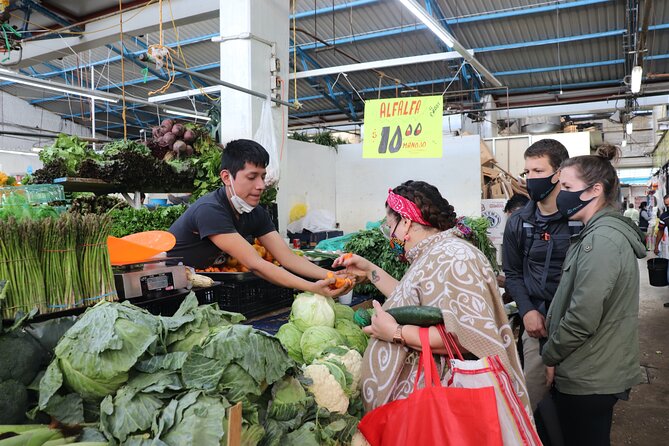
The market visit is one of the best reasons to choose this experience. Instead of arriving at a kitchen where every ingredient has already been measured, you help select what goes into the recipes.
Your host explains how to pick the produce and points out local fruits, vegetables, chiles, and spices. The market can also introduce you to ingredients you may have seen on menus without knowing how they are used. One person specifically enjoyed finding fresh mole to take home, though that is an optional market purchase rather than part of the class.
This stop also supports local commerce. Your spending is connected to the market and its vendors, not only to the cooking activity itself. That matters if you want your food experience to include the everyday buying and selling that supports local households.
The market is a working neighborhood market, not simply a display arranged for visitors. You may find it more crowded, noisy, or informal than a purpose-built food hall. That is a fair trade for seeing where the ingredients come from and learning how local shopping works.
Four salsas, four ways to cook
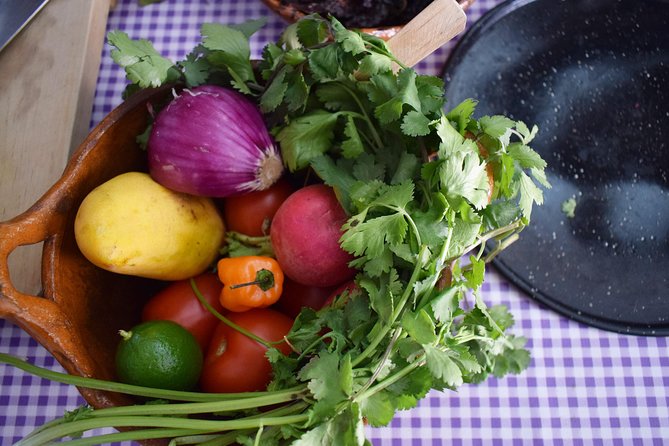
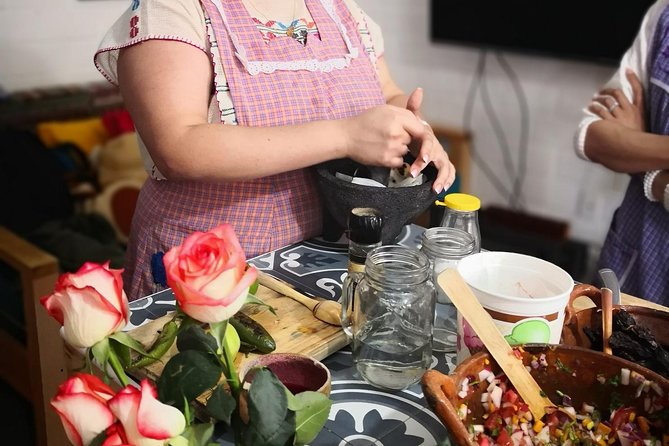
After shopping, you walk about five minutes to the host’s home. The kitchen is set up with the necessary cooking equipment, cutting boards, and ingredients, and the class gets moving without a long demonstration before you participate.
The four methods are the heart of the lesson:
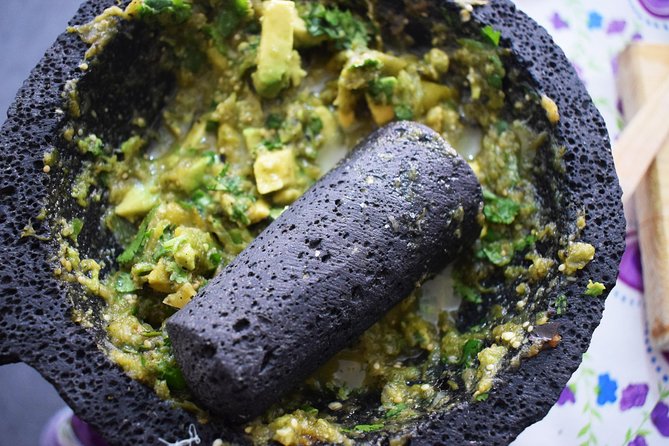
- Raw salsa: Fresh ingredients retain their crisp taste and direct chile heat.
- Fried salsa: Cooking in fat changes the aroma and gives the salsa a fuller character.
- Boiled salsa: Heat softens the ingredients and produces a different texture.
- Roasted salsa: Roasting adds a smoky, deeper flavor.
The exact recipes and chile choices can vary, but the point is to see how preparation changes the finished result. You taste the salsas along the way, which helps you understand why one method may suit a particular ingredient better than another.
Spice tolerance is handled with some flexibility. The class includes different chile and heat levels, and the host can accommodate varying comfort with spicy food. Still, you should tell the instructor about your preferences early, especially if your group includes children or anyone who rarely eats chiles.
The activity has worked well for family groups, couples, and friends. A group of 11, including seven children, took part and enjoyed learning about the food at the market and cooking together. That suggests the class can handle a mixed-age group, although young children will still need normal supervision around knives and hot cooking surfaces.
Quesadillas, totopos, and jamaica water
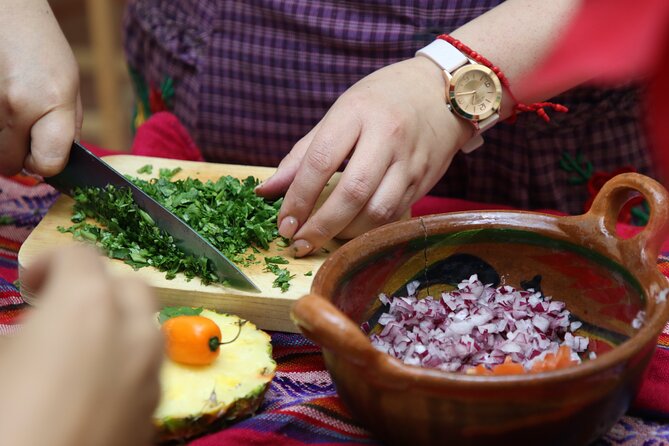
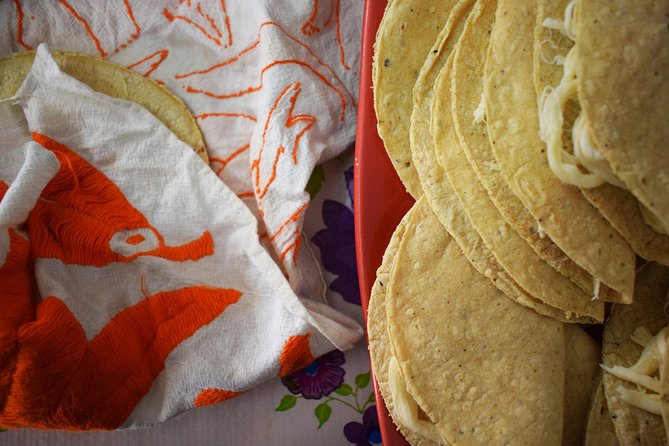
You do not simply make salsa and leave hungry. Totopos, or fried corn tortilla pieces, are served with the salsas as you prepare them. This turns the lesson into a series of small tastings rather than one final reveal.
The main food is a quesadilla made with a hot tortilla and melted Oaxaca cheese. Vegan options are available, using beans or nopales instead of cheese. The menu is simple, but it makes sense: quesadillas and tortillas give you a neutral base for comparing the sauces.
Unlimited jamaica water is included. This traditional agua fresca is made with hibiscus flower, ice, and a little sugar. Its tart, refreshing flavor is a useful counterpoint to chile heat.
Do not book this expecting a long restaurant-style lunch. The food is substantial enough for many people, and one group planned to eat dinner afterward but found no need to do so. Still, the experience is built around learning and shared tasting, not a formal multi-course meal.





Meeting the different hosts
The class has been led by several hosts, including Luis, Jazz, Veronica, Yazmin, Natalia, and Quesse. The tone can therefore vary depending on the date and instructor, but the consistent pattern is personal, energetic teaching combined with time at the market.
Jazz is described as lively, kind, and comfortable teaching in English. Veronica’s strengths include explaining how to select ingredients and how to eat the finished food in a local way. Yazmin has also taught the class in a warm, welcoming style, and one French-speaking group received the full lesson in French.
Natalia has hosted families and mixed groups, with a patient approach to different spice levels and cooking skills. Quesse has added music, photos, and a playful sense of humor to the experience. These details matter because the host is a major part of a small home-based activity.
The language information deserves a quick note. English is offered, but the experience may be held in more than one language at the same time. If you need a particular language or want a specific date and time, contact the provider to arrange it rather than assuming every session will be English-only.
What you take home
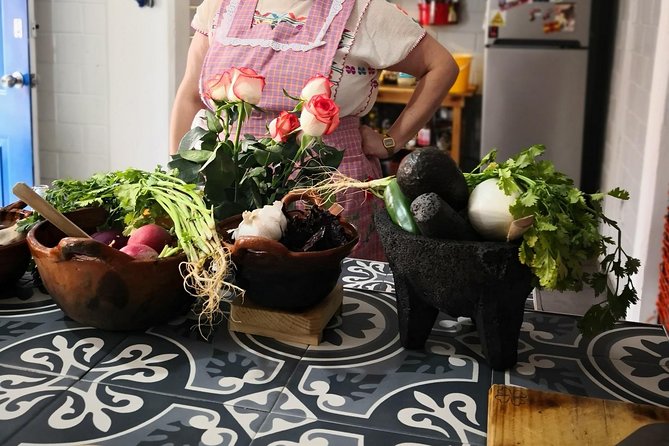
The most useful souvenir is not a trinket. You leave with a jar of salsa and recipe cards, giving you a clear way to repeat the class at home.
That makes the experience a good choice for cooks, but you do not need advanced kitchen skills. The lesson is hands-on and designed to show how approachable salsa can be. You cut, cook, taste, adjust, and learn how the four methods differ.
The recipes also give you a better chance of remembering what you learned. Without written instructions, it is easy to return home with only a general memory of a delicious meal. With recipe cards, you can make the salsas for friends and compare how your own ingredients affect the result.
Since the ingredients are bought fresh at the market, the class also gives you a better sense of substitution. You may not find exactly the same produce at home, but you understand the role of the chile, tomato, herb, or vegetable well enough to experiment.
Practical details that affect your decision
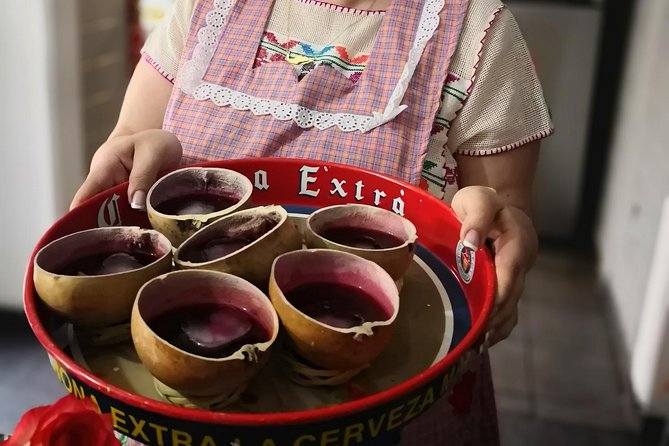
The activity takes about two hours and 30 minutes. That is long enough for the market visit, four salsa preparations, tastings, quesadillas, and drinks, but short enough to fit into a busy Mexico City schedule.
It is a private activity, so only your group participates. That is especially useful for families, friends, or couples who want to ask questions without keeping pace with strangers. It also makes the home setting feel more natural than a large demonstration class.
The meeting point is near public transportation. Private transportation is not included, and the activity begins and ends at the church. Plan your route to Tacuba in advance and allow time for Mexico City traffic.
Service animals are allowed. Vegan food is available with beans or nopales. Confirmation is normally received when you book, but bookings made within one hour of the start time are subject to availability and may be confirmed later.
You can cancel for a full refund up to 24 hours before the start time. Changes or cancellations made within 24 hours are not accepted for a refund. The activity requires good weather and a minimum number of participants, so if the provider cancels for either reason, you are offered another date, another experience, or a full refund.
Who will enjoy this most
I would recommend this to you if you like meeting local hosts, visiting ordinary markets, and learning something you can use after vacation. It suits couples, families, and friend groups, especially when everyone is willing to chop, taste, and share the work.
It is also a smart choice for repeat visitors to Mexico City. You may already have seen the major museums and historic areas, and a half-day in Tacuba gives you a different view of the city through shopping and food.
Families should appreciate the short format and the chance for children to try ingredients in a guided setting. The activity has welcomed groups with teenagers and younger children, but it is still a cooking class, not a child-care program.
You may want to skip it if you dislike spicy food, avoid all cooking, or prefer a polished professional kitchen. The class can adjust heat levels, but salsa remains the focus. You should also be comfortable entering a host’s home and spending time in a neighborhood outside the main sightseeing circuit.
Should you book Learn to Cook Mexican Salsas?
I would book this experience if you want a personal food activity with a clear takeaway. The market visit, four cooking methods, quesadillas, and recipe cards give the class more substance than a basic tasting.
The strongest reason to choose it is the combination of local shopping and useful instruction. You see the ingredients in their everyday setting, then learn how preparation changes their flavor. The jar of salsa and recipes extend the experience after you leave Mexico City.
At $96, it is best value for people who will take part fully and use the recipes later. Book at least 24 hours ahead if your plans are firm, and contact the provider if you need a different time or language. For an easy, friendly introduction to Mexican home cooking, this is a well-focused choice.
FAQ
Where does the salsa cooking experience begin?
It begins at Parroquia San Gabriel Arcangel, located at Calz México-Tacuba S/N in Tacuba, Miguel Hidalgo, Mexico City.
Where does the activity end?
The activity ends back at the meeting point at the church.
How long does the experience last?
It lasts approximately two hours and 30 minutes.
How much does it cost?
The listed price is $96 per person.
What kinds of salsa will I prepare?
You will prepare four types using raw, fried, boiled, and roasted methods.
Is food included?
Yes. The included food consists of salsas, totopos, quesadillas, and agua fresca.
Is a vegan option available?
Yes. The vegan quesadilla option can use beans or nopales.
Is the activity private?
Yes. Only your group participates in the private activity.
Is the class offered in English?
English is offered. The experience may also be held in more than one language at the same time, and different language arrangements may be possible.
Can I cancel for a refund?
You can receive a full refund if you cancel at least 24 hours before the experience start time. Cancellations or changes made within 24 hours are not refunded.
More tours in Mexico City we've reviewed








Mexico City, compared.
 ★ 5.0Teotihuacan, Guadalupe Shrine & Tlatelolco Day Tour with LunchFrom $399 hours (approx.)
 ★ 4.5Xochimilco, Coyoacan and Frida Kahlo with Optional LunchFrom $349 hours (approx.)
 ★ 5.0Balloon flight + Breakfast in cave + Pyramids + Pick up CDMX.From $1722 to 8 hours (approx.)
 ★ 5.0Teotihuacan pyramids morning or afternoon without tourist trapsFrom $645 hours 30 minutes (approx.)
 ★ 4.5Teotihuacan Early Access Guided Tour with optional LunchFrom $398 hours (approx.)
 ★ 5.0Balloon flight + pick up in CDMX + Breakfast in Cave + PyramidsFrom $1694 to 7 hours (approx.)
 ★ 5.0Balloon Flight + Cave Breakfast + Pick Up from CDMX or We FlyFrom $1663 to 9 hours (approx.)
 ★ 4.6Mexico City: Teotihuacan, Tlatelolco & Guadalupe Shrine TourFrom $49