
Reviewed · WALKING TOURS
Mexico City: Historical walking tour of Tenochtitlan
Mexico City’s historic center makes the most sense when you see its layers together: the Aztec capital beneath your feet, Spanish churches built over earlier foundations, grand colonial houses, and modern Mexican art. This three-hour walk with Prof. Cristina Ríos follows that story from Tenochtitlan to the 20th century, using the streets and buildings as one long lesson.
In This Article
- Key points to know before booking
- A history walk that begins beneath modern Mexico City
- Starting at Templo Mayor and the Centro Cultural España
- Behind the Cathedral: Calmecac and the city’s buried layers
- The Cathedral and the former Azayacatl Palace
- Iturbide Palace and the Church of San Francisco
- Casa de los Azulejos and Orozco’s mural
- A final pass by Palacio de Bellas Artes
- What the guide adds to the experience
- Pace, comfort, and practical planning
- Is $43 a fair price?
- Who should book this walk?
- Should you book the Tenochtitlan walking tour?
- FAQ
- Where does the tour meet?
- Does the tour enter the Templo Mayor Museum?
- How long does the walking tour last?
- Which languages are available?
- Is food included?
- Is the tour suitable for children?
I like the tour’s small groups of three to 10 people, which make it easier to ask questions and adjust the pace. I also like that Cristina focuses on architecture, art, customs, and political history rather than giving you only a quick list of dates. The main consideration is that this is a serious, information-filled tour, with only outside views of Templo Mayor and the Metropolitan Cathedral rather than full museum visits.
Key points to know before booking
- Seven centuries in three hours: The route connects Tenochtitlan, Spanish rule, Mexican independence, and modern Mexico City.
- Prof. Cristina Ríos leads the walk: Her background as a PhD and her focus on history, art, and architecture shape the experience.
- Templo Mayor is viewed from outside: You see models and the archaeological zone, but museum admission is not included.
- The route includes overlooked details: Calmecac remains, Cortés’s former lodgings, the tomb of Cortés on some outings, and a mural inside the Casa de los Azulejos.
- It ends at Palacio de Bellas Artes: That gives you a useful place to continue exploring after the tour.
- Bring sun protection and good shoes: The walk lasts three hours, and food, drinks, tickets, and hotel transfers are not included.
A history walk that begins beneath modern Mexico City
The most useful thing about this experience is its connecting thread. You are not simply moving from one monument to another. Cristina explains how the Aztec capital, the Spanish colonial city, and the Mexican republic occupy the same central streets.
That matters in Mexico City. A church facade may carry traces of an older religious order. A colonial palace may now house a cultural center. A mural inside a famous tile-covered building can open a conversation about Mexican identity and modern art. With a strong guide, the center becomes easier to read.
Cristina’s style is detailed and academic, but the available feedback also points to warmth and patience. She answers questions carefully, gives suggestions for places to see afterward, and can adapt the route when the group is very small. One person even received an unscheduled look at Cortés’s tomb, showing how the tour can sometimes move beyond its basic route.
Still, this is not the best choice if you want a light stroll with only a few stories. One rating described it as a traditional tour with many facts, best suited to adults who already have some interest in architecture. That is fair. You will get more from it if you enjoy chronology, buildings, art, and the complicated meeting of Indigenous and European cultures.
Other walking tours we've reviewed in Mexico City



Starting at Templo Mayor and the Centro Cultural España
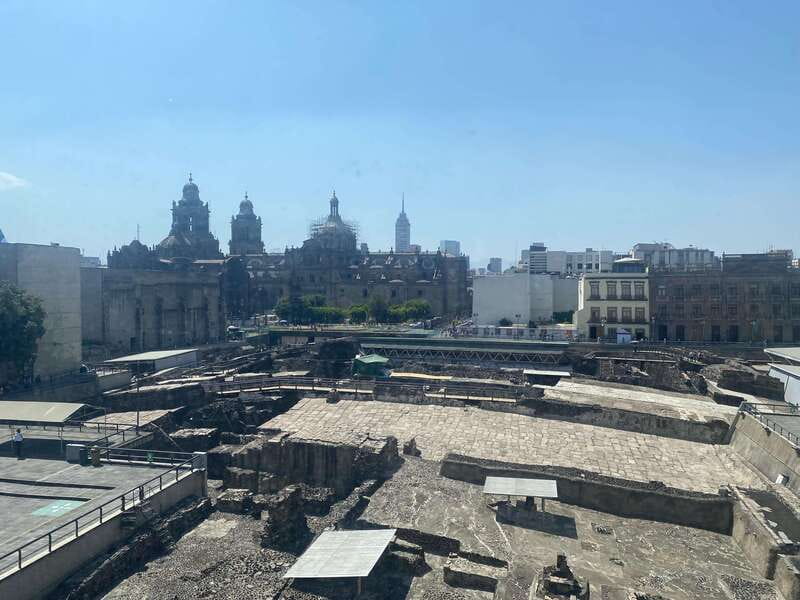
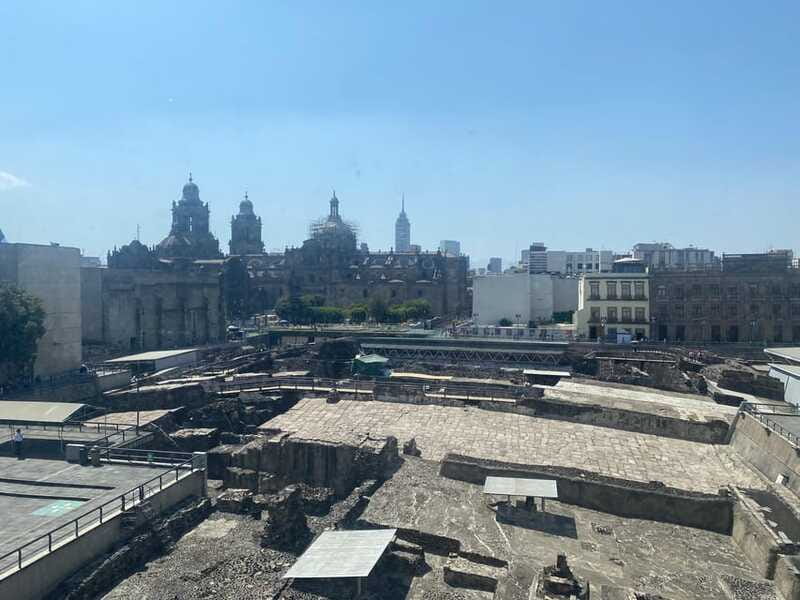
The meeting point is the entrance to the Centro Cultural España at Guatemala #18. The walk begins with models and an outside view of the Templo Mayor archaeological area. You do not enter the Templo Mayor Museum or the excavation zone as part of this tour, so plan a separate visit if you want to see the artifacts and ruins at close range.
Even from outside, this is the right place to begin. Templo Mayor was at the center of Tenochtitlan, the Mexica capital that occupied the site before the Spanish conquest. Cristina uses the models and the visible ruins to explain the city’s layout and the way Mexico City grew over it.
The opening stop lasts about 40 minutes. That is a substantial amount of time for an exterior introduction, and it sets the tone for the rest of the morning. You are encouraged to understand the city before simply admiring it.
If you want to visit the museum afterward, leave extra time in your schedule. A useful plan is to take this walking tour first, then return to Templo Mayor independently when you can concentrate on the displays.
Behind the Cathedral: Calmecac and the city’s buried layers
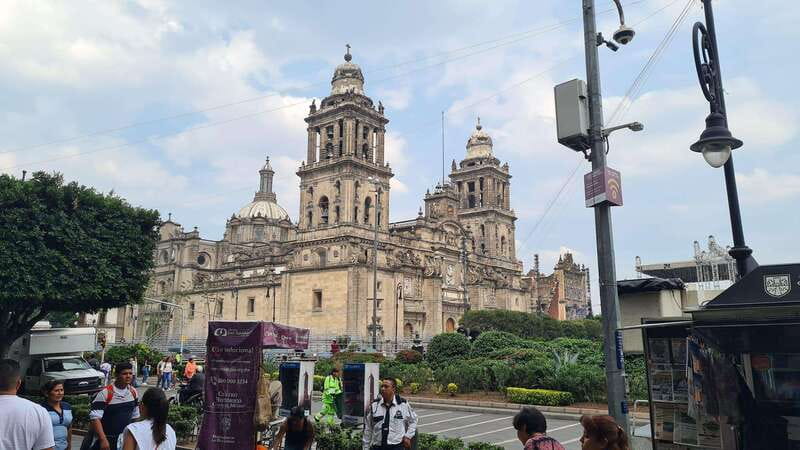
The route then moves behind the Metropolitan Cathedral to an area associated with the Calmecac, an Aztec school for the children of the nobility. The site is now connected with the Centro Cultural España and its site museum.
This stop is one of the tour’s most appealing details because it shows how much history can hide behind the grand facades of the main square. The Cathedral draws the eye, but the structures behind it help explain the earlier city and the way colonial construction reused and covered older spaces.
The planned explanation here takes about 20 minutes. Cristina’s strength is especially useful at places like this, where the remains are less immediately obvious than a major monument. You will need to listen and look closely rather than expect a large, open archaeological site.
That is also the tradeoff. If you prefer dramatic ruins and long museum visits, this portion may feel brief. If you like finding significance in overlooked corners, it adds a good layer to the walk.
The Cathedral and the former Azayacatl Palace
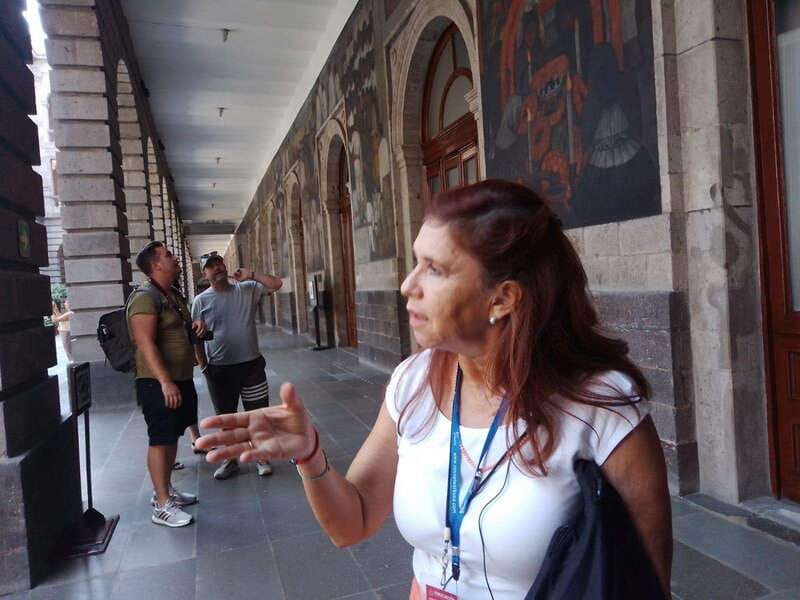
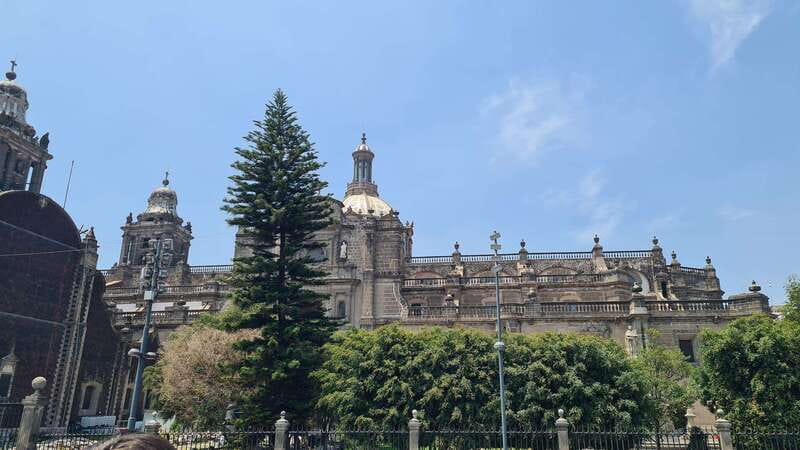
The Metropolitan Cathedral receives another 20-minute explanation. The tour focuses on its setting and historical role rather than a lengthy interior visit. From here, Cristina links the Spanish colonial center with the earlier Aztec capital and explains the buildings that shaped Mexico City after the conquest.
Next comes the area of the old Axayacatl Palace, also associated with the former houses of Moctezuma and Cortés’s lodgings. This is an important point in the story because it brings the conquest out of the realm of abstract dates. The buildings and street plan help you think about how Spanish power was established directly on the foundations of Tenochtitlan.
Some outings have included an extra look at the tomb of Hernán Cortés. Treat that as a possible bonus, not a guaranteed part of the advertised route. Cristina’s familiarity with the center may allow for such additions when time, access, and group interests permit.
Iturbide Palace and the Church of San Francisco
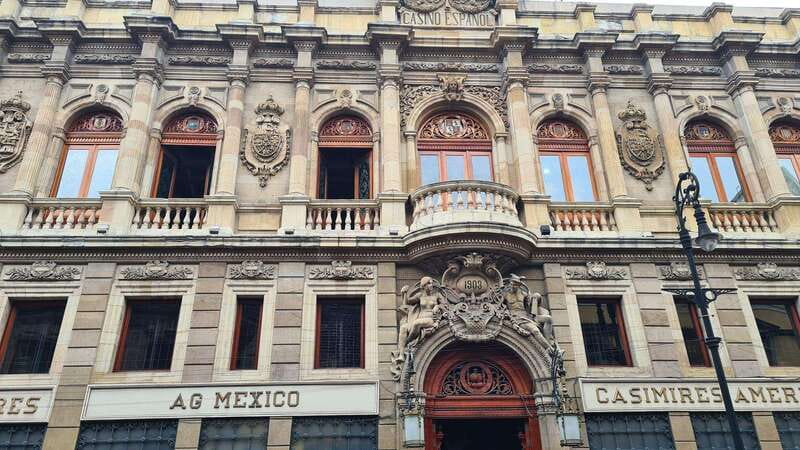
The Iturbide Palace, now the Banamex Cultural Center, provides a change of mood. The building represents the wealth and style of colonial Mexico, and Cristina uses it to explain architecture as well as the people connected with the building.
You spend roughly 20 minutes here. The value is not just in seeing an elegant facade. It is in learning how commercial power, elite households, and colonial design shaped the center. The building also helps break up the focus on conquest and religious monuments.
The Church of San Francisco follows, with about 20 minutes devoted to its facade. Since this is an exterior stop, it is worth being clear about expectations. You will study the front of the church and its place in the city, but this is not a full church interior tour.
I like the way these two stops broaden the story. Tenochtitlan and conquest are the starting points, but Mexico City’s character also grew from religious institutions, wealthy families, trade, and public architecture. The walk gives each part a place without trying to turn every building into a separate museum visit.
Other city tours we've reviewed in Mexico City





Casa de los Azulejos and Orozco’s mural
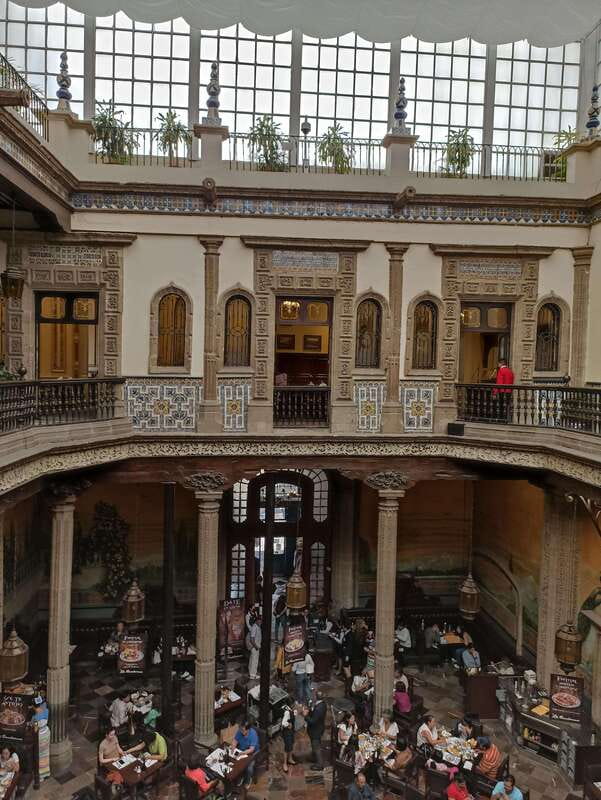
The Casa de los Azulejos, or House of Tiles, is one of the route’s most memorable visual stops. Its blue-and-white tiled exterior is easy to admire, but the tour goes further by entering the building to see a José Clemente Orozco mural.
The explanation here lasts about 30 minutes. That extra time matters because the mural deserves more than a quick photograph. Cristina discusses its meaning and artistic setting, while also connecting it to the wider story of Mexican art and public culture.
This is where the tour’s art focus becomes especially clear. You are not only learning about ancient and colonial Mexico. You are also seeing how artists in modern Mexico looked back at the country’s past and argued about its identity.
The Casa de los Azulejos is also a practical stop because you get an interior view after several outside explanations. If architecture and murals are high on your list, this may be one of the strongest parts of the morning.
A final pass by Palacio de Bellas Artes
The route finishes at the Palacio de Bellas Artes after a pass-by explanation of about 30 minutes. The building is one of Mexico City’s best-known cultural landmarks, and ending here gives the tour a clear final chapter.
You should not expect a full visit to the palace or its murals as part of the walk. The stop is designed to explain the building from the outside and place it within the city’s artistic development. That distinction matters because admission is not included, and the schedule does not provide a full independent exploration.
The finish is useful. Bellas Artes is a natural place to continue your day, and several people who took the walk used Cristina’s suggestions to plan further visits. If you want to see the palace’s interior collections or murals, schedule that separately rather than trying to squeeze it into the three-hour route.
What the guide adds to the experience
A route through central Mexico City is easy to do on your own, but it is not always easy to understand. The main benefit here is Cristina’s ability to put the stops into a clear sequence.
She covers Aztec society, Spanish colonization, early Mexican independence, architecture, art, and local customs. Her English has been described as clear, and the tour is available in English or Spanish. If the group has more than seven people, headsets are provided, which helps in noisy parts of the center.
The small group limit also matters. With three to 10 participants, you have a better chance to stop for questions instead of standing at the back of a large crowd. When only one small group has booked, Cristina may tailor the route or add a point of interest.
This is a guide-led experience in the fullest sense. You should not expect a self-guided stroll with a few prepared remarks. Cristina’s strongest qualities are her command of detail, her passion for the subject, and her willingness to explain why a site matters.
Pace, comfort, and practical planning
The tour lasts three hours and takes place in the morning. Wear comfortable shoes and bring a hat, sunglasses, and sunscreen. The supplied information confirms wheelchair accessibility, but you should still ask the provider about the exact route and current access conditions if that is important for your plans.
Food and drinks are not included. An optional stop at Dulcería Celaya, a famous traditional sweet shop, may add a pleasant taste of old Mexico City. Bring money if you want to buy sweets, and do not treat this as a meal stop.
The tour does not include hotel pickup or drop-off. You need to reach the Centro Cultural España at Guatemala #18 on your own and arrange your own return from Palacio de Bellas Artes.
Children under 10 are not permitted. That fits the tone of the activity, which is aimed at people ready to listen to detailed explanations for much of the morning.
I would book it early in a Mexico City stay. The walk gives you a useful map of the historic center and helps you decide which museums, churches, and cultural sites deserve more of your time later. It also makes a strong first-day activity for an adult interested in history, architecture, or art, though you should allow time afterward for the Templo Mayor Museum and Bellas Artes.
Is $43 a fair price?
At $43 per person, this is not the cheapest way to walk around Centro Histórico. You are paying for a specialized guide, a small group, detailed explanations, and audio equipment when the group is larger than seven.
The value depends on how you like to travel. If you would happily read a guidebook plaque by plaque, the price may feel high, especially since museum tickets and food are extra. If you want a historian to connect scattered buildings into one understandable story, the cost is more reasonable.
The tour also saves you from having to research the route in advance. Templo Mayor, the Cathedral, Iturbide Palace, San Francisco, Casa de los Azulejos, and Bellas Artes are all major stops, but the smaller sites and architectural details are easy to miss without guidance.
The strong rating of 4.9 from 69 bookings supports the view that the tour delivers what it promises, especially for people who want depth. One four-star assessment still offers a useful warning: the experience is fact-heavy and aimed more at adults than casual sightseers.
Who should book this walk?
I would choose this tour if you want to:
- Understand the connection between Tenochtitlan and modern Mexico City
- Learn about architecture as well as political history
- Ask detailed questions in a small group
- See places you might otherwise pass without noticing
- Get suggestions for museums and sites to visit afterward
- Tour in English or Spanish with a specialist guide
I would think twice if you want:
- Full entry to Templo Mayor or Palacio de Bellas Artes
- A relaxed stroll with very little historical detail
- A food-focused experience
- A tour designed for young children
- Hotel transportation
Free cancellation is available up to 24 hours before the activity, and you can reserve now and pay later. Those policies are useful if your Mexico City plans are still shifting, but the main booking decision should be about style: this is a focused history walk, not a general orientation tour.
Should you book the Tenochtitlan walking tour?
Book it if you want Mexico City’s center explained by someone who can move from Aztec history to colonial architecture, Mexican independence, and modern art without losing the thread. Prof. Cristina Ríos is the main reason to choose this experience, especially if you value careful answers, local detail, and a guide who may adjust the route for a small group.
Skip it if you mainly want interior access, museum time, or a short introduction with few facts. For the right audience, $43 buys more than a sightseeing route. It gives you a way to read the city, and that understanding will improve every visit you make afterward.
FAQ
Where does the tour meet?
Meet at the entrance of the Centro Cultural España at Guatemala #18. The walk begins with models and an outside view of the Templo Mayor archaeological area.
Does the tour enter the Templo Mayor Museum?
No. The museum and archaeological zone are viewed from outside during the tour. Museum tickets are not included.
How long does the walking tour last?
The experience lasts three hours and takes place in the morning. Availability depends on the selected starting time.
Which languages are available?
The live guide is available in English and Spanish. Headsets are supplied when the group has more than seven participants.
Is food included?
No. Food and drinks are not included. An optional stop at Dulcería Celaya may allow you to try or purchase traditional Mexican sweets.
Is the tour suitable for children?
The tour is not suitable for children under 10. It is designed for a small group and includes detailed explanations about history, architecture, art, and culture.
More Historical Tours in Mexico City

More City Tours in Mexico City
More Walking Tours in Mexico City
More tours in Mexico City we've reviewed





Walking Tours, compared.
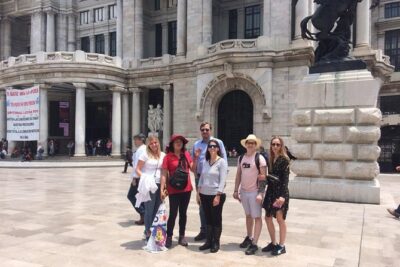 ★ 5.0Historic Downtown Walking TourFrom $263 hours (approx.)
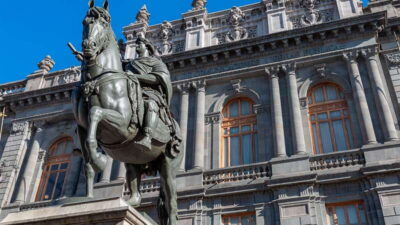 ★ 4.8Mexico City: Historic Downtown Walking TourFrom $263 hours
 ★ 5.0Frida Kahlo VIP [Museum Tickets Included] Walk, Markets & ChurrosFrom $833 to 4 hours (approx.)
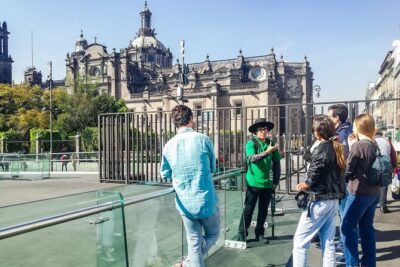 ★ 5.0Walking Tour of the Historic Center of Mexico City3 hours (approx.)
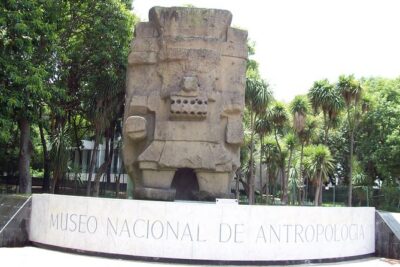 ★ 5.0Anthropology Museum Private Experience Walking TourFrom $783 hours (approx.)
 ★ 5.0Walking Tour in Mexico City for Exploring their Cultural HeritageFrom $252 to 3 hours (approx.)
 ★ 5.0Walking Tour – Impressive murals in Historical Center of Mexico CityFrom $511 to 3 hours (approx.)
 ★ 5.0Muralist Art Semi Private Walking Tour in Mexico City DowntownFrom $583 hours 30 minutes (approx.)
The lists this tour appears in