
Reviewed · BIKE TOURS
Mexico City: 19 City Highlights Bicycle Tour
Mexico City is enormous, and this bicycle tour gives you a useful first look without trapping you in a van. In three to four hours, you pedal from Roma and Chapultepec to the Zócalo, Bellas Artes, the Monument to the Revolution, and back toward Roma Norte. On Sundays, closed-to-car streets can make the ride especially pleasant.
In This Article
- Key things to know before you pedal off
- Why this bicycle route works so well on a first day
- Parque México begins the tour in Roma
- Chapultepec brings together monuments, trees, and royal views
- Reforma supplies the grand avenue and famous symbols
- The Historic Center packs in the biggest sights
- The Monument to the Revolution closes the sightseeing loop
- Yibran and Daniela add useful human touches
- Is $71.53 a fair price?
- Who will enjoy this ride most?
- Booking, timing, and cancellation details
- My verdict: book it early in your Mexico City stay
- FAQ
- How long does the Mexico City bicycle tour last?
- How much does the tour cost?
- Where does the tour begin?
- Where does the tour end?
- What language is offered?
- How many people can join the tour?
- Is the tour suitable for beginners?
- Does the tour enter Chapultepec Castle?
- Does the tour include visits inside the Anthropology Museum and Templo Mayor?
- Is Sunday a good day to take the tour?
- Can I cancel for a full refund?
- What happens if bad weather cancels the tour?
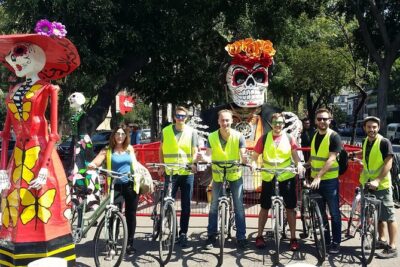
I like the small maximum of 10 people, which keeps the group easy to manage, and I like the husband-and-wife team of Yibran and Daniela. They divide the work well, with one guide leading and the other helping from behind. The photos and short video sent after the ride are a thoughtful bonus.
The main caution is length. The riding is generally described as manageable, but you are on a bicycle for several hours, and the route may cover more than 10 miles. Bring water, eat beforehand, and remember that the castle, museums, and archaeological sites are viewed from outside rather than toured inside.
Key things to know before you pedal off
- Sunday is often the best day: Main roads may close to cars, creating a more relaxed setting filled with people cycling, running, and skating.
- You cover a remarkable amount of ground: The route links Roma, Chapultepec, Reforma, the Historic Center, the Monument to the Revolution, and Roma Norte.
- Yibran and Daniela handle safety together: One guide leads while the other follows, watches the group, and helps manage traffic.
- The tour is an orientation, not a museum visit: You see Chapultepec Castle, the Anthropology Museum, Templo Mayor, and other major sites, but admission and indoor guiding are not included.
- Photos and a video may follow: The guides take pictures during the ride and send tour images afterward.
- Plan for a long morning on the bike: The physical demand is moderate, but the total time can feel tiring if you are not used to extended cycling.
Why this bicycle route works so well on a first day
I often prefer a bike tour early in a Mexico City stay because the city’s districts make more sense once you have traveled between them. The route does not confine you to one plaza or neighborhood. Instead, it connects the polished stretch of Paseo de la Reforma, the broad green space of Chapultepec, the old center, and the café-lined streets around Roma.
That variety is the main value. You see where the major sights sit in relation to one another, then you can decide what deserves a longer return visit. It is a quick way to get your bearings fast.
The tour begins at Jalapa 272 in Roma Sur and ends at Coahuila and Calle Orizaba in Roma Norte. That start and finish are useful because the ride itself connects two central neighborhoods rather than simply returning you to the starting point. Check the exact meeting instructions before leaving, since the start and end are different addresses.
The group is limited to 10 people. That matters in Mexico City traffic. A compact group is easier to keep together at intersections, easier to hear during stops, and less likely to clog a path or plaza. The two-guide setup adds another layer of care, with one person at the front and one behind the group.
A few more Mexico City tours and experiences worth a look

Parque México begins the tour in Roma
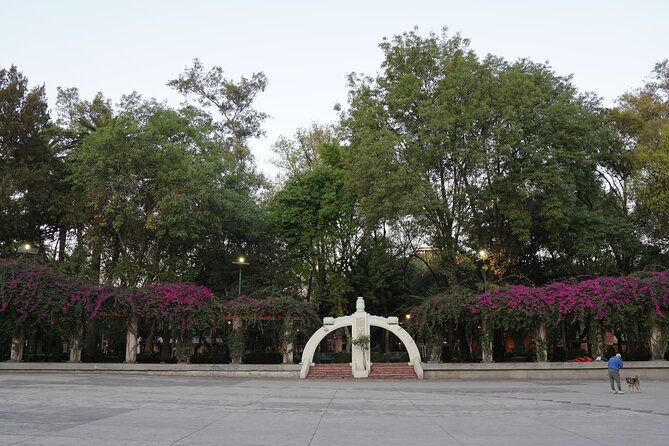
Parque México is the first stop, and it introduces you to one of Roma’s favorite public spaces. You have about 10 minutes here, enough to look around and hear why the park matters to local life.
This is a good opening stop because it shows you a neighborhood park before the tour moves toward grand monuments. You are not simply ticking off famous buildings. You start with a place where people spend ordinary city time.
From there, the route passes the monument marking the Bicentennial of National Independence. The stop is brief, but it adds a national story to the neighborhood scale of Parque México.
Chapultepec brings together monuments, trees, and royal views
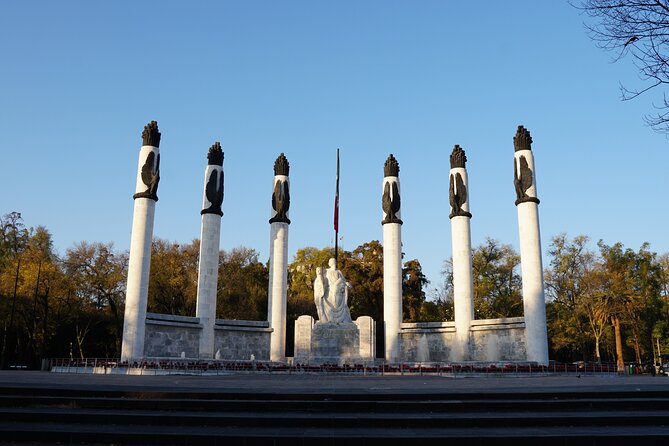
The next major section reaches the Altar a la Patria, also called the Monument to the Children Heroes. The guide explains the story behind this memorial, which commemorates the young military cadets associated with the defense of Chapultepec Castle.
You then enter Bosque de Chapultepec, one of Mexico City’s defining public spaces and one of the largest urban parks in the world. The scheduled stop is about 15 minutes. That is enough for an overview, not enough to explore the park’s many museums, paths, and attractions on foot.
Chapultepec Castle gets a 10-minute look. You can admire its hilltop position and hear some of its story, but this is not an indoor castle tour. Admission is not included, and the experience specifically does not provide a guided visit inside.
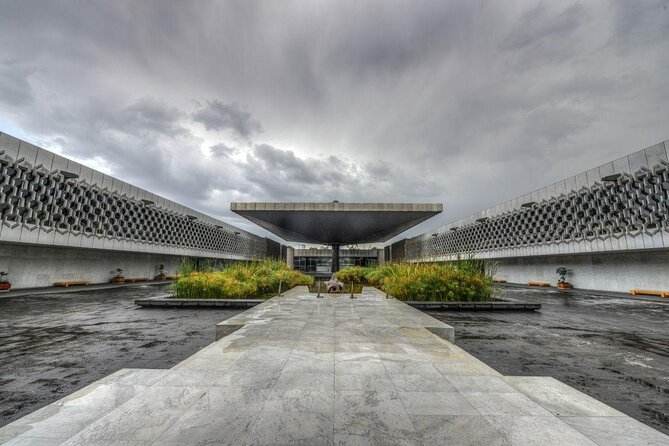
The same limit applies to the Museo Nacional de Antropología. You see one of Mexico City’s most important museums and learn a little about its background, but you do not tour the galleries. If ancient Mexico, Indigenous cultures, or archaeology are high on your list, return to the museum later with at least several hours available.
This arrangement is both useful and easy to misunderstand. The bike tour gives you a preview and helps you decide what to revisit. It does not replace an actual museum visit.
Reforma supplies the grand avenue and famous symbols
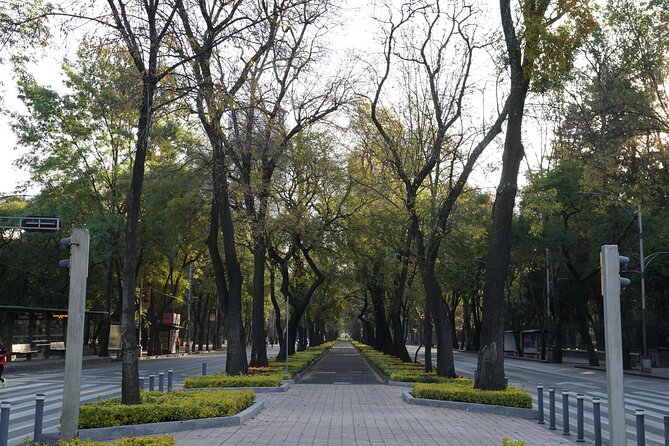
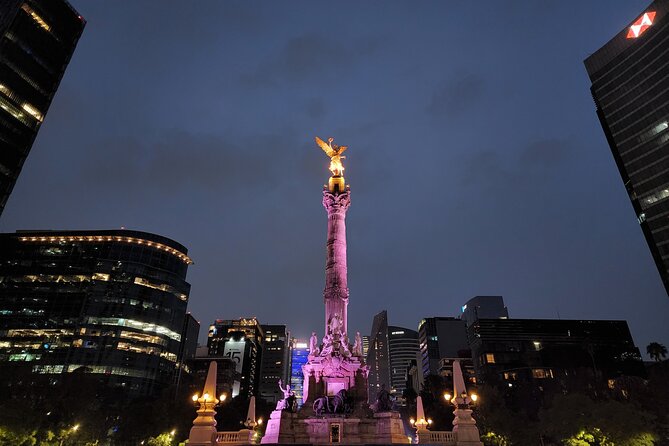
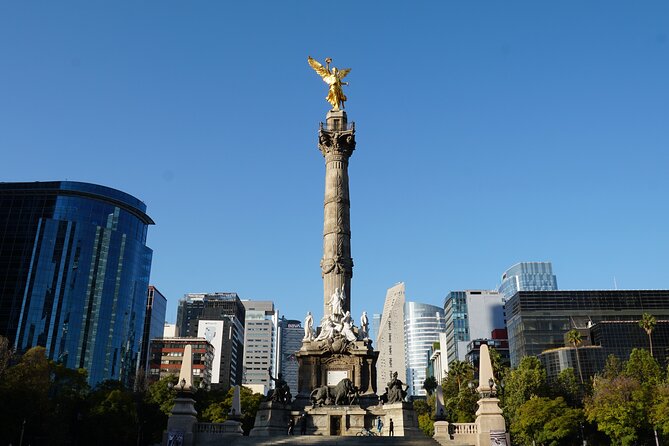
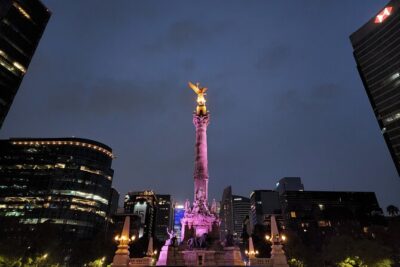
The route continues along the city’s monumental Reforma corridor, where you see another important monument before stopping at El Ángel de la Independencia. The golden Angel is one of the clearest symbols of Mexico City, and the 10-minute stop gives you time for photographs and an explanation of its place in the city.
Seeing Reforma by bike is more revealing than simply passing it in a car. You notice the scale of the avenue, the statues, and the way the road links the park district with the Historic Center. On a Sunday, the experience can be especially enjoyable because some major roads close to traffic. You may find yourself riding among people on bicycles, rollerblades, and foot.
Sunday is not just a scheduling trick here. It can change the feel of the ride. The route becomes more social and less focused on cars. If your dates allow it, this is the day I would choose.
Still, keep weather in mind. The activity requires good weather, and poor conditions may lead to a different date or a full refund. That is sensible for an outdoor ride, but it means you should avoid placing the tour on the only free morning of a very short visit if your plans are hard to change.
The Historic Center packs in the biggest sights
At the Hemiciclo a Juárez, you stop to see the white marble monument honoring former President Benito Juárez. The tour then moves through one of the city’s oldest parks and past one of its most emblematic buildings before reaching Palacio de Bellas Artes.
Bellas Artes is one of the essential Mexico City sights. Its exterior alone is worth a pause, and the guide gives you a short introduction rather than taking you through the building. The 10-minute format keeps the ride moving, but it also means you should return later if you want to see the murals, exhibitions, or interior details.
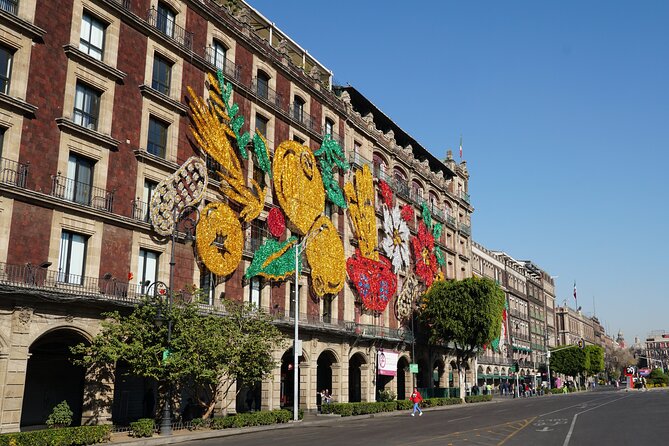
The Zócalo is the route’s central historic moment. Officially called Plaza de la Constitución, this huge square anchors the Historic Center. You see the plaza and its surroundings, with about 10 minutes to take in the scale and hear basic context.
A short stop can only introduce the Zócalo. The square deserves a longer visit for the cathedral, surrounding streets, food stops, and nearby buildings. The advantage of arriving by bicycle is that you get a sense of how the center connects to the rest of the city before returning on foot.
The Museo del Templo Mayor follows. You can view the archaeological area and learn a little about its past, but the tour does not include a guided visit. This is another place where the bicycle route acts as a preview. If you want to study the Aztec remains and museum displays, plan a separate visit.
Other city tours we've reviewed in Mexico City


The Monument to the Revolution closes the sightseeing loop
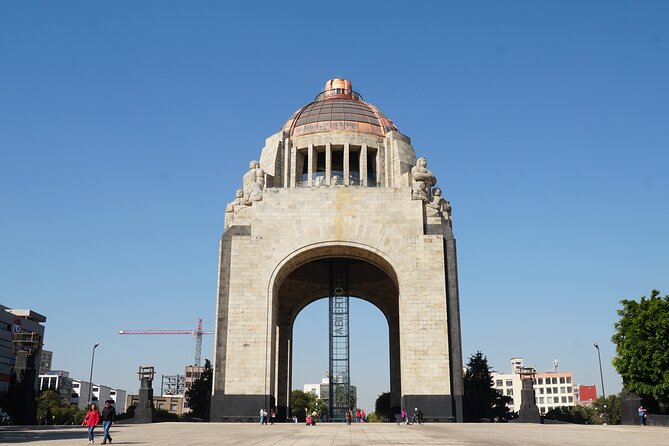
The Monument to the Revolution is the final major landmark. The guide introduces this large architectural memorial connected with the Mexican Revolution, again without an interior guided tour.
By this point, you have seen parks, memorials, a castle, a major museum, a famous avenue, an archaeological site, and the country’s central plaza. The route is ambitious. It favors breadth over long stops, which is exactly why it works well as an opening activity and less well as your only sightseeing day.
The tour then moves through Roma Norte and ends at Coahuila and Calle Orizaba. The final portion is listed as about an hour and a half, so do not assume the last address is just a quick finish after the Monument to the Revolution. The full experience lasts roughly three to four hours, depending on pace, stops, traffic, and group needs.
Yibran and Daniela add useful human touches
The guides, Yibran and Daniela, are also the owners of the company. Their role goes beyond pointing at landmarks. They keep the group moving, check on comfort, allow time for bathrooms, and offer suggestions for places to eat and drink after the ride.
The two-person format is particularly useful on city streets. One guide leads, while the other follows and helps watch the group. That arrangement does not remove all traffic risk, of course, but it gives you more support than a single guide trying to manage everyone at once.
The guides also take photographs during the ride. That lets you enjoy the route without repeatedly reaching for your phone while cycling. A short video is also sent afterward, according to the tour details and guest experiences. These extras are not the reason to book, but they add real value, especially for solo riders and couples who want pictures together.
English is offered. The guide team has also been described as bilingual, which can help mixed-language groups, though English is the stated language for this departure.
One point deserves a fair warning: not every explanation will satisfy a specialist in architecture, archaeology, or Mexican history. The tour’s strength is the overall introduction, the safe group handling, and the practical sense of the city. You should not expect a museum scholar at every stop.
Is $71.53 a fair price?
At $71.53 per person, this is not the cheapest way to see Mexico City. A city bike-share pass or self-guided ride costs much less, and public transportation can carry you between many of the same districts.
The price makes more sense when you count what is included: a quality bicycle, a small group, two guides, route planning, safety support, explanations at a dozen or more points, photos, and a follow-up video. You are also paying for the time saved figuring out how to connect distant areas on your own.
The best comparison is not with a rental bike. Compare it with a private or small-group city orientation that covers several major districts in one morning. If you are new to Mexico City and want a clear overview, the cost is reasonable. If you already know the center, Chapultepec, and Reforma well, the value drops.
Food and drinks are not listed as included, so bring your own water. One rider specifically advised doing so, and it is practical advice. A snack before departure is also wise because the ride may be long even if the cycling itself is not difficult.
Who will enjoy this ride most?
This tour fits you if you have basic bike skills, moderate fitness, and an interest in seeing a lot in a short time. Families with teenagers have enjoyed it, and solo riders can expect a friendly group structure rather than being left to themselves.
It is especially good for:
- First or second days in Mexico City
- Couples who want shared photos
- Solo visitors who prefer a social activity
- Families with older children or teenagers
- Riders who want neighborhood orientation before choosing longer visits
- Anyone who likes active sightseeing more than sitting in a vehicle
It may not suit you if you dislike city cycling, tire quickly after several hours, or want detailed indoor tours of museums and monuments. The route is not presented as an easy little spin around one neighborhood. The riding is manageable for many people, but the duration is the real test.
Booking, timing, and cancellation details
The tour is booked an average of 19 days ahead, so I would reserve early if you want a Sunday morning or are visiting during a busy period. Confirmation arrives at booking, and the meeting point is near public transportation.
Free cancellation is available up to 24 hours before the start time for a full refund. Changes or cancellations inside that 24-hour window are not accepted for a refund. Cutoff times use Mexico City local time.
Because weather matters, leave some flexibility if possible. If the activity is canceled due to poor weather, you are offered another date or a full refund.
My verdict: book it early in your Mexico City stay
I would book this tour near the start of a Mexico City visit, ideally on a Sunday if the schedule works. It gives you a broad map of the city, a feel for the connections between districts, and a useful list of places to revisit at a slower pace.
The strongest reasons to choose it are the wide route, the two-guide safety system, the good bikes, and the personal help from Yibran and Daniela. The main tradeoff is that most stops are short and several major attractions are viewed only from outside.
If you want one activity that covers a great deal of ground and leaves you with restaurant tips, photos, and a better sense of where to spend your time, this is a strong choice. If your priority is deep museum time or expert-level historical lectures, choose separate visits instead.
FAQ
How long does the Mexico City bicycle tour last?
The experience lasts approximately three to four hours. The total time can vary with the pace, stops, traffic, and group needs.
How much does the tour cost?
The listed price is $71.53 per person.
Where does the tour begin?
The meeting point is Jalapa 272, Centro Urbano Presidente Juárez, Roma Sur, Cuauhtémoc, Mexico City.
Where does the tour end?
The bicycle tour ends at Coahuila and Calle Orizaba in Roma Norte.
What language is offered?
The tour is offered in English.
How many people can join the tour?
The maximum group size is 10 people.
Is the tour suitable for beginners?
You should have basic bicycle skills and a moderate level of physical fitness. The riding is described as manageable, but the total time on the bicycle can be tiring.
Does the tour enter Chapultepec Castle?
No. You get a view of the castle and hear some of its history, but the activity is not a guided tour inside, and admission is not included.
Does the tour include visits inside the Anthropology Museum and Templo Mayor?
No. You see these major sites and receive a brief introduction, but guided indoor visits are not included.
Is Sunday a good day to take the tour?
Sunday is often recommended because some roads close to cars, making room for people cycling, running, and skating. The experience still depends on suitable weather.
Can I cancel for a full refund?
Yes. You can cancel at least 24 hours before the start time for a full refund. Cancellations or changes made less than 24 hours before the start time are not refunded.
What happens if bad weather cancels the tour?
You are offered a different date or a full refund if the activity is canceled because of poor weather.
More City Tours in Mexico City
More Bike Tours in Mexico City

More tours in Mexico City we've reviewed



Bike Tours, compared.
 ★ 5.0Frida Kahlo VIP [Museum Tickets Included] Bike, Markets & ChurrosFrom $834 hours (approx.)
 ★ 5.0Mexico bike tourFrom $704 hours (approx.)
 ★ 5.0Mexico City: 19 City Highlights Bicycle TourFrom $704 hours
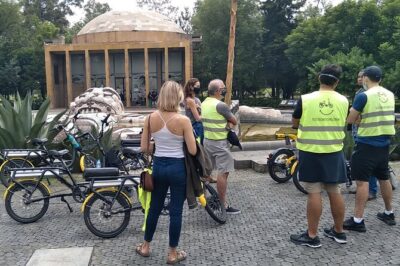 ★ 5.0Mexico City E-Bike Tour with a taco and churros stopFrom $704 hours (approx.)
 ★ 5.0Mexico City; ART NACO : Murals & Street Art Bike TourFrom $603 hours (approx.)
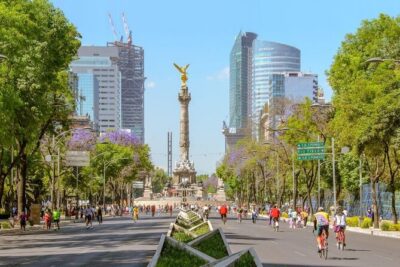 ★ 5.0Mexico City Highlights E-Bike Tour With Foodie StopsFrom $524 hours (approx.)
 ★ 5.0Street Food Bike Tour / Mexico is not only Tacos / All InclusiveFrom $924 hours 30 minutes (approx.)
★ 4.7Mexico City: Art Naco, murals & street art bike tourFrom $523 hours
★ 5.0Street Food Bike Tour / Mexico is not only Tacos / All InclusiveFrom $924 hours 30 minutes (approx.)
★ 4.7Mexico City: Art Naco, murals & street art bike tourFrom $523 hours
The lists this tour appears in