
Reviewed · BIKE TOURS
Mexico City: Art Naco, murals & street art bike tour
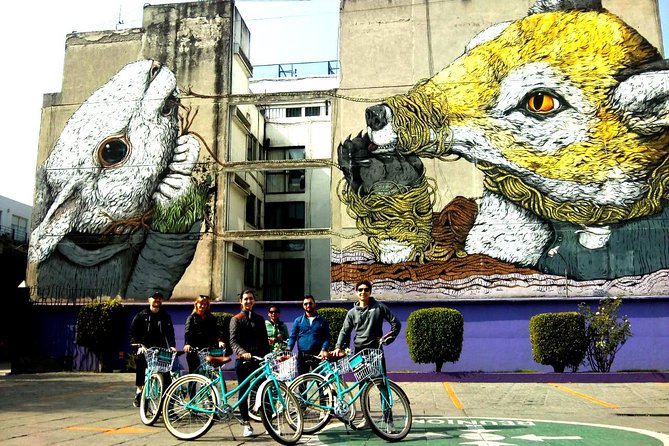
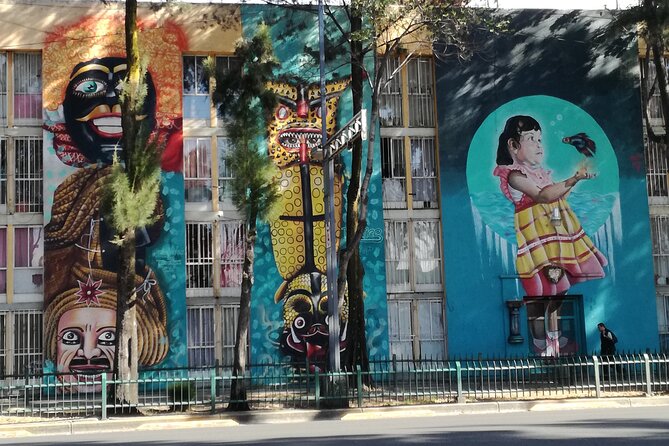
Mexico City’s best art is not confined to museums. This three-hour ride takes you through working neighborhoods where murals, graffiti, libraries, ruins, workshops, and taco stands share the same streets. I like the mix of street art and local history, and I like that guides such as Iván, Alberto, and Gabi explain what you are seeing instead of simply pointing at painted walls.
In This Article
- Key points to know before you book
- Why this bike tour shows you a different Mexico City
- Start beside Hidalgo MetroBus Station
- Choosing between the three routes
- North Route: Buenavista, Guerrero, and Tlatelolco
- Downtown Route: Obrera, Doctores, and the historic center
- South Route: Coyoacán and Frida’s neighborhood
- Riding through traffic without feeling abandoned
- The art is better with a guide
- Street food is part of the point
- How much value do you get for $52?
- Who should book this ride?
- Should you book the Art Naco bike tour?
- FAQ
- How long is the Mexico City art bike tour?
- Where does the tour start?
- Where does the tour finish?
- Which neighborhoods can I visit?
- Do all routes start at the same place?
- What languages are available?
- Is the tour suitable for a small group?
- Is the tour wheelchair accessible?
- Is food included?
- What should I bring?
The tour also uses a second guide on many rides to help manage traffic, a small but important comfort in a huge city. The main consideration is that you are riding in real city streets, and some bicycles may feel small for taller riders.
Key points to know before you book
- Three routes offer different sides of Mexico City: Choose the North Route for Buenavista, Guerrero, and Tlatelolco; the Downtown Route for central neighborhoods and urban art; or the South Route for Coyoacán and Frida Kahlo’s neighborhood.
- Artist workshops add more than wall photography: Stops such as 8A Workshop and 75 Degrees Workshop can give you a closer look at the people and spaces behind the art.
- Traffic safety receives serious attention: A lead guide rides with the group, while another Poray team member can help at intersections and keep riders together.
- The food stop feels local: Your included snack may be tacos, tlacoyos, gorditas, or another street-food choice, with vegetarian and vegan needs accommodated.
- The pace suits casual cyclists: The routes are described as manageable, and Mexico City is generally flat, but you should still feel comfortable steering and braking around city traffic.
- A group of 10 keeps the ride personal: Smaller groups may allow more questions, photos, and route adjustments.
Why this bike tour shows you a different Mexico City
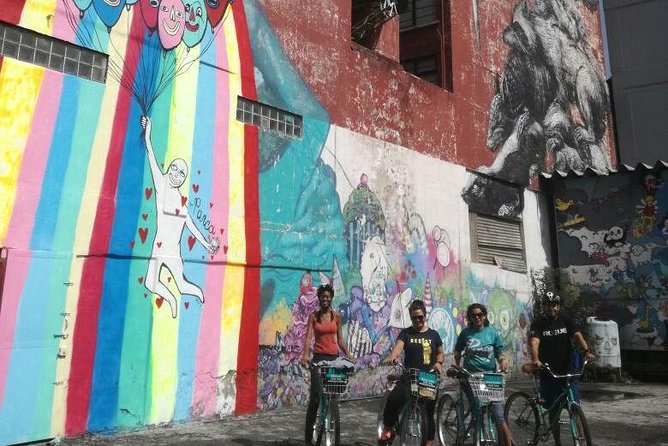
Mexico City can be hard to grasp from a taxi window. Its neighborhoods change quickly, and the most interesting public art often appears far from the standard historic-center circuit. On a bicycle, you can move between these areas at street level, stop beside a mural, and see how art fits into ordinary daily life.
That is the real strength of Poray Biclaturs & Rentals. The ride is not only a hunt for colorful walls. It connects murals to Mexican stories, neighborhood identity, architecture, community spaces, and older layers of the city.
I especially like the way the tour combines major cultural stops with places you might not reach on your own. Depending on the route, you could see the Vasconcelos Library, Three Cultures Square, MUJAM, an artist collective, Aztec ruins, or a family-run food stall. The result feels less like a checklist and more like a moving introduction to the city.
A few more Mexico City tours and experiences worth a look

Start beside Hidalgo MetroBus Station
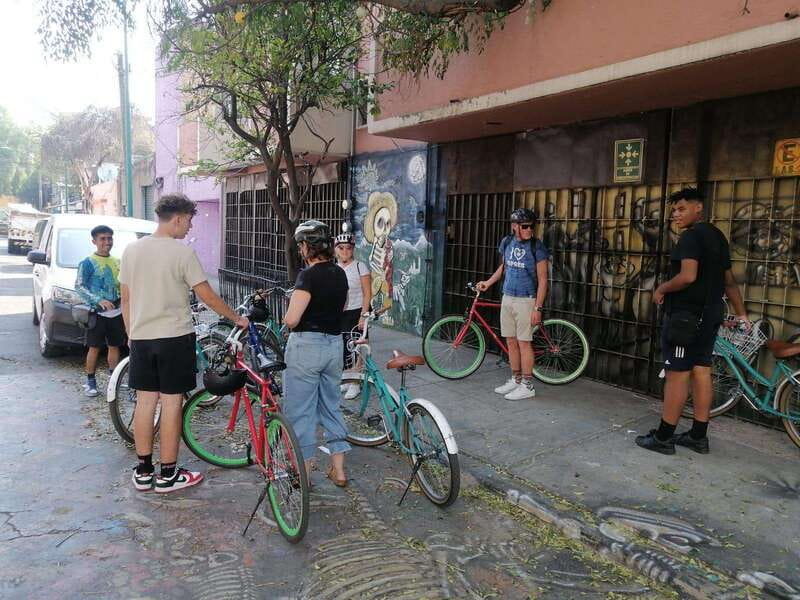
The meeting point is the Poray Bike Shop, next to the Fontan Hotel and in front of the Hidalgo MetroBus Station. You return to the same shop after the three-hour ride, and hotel pickup is not included, so allow time to reach the starting point yourself.
Poray provides the bicycle, bottled water, street food or snacks, and personal-injury insurance. Helmets are available, and one rider specifically noted asking for one, so I would request yours at the shop rather than assume you will want to ride without it.
Wear comfortable shoes and bring sunglasses, a hat, and sunscreen. Mexico City’s high elevation can make sun exposure feel stronger than expected, even when the air seems mild. Additional drinks cost extra.
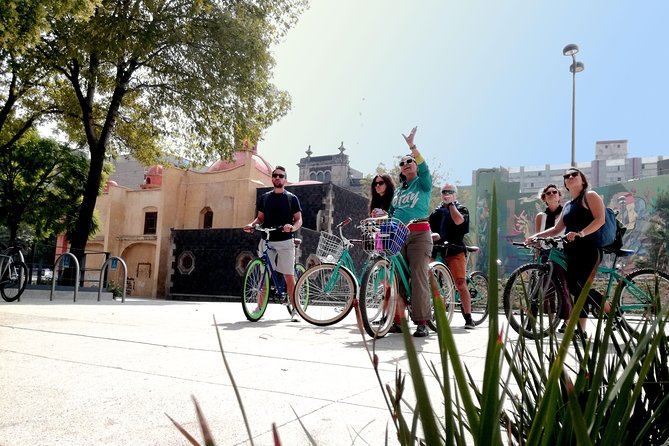
The group is limited to 10 participants. That matters here. A guide can stop to explain a mural or answer questions without holding up a large crowd, while the small size makes it easier for the support guide to watch the group at crossings.
Choosing between the three routes
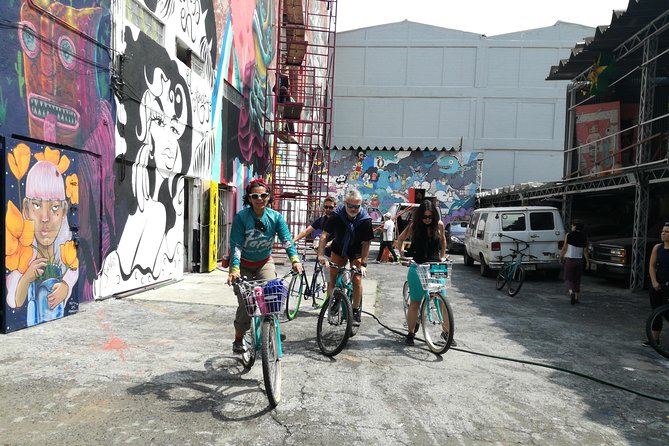
The route choice is the biggest decision you make when booking. Each option has a different character, and you should not treat them as interchangeable.
North Route: Buenavista, Guerrero, and Tlatelolco
The North Route is the strongest choice if you want public art tied closely to Mexican stories and social history. You ride through Buenavista, Guerrero, and Tlatelolco, with stops that can include the Vasconcelos Library, 8A Workshop, and Three Cultures Square.
The Vasconcelos Library is a striking architectural stop and more than a place to borrow books. It has also been described as a community center, making it a useful example of how public buildings serve local life. The library’s design offers a welcome change from the outdoor murals, and it gives you a quieter place to look around.
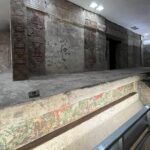
At Tlatelolco, the Three Cultures Square brings different periods of Mexico together in one setting. The route also passes areas with Aztec ruins at their heart, so the art is not presented as a separate attraction. You get a sense of how old foundations, modern neighborhoods, and new murals occupy the same city.
The 8A Workshop adds an artist-focused stop. Access to an atelier or collective has been a highlight for several riders, but entry can depend on the day and route conditions. I would treat it as a valuable possibility rather than a guaranteed private studio visit.
Choose the North Route if you want the most cultural context and a look at neighborhoods beyond the familiar visitor areas.
Downtown Route: Obrera, Doctores, and the historic center
The Downtown Route moves through Mexico City’s central zone and the Obrera and Doctores neighborhoods. Here, murals and graffiti appear beside colonial buildings and newer urban structures. The contrast gives the route its appeal.
Possible points of interest include the Zócalo, Regina Alley, 75 Degrees Workshop, and MUJAM, the Museum of Ancient Mexican Toys. Regina Alley offers a more intimate urban-art setting than a grand plaza, while the Zócalo connects the ride to the city’s central civic space.
MUJAM brings a very different subject into the tour. Its focus on old Mexican toys can broaden your understanding of popular culture beyond murals and political art. The 75 Degrees Workshop provides another chance to see an art-making space rather than only finished work on a wall.
The drawback is that the Downtown Route may feel busier and more urban than the North or South choices. You will be close to well-known central sights, but you will also encounter more traffic and city movement. The support guide becomes especially useful in this setting.
I would pick this route if you are staying near the historic center and want art, architecture, and central Mexico City in one outing.
Other cycling tours in Mexico City


South Route: Coyoacán and Frida’s neighborhood
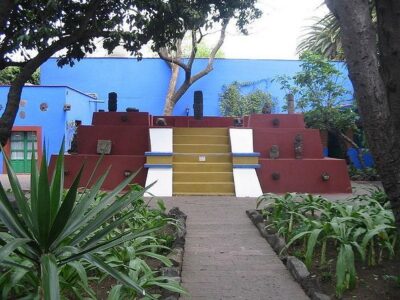
The South Route explores Coyoacán and the area associated with Frida Kahlo. Its focus is on street art and the character of this southern neighborhood.
Coyoacán is a natural fit for an art-based ride, but this option has one practical difference: the starting point is south of the city. You must tell Poray in advance if you choose it, since the departure location changes from the main shop near Hidalgo.
That extra planning is worth considering before you book. If you already want to spend time in Coyoacán, this route can pair well with your plans. If you are based near central Mexico City and want the simplest meeting point, the North or Downtown Route may be easier.
The provided details do not promise specific Frida Kahlo museum entry, so do not book this as a museum tour. You are choosing it for the neighborhood, public art, and connection to Frida’s part of the city.
Riding through traffic without feeling abandoned
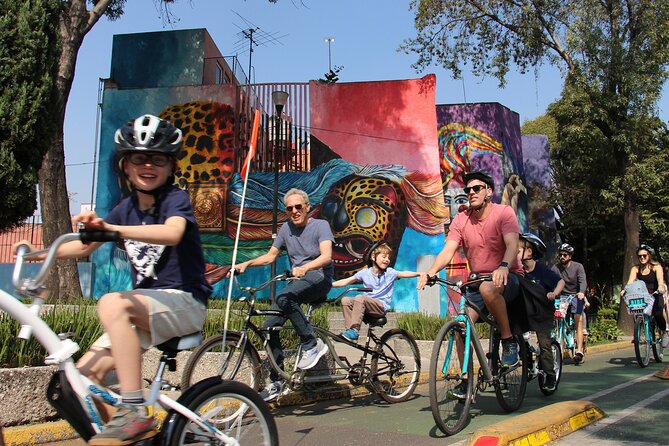
Traffic is the main concern for many people considering a Mexico City bike tour. You do not need to be a serious cyclist, but you should be comfortable on a bicycle and ready to ride in an active city environment.
Poray’s setup helps. The lead guide directs the group, and a second team member may ride behind or position themselves at intersections. Riders repeatedly praised the care taken to keep everyone together and help the group cross safely. That support is particularly useful for people who cycle only occasionally.
The routes are described as leisurely or manageable, and Mexico City is fairly flat. Still, the ride is not a protected, traffic-free park circuit. You may use bike lanes or mainly pedestrian streets, but the tour still winds through public roads.
Tell the guide if you are nervous, inexperienced, or need a slower pace. The group size is small enough for the guide to keep an eye on you. Taller riders should check the bicycle size at the shop, since one couple found the available bikes a little small for their height.
The art is better with a guide
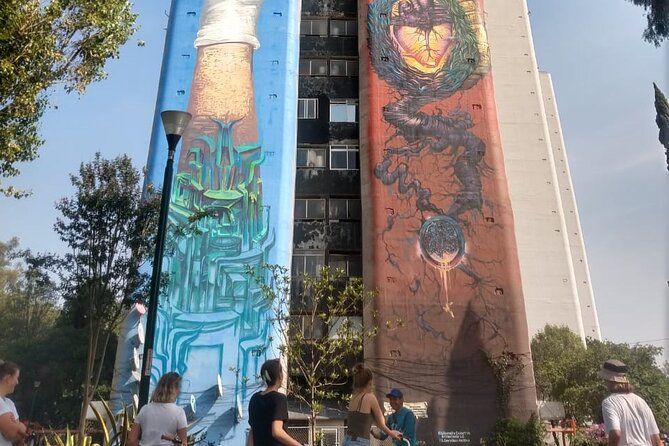
Street art changes. A wall may be painted over, a workshop may close for the day, or a planned stop may shift. What remains valuable is the guide’s ability to explain why a work matters and how it relates to the neighborhood.
Iván has led many of the highly praised rides, and his explanations cover art, history, and daily life rather than graffiti alone. Alberto is also known for personal recommendations about food and places to visit later in the trip. Gabi has been praised for clear English and for making history easy to follow.
Language options are English, Spanish, and German. If you need English, select that language when booking and confirm it at the start. The quality of a street-art ride depends heavily on the guide’s storytelling, and this team appears to take that part seriously.
The guides also take photos for riders when time allows. That is handy because stopping to frame a group picture while managing a bicycle and traffic is awkward.
Street food is part of the point
The included snack is not an afterthought. It gives you a small but useful taste of how Mexico City eats outside formal restaurants.
Depending on the outing, the stop may include tacos, tlacoyos, gorditas, or another street-food item, along with a drink such as agua de jamaica. Vegetarian and vegan requests have been accommodated, but tell Poray ahead of time so the guide can plan appropriately.
Food safety is a personal matter, especially if you have a sensitive stomach. I would carry hand sanitizer and mention allergies or dietary restrictions before setting off. Still, the stop is one of the most authentic parts of the tour because it puts you at a local food stall rather than a visitor-oriented restaurant.
The timing also works well. After riding and looking at walls for a couple of hours, a simple snack gives the group a natural pause. It is a chance to ask the guide for restaurant ideas and to talk about what you have seen.
How much value do you get for $52?
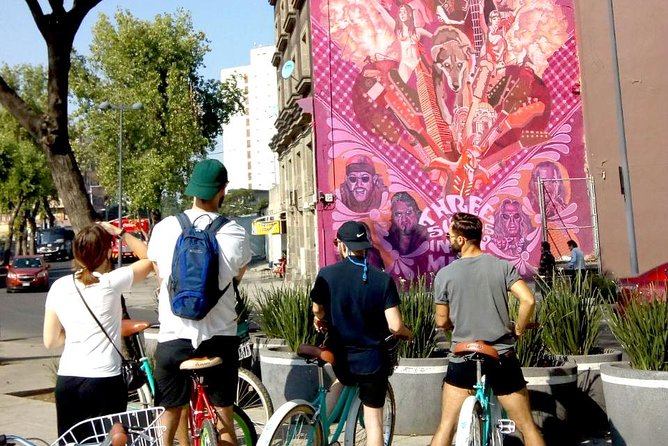
At $52 per person, this is not the cheapest way to rent a bicycle, but it is a fair price for a guided three-hour experience that includes the bike, water, snack, insurance, and route planning.
You are paying for access and judgment as much as for equipment. A rental alone will not tell you which neighborhoods connect well, where the strongest murals are, how to reach an artist workshop, or how to cross a difficult intersection with a group.
The value improves if you are new to Mexico City. The ride can help you understand the city’s shape and give you ideas for the rest of your stay. Several stops are outside the usual visitor circuit, so you see areas that would be easy to miss from a hotel or standard sightseeing bus.
It is less useful if you only want a quick photo tour of famous landmarks. The pace includes explanations, food, and neighborhood riding, so you should book it for context and local texture rather than speed.
Free cancellation up to 24 hours before the start and the option to reserve now and pay later make the $52 commitment easier to manage. Availability and starting times vary, so check the chosen date and route carefully.
Who should book this ride?
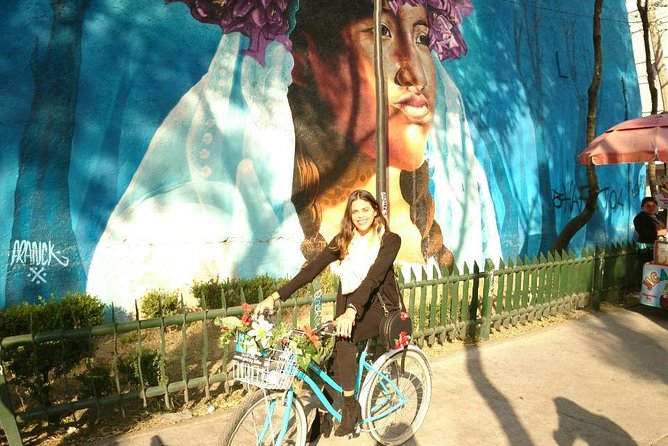
I would recommend it to:
- First-time visitors who want an early orientation to Mexico City
- Art lovers who prefer murals and working studios to formal galleries
- Casual cyclists who can ride and brake confidently
- Visitors interested in neighborhoods beyond Roma, Condesa, and the busiest central streets
- Food-focused travelers who want a simple street snack included
- Small groups and solo riders who like asking questions
I would think twice if you dislike city cycling, need a large-frame bicycle, or want a fully private tour with a fixed route. The ride is manageable, but it is still a bicycle tour through Mexico City traffic.
Should you book the Art Naco bike tour?
Yes, if you want to connect Mexico City’s art with its streets, neighborhoods, and people. The strongest reasons to book are the passionate guiding, the careful traffic support, the small group size, and the chance to visit places such as the Vasconcelos Library, Tlatelolco, artist workshops, and local food stalls.
Choose the route with care. Pick North for murals, community spaces, and layered history; Downtown for central architecture and urban art; or South for Coyoacán and Frida’s neighborhood. Ask about bicycle size if you are tall, request a helmet, and tell the company about food needs before the ride.
At $52, this is good value for a three-hour introduction to the less obvious side of Mexico City. It will not replace a museum visit or a relaxed day in Coyoacán, but it can show you how the city’s art lives beyond the postcard sights.
FAQ
How long is the Mexico City art bike tour?
The tour lasts three hours, including the bicycle ride, photo stops, guide commentary, and a street-food or snack stop.
Where does the tour start?
The standard meeting point is Poray Bike Shop, next to the Fontan Hotel and in front of the Hidalgo MetroBus Station.
Where does the tour finish?
The ride returns to Poray Bike Rental Shop.
Which neighborhoods can I visit?
The North Route visits Buenavista, Guerrero, and Tlatelolco. The Downtown Route includes Obrera, Doctores, and central Mexico City. The South Route explores Coyoacán and Frida’s neighborhood.
Do all routes start at the same place?
No. If you choose the South Route, you must inform Poray because its starting point is south of the city.
What languages are available?
The live guides speak English, Spanish, and German.
Is the tour suitable for a small group?
Yes. The group is limited to 10 participants.
Is the tour wheelchair accessible?
Yes, the activity is listed as wheelchair accessible.
Is food included?
Yes. Street food or snacks and bottled water are included. Additional drinks are not included.
What should I bring?
Bring comfortable shoes, sunglasses, a sun hat, and sunscreen. You may also want to request a helmet at the bike shop.
More City Tours in Mexico City


More Cycling Tours in Mexico City
More Bike Tours in Mexico City
More tours in Mexico City we've reviewed

Bike Tours, compared.
 ★ 5.0Frida Kahlo VIP [Museum Tickets Included] Bike, Markets & ChurrosFrom $834 hours (approx.)
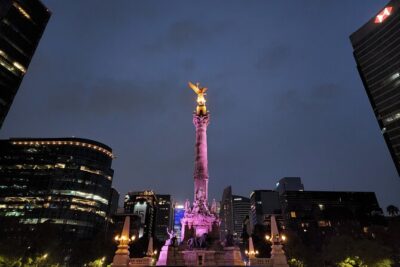 ★ 5.0Mexico City: 19 City Highlights Bicycle TourFrom $713 to 4 hours (approx.)
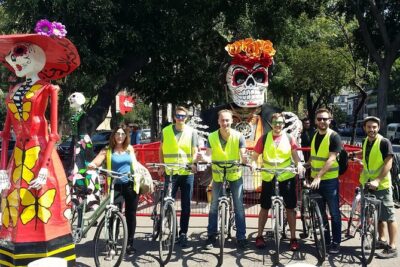 ★ 5.0Mexico bike tourFrom $704 hours (approx.)
★ 5.0Mexico City: 19 City Highlights Bicycle TourFrom $704 hours
★ 5.0Mexico bike tourFrom $704 hours (approx.)
★ 5.0Mexico City: 19 City Highlights Bicycle TourFrom $704 hours
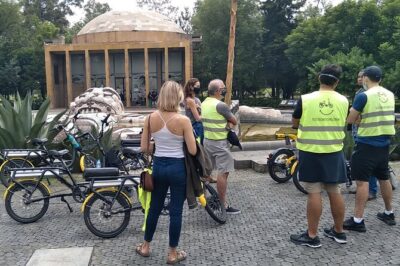 ★ 5.0Mexico City E-Bike Tour with a taco and churros stopFrom $704 hours (approx.)
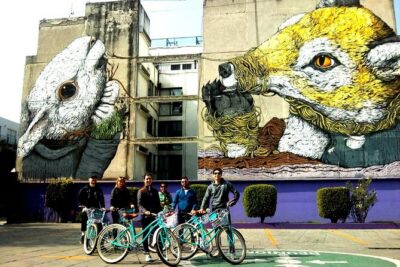 ★ 5.0Mexico City; ART NACO : Murals & Street Art Bike TourFrom $603 hours (approx.)
 ★ 5.0Mexico City Highlights E-Bike Tour With Foodie StopsFrom $524 hours (approx.)
 ★ 5.0Street Food Bike Tour / Mexico is not only Tacos / All InclusiveFrom $924 hours 30 minutes (approx.)
The lists this tour appears in