
Reviewed · COOKING CLASSES
Muchos moles: Multi-variety mole cooking class and feast
Mexico’s famous mole is not one sauce but a whole family of dishes. In this four-hour class, you’ll make two less-common versions from scratch: fruity manchamanteles, with pineapple and plantain, and a fresh green mole built around crisp green leaves. You’ll also prepare the corn tortillas needed to scoop up dinner.
In This Article
- Key points to know before booking
- Why these two moles make a better lesson than one
- The Condesa home sets the tone
- The first two hours are about ingredients and method
- Fresh tortillas give you the right way to eat
- Manchamanteles brings pineapple and plantain to the table
- Green mole supplies a fresher counterpoint
- A beautiful table turns cooking into a proper meal
- Drinks and dietary needs
- Is $130 a fair price?
- Timing, group size, and access
- Who will enjoy this most?
- Should you book Muchos moles?
- FAQ
- Where does the Muchos moles cooking class take place?
- How long does the cooking class last?
- Which dishes will I prepare?
- Are drinks included?
- Is the class available in English?
- Can dietary requirements be accommodated?
- Is the home accessible to wheelchair users?
- What should I know about allergies and pets?
I like the small, dinner-party feel and Jim’s patient teaching style. I also like the care given to local food and craft traditions, from the ingredients to the handmade dinnerware on the table. The main drawback is practical: the home has no elevator, and two cats live there, which matters if you have mobility or serious allergy concerns.
Key points to know before booking
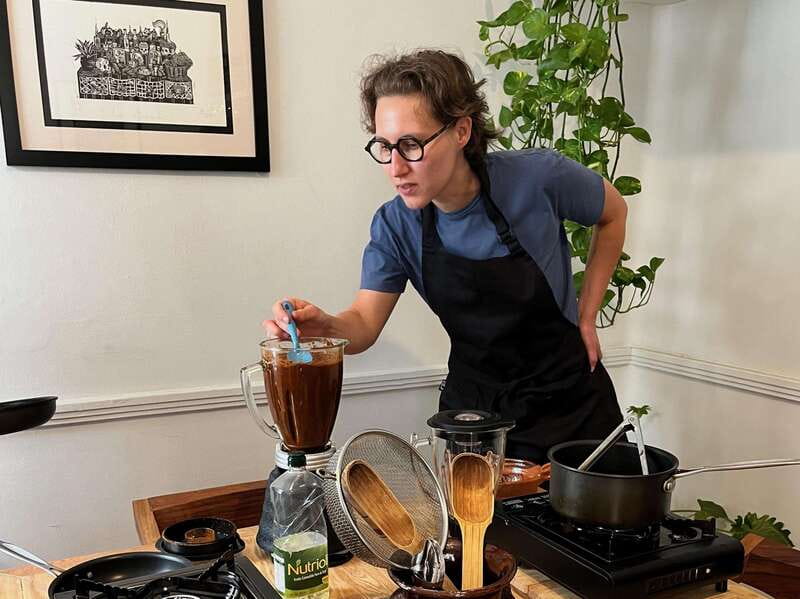
- Two very different moles: Compare a sweet, fruity manchamanteles with a lighter green mole instead of making the same style twice.
- A real home setting: The class takes place in a Condesa home, so expect a relaxed meal with Jim rather than a formal culinary school.
- Tortillas are part of the lesson: You prepare fresh corn tortillas to eat with the moles.
- Jim teaches with patience: His explanations cover ingredients, methods, and the background of the dishes, making the class suitable for different cooking levels.
- Local details matter: Handmade Mexican tableware and Jim’s support for local produce and crafts add cultural interest beyond the food.
- Check the practical points: The house has cats, no elevator, and cannot accommodate strict kosher requirements.
Why these two moles make a better lesson than one
Many visitors arrive in Mexico knowing mole poblano, the dark sauce often served with chicken or turkey. That famous version is only one expression of a much bigger cooking tradition. Mole recipes change by region, household, season, and available ingredients.
This class uses two contrasting preparations to show that range. Manchamanteles shares some ingredients and techniques with mole poblano, but its character comes from large pieces of pineapple and plantain rather than chocolate. The result should make sense to you as soon as you taste it: it is still a serious, layered mole, but the fruit gives it a clear sweet note.
The green mole offers the second point of comparison. Its base of crisp green leaves makes it feel fresher and less heavy than darker mole styles. You are not simply learning two recipes. You are learning how Mexican cooks can use the same broad idea, a complex sauce built from many ingredients, to create two very different meals.
I find this approach especially useful if you have eaten mole in restaurants but never understood how varied it can be. The class gives you a way to taste the contrast side by side, then take the recipes home by email.
Other cooking classes in Mexico City


The Condesa home sets the tone
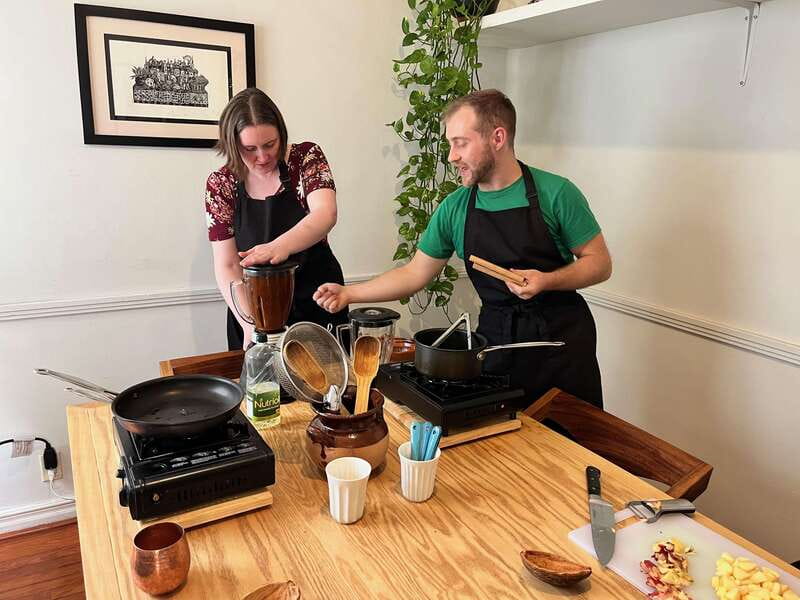
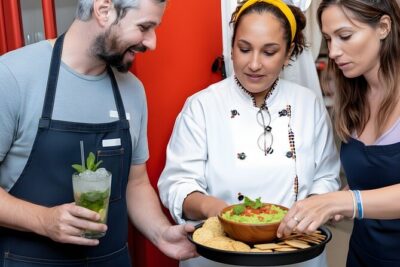
The class takes place in a beautiful home in Condesa, with the exact meeting point dependent on the option you book. That home setting shapes the afternoon. You are not sitting in rows while an instructor performs every step at a distance. The format is smaller and more personal, with room to ask questions and take part at your own pace.
Jim leads the experience in English or Spanish. His style is patient and explanatory, which helps if your kitchen skills are limited. The class is also a good fit for confident home cooks who want context for the ingredients and techniques rather than just a recipe card.
The atmosphere is intentionally casual. It has more of the rhythm of a dinner party with cooking included than a strict professional lesson. That can be a major plus if you want conversation and a relaxed meal. If you prefer a tightly timed culinary workshop, the informal setting may feel less structured.
Two cats live in the house. Allergy pills are available, and people with allergies are kept out of the cooking area, but this is not an animal-free environment. If cat exposure could cause a serious reaction, contact the provider before paying.
The first two hours are about ingredients and method
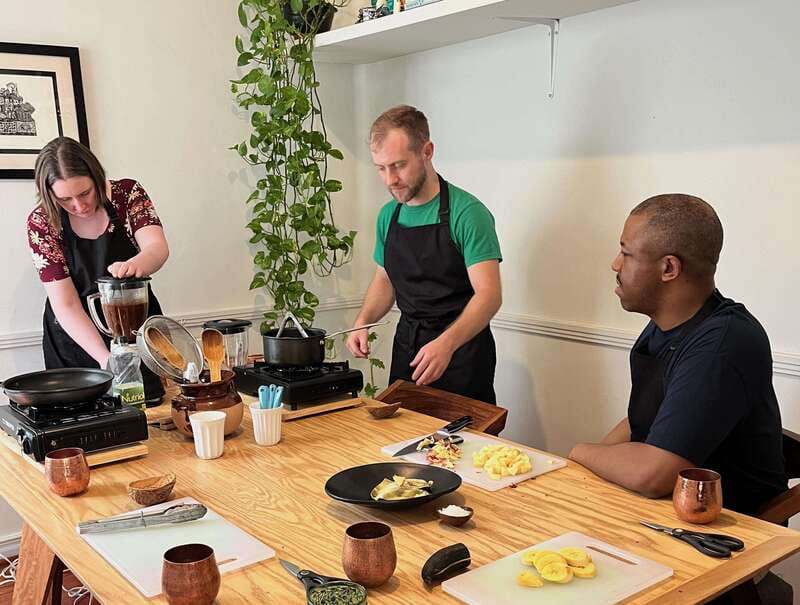
Expect roughly two hours of preparation before sitting down to eat. You will work with all the ingredients needed for two mole recipes and fresh tortillas. The details provided do not specify every step or ingredient, so you should think of this as a guided, hands-on class rather than a printed demonstration with a fixed script.
Jim explains the role of each element as you go. That matters with mole, where the final taste depends on how separate ingredients are combined and balanced. You can ask about the origins of the dishes, the purpose of particular ingredients, and ways to repeat the recipes at home.
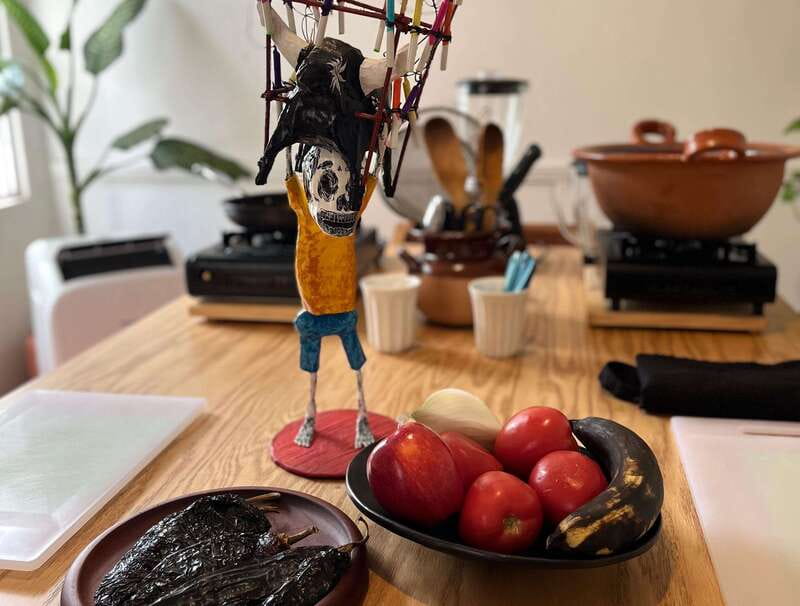
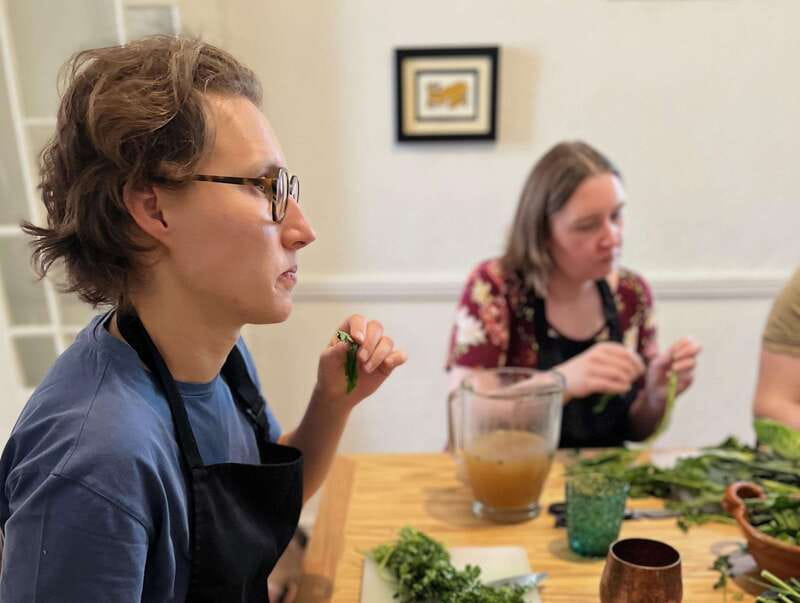
The best part of a class like this is that you see the food before it becomes a smooth sauce. The fruit in the manchamanteles remains an important part of the finished dish, while the green mole gets its character from fresh green leaves. You can connect the raw ingredients to the final flavor instead of treating mole as a mysterious brown topping.
Different cooking levels can contribute. Jim’s patient approach means you do not need to arrive with professional knife skills or previous Mexican cooking experience. At the same time, someone who already cooks should still find useful detail in the discussion of mole varieties and local ingredients.
Fresh tortillas give you the right way to eat
The tortillas are not an afterthought. You make them as part of the class, then use them at the meal. That adds both work and pleasure to the experience.
Fresh corn tortillas change the way you eat mole. You can use one to scoop up sauce and fruit, taste the green mole on its own, or compare how each preparation works with the corn. This makes the meal more active than simply receiving two plated dishes.
It also gives you a practical skill to take home. The recipes arrive by email after the class, and the tortilla preparation belongs to the same useful package. You will not leave with a souvenir, but you will have instructions for trying the meal again.
Do not expect a full Mexican cooking curriculum in four hours. The focus is narrow and clear: two moles, tortillas, drinks, and the meal. That focus is a strength if you want to understand one important part of Mexican food without spending an entire day in a kitchen.
Manchamanteles brings pineapple and plantain to the table
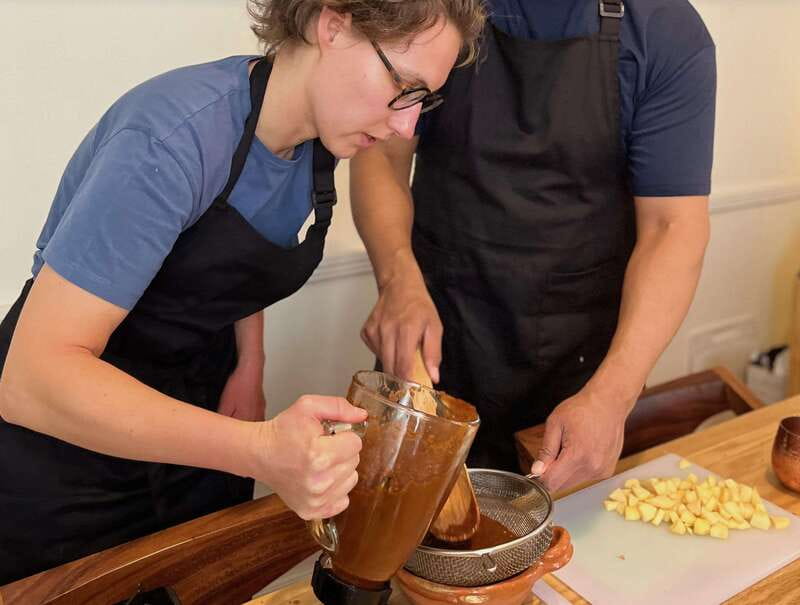
Manchamanteles is the dish that may surprise you most. Its name and its relationship to mole poblano can suggest a familiar dark sauce, but the generous pieces of pineapple and plantain shift the balance toward fruit.
I like this choice for a class because it teaches by contrast. You can recognize links to the mole you may already know, then notice how the fruit changes the dish’s sweetness and texture. It also shows why Mexican cooking cannot be reduced to one standard mole recipe.
The fruit is not just decoration added at the end. It is part of the identity of the preparation. Pay attention to how it sits with the sauce and tortillas, and ask Jim about the ingredients and process as you cook.
If you strongly prefer savory food with no sweet notes, this may be the less natural match for you. The class includes the green mole as a counterpoint, so you are not limited to the fruity style.
Other cooking classes in Mexico City


Green mole supplies a fresher counterpoint
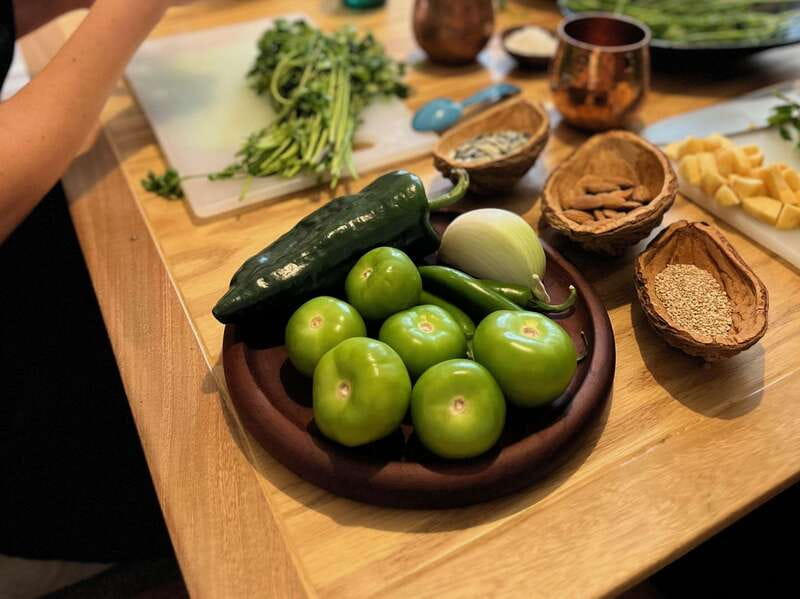
The green mole is designed to refresh the palate after the more substantial flavors associated with darker mole preparations. Its base of crisp green leaves gives it a lighter feel, though the dish still comes from the same broad Mexican tradition of building layered sauces.
This contrast is one of the strongest reasons to choose the class. You get two distinct results rather than two minor variations. The meal can help you decide which kinds of mole you prefer and which recipes you might want to repeat at home.
The description does not identify the exact leaves or provide the full ingredient list. If you have dietary restrictions, contact Jim after booking so he can ask what you need and plan accordingly. Most requirements can be accommodated, but strict kosher cooking is not possible.
A beautiful table turns cooking into a proper meal
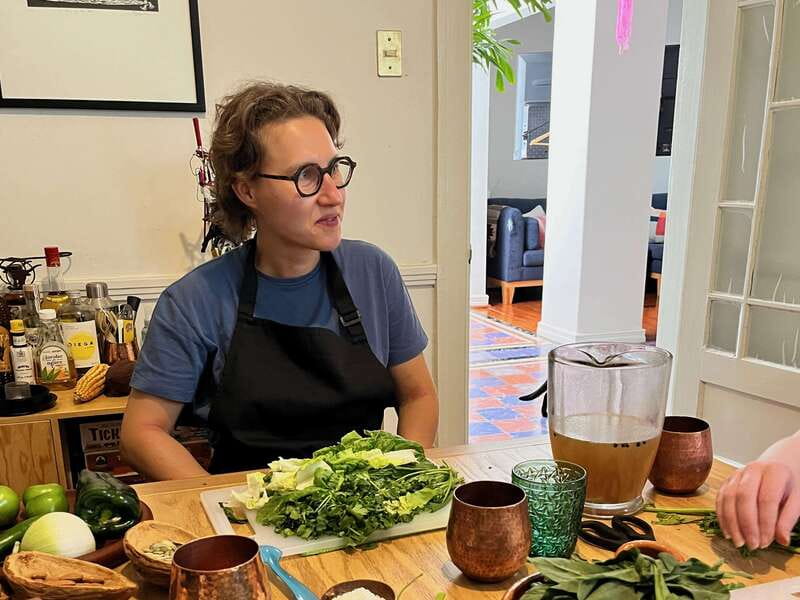
After the cooking, you help set a picture-perfect Mexican dining table with locally made dinnerware. This is more than a visual flourish. It links the meal to the people who make the objects around it and gives you a chance to ask Jim about Mexican crafts.
That local focus was important to the experience. Jim supports local produce and crafts, and he is happy to share the names of artisans and explain the pieces in the home. If you enjoy food culture as well as food itself, this adds another layer to the afternoon.
The setting also helps the class feel like a shared meal rather than a rushed tasting. You sit down with the food you prepared, use the tortillas you made, and have time to enjoy Mexican beer, wine, and soft drinks.
There is no separate souvenir included. For me, that is not a serious weakness because the recipes arrive by email and the lasting value is the skill and knowledge you take away. Still, if you want a physical cooking kit or packaged food to carry home, you will need to arrange that separately.
Drinks and dietary needs
Mexican beer, wine, and soft drinks are included throughout the experience. That makes the $130 price easier to assess because the fee covers the ingredients, the drinks, the teaching, and the meal rather than just a short lesson.
Dietary requirements should be discussed after booking. Jim contacts you by email to ask what you need, and most requests can be handled. Strict kosher requirements cannot be accommodated at present.
Be specific in your reply. If you avoid certain ingredients, need a vegetarian adjustment, or have a medical allergy, tell the provider clearly before the class. The presence of cats is a separate concern from food allergies, so address both if necessary.
Is $130 a fair price?
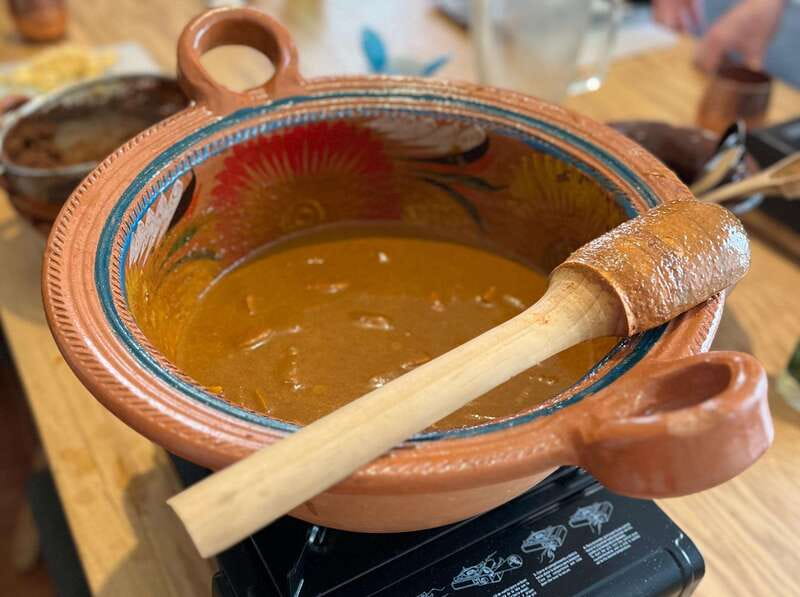
At $130 per person, this is not a budget cooking class. You are paying for a four-hour private or small-group experience in a home, two full mole preparations, tortillas, drinks, instruction in English or Spanish, and a meal at the end.
I think the value is strongest for people who care about personal teaching and food culture. The small class size allows Jim to explain ingredients and adapt his help to different skill levels. You also get a meal that would be difficult to recreate without guidance, plus recipes to try later.
The value is weaker if you mainly want to eat mole and do not care about cooking. A restaurant meal costs less, and a formal cooking school might offer more equipment or a broader menu. This experience makes sense because the lesson, conversation, and home setting are part of the purchase.
One important price tip: compare the cost with booking directly through the Martaja website. The same experience may be offered there for less than the price shown through another booking channel. Check the direct rate before you commit.
Timing, group size, and access
The experience lasts four hours, with start times depending on availability. That is a substantial part of your day, so do not place it beside another fixed appointment that requires a long cross-town trip.
Private and small-group options are available. A private booking should suit couples, families, or friends who want the meal to feel fully personal. A small group keeps the cost and social element balanced while still giving you more contact with Jim than a large class would.
The building has no elevator. Wheelchair users have attended before, but you should discuss your needs in advance because access depends on the building and the booked option. Do not assume that previous attendance means every mobility situation will work without planning.
Cancellation is free up to 24 hours before the experience for a full refund. You can also reserve now and pay later, which helps if your Mexico City plans are still moving around.
Who will enjoy this most?
I would choose this class if you want to understand Mexican food through one dish with many faces. It suits home cooks, curious eaters, couples, small groups, and anyone who likes a relaxed meal with plenty of explanation.
It is also a strong pick for people who have already tried mole poblano and want something less predictable. The pineapple and plantain in the manchamanteles, followed by the leafy green mole, give you a much broader picture than a standard restaurant tasting.
Families and mixed-skill groups may work well here because Jim welcomes different levels of participation. You can contribute without needing advanced technique, while more experienced cooks can ask detailed questions.
I would hesitate if you have a serious cat allergy, require strict kosher preparation, need an elevator, or want a polished restaurant-style event. I would also compare the direct Martaja price before booking, since the same class may cost less there.
Should you book Muchos moles?
Book it if you want a personal, food-centered afternoon and are happy to cook before you eat. The two moles offer real contrast, the tortillas make the meal hands-on, and Jim’s calm teaching style suits beginners and experienced home cooks alike.
The strongest reason to go is the chance to see Mexican mole as a wide family of dishes rather than one famous sauce. The main cautions are the home’s stairs, resident cats, dietary limits, and the need to check the direct price.
For a visitor who values authentic cooking, local crafts, and a relaxed table more than a low-cost meal, $130 can be good value. You will leave with recipes, new ways to think about mole, and a better sense of how fruit, greens, corn, and careful preparation shape Mexican cooking.
FAQ
Where does the Muchos moles cooking class take place?
The class takes place in a beautiful Condesa home. The exact meeting point may vary depending on the option you book.
How long does the cooking class last?
The experience lasts four hours. Check availability for the starting times offered on your chosen date.
Which dishes will I prepare?
You will prepare two types of mole from scratch: manchamanteles with pineapple and plantain, and a green mole based on crisp green leaves. You will also prepare fresh corn tortillas.
Are drinks included?
Yes. Mexican beer, wine, and soft drinks are included during the experience.
Is the class available in English?
Yes. Instruction is available in English and Spanish.
Can dietary requirements be accommodated?
Most dietary requirements can be accommodated if you provide the details after booking. Strict kosher preparation is not possible at this time.
Is the home accessible to wheelchair users?
Wheelchair users have attended the class before, but the building has no elevator. Contact the provider in advance to discuss your specific access needs.
What should I know about allergies and pets?
There are two cats in the home. People with allergies are kept out of the cooking area, and allergy pills are available, but anyone with a serious cat allergy should check with the provider before booking.
More Workshops & Classes in Mexico City

More Cooking Classes in Mexico City
More Cooking Classes in Mexico City
More tours in Mexico City we've reviewed











Cooking Classes, compared.
 ★ 5.0Mexican Cooking Class with Food Market Visit in Mexico CityFrom $1243 hours 30 minutes (approx.)
 ★ 5.0Essence of Mexico: Authentic Mexican Cooking Class & Market TourFrom $1784 hours 30 minutes (approx.)
 ★ 5.0Mexican Cooking Class & Cocktails in Mexico CityFrom $1323 hours 30 minutes (approx.)
 ★ 5.0Private Mexican Cooking Class with Gastronomic Historian, LuciaFrom $1453 hours (approx.)
 ★ 4.8Mexico City: Mexican Cooking ClassFrom $1213 hours
 ★ 5.0México City: Street Food to Home Cooking Food TourFrom $1104 hours
 ★ 5.03h Cooking Class in Mexico City: 8 Recipes & Bottomless DrinksFrom $1104 hours (approx.)
 ★ 5.0Private San Angel Tour & Cooking Class in Mexico City with LuciaFrom $1555 hours (approx.)
The lists this tour appears in