
Mexico City’s National Anthropology Museum is too large to understand by simply wandering from case to case. This private tour puts archaeologist David Huesca, known as Pakalito, beside you to explain the objects, connect the timelines, and show why pre-Hispanic Mexico is far bigger than the Maya and Aztecs. The museum becomes a story instead of a storage room.
In This Article
- Key points to know before booking
- Why this museum needs a guide with a plan
- Meeting David Huesca at the museum
- The main galleries: Mesoamerica beyond the familiar names
- Why the visual aids help children and first-time visitors
- Three hours inside a very large collection
- What makes the private format worth the price
- The guide’s teaching style and level of expertise
- Practical details for planning the visit
- Who should book this museum tour
- Should you book it?
- FAQ
- How long does the private museum tour last?
- Who leads the experience?
- Is the tour private?
- Is admission to the museum included?
- What language is offered?
- Where does the tour start and finish?
- Can I cancel for a full refund?
I especially like two things here: the tour is private, so David can adjust the pace and answer your family’s or group’s questions, and he brings digital images and illustrations that make difficult ideas easier to grasp. The main consideration is time. Three hours gives you a strong guided route, not a careful look at every gallery in this enormous museum.
Key points to know before booking
- You get an archaeologist, not a script-reading guide: David Huesca, also called Pakalito, leads the experience and brings academic training to the galleries.
- The focus reaches beyond the Maya and Aztecs: You’ll look at Teotihuacan and other Mesoamerican cultures, with attention to change over time.
- Digital visual aids help explain symbolism: David uses an iPad with images, illustrations, and historical documents.
- The private format suits families: The pace can shift for children, teenagers, and adults with different interests.
- Three hours is a smart first visit: You’ll see major highlights and gain a framework for returning on your own.
- Book ahead if your dates matter: The tour is often reserved about 29 days before the start date.
Why this museum needs a guide with a plan
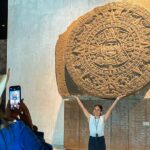
The National Museum of Anthropology is one of Mexico City’s essential sights, but its size can work against you. The collection covers many cultures, regions, centuries, and subjects. Without a plan, it is easy to admire a famous stone sculpture, read a label, and move on without understanding how the object fits into the larger picture.
This tour gives you that larger picture. David’s stated aim is to show that Mexico’s pre-Hispanic past cannot be reduced to two famous names. You’ll examine the cultures and regions of Mesoamerica through their religion, politics, economy, architecture, traditions, and art.
That approach matters. A ceremonial object means more when you understand who used it, what power it represented, and how its meaning changed over time. A carved figure is not just an impressive piece of stone. It may reveal beliefs about rulers, gods, death, trade, or the natural world.
The public rating is 5 out of 5 from 88 reviews, with 100 percent of participants recommending the experience. The praise is especially consistent around David’s ability to explain difficult subjects in plain language, answer questions patiently, and keep both children and adults involved.
A few more Mexico City tours and experiences worth a look
Meeting David Huesca at the museum
You meet at the National Museum of Anthropology, on Paseo de la Reforma in Chapultepec, and return to that same point at the end. The meeting place is practical if you are already visiting Chapultepec or staying near Polanco. It is also close to public transportation.
David leads the tour himself under the name Un Joven Arqueólogo Tours. Several comments identify him as Pakalito, or Paquito, and make clear that you should expect the advertised archaeologist rather than an assistant.
His style combines formal training with a friendly presentation. He explains timelines, symbolism, and cultural differences, but also uses humor and stories. That balance is useful in a museum where a long stream of dates and unfamiliar names can quickly blur together.
You should tell him before the tour if one culture or subject matters most to you. The experience is private, so there is room to shape the route around your interests. That does not mean you will see every room. It means your three hours can be used more intelligently.
The main galleries: Mesoamerica beyond the familiar names
The heart of the tour is a guided visit through the museum’s principal exhibition halls. The stated focus is broad: the great cultures of Mesoamerica, their regions, and the changes that took place over time.
You can expect the route to include major works associated with cultures such as the Maya, Aztecs, and Teotihuacan, while also placing those better-known societies beside others that receive less attention in popular travel talk. This is one of the tour’s best features. Mexico’s pre-Hispanic world was not one single civilization, and the museum’s collection makes that clear.
David explains historical timelines so the galleries do not feel like isolated displays. You’ll work toward an understanding of which cultures came earlier, which overlapped, and how ideas, artistic forms, and political systems developed across different areas.
The subject list is wide:
- Religion and the possible meaning of sacred objects
- Political power and the role of rulers
- Trade and economic life
- Architecture and city planning
- Local traditions and daily customs
- Changes within cultures over time
The wording possible meanings is important. Archaeology often deals with evidence rather than perfect certainty. A good guide can explain what scholars think, what an object may have represented, and where interpretation remains open. That is more useful than presenting every theory as fact.
David also uses visual material on an iPad. Historical documents, illustrations, and comparison images can help you see details that are difficult to understand from a label alone. This is particularly useful when a display contains symbolism or when an artifact’s original setting is no longer obvious.
Why the visual aids help children and first-time visitors
A museum tour can lose younger visitors if it depends only on dates and long explanations. David’s use of images and activities gives him another way to make the material clear. Families with children as young as six and seven have found the tour accessible, while older children and teenagers can engage with more complex questions.
That does not mean the tour is only for families. Couples and adults without children also benefit from the same tools. A quick drawing or comparison image can explain a complicated architectural form faster than several paragraphs of text.
The private setting helps here. If your child needs to sit for a moment, ask a question, or move at a different pace, the guide can respond without holding up a large group. One family specifically appreciated that David included breaks when needed.
You should still expect a serious museum visit. This is not a theatrical performance or a light sightseeing walk. The subject is demanding, and three hours on your feet requires moderate physical fitness. But the tone is warm, and the presentation appears designed to keep the material moving.
Three hours inside a very large collection
The tour lasts about three hours, with admission included. That length works well as an introduction. You can see important highlights, learn the basic cultural framework, and leave with enough direction to return for galleries that deserve more time.
Several participants ended up spending closer to four hours with David when traffic caused a late arrival or when the visit ran long. You should not count on extra time, but it suggests some flexibility in the way he handles the appointment.
Do not expect to inspect every artifact. The museum is vast, and a guide who tries to cover everything will either rush you or turn the visit into a list of names. A strong three-hour route should give attention to selected masterpieces and use them to explain wider ideas.
I would schedule this near the beginning of your Mexico City stay. One useful effect of the tour is that it gives you a visual and historical base for later visits. Afterward, places such as Teotihuacan can make more sense because you recognize themes, artistic features, and cultural connections introduced at the museum.
If you are already an expert in Mesoamerican archaeology, you may want to request a narrower route focused on a particular period or set of objects. For most first-time visitors, the broad approach is the better choice.
Other private tours in Mexico City



What makes the private format worth the price
The cost is $98 per person. That is not the cheapest way to enter a museum, since the price includes more than the admission ticket. You are paying for a private archaeologist, a planned route, tailored explanations, and digital support material.
Value depends on how you use the experience. If you prefer to move quickly, read labels, and return later to study the collection alone, the extra cost may not suit you. If you want to understand what you are seeing and have someone answer questions as they arise, the price is easier to justify.
The private format is particularly useful for a mixed group. Parents can ask for explanations that work for children, while history-minded adults can ask for more detail. You also avoid the fixed pace of a large group and do not need to worry about whether your questions are holding up strangers.
The strongest value comes from the guide’s interpretation. Museum labels can identify an object, date, and culture. David adds the links between those facts. He explains symbolism, political context, and the way different Mesoamerican societies fit into a longer sequence.
The admission fee and digital support material are included. Food and drinks are not, so plan those separately before or after the museum.
The guide’s teaching style and level of expertise
David Huesca is described as an archaeologist with a strong educational background in the subject. His main strength is not simply knowing many facts. It is turning that information into a clear explanation for people who may have little background in archaeology.
His presentation is energetic but not forced. He uses humor, direct answers, stories, images, and questions to keep the tour moving. You can expect a guide who is passionate about the subject but still willing to adjust his explanation to your level.
That flexibility comes through in the way he works with different ages. Families with a six-year-old and a history-focused older child can receive different kinds of explanations during the same visit. Adults who want more detail can ask for it without making the tour inaccessible to everyone else.
The repeated praise for his symbolism explanations is worth noting. The museum is full of objects whose visual language may not be familiar to you. David helps explain what certain gestures, animals, costumes, or arrangements may suggest, while keeping the discussion tied to archaeological evidence.
He also offers suggestions for other things to see in Mexico. Those recommendations are an extra benefit, although the tour itself remains focused on the museum rather than becoming a general Mexico City sightseeing service.
Practical details for planning the visit
The tour is offered in English and runs Tuesday through Saturday between 9 a.m. and 3 p.m. The stated operating dates extend from March 25, 2024, through February 24, 2027.
Confirmation is sent within 48 hours of booking, subject to availability. Since the experience is commonly booked about 29 days in advance, reserve earlier if you are visiting Mexico City on a short schedule or during a busy travel period.
The meeting point is Av. Paseo de la Reforma, in the Polanco and Chapultepec area. The activity ends back at the museum. Public transportation is nearby, but you are responsible for getting to the meeting point.
Wear comfortable shoes and be ready for a moderate amount of walking and standing. You can ask for breaks, but this is still a three-hour museum visit. Service animals are allowed.
The weather policy is worth keeping in mind because the experience requires good weather. If poor weather causes cancellation, you will be offered another date or a full refund. You can cancel for a full refund up to 24 hours before the start time. Changes or cancellations within 24 hours are not accepted for a refund.
Who should book this museum tour
I would recommend it most strongly to first-time visitors who want a clear introduction to Mesoamerican cultures. The museum can feel overwhelming, and a good framework early in your trip can improve later visits to archaeological sites.
It is also a strong choice for families. The private setting, visual aids, patience, and ability to adapt the explanation make it easier to hold the attention of children and teenagers.
Couples and adult groups who enjoy museums will appreciate the chance to ask detailed questions. You are not limited to the information on the wall, and you can request more explanation about a specific culture, object, or theme.
You may not need this tour if you already have specialist training in Mesoamerican archaeology or if your goal is simply to browse the museum at your own pace. Even then, you could ask David to build a more focused visit around a narrow subject.
Should you book it?
Book this tour if you want the National Museum of Anthropology to make sense, not just look impressive. The private setting, three-hour route, archaeologist guide, and visual material give you a useful way into one of Mexico City’s largest museums.
The best strategy is to schedule it early in your trip and tell David what interests you before you arrive. At $98 per person, it is a meaningful extra expense, but the value is strong if you want context, clear storytelling, and the freedom to ask questions.
Skip it only if you prefer independent browsing or plan to spend several days studying the museum on your own. For most first-time visitors, this is a practical and engaging way to understand why Mexico’s pre-Hispanic past reaches well beyond the Maya and Aztecs.
FAQ
How long does the private museum tour last?
The tour lasts approximately three hours. Some visits may run longer, but you should plan around the stated three-hour duration.
Who leads the experience?
The tour is led by archaeologist and professional guide David Huesca, also known as Pakalito or Paquito. The experience is provided by Un Joven Arqueólogo Tours.
Is the tour private?
Yes. Only your group participates, allowing the guide to adjust the pace and respond to your questions.
Is admission to the museum included?
Yes. The entrance fee is included in the price, along with digital support material.
What language is offered?
The experience is offered in English.
Where does the tour start and finish?
It starts at the National Museum of Anthropology on Paseo de la Reforma in Chapultepec and ends back at the same meeting point.
Can I cancel for a full refund?
Yes. You can cancel at least 24 hours before the start time for a full refund. Cancellations or changes made less than 24 hours before the start time are not accepted for a refund.
More Museum Experiences in Mexico City


More Private Tours in Mexico City
More Chapultepec & Museum Tours in Mexico City
More tours in Mexico City we've reviewed





Chapultepec & Museum Tours, compared.
 ★ 4.4CDMX: Xochimilco, Coyoacan, Frida Kahlo Museum & Murals TourFrom $89
 ★ 4.5Chapultepec Castle & Anthropology Museum TourFrom $795 hours (approx.)
 ★ 5.0Frida Kahlo VIP [Museum Tickets Included] Bike, Markets & ChurrosFrom $834 hours (approx.)
 ★ 4.5Anthropology Museum Guided TourFrom $392 hours 30 minutes (approx.)
 ★ 5.0Frida Kahlo VIP [Museum Tickets Included] Walk, Markets & ChurrosFrom $833 to 4 hours (approx.)
 ★ 5.0EXCLUSIVE TOUR Frida Kahlo Museum – SMALL GROUPSFrom $862 hours (approx.)
 ★ 4.4Mexico City: Anthropology Museum Guided VisitFrom $672.5 hours
 ★ 4.5Mexico City: Frida Kahlo Museum Entry Ticket w/Digital GuideFrom $34
The lists this tour appears in