
Reviewed · WORKSHOPS
Acolman-Teotihuacán-Plaza of the Three Cultures- Craft Workshop
Teotihuacán is the star here, but this tour gives you more than a pyramid photo. In one morning, you move from the layered history of Plaza de las Tres Culturas to the broad ceremonial avenue and pyramids of ancient Teotihuacán, then on to a sixteenth-century convent and a local craft workshop.
In This Article
- Key points to know before booking
- A morning that links three Mexicos
- Plaza de las Tres Culturas: a quick lesson in layered history
- Teotihuacán’s Avenue of the Dead and great pyramids
- Acolman’s convent and the craft workshop
- What the guide and group format mean
- Pickup, meeting point, and timing
- Is the $46.80 price good value?
- What to bring and how to pace yourself
- Who should book this tour?
- Should you book it?
- FAQ
- How long does the tour last?
- What time does the tour start?
- Is hotel pickup available?
- Where is the meeting point for guests without hotel pickup?
- Is the tour offered in English?
- Can you climb the pyramids?
- Are tequila, mezcal, and pulque included?
- Is admission to the Acolman monastery museum included?
- Can I cancel for a full refund?
I like the mix of major sights and smaller cultural stops. The tasting of tequila, mezcal, and pulque adds a distinctly Mexican touch, while guides such as Carlos and Eli have earned praise for making the day lively. The catch is that the workshop can feel sales-focused, and Acolman may be closed during remodeling.
Key points to know before booking
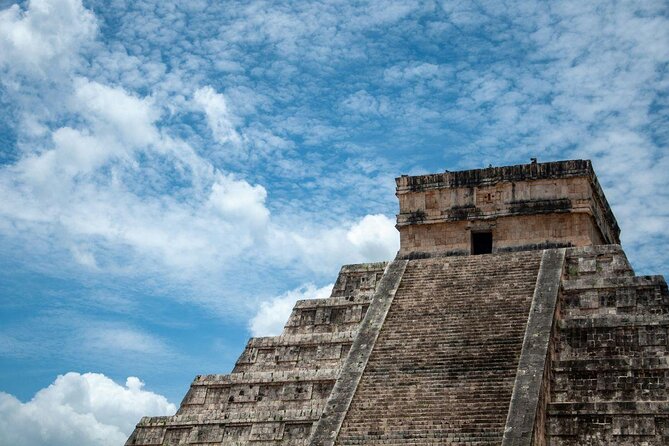
- Teotihuacán takes about four hours: You have time for the Avenue of the Dead, the Pyramids of the Sun and Moon, the Citadel, and Quetzalpapalotl.
- The tour covers three eras: Plaza de las Tres Culturas brings pre-Hispanic, colonial, and modern Mexico together in one stop.
- Three drinks are included: You can taste tequila, mezcal, and pulque at the artisan visit.
- The group may include two languages: This is a shared English and Spanish tour, not an English-only departure.
- You cannot climb the pyramids: The stated restriction prevents visitors from climbing them.
- Pickup has limits: Hotel pickup is offered only from selected hotels. Airbnb stays and private residences must use the meeting point near Monumento a la Revolución.
A morning that links three Mexicos
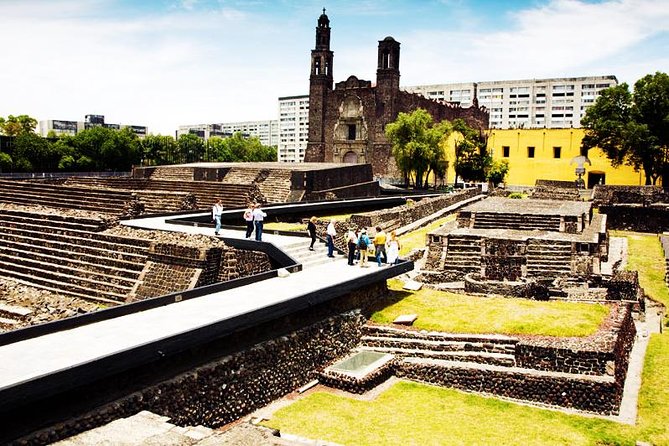
This six-hour excursion works because its stops tell a connected story. At the Plaza de las Tres Culturas, you see the remains of pre-Hispanic Mexico beside the Temple of Santiago Apostol from the colonial period, with modern buildings completing the scene.
It is a quick panoramic visit rather than a long archaeological tour. Still, it is a useful opening because you are not looking at ancient ruins in isolation. The plaza shows how Mexico City was built layer upon layer, with older structures remaining part of the modern city.
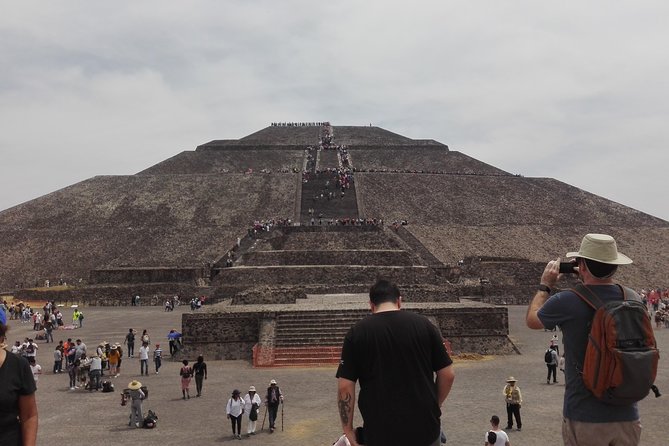
The next stop is Teotihuacán, the main reason to book. The ancient city covers more than four kilometers and once held more than 100,000 people at its height. That scale matters. Even before your guide explains the site, the broad layout helps you understand that this was a major urban center, not simply a pair of isolated pyramids.
The final visit combines Acolman’s former convent with a craft stop and drink tasting. It is a different kind of history, moving from monumental ruins to colonial architecture and living traditions. The pace is brisk, but the range is unusually good for a half-day outing from Mexico City.
A few more Mexico City tours and experiences worth a look



Plaza de las Tres Culturas: a quick lesson in layered history
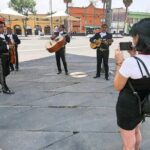
The Plaza de las Tres Culturas is designed for a panoramic look. You will see pre-Hispanic pyramid remains, the Temple of Santiago Apostol, and nearby modern buildings in the same frame.
The value here is visual and historical. The stop helps you recognize three periods at once:
- Pre-Hispanic Mexico, represented by the ruins
- Colonial Mexico, represented by the sixteenth-century church
- Modern Mexico, represented by the surrounding buildings
Do not expect the same amount of time here as at Teotihuacán. This is a short orientation stop, not the central archaeological visit. I like it as a first chapter because it sets up the idea that Mexico City is a place where old and new often share the same block.
If you enjoy urban history, this may be one of the most thought-provoking parts of the day. If you mainly want pyramid time, keep your expectations in check. The schedule gives Teotihuacán the bulk of the morning.
Teotihuacán’s Avenue of the Dead and great pyramids
At Teotihuacán, you spend about four hours inside the archaeological zone. That is enough time to get a real sense of the site instead of rushing in for one photograph and leaving.
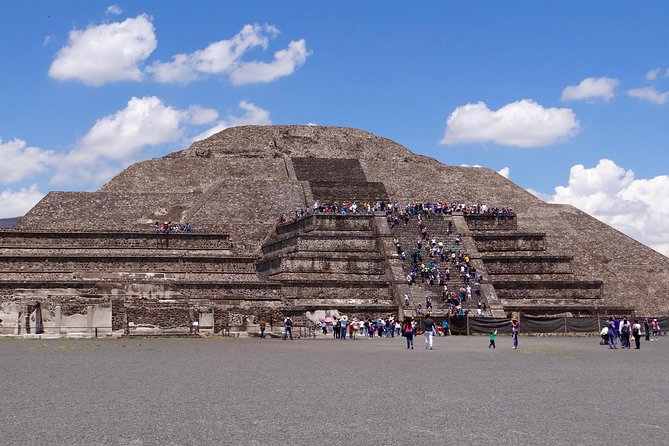
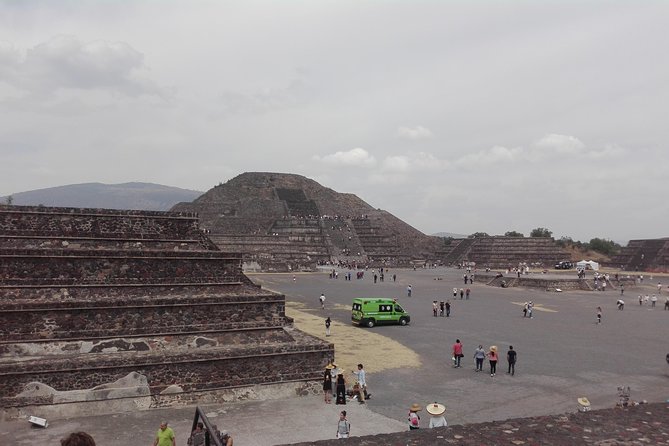
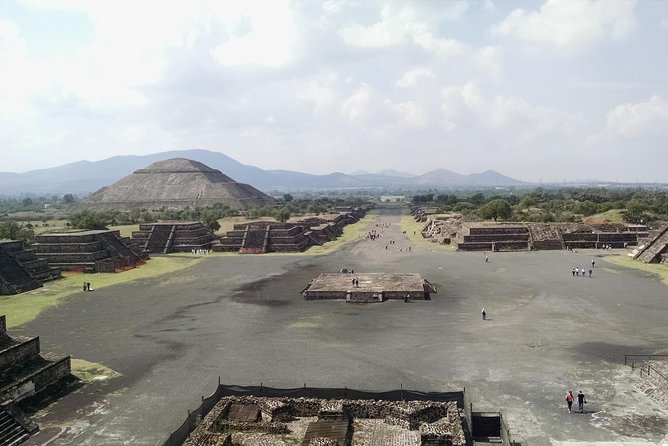
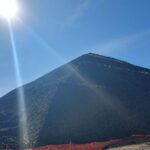
The route includes the Pyramids of the Sun and Moon, the Avenue of the Dead, the Citadel, and the Temple of Quetzalpapalotl. Each area gives you a different view of the ancient city.
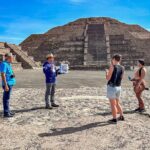
The Avenue of the Dead provides the clearest sense of urban planning. It leads your eye through the ceremonial center and helps explain the relationship between the major buildings. The Pyramids of the Sun and Moon provide the familiar landmarks, but the surrounding plazas and platforms are just as important for understanding how the site functioned.
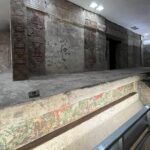
The Citadel adds another large ceremonial area to the visit. Quetzalpapalotl brings attention to the detailed architectural work, a welcome change after the massive geometry of the pyramids. Your bilingual guide is especially useful here because the scale can make the site difficult to read without context.
You cannot climb the pyramids under the stated restriction. That changes the visit, but it does not remove the main attraction. You still see the structures, the avenues, and the ceremonial spaces from ground level. Plan on walking across a large open site, so comfortable shoes and protection from the sun are sensible choices.
The four-hour block is generous compared with a quick stopover. It also creates the main practical tradeoff: Teotihuacán can be tiring, and the whole day continues afterward. I would treat this as an active sightseeing morning rather than a relaxed outing.
Acolman’s convent and the craft workshop
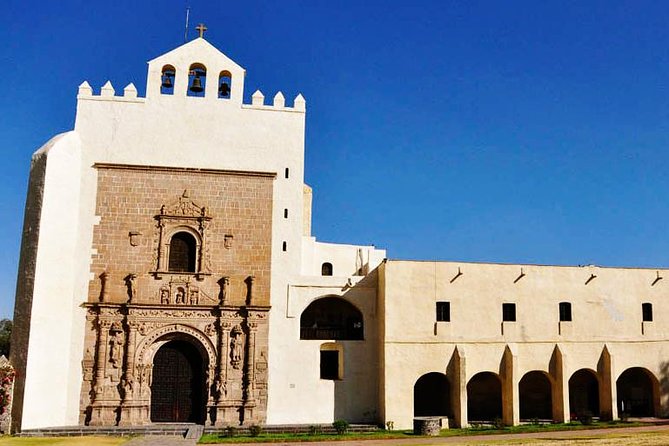
The Acolman portion lasts about an hour and has two parts. You visit the former convent, dating from the sixteenth century, and stop at a handicraft center for an explanation of local crafts and a tasting of tequila, mezcal, and pulque.
The former convent adds a colonial chapter after the pre-Hispanic sites. Its inclusion makes the day feel less one-note, especially if you want to connect Mexico’s ancient past with the period that followed Spanish arrival.
There is an important warning here. Acolman is undergoing remodeling, and it may close without fixed reopening or closing dates. If the convent is closed on your date, the stop may not deliver what you expected. The tour information also says admission to the Monastery Museum is not included, so you should not assume that every interior or museum area is part of the visit.
The artisan center can be useful if you want an introduction to Mexican crafts and traditional drinks. It is also the part of the tour that demands the most care from your wallet. One harsh account describes the workshop as mainly focused on selling trinkets and food, with costly items on offer. I would enjoy the explanation and tasting, but treat purchases as optional. Do not feel that buying something is part of the price of admission.
The tasting includes tequila, mezcal, and pulque, three drinks with very different identities. The information provided does not specify the amount served or the exact format, so think of this as a sampling rather than a full beverage experience. Food and other drinks are not included.
What the guide and group format mean
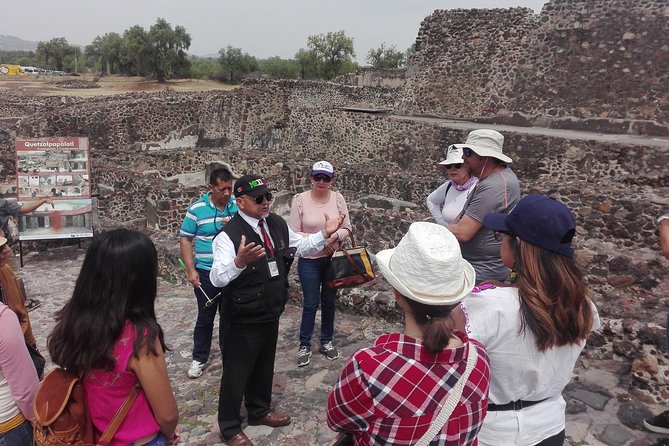
A professional bilingual guide in English and Spanish accompanies the tour. Carlos and Eli are specifically associated with a positive account of the experience, with their energy helping make the day more enjoyable.
You should know that this is a shared bilingual service. It is not guaranteed to be an English-only or Spanish-only departure. The guide may divide explanations between the two languages, depending on the group. That can lengthen some stops and make the day feel less tailored, but it also allows mixed-language groups to travel together.
The maximum group size is 50 people. That is a fairly large coach group for archaeological sightseeing. A larger group can keep the price down, but it may mean waiting for people at meeting points and standing near the guide to hear explanations. If you prefer a quiet, highly personal visit, this format may frustrate you.
The tour has an overall rating of 4.1 from 24 ratings, which suggests a generally positive but not flawless experience. The praise centers on guide energy, while the sharp criticism focuses on the commercial feel of the artisan stop and the possibility of missing the pyramid visit. Those are not small details, so they should shape your decision.



Pickup, meeting point, and timing
The advertised start time is 9:00 a.m., but hotel pickup occurs earlier. You must call to confirm the exact pickup time, which can be 15 to 60 minutes before the activity begins.
Pickup is available only from the hotels shown during booking. It is not available from apartment buildings, private homes, or Airbnb properties. If you are staying somewhere outside the listed hotels, go to the meeting point at Avenida de la República 154 in Tabacalera, near Monumento a la Revolución, behind the Barceló Reforma hotel and in front of the ISSSTE building.
Hotel pickup does not take you straight to the archaeological site. You are first transferred to the main meeting point, where you join the wider tour group. That extra step explains why the morning can feel less direct than a private departure.
The tour returns to the meeting point, with hotel drop-off included for the selected hotels. Return time can change because of traffic or the number of people in the group. Do not schedule this on the same day as a flight. A delay on the road is outside the operator’s responsibility, and Mexico City traffic can make a fixed return time unwise.
Is the $46.80 price good value?
At $46.80 per person, the price is attractive for a six-hour outing that includes transportation, a professional bilingual guide, admission to the Teotihuacán archaeological zone, the Plaza de las Tres Culturas visit, travel insurance, taxes, the craft stop, and the drink tasting.
The strongest value is the transport and guiding. Teotihuacán is well outside central Mexico City, and arranging transport on your own adds time and planning. The guide also gives structure to a huge site that can be hard to understand from signs alone.
The price is less impressive if you care only about the pyramids. The day includes a panoramic plaza stop and an artisan visit, and the bilingual group format may make the schedule feel less focused. Food is not included, and the Acolman museum admission is extra.
I see this as good value for someone who wants a broad introduction to several periods of Mexican history in one morning. It is a weaker match for someone who wants a private archaeological guide, an English-only group, or a long, quiet visit at Teotihuacán.
What to bring and how to pace yourself
The supplied details do not list a packing requirement, but the route itself tells you how to prepare. You will spend about four hours at a large archaeological site, so walking comfort matters. Bring anything you normally need for a long outdoor sightseeing visit.
Give yourself room to listen. Teotihuacán rewards attention to the layout, not just quick photographs. If the group is large, stay close enough to the guide to hear the explanations, especially around the major plazas.
At the craft workshop, decide in advance how you want to handle shopping. You can listen to the craft presentation and take part in the tasting without treating the sales area as a required purchase. That simple boundary helps keep the stop from overshadowing the archaeological visit.
Also remember that the day has several transitions. Hotel pickup, the central meeting point, the drive outward, the archaeological zone, Acolman, and the return all fit into roughly six hours. The schedule is efficient, but not leisurely.
Who should book this tour?
I would recommend it to first-time visitors who want a guided introduction to Teotihuacán without arranging long-distance transport themselves. It suits you especially well if you like combining major ruins with colonial architecture, city history, crafts, and local drinks.
It can also work for families and mixed-interest groups, since the day changes subject several times. A person who is less interested in archaeology may appreciate the church and artisan visit, while a history-minded companion gets the long Teotihuacán stop.
I would hesitate if you dislike group tours, sales-oriented craft centers, or bilingual commentary. I would also avoid booking it right before a flight, since return time can shift. If Acolman is a must-see for you, confirm its current status before departure because remodeling may close it on short notice.
Should you book it?
Book this tour if you want a low-cost, wide-ranging day with Teotihuacán at its center. The included admissions, transport, guide, and tastings make the $46.80 fare sensible, and the four-hour archaeological visit gives the pyramids proper attention.
Skip it if your priority is a private or English-only experience, or if you want every minute devoted to Teotihuacán. Keep the artisan stop in perspective, and confirm pickup details and Acolman’s status before you go. With those expectations set, this is a practical way to connect ancient ruins, colonial Mexico, and modern city life in one organized outing.
FAQ
How long does the tour last?
The experience lasts approximately six hours, including the visits to Plaza de las Tres Culturas, Teotihuacán, and Acolman.
What time does the tour start?
The stated start time is 9:00 a.m. Hotel pickup can take place 15 to 60 minutes earlier, so you need to call and confirm the exact pickup time.
Is hotel pickup available?
Yes, pickup and drop-off are available from selected hotels shown during booking. Pickup is not available from private residences, apartment buildings, or Airbnb properties.
Where is the meeting point for guests without hotel pickup?
The meeting point is at Avenida de la República 154 in Tabacalera, near Monumento a la Revolución, behind the Barceló Reforma hotel and in front of the ISSSTE building.
Is the tour offered in English?
Yes, an English and Spanish bilingual guide is provided. The service is shared, so the tour is not guaranteed to be English-only.
Can you climb the pyramids?
No. The tour information states that climbing the pyramids is not permitted because of the pandemic-related restriction.
Are tequila, mezcal, and pulque included?
Yes, the artisan visit includes a tasting of tequila, mezcal, and pulque. Food and other drinks are not included.
Is admission to the Acolman monastery museum included?
No. Admission to the Monastery Museum at Acolman is not included. Acolman is also undergoing remodeling and may close without specific dates.
Can I cancel for a full refund?
Yes. You can cancel at least 24 hours before the local start time for a full refund. Cancellations or changes made within 24 hours are not refunded or accepted.
More Workshops & Classes in Mexico City


More tours in Mexico City we've reviewed



Workshops, compared.
 ★ 5.0Mexican Cooking Class with Food Market Visit in Mexico CityFrom $1243 hours 30 minutes (approx.)
 ★ 5.0Essence of Mexico: Authentic Mexican Cooking Class & Market TourFrom $1784 hours 30 minutes (approx.)
 ★ 5.0Mexican Cooking Class & Cocktails in Mexico CityFrom $1323 hours 30 minutes (approx.)
 ★ 5.0Private Mexican Cooking Class with Gastronomic Historian, LuciaFrom $1453 hours (approx.)
 ★ 5.0Mexican Churros Master ClassFrom $702 hours (approx.)
 ★ 4.8Mexico City: Mexican Cooking ClassFrom $1213 hours
 ★ 5.03h Cooking Class in Mexico City: 8 Recipes & Bottomless DrinksFrom $1104 hours (approx.)
 ★ 5.0Private San Angel Tour & Cooking Class in Mexico City with LuciaFrom $1555 hours (approx.)
The lists this tour appears in