
Reviewed · GUIDED
Discover Mexico City: 3-Day Private Guided Tour
Mexico City packs Aztec temples, grand Spanish-era squares, Diego Rivera’s volcanic-stone museum, Frida Kahlo’s home, and floating gardens into three busy days. This private tour gives you one guide and one vehicle for the full route, so you can cover far more ground than you could on foot or by public transport alone.
In This Article
- Key points to know before booking
- What this three-day route does well
- Day 1: Teotihuacan, Guadalupe, and the city center
- Teotihuacan and the Avenue of the Dead
- Basilica de Santa Maria de Guadalupe
- Mexico City’s Historic Center
- Day 2: Xochimilco, Rivera, UNAM, and Frida Kahlo
- Xochimilco by trajinera
- Museo Diego Rivera Anahuacalli
- UNAM’s Central Library
- Coyoacan and Frida Kahlo’s Blue House
- Day 3: Chapultepec Castle and Mexico’s great museum
- Chapultepec Castle above Paseo de la Reforma
- National Museum of Anthropology
- Is $450 per person a fair price?
- Pace, comfort, and practical details
- Who should book this Mexico City tour?
- FAQ
- How long is the tour?
- What is the tour price?
- Is the tour private?
- Is a guide included?
- Is transportation included?
- Where does the tour start?
- What time does the tour start?
- Are entrance tickets included?
- Are meals included?
- Can the tour be canceled for a refund?
I like the wide cultural range, from the Pyramids of the Sun and Moon to UNAM’s modern mural art. I also like the personal touch: guides such as Alex and Carlos have helped make the days work for different needs, including an elderly parent. The main drawback is the pace. You will see a lot, but several stops allow just enough time for an introduction rather than a slow, thoughtful visit.
Key points to know before booking
- Teotihuacan opens the tour with three hours among Mexico’s greatest ancient monuments.
- A private vehicle and guide make a far-flung schedule practical.
- Coyoacan combines Frida Kahlo, Diego Rivera, galleries, plazas, and everyday neighborhood life.
- Xochimilco includes a trajinera ride through old canals, with music and local color around you.
- The Anthropology Museum and Chapultepec Castle give Day 3 a strong historical finish.
- The $450 price includes admissions, transport, guiding, snacks, and non-alcoholic drinks, but not meals or insurance.
What this three-day route does well
This is a sightseeing-heavy introduction to Mexico City. You are not simply visiting the famous center, then returning to the same area each afternoon. The route reaches the northeastern pyramids, the southern neighborhoods of Coyoacan and Xochimilco, the UNAM campus, and the central museums around Chapultepec.
I like that the schedule connects places that explain one another. At Teotihuacan, you see the scale of an ancient city. At Templo Mayor, you see what happened when Spanish Mexico was built over Tenochtitlan. At the Anthropology Museum, the objects and cultures you encountered outdoors are given a larger setting.
The private format matters here. Mexico City is vast, and the stops are spread across a huge urban area. You get pickup and drop-off with the private option, a dedicated vehicle, and a guide who can explain the setting as you go. Most guides speak English and Spanish. Other languages may be possible by request, with an added fee, so confirm that before paying.
The program begins at 9:00 a.m. and ends back at the meeting point, listed as the Angel of Independence on Paseo de la Reforma. Hotel pickup and drop-off are included only for the private option. If your accommodation is outside the stated pickup areas, an extra fee of $10 to $40 may apply.
Other guided tours in Mexico City
Day 1: Teotihuacan, Guadalupe, and the city center
Teotihuacan and the Avenue of the Dead
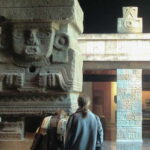
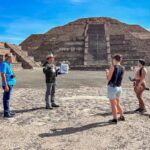
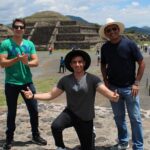
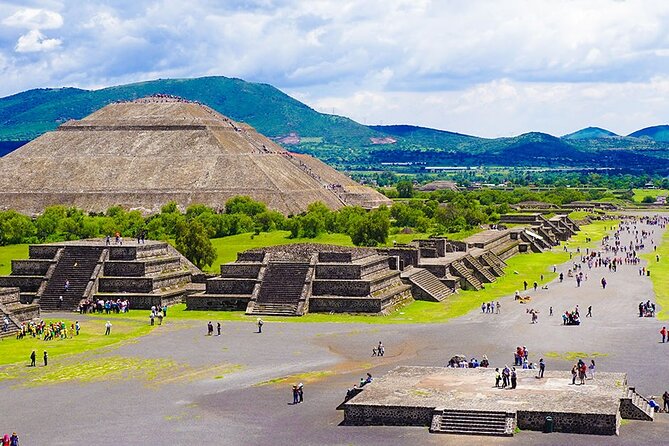
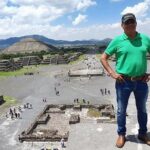
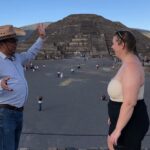
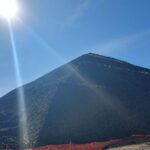
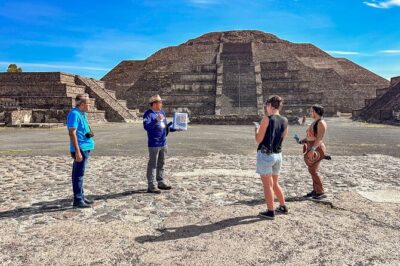
The first morning goes to Teotihuacan, about three hours of guided sightseeing at the archaeological zone. You will see the Pyramids of the Sun and Moon, walk along the Avenue of the Dead, and visit the Temple of Quetzalpapalotl.
This is the dramatic start the tour needs. Teotihuacan is not a small ruin with one famous building. Its broad ceremonial avenue and huge pyramids show the scale of a city that once shaped central Mexico. The open setting also gives your guide room to explain how the different structures fit together.
Three hours is a useful amount of time for a first visit. You can walk, stop for photographs, and hear the main story without spending the whole day under the sun. Wear comfortable shoes and bring protection from heat, since the visit involves outdoor walking. Admission is included, and the vehicle gives you a place to rest on the return drive.
The tradeoff is that this is an overview, not an archaeological study. If Teotihuacan is your main reason for coming to Mexico, you may want more time than this schedule allows. For a first look at Mexico City’s ancient world, though, the stop earns its place.
Basilica de Santa Maria de Guadalupe
Back in the city, the tour turns to the Basilica of Guadalupe, one of the world’s most visited religious destinations. You get about two hours to walk around the site and learn about the Virgin of Guadalupe and the story of her appearance to Juan Diego in 1531.
This stop is useful because it introduces a major part of Mexican religious life, not just another church interior. The story centers on Juan Diego’s cloak, which is said to preserve the sacred image. Your guide can provide the cultural and religious setting, while you take in the scale of the complex.
Approach this as a place of active faith, not only as a sightseeing photo stop. Two hours gives you time to look around without rushing, although the experience can feel more devotional than museum-like depending on the day.
Mexico City’s Historic Center
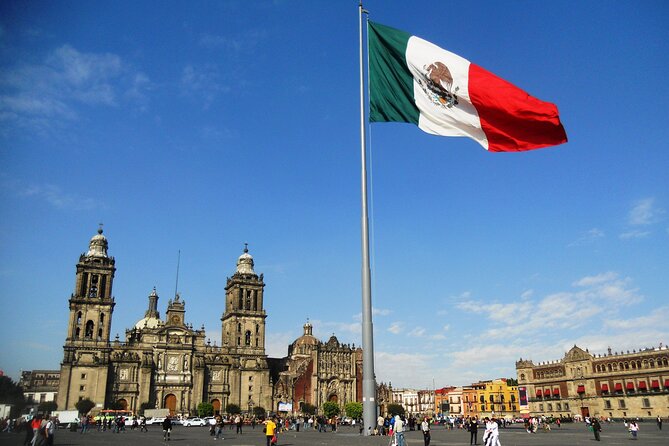
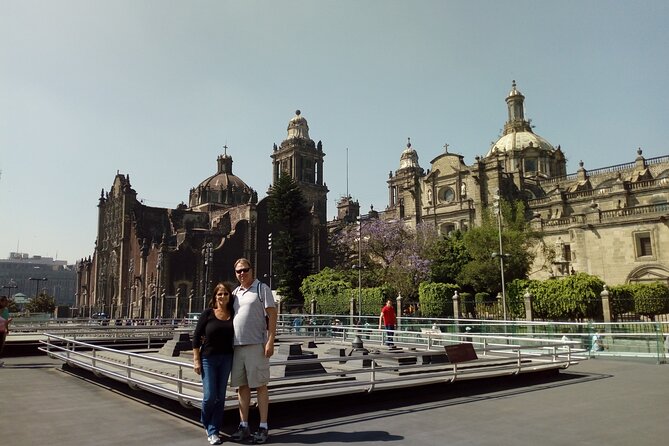
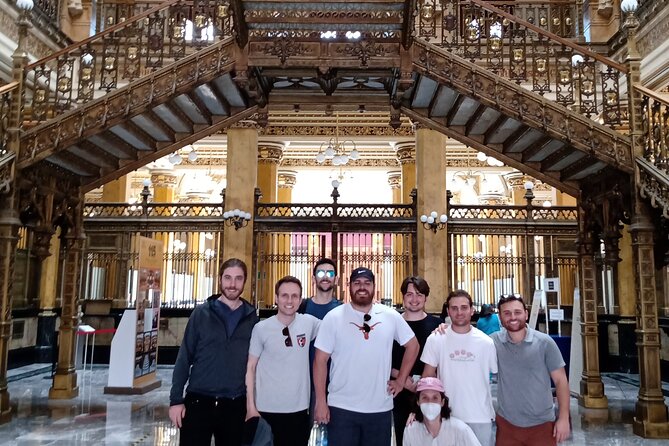
The afternoon continues in the Centro Historico, the city’s architectural and civic core. You will see the Zocalo, the remains of Templo Mayor, Madero Avenue, the Palace of Fine Arts, and parts of the area’s large collection of museums and historic buildings.
The great strength here is the layering. Mexico City began as Tenochtitlan, the Aztec capital, and later became a Spanish colonial center. The modern city grew around both. Near Templo Mayor, you can see physical evidence of the pre-Hispanic city beside buildings shaped by Spanish rule.
The Zocalo gives you the broad civic view, while Madero Avenue leads through a more intimate stretch of historic architecture. The Palace of Fine Arts adds a different note, with its European influence and place in Mexico’s 20th-century cultural life.
Three hours is enough for a guided walk through the major sights. It is not enough to visit several museums in depth. I would treat the center as an orientation, then make a note of any museum or building you want to revisit on your own.
Other city tours we've reviewed in Mexico City



Day 2: Xochimilco, Rivera, UNAM, and Frida Kahlo
Xochimilco by trajinera
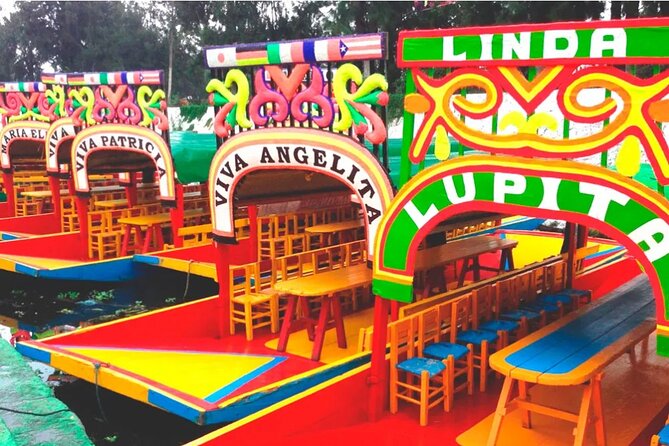
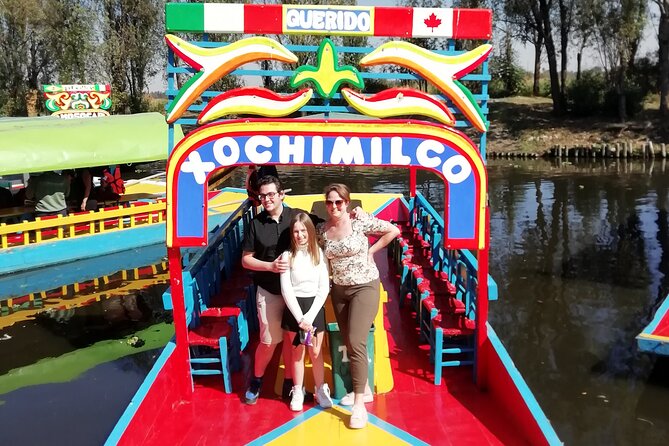
Day 2 begins in Xochimilco, whose Nahuatl name means Field of Flowers. The area preserves old canals from the period when the Mexico Valley was largely covered by lakes and lagoons. You will take a ride in a trajinera, the colorful flat-bottomed boat often compared with a Mexican gondola.
The boat ride changes the rhythm of the tour. After a day of monuments and city streets, you are on the water, surrounded by music, parties, mariachis, marimba, and traces of older agricultural and cultural traditions. The canals are not a quiet wilderness outing. They are social, musical, and distinctly local in character.
Two hours gives you a good introduction. Ask your guide how the canals connect with pre-Hispanic life and how Xochimilco has kept cultural traditions alive within the modern capital. The included boat ride is a real benefit, since arranging a trajinera independently can add time and uncertainty to an already packed visit.
Museo Diego Rivera Anahuacalli
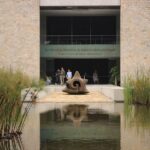
The Anahuacalli Museum is one of the more unusual stops on the route. Diego Rivera designed the building to hold his large collection of pre-Hispanic art. It is built from dark volcanic rock found in the surrounding El Pedregal area, shaped by the eruption of the Xitle volcano.
The building itself is part of the experience. It does not feel like a standard white-walled museum. Its volcanic material links the structure to the ground beneath the southern part of the city, while the collection points back to ancient Mexican cultures.
You have about an hour here. That is enough to understand Rivera’s purpose and see selected objects, but not enough to examine a large collection slowly. If you enjoy art, archaeology, and architecture, this is one of the tour’s most distinctive stops. It also gives you a fuller picture of Rivera beyond his public murals.
UNAM’s Central Library
The brief UNAM visit lasts about 30 minutes and focuses on the university campus and the Central Library. The library’s exterior is covered in murals designed by Juan O’Gorman, and the campus is protected as a UNESCO World Heritage site.
This is a quick orientation rather than a full museum visit. The value is visual: you get to see how modern Mexican art and public architecture were brought together on a university campus. The murals reward a close look, so use your short stop well and ask your guide to point out the major themes.
Coyoacan and Frida Kahlo’s Blue House
Coyoacan means place of coyotes in Nahuatl. Today, it is known for galleries, cultural spaces, artisans, and its connection with Frida Kahlo, Diego Rivera, and David Alfaro Siqueiros.
I like the neighborhood walk because it gives the day a human scale. You are not only moving between formal institutions. You are also seeing a part of Mexico City associated with artists, local life, and public squares. The two-hour visit allows room for an orientation walk and some time around the neighborhood.
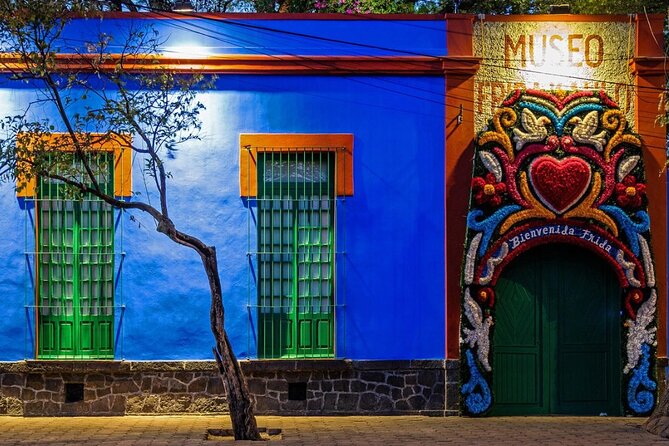
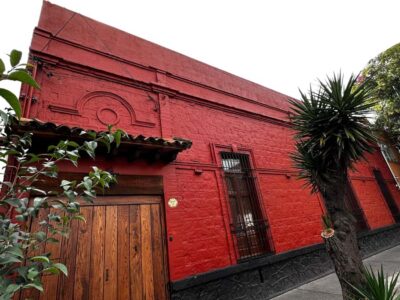
The Frida Kahlo Museum, known as the Blue House, is the main draw. Kahlo lived there with her family and later with Rivera. After her death, Rivera donated the house and its contents so it could become a museum in her honor.
The rooms remain much as they were in the 1950s. You will see work by Kahlo and Rivera, Mexican folk art, and pre-Hispanic objects displayed inside the house. That setting matters. Instead of seeing only isolated paintings on a gallery wall, you get a sense of the domestic world around the artist.
The visit lasts about an hour, which is practical but short. The museum is one of the most visited places in Mexico City, so the schedule may feel tight if you want to inspect every room. Still, the included admission and guided visit remove one major planning task from a busy day.
The second day covers a lot: canals, a volcanic-stone museum, a university campus, an artist neighborhood, and Kahlo’s home. I would wear comfortable shoes and keep expectations realistic. This is a rich day in subject matter, not a leisurely neighborhood stay.
Day 3: Chapultepec Castle and Mexico’s great museum
Chapultepec Castle above Paseo de la Reforma
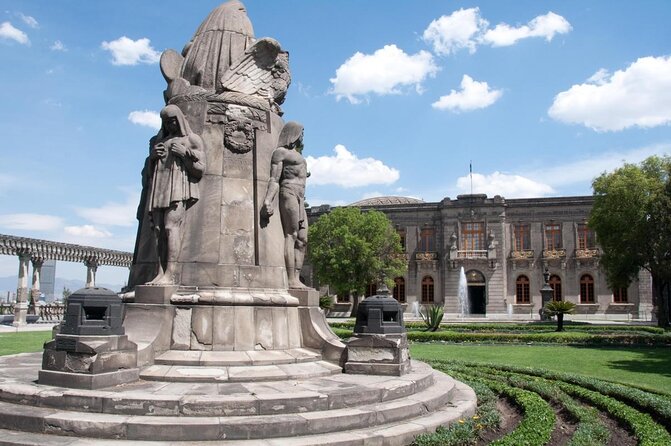
On the final day, you drive along Paseo de la Reforma toward Chapultepec Park. The route leads uphill to Chapultepec Castle, a former residence of viceroys, Emperor Maximilian of Habsburg, and several Mexican presidents.
The castle is valuable for its changing roles. Its rooms connect colonial rule, the short-lived empire of Maximilian, and later Mexican government. From its hilltop position, you also get a view over the city and the park.
One detail needs checking before you book: the supplied schedule lists only three minutes for this stop, which is almost certainly a timing error or an extremely abbreviated entry. The tour includes admission and a guided visit, but you should confirm the actual time allocated to the castle. A proper visit needs far more than a few minutes.
National Museum of Anthropology
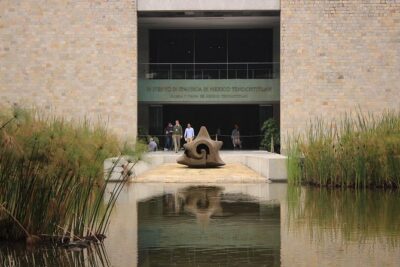
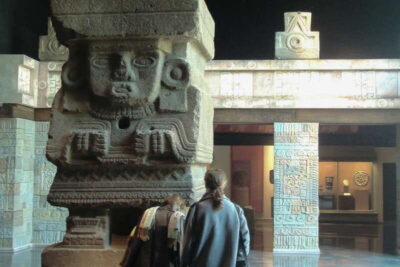
The three-hour visit to the National Museum of Anthropology is the strongest museum block in the program. Its collection includes ancient Mexican art as well as ethnographic displays about present-day Indigenous communities.
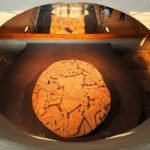
Among the major objects are Olmec figures and the 22-ton Aztec Sun Stone. The museum also displays ancient human remains and objects from many cultures. This is where the earlier stops gain context. Teotihuacan, Templo Mayor, and Rivera’s collection can all be understood more clearly after seeing the wider story of Mexico’s peoples and traditions.
Three hours lets your guide select important rooms and explain the main themes. It still will not cover every gallery. The museum is large, so do not worry about seeing every object. Focus on the sections that connect with your interests, and ask your guide to help you choose.
The day’s pairing works well: Chapultepec Castle gives you political and architectural history, while the Anthropology Museum brings the country’s ancient cultures and Indigenous communities into view.
Is $450 per person a fair price?
At $450 per person, this is not a budget tour. The value depends on how much planning help and private transport you want.
The price includes a private local guide, private vehicle, pickup and drop-off for the private option, entrance tickets, the Teotihuacan visit, the Anthropology Museum, Chapultepec Castle, Frida Kahlo Museum, Anahuacalli Museum, and the trajinera ride. It also includes non-alcoholic drinks and snacks.
You still pay for meals, insurance, tips, and personal purchases. Pickup outside the listed areas can cost another $10 to $40. The price also includes a sales commission from the booking platform, which limits the operator’s ability to reduce it.
For a solo visitor or couple, $450 may feel high. For a family or small group, the private format becomes easier to justify, especially if you value door-to-door transport and the ability to ask questions throughout the day. Group discounts may also be available.
The best comparison is not with a cheap walking tour. Compare it with the cost and effort of arranging transport to Teotihuacan, Xochimilco, Coyoacan, UNAM, Chapultepec, and several museums on your own. If you have only three days and want the major sights organized in one plan, the price can be reasonable.
Pace, comfort, and practical details
You begin at 9:00 a.m. The activity ends back at the meeting point at the Angel of Independence unless private pickup arrangements apply. A valid phone number with an international prefix is required, and you need to keep it available on the tour day so the guide can reach you.
Most people can take part, and the meeting point is near public transportation. The program includes a great deal of walking at archaeological sites, museums, plazas, and neighborhood streets. Comfortable shoes are essential.
This is a private activity, so only your group participates. That gives you more control than a large coach tour, but it does not turn the schedule into a relaxed one. If you need more time at Frida Kahlo’s museum or want to study the Anthropology Museum carefully, ask about adjusting the route before booking.
The experience is non-refundable and cannot be changed after booking. Bad weather or failure to meet the minimum number of participants can lead to a different date or a full refund. Since weather affects Teotihuacan and Xochimilco in particular, keep that rule in mind.
Who should book this Mexico City tour?
I would choose this tour if you are visiting Mexico City for the first time, have only three days, and want the major cultural sights arranged for you. It suits families, small groups, and anyone who prefers a private guide to figuring out a huge city alone.
It is also a good fit if you want both famous stops and less obvious connections, such as Anahuacalli’s volcanic architecture or UNAM’s O’Gorman murals. Guides such as Alex and Carlos have helped make the route work for different ages and interests, including a family traveling with an elderly mother.
I would not choose it if you want long museum visits, slow meals, or free afternoons. The schedule is ambitious, and the Chapultepec timing should be confirmed. Still, for a concentrated first look at Mexico City, the route offers strong coverage and useful historical links.
FAQ
How long is the tour?
The tour lasts approximately three days.
What is the tour price?
The listed price is $450 per person. Group discounts may be available.
Is the tour private?
Yes. This is a private activity, and only your group participates.
Is a guide included?
Yes. A private local guide is included. Most guides speak English and Spanish.
Is transportation included?
Yes. The private option includes transportation in a private vehicle, with pickup and drop-off.
Where does the tour start?
The listed meeting point is the Angel of Independence at Av. Paseo de la Reforma 342, Piso 27, Juarez, Cuauhtemoc, Mexico City.
What time does the tour start?
The stated start time is 9:00 a.m.
Are entrance tickets included?
Yes. Entrance tickets are included for Teotihuacan, the National Museum of Anthropology, Frida Kahlo Museum, Chapultepec Castle, and Anahuacalli Museum.
Are meals included?
No. Meals, personal expenses, tips, and personal travel insurance are not included. Non-alcoholic drinks and snacks are included.
Can the tour be canceled for a refund?
The experience is normally non-refundable and cannot be changed. If the operator cancels because of poor weather or because the minimum number of participants is not met, you will be offered another date or experience, or a full refund.
More Private Tours in Mexico City



More City Tours in Mexico City
More Guided Tours in Mexico City
More tours in Mexico City we've reviewed


Guided, compared.
 ★ 4.5Teotihuacan Early Access Guided Tour with optional LunchFrom $398 hours (approx.)
 ★ 4.5Anthropology Museum Guided TourFrom $392 hours 30 minutes (approx.)
 ★ 4.4Mexico City: Anthropology Museum Guided VisitFrom $672.5 hours
 ★ 4.5Mexico City: Frida Kahlo Museum Entry Ticket w/Digital GuideFrom $34
 ★ 5.0Guided Tour in Teotihuacan with Cave Breakfast and Transportation5 to 6 hours (approx.)
 ★ 5.0Teotihuacan Private Tour with Expert Guide & Cultural InsightsFrom $1408 hours (approx.)
 ★ 5.0Teotihuacan Early Morning Tour: Avoid Crowds, & Expert GuideFrom $808 hours (approx.)
 ★ 4.7Mexico City: Guided Volcano Trek with LunchFrom $1059 hours