
Reviewed · BIKE TOURS
Electric Bike City Tour with a taco stop.
Mexico City makes sense from a bicycle seat. In four hours, you can connect the Roma, Condesa, and Polanco neighborhoods with Reforma, Chapultepec Park, and the historic center, rather than seeing each area as a separate taxi ride. The electric motor helps you cover a lot of ground without turning the day into a race.
In This Article
- Key points to know before you book
- Why an e-bike is a smart way to see Mexico City
- Roma, Condesa, and the first look at local life
- Reforma, Plaza de la República, and Frontón México
- Alameda Central and the grand buildings of the historic center
- Barrio Chino, Plaza de San Juan, and the food breaks
- Chapultepec Park and Mexico City’s green spaces
- What the guide adds to the ride
- How much ground you cover, and what you miss
- Is $81 a fair price?
- Who should book this Mexico City ride?
- Should you book the Electric Bike City Tour?
- FAQ
- Where does the electric bike tour start?
- How long does the tour last?
- What languages are available?
- How many people can join the group?
- Is the electric bike included?
- Is food included?
- Do I need to know how to ride a bicycle?
- Is the tour suitable for children?
- What should I bring?
- Can I cancel for a full refund?
I like the way the route mixes grand sights with everyday food stops, including Pastelería Ideal, Barrio Chino, and a taco break. I also like the small group size, capped at nine people, and the way guides such as Eduardo and Sergio adjust the route to what you have already seen. The main drawback is simple: this is still four hours of cycling. The e-bike reduces the effort, but you need basic bicycle skills and should expect to finish pleasantly tired.
Key points to know before you book
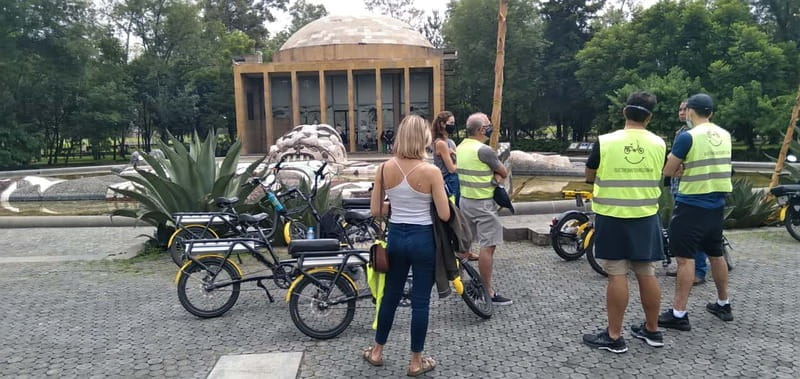
- Four hours on an electric bike: The motor makes long stretches easier, but you still pedal, steer, and ride in a major city.
- A wide view of Mexico City: The route links Roma, Condesa, Polanco, Reforma, Chapultepec, and the historic center.
- Food is part of the route: Expect a taco stop, plus time for pastries and street food.
- Guides tailor the experience: Eduardo and Sergio are among the guides, and the route can change according to your interests and previous sightseeing.
- Sunday can be especially good: Avenida Reforma may be closed to vehicles, creating a calmer and more unusual ride.
- Small groups matter: With no more than nine participants, it is easier to hear the guide and keep the pace together.
Why an e-bike is a smart way to see Mexico City
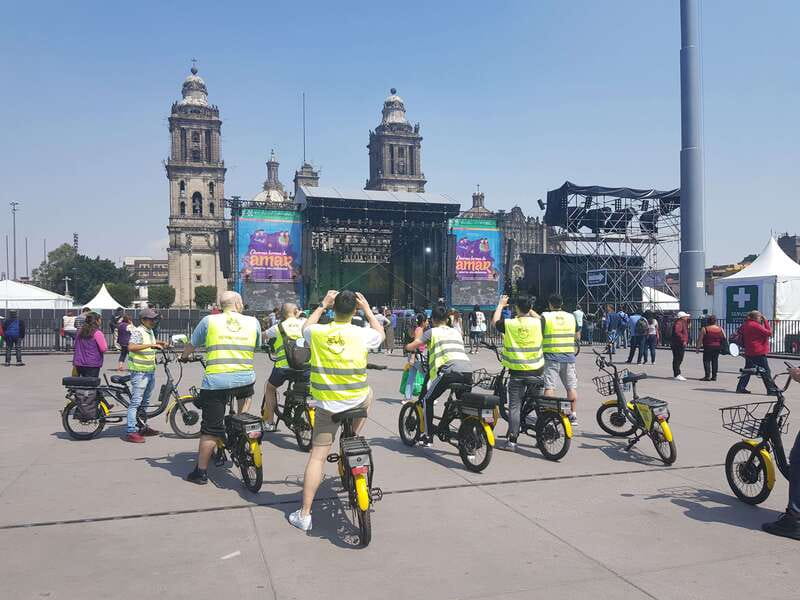
Mexico City is too spread out for a short walking tour to show you much beyond one district. This ride gives you a useful city overview, from the leafy streets of Roma and Condesa to the monumental center and the broad avenues around Chapultepec.
The electric motor is the key. You still ride a bicycle, but the assist helps on longer stretches and makes it easier to keep moving between stops. That matters here because the tour covers several neighborhoods and major sights in one morning or afternoon. I would choose this over a standard bike if your priority is seeing more of the city rather than getting a workout.
The motor does not remove every physical demand. You need to balance, steer, stop, and pay attention to the route. The tour requires basic cycling ability and is not suitable for children under 13. Comfortable shoes are a must, and you should bring sunscreen, a hat, and a copy of your passport or identification.
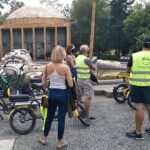
At the starting point on Zacatecas 3, look for a guide wearing a green vest. You receive an electric bike, helmet, reflective vest, and bottled water before setting out. The safety equipment is practical rather than decorative, especially on a route that includes large avenues and busy parts of the city.
A few more Mexico City tours and experiences worth a look

Roma, Condesa, and the first look at local life
The ride begins with the stylish neighborhoods around Roma and Condesa. Plaza Río de Janeiro is an early photo and orientation stop, a useful introduction to the architecture and public spaces that give this part of Mexico City its character.
From there, the route reaches Mexico Park and Avenida Álvaro Obregón. These stops help show the difference between a formal monument and a neighborhood people use every day. The guide can explain how the areas fit into modern Mexico City, including their architecture and cultural mix.
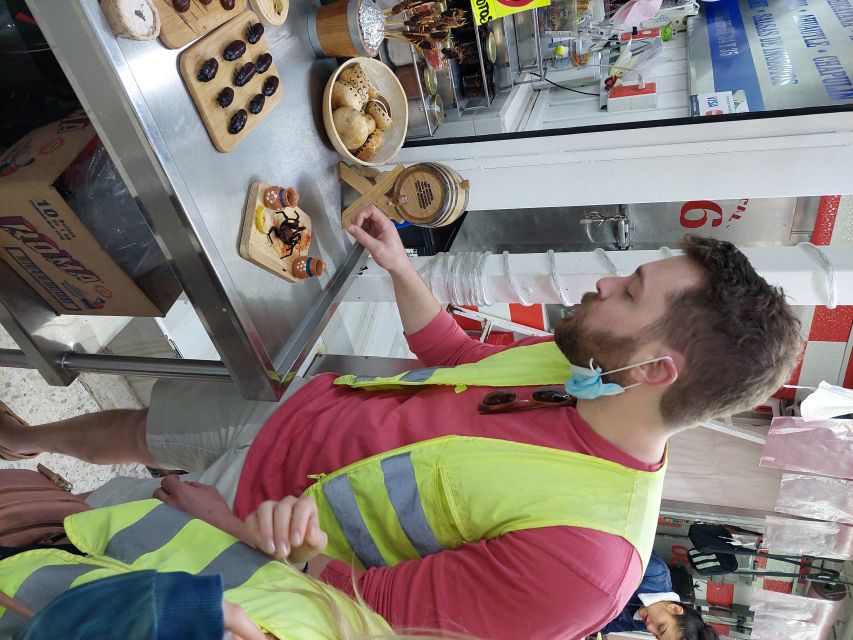
A stop on Avenida Álvaro Obregón includes dessert and lasts about 30 minutes, making it one of the more relaxed food breaks. The exact food selection is not specified, so think of this as a chance to sample something sweet rather than a fixed tasting menu.
The route also includes Parque Tamayo and Audiorama near Chapultepec. These quieter green spaces offer a change from major avenues and dense urban blocks. At Audiorama, you have time for a photo stop and a visit, while Parque Tamayo receives a longer 20-minute visit.
One useful feature is the guide’s flexibility. Eduardo has adjusted routes for people already familiar with Mexico City, adding different places and background rather than repeating the standard highlights. If you have already seen a certain district, tell the guide early. A small group makes that sort of adjustment more realistic.
Reforma, Plaza de la República, and Frontón México
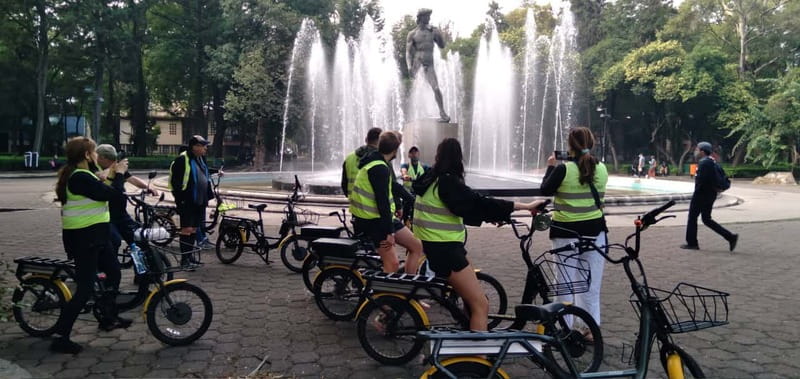
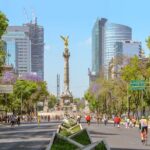
The route then connects the neighborhood streets with some of the city’s grandest public spaces. Plaza de la República is a 15-minute stop, followed by a brief photo stop at Frontón México.
These places help you see how Mexico City shifts in scale. One moment you are riding among local streets and cafés, and soon you are beside broad civic spaces and large historic buildings. The e-bike is particularly useful during this part of the ride because it lets the group cover the distance without forcing slower riders to chase a fast pace.
A Sunday booking can improve this section. Avenida Reforma is sometimes closed to cars for bikes and runners, and riding along the main road without normal vehicle traffic can be a memorable part of the day. This is not guaranteed for every departure, so treat Sunday as a useful tip, not a promise.
The guide’s job is important here. The route includes several roads where you need to stay alert, and the group follows a leader in a green vest. Some riders may be comfortable on city streets, while others will need a little more confidence. You should be honest about your cycling experience before booking.
Alameda Central and the grand buildings of the historic center
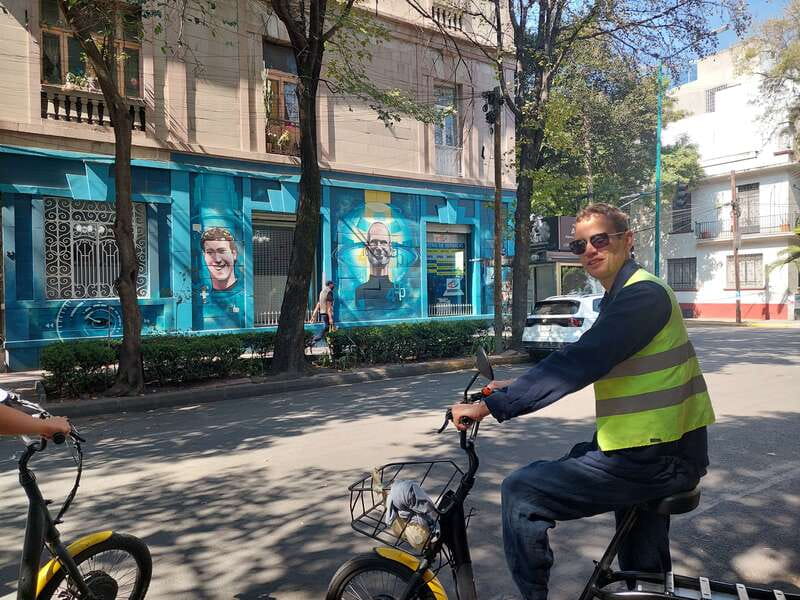
The historic center arrives as a concentrated run of major sights. Alameda Central is a short photo and visit stop, followed by the Palace of Fine Arts, Palacio de Correos de México, and the Zócalo.
The Palace of Fine Arts receives about 15 minutes. Even with limited time, it is worth pausing to look at the building’s exterior and hear the guide place it within the city. The same goes for the Postal Palace, whose ornate design gives the ride a strong architectural moment.
The Zócalo gets the longest stop in this central section, about 20 minutes. This is where the city’s scale and history become easiest to grasp. You can take photographs, look across the huge square, and listen to the guide explain the setting before moving on.
Do not expect full museum visits or extended indoor sightseeing. These are primarily outdoor stops with photo and orientation time. That is both a strength and a limitation. You see many important places in one ride, but you will need a separate visit if you want to explore the Palace of Fine Arts or other buildings in depth.
Pastelería Ideal follows with a 20-minute dessert stop. The bakery is included because it is part of the city experience, not simply a quick refueling point. You can expect time to look around and choose something sweet, although extra food and drinks beyond the included elements are your responsibility.
Barrio Chino, Plaza de San Juan, and the food breaks
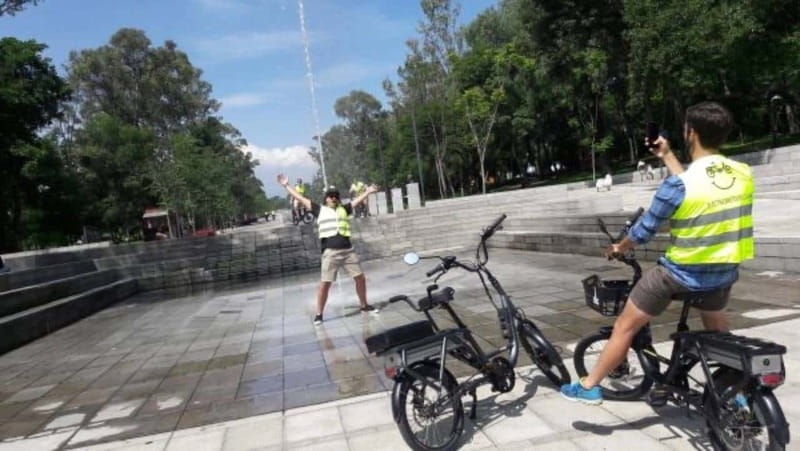
Food gives the middle of the tour a welcome change of pace. Barrio Chino includes about 20 minutes for street food, while Plaza de San Juan provides another 20-minute photo and visit stop.
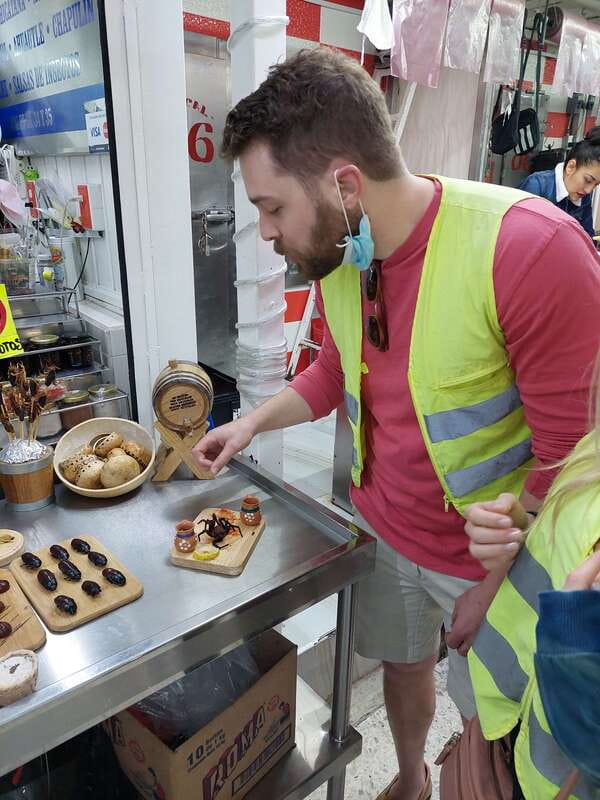
The advertised taco stop is included in the price, but the supplied details do not specify the exact taquería, taco count, or menu. That is worth knowing if you are comparing this tour with a dedicated food walk. This is a city tour with food along the way, not a full taco crawl.
The food stops still add real value. You are not spending four straight hours looking at monuments, and the breaks give you a chance to sit, eat, and chat with the guide. Guides have also taken groups for coffee, snacks, churros, and tacos, though those details can vary by route and day. Extra food and drinks are not included.
Plaza de San Juan helps connect the historic center with the city’s working, local side. It is another chance to ask questions and watch the rhythm of the neighborhood instead of simply checking off famous buildings.
If food is a major reason for booking, ask at the start what is planned that day. The fixed inclusion is a taco stop, while the dessert and street-food moments form part of the scheduled route. The experience is strongest when you want sightseeing and local flavors together.
Other cycling tours in Mexico City


Chapultepec Park and Mexico City’s green spaces
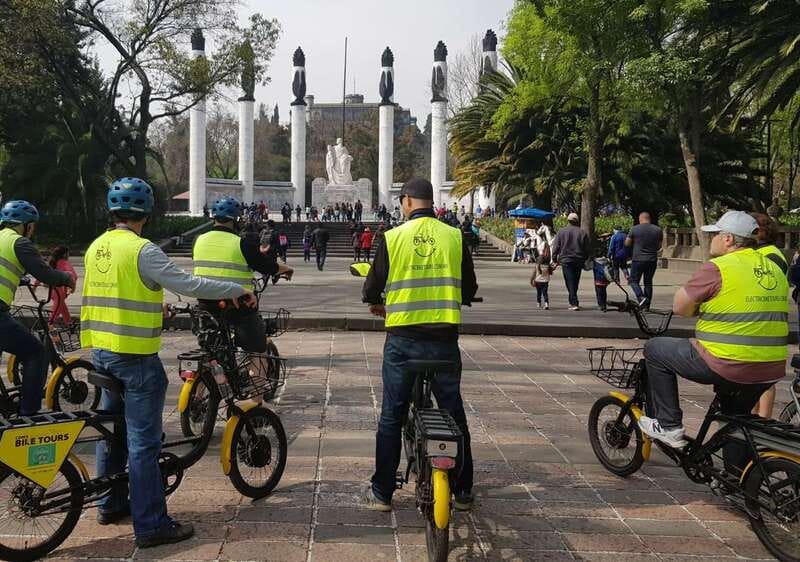
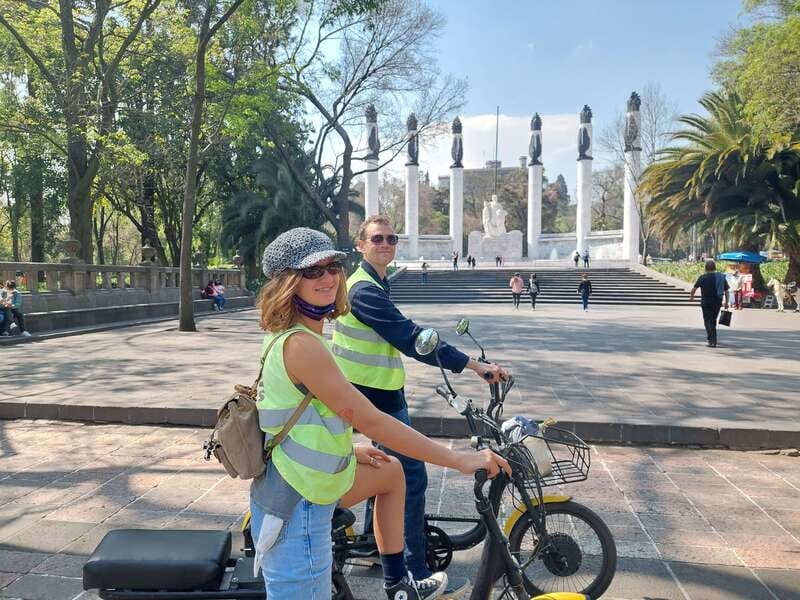
Chapultepec Park is one of the most important portions of the ride, with about 35 minutes for a photo stop, visit, and bike touring. The park gives you a break from the hard surfaces and traffic of the center while showing how much open space Mexico City contains.
You ride through part of the park rather than treating it as a single photo backdrop. The pace here should feel more comfortable, but you still need to follow the guide and watch the path around you.
The nearby Parque Tamayo and Audiorama extend this greener section. Parque Tamayo gets around 20 minutes, while Audiorama receives 15 minutes. These stops are useful for anyone who wants more than avenues and monuments. They also make the tour feel less like a fast list of landmarks.
At this point, the value of the e-bike becomes clear. You have already crossed several districts and spent time stopping, listening, photographing, and eating. The motor helps preserve enough energy to enjoy Chapultepec rather than arriving there worn out.
What the guide adds to the ride
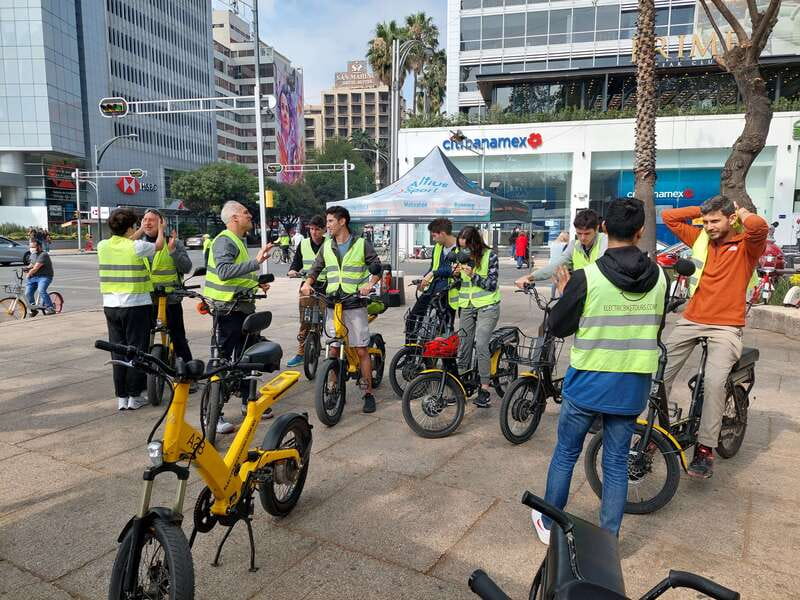
The guide is not just there to lead the bicycles. The best version of this tour depends on the explanations between stops and on small route decisions made during the day.
Eduardo is one of the guides, and Sergio also leads tours, sometimes working with Eduardo. Their backgrounds in different Mexico City neighborhoods allow them to give practical local context. The tour is offered in English and Spanish, and Sergio’s English has been described as excellent in the supplied feedback.
You can also expect the guide to check on water and comfort during the ride. That matters because the route is long enough for heat, sun, or simple fatigue to affect your enjoyment. The reflective vest and helmet add basic protection, but attentive riding remains your responsibility.
The group limit of nine is a good middle ground. You get the social feel of a small group without the large crowd and rigid pace of a bus tour. If only two people book, the ride may feel close to private, though that depends on the departure.
The tour works especially well as one of your first Mexico City activities. It gives you a mental map of the center, Roma, Condesa, Polanco, Reforma, and Chapultepec. You can then return later to the places that deserve more time.
How much ground you cover, and what you miss
The route is ambitious. It includes Plaza Río de Janeiro, Plaza de la República, Frontón México, Alameda Central, the Palace of Fine Arts, Palacio de Correos, the Zócalo, Barrio Chino, Plaza de San Juan, Chapultepec, Parque Tamayo, Audiorama, Mexico Park, and Avenida Álvaro Obregón.
That range is the central selling point. You see the city as a connected whole, not as isolated attractions. The tradeoff is that most stops are short, usually 5 to 20 minutes, with only the food breaks and some park visits giving you more time.
You should book this if you like orientation, movement, and variety. You should choose something slower if your main goal is entering museums, lingering over architecture, or spending half a day in one neighborhood.
The ride also depends on weather. It may be canceled at short notice in bad weather, so keep a little flexibility in your Mexico City schedule. Free cancellation is available up to 24 hours before the activity, with a full refund, and you can reserve now and pay later.
Is $81 a fair price?
At $81 per person, this is not the cheapest way to see Mexico City. But the price includes four hours, a guide, electric bike, helmet, reflective vest, bottled water, and a taco stop. You are also paying for a route that links districts that would otherwise require several separate walks or taxi rides.
The small group improves the value. With no more than nine participants, the guide can answer questions, check the pace, and adjust the route when the group has already seen certain sights. The e-bike also adds value for anyone who wants distance without the strain of a standard bicycle.
The price is less attractive if you want a focused food tour or detailed indoor visits. Extra food and drinks cost more, and the short stops mean you will not get a full guided tour inside each major building.
For a first day in Mexico City, I think the price is reasonable if you value a broad city introduction. It is harder to justify if you dislike cycling, already know all these neighborhoods, or prefer a slow walking pace.
Who should book this Mexico City ride?
I would recommend it to active adults, couples, friends, and solo visitors who want a quick sense of how the city fits together. It is also a good choice for people who normally find a standard bike tour tiring but still want to ride rather than sit in a vehicle.
It suits confident beginners who know how to ride a bicycle, but not anyone uncomfortable with steering and stopping in an urban setting. Children under 13 cannot join.
Bring comfortable shoes, sunscreen, a sun hat, and identification or a copy of your passport. Keep your expectations clear: this is an energetic sightseeing ride with food breaks, not a relaxed café tour.
Should you book the Electric Bike City Tour?
Book it if you want to cover a lot of Mexico City in four hours, learn how the districts connect, and enjoy tacos and sweets along the route. I especially like it for a first or second day, when the guide’s local advice can help shape the rest of your visit.
Choose a different activity if four hours of riding sounds tiring, if you need extensive time inside museums, or if your main interest is a carefully planned food itinerary. For everyone else, the combination of electric assistance, small-group attention, historic sights, green spaces, and local snacks makes this a practical introduction to a huge city.
FAQ
Where does the electric bike tour start?
The tour starts at Zacatecas 3. Look for the guide wearing a green vest.
How long does the tour last?
The activity lasts four hours.
What languages are available?
The live tour guide is available in English and Spanish.
How many people can join the group?
The group is limited to nine participants.
Is the electric bike included?
Yes. The electric bike, helmet, reflective vest, and bottled water are included.
Is food included?
A taco stop is included. Extra food and drinks are not included. The route also includes dessert and street-food stops.
Do I need to know how to ride a bicycle?
Yes. You must have basic cycling skills to participate.
Is the tour suitable for children?
No. Children under 13 are not permitted to join.
What should I bring?
Bring comfortable shoes, a sun hat, sunscreen, and a passport or identification card. A copy of your passport or ID is accepted.
Can I cancel for a full refund?
Yes. You can cancel up to 24 hours in advance for a full refund. The tour may also be canceled at short notice because of bad weather.
More City Tours in Mexico City



More Cycling Tours in Mexico City
More Bike Tours in Mexico City
More tours in Mexico City we've reviewed



Bike Tours, compared.
 ★ 5.0Frida Kahlo VIP [Museum Tickets Included] Bike, Markets & ChurrosFrom $834 hours (approx.)
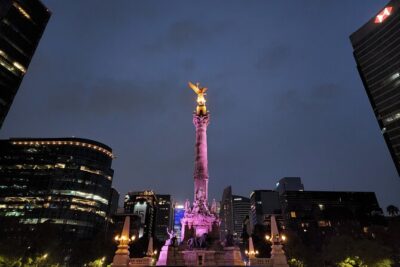 ★ 5.0Mexico City: 19 City Highlights Bicycle TourFrom $713 to 4 hours (approx.)
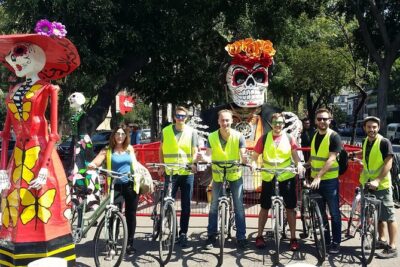 ★ 5.0Mexico bike tourFrom $704 hours (approx.)
★ 5.0Mexico City: 19 City Highlights Bicycle TourFrom $704 hours
★ 5.0Mexico bike tourFrom $704 hours (approx.)
★ 5.0Mexico City: 19 City Highlights Bicycle TourFrom $704 hours
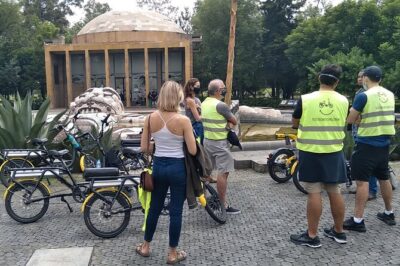 ★ 5.0Mexico City E-Bike Tour with a taco and churros stopFrom $704 hours (approx.)
 ★ 5.0Mexico City; ART NACO : Murals & Street Art Bike TourFrom $603 hours (approx.)
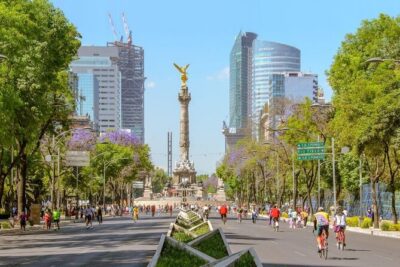 ★ 5.0Mexico City Highlights E-Bike Tour With Foodie StopsFrom $524 hours (approx.)
 ★ 5.0Street Food Bike Tour / Mexico is not only Tacos / All InclusiveFrom $924 hours 30 minutes (approx.)
The lists this tour appears in