
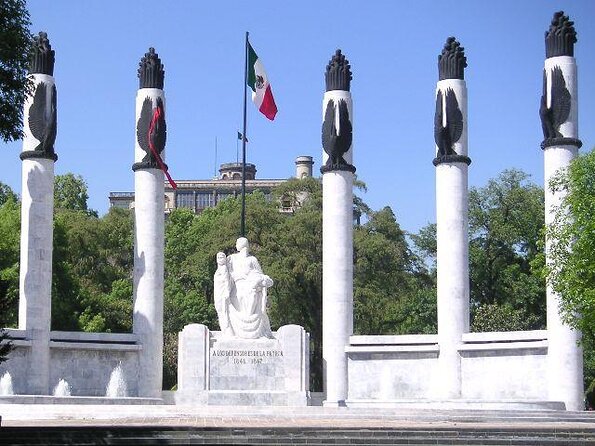
Reviewed · CHAPULTEPEC & MUSEUM TOURS
Explore Chapultepec & Mexico City sights by Bike
Mexico City makes sense from a bicycle seat. This four-hour ride links grand Paseo de la Reforma with leafy Chapultepec Park, so you get city monuments, political history, sculptures, quiet paths, and local food in one outing. The route follows the old Emperor route, with guides such as Pablo, Ivan, Alberto, and Gabby bringing plenty of personality to the ride.
In This Article
- Key points at a glance
- Why a bike is a smart way to see Mexico City
- Paseo de la Reforma and the stories in stone
- El Ángel and Mexico’s Independence
- The Revolution Monument and its unfinished story
- Chapultepec Park, the green heart of the route
- Street food that turns a stop into lunch
- What the guides add to the experience
- Price, pace, and practical value
- Finding the start and avoiding a bad beginning
- Should you book this bike tour?
- FAQ
- How long does the bike tour last?
- How much does the experience cost?
- What language is the tour offered in?
- Where does the tour begin?
- Where does the tour finish?
- What is included in the price?
- What food may be available?
- Is hotel pickup included?
- How many people can join the tour?
- Can I cancel for a refund?
I like the small group size, capped at 10, and the fact that the tour begins right beside a bike lane. I also like the food stop, since tacos, quesadillas, tlacoyos, gorditas, and chilaquiles turn a history lesson into something you can taste. The main caution is that the meeting point can be hard to spot, and one past departure suffered a major delay when a guide had to cover unexpectedly.
Key points at a glance
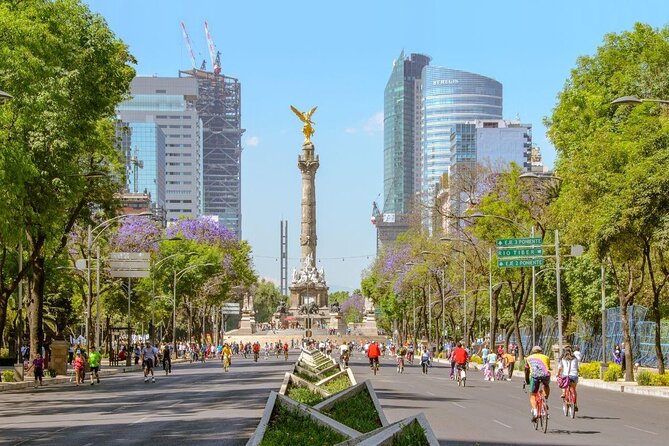
- Ride the Emperor route: Follow Paseo de la Reforma past major monuments and sculptures before reaching Chapultepec.
- See two sides of Mexico City: Reforma brings grand avenues and national symbols, while Chapultepec offers trees, lakes, fountains, museums, and castle views.
- Eat along the way: Street-food snacks, bottled water, and options for dietary restrictions are included.
- Ride with local guidance: Safety advice, help at intersections, and a small group make city cycling less stressful.
- Allow four hours: The route is long enough to give you an orientation to central Mexico City, not just a quick park loop.
- Book with the meeting point in mind: Start and finish at Avenida Paseo de la Reforma 24, near Hotel Fontan and public transportation.
Why a bike is a smart way to see Mexico City
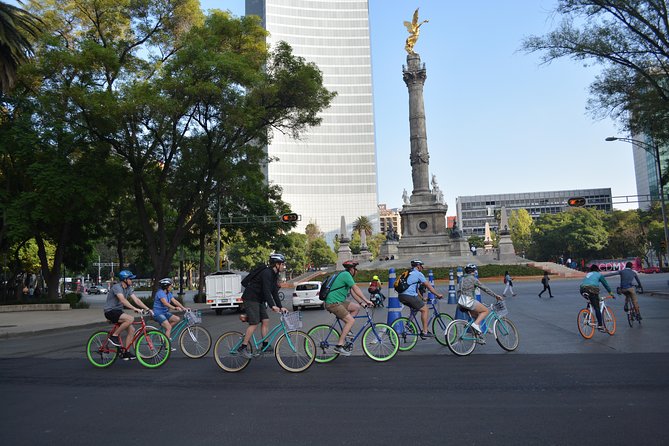
Mexico City is too large for a short walking tour, yet an open-top bus can leave you watching the city from a distance. A bicycle gives you a useful middle ground. You cover more ground than on foot, but you can still pull over for a monument, a sculpture, a food stall, or a quick explanation from your guide.
This route is especially good for a first full day in the city. You get an early sense of how the historic center connects to Reforma and how Reforma leads toward Chapultepec. Later in your trip, you can return to the places that caught your eye, this time with more time to explore.
The ride starts from a downtown bicycle location at Avenida Paseo de la Reforma 24. The staff helps you choose a bicycle and get comfortable before you leave. Your guide gives safety instructions, then takes you directly onto the bike lane. That simple start matters. You do not have to push a bike through traffic or work out the route on your own.
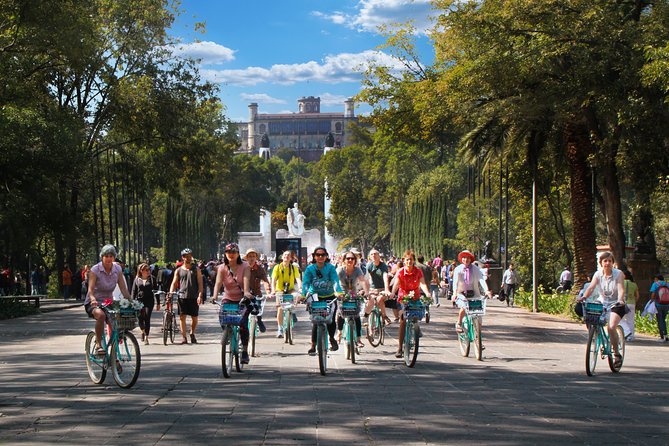
The group limit is 10 people, with at least two required for a booking. That is small enough for a guide to keep an eye on the group and adjust the pace. Several riders have described the experience as safe and relaxed, with guides helping at crossings and watching for anyone who falls behind.
A few more Mexico City tours and experiences worth a look
Paseo de la Reforma and the stories in stone
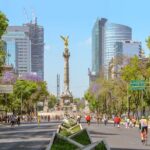
The first major stretch follows Paseo de la Reforma, one of Mexico City’s grandest avenues. Here, the tour is not only about pedaling. Your guide points out monuments and sculptures and explains the battles, leaders, legends, and national events tied to them.
The route is often called the Emperor route because Reforma was developed during the era of Emperor Maximilian. You will hear how the avenue’s design connected major parts of the capital and how its monuments came to express Mexican identity. A guide with strong local knowledge can make the boulevard feel less like a line of traffic and more like a sequence of historical clues.
The bike lane is a major advantage. Riders have described the route as easier than expected, with calm traffic and a peaceful ride despite the size of the avenue. That does not mean you can switch off completely. You still need to listen to safety instructions, stay with the group, and pay attention at intersections.
The ride includes stops where your guide explains what you are seeing. The listed timing gives about 10 minutes for the opening section, though the full route naturally depends on the group’s pace and traffic conditions. Bring a camera, but do not expect a museum-style stop at every monument. This is an active orientation tour, not a series of long indoor visits.
El Ángel and Mexico’s Independence
At El Ángel de la Independencia, you get a focused explanation of El Grito de Independencia, the cry that launches Mexico’s Independence Day celebrations. The monument is one of the most recognizable sights on Reforma, but its meaning is much more useful once you understand the national ceremony connected to it.
The scheduled stop lasts about 20 minutes. That is enough time for a clear introduction, photographs, and questions without breaking the rhythm of the ride. If you are still learning the basic timeline of Mexican history, this stop helps put later monuments and public spaces into context.
The guide’s style can shape this part of the experience. Pablo, Ivan, Alberto, and Gabby have all been praised for being warm, clear, and willing to answer questions. One guide, Pablo, was particularly appreciated for adding off-route spots and showing how the city’s past connects with its present culture.
Still, the tour is not a formal academic seminar. One past rider found some historical details inaccurate, so you should treat the commentary as a lively local introduction rather than your only source for complicated historical claims. That is a fair trade for a ride that covers so much ground, but it is worth knowing if you want precise scholarly detail.
The Revolution Monument and its unfinished story
The Monumento y Museo de la Revolución is another short but worthwhile stop. The guide explains the surprising original design of the structure, giving you a glimpse into how plans for major civic buildings can change over time.
The scheduled stop is about 15 minutes. You will not have time for a full museum visit during the ride, and admission is not listed as an included feature. Instead, the monument works as an outdoor story stop. You learn why the building looks the way it does and then continue toward Chapultepec.
This is one of the tour’s strengths: it gives you a broad map of Mexico City rather than spending the whole morning in one place. If the Revolution Monument interests you, note it as a place to revisit on another day. The bike tour gives you the first layer, then leaves you free to return with more time.
Chapultepec Park, the green heart of the route
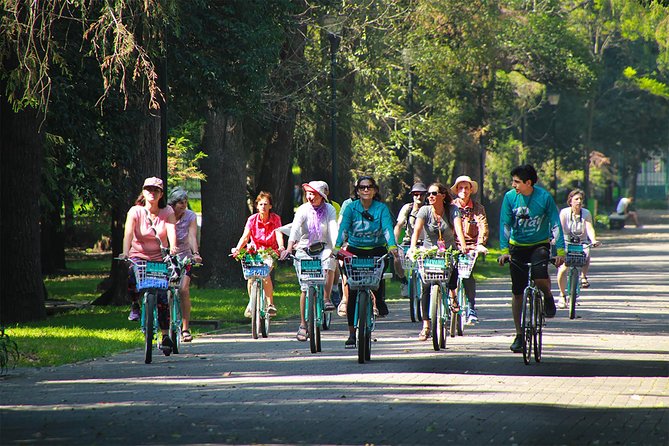
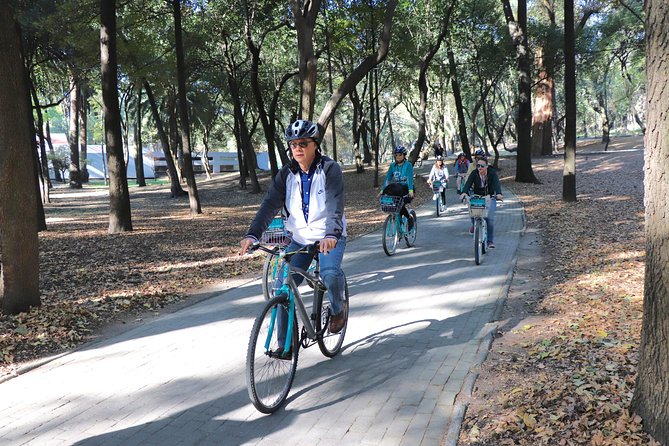
Chapultepec is where the ride changes character. Reforma is open, formal, and monumental. The park brings trees, paths, fountains, lakes, archaeological sites, museums, and the hilltop Chapultepec Castle.
The park is enormous, and cycling lets you understand its scale quickly. Instead of seeing one entrance and one walkway, you move through several sections and get a sense of how much the park contains. A past route included sections one and two, with time to see sculptures and squares and to explore less obvious corners. Another guide showed a hidden cave, although the exact route can vary.
The tour description presents Chapultepec as Mexico City’s most visited park and points to its nature, archaeology, museums, and castle. You should not expect to enter every museum or tour the castle interior during this four-hour outing. The value is in seeing how the park fits into the city and learning which places deserve a return visit.
The park also gives you a welcome break from pavement and traffic. Several riders appreciated the fresh air and easy exercise. You may find the ride particularly pleasant in a morning time slot, when the streets can feel less crowded. Afternoon departures are available, but heat, traffic, and the group’s pace may affect how relaxed the ride feels.
A few more Mexico City tours and experiences worth a look


Street food that turns a stop into lunch
Food is not an afterthought here. Snacks are included, with choices such as tacos, quesadillas, tlacoyos, gorditas, and chilaquiles. Bottled water is also provided.
The exact selection may depend on the day and on dietary needs, but the provider states that options are available for different restrictions. Tell the team about your needs when booking or before departure so the guide can help you choose from the available options.
This food stop adds real value. A standard monument tour can leave Mexico feeling like a collection of buildings and dates. Trying a simple local dish gives you a more direct connection to daily life. You may also want to save room for an ice cream in Chapultepec, a small pleasure specifically praised by one rider.
Do not think of the food as a long restaurant meal. The route is still a bike tour, so the stop is meant to fuel you and introduce you to familiar Mexican snacks. If you need a large lunch, plan another meal after the tour.
What the guides add to the experience
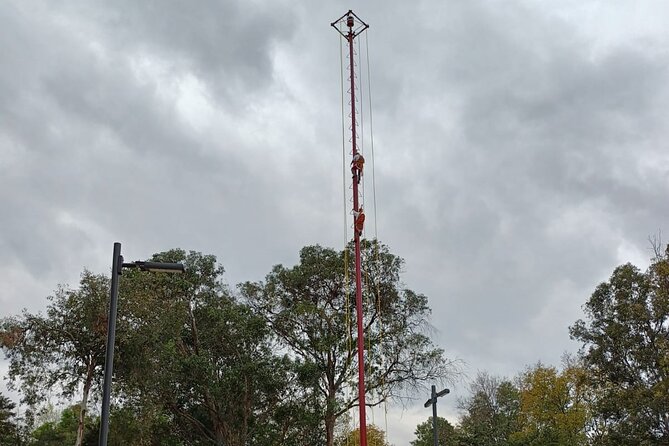
The strongest part of this outing is the human element. Alberto has been praised for his English, patience, and pride in his city. Ivan is known for his care and enthusiasm for bicycles. Pablo has received especially warm praise for his history stories, friendliness, and willingness to include less familiar places.
Gabby has also been praised for looking after riders and handling a minor bicycle mishap with basic first aid. That does not mean you should expect medical support, but it does show why a guide matters when you are riding in an unfamiliar city.
The provider may assign a multilingual guide, and the tour is offered in English. The names of your guide are not guaranteed, so book for the route and format rather than for a specific person. Still, the repeated praise for the guide team suggests that personality and local pride are central to the experience.
The group size helps here. With no more than 10 people, you can ask questions without shouting across a crowd. The guide can also notice differences in cycling ability and help keep the pace manageable.
Price, pace, and practical value
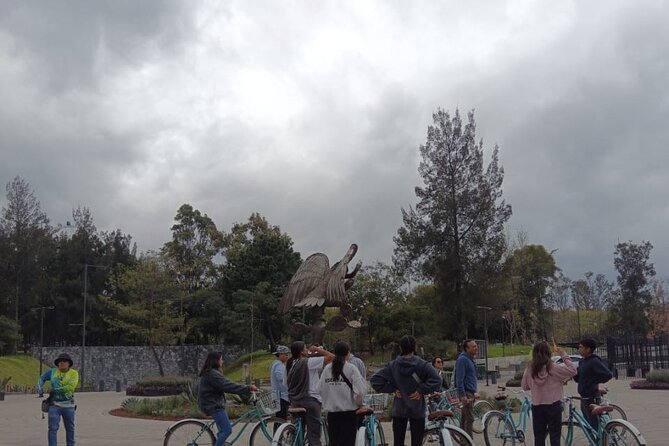
At $78.86 per person, this is not the cheapest way to rent a bicycle in Mexico City. You are paying for roughly four hours of route planning, a bicycle, helmet, guide, water, historical commentary, safety support, and street food.
I think the price makes sense if you want a useful introduction to the city. A self-guided ride costs less, but you must choose the route, navigate Reforma and Chapultepec, interpret the monuments, and find food on your own. The tour also saves you from spending your first morning working out how to ride safely through an unfamiliar capital.
The value is strongest for first-time visitors, couples, solo riders who want company, and families with older children or teens who can manage a four-hour outing. It is also a good fit if you like active sightseeing but do not want a strenuous athletic ride.
You should think twice if you want long museum visits, a slow photography tour, or a tightly scripted historical lecture. Four hours on a bicycle can feel long if you rarely ride. The route is described as easy by several riders, but you still need to be comfortable sitting on a bike and handling city streets.
The tour is generally suitable for most people, though the supplied information does not give a detailed accessibility assessment. Ask the operator directly if you have specific mobility, bicycle, or medical needs.
Finding the start and avoiding a bad beginning
The meeting point is Av. Paseo de la Reforma 24, Colonia Centro, near Hotel Fontan. The activity ends back at the same location, and hotel pickup and drop-off are not included.
Give yourself extra time to find the office. One rider missed the tour because the meeting location was not clear. The provider has explained that the shop is beside Hotel Fontan on the major Paseo de la Reforma, but I would still save the full address, identify the hotel before departure, and avoid arriving at the last minute.
The tour is booked about 14 days ahead on average, so popular dates may fill before departure. Confirmation arrives at booking, and free cancellation is available if you cancel at least 24 hours before the local start time. Cancellations or changes inside that window are not refunded or accepted.
Should you book this bike tour?
Book it if you want a broad, active introduction to Mexico City rather than a single-site visit. Reforma’s monuments, El Ángel, the Revolution Monument, Chapultepec, local food, and guide stories make a strong first-day combination.
I would especially choose it for a first or second day, when you want to learn the city’s layout and mark places for later visits. The small group, bike lanes, helmet, water, and attentive guides make it easier than arranging the same route alone.
Skip it if cycling for four hours sounds tiring, or if your main goal is to spend serious time inside Chapultepec Castle or the museums. For most riders who want history, fresh air, food, and a friendly local guide, the $78.86 price is fair, and the route gives you far more context than a simple bicycle rental.
FAQ
How long does the bike tour last?
The tour lasts approximately four hours.
How much does the experience cost?
The listed price is $78.86 per person.
What language is the tour offered in?
The tour is offered in English. The guide may be multilingual.
Where does the tour begin?
It begins at Av. Paseo de la Reforma 24, Colonia Centro, Cuauhtémoc, 06040 Ciudad de México, near Hotel Fontan.
Where does the tour finish?
The activity ends back at the meeting point.
What is included in the price?
A local guide, bicycle use, helmet use, bottled water, and street-food snacks are included.
What food may be available?
Snack choices may include tacos, quesadillas, tlacoyos, gorditas, chilaquiles, and other options. Choices are available for dietary restrictions.
Is hotel pickup included?
No. Hotel pickup and drop-off are not included.
How many people can join the tour?
A maximum of 10 people can join each tour, and at least two people are required per booking.
Can I cancel for a refund?
Yes. You can cancel up to 24 hours before the local start time for a full refund. Cancellations or changes made less than 24 hours before the start time are not accepted or refunded.
More Cycling Tours in Mexico City

More Bike Tours in Mexico City
More Chapultepec & Museum Tours in Mexico City


More tours in Mexico City we've reviewed


Chapultepec & Museum Tours, compared.
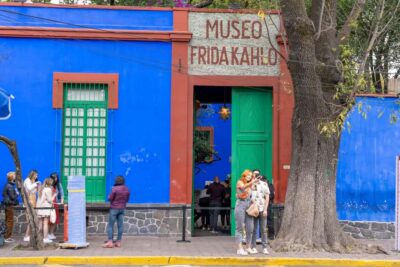 ★ 4.4CDMX: Xochimilco, Coyoacan, Frida Kahlo Museum & Murals TourFrom $89
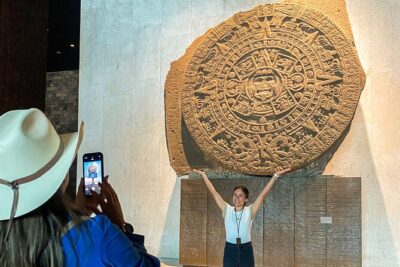 ★ 4.5Chapultepec Castle & Anthropology Museum TourFrom $795 hours (approx.)
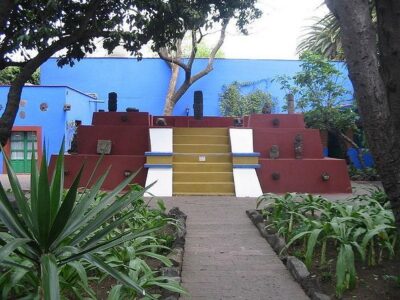 ★ 5.0Frida Kahlo VIP [Museum Tickets Included] Bike, Markets & ChurrosFrom $834 hours (approx.)
 ★ 4.5Anthropology Museum Guided TourFrom $392 hours 30 minutes (approx.)
 ★ 5.0Frida Kahlo VIP [Museum Tickets Included] Walk, Markets & ChurrosFrom $833 to 4 hours (approx.)
 ★ 5.0EXCLUSIVE TOUR Frida Kahlo Museum – SMALL GROUPSFrom $862 hours (approx.)
 ★ 4.4Mexico City: Anthropology Museum Guided VisitFrom $672.5 hours
 ★ 4.5Mexico City: Frida Kahlo Museum Entry Ticket w/Digital GuideFrom $34
The lists this tour appears in