
Reviewed · TEOTIHUACAN TOURS
From Mexico City: Expedition to Teotihuacan, Tlatelolco, and Basilica of Guadalupe
Teotihuacan is the star here, but this 9-hour expedition gives you three very different ways to understand Mexico: an ancient city, a major religious center, and a modern capital built over older civilizations. You walk through Tlatelolco, see the Basilica of Guadalupe, taste tequila at an obsidian workshop, and finish at the enormous pyramids.
In This Article
- Key points to know before booking
- Why this day trip works
- Tlatelolco and the stories beneath Mexico City
- The Basilica of Guadalupe and Mexico’s most important pilgrimage site
- Obsidian, tequila, and the tour’s commercial stop
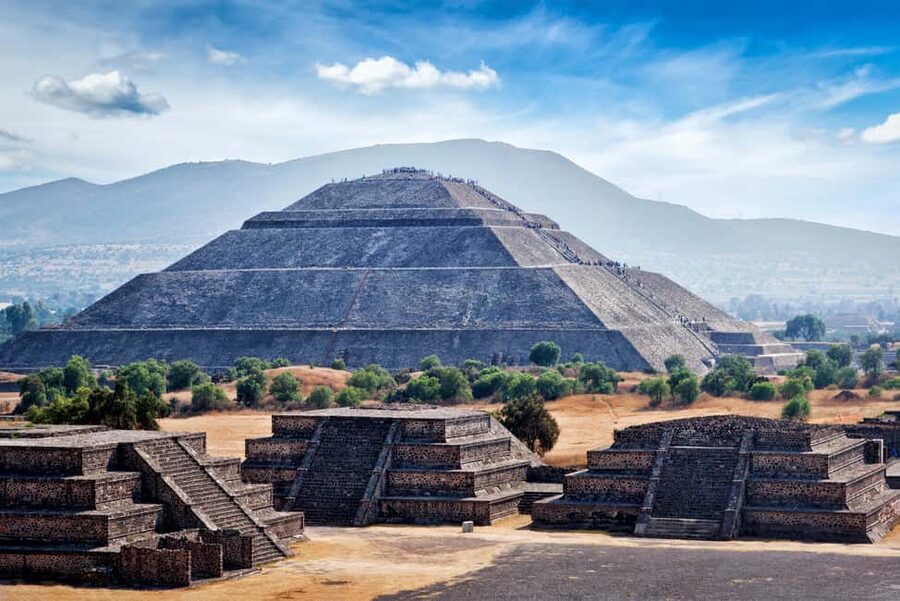
- Teotihuacan, the main reason to book
- Lunch, music, and the Mexican fiesta
- Transport, timing, and group rhythm
- Price and overall value at $60
- Who should book this Teotihuacan tour?
- Should you book it?
- FAQ
- How long does the tour last?
- Where does pickup take place?
- Is lunch included?
- What languages are available?
- Is Teotihuacan admission included?
- Is the tour suitable for wheelchair users?
I like the strong historical storytelling, especially when guides such as Lily, Alex, Gio, Leo, and Alan explain how the sites connect. I also like the value: round-trip transport, Teotihuacan admission, bilingual guiding, and tequila tasting are included for $60. The drawback is the pace. This is a full coach tour, often with 35 or more people, and the lunch stop and shopping workshop may feel more commercial than cultural.
Key points to know before booking
- Tlatelolco comes first, with ancient temples, stories of sacrifice, mass graves, and Mexico City’s layered past.
- The Basilica of Guadalupe adds a living religious experience, including the famous image on the Virgin’s mantle.
- Teotihuacan gets the most attention, with the Avenue of the Dead, Pyramid of the Sun, Pyramid of the Moon, and ancient temples.
- The obsidian workshop includes tequila tasting, but shopping can feel rushed or pressuring.
- Lunch is optional, and the buffet option does not include drinks, tax, or tip.
- The tour is a good deal for first-time visitors, but it involves plenty of walking and is not suitable for wheelchair users.
Why this day trip works
Mexico City can feel like several cities layered on top of one another. This tour makes that idea clear in a single day. At Tlatelolco, you encounter a pre-Hispanic ceremonial center inside the modern city. At Guadalupe, you see the power of faith in present-day Mexico. At Teotihuacan, you walk through one of the most impressive ancient sites in the Americas.
I would not book this as a slow, reflective day. It is built for coverage. You move from one stop to the next by coach, listen to a guide, walk through each site, and return to central Mexico City after roughly nine hours.
That trade-off makes sense if you have limited time. Instead of arranging separate transport to Teotihuacan and figuring out the Basilica on your own, you get a clear route and a guide who can explain what you are seeing. The strongest guides bring energy and detail to the day. Alex, Lily, Gio, Leo, and Alan are among the names associated with especially engaging English-language tours.
The group size matters. A comfortable coach has been used for these outings, but some departures include more than 35 people. You may receive instructions in both Spanish and English, with separate language groups sometimes led by different guides. Most of the time, the organization keeps things moving, but you need to pay attention when it is time to return to the bus.
A few more Mexico City tours and experiences worth a look
Tlatelolco and the stories beneath Mexico City
Tlatelolco is an excellent opening stop because it immediately complicates the usual picture of Mexico City. This is not just a collection of old stones. It is a place where several periods of Mexican history meet.
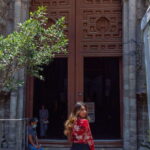
Your guide introduces the ancient temples and the site’s role in the pre-Hispanic city. You also hear about human sacrifice, mass graves, and the darker legends connected with the ruins. Those details can be unsettling, but they help explain the religious and political world that shaped the site.
The stop is listed as a guided visit and photo stop, so expect time to look around rather than an extended archaeological session. I like having Tlatelolco at the start because it gives you a useful frame for Teotihuacan later. You begin with a smaller, more urban archaeological site, then see the vast scale of an ancient city outside the capital.
Keep your attention on the guide here. Without context, the remaining walls and platforms can be hard to read. A good explanation turns scattered foundations into a place with ceremonies, power struggles, and human consequences.
This is also one of the stops where guide quality matters most. Several guides have been praised for using booklets or visual material to show how the original buildings may have looked. That sort of aid is useful because the site today is only a fragment of what once stood there.
The Basilica of Guadalupe and Mexico’s most important pilgrimage site
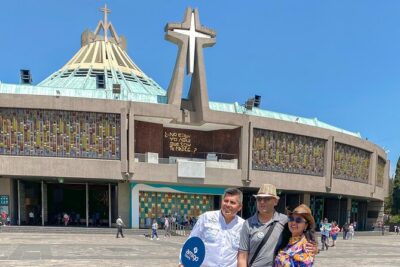
The Basilica of Our Lady of Guadalupe shifts the mood from archaeology to living faith. It is one of Latin America’s major religious destinations, and the visit gives you a chance to see why Guadalupe holds such a powerful place in Mexican culture.
The central focus is the image of Our Lady of Guadalupe on her mantle. Your guide explains the symbolism surrounding the image and its meaning for Mexican identity. Even if you are not religious, the stop has cultural value because Guadalupe appears throughout Mexican public life, family traditions, art, and national celebrations.
The visit is generally more about seeing and understanding the site than taking part in a service. You have time for sightseeing and photographs, while the guide provides the background that turns the basilica from a famous building into a meaningful cultural place.
I like the contrast with Tlatelolco. At the first stop, you hear about an ancient ceremonial world that disappeared. At Guadalupe, you see belief continuing in the present. Put together, the two stops show how Mexico’s past is not sealed away in museums. It remains part of everyday life.
Dress and behave respectfully inside the religious complex. The supplied information does not set out a formal dress code, but this is still a place of worship rather than only a sightseeing stop. Stay alert to the group meeting time, since the tour must keep moving toward Teotihuacan.
Obsidian, tequila, and the tour’s commercial stop
After Guadalupe, the group visits an obsidian workshop. This stop adds a hands-on craft element and explains the importance of obsidian in ancient Mexican culture. You can see traditional work with the volcanic stone, then sample tequila during a tasting.
The combination makes sense. Obsidian was valuable for tools, weapons, and ritual objects, while tequila offers a more familiar taste of Mexico today. The workshop gives you a break from walking and lets you handle the cultural story in a more practical way.
This is also the part of the day to approach with clear expectations. It is both a cultural demonstration and a shopping stop. Several people found the shop crowded, rushed, or somewhat pushy, especially when sales staff were trying to make purchases. You may enjoy browsing, but you do not need to buy anything to make the stop worthwhile.
I would treat the tequila tasting as a sample, not as a full tasting course. The experience is included, but drinks beyond the included tasting are not. If you want a quiet look at crafts, this may not provide it. If you are interested in obsidian objects or Mexican spirits, however, it adds variety to an otherwise site-heavy day.
Teotihuacan, the main reason to book
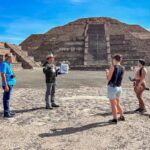
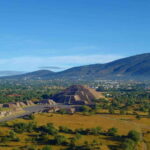
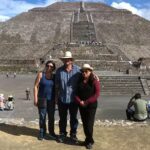
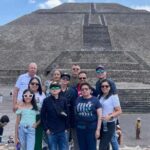
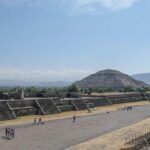
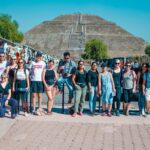
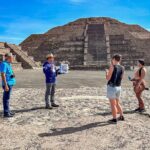
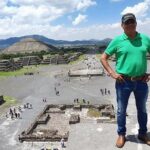
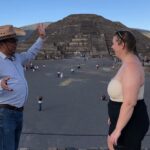
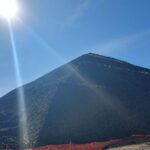
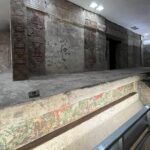
Teotihuacan is the payoff. The ancient city is vast, formal, and visually powerful, with the Pyramid of the Sun and Pyramid of the Moon anchoring the visit. You walk along the Avenue of the Dead, explore old temples, and hear about the people who built and occupied this major pre-Hispanic center.
The scale is difficult to grasp from photographs. The Avenue of the Dead gives the site its grand order, while the pyramids make the city’s ambition obvious. Your guide helps connect the layout, temples, and beliefs so you are not simply walking from one large structure to another.
The exact amount of free time can vary with traffic, group movement, and the guide’s schedule, but the tour is designed to give you time to wander on your own. That balance matters. You get an explanation first, then a chance to look, photograph, and absorb the place at your own pace.
Some descriptions of the outing refer to climbing the pyramids. You should confirm the current access rules before booking or arriving, since access to major structures can change. Even if climbing is not permitted, the Avenue of the Dead and the views across the site remain the central experience.
Bring water, sun protection, and shoes suited to uneven walking. The day involves a good deal of walking, and Teotihuacan is not a quick roadside photo stop. You will enjoy it more if you arrive ready for stairs, open spaces, and a long period outside.
I especially like visiting Teotihuacan after Tlatelolco. The earlier site gives you an introduction to ancient Mexican urban life, while Teotihuacan supplies the grand scale. A guide who has real enthusiasm for pre-Hispanic history can make the difference here. Several praised guides have been singled out for clear explanations, strong storytelling, and an ability to answer questions in English.
A few more Mexico City tours and experiences worth a look
Lunch, music, and the Mexican fiesta
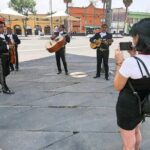
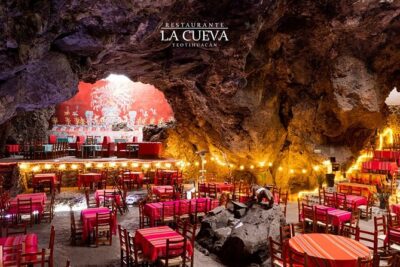
The day ends with a local restaurant stop and a Mexican fiesta featuring traditional food, music, and dance. The lunch is offered as an option, and the package can include an international and Mexican buffet.
This ending gives the tour a social lift after the long archaeological visits. You are no longer only looking at ruins or listening to historical explanations. You get food, performance, and a more festive presentation of Mexican culture.
Still, I would read the lunch option carefully. The buffet does not include drinks, and extra charges can apply for tax and tip. Some people found the restaurant average, with food not always kept at ideal serving temperatures and a limited dessert selection. The seating arrangement may also feel awkward, with people from the group placed at different tables.
If you prefer to choose exactly what you eat, ordering from the menu may be better than pre-purchasing the buffet. If convenience matters more, the buffet keeps the meal simple and prevents you from spending too much time deciding. Have some cash available for drinks, small purchases, and tips for the guide and driver.
The party is best seen as an entertaining finish, not a formal cultural performance. You may enjoy the music and dancing, but the restaurant setting can feel tourist-oriented. That is not necessarily a flaw on a long group tour, as long as you know what you are paying for.
Transport, timing, and group rhythm
Pickup is available from two central meeting points. You can meet the group at Hostal Amigo at 7:30 am or at MIGA Café at 8:20 am. The return is to those same general locations, not to your hotel, and hotel transportation is not included.
The early start is useful. Teotihuacan is outside Mexico City, and traffic can affect the schedule. Starting early gives the group a better chance of reaching the sites with enough time to walk around. The nine-hour duration is realistic for the number of stops, but you should not plan another major activity that evening.
Transport has received strong marks, with 91 percent of ratings giving it a perfect score. The coach has been described as clean, comfortable, and new, and drivers such as Alex, Adolfo, Victor, Felix, and Johny have been praised for safe, smooth driving in difficult city traffic.
You do need to stay organized. Keep track of your guide, language group, and bus. One account describes a guide failing to count the full group, leaving three people behind temporarily. That appears to be an exception rather than the normal pattern, but it is an important practical warning: do not wander off without confirming the meeting point and departure time.
Price and overall value at $60
At $60 per person, this is a strong value for a first visit if you want several major sights in one day. The price includes round-trip transport from the meeting point, a professional bilingual guide, admission to Teotihuacan, and the tequila tasting. Lunch is included only when you select the lunch option.
The value comes mainly from saving time and managing transport. A separate visit to Teotihuacan requires arranging a long journey outside the city, while this tour also adds Tlatelolco and Guadalupe. You pay for a busy day, but you receive a broad introduction to Mexico’s ancient, religious, and modern cultural life.
The compromises are clear. You do not control the pace, the restaurant, or the shopping stop. Drinks, hotel transport, and some meal costs are extra. A private guide or a specialist archaeological tour could offer more time and depth, but it would cost more and would not cover as much ground.
For a visitor with only a few days in Mexico City, the price is easy to justify. For someone who has already seen Teotihuacan or dislikes coach groups, the fixed schedule may feel limiting.
Who should book this Teotihuacan tour?
I would recommend it to first-time visitors who want a broad introduction without spending hours planning transport. It suits couples, families, and solo visitors who like having history explained in clear English or Spanish. It is also useful if you want to see more than Teotihuacan alone.
You should think twice if you need wheelchair access, since the activity is not suitable for wheelchair users. You should also reconsider if long walking days, early starts, group instructions, or tourist-oriented shopping stops frustrate you.
The tour works best when you accept its character: this is a lively, efficient group outing, not a quiet archaeological study. Listen closely at Tlatelolco, take in the Basilica with respect, enjoy the obsidian demonstration without feeling obliged to shop, and save your energy for Teotihuacan.
Should you book it?
Book this expedition if you want maximum historical coverage for $60 and can handle a nine-hour day. Teotihuacan is the main draw, but Tlatelolco and Guadalupe give the outing more meaning than a pyramid-only trip.
Skip it if you prefer slow visits, independent meals, or a private guide. For most first-time visitors with limited time, though, the combination of ancient ruins, religious culture, craft, tequila, transport, and music makes this a practical way to see several sides of Mexico in one day.
FAQ
How long does the tour last?
The tour lasts nine hours, including transport and visits to Tlatelolco, the Basilica of Our Lady of Guadalupe, the obsidian workshop, Teotihuacan, and the final meal and entertainment.
Where does pickup take place?
You can meet the tour at Hostal Amigo at 7:30 am or at MIGA Café at 8:20 am. Return is available to the same general meeting locations.
Is lunch included?
Lunch is included only if you select the option that includes it. The meal may be an international and Mexican buffet. Drinks, tax, and tip are not included.
What languages are available?
Live guiding is available in English and Spanish. The tour may operate with separate English and Spanish-speaking groups.
Is Teotihuacan admission included?
Yes. Entrance to Teotihuacan is included in the tour price.
Is the tour suitable for wheelchair users?
No. The activity is not suitable for wheelchair users. It also involves a significant amount of walking at the archaeological sites.
More City Tours in Mexico City



More Guadalupe Shrine Tours in Mexico City
More Teotihuacan Tours in Mexico City

More tours in Mexico City we've reviewed


Teotihuacan Tours, compared.
 ★ 5.0Teotihuacan, Guadalupe Shrine & Tlatelolco Day Tour with LunchFrom $399 hours (approx.)
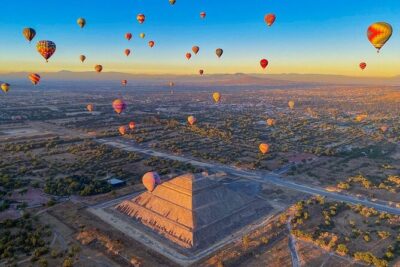 ★ 5.0Balloon flight + Breakfast in cave + Pyramids + Pick up CDMX.From $1722 to 8 hours (approx.)
 ★ 5.0Teotihuacan pyramids morning or afternoon without tourist trapsFrom $645 hours 30 minutes (approx.)
 ★ 4.5Teotihuacan Early Access Guided Tour with optional LunchFrom $398 hours (approx.)
 ★ 5.0Balloon flight + pick up in CDMX + Breakfast in Cave + PyramidsFrom $1694 to 7 hours (approx.)
 ★ 4.6Mexico City: Teotihuacan, Tlatelolco & Guadalupe Shrine TourFrom $49
 ★ 5.0Teotihuacan Hot Air Balloon Flight from Mexico City / VolareFrom $1553 to 9 hours (approx.)
 ★ 5.0Hot Air Balloon Flight with Breakfast Cave and Pyramids TourFrom $1408 hours (approx.)
The lists this tour appears in