
Reviewed · GUADALUPE SHRINE TOURS
Guadalupe Shrine Tour
The most moving part of this tour is seeing Juan Diego’s tilma, the cloak believed to bear the image of the Virgin of Guadalupe. You also get a clear look at the old 1709 basilica, the vast circular church completed in 1976, Tepeyac Hill, and a museum filled with 17th-century religious art. I like the round-trip ride from central Mexico City and the way a good guide connects the shrine to Mexican culture, not just Catholic doctrine.
In This Article
- Key points to know before booking
- Why the Shrine of Guadalupe matters
- Starting at Hostal Amigo in Centro Histórico
- Riding north from Mexico City
- The Old Basilica from 1709
- The New Basilica and the tilma
- Walking up Tepeyac Hill
- The museum of 17th-century religious art
- Time for Mass, prayer, or your own walk
- The guides make the largest difference
- Is $51 a fair price?
- Who should book this visit?
- Should you book the Guadalupe Shrine Tour?
- FAQ
- How much does the Guadalupe Shrine Tour cost?
- How long does the tour last?
- What time does the tour start?
- Where does the tour begin?
- Where does the tour end?
- Is hotel pickup available?
- Is the tour offered in English?
- What does the price include?
- Are food and drinks included?
- How many people can join the tour?
- Does the tour require much physical activity?
- Can I attend Mass during the tour?
- Can I cancel for a full refund?
I also like that the visit leaves room for prayer, Mass, photographs, or a quiet walk around the grounds. Guides such as Ligia, Miriam, Jocelyn, and Gabriel have earned praise for answering questions and adjusting the pace, including for people using wheelchairs. The main concern is the 3 p.m. start, since some buildings close around 5 p.m. A late vehicle or slow departure can leave you rushing the hill and museum.
Key points to know before booking
- Juan Diego’s tilma is the central sight: See the image of the Virgin of Guadalupe inside the New Basilica.
- Two very different basilicas: Compare the Spanish-colonial Old Basilica from 1709 with the modern circular church from 1976.
- Tepeyac Hill adds the physical story: Walk to the chapel area connected with the reported 1531 apparition.
- The guide provides useful orientation: The shrine is a large complex with churches, chapels, gardens, and open spaces that can be confusing on your own.
- The afternoon schedule needs care: A 3 p.m. departure may limit time at sites that close at 5 p.m.
- Transport is part of the value: Round-trip service saves you from arranging your own route across Mexico City.
Why the Shrine of Guadalupe matters
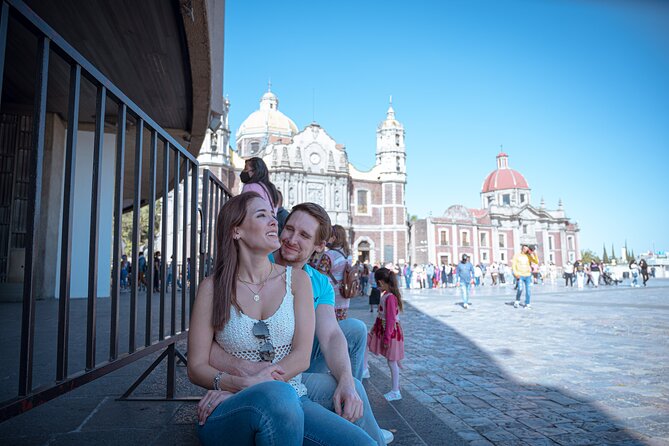
The Basilica of Our Lady of Guadalupe is far more than one church. It is a large pilgrimage complex at the northern edge of Mexico City, with multiple religious buildings, chapels, gardens, plazas, and historic points connected to the Virgin of Guadalupe.
According to Catholic tradition, the Virgin appeared to Juan Diego, an Indigenous peasant, on Tepeyac Hill in 1531. The image of the Virgin was then miraculously imprinted on his tilma. That story helped shape Mexican religious identity and remains central to the nation’s culture.
You do not need to be Catholic to find the place worthwhile. The site also offers a lesson in Mexican history, art, architecture, popular devotion, and national identity. One useful feature of a guided visit is that you can ask how the Virgin functions as both a religious figure and a cultural symbol.
The scale can surprise you. The New Basilica can hold more than 10,000 worshippers, and the surrounding grounds are large enough to feel like a small district of churches rather than a single attraction. In December, the number of pilgrims rises sharply, with millions coming around the feast of Our Lady of Guadalupe.
A few more Mexico City tours and experiences worth a look
Starting at Hostal Amigo in Centro Histórico
The standard meeting point is Hostal Amigo at Isabel La Católica 61-A in the historic center. The listed departure time is 3 p.m., and the tour ends back at this same meeting point.
This arrangement keeps the price down, but it is not the easiest start in town. The meeting point is inside a youth hostel, and the entrance can be hard to spot. Give yourself extra time to find it rather than arriving at the last minute.
Hotel pickup is available only with the private option. If you choose that version, you need to provide your hotel name so the pickup can be arranged. The regular group tour uses the central meeting point instead.
The tour usually accommodates no more than 20 people. That is small enough for questions when the guide manages the group well, though the actual experience can vary depending on attendance. On some dates, a very small booking may turn the visit into something close to a private tour.
Riding north from Mexico City
Round-trip transportation is included, which is one of the strongest practical reasons to book this experience. The shrine is not in the middle of the main tourist zone, and arranging the journey yourself adds another task to an already busy Mexico City day.
A comfortable vehicle is provided, although vehicle quality can vary. One past problem involved a van with faulty air conditioning, so I would not treat the transport as a luxury service. The ride is mainly useful because it removes the need to navigate the city and gives you a guide who can explain parts of Mexico City along the way.
Timing matters here. The advertised duration is about four hours, but the return can run later depending on traffic and how long the group spends at the shrine. One visit ran from about 3 p.m. until roughly 6:30 p.m. Plan your evening with some flexibility, especially if you have dinner reservations.
The Old Basilica from 1709
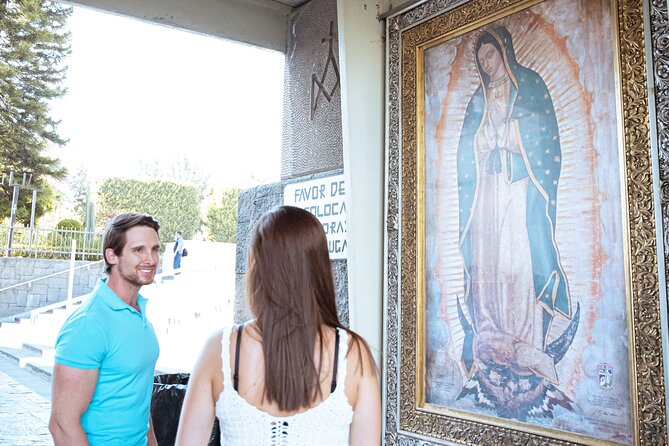
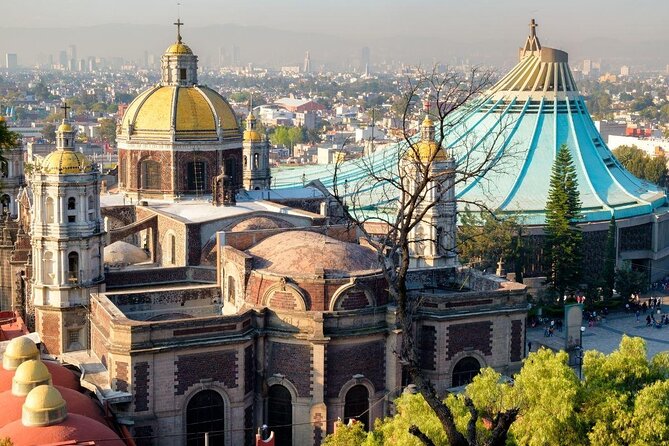
Your first close look at the complex is the Basílica Antigua, or Old Basilica. Built in 1709, it reflects Spanish colonial design with Moorish influence. Its age and style make a useful contrast with the newer church nearby.
Inside, you can see devotional paintings and the setting connected with the shrine’s earlier history. The old building also helps you understand how the site developed over time, from an important colonial church into one of the world’s busiest Catholic pilgrimage centers.
The Old Basilica has a practical lesson attached to it. Parts of the historic structure have been affected by ground movement and settling, a concern that has drawn attention from visitors. The building is still an important sight, but its condition adds another layer to the story of Mexico City’s old architecture.
Your guide’s explanation matters most here. Without an introduction, it can be difficult to tell which building is the original basilica, which chapel serves which purpose, and how each structure relates to the reported apparition.
The New Basilica and the tilma
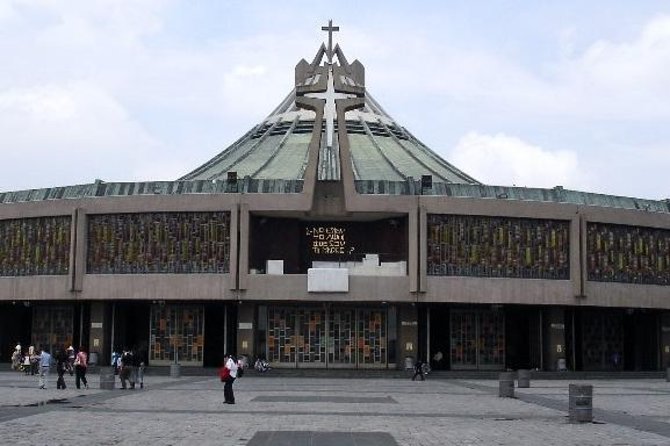
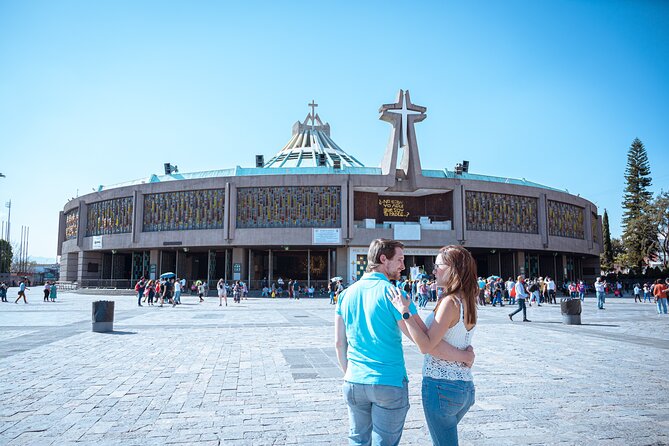
The New Basilica, completed in 1976, is the visual and spiritual center of the visit. Its circular floor plan allows you to see the image of the Virgin from almost any position inside the church.
The tilma is displayed above the main altar area. A moving walkway allows people to pass beneath and look up at the image without stopping the flow of worshippers. You may see pilgrims entering the main aisle slowly, praying, or making what may be their only visit to this sacred site.
This is not a standard museum display. The image remains part of active worship, so the atmosphere can shift quickly from sightseeing to prayer. Photography rules also matter. Photos are allowed in most areas, but not inside the original chapel.
The circular design makes the church easy to appreciate architecturally, even if you are visiting for cultural reasons rather than religious ones. I find the contrast between the building’s huge scale and the intimate focus on the tilma especially striking.
A guide can also help you understand why the image carries such weight in Mexico. The story is not only about a reported miracle. It is also tied to Mexican identity, family tradition, pilgrimage, and national pride.




Walking up Tepeyac Hill
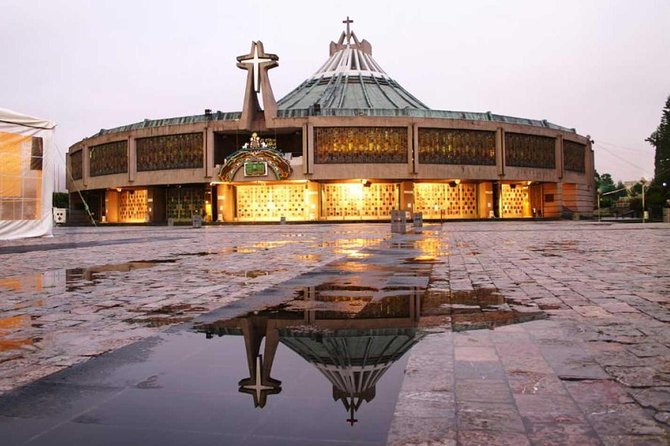
The route continues to Tepeyac Hill, where the reported apparitions began. The walk is not a mountain hike, but the climb does require moderate physical effort. The stairs are maintained, and the route offers views across the complex.
If you have limited mobility, ask your guide about the easiest route. Several past visits were handled well for people using wheelchairs, and guides helped families find less difficult access points. Still, the hill and stair sections mean this is not a completely effortless outing.
The hill gives the story a sense of place. Instead of hearing only about Juan Diego and the Virgin inside a church, you see the setting where the tradition says the events occurred. The physical connection makes this part more meaningful than a quick photo stop.
The climb can also be one of the first parts affected by the afternoon schedule. If the group arrives late, there may be less time for the hill, the museum, or the smaller chapels. This is the main reason I would avoid booking the tour immediately before an important evening plan.
The museum of 17th-century religious art
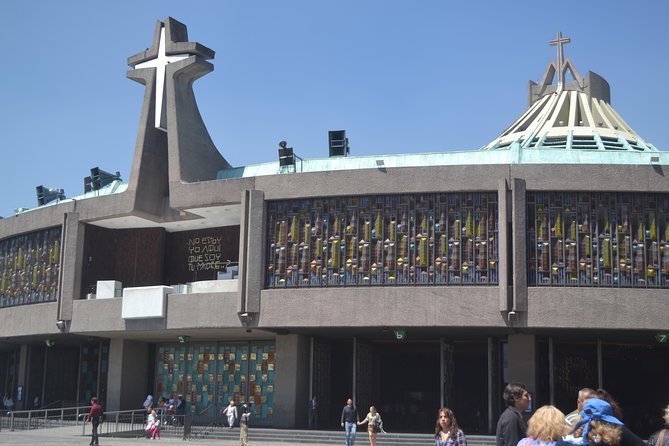
Behind the Old Basilica is a museum with about 4,000 pieces of 17th-century religious art. It gives the visit useful visual context, particularly if you want to understand the devotional art of colonial Mexico.
The museum is a good counterpoint to the living pilgrimage site. At the basilicas, you see modern worship, large crowds, and active ceremonies. In the museum, you can focus on paintings and religious objects from an earlier period.
Do not assume you will have unlimited time here. The late starting time can make the museum feel rushed, especially if the group reaches the complex behind schedule. If the art collection is a priority, ask at the start how the guide plans to divide the afternoon.
The museum is also one reason a guided visit can offer more than a simple ride to the basilica. A self-guided visit lets you see the buildings, but a guide can point out how the art, architecture, and devotion fit together.
Time for Mass, prayer, or your own walk
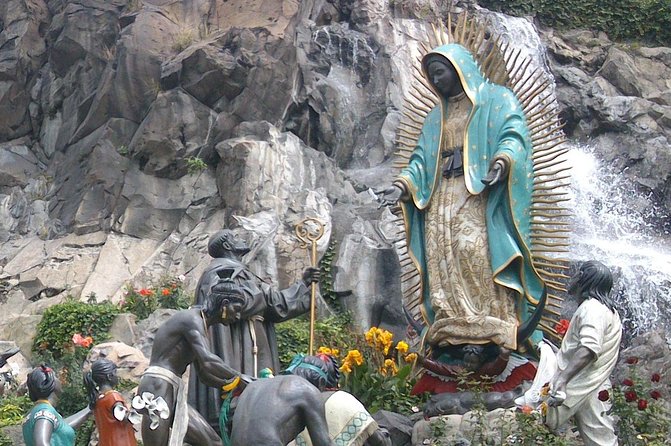
The final part of the visit includes free time. You can attend Mass, pray, take photographs where permitted, or walk around the grounds independently.
This flexibility is valuable. Some people want the tour to explain the site, then prefer a quiet moment inside the basilica. Others want to see more chapels, gardens, and outdoor areas. If you want to attend a service, tell the guide early so the timing can be handled as carefully as possible.
Several guides have been praised for waiting while people attended Mass or prayed. That kind of patience can turn a standard sightseeing outing into a personal pilgrimage. It is not guaranteed that every schedule will allow a long service, but the free time gives you a chance to ask.
The complex contains more than the two main basilicas. Depending on time, opening hours, and the group’s pace, you might see other churches and chapels. One past afternoon did not allow enough time for every building, which is a fair warning for anyone hoping to cover the entire site.
The guides make the largest difference
The strongest part of this experience is the guide. Good guides have explained the story of Juan Diego, the apparition points, the basilicas, Mexican culture, and the role of the Virgin in everyday life.
Names associated with especially well-received visits include Ligia, Miriam, Jocelyn, Gabriel, Herson, and Antonio. Do not expect a specific guide unless the booking offers that choice, but these examples show the range of service the company can provide.
The best guides are friendly, answer questions, and avoid rushing. One guide helped a family with a wheelchair find easier paths. Another waited while a couple attended Mass. Jocelyn was praised for expanding the discussion into Mexican history and culture, while Ligia was especially accommodating to visitors who wanted time for prayer.
There have also been weaker experiences. One past guide reportedly offered little information and relied heavily on a phone. Another serious complaint involved a late bus, limited English, missed sights, and poor group management. These accounts appear to be exceptions among many positive visits, but they are worth keeping in mind.
The English-language promise is important if you do not speak Spanish. Most visits have included guides with strong English, but service can depend on the individual guide assigned that day. If detailed explanation is essential to you, confirm the language at the meeting point.
Is $51 a fair price?
At $51 per person, this tour is not the cheapest way to reach the Basilica of Guadalupe. You could potentially arrange public transport or a rideshare and explore independently.
The price makes more sense if you value round-trip transportation, an English-speaking guide, and help making sense of a large religious complex. A guide can also save you time by identifying the old basilica, New Basilica, Tepeyac Hill, museum, and other important points.
The value drops if you want a slow, open-ended afternoon. The four-hour format and 3 p.m. start leave limited room for every church, museum object, and chapel. You are paying for structure and transport, not unlimited time.
Group discounts may be available, and the maximum group size is 20 people. Food and drinks are not included, so plan to eat before the tour or after returning to the city center.
Who should book this visit?
I would recommend it to a first-time visitor to Mexico City who wants the shrine explained rather than simply photographed. It is also a good fit for anyone interested in Catholic pilgrimage, Mexican culture, colonial art, or the way religious traditions shape public life.
Families may appreciate the transport and guide support, especially when someone in the group needs an easier route. The tour can work well for older relatives, but the Tepeyac Hill climb means you should discuss mobility needs with the guide.
It is less suitable if your schedule is rigid or if you want to see every part of the complex. The afternoon departure creates a real risk of rushed sightseeing, particularly if traffic delays the vehicle. I would also skip it if you have a fixed dinner reservation soon after the planned return.
The cancellation policy is forgiving if your plans change: you can receive a full refund by canceling at least 24 hours before the start time. Changes or cancellations made inside that window are not accepted for a refund.
Should you book the Guadalupe Shrine Tour?
Book this tour if you want context, transport, and a clear route through one of Mexico City’s most important religious sites. The tilma, the two basilicas, Tepeyac Hill, and the art museum make a strong half-day visit, and a good guide can add meaning that is hard to find on your own.
Before booking, check your evening schedule and be realistic about the 3 p.m. departure. If you want Mass, extra chapels, or a leisurely museum visit, ask how much free time is normally available. For a first visit, the $51 price is reasonable. For repeat visitors or confident independent sightseers, public transport and self-guided exploration may offer better control.
FAQ
How much does the Guadalupe Shrine Tour cost?
The listed price is $51 per person. Group discounts are available.
How long does the tour last?
The tour lasts approximately four hours.
What time does the tour start?
The listed start time is 3 p.m.
Where does the tour begin?
The standard meeting point is Hostal Amigo, Isabel La Católica 61-A, in Mexico City’s Centro Histórico.
Where does the tour end?
The activity ends back at the original meeting point.
Is hotel pickup available?
Hotel pickup is available only when you select the private tour option. You must provide your hotel name to arrange it.
Is the tour offered in English?
Yes. The tour is offered in English.
What does the price include?
The price includes a professional guide and round-trip transportation. Hotel pickup is included only with the private option.
Are food and drinks included?
No. Food and drinks are not included.
How many people can join the tour?
The maximum group size is 20 people.
Does the tour require much physical activity?
A moderate level of physical fitness is recommended. The visit includes walking and a climb up Tepeyac Hill.
Can I attend Mass during the tour?
Free time is provided to attend Mass or walk around independently, but the available time depends on the schedule and site hours.
Can I cancel for a full refund?
Yes. You must cancel at least 24 hours before the experience start time for a full refund. Cancellations made less than 24 hours in advance are not refunded.
More Guadalupe Shrine Tours in Mexico City
More tours in Mexico City we've reviewed


Guadalupe Shrine Tours, compared.
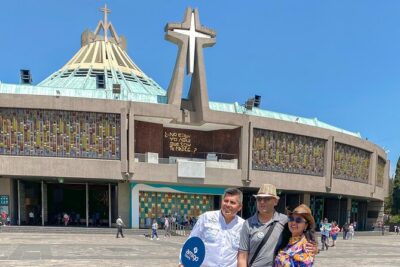 ★ 5.0Teotihuacan, Guadalupe Shrine & Tlatelolco Day Tour with LunchFrom $399 hours (approx.)
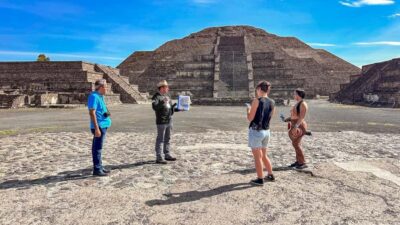 ★ 4.6Mexico City: Teotihuacan, Tlatelolco & Guadalupe Shrine TourFrom $49
 ★ 4.7Mexico City: Teotihuacan, Tlatelolco & Basilica of GuadalupeFrom $579 hours
 ★ 5.0Private Tour: Teotihuacan and Guadalupe ShrineFrom $1896 hours (approx.)
 ★ 4.5Teotihuacan Tour with Basilica of Guadalupe & TlatelolcoFrom $408 hours 30 minutes (approx.)
 ★ 5.0Teotihuacan, Shrine of Guadalupe & Tlatelolco Day TourFrom $667 hours (approx.)
 ★ 4.5Pyramids of Teotihuacan, Guadalupe Shrine & Tlatelolco TourFrom $638 hours (approx.)
 ★ 4.5Teotihuacan & Basilica Guadalupe Tour with lunchFrom $598 to 9 hours (approx.)
The lists this tour appears in