
Reviewed · FRIDA KAHLO & COYOACAN TOURS
Guided Tour of Coyoacan and Leon Trotsky Museum
The most compelling part of this tour is its unusual pairing: Coyoacán’s colonial streets and market lead to the guarded home where Leon Trotsky lived and was killed. You get a neighborhood walk, church visits, local food, and political history in one compact outing.
In This Article
- Why Coyoacán and Trotsky Belong on the Same Walk
- Starting at Fuente de los Coyotes
- Inside the Parish of St. John the Baptist
- La Conchita and the Church Ordered by Cortés
- Coyoacán Town Hall and Local Life
- Tasting Coyoacán at the Market
- The Leon Trotsky Museum Changes the Tone
- The Guides Shape the Experience
- Is $77.67 a Fair Price?
- Who Should Book This Coyoacán Walk?
- Booking, Timing, and Cancellation
- My Verdict on the Coyoacán and Trotsky Tour
- FAQ
- Where does the tour begin?
- Where does the tour end?
- How long does the tour last?
- Is the tour offered in English?
- What is included in the price?
- Is lunch included?
- How large is the tour group?
- Can I cancel for a full refund?
- Is the tour suitable for most people?
I like the way the route gives you context before reaching the museum. I also like the chance to try a market snack, including fried grasshoppers if you wish. The main consideration is time: two hours and 15 minutes is enough for a good introduction, but not enough for a slow visit to every corner of Coyoacán.
- Start at the Coyote Fountain: Learn why Coyoacán mattered long before modern Mexico City.
- Enter San Juan Bautista Parish: See how Spanish evangelization reshaped the area.
- Walk through La Conchita: Visit a 16th-century church linked to Hernán Cortés.
- Stop at Coyoacán Market: Sample local food if you choose, including a possible taste of grasshoppers.
- Finish at Trotsky’s former home: Spend about 40 minutes with the story of exile, politics, and assassination.
- Follow a guide with a personal style: Delta, Jorge, Ana, Rodrigo, Denaila, and Jesus are among the guides praised for clear explanations, humor, and flexibility.
Why Coyoacán and Trotsky Belong on the Same Walk
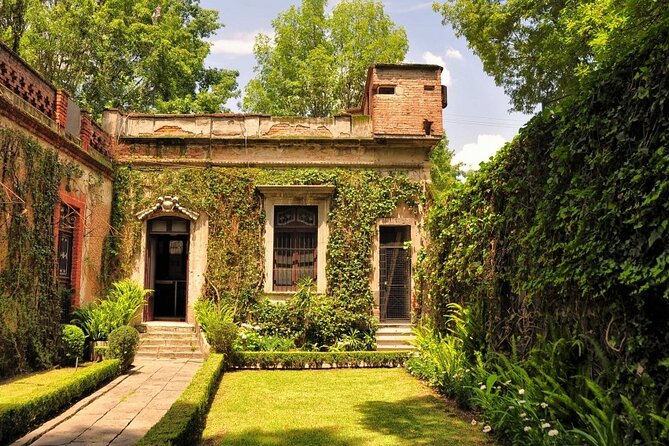
Coyoacán can seem like a pleasant district of plazas, churches, cafés, and colorful streets. Yet its past is much larger than its relaxed appearance suggests. It was important in pre-Hispanic times, played a role in the Spanish conquest, became a center of religious conversion, and later drew artists and political exiles.
That long timeline is what gives this tour its shape. You are not simply walking from one pretty square to another. The guide connects indigenous Coyoacán, Spanish rule, Catholic institutions, local government, the market, and the arrival of one of the 20th century’s most controversial political figures.
The final museum changes the mood. Earlier stops focus on architecture, faith, food, and local life. Trotsky’s house brings in exile, international politics, revolutionary conflict, and murder. That contrast makes the outing more memorable than a standard sightseeing walk.
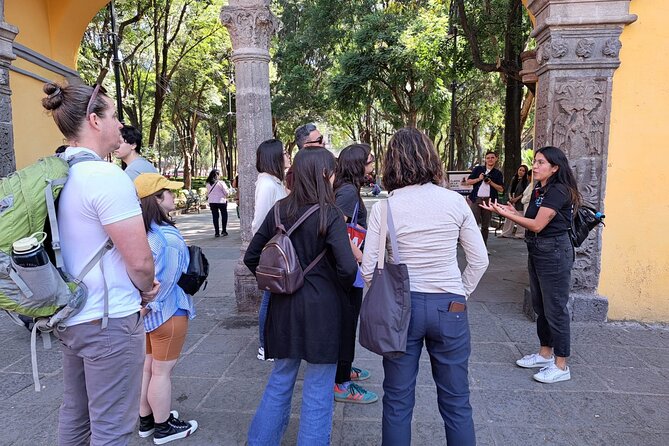
The tour is offered in English and has a maximum group size of 25 people. That is small enough for a guide to answer questions, though it is not a private tour. The route lasts about two hours and 15 minutes, so you should expect a steady walking pace rather than a leisurely half-day visit.
Starting at Fuente de los Coyotes
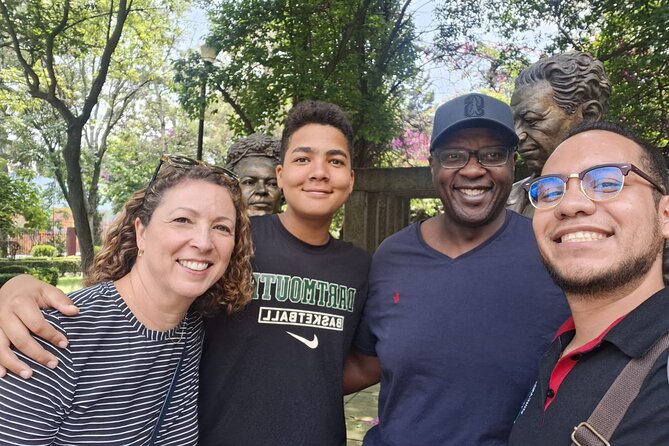
The meeting point is Fuente de los Coyotes in Parque Centenario, Coyoacán. The fountain is a practical place to begin because it puts you directly in the historic center of the district, rather than starting at a major museum or a busy transport hub.
The first 15 minutes focus on Coyoacán before the Spanish arrived. This opening matters because it prevents the neighborhood from being reduced to colonial churches and famous 20th-century residents. You begin with the area’s earlier importance and get a basic framework for understanding why this part of the city developed as it did.
I would pay close attention here, even if the fountain itself takes only a few minutes. The opening explanation helps make sense of the later stops, especially the Spanish alliance with local groups opposed to Mexica power. One particularly useful aspect of the tour is the way it links conquest, religion, architecture, and politics instead of presenting each stop as an isolated fact.
Because the tour begins outdoors, wear comfortable shoes and be ready to walk from the first minute. The route uses public streets and neighborhood spaces, so it feels more like an urban walk than a sequence of formal museum rooms.
A few more Mexico City tours and experiences worth a look

Inside the Parish of St. John the Baptist
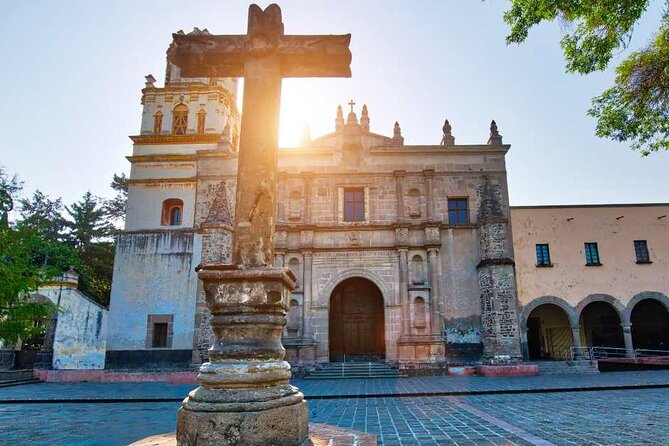
The next stop is the Parish of St. John the Baptist, where you spend about 20 minutes. Admission is included, and the guide explains the process of evangelizing indigenous people after Spanish rule took hold.
This is one of the most useful stops for anyone who wants more than pretty façades. Churches in Mexico City often carry several layers of meaning. They are places of worship, records of colonial power, examples of artistic change, and evidence of how Spanish religious institutions were imposed and adapted.
The guide helps you read those layers. You can expect an explanation of the parish’s early role and the larger process of conversion, rather than only a quick look at the interior. Architectural details become easier to understand when you know why the church was built and what it was meant to accomplish.
The 20-minute visit is fairly brief. If you want extended time for quiet observation, photography, or religious reflection, you may find the schedule a little tight. Still, the stop gives you a useful foundation for the later visit to the Church of the Conception.
La Conchita and the Church Ordered by Cortés
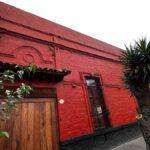
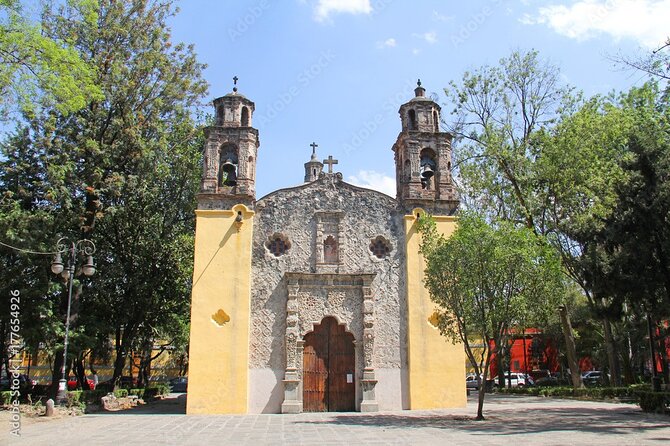
The walk continues to the neighborhood of La Conchita and the Church of the Conception. This 16th-century church was built by direct order of Hernán Cortés, and his red house is identified at the corner of the square.
This is a strong example of how the tour places major national figures within an ordinary neighborhood. Cortés is not treated as a distant name from a textbook. His presence is tied to a specific square, a specific building, and the physical setting of Coyoacán.
The church stop lasts about 20 minutes and has no separate admission charge. You will hear about the building and the area around it, while the guide places the church within the early colonial period. It is a good point in the route for asking questions about the relationship between conquest, settlement, and religious construction.
I like this part because it keeps the tour grounded. Instead of rushing from one famous museum to another, you walk through a district where the past is mixed into the streets. The possible drawback is that the stop depends heavily on the guide’s explanation. Without context, the church and square may seem modest compared with Mexico City’s grandest historic buildings.
Coyoacán Town Hall and Local Life
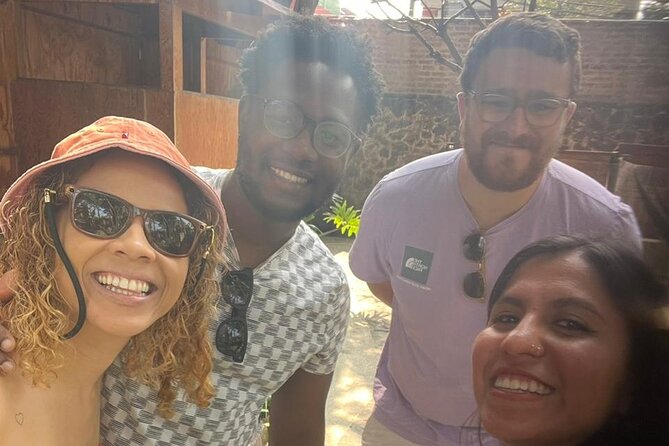
The itinerary includes about 15 minutes inside the Coyoacán town hall. This gives you another view of the district, this time through civic rather than religious space.
The town hall helps round out the story. You have already heard about pre-Hispanic Coyoacán and Spanish evangelization. Here, the focus shifts toward local administration and the public life of the district. The stop is short, but it helps explain why Coyoacán feels like a distinct historic community within a huge capital.
This is also where a good guide can make the difference between a quick building visit and a useful lesson in how the area developed. Guides such as Delta and Jesus are described as adapting their explanations to questions, while Rodrigo is praised for combining solid information with humor. That matters on a walking tour with several historical periods packed into a short time.
The town hall is not presented as the main attraction, so you should not expect a long interior visit. Think of it as a connecting piece between the churches and the market.
Tasting Coyoacán at the Market
The Coyoacán Market receives about 25 minutes, and this is the most flexible part of the route. You can look around, hear about local food, and try something if you wish. A market snack may include fried grasshoppers, a traditional food that can test your sense of adventure.
You do not pay for lunch as part of the tour, and food is not included in the price. That is worth remembering. The market visit is an opportunity to sample something, not a full meal stop. If you arrive hungry, bring a little spending money and allow for the fact that the tour gives you limited time.
I like this stop because food turns the history lesson into something immediate. Churches and civic buildings tell you about institutions. A market shows you how people eat, shop, and spend time in the neighborhood now. The guide can also point out local habits and explain why certain foods matter.
The 25-minute window is enough for a taste and a look around, but you may want to return after the tour. Coyoacán is a good place to linger once the guided walk ends, and the tour’s finish at the Trotsky museum leaves you in a part of the district where you can continue exploring independently.
A few more Mexico City tours and experiences worth a look


The Leon Trotsky Museum Changes the Tone
The final 40 minutes take place at the Museo Casa de Leon Trotsky, also called Leon Trotsky’s House Museum. Admission is included, and the tour ends here.
This is the tour’s central reason to book it instead of a more familiar Coyoacán sightseeing walk. The museum was Trotsky’s home during his time in Mexico, and the guide explains his arrival, political life, and the attempts on his life before his assassination.
You walk through the rooms while hearing about Mexico’s decision to offer asylum to Trotsky and the complicated politics surrounding him. The museum makes those events physical. You are not only hearing about an exile in abstract terms. You are moving through the place where he lived, worked, and faced danger.
The story also connects to Frida Kahlo and Diego Rivera, whose presence in Coyoacán forms an important part of the district’s 20th-century identity. If you are more interested in Trotsky than in waiting for entry to the Frida Kahlo Museum, this tour offers a useful alternative. It gives you some of the artistic and political background without making the Blue House the main event.
The museum visit is short enough to leave you wanting more. Forty minutes can cover the main story, but visitors with a strong interest in Trotsky, revolutionary politics, or museum displays may wish for extra time. Since the tour ends here, you can ask about returning on your own if you want a slower look, though the provided details do not state whether a separate reentry ticket is possible.
The Guides Shape the Experience
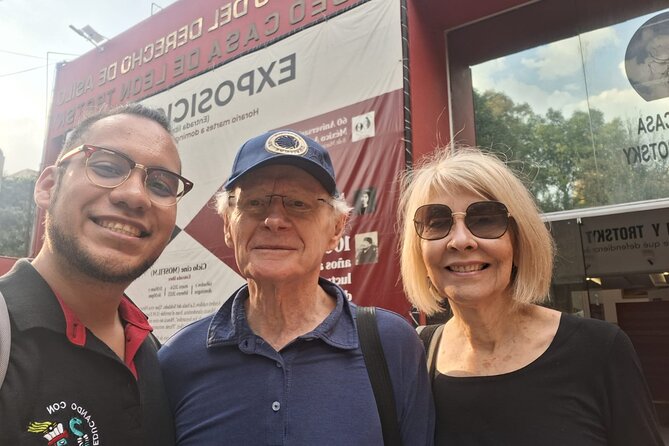
The strongest part of this experience is the guiding. The available feedback gives a clear picture of what to look for: guides are praised for clear communication, historical command, warmth, humor, and the ability to adjust to questions.
Delta appears several times in the feedback and is described as especially familiar with Coyoacán. She is also noted for flexibility with a guest’s schedule and for explaining both the neighborhood and Trotsky’s life in detail. Jorge receives similar praise for making the walk engaging and for connecting Coyoacán to wider Mexican history.
Ana is described as very well informed about the area’s historical setting. Rodrigo is praised for his humor and for bringing together Spain, Frida Kahlo, Trotsky, and Mexico’s complicated past. Denaila is described as enthusiastic, while Jesus is noted for a personalized approach and detailed explanations.
Of course, a guide’s style can vary from one departure to another. Still, the repeated pattern is useful. This is not a tour designed only to point out photo stops. You should expect a spoken history lesson, with room for questions and discussion.
Ask questions as you go. The tour covers several centuries in a little over two hours, so the guide’s answers can help you decide which threads matter most to you.
Is $77.67 a Fair Price?
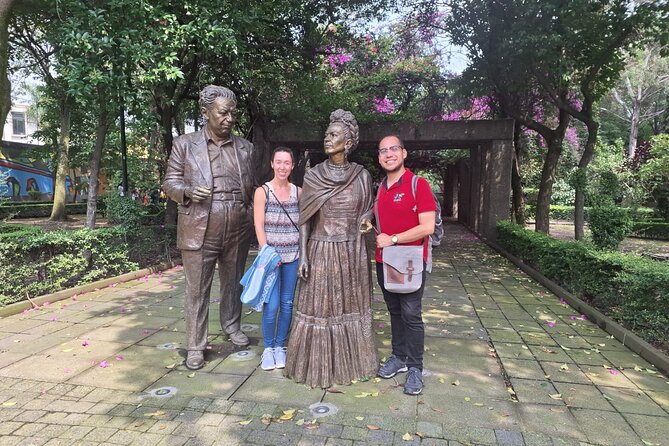
At $77.67 per person, this is not the cheapest way to see Coyoacán. You are paying for an English-speaking guide, included admission to the Parish of St. John the Baptist and Trotsky’s house, and a planned route through several important sites.
The value depends on your interests. If you only want to stroll through the plazas, browse the market, and take photos, you can do much of that without booking a tour. If you want the connections between indigenous Coyoacán, Spanish conquest, religious conversion, local government, food, Frida Kahlo, Diego Rivera, and Trotsky, the price is easier to justify.
A group limit of 25 keeps the outing from becoming a very large procession. It is still worth arriving ready to listen and walk at a set pace. Tips and lunch are not included, so budget separately for both if needed.
The experience receives a five-star rating from 53 reviews, with 98 percent of customers recommending it. Those figures suggest a strong level of satisfaction, especially with the guides and the historical content, but they do not change the practical point: the tour is best value for a history-minded visitor who wants structure.
Who Should Book This Coyoacán Walk?
I would choose this tour if you want a compact introduction to Coyoacán and have a real interest in Mexico’s political and cultural past. It suits couples, families, solo visitors, and anyone who prefers learning about a place while walking through it.
It is especially useful if you have already decided that the Trotsky museum matters more to you than the Frida Kahlo Museum. You still hear about Kahlo and Rivera, but the route gives Trotsky’s house the final and longest stop.
Families should note that the tour includes churches, civic history, a market, and political violence. Older children and adults who enjoy stories about people and places may find it rewarding. Someone seeking only shopping, food, or relaxed sightseeing may find the explanations too dense.
Most people can participate, service animals are allowed, and the meeting point is near public transportation. The supplied details do not give a specific accessibility assessment, so you should ask the operator directly if you have mobility needs.
Booking, Timing, and Cancellation
Confirmation arrives when you book, and the tour is offered in English with a mobile ticket. It is booked an average of 17 days ahead, so reserving before your Mexico City visit is sensible if your schedule is fixed.
The route starts at Fuente de los Coyotes in Parque Centenario and ends at Leon Trotsky’s House Museum on Avenida Río Churubusco. Since the tour does not return to the starting point, plan your next activity from the museum rather than assuming you will finish back in central Coyoacán.
Free cancellation is available up to 24 hours before the start time for a full refund. Inside that 24-hour window, you cannot receive a refund or make changes. The activity also requires a minimum number of participants, and if that minimum is not met, you will be offered another date or experience, or a full refund.
My Verdict on the Coyoacán and Trotsky Tour
Book it if you want context, not just landmarks. The churches and market would be pleasant on their own, but the guide turns them into part of a larger story. The Trotsky museum then gives the walk a sharp, unusual finish.
Skip it if you want a slow food tour, a private experience, or a long museum visit. The schedule is compact, the group may reach 25 people, and lunch is not included.
For the right visitor, this is a smart way to spend a morning or afternoon in Coyoacán. You leave with a better sense of the district’s older roots, its colonial institutions, its local character, and the political drama that brought Trotsky to Mexico.
FAQ
Where does the tour begin?
The tour begins at Fuente de los Coyotes in Parque Centenario, Coyoacán, Mexico City.
Where does the tour end?
It ends at Leon Trotsky’s House Museum on Avenida Río Churubusco 410, in the Del Carmen area of Coyoacán.
How long does the tour last?
The tour lasts approximately two hours and 15 minutes.
Is the tour offered in English?
Yes. The experience is offered in English and provides a mobile ticket.
What is included in the price?
The price includes the guide and tickets for the included attractions.
Is lunch included?
No. Lunch is not included, and tips are also separate.
How large is the tour group?
The maximum group size is 25 participants.
Can I cancel for a full refund?
Yes, if you cancel at least 24 hours before the experience begins. Cancellations made less than 24 hours in advance are not refunded.
Is the tour suitable for most people?
Yes. Most people can participate, and service animals are allowed. The tour is also near public transportation.
More Guided Tours in Mexico City

More Chapultepec & Museum Tours in Mexico City
More Frida Kahlo & Coyoacan Tours in Mexico City
More tours in Mexico City we've reviewed


Frida Kahlo & Coyoacan Tours, compared.
 ★ 4.5Xochimilco, Coyoacan and Frida Kahlo with Optional LunchFrom $349 hours (approx.)
 ★ 4.4CDMX: Xochimilco, Coyoacan, Frida Kahlo Museum & Murals TourFrom $89
 ★ 5.0Frida Kahlo VIP [Museum Tickets Included] Bike, Markets & ChurrosFrom $834 hours (approx.)
 ★ 5.0Frida Kahlo VIP [Museum Tickets Included] Walk, Markets & ChurrosFrom $833 to 4 hours (approx.)
 ★ 5.0EXCLUSIVE TOUR Frida Kahlo Museum – SMALL GROUPSFrom $862 hours (approx.)
 ★ 4.5Mexico City: Frida Kahlo Museum Entry Ticket w/Digital GuideFrom $34
 ★ 5.0Private City Tour in Frida Kahlo, Coyoacan, and XochimilcoFrom $1954 to 6 hours (approx.)
 ★ 5.0PREMIUM Frida Kahlo Museum and Xochimilco (Small Groups)From $806 to 7 hours (approx.)
The lists this tour appears in