
Reviewed · HISTORICAL TOURS
Gay Side of History through Plazas & Temples
Mexico City’s LGBTQ+ past is not confined to a nightclub district or a modern pride parade. It is threaded through the old city, from the ruins of the Templo Mayor to the plazas shaped by the Spanish conquest, the Catholic Church, the Inquisition, and later political change. This tour uses those familiar sights to tell a less familiar story.
In This Article
- Key points to know before booking
- Coffee above the ruins at Librería Porrúa
- Templo Mayor and the city beneath the city
- The cathedral, conquest, and competing power
- Thirty minutes in the Zócalo
- Centro Cultural de España and the restored colonial mansion
- Plaza de Santo Domingo and the Old Customs Building
- Why the LGBTQ+ focus adds real value
- Guide style and group size
- What the $99 price includes
- Practical planning for the morning
- Who should book this walk?
- Should you book Gay Side of History through Plazas and Temples?
- FAQ
- How long does the tour last?
- Where does the tour begin?
- Where does the tour end?
- How far do you walk?
- Is the tour offered in English?
- What is included in the price?
- Can I cancel for a full refund?
I especially like the small maximum group of 10, which gives the guide room to answer questions and adjust the conversation to your interests. I also like that your $99 includes coffee or tea, water, a digital LGBTQ+ map, and the downloadable Rainbow Mexico e-book. The main consideration is that the tour has had at least one last-minute cancellation, so confirm the outing before making tightly timed plans around it.
Key points to know before booking
- Start with coffee above the Templo Mayor: The tour opens at Librería Porrúa, where a rooftop balcony frames Aztec ruins and major Historic Center landmarks.
- Carlos gives the tour its voice: His approach combines dates, political context, personal connection, and plenty of room for questions.
- The route covers about one mile: Three and a half hours sounds long on paper, but the pace includes seated discussion and stops rather than a brisk march.
- You get useful follow-up material: The LGBTQ+ map and Rainbow Mexico PDF help you keep exploring after the walk.
- The route links several layers of Mexico City: You move from Mexica history to Spanish rule, Catholic power, the Inquisition, independence-era change, and modern LGBTQ+ life.
- It suits curious adults, not just LGBTQ+ visitors: You must be at least 18, and the tour works well for allies and anyone who wants a different angle on the city.
Coffee above the ruins at Librería Porrúa
Meet at 10 a.m. at República de Argentina 15 in the Historic Center. The first stop is Librería Porrúa, a bookshop with a rooftop balcony overlooking some of the most important sights in central Mexico City.
This is a smart opening. Rather than pointing at buildings one by one, the guide can help you understand how the old city fits together. From the balcony, you can look toward the Palace of the Royal Duty, the hideaway rooms associated with Frida Kahlo, and the exposed ruins of the Templo Mayor. Coffee or tea and bottled water are included, giving the first hour a relaxed feel.
Carlos is especially good at using this time to build a broad base. His historical discussion can reach back to the population of the Americas, then move through the Mexica capital, the Spanish conquest, and the creation of Mexico as a nation. This is one reason the tour is more than a standard point-and-walk outing. You are not simply memorizing names. You are given the background needed to understand why each later plaza carries such weight.
The stop lasts about an hour, with admission included. If you prefer a fast tour with constant movement, this opening may feel slow. I see it as a strength, especially if this is your first morning in the Historic Center or you enjoy sitting down before a long history conversation.
Other historical tours in Mexico City

Templo Mayor and the city beneath the city
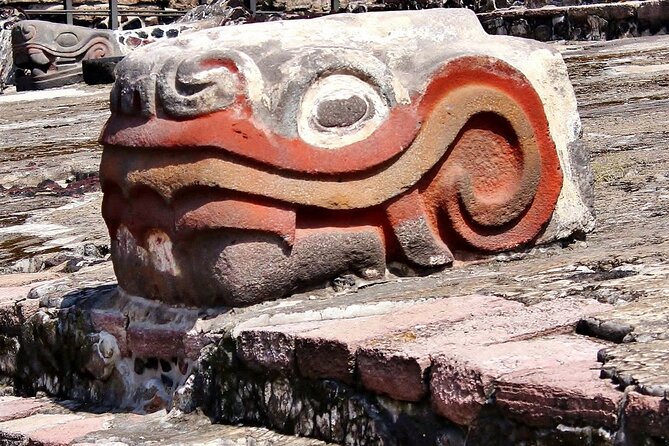
The Templo Mayor was the central temple of the Mexica capital, often called the Aztec Empire in English. Its ruins sit right beside the colonial center, making the site one of the clearest places in Mexico City to see two eras pressed together.
The LGBTQ+ focus gives this familiar archaeological setting a different purpose. The tour asks you to consider whose stories survive, whose stories were suppressed, and how later institutions described same-sex relationships and gender expression. You will also receive wider context on Mexica society and the Spanish conquest, so the conversation is not limited to one theme.
The supplied information does not promise a full museum visit or an archaeological-site entry. Think of this as a guided historical reading of the area, with the rooftop view helping you grasp the relationship between the ruins and the surrounding city. That distinction matters if you want a detailed look at the museum collections. For that, plan a separate visit.
The cathedral, conquest, and competing power
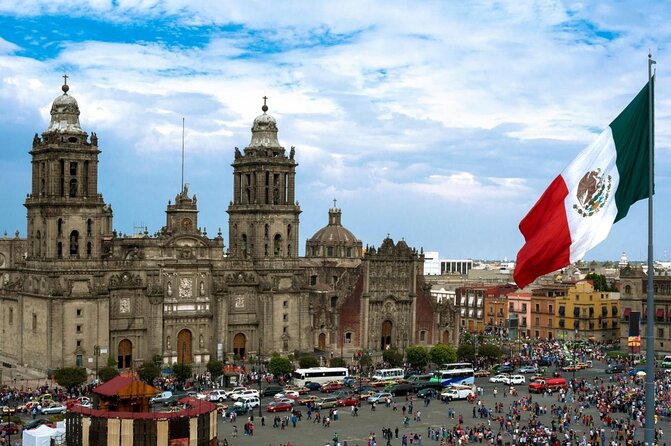
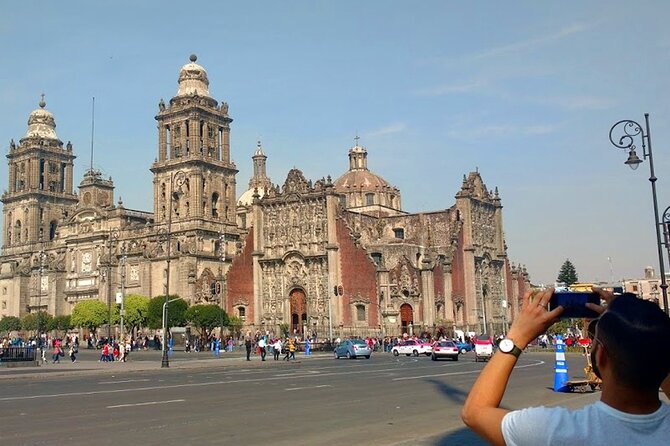
The Metropolitan Cathedral of the Assumption rises beside the Zócalo, and its presence helps explain the power of the colonial order. The cathedral is the seat of the Catholic Archdiocese of Mexico, and its location places religious authority at the center of the capital.
Here the tour moves through the difficult period after the Spanish conquest. The LGBTQ+ story is not treated as a modern add-on. It is connected to law, religion, colonial control, and the ways institutions judged private behavior. That approach makes the stop useful even if you already know the cathedral from a regular sightseeing walk.
You should expect exterior discussion rather than assume an interior visit. The route has a lot to cover, and its purpose is to connect the cathedral with the broader history of Mexico City. Wear shoes that handle uneven pavement, and keep in mind that the tour runs in all weather.
Thirty minutes in the Zócalo
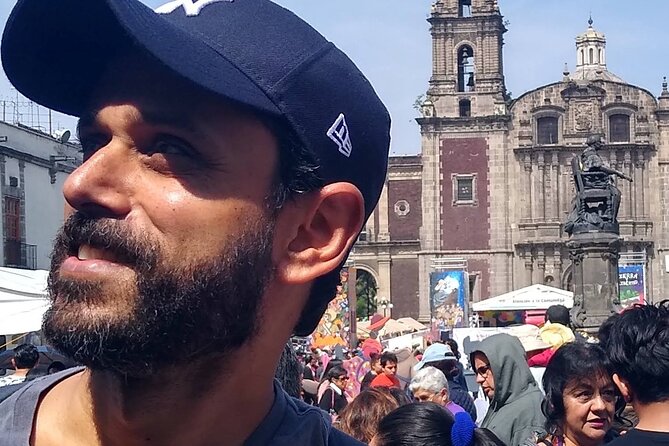
The Zócalo is the country’s central plaza and has served as a meeting place since the 16th century. It is also one of the best locations for seeing how Mexican political and religious life was organized around a single public space.
The tour gives you about 30 minutes here. That is enough time to discuss the National Palace, the cathedral, and the plaza’s role without turning the visit into a long architecture lecture. The National Palace is the seat of Mexico’s federal executive and has also served as the president’s official residence since 2018.
I like the Zócalo stop because it places LGBTQ+ stories inside national history. Political power, religious authority, public ceremony, and social rules all meet here. The conversation can move from colonial government to later political figures and major changes in Mexican society, giving you a clearer sense of how public attitudes shift over time.
The drawback is familiar: the Zócalo can be crowded, noisy, or affected by events. The tour operates in all weather, so bring sun protection or rain gear according to the forecast. The broad plaza offers little shade in some areas.
Centro Cultural de España and the restored colonial mansion
The Centro Cultural de España occupies an old mansion at 18 Guatemala Street, just behind the cathedral. By the late 1990s, the building had fallen into ruin. Mexico City transferred it to the Spanish government, and after restoration, the center opened in 2002 with the King of Spain and Mexico’s president present.
This stop adds a useful architectural and political angle. The building is not only a cultural venue. Its restoration reflects the continuing relationship between Mexico and Spain, along with the changing use of old colonial structures. The tour’s LGBTQ+ focus encourages you to consider how cultural institutions can preserve, reinterpret, or leave out parts of the past.
Admission is free, and the stop lasts about 30 minutes. The available details do not guarantee a particular exhibition or interior program on the day you visit, so do not book this tour solely for access to a specific display. Its main value is the guided context and the way it connects the building to the surrounding streets.
A few more Mexico City tours and experiences worth a look
Plaza de Santo Domingo and the Old Customs Building
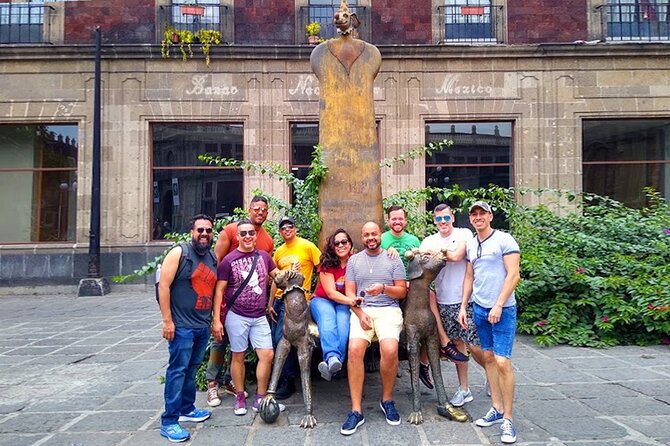
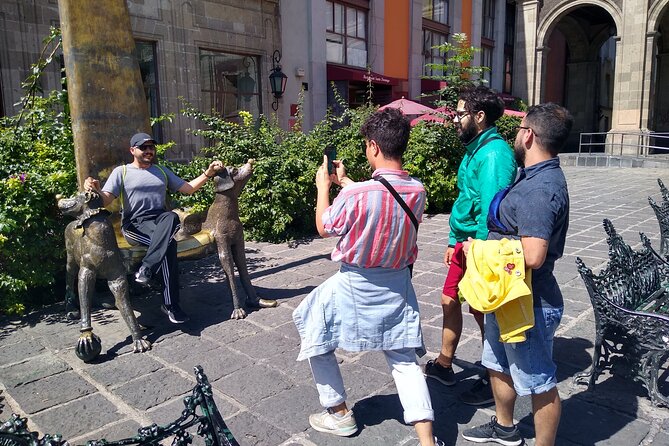
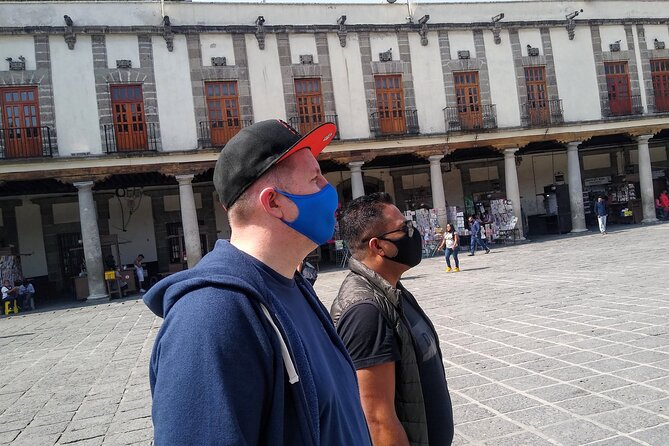
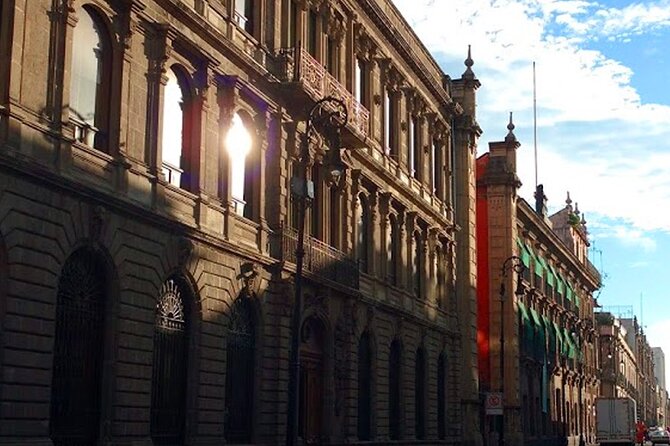
The route ends at Plaza de Santo Domingo, the Historic Center’s second-largest plaza. The meeting point for the end is at the corner of República de Venezuela and República de Brasil, beside the Antiguo Palacio de la Santa Inquisición.
The plaza is framed by the Old Customs Building on its east side and the Church of Santo Domingo on the north. Along the west side, the Portal de Evangelistas is a Tuscan colonnade with round arches. Scribes have traditionally worked there with typewriters and older printing equipment, giving the plaza a strong connection to documents, bureaucracy, and the written word.
This is a fitting final setting for a tour about stories that were recorded, controlled, or erased. The Old Customs Building reflects the machinery of colonial administration. The church points to religious authority. The scribes suggest the everyday business of putting words onto paper. Together, the buildings give the guide several ways to discuss how official records shaped what later generations knew about sexuality and social life.
The tour also covers the Spanish Inquisition’s role in executing people convicted of homosexual acts between 1521 and 1821. That subject is serious, and the setting makes it harder to treat the past as a series of harmless curiosities. You will hear about persecution, but the tour also connects that painful past with survival, change, and present-day LGBTQ+ Mexico.
The Church of Santo Domingo is linked to El Camino Real, the trading route running from Old Mexico toward New Mexico. The route is also described as a safe haven for gay male couples. That detail shows the kind of local story this experience seeks out: not just famous monuments, but the social meanings attached to ordinary streets and travel routes.
Why the LGBTQ+ focus adds real value
A standard Historic Center walk will likely give you dates, façades, churches, and government buildings. This experience asks different questions. Who had power? Who was punished? Who found ways to live privately? How did colonial law affect same-sex relationships? How did modern Mexico move toward greater public recognition?
The result is not a tour that ignores the city’s wider past. The best parts use LGBTQ+ history as a lens for understanding Mexico City as a whole. You may discuss the Mexica capital, Spanish rule, Isabella of Spain, the Inquisition, Benito Juárez, Porfirio Díaz, the 1910 Revolution, and modern gay life in Mexico City.
That broad range is a major reason to choose this walk over a general sightseeing route. It also means you should arrive ready to think, not just take photographs. The subject is sometimes heavy, but the presentation is described as engaging, entertaining, and occasionally funny. Carlos is known for turning a serious history lesson into a conversation that stays lively.
The tour is also not limited to LGBTQ+ participants. If you are an ally, you can still expect a strong introduction to Mexican history, with an angle that regular guidebooks often leave out. If you have already visited Mexico City several times, the route may bring you to familiar places with new questions attached.
Guide style and group size
Carlos is the named guide associated with the experience, and his role is central. He combines broad historical knowledge with an informal, personal manner. He asks about your interests and can work those questions into the route, which is especially helpful when the group is small.
The maximum is 10 people. That is small enough for conversation, though the actual group size can vary. On a very small departure, you may get extra time for questions. One exceptionally engaged outing lasted about four hours because the group kept asking questions, so treat the advertised three hours and 30 minutes as an approximate duration.
The walking distance is about one mile over three hours. This is not a fitness challenge, but you should be comfortable standing and walking on city streets for an extended period. The stated requirement is moderate physical fitness. Service animals are allowed, and the route is near public transportation.
The tour is offered in English and uses a mobile ticket. The minimum age is 18, so it is designed for adults.
What the $99 price includes
At $99 per person, this is not the cheapest way to see the Historic Center. It is also not a bare walking tour. The price includes a local guide, coffee or tea, bottled water, the digital LGBTQ+ map of the Historic Center, extra online resources, and a downloadable PDF of Rainbow Mexico: Bridging Forgotten Pasts and Vibrant Futures.
The value depends on what you want from the morning. If you only need a quick orientation to the cathedral and Zócalo, a less expensive general walk may suit you better. If you want a focused discussion, personal questions answered, and useful material for exploring after the tour, the price is easier to justify.
Admission is included at Librería Porrúa, while the Zócalo, Centro Cultural de España, and Plaza de Santo Domingo stops are listed as free. The real expense here is the guide’s time and subject focus, not entrance tickets.
The digital resources improve the value. You can use the map to identify other LGBTQ+ places in the Historic Center, and the e-book gives you a way to revisit the material after the tour. I would download both before the day begins if possible, particularly if you want to take notes or follow up on names and events.
Practical planning for the morning
The start is at República de Argentina 15 in Centro Histórico at 10 a.m. The tour finishes at the Antiguo Palacio de la Santa Inquisición, República de Brasil 33, at the corner of República de Venezuela and República de Brasil in Plaza de Santo Domingo.
Because the start and finish are different, plan your next stop from the finishing point rather than returning to the beginning. The route is near public transportation, but the provided details do not specify a particular station or transit line.
Dress for the weather. The outing runs in rain or shine, and the first stop includes a rooftop balcony. Comfortable walking shoes are the sensible choice. Carrying water is optional because a bottle is included, but a hat or rain layer may be useful.
Free cancellation is available up to 24 hours before the local start time. Changes or cancellations made inside that window are not accepted for a refund. Since one booking was canceled about an hour before departure without a clear explanation, I would avoid scheduling an important timed activity immediately afterward and confirm the tour is operating before setting out.
Who should book this walk?
You should book it if you want the Historic Center explained through LGBTQ+ lives, law, religion, and politics rather than through monuments alone. It is a particularly good fit for first-time visitors who want a strong historical introduction, and for repeat visitors who have already seen the main sights but want a different way to read them.
It also suits solo visitors and couples who enjoy conversation. The small group and question-friendly format are more valuable here than they would be on a simple photo stop. Allies can book with confidence, since the content also covers Mexico City’s wider political and cultural past.
I would hesitate only if you want extensive interior access to the Templo Mayor museum, cathedral, or cultural center, or if you prefer a short, fast-paced tour. The experience is built around interpretation and discussion. Its best moments come from connecting one site to another.
Should you book Gay Side of History through Plazas and Temples?
Yes, if the subject interests you and you are willing to give the morning time. The strongest reasons are Carlos’s broad storytelling, the unusual LGBTQ+ lens, the relaxed coffee opening, and the downloadable material that helps you continue on your own.
The $99 price is fair for a small, focused experience with a local guide, but it is not the right choice for anyone seeking a low-cost introduction or a ticket-heavy attraction tour. Confirm the departure before leaving, wear sensible shoes, and keep the afternoon flexible. For an adult who wants Mexico City’s famous plazas to say something beyond their architecture, this is a thoughtful and worthwhile choice.
FAQ
How long does the tour last?
The tour lasts approximately three hours and 30 minutes. A very engaged group may spend longer because the guide allows time for questions and discussion.
Where does the tour begin?
It begins at República de Argentina 15 in Mexico City’s Historic Center at 10 a.m.
Where does the tour end?
It ends at the Antiguo Palacio de la Santa Inquisición, República de Brasil 33, at the corner of República de Venezuela and República de Brasil in Plaza de Santo Domingo.
How far do you walk?
The route covers about one mile over roughly three hours. A moderate level of physical fitness is recommended.
Is the tour offered in English?
Yes. English is the stated language for the experience.
What is included in the price?
The price includes a local guide, coffee or tea, bottled water, a digital LGBTQ+ map of the Historic Center with extra resources, and a downloadable PDF copy of Rainbow Mexico: Bridging Forgotten Pasts and Vibrant Futures.
Can I cancel for a full refund?
Yes, if you cancel at least 24 hours before the experience start time. Cancellations or changes made less than 24 hours before the start are not accepted for a refund.
More LGBTQ-Friendly in Mexico City
More Historical Tours in Mexico City

More tours in Mexico City we've reviewed



Historical Tours, compared.
 ★ 5.0Historic Downtown Walking TourFrom $263 hours (approx.)
 ★ 5.0Historic Center Food Tour in Mexico CityFrom $1155 hours (approx.)
 ★ 4.8Mexico City: Historic Downtown Walking TourFrom $263 hours
 ★ 5.0Walking Tour of the Historic Center of Mexico City3 hours (approx.)
 ★ 5.0Mexico City Historical Centre Food Tour with 7 Authentic TastingsFrom $653 hours (approx.)
 ★ 5.0Walking Tour in Mexico City for Exploring their Cultural HeritageFrom $252 to 3 hours (approx.)
 ★ 5.0Walking Tour – Impressive murals in Historical Center of Mexico CityFrom $511 to 3 hours (approx.)
 ★ 4.5Mexico City: Guided walking tour through the most historic parts of the city.From $303 hours
The lists this tour appears in