
Reviewed · HALF-DAY
Half-Day Small-Group Historical Center Mexico City Tour
Mexico City’s Historic Center makes far more sense from a bicycle seat. In four hours, you move from the Aztec world at Templo Mayor to the Zócalo, Diego Rivera’s mural, Bellas Artes, and the Monument to the Revolution, with guides connecting the pieces as you go. The route gives you a fast but thoughtful introduction to the city.
In This Article
- Key things to know before you book
- Why a bicycle works so well in Mexico City’s center
- Bazar Fusion: a useful start at 9 a.m.
- Plaza Tlaxcoaque and Regina Coeli: the city’s layers begin to show
- The Zócalo and Templo Mayor: two centers of Mexico City
- Diego Rivera’s mural at Alameda Central
- Bellas Artes: a five-minute architectural pause
- The Monument to the Revolution and the ride home
- Food, snacks, and what lunch adds
- The guides and the small-group advantage
- Who should book this four-hour ride?
- Value, timing, and practical details
- Should you book Bikes and Munchies?
- FAQ
- Where does the Mexico City bike tour begin?
- What time does the tour start?
- Where does the tour end?
- Are bicycles and helmets included?
- Is lunch included?
- What is the maximum group size?
- Are museum entrance fees included?
I like the small group of no more than 10 people, especially since two guides ride along. I also like the blend of history and food: you get a snack at the start, local food along the way, and lunch is included. Guides including Velia, Valentin, Isaac, and Augustine are praised for their clear explanations and careful handling of city traffic.
The main consideration is the cycling itself. Mexico City streets can feel intense, and you need moderate physical fitness and enough confidence to ride in an active urban setting. The guides help, but this is still a bike tour, not a gentle sightseeing ride by van.
Key things to know before you book
- See eight major central sights in about four hours, from Plaza Tlaxcoaque to the Monument to the Revolution.
- Ride with two guides and a maximum of 10 people, giving the group a personal feel and extra help at crossings.
- Study Diego Rivera’s Mexico mural inside the museum, with admission included.
- Learn how Aztec, colonial, revolutionary, and modern Mexico meet in one city center.
- Bikes, optional helmets, a snack, and lunch are included, but transport to the starting point is not.
- Return to Bazar Fusion by the end, after a 9 a.m. start.
Why a bicycle works so well in Mexico City’s center
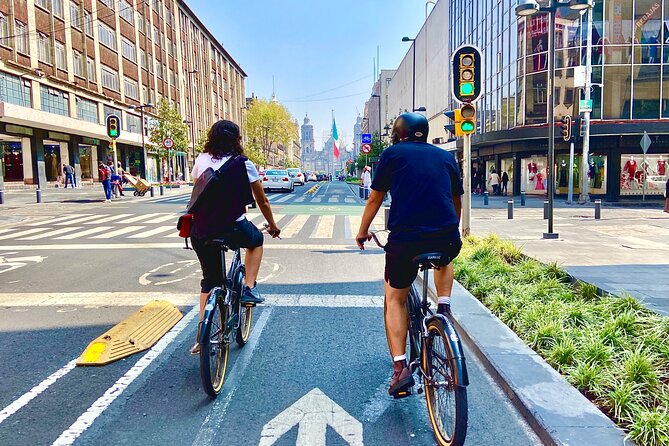
The Historic Center is compact on a map but packed with churches, plazas, museums, government buildings, markets, and layers of older construction. Walking can be rewarding, but it takes time. A bicycle lets you cover more ground while still stopping often enough to look closely.
This route is especially useful early in a Mexico City visit. You get your bearings quickly, hear the broad outline of the capital’s past, and pass through areas you might not connect on your own. The guides explain not just what a building is, but why the location matters.
The format also avoids the anonymity of a large bus tour. With two guides for up to 10 people, one guide can lead while the other helps the group move through traffic. That arrangement has made a real difference for people who were initially unsure about riding in the city.
Still, you should be honest about your comfort level. The tour requires a moderate level of fitness, and you will be riding for much of the morning. Helmets are available but optional. If you are nervous on a bicycle, ask yourself if the chance to cover more of the center is worth the added effort.
Other city tours we've reviewed in Mexico City

Bazar Fusion: a useful start at 9 a.m.
The meeting point is Bazar Fusion, at Londres 37 in the Juárez neighborhood. The activity begins at 9 a.m. and ends back at the same location. You need to arrange your own way there, but the meeting point is near public transportation.
The first 40 minutes are more than a quick bicycle handoff. You receive a snack, hear an outline of the route, and get instructions on riding in Mexico City. This is a good place to ask questions before leaving, especially if you have not cycled in a large city recently.
The opening briefing matters because it sets the tone for the day. You learn how the guides will work with the group and what to expect on the road. The small group and two-guide setup should help, though you still need to pay attention and follow instructions.
A practical tip: arrive ready to ride rather than treating the meeting point as a casual café stop. The tour begins promptly in the morning, and the first section includes both orientation and sightseeing.
Plaza Tlaxcoaque and Regina Coeli: the city’s layers begin to show
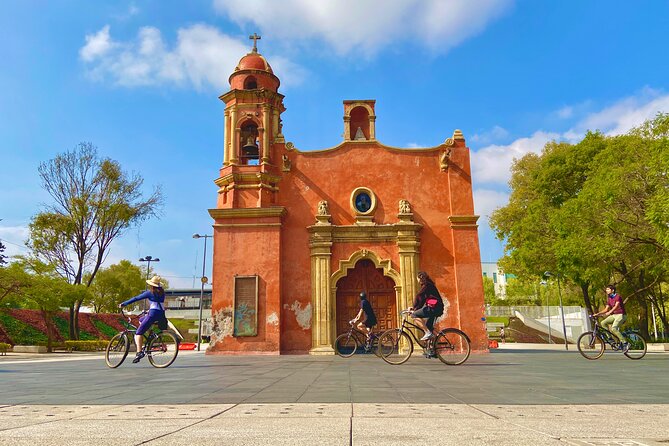
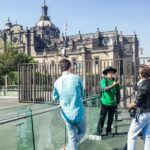
The ride toward the Historic Center includes a 15-minute stop at Calle Tlaxcoaque and Plaza Tlaxcoaque. Here, the guides explain the plaza’s past and point out a street mural.
This is a brief stop, but it introduces one of the tour’s best habits: looking beyond the famous monuments. Mexico City’s public art and ordinary streets often carry clues about local identity, politics, and memory. The mural gives you something visual to study before the grander sights arrive.
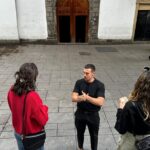
Next comes Regina Coeli Parish, where you spend about 30 minutes. The church occupies a former convent complex in the Historic Center, and the guides discuss its architecture and importance to local residents.
This stop should appeal to you if you enjoy seeing how historic buildings still function as part of daily life. It is not only a stop for photographs. The explanation of the church’s design and local role gives the area a human scale.
The itinerary does not promise an extended interior visit or a formal religious tour, so keep your expectations measured. The value here is the guide’s interpretation and the chance to place the church within the surrounding neighborhood.
The Zócalo and Templo Mayor: two centers of Mexico City
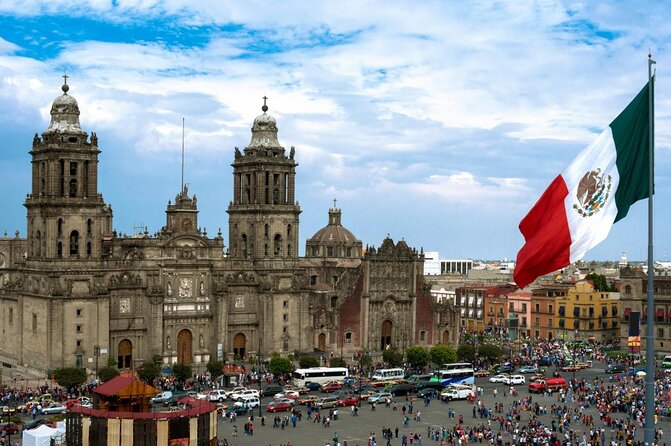
The Zócalo is the symbolic heart of the capital, and the tour spends about 15 minutes here. That may sound short, but a guide can use the time to orient you to the square and explain why it has carried such importance through Mexico’s past and present.
The Zócalo is also where the route’s central idea becomes clear. The modern city was built over earlier layers, and major events have repeatedly gathered in this same space. You will not get every detail in 15 minutes, but you will have a framework for understanding the buildings and streets around it.
From there, you visit the exterior of the Museo del Templo Mayor for another 15 minutes. This was the center of the Aztec Empire, though much of the archaeological site remains under the colonial buildings around it. Seeing the ruins beside later construction makes Mexico City’s layered past unusually plain.
The museum entrance is not included, and the tour checks the temple from outside only. That is an important distinction. If you want the full archaeological museum and excavation area, you will need to return separately and pay admission yourself.
Even with the short stop, Templo Mayor is one of the strongest parts of the morning. You see how colonial Mexico City grew over the Aztec capital rather than replacing its story completely.
Diego Rivera’s mural at Alameda Central
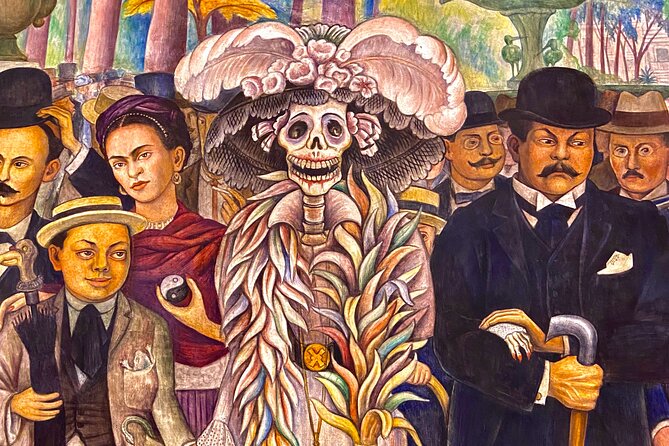
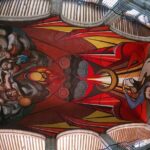
The Museo Mural Diego Rivera is the main indoor art stop. You spend about 40 minutes there, park the bicycles, and view Rivera’s large mural about Mexico’s story in Alameda Central, the park where the museum is located. Admission to the museum is included.
This stop gives the tour a welcome change of pace. After riding through plazas and streets, you can stand still and look carefully at a single work. The guides have a strong background in Mexican muralism, so the mural becomes more than a quick art photo.
Rivera’s work brings together figures and episodes from Mexico’s past. A guide can point out how the painting presents national identity, conflict, politics, and social change in one crowded scene. You do not need an art degree to enjoy it. The useful part is having someone help you notice the details and explain the larger argument.
For many people, this is the most rewarding stop because it combines art and history without requiring a separate museum day. It is also one of the few places on the route where admission is included, so you get a proper indoor visit rather than only an exterior explanation.
The 40-minute visit is long enough for a thoughtful look, though art lovers may wish they had more time. If Rivera is a priority for you, note the museum’s name and consider returning later.
Other historical tours in Mexico City


Bellas Artes: a five-minute architectural pause
The group passes Palacio de Bellas Artes and spends about five minutes discussing its architecture and the effect of the Mexican Revolution on its construction.
This is a quick look, not a museum visit. Admission is not included, and the short timing means you should not expect an interior tour or a full account of the building’s art collections.
Still, the stop earns its place because Bellas Artes is one of Mexico City’s most recognizable buildings. The unfinished or interrupted story of its construction helps explain how political upheaval can shape a city’s architecture.
If you want to go inside, plan another visit on your own. The bike tour gives you context and a view from the street, which is useful for orientation but limited for anyone hoping to study the building in detail.
The Monument to the Revolution and the ride home
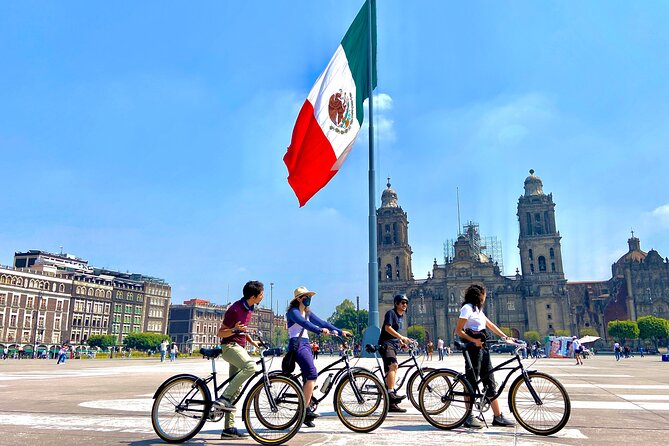
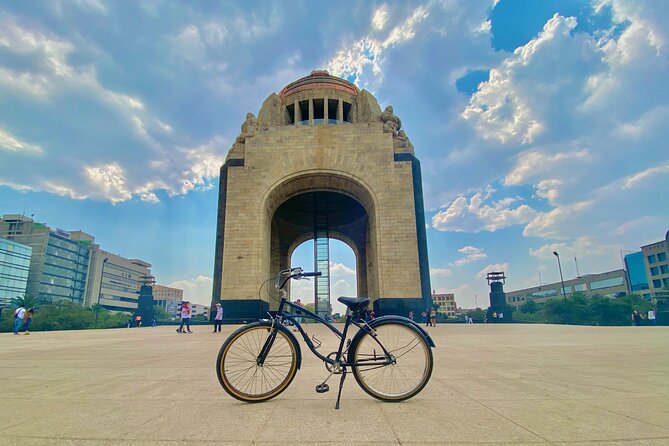
The final major stop is the Monument to the Revolution. The group rides past it, then stops in the middle for about 20 minutes while the guides explain the Mexican Revolution.
The monument is one of the largest landmarks in the city, and its scale gives the final history lesson a strong visual setting. The stop links the earlier discussions of colonial power, Aztec foundations, and public art with the political changes that shaped modern Mexico.
Admission to the monument and museum is not included. You see the monument from the route and hear its story, but this is not a museum tour. If you want the interior or museum exhibits, return separately.
The ride then goes back to Bazar Fusion, where the activity ends. Because the route returns to its starting point, you do not have to work out a new pickup location in an unfamiliar part of town.
Food, snacks, and what lunch adds
Food is part of the appeal, not a side note. You receive a snack at the start, and the experience includes lunch. The food portions and exact lunch location are not specified, so you should not book this expecting a detailed tasting menu or a fixed list of dishes.
The food side appears to focus on everyday Mexico City eating. The experience can include cafés, taco shops, street food, and a pastry stop. One food visit is described as a wholesale bakery or pastry shop, which suggests a look at places serving local residents rather than only formal dining rooms.
I like this approach because food gives the history a physical connection. You are not only hearing about the city’s neighborhoods. You are stopping to taste something in them. The combination of cycling, snacks, and lunch also makes the four-hour schedule feel varied.
If you have allergies, dietary restrictions, or strong food preferences, confirm what can be accommodated before booking. The supplied details do not specify a vegetarian menu, allergy policy, or exact lunch dishes.
The guides and the small-group advantage
The quality of this activity depends heavily on the guides. Names connected with the tour include Velia, Valentin, Isaac, Augustine, Miranda, and Amistad. Their roles can vary, but the strongest pattern is clear: you should expect history explanations, traffic assistance, and an upbeat approach to local food.
Velia and Valentino have been praised for making the tour feel personal, while Isaac is noted for offering detailed analysis of Mexico City’s past and present. Valentin and Augustine are also described as careful leaders who help the group ride through difficult sections.
The presence of two guides is especially useful. One can explain a site while the other keeps an eye on bicycles and crossings. That does not remove every risk, but it can make city riding feel much more manageable.
The cap of 10 people is another real advantage. You can ask questions without shouting across a coach, and the guides can adjust their explanations to the group. Several private tours have also been arranged, including outings for families with teenagers. The standard product is small-group, while private arrangements may be possible through the provider.
Who should book this four-hour ride?
I would choose this tour for a first or second day in Mexico City, especially if you want a broad overview before exploring individual museums and neighborhoods. It suits active couples, friends, families with older children, and anyone who prefers movement to a long walking tour.
It is also a good fit if you want history without spending four hours inside museums. The route gives you architecture, archaeology, public art, muralism, food, and revolutionary history in one morning.
You may want another option if you dislike cycling in city traffic, have limited mobility, or prefer slow museum visits. The tour requires moderate fitness, and several stops are short. You will see the outside of Templo Mayor, Bellas Artes, and the Monument to the Revolution rather than receiving full interior tours.
For families with teenagers, the food breaks and constant movement can help maintain interest. Guides have adapted private outings for groups with three teenagers, but the standard small-group experience still depends on everyone being comfortable on a bike.
Value, timing, and practical details
The price is not provided here, so I cannot judge the exact cost. In value terms, you are paying for four hours of guiding, bicycle use, optional helmets, a snack, lunch, two guides, and admission to the Museo Mural Diego Rivera.
That package is more useful than a bare bicycle rental because the route and explanations do the planning for you. You also avoid arranging separate transport between several central sights. On the other hand, several landmarks are exterior stops, and entrance fees for Templo Mayor, Bellas Artes, and the Monument to the Revolution are not included.
The activity starts at 9 a.m. and lasts about four hours. Morning timing can help you fit another museum, meal, or neighborhood walk into the afternoon. It also means you should eat sensibly before arriving, since the provided snack and lunch timing may not match your usual breakfast routine.
Confirmation arrives when you book. Free cancellation is available up to 24 hours before the start time for a full refund. Changes or cancellations inside that window are not accepted for a refund, and the activity may be canceled if its minimum group size is not met. In that case, you are offered another date or experience, or a full refund.
Should you book Bikes and Munchies?
Book it if you want a lively introduction to central Mexico City that combines biking, food, art, and history in one morning. The two-guide format and small group are important advantages, especially if riding in city traffic makes you uneasy.
Skip it if your main goal is extended time inside museums or if you do not feel comfortable cycling. For everyone else, this is a practical first look at the capital’s center. You see the city’s major layers quickly, then have the rest of your visit to return to the places that deserve more time.
FAQ
Where does the Mexico City bike tour begin?
The tour begins at Bazar Fusion, Londres 37, Juárez, Cuauhtémoc, 06600 Ciudad de México, CDMX, Mexico.
What time does the tour start?
The activity starts at 9 a.m. and lasts approximately four hours.
Where does the tour end?
The tour ends back at the meeting point at Bazar Fusion.
Are bicycles and helmets included?
Bicycle use is included, and helmets are available as an option.
Is lunch included?
Yes. Lunch is included, along with a snack at the beginning of the tour.
What is the maximum group size?
The activity has a maximum of 10 participants and includes two guides.
Are museum entrance fees included?
Admission to the Museo Mural Diego Rivera is included. Entrance to the Museo del Templo Mayor, Palacio de Bellas Artes, and the Monument to the Revolución is not included, and the route visits those places from outside.
More Half-Day in Mexico City

More Historical Tours in Mexico City
More City Tours in Mexico City
More tours in Mexico City we've reviewed


Half-Day, compared.
 ★ 5.0Mexico City Private & Personalized Half-Day Tour with a LocalFrom $1083 to 4 hours (approx.)
 ★ 5.0Private Teotihuacan Half-Day Tour from Mexico CityFrom $3706 hours (approx.)
 ★ 5.0Half-Day Tour to Teotihuacan Pyramids from Mexico CityFrom $2006 hours (approx.)
 ★ 4.5Mexico City Half-Day Tour with Museum of AnthropologyFrom $475 hours (approx.)
 ★ 4.8Mexico City: Teotihuacan Early Morning Access Half-Day TourFrom $57
 ★ 5.0CDMX: Half-day tour of TeotihuacanFrom $578 hours
 ★ 5.0From Mexico City: Half-day tour to TeotihuacanFrom $678 hours
The lists this tour appears in