
Reviewed · HISTORIC CENTER WALKS
Walking Tour of the Historic Center of Mexico City
Mexico City’s historic center makes the most sense on foot. In three hours, this tour links the Mexica capital, Spanish colonial city, and modern metropolis in one steady walk, rather than treating each building as a separate photo stop. You move from the Zócalo and Templo Mayor to Diego Rivera murals, grand civic buildings, and the famous House of Tiles.
In This Article
- What makes this walk worth your morning
- Start beneath the flag in the Zócalo
- The Cathedral and the Mexica city below it
- Rivera’s murals inside the Ministry of Education
- Santo Domingo and the colonial city
- Shade and conversation at Plaza Tolsá
- A small archaeological surprise under the street
- Bellas Artes, Palacio Postal, and the final stretch
- Pace, comfort, and what to bring
- How the value works
- The guides shape the experience
- Who should book this walk
- Should you book it?
- FAQ
- How long is the walking tour?
- Where does the tour begin?
- Where does the tour end?
- Is the tour offered in English?
- How large is the group?
- Are admission tickets included?
- Is transportation included?
- What happens if I cancel?
I like two things in particular: the small groups, capped at 10, and the way the guides connect architecture with daily life, politics, food, music, indigenous languages, and the Day of the Dead. Guides including Fernanda, Luis, Alexia, Nat, and Benjamin have been praised for clear English, humor, thoughtful answers, and good care at street crossings and in the sun.
The tradeoff is physical. Three hours on cobblestones and hard city pavement can be tiring, especially at Mexico City’s high altitude. There are stretches with few places to sit, and a slower group may mean skipping part of the route.
What makes this walk worth your morning
- A compact route through nine major sights: You cover the Zócalo, Metropolitan Cathedral, Templo Mayor, Rivera murals, Santo Domingo, Plaza Tolsá, an archaeological window, Bellas Artes, Palacio Postal, and the House of Tiles.
- History told as a sequence: The walk explains how a pre-Hispanic city became the capital of New Spain and then the center of modern Mexico.
- Diego Rivera murals indoors: The Ministry of Education contains a large group of Rivera’s murals, making this more than an exterior architecture walk.
- A genuinely small group: With no more than 10 people, it is easier to hear the guide and ask questions.
- Strong guide personalities: Fernanda, Luis, Alexia, Nat, Benjamin, Sara, Oscar, Thomas, Eduardo, and others are noted for warmth, humor, clear explanations, and local recommendations.
- A useful first-day orientation: The walk ends beside Bellas Artes and the House of Tiles, two places you can return to at your own pace.
Start beneath the flag in the Zócalo
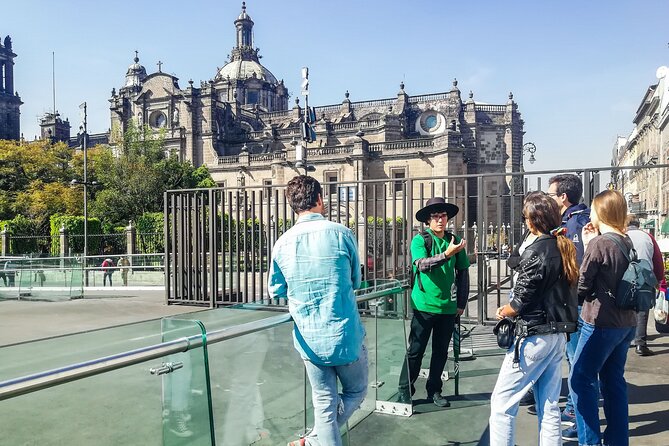
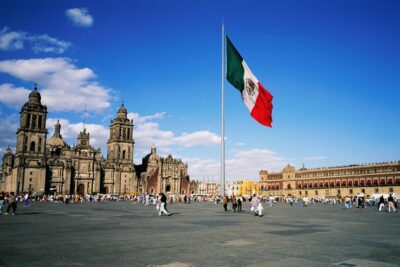
The tour begins at Plaza de la Constitución, usually called the Zócalo. This immense square gives you the right opening scene: the National Palace on one side, the Supreme Court of Justice nearby, the Cathedral at the edge, and the commercial streets of the historic center spilling away from it.
Your guide uses the square to explain the basic shape of Mexico City and the collision of cultures beneath its streets. The point is not simply that this is a grand plaza. It is that the city’s political, religious, and commercial life has gathered here for centuries.
The stop lasts about 15 minutes and costs nothing to enter. Expect an open, busy public space, not a quiet museum courtyard. Bring water, use sun protection, and listen for the guide’s meeting instructions. Green shirts and umbrellas help identify the tour staff in the crowd.
A few more Mexico City tours and experiences worth a look



The Cathedral and the Mexica city below it
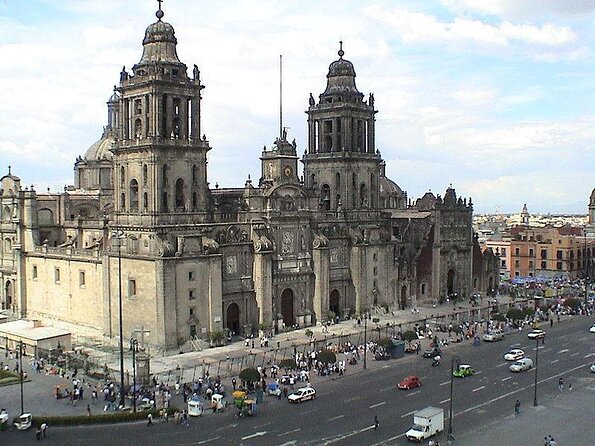
At the Metropolitan Cathedral, the explanation takes place outside. That matters if you are hoping to study the interior, since an admission ticket is not included and the tour does not promise an interior visit.
Instead, the guide focuses on the cathedral’s long construction, its origins, and its Baroque and neoclassical elements. Ten minutes is enough for a clear introduction, but not enough for a detailed architectural study. I see this as a strength for a first walk, since the route keeps moving and leaves you free to return later if the cathedral catches your interest.
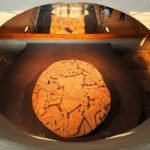
The nearby Templo Mayor ruins bring the pre-Hispanic chapter into sharper focus. From the outside, you see the remains of the temple precinct dedicated to the rain god and the sun god. The guide explains why the Mexica considered the site important and how its position related to the wider city.
This is one of the most useful parts of the tour because Mexico City’s oldest layer is easy to miss. Modern streets and buildings surround the ruins, yet the walk helps you picture the ceremonial center that came before the colonial city. The stop is viewed from outside, so do not treat it as a substitute for a full archaeological museum visit.
Rivera’s murals inside the Ministry of Education
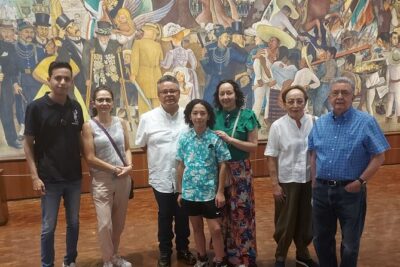
The Museo Vivo del Muralismo is a highlight for anyone interested in Mexican art and social history. You go inside the Ministry of Education to see a large group of Diego Rivera’s murals, including about a third of the murals he painted during his career.
The subjects are broad: festivals, traditions, commerce, political struggle, and life in the early 20th century. That range gives the art real purpose. You are not just looking at famous paintings on a wall. You are seeing how mural art became a public way to discuss work, inequality, national identity, and Mexico’s past.
The planned visit lasts about 25 minutes, with admission included. That is a fair amount of time for a guided introduction, though not a full museum visit. One practical point: if the group is moving quickly, it is worth asking for a few extra minutes in the courtyard or mural spaces when possible. Fernanda has been praised for allowing extra time to look at the Rivera work, a useful sign of the flexible approach some guides bring to the walk.
Santo Domingo and the colonial city
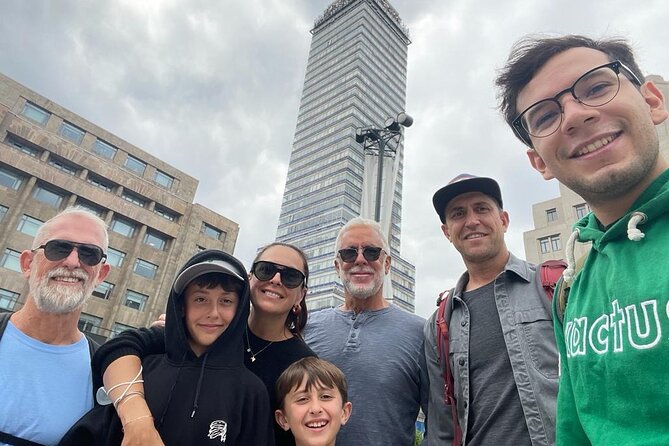
Plaza de Santo Domingo shifts the story toward the viceroyalty of New Spain. Here, the guide discusses major events from the colonial period, trade in spices and goods with Asia, the Holy Inquisition, and France’s attempts to conquer Mexico.
That mix gives the square more depth than a quick architectural stop. Mexico City was not isolated from the wider world. Goods, power, religion, and military pressure all passed through the city, and the plaza helps place those forces in a physical setting.
You spend about 15 minutes here, outdoors and free of admission charges. This is another place where a strong guide makes a big difference. The buildings alone may not explain why the square matters, but an engaging storyteller can turn the setting into a readable chapter of Mexican history.
Shade and conversation at Plaza Tolsá
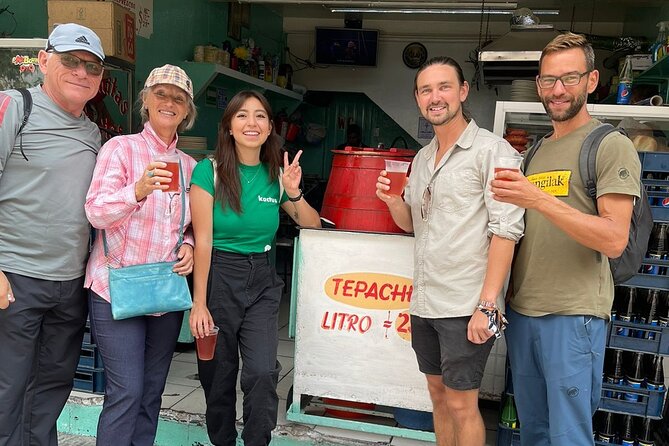
Plaza Tolsá is the route’s pause point. You stop in the shade, rest your feet, and move from formal history into topics that shape Mexico today: indigenous languages, the Day of the Dead, music, politics, and gastronomy.
I like this part because it keeps the walk from becoming a parade of dates and façades. Each guide brings personal knowledge and local examples, so this is a good moment to ask questions. If you want restaurant ideas, cultural context, or help understanding something you have seen elsewhere in the city, this is the kind of stop where you can ask directly.
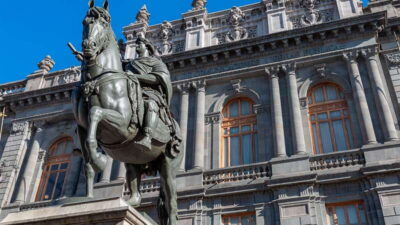
The square also gives you views of the equestrian statue of Charles IV, known as El Caballito, or the little horse. You see the exterior of the National Museum of Art and the Mining Palace as well. The stop lasts around 20 minutes and is free.
Other walking tours we've reviewed in Mexico City




A small archaeological surprise under the street
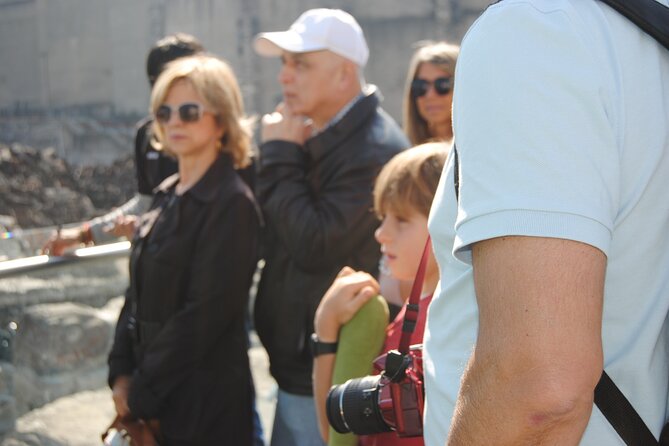
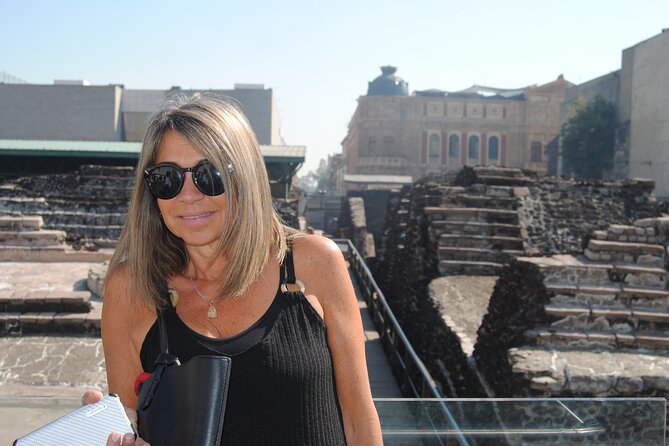
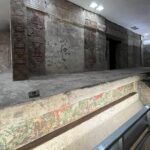
The Ventana Arqueológica is brief, only about five minutes, but it shows how much of Mexico City lies below ordinary pavement. The guide explains how the archaeological remains were found and points out the secrets hidden beneath buildings in the center.
Do not expect a long excavation visit. The value is the idea: the modern street is only one layer of the city. After seeing Templo Mayor, this small window reinforces the connection between the Mexica settlement and the colonial and modern structures built above it.
Bellas Artes, Palacio Postal, and the final stretch
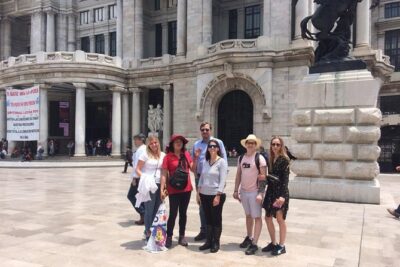
Palacio de Bellas Artes is one of the route’s essential visual stops. The building’s exterior and interior are both presented as works of art, although the walk does not include an admission ticket. You should expect a short introduction, not a complete visit to the museum or performance spaces.
The scheduled stop lasts about 15 minutes. That makes sense on a route with many sights, but Bellas Artes deserves more time if you want to study its details or see its interior at leisure. Since the tour ends nearby, you can return after the walk without having to cross the city again.
Next comes Palacio Postal, a still-functioning palace with elaborate design and a story tied to Mexico’s economic and political development. The outside explanation lasts about 10 minutes, and admission is not included. Again, this is a preview rather than an extended interior tour.
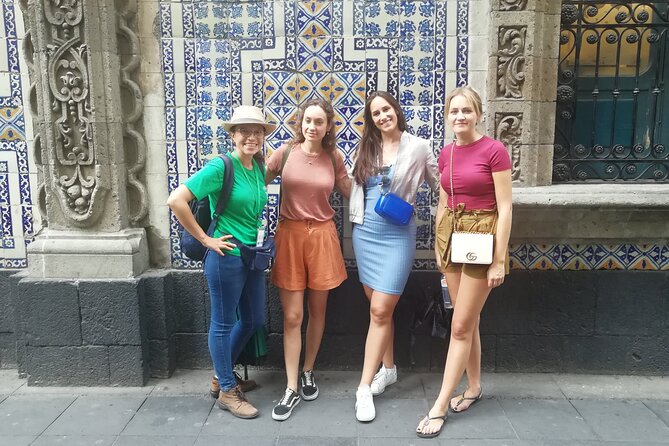
The House of Tiles is the final major stop. Its tile-covered façade has become one of Mexico City’s most photographed images, and the guide explains why it matters as more than a pretty backdrop. The route ends at Edificio Guardiola, beside Bellas Artes and the House of Tiles, which is a practical finish. You can continue exploring on foot, return to a building that interested you, or use public transportation from the central area.
Pace, comfort, and what to bring
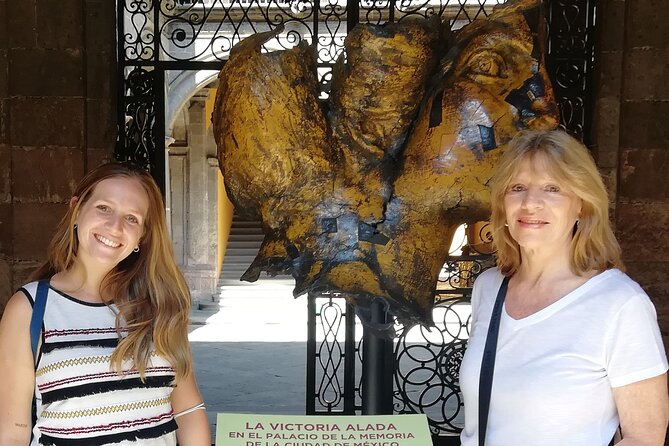
This is an active walk, not a hop-on, hop-off tour. The route covers a lot of ground in about three hours, with several stops lasting between five and 25 minutes. You should be comfortable walking on cobblestones and standing while listening.
The altitude deserves attention. One person in a recent group found the lack of seating difficult, while the guide took care with the heat and sun. That is useful advice for everyone, not only people with mobility concerns. Wear shoes with firm support, carry water, and choose a hat or light layer that protects you from direct sun.
The group limit of 10 is a real advantage. Guides such as Luis have been praised for maintaining a good pace and helping with street crossings, while Sara was noted for patience with different needs in the group. Still, the walk cannot control every delay. If someone has trouble walking, the entire group may slow down, and the full route may not be completed.
Most people can take part, and service animals are allowed. The meeting point is near public transportation, but getting there is your responsibility. Tips, transportation, and food or sweets purchased along the way are not included.
How the value works
No tour price is supplied here, so I cannot judge the exact cost against similar walks. The value rests on what is included: three hours, an English-speaking guide, a small group, and admission to the Ministry of Education murals.
Several major locations are viewed from outside or explained without admission. That is normal for a compact orientation walk, but it means you should budget extra time and entrance fees if you want to visit the Cathedral, Templo Mayor, Bellas Artes, Palacio Postal, or other interiors on your own.
For a first visit, the value is strongest if you want a clear map of the historic center and enough background to choose your next stops. It is less suitable if you want lengthy museum visits, detailed architectural analysis, or a relaxed café-to-café stroll.
The free cancellation policy adds some useful flexibility. You can receive a full refund if you cancel at least 24 hours before the start time. Changes or cancellations within 24 hours are not refunded, and poor weather or failure to reach the minimum group size can lead to a new date or full refund.
The guides shape the experience
The route is fixed, but the tone can vary with the guide. Fernanda has been praised for humor, warmth, flexibility, and a strong connection between past and present. Luis is noted for clear English, local recommendations, and a pace that works for mixed ages.
Alexia brings thoughtful commentary on both history and current life, while Nat has been valued for personal stories and careful answers. Benjamin is described as funny and engaging, and guides such as Sara, Oscar, Thomas, and Eduardo have also been praised for clear, friendly presentations.
That range matters because this is not a headset tour. Your guide carries the experience. You should expect plenty of opportunities for questions, but the depth and style will depend on who leads your group that day.
Who should book this walk
I would choose this tour early in a Mexico City stay. It gives you a useful mental map, introduces the city’s main historic layers, and ends in an area where you can keep exploring.
It fits first-time visitors, English-speaking travelers, solo visitors, couples, and friends who want history without committing to a full museum day. The small group also makes it a good choice if you like asking questions instead of following a large flag through the streets.
I would think twice if you have trouble standing or walking for three hours, dislike uneven streets, or want every site visited inside. In that case, a private vehicle-based tour or a shorter walking route may suit you better.
Should you book it?
Book it if you want a lively introduction to central Mexico City, especially one that links Templo Mayor, colonial power, Rivera’s murals, and present-day culture. The strongest reasons are the small group, the range of subjects, and the chance to hear guides such as Fernanda, Luis, Alexia, or Nat explain the city in plain English.
Skip it if you want a slow, in-depth visit to each museum and monument. For most first-time visitors who can manage the walking, this is a useful and well-focused way to get your bearings before exploring the historic center on your own.
FAQ
How long is the walking tour?
The tour lasts approximately three hours.
Where does the tour begin?
It begins at Plaza de la Constitución in Mexico City’s Centro Histórico.
Where does the tour end?
It ends at Edificio Guardiola on Avenida 5 de Mayo, beside the Palace of Fine Arts and the House of Tiles.
Is the tour offered in English?
Yes. The walking tour is offered in English.
How large is the group?
The tour has a maximum of 10 participants.
Are admission tickets included?
Admission to the Museo Vivo del Muralismo is included. Tickets for the Metropolitan Cathedral and Palacio Postal are not included. Other stops are listed as free or viewed from outside.
Is transportation included?
No. Transportation to the meeting point is not included.
What happens if I cancel?
You receive a full refund if you cancel at least 24 hours before the start time. Cancellations or changes made within 24 hours are not refunded. If poor weather or insufficient numbers cancel the tour, you are offered another date or a full refund.
More City Tours in Mexico City




More Walking Tours in Mexico City
More Historic Center Walks in Mexico City


More tours in Mexico City we've reviewed





Historic Center Walks, compared.
 ★ 5.0Historic Downtown Walking TourFrom $263 hours (approx.)
 ★ 5.0Historic Center Food Tour in Mexico CityFrom $1155 hours (approx.)
 ★ 4.8Mexico City: Historic Downtown Walking TourFrom $263 hours
 ★ 5.0Mexico City Historical Centre Food Tour with 7 Authentic TastingsFrom $653 hours (approx.)
 ★ 5.0Private Walking Tour Gems of the Historic Center of Mexico CityFrom $1564 hours (approx.)
 ★ 5.010 wonders of the Historic Center of Mexico City food and musicFrom $493 hours (approx.)
 ★ 5.0Walking Tour in Historic Center CDMXFrom $832 hours 30 minutes to 3 hours 10 minutes (approx.)
 ★ 5.0The best and most complete PRIVATE CITY TOUR through the Historic CenterFrom $683 hours (approx.)
The lists this tour appears in