
Reviewed · HISTORIC CENTER WALKS
Historic Downtown Walking Tour
Mexico City’s historic center makes the most sense when you see its layers side by side: Aztec ruins beneath the modern city, a vast cathedral built after the Spanish conquest, and grand civic buildings from later centuries. This three-hour walking tour links those pieces in a compact route from the Zócalo to the National Museum of Art.
In This Article
- Key points to know before booking
- Why this walk works as a first Mexico City experience
- Starting at the Zócalo, Mexico City’s public heart
- Seeing Templo Mayor without rushing past it
- Entering the Metropolitan Cathedral
- Pausing at Plaza Manuel Tolsá
- Palacio Postal, a surprisingly ornate stop
- Finishing at Palacio de Bellas Artes and El Caballito
- What $26.53 gets you
- Group size, language, and the walking pace
- Who should book this walk?
- Should you book the Historic Downtown Walking Tour?
- FAQ
- How long is the Historic Downtown Walking Tour?
- What sights are included?
- Where does the tour start?
- Where does the tour end?
- Is the tour offered in English?
- Are museum entrance fees included?
- How large is the group?
- Can I cancel for a full refund?
I like the way the tour gives you a quick historical framework before you start exploring on your own. I also like the practical food and sightseeing suggestions that guides such as Emiliano, Estefania, Mar, and Nadia have offered during the walk. The main consideration is pace: you cover a lot in three hours, and a fast-speaking guide or a large group can make some explanations hard to hear.
Key points to know before booking
- Six major downtown stops: The route includes the Zócalo, Templo Mayor ruins, Metropolitan Cathedral, Plaza Manuel Tolsá, Palacio Postal, and Palacio de Bellas Artes.
- A useful first-day orientation: The tour connects Mexico City’s Aztec, colonial, religious, and modern eras in one walk.
- English and Spanish options: The experience is offered in English or Spanish, with a professional certified local guide.
- Mostly an exterior introduction: You see only part of the Templo Mayor site, so plan a separate museum visit if you want the full archaeological experience.
- Small-group format, with a size caveat: The tour is promoted with groups capped at 15, while the additional booking information gives a maximum of 25.
- Good value at $26.53: For three hours of guiding through the city center, the price is reasonable, especially if you use the advice to plan the rest of your stay.
Why this walk works as a first Mexico City experience
I would put this tour near the beginning of a Mexico City visit, not at the end. The historic center can feel like a wall of churches, plazas, museums, and government buildings when you first arrive. A guide helps you sort out what you are seeing and why the city grew in such a surprising way.
The route is short in geographic terms, but the subject matter is broad. You move from the ceremonial heart of the Aztec capital to the center of Catholic Mexico, then onward to grand buildings shaped by European design and twentieth-century Mexican culture.
That mix is the real value. You are not simply checking off famous facades. You are getting a basic map of Mexico City’s past, which can make later visits to the National Museum of Anthropology, Templo Mayor Museum, or other historic sites easier to understand.
The guides are a major part of the experience. Emiliano has been praised for clear English, strong storytelling, and an ability to mix history, politics, food, and culture without losing the thread. Estefania has earned similar praise for explaining the transition from the Aztecs to present-day Mexico in a friendly, accessible way.
Mar is another guide to hope for if you want more attention to pre-Hispanic history and food suggestions. Nadia has been noted for a relaxed pace, humor, and useful advice for the rest of a Mexico City stay. Guide quality can vary, as it does on any group tour, so pay attention at the start and speak up if you cannot hear.
A few more Mexico City tours and experiences worth a look



Starting at the Zócalo, Mexico City’s public heart
The tour begins at C. de Monte de Piedad 11, close to the Zócalo. This is a handy starting point because the square gives your guide a natural place to explain the city’s basic story.
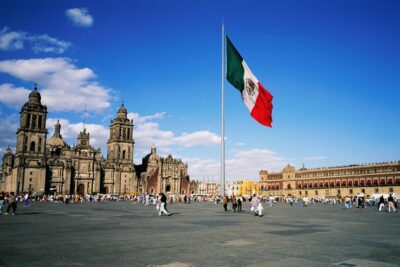
The Zócalo is Mexico City’s main square and one of the country’s most important public spaces. Expect a broad open plaza surrounded by major civic and religious buildings, with the Metropolitan Cathedral on one side and the National Palace nearby.
You spend about 15 minutes here. That is enough for an orientation, but not enough to explore every building around the square. The guide’s explanation matters more than the stop length. Listen for how the square changed from the center of the Aztec capital into the colonial and national center you see today.
This is also where group size starts to matter. The square can be noisy, and music or public activity may compete with the guide’s voice. Emiliano has been praised for projecting clearly, but not every guide may do so. Stay near the guide and ask for a repeat when needed.
Seeing Templo Mayor without rushing past it
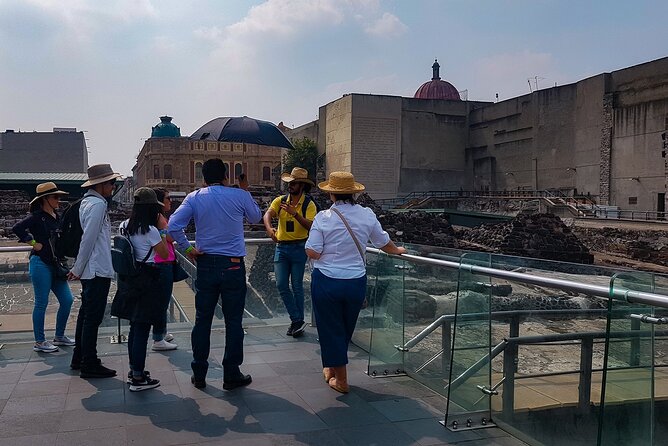
From the Zócalo, the walk continues to Plaza Manuel Gamio and the ruins of Templo Mayor. This is one of the most important stops because it gives you a direct look at the remains of the Aztec ceremonial center.
The visit lasts about 30 minutes and admission to the outdoor area is listed as free. You will see exposed ruins in the middle of the modern historic center, a striking reminder that the Spanish colonial city was built over the earlier Aztec capital.
Keep your expectations clear: this tour provides an introduction to the ruins, not a full archaeological visit. You see some of the outdoor remains, but the larger Templo Mayor Museum deserves separate time if you want detailed exhibits and a closer look at the objects found here.
That limitation is not a flaw for a first walk. In fact, the brief stop can help you decide if you want to return. If ancient Mexican history is your main interest, plan that return visit rather than expecting this tour to replace it.
Guides such as Mar have been especially appreciated for explaining pre-Hispanic history. A strong guide can turn a partial ruin into a much clearer picture of the city that once occupied this site.
Entering the Metropolitan Cathedral
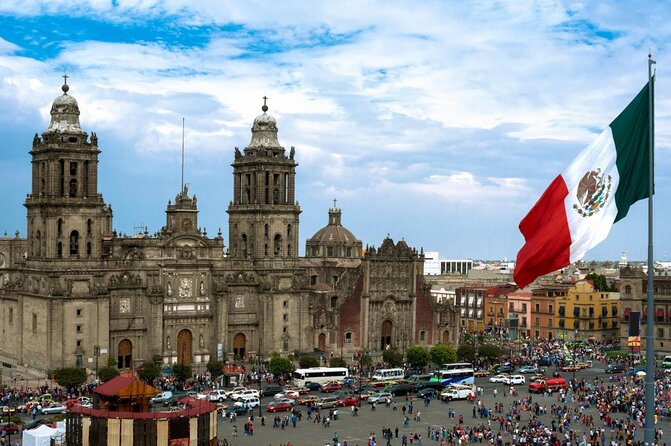
The next stop is the Mexico City Metropolitan Cathedral, where the tour spends about 30 minutes. Going inside gives the route a welcome change from open plazas and archaeological remains.
The cathedral is presented as the center of Catholic faith in Mexico. Your guide explains its place in the city’s religious and political story, while the building itself offers a chance to look at the scale and detail of colonial Mexico.
This stop also shows why walking is useful. You move from the Aztec site to the cathedral in a few minutes, seeing how closely the city’s different eras sit on top of one another. That physical contrast is harder to grasp when you visit each attraction separately by taxi.
The time inside is long enough for context and a basic look around, but it is not a dedicated cathedral tour. If you care about architecture or religious art, you may want to return later at your own pace.
Dress and behave respectfully inside a working place of worship. The experience information calls for moderate physical fitness, and the full route involves several hours on foot, though the walking is described as manageable by people who found the pace comfortable.
Pausing at Plaza Manuel Tolsá
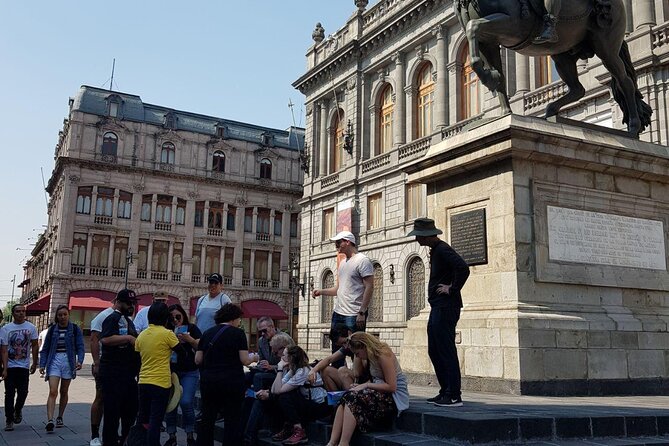
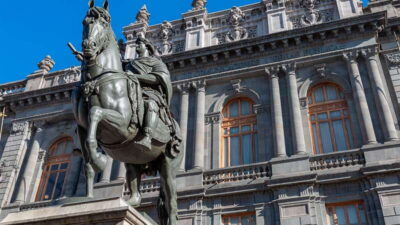
Plaza Manuel Tolsá is a shorter stop, about 10 minutes, but it adds a useful architectural and artistic pause. The square is named for Manuel Tolsá and is known for its prominent equestrian statue, one of the memorable public sculptures in central Mexico City.
This is the kind of stop that can disappear on a rushed independent visit. You may pass through the square on the way to a museum without knowing why the statue matters or how the surrounding buildings fit into the city’s story.
Do not expect a long visit here. The guide uses the plaza to point out the statue and its historical setting before moving on. That brevity keeps the tour moving, but it also means you should take your photographs promptly.
Other walking tours we've reviewed in Mexico City




Palacio Postal, a surprisingly ornate stop
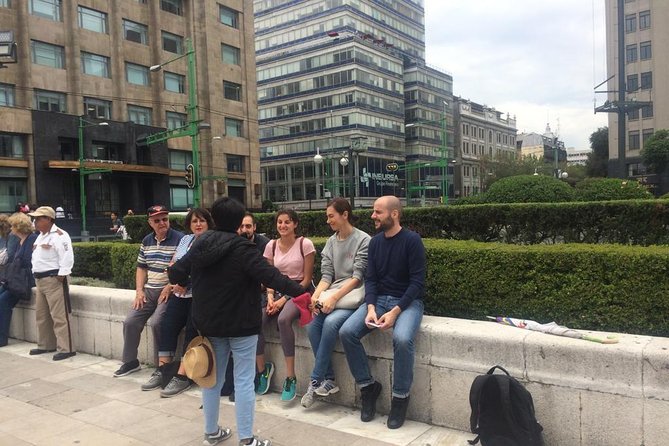
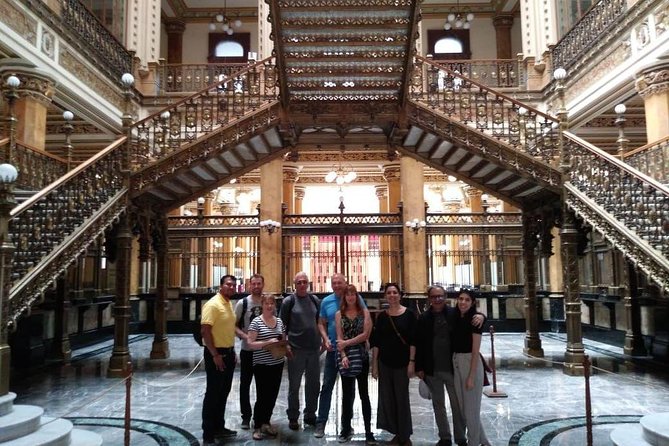
The route then reaches Palacio Postal, where you go inside for about 15 minutes. The building is known for its elaborate interior, and it is one of the tour’s more unusual stops because it is still a post office rather than only a historic monument.
The short visit lets you see the decorative character of the building without spending much time away from the main route. It is a good reminder that Mexico City’s historic center is full of working places with impressive design, not just formal museums.
A 15-minute stop will not give you a detailed architectural study. Instead, think of it as a sharp visual break and a chance to see one of the city’s most glamorous public interiors.
If you are taking pictures, listen for the guide’s instructions and avoid blocking people using the building. The tour is designed to keep a group moving through active downtown spaces.
Finishing at Palacio de Bellas Artes and El Caballito
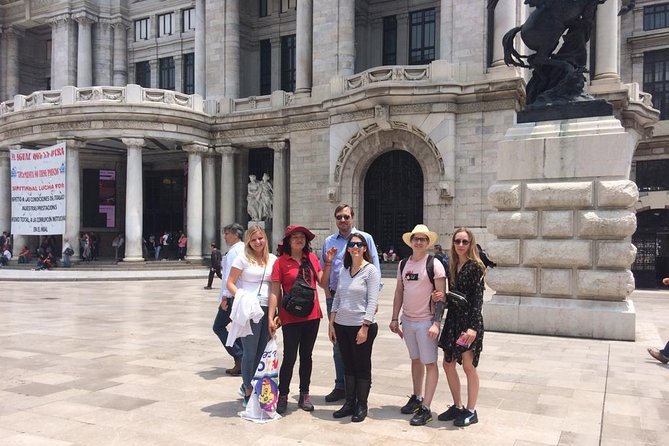
The final major stop is Palacio de Bellas Artes, the art nouveau landmark that has become one of the defining buildings of twentieth-century Mexico City. The tour allows about 15 minutes here, enough for an exterior introduction and a look at the building’s role as a symbol of the city.
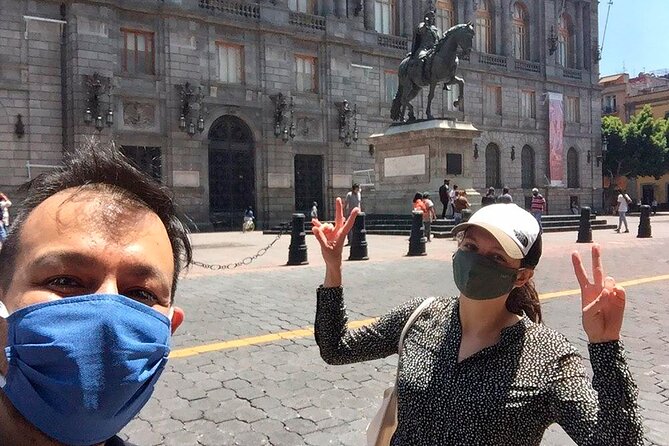
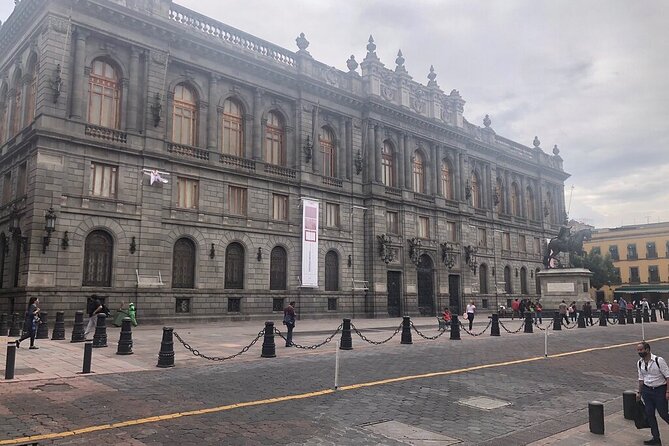
The walk ends nearby at the El Caballito statue, in front of the National Museum of Art on C. de Tacuba 8. This ending is convenient if you want to continue sightseeing. You can use the National Museum of Art as your next destination, or simply remain in the historic center for food and more independent wandering.
The stop at Bellas Artes is brief, so do not book this walk expecting a full museum visit. The experience information says museum entrance tickets are included, but the scheduled route does not list a dedicated museum admission or extended museum time. Confirm what your guide plans to enter on the day, especially if seeing the interior galleries is important to you.
The ending also makes the tour useful as a planning tool. Several guides have offered suggestions for food, desserts, museums, and later activities across the city. Write these down before you leave. A good walking tour often pays off most after it ends.
What $26.53 gets you
At $26.53 per person, this is a sensible price for a guided introduction to Mexico City’s center. You are paying for more than the distance walked. You are paying for the guide’s ability to connect six places that otherwise might feel unrelated.
The value is strongest if you are new to Mexico City, have only a few days, or want help deciding which sites deserve a longer return visit. It is also useful for families, since the route gives everyone a shared base before splitting up for museums and meals.
The price does not include transportation to the starting point, food, or optional gratuities. Some food is available to purchase along the way, but lunch is not part of the experience. Bring enough for your own needs and do not assume the tour will pause for a full meal.
The tour is booked an average of 18 days in advance, so reserving ahead is sensible if your schedule is fixed. Free cancellation is available up to 24 hours before the start time. Inside that window, the payment is not refunded, and changes are not accepted.
Group size, language, and the walking pace
The experience is offered in English and Spanish, and the guide is a certified local professional. English-language performance has generally been strong, with particular praise for clear explanations from Emiliano, Estefania, Mar, Mariel, and Nadia.
Still, group conditions can affect how easy the tour is to follow. The highlights describe groups capped at 15, while the additional information gives a maximum of 25 participants. That is an important difference. Ask about the expected group size when booking if hearing every explanation is a priority.
Crowded streets can also stretch the group. One practical suggestion is to stay close to the guide, especially at crossings and busy plazas. If the guide walks quickly or speaks rapidly, politely ask for a slower pace or a repeat.
You should be comfortable walking for more than three hours and standing at several stops. The tour is near public transportation, and service animals are allowed. Transport to the meeting point is your responsibility.
Who should book this walk?
This tour suits first-time visitors who want a clear introduction before tackling Mexico City on their own. It works especially well for couples, solo visitors, and families who want history explained without committing to a full-day museum program.
It is also a good fit if you enjoy architecture but do not yet know which buildings matter. The cathedral, Palacio Postal, Plaza Manuel Tolsá, and Bellas Artes give you several different styles in a short route.
You may want something else if you prefer slow photography, long museum visits, or very detailed archaeology. The route moves briskly, and the Templo Mayor portion is only an outdoor introduction. A private guide may be better if you need a highly customized pace or have hearing concerns.
Food-minded visitors should also pay attention to the guide’s recommendations. Several guides have been praised for suggestions on local food and desserts, which can help you turn the walk into a useful first afternoon in the city.
Should you book the Historic Downtown Walking Tour?
Yes, if you are visiting Mexico City for the first time and want to get your bearings fast. The route covers the right core sights, the price is fair, and a strong guide can connect Aztec, colonial, religious, and modern Mexico in a way that makes the whole city easier to read.
Book it early in your stay, stay near the guide, and treat Templo Mayor and Bellas Artes as introductions rather than complete visits. If you want a slow, highly detailed tour, check the expected group size and confirm the language and pace before paying.
FAQ
How long is the Historic Downtown Walking Tour?
The walk lasts approximately three hours and includes more than three hours of guided walking through Mexico City’s historic center.
What sights are included?
The route includes the Zócalo, Plaza Manuel Gamio and the Templo Mayor ruins, the Metropolitan Cathedral, Plaza Manuel Tolsá, Palacio Postal, and Palacio de Bellas Artes.
Where does the tour start?
The meeting point is C. de Monte de Piedad 11 in Centro Histórico, Mexico City.
Where does the tour end?
The tour ends next to the El Caballito statue, in front of the National Museum of Art at C. de Tacuba 8.
Is the tour offered in English?
Yes. The experience is offered in English and Spanish. The activity details identify English as an available option.
Are museum entrance fees included?
The tour information states that entrance tickets to museums are included, but the scheduled stops do not list a dedicated museum visit. Confirm the exact entrance arrangements with the provider if museum admission is important to you.
How large is the group?
The highlights describe groups capped at 15 participants. The additional information gives a maximum of 25 travelers, so the expected group size may vary.
Can I cancel for a full refund?
Yes. You can cancel at least 24 hours before the local start time for a full refund. Cancellations or changes made less than 24 hours before the start time are not refunded or accepted.
More Historical Tours in Mexico City
More Walking Tours in Mexico City
More Historic Center Walks in Mexico City


More tours in Mexico City we've reviewed






Historic Center Walks, compared.
 ★ 5.0Historic Center Food Tour in Mexico CityFrom $1155 hours (approx.)
 ★ 4.8Mexico City: Historic Downtown Walking TourFrom $263 hours
 ★ 5.0Walking Tour of the Historic Center of Mexico City3 hours (approx.)
 ★ 5.0Mexico City Historical Centre Food Tour with 7 Authentic TastingsFrom $653 hours (approx.)
 ★ 5.0Private Walking Tour Gems of the Historic Center of Mexico CityFrom $1564 hours (approx.)
 ★ 5.010 wonders of the Historic Center of Mexico City food and musicFrom $493 hours (approx.)
 ★ 5.0Walking Tour in Historic Center CDMXFrom $832 hours 30 minutes to 3 hours 10 minutes (approx.)
 ★ 5.0The best and most complete PRIVATE CITY TOUR through the Historic CenterFrom $683 hours (approx.)
The lists this tour appears in