
Reviewed · CITY TOURS
Mexico City: City Highlights Cable Car Ride w/ Taco & Tour
Mexico City’s most unusual view may come from a cable car over Iztapalapa, far from the usual historic center and museum circuit. This 4.5-hour outing takes you by metro into one of the city’s least visited areas, then lifts you above streets, murals, rooftops, and the broad valley below.
In This Article
- Key points to know before booking
- Why this cable car trip shows you another Mexico City
- Meeting Fernando or Elizabeth near El Moro
- Taking the metro into Iztapalapa
- Local art and the story of Iztapalapa
- Flying above the city on the Cablebús
- The airplane turned into a public library
- A market taco and a taste of pulque
- Is $69 a fair price for 4.5 hours?
- Who will enjoy this outing most?
- My practical advice before you go
- Should you book this Iztapalapa cable car tour?
- FAQ
- How long does the Mexico City cable car tour last?
- What language is the tour offered in?
- Where is the meeting point?
- What transportation does the tour use?
- Is the cable car ticket included?
- Is food included?
- Is pulque included?
- What should you bring?
- Can children or wheelchair users join?
I like two things right away: you ride public transport instead of watching the city through a tour van window, and you get a look at the clever local projects that shape daily life, including an airplane converted into a public library and cultural space. The drawback is simple: this is a fast-paced tour with plenty of walking and stairs, so it is not a soft half-day outing.
Key points to know before booking
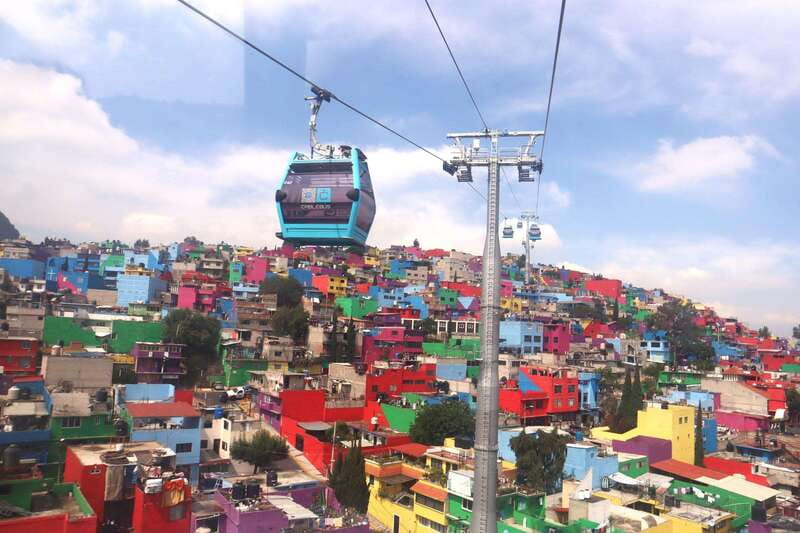
- The cable car is the visual star: Look down on colorful rooftop murals and the immense spread of Mexico City from above.
- Iztapalapa is the focus: You see a working district with local art, food, traditions, and links to Aztec-era history.
- The metro ride is part of the lesson: Your guide explains how millions of people move through North America’s largest city.
- The Utopia airplane is genuinely unusual: A retired aircraft has been adapted as a public library and cultural venue.
- Food and drink are included: Expect one large traditional taco, a vegetarian option, and two pulque tastings.
- Small groups make a difference: The tour is limited to nine people, with English-speaking guides such as Fernando and Elizabeth.
Why this cable car trip shows you another Mexico City
Most first visits to Mexico City stay around Centro Histórico, Chapultepec, Roma, Condesa, Coyoacán, or Teotihuacán. Those places deserve attention, but they do not show how most residents commute, eat, and spend time in the outer districts.
This tour heads toward Iztapalapa, a huge district on the eastern side of the metropolitan area. You will not be touring a polished attraction zone. You will be moving through ordinary city spaces, using the same public transport system as local residents, with your guide explaining what you are seeing along the way.
That setting gives the tour its value. The metro ride is not filler before the cable car. It helps you understand the size of the city and the daily transport challenge faced by millions of people. The guide also points out how public art and community projects connect with local life.
The small group size, capped at nine, should make it easier to ask questions and stay together through stations, platforms, and busy streets. Fernando has led many of the outings, while Elizabeth has also guided groups. Both are described as funny, well prepared, and able to give clear background on the city and the places visited.
Other city tours we've reviewed in Mexico City


Meeting Fernando or Elizabeth near El Moro
The meeting point is outside Churrería El Moro in downtown Mexico City. The guide sends a description of their outfit that morning, which is useful at a busy central meeting point.
Arrive ready to move. The tour uses public transport from the start, and the itinerary includes walking and stairs inside the metro system. You should wear comfortable shoes, bring water and sunscreen, and choose clothes that let you move easily.
The meeting point also gives you a familiar downtown landmark before the group heads into less familiar areas. After that, the experience becomes less about famous facades and more about how the city works.
Taking the metro into Iztapalapa
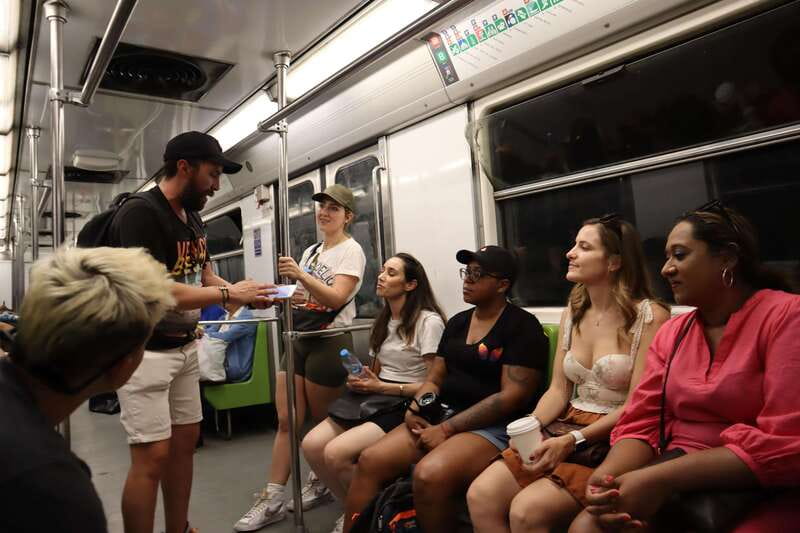
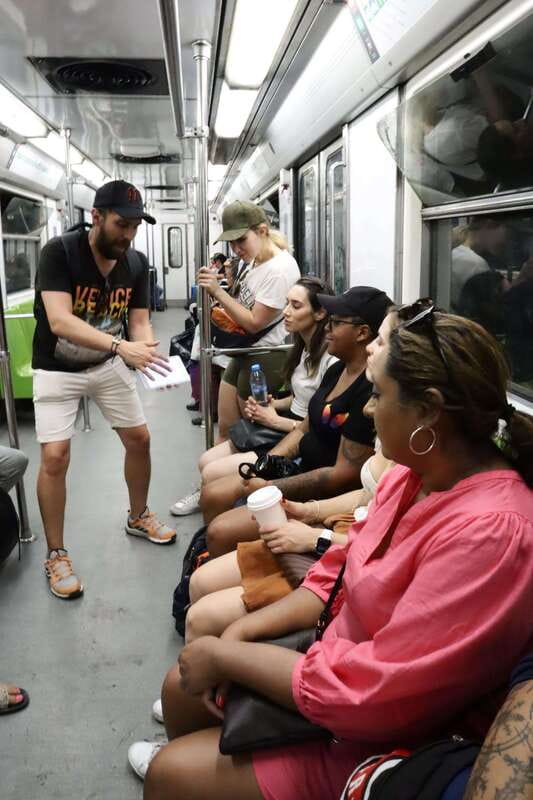
The first major section is a metro journey from downtown toward the suburbs. You travel with your guide while learning about Mexico City’s transport network and the pressure placed on it by the city’s size.
This is one of the tour’s strongest choices. A private vehicle would get you to the cable car with less effort, but you would lose the sense of distance and scale. On the metro, you see the practical side of the capital, including the transfers, stairs, and movement that shape a normal commute.
The tradeoff is comfort. You may stand, walk through stations, and keep pace with the group. The tour is not designed for people who want a slow schedule or frequent pauses. If you find stairs difficult, this part deserves serious thought before you book.
Your guide keeps the ride lively with history, questions, and facts about Mexico City. The tone is meant to be friendly rather than academic, but there is a substantial amount of information. One guide was praised for packing in so many facts that the group felt full by the end of the outing. That is good news if you like context, but less appealing if you prefer a quiet ride.
Local art and the story of Iztapalapa
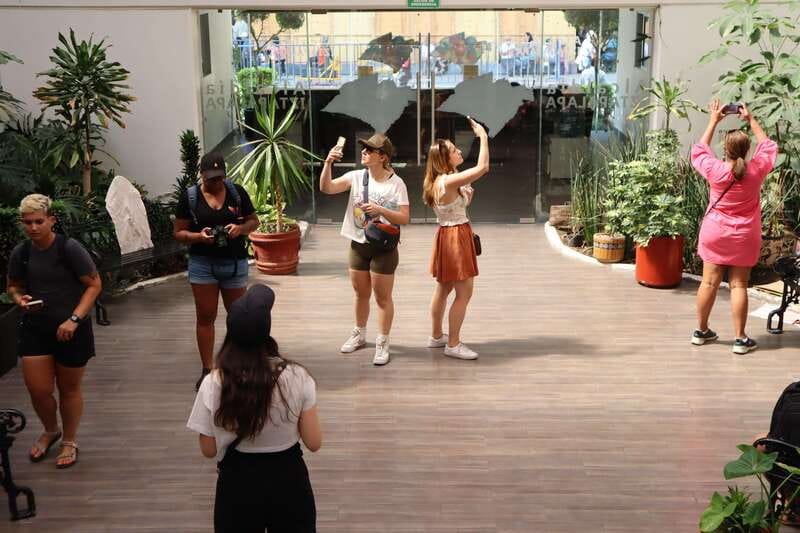
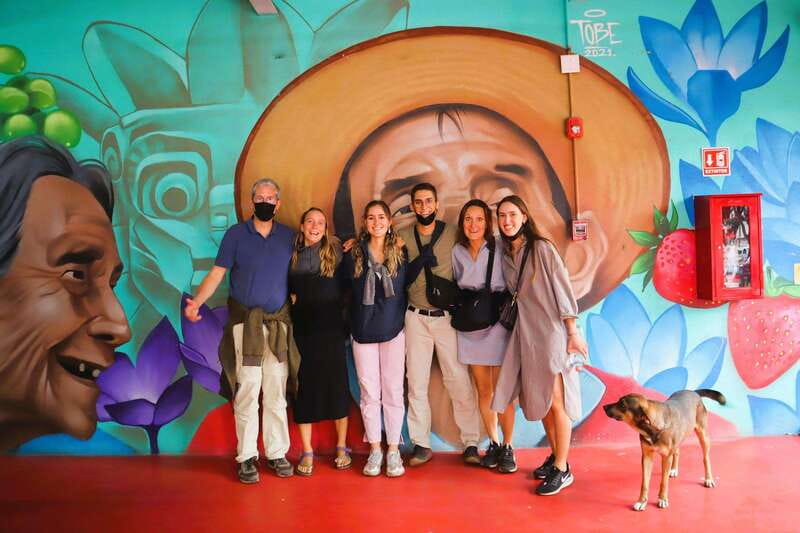
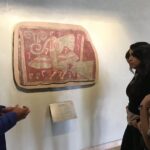
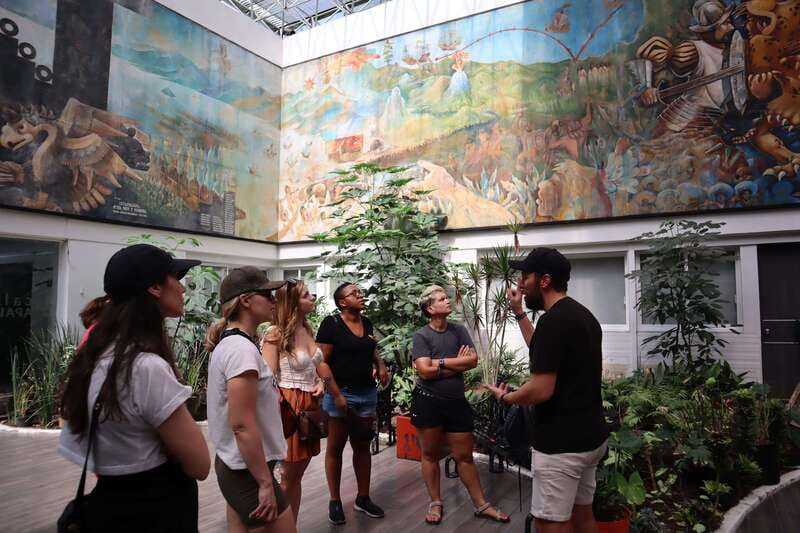
After arriving in the district, the group visits a local building to see a large mural and learn about Iztapalapa. The art is not treated as a quick photo stop. It is used to explain the district’s past, traditions, and community life.
The area has connections reaching back to the Aztecs, and your guide links that older past with present-day customs and popular culture. You also learn about Iztapalapa’s large open-air community theater event, a major local tradition that gives the district a strong public identity.
This context matters because the cable car views can otherwise turn the neighborhood into a patchwork of rooftops. The mural and the explanations help you read the area as a place where people live, work, create art, and maintain traditions.
You should expect a walking tour rather than a string of formal attractions. Some stops may be short, and much of the experience comes from connecting the pieces: public transport, street art, local food, community facilities, and the sheer scale of the district.
Flying above the city on the Cablebús
The Cablebús is the main visual payoff. The tour describes this as the world’s largest cable car system, and the ride gives you a high view across Iztapalapa and the wider valley.
From the cabins, you can see colorful murals painted across rooftops and walls. You also get a clear sense of how far Mexico City spreads beyond the central areas most people photograph. The cable car changes your view of the city from street level to a broad overhead sweep.
This is not just a ride for the sake of height. The guide continues explaining the places below, pointing out art and historic sites as the cabins move along the line. The result is a useful pairing of scenery and local context.
Bring sunscreen and water, since the day includes time outside and walking between stops. Keep your phone or camera ready, but do not let the photos replace the view. The best part of this section is seeing how the murals fit into the neighborhood rather than treating them as isolated works.
For many people, the cable car will be the highlight of the day. It was singled out as one of the most memorable views of a Mexico City visit, especially because it combines the city’s scale with details that are easy to miss from the ground.


The airplane turned into a public library
One of the tour’s oddest and most memorable stops is Utopia, an airplane adapted into a public library and cultural venue.
An aircraft used this way is a reminder that public spaces do not have to follow a standard design. Instead of seeing another church, plaza, or museum, you encounter a local project that combines learning, culture, and imagination.
The plane also fits the larger point of the tour. Iztapalapa is not presented only through its problems or population size. You see local efforts that add art and shared spaces to everyday neighborhoods. Your guide gives the setting meaning, so the stop becomes more than a novelty photo.
Allow time to listen here. The tour is information-heavy, and the airplane is one of the places where the background helps you appreciate what you are seeing.
A market taco and a taste of pulque

Food comes in the middle of the route at a local market. You receive one large traditional taco, with a vegetarian option available. The meal is included in the $69 price, so you do not need to budget separately for the main food stop.
The market setting is part of the appeal. You are not being taken to a restaurant designed around visitors. You get a brief look at a local food environment, and the taco provides a practical break during a morning of walking and transit.
The description calls it a huge traditional taco, so do not expect a multi-course meal. If you need a larger lunch, plan for another meal later. The tour includes a single taco rather than a full market tasting session.
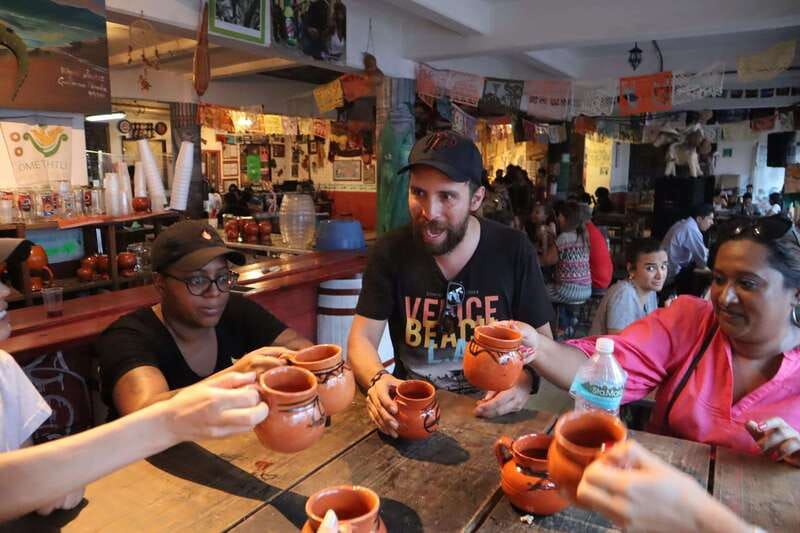
The final stop is a downtown local bar, where you taste pulque in both natural and flavored forms. Pulque is a pre-Hispanic Mexican drink made from fermented agave sap. The tasting gives you a small connection to a drink with very old roots, and it closes the journey on a social note.
The pulque tasting is included. Bottled water is not, so bring your own. You will also need coins for restrooms, and souvenirs cost extra.
Is $69 a fair price for 4.5 hours?
For $69 per person, the package includes the guide, all public transport tickets, the walking tour, the large taco, two pulque tastings, and help with questions and recommendations for the rest of your stay.
That is fair value if you want a guided introduction to public transport and a district you might not visit on your own. The cable car ticket alone is not the whole point. You are paying for the route design, the explanations, the transitions between stops, and the confidence of having a local guide lead you through an unfamiliar part of the city.
The value is weaker if you mainly want a cable car ride. You could think of the tour as a full half-day city lesson with a cable car at its center, not as a short scenic attraction.
The reserve-now, pay-later option helps if your schedule is still changing. Free cancellation is available up to 24 hours before the activity for a full refund. Starting times vary, so check availability for the day you want.
Who will enjoy this outing most?
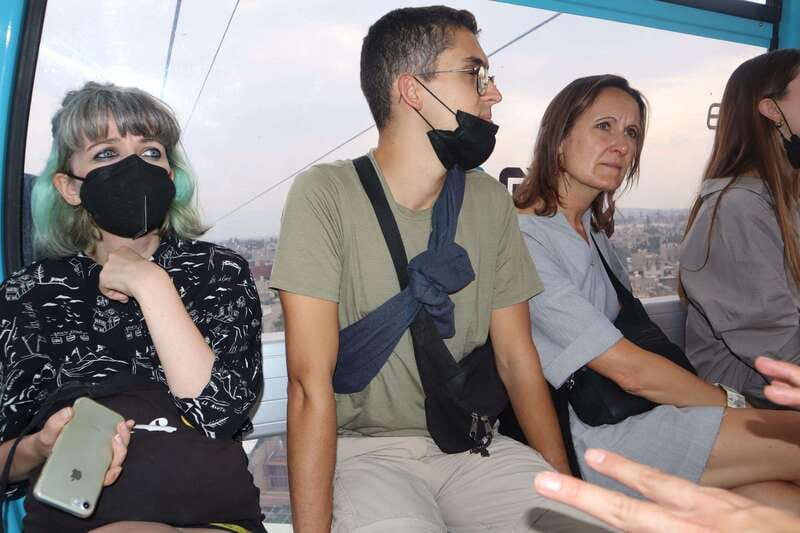
I would choose this tour if you have already seen some central Mexico City and want a different angle. It suits curious adults, first-time visitors who like local context, and anyone interested in transport, public art, food, and neighborhood life.
It is also a good choice if you enjoy learning while you walk. Fernando and Elizabeth are both described as funny and highly informed, and the guide’s role is central to the experience. You are not simply being dropped at viewpoints.
This is less suitable for children under 10. Older children may join on a private tour, but the history talks, walking, stairs, and pace may tire them. A private booking is suggested for families who want more control over the rhythm.
The activity is not suitable for wheelchair users, and the information provided lists age limits for people over 70, 80, and 95. Since those limits are not consistent, anyone in an older age group should confirm the rule before booking. Pets, bikes, unaccompanied minors, and bare feet are not allowed.
My practical advice before you go
Wear shoes that can handle several hours of walking. Metro stations can involve long passages and stairs, and the tour moves at a steady pace.
Carry water even though transport, food, and pulque are included. Sunscreen is also useful because the route includes outdoor walking and open views from the cable car.
Keep your schedule clear around the four-and-a-half-hour duration. Public transport adds real movement to the day, and the tour is not built around rushing through a checklist of attractions.
Come ready for a lot of information. You will hear about transport, Iztapalapa, history, murals, community projects, and local customs. That is a major strength, but it can feel dense if you prefer a quiet sightseeing trip.
Should you book this Iztapalapa cable car tour?
Book it if you want Mexico City beyond the postcard circuit. The strongest reasons are the public transport experience, the rooftop art seen from the Cablebús, the converted airplane library, and the chance to eat and drink in a local setting.
Skip it if stairs are a serious problem, you need an unhurried pace, or you only want a quick cable car ride. For everyone else, $69 buys a carefully connected half-day route that shows how the city moves and how local communities use art and public spaces. I would place it high on the list for repeat visitors and curious first-timers who want a less polished, more revealing side of the capital.
FAQ
How long does the Mexico City cable car tour last?
The activity lasts 4.5 hours.
What language is the tour offered in?
The live tour guide provides the experience in English.
Where is the meeting point?
Meet outside Churrería El Moro in downtown Mexico City. The guide sends their outfit details that morning to make identification easier.
What transportation does the tour use?
You travel by public transport, including the metro and the Cablebús cable car.
Is the cable car ticket included?
Yes. All public transport tickets are included in the price.
Is food included?
Yes. The tour includes one large traditional taco, with a vegetarian option available.
Is pulque included?
Yes. You receive a tasting of natural and flavored pulque.
What should you bring?
Bring comfortable shoes, sunscreen, water, and comfortable clothing. You may also need coins for restrooms.
Can children or wheelchair users join?
Children under 10 are not suitable for the activity. Older children may join on a private tour, though the walking and history content may be tiring. The tour is not suitable for wheelchair users.
More City Tours in Mexico City



More tours in Mexico City we've reviewed








City Tours, compared.
 ★ 4.6Mexico City: Teotihuacan, Tlatelolco & Guadalupe Shrine TourFrom $49
 ★ 5.0Teotihuacan Hot Air Balloon Flight from Mexico City / VolareFrom $1553 to 9 hours (approx.)
 ★ 5.0Teotihuacan Private Tour from Mexico CityFrom $1401 to 5 hours (approx.)
 ★ 5.0Historic Center Food Tour in Mexico CityFrom $1155 hours (approx.)
 ★ 5.0The best tour to Teotihuacán from Mexico CityFrom $506 to 7 hours (approx.)
 ★ 4.3From Mexico City: Puebla, Cholula and Tonantzintla Day TripFrom $89
 ★ 4.0Mexico City: Hop-on Hop-off Bus TourFrom $211 - 2 days
 ★ 4.8Mexico City: Historic Downtown Walking TourFrom $263 hours