
Reviewed · EVENING EXPERIENCES
Night Tour of Mexico City Panoramic Ride on a Double-Decker Bus
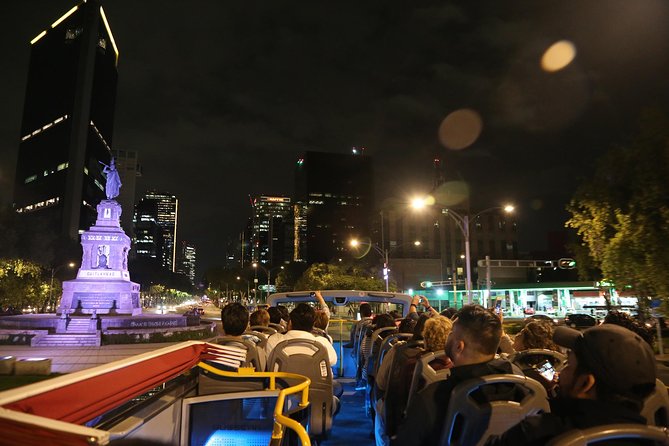
Mexico City looks different from the top deck after dark. Streetlights pick out the Zócalo, Reforma Avenue, the Angel of Independence, and Benito Juárez’s marble monument while the city rolls past at street level. For $10 per person, this is a cheap way to get your bearings without committing to a long walking tour.
In This Article
- Key points to know before you board
- Why this short night ride works
- Starting at the Zócalo after dark
- Reforma Avenue and Mexico City in motion
- Reforma 222 and the modern skyline
- The Angel of Independence under lights
- Benito Juárez Hemicycle in evening light
- The audio guide is useful, but handle it carefully
- The upper deck is the reason to book
- Timing, traffic, and the return ride
- What the $10 price really buys
- Who will enjoy this bus ride
- Booking and practical details
- Should you book the Mexico City night bus?
- FAQ
- How much does the night bus tour cost?
- How long does the tour last?
- Where does the tour begin and end?
- What time does the bus leave?
- Is the tour available in English?
- Is this a hop-on hop-off tour?
I like two things here: you see a long run of major sights in one short ride, and the open-air upper deck gives you a fine angle for photographs. The audio guide adds basic context in English, Spanish, or French, though you must ask for the earphones and make sure your connection works.
The main caution is inconsistent timing and audio. The ride is advertised at about 45 minutes, yet actual runs can feel shorter or much longer because of traffic, celebrations, demonstrations, rain, or road closures. Spanish commentary may also overpower the headphone track.
Key points to know before you board
- The $10 price buys a quick city orientation, not a full guided tour or a hop-on hop-off pass.
- The upper deck offers the best views and photos, but it can be cold, rainy, and exposed.
- English and French use earphones, while Spanish is played through the bus speakers.
- The route links the Zócalo with Reforma’s major monuments, including the Angel of Independence and Benito Juárez Hemicycle.
- Traffic can change the experience completely, especially during holidays, protests, parades, and Day of the Dead events.
- You return to the same meeting point, so you cannot use the bus as a hotel transfer or get off wherever you wish.
Why this short night ride works
I see this as a first-evening introduction to Mexico City rather than a sightseeing tour you build an entire day around. The bus gives you a broad view of the historic center and Reforma without asking you to navigate unfamiliar streets at night.
The best part is the contrast. You begin around the formal heart of the city, with the Zócalo and its grand colonial buildings, then move toward Reforma’s wide avenue and modern towers. In less than an hour, you get old Mexico City, modern Mexico City, national monuments, traffic, music, and ordinary evening street life.
The experience is simple. You show the mobile ticket at the Turibus Tours point, board the double-decker bus, and ride back to the starting area. There is no hotel pickup, no meal, and no personal guide walking beside you.
That simplicity is exactly why the low price can make sense. If you want a fast overview and a pleasant view from above, it is useful. If you want detailed stories, flexible stops, or a quiet ride with perfectly clear commentary, you may want a different tour.
Other city tours we've reviewed in Mexico City

Starting at the Zócalo after dark
The meeting point is Turibus Tours on Calle de Monte de Piedad in the Centro Histórico, near the Zócalo. The scheduled start is 7:30 pm. Allow time to find the exact boarding area, particularly if the plaza is crowded or an event has changed traffic patterns.
The Zócalo, formally the Plaza de la Constitución, is one of the city’s most important public spaces. The huge Mexican flag in the middle gives the square a strong national focus, while the Metropolitan Cathedral and government buildings frame it on every side.
From a bus, you will not get the same close look you would on foot. That is both the strength and weakness of this stop. You see the square in context, but you should not expect time to wander through the cathedral, inspect the Palacio Nacional, or pause for photographs at street level.
If you are staying in the Historic Center, the start point is convenient. If you are elsewhere in the city, you must make your own way there using public transportation or another option. The tour does not include round-trip transport from your hotel.
Reforma Avenue and Mexico City in motion
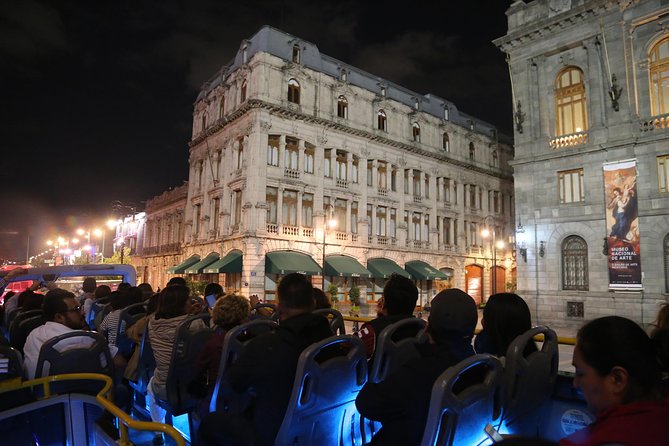
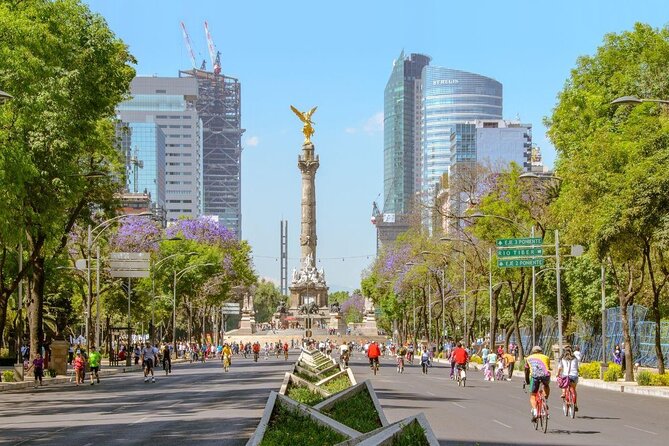
Paseo de la Reforma is the central spine of the ride. This broad avenue has hosted concerts, marches, civic gatherings, demonstrations, and other major public events. At night, the moving view shows you how Mexico City uses its grandest avenue as both a ceremonial route and a normal city street.
The double-decker position matters here. From the upper level, you can look beyond nearby cars and buses and see more of the avenue’s scale. The slow pace is helpful for photographs, although traffic can also bring the bus almost to a standstill.
This is not a quiet scenic drive. Mexico City has heavy traffic, and special events can close roads or fill them with pedestrians. A Sunday celebration once left passengers stuck in traffic for much of the ride. Day of the Dead and holiday periods can cause similar delays, while a demonstration has led to a changed meeting point and confusion for people waiting at the original location.
I would check the city calendar before booking if your schedule is tight. A traffic jam does not make the monuments less interesting, but it can turn a 45-minute tour into a much longer outing. In other cases, the bus may cover the route so quickly that the ride feels closer to 35 minutes.
Reforma 222 and the modern skyline
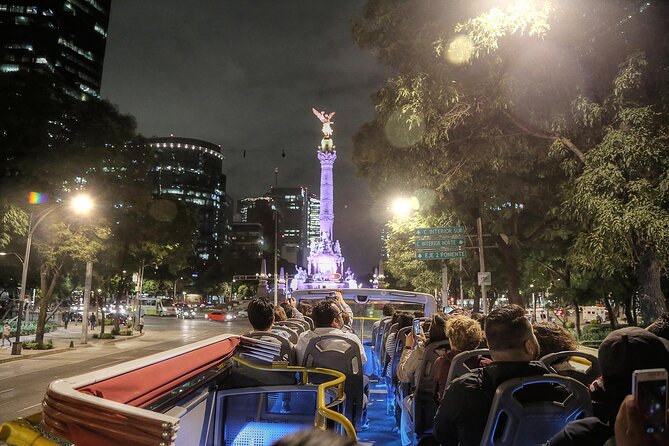
The route passes the three-tower complex commonly known as Reforma 222. Its towers changed the appearance of this part of Mexico City and remain among the city’s most recognizable modern buildings.
The complex includes shops and movie theaters, so it is not only an office landmark. From the bus, the main appeal is visual: illuminated glass and concrete set against the older monumental architecture along Reforma.
This is a good example of what the ride does best. You move from colonial and republican buildings to contemporary commercial architecture without changing buses or planning separate stops. The drawback is that you only see the complex from the road. There is no scheduled shopping break or time to visit the cinemas.
The Angel of Independence under lights
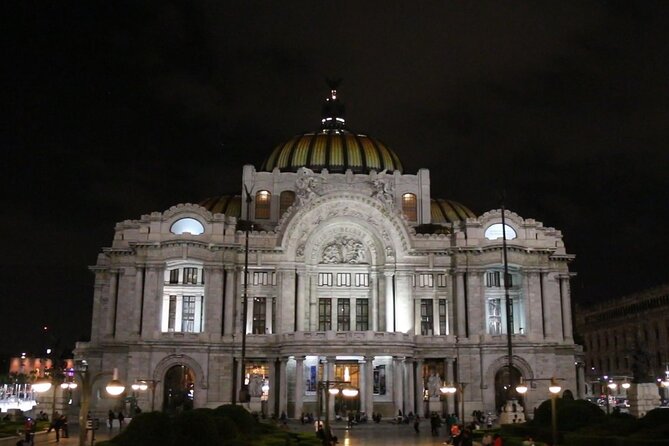
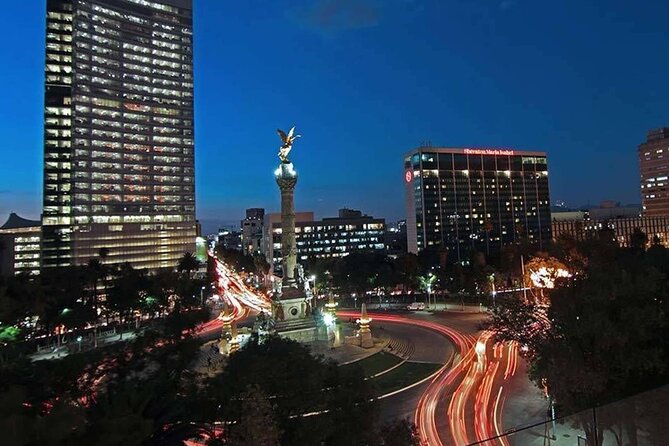
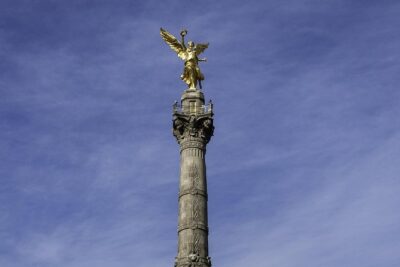
The Angel of Independence is the tour’s most familiar landmark. Inaugurated in 1910 for the centennial of Mexican independence, the monument serves as a mausoleum for heroes of the independence war. It has also become a broad symbol of freedom and a favorite meeting point for public celebrations.
At night, the illuminated column is especially striking. The upper deck lets you see it from a higher angle as the bus approaches and passes. Keep your phone or camera ready because the bus may not stop for long, and traffic can affect the view.
This is one of the ride’s strongest photo moments. You may get a clear image when the bus moves slowly, but passing cars, cables, signs, and other city clutter can get into the frame. That is part of the real Mexico City view, though it can frustrate anyone expecting a carefully staged photo stop.
The Angel also helps you understand the layout of Reforma. After seeing it from the bus, you may want to return during daylight and explore the avenue on foot. The night tour is useful for orientation, but it does not replace a closer visit.
Other evening experiences in Mexico City




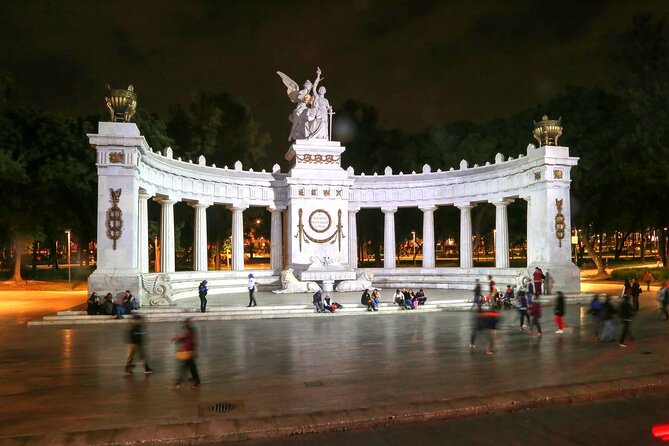
Benito Juárez Hemicycle in evening light
Another highlight is the Hemicycle to Benito Juárez, a neoclassical monument honoring the former Mexican president. Its 12 marble Doric columns give it a formal, almost theatrical appearance, and illumination brings out the white stone after sunset.
This stop is less instantly familiar than the Angel, which makes the audio explanation useful. The bus gives you a quick introduction to the monument and its place in the city’s civic story.
Again, your view depends on the traffic and your seat. If the vehicle passes without slowing, you may see the structure only briefly. Sit on the side with the clearest outward view when possible, and avoid blocking the windows with bags or coats.
The audio guide is useful, but handle it carefully
The tour includes an audio guide in English, Spanish, and French, along with earphones. Spanish narration is played through the bus speakers. English and French are accessed through the individual audio connections, so ask staff for the earphones before the bus leaves.
This arrangement needs a little attention. Some passengers have boarded expecting English narration through the main speakers and did not realize that the English track required headphones. Others have found that the Spanish loudspeaker was so strong it drowned out the English audio.
Before departure, plug in the earphones and test the volume and channel controls. If your outlet does not work, ask staff for help immediately while seats and equipment are still available. One reported problem involved a dead connection, forcing two people to share one working set.
The commentary is recorded rather than a fully personal, live explanation. That keeps the cost low, but it also means the experience can feel generic if you have already taken a detailed walking tour. You get useful names and basic background, not a conversation with a local guide who can answer questions or change the pace.
The upper deck is the reason to book
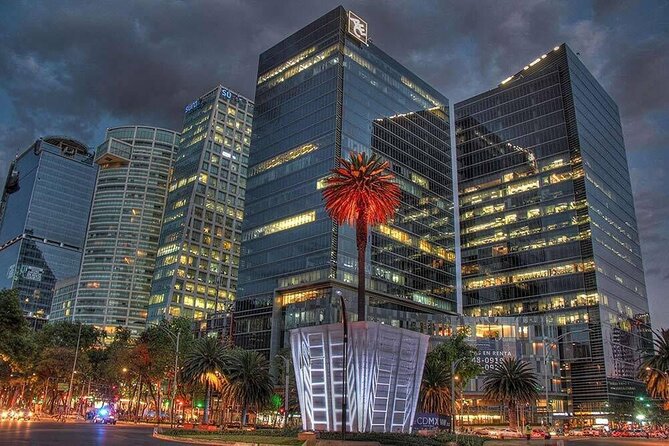
The top level is the main attraction. You get a raised view over traffic, better sight lines to monuments, and a more open sense of the city. The bus moves slowly enough in many sections for decent photographs.
It is also exposed. A December ride can feel cold, and rain can make the upper deck uncomfortable even with a poncho. Bring a warm layer, and check the weather before leaving your hotel. If it rains heavily, you may prefer the lower level, though your views will be more limited.
The open roof also means you should keep personal items secure and avoid assuming that every seat will remain available. If you want the upper deck, arrive with enough time to board calmly. The maximum group size is 30 passengers, which is modest, but a popular departure can still fill the best seats.
Low-hanging electrical cables have also been a concern on parts of the route during rainy conditions. The operator has indicated that route safety should be reviewed, but you should still follow staff instructions and move inside if conditions appear unsafe.
Timing, traffic, and the return ride
The tour begins and ends at the Zócalo meeting point. It is not a hop-on hop-off service, and it is not designed to drop you near your hotel or let you explore a monument independently.
The advertised duration is approximately 45 minutes. In practice, allow extra time. Traffic may extend the ride, while route changes or operational delays can affect departure. Some passengers have waited for a bus that arrived late or did not arrive at the expected point because of road closures.
The return journey can also retrace part of the route. That is useful for catching a landmark you missed, but it can make the ride feel repetitive, especially if the commentary repeats. The actual sightseeing time may feel shorter than the total time spent sitting in traffic.
I would not book this immediately before a dinner reservation, airport transfer, theater ticket, or other fixed appointment. The $10 fare is forgiving, but a missed reservation is not.
What the $10 price really buys
At $10, this is among the least expensive organized ways to see central Mexico City after dark. You receive the bus ride, access to the upper deck, multilingual audio options, and earphones. That is a fair price for a short orientation, especially if you have limited time.
The value drops if you already know the Historic Center and Reforma well. It also drops if you expect a one-hour live tour, many photo stops, or guaranteed English narration through the speakers.
Think of it as a moving introduction. You are paying for convenience and a broad first look, not depth. A taxi or rideshare might move you between districts more directly, but it will not provide the same elevated view. A walking tour offers more detail, but it takes longer and covers less ground.
Because the price is low, I would use this ride as a way to decide where to return. If the Angel, Hemicycle, or Reforma 222 catches your attention, visit again in daylight or explore nearby on foot.
Who will enjoy this bus ride
I think the tour suits you best if:
- You are visiting Mexico City for the first time.
- You want a quick first-night orientation.
- You enjoy city lights, traffic sounds, and people-watching.
- You have limited vacation time.
- You want photographs without walking several kilometers.
- You are comfortable with recorded commentary and a fixed route.
- You are willing to dress warmly for the open-air upper deck.
Families can find the short length manageable, and solo visitors can see a wide area without planning every turn. Couples may enjoy the nighttime views, especially if the weather is clear.
You may want to skip it if you need exact timing, personal storytelling, frequent stops, or dependable English audio without checking the equipment. It is also a poor choice for a tightly packed evening during a major public event.
Booking and practical details
You receive confirmation at booking and can use a mobile ticket. Service animals are allowed, and the starting point is near public transportation. Most people can participate, but the experience involves boarding and riding on a double-decker bus.
Free cancellation is available until 24 hours before the local start time. Inside that window, changes and refunds are not accepted, so check the weather and your evening plans early.
The service is operated by Turibus. Staff at the main counter have been described as friendly and helpful, but communication during delays has not always been smooth. If an event, protest, or street closure is affecting the route, ask staff directly for the latest boarding information rather than relying only on the original meeting details.
Should you book the Mexico City night bus?
Book it if you want an inexpensive, 45-minute overview of the Zócalo and Reforma, with the city lit up around you. The upper deck, broad route, and low price make it a sensible first-night activity.
Go in with realistic expectations. Bring a warm layer, arrive early, request the English or French earphones before departure, and test the connection. Leave room in your schedule for traffic, and do not treat the bus as transportation to your next stop.
For a quick look at Mexico City’s monuments and evening energy, I think the ride is worth $10. For detailed history or a perfectly controlled tour, spend your money on a walking guide instead.
FAQ
How much does the night bus tour cost?
The listed price is $10 per person.
How long does the tour last?
The tour is advertised at approximately 45 minutes. Traffic, events, road closures, and operating conditions can make the actual experience shorter or longer.
Where does the tour begin and end?
It begins at Turibus Tours on Calle de Monte de Piedad in the Centro Histórico, near the Zócalo, and ends back at the same meeting point.
What time does the bus leave?
The scheduled start time is 7:30 pm.
Is the tour available in English?
Yes. The audio guide is available in English, Spanish, and French. Spanish commentary plays over the bus speakers, while English and French require the provided earphones.
Is this a hop-on hop-off tour?
No. This is a fixed sightseeing ride, and you return to the meeting point at the end. Round-trip transportation to and from your hotel is not included.
More Evening Experiences in Mexico City
More City Tours in Mexico City


More tours in Mexico City we've reviewed




Evening Experiences, compared.
 ★ 5.0Lucha Libre Tickets & Tacos & Beer & Mezcal – BEST NIGHT EVER!From $84
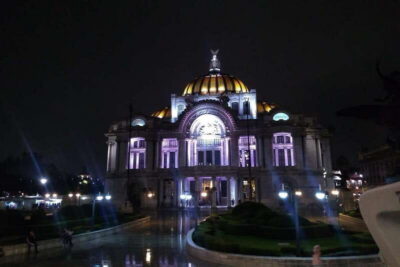 ★ 3.8Mexico City: Double Decker Bus Night TourFrom $101h 30m
 ★ 5.0A Night of Tacos and Mezcal in Mexico CityFrom $1353 hours 30 minutes (approx.)
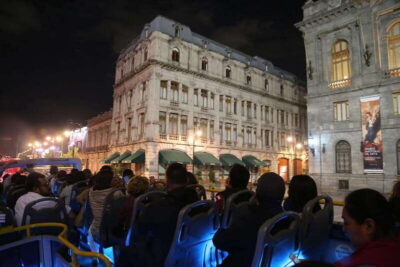 ★ 4.2Mexico City: Night City Tour in a Double Decker BusFrom $101 hour
 ★ 5.0Narvarte At Night: Tacos, Chelas & MezcalFrom $1433 hours 30 minutes (approx.)
 ★ 5.03-Hour Night Tacos and Mezcal Crawl in Mexico with GuideFrom $953 hours (approx.)
 ★ 3.0Hop-on Hop-off or Night Tour Tourist Bus in Mexico City1 to 11 hours (approx.)
 ★ 5.0Mexico City: Tacos & Mezcal Night Food TourFrom $1354 hours
The lists this tour appears in