
Reviewed · BUS TOURS & PASSES
Hop-on Hop-off or Night Tour Tourist Bus in Mexico City
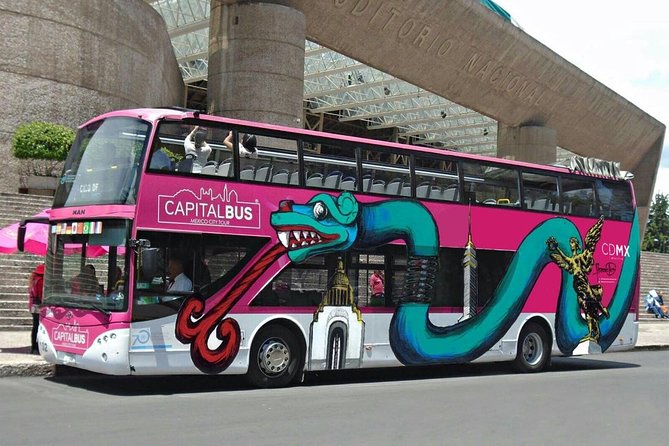
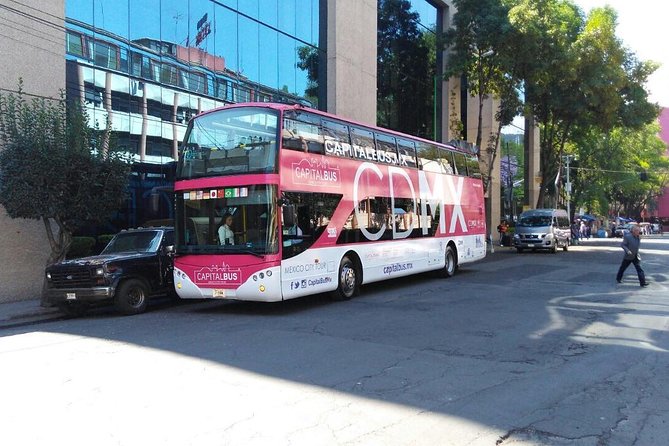
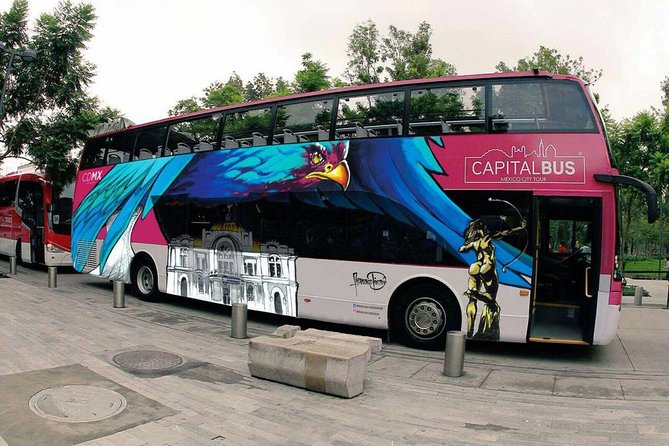
Mexico City is huge, busy, and spread across several distinct districts. This open-top double-decker bus gives you a quick overview without asking you to decode the city’s full transport system on your first day. You can see the Zócalo, Chapultepec, Polanco, Reforma, and several major museums from one seat.
In This Article
- Key points to know before boarding
- Why this bus is useful in a city as large as Mexico City
- Beginning at the Zócalo and entering the historic center
- Chapultepec: the best stop for museums and open space
- Plaza Carso and Nuevo Polanco’s museum cluster
- Avenida Moliere and Lincoln Park in Polanco
- Auditorio Nacional and Mexico City’s performance culture
- Reforma’s monuments: El Ángel, Diana, and Cibeles
- Santa Fe, shopping, and how to use the 24-hour ticket
- Audio commentary, seating, and group size
- Who should book this Mexico City bus tour?
- Should you book it?
- FAQ
- Where does the Mexico City tourist bus tour start?
- Where does the tour end?
- How long does the tour last?
- How long is the ticket valid?
- Is the commentary available in English?
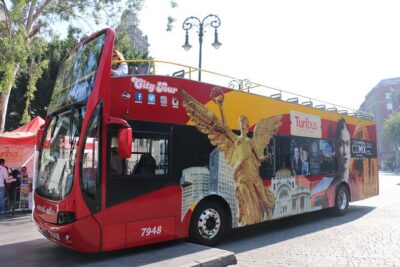
- Is this an open-top bus?
- Which major museums are connected with the route?
- Does the tour stop at Chapultepec?
- How large can the group be?
- Can I cancel for a full refund?
I like the 24-hour ticket, which lets you use the bus as both a sightseeing ride and a practical way to move between districts. I also like the English audio commentary and the open views from the upper deck. The main drawback is the middling 3 out of 5 rating from 127 reviews, so you should treat this as a useful orientation tool, not a perfectly polished guided tour.
Key points to know before boarding
- Start at the Zócalo: The listed meeting point is Capital Bus Zócalo on Monte de Piedad in the Centro Histórico.
- Use the full 24 hours: You can hop off, explore independently, and board again during the ticket’s validity period.
- See several different sides of the city: The route connects the historic center with Chapultepec, Polanco, Reforma, and Santa Fe.
- Expect English audio commentary: The sightseeing information comes through onboard recorded commentary rather than a named live guide.
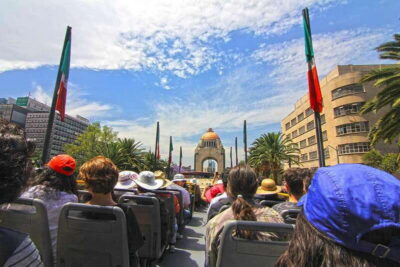
- Look up from the upper deck: The open-top seating is especially useful for seeing monuments, grand avenues, and city buildings.
- Plan around traffic: The bus covers a large area, so a short stop can become a longer ride during busy road conditions.
Why this bus is useful in a city as large as Mexico City
Mexico City can feel like several cities joined together. The Centro Histórico has monumental colonial and national buildings. Chapultepec is a huge public park filled with museums. Polanco brings museums, restaurants, and expensive shopping. Reforma ties much of it together with broad avenues and famous monuments.
That scale is the best argument for this bus. You can sit back and watch the city change around you. The audio commentary gives you basic context as you pass each sight, while the upper deck lets you see over traffic and catch details that disappear from a taxi window.
You are not locked into a fixed one-hour circuit. The ticket remains valid for 24 hours, and you can get off whenever you want. That makes the ride more useful than a simple drive-by tour. You might use it for a complete circuit in the morning, then return to one museum or district later in the day.
The tour is offered in English, which helps if you want background information without arranging a private guide. Still, you should set your expectations correctly. This is not a walking tour with a guide answering questions at each monument. It is a flexible city ride with recorded commentary.
The published operating period runs Monday through Sunday, from 9:15 a.m. to 8 p.m. The tour information describes an approximate duration ranging from one to 11 hours, depending on how long you stay aboard and how often you hop off. The maximum group size is listed as 45 people.
A few more Mexico City tours and experiences worth a look


Beginning at the Zócalo and entering the historic center
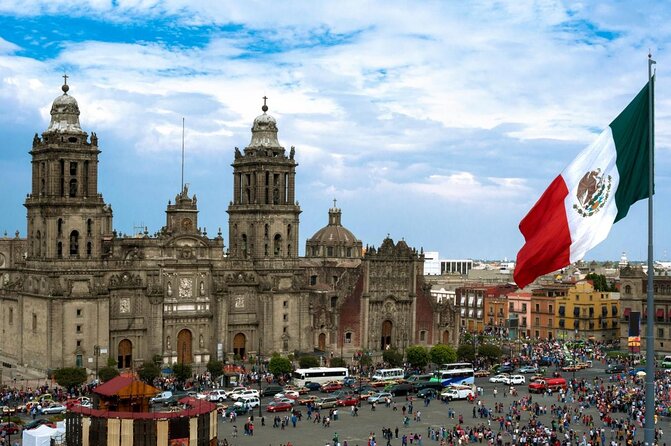
The listed starting point is Parada Capital Bus Zócalo, on Monte de Piedad in the Centro Histórico. This is a practical place to begin because the Zócalo is one of Mexico City’s main reference points and a natural first stop for anyone seeing the city for the first time.
The enormous Mexican flag in the center of the square is hard to miss. The National Palace gives the square its powerful sense of scale, and the surrounding historic streets lead toward churches, shops, and other central sights. From the bus, you get an introduction to the area before deciding how much time you want to spend on foot.
I recommend using the first ride to get your bearings rather than immediately trying to check off every attraction. Listen to the commentary, note the districts that appeal to you, and then choose where to hop off. The 24-hour validity gives you room to make that decision without rushing.
One point deserves attention: the general description refers to beginning the city exploration in Zona Rosa, while the formal meeting point is listed at the Zócalo. Since routes and boarding arrangements can vary, confirm the exact stop and direction when you book. The Zócalo is the official starting location provided for this activity.
Chapultepec: the best stop for museums and open space
Bosque de Chapultepec is one of the route’s strongest stops. It is described as the largest urban park in the Western Hemisphere, and it contains several of Mexico City’s most important cultural sights.
The National Museum of Anthropology is the major draw. The park also includes the Tamayo Museum and the Museum of Modern Art, both named among the stops and attractions associated with the route. If you want culture rather than a quick monument photo, this is the part of the itinerary where you should spend your time.
Chapultepec also has archaeological importance. Historical remains have been found in the forest, including nearly 4,000 archaeological objects. That detail changes how you see the park. It is not simply a large patch of greenery between city districts. It is a place where Mexico City’s modern public life overlaps with much older remains.
The listed stop description gives 15 minutes and no admission ticket. Read that as a short orientation pause, not enough time to visit a major museum. You will need to hop off and remain in the area if you want to see the National Museum of Anthropology or another museum properly.
The main drawback is choice. With several major sights close by, you can easily spend much longer than planned. That is not a problem if you use the 24-hour ticket as intended, but it does mean you should not expect to visit Chapultepec and still cover every other stop in one quick circuit.
Plaza Carso and Nuevo Polanco’s museum cluster
The bus continues toward Plaza Carso, a large mixed-use development in Nuevo Polanco. The complex is associated with the Museo Soumaya, Museo Jumex, and Teatro Telcel, among other sites.
This stop is useful for readers who want modern architecture, art museums, and a change from the older center. Museo Soumaya and Museo Jumex appeal to different tastes, so you can choose based on your interests rather than treating the area as one single attraction.
The supplied stop information again gives a 15-minute orientation period and free admission to the stop itself. That short time is enough to look around, take in the development, or decide where to return. It is not enough for a careful museum visit.
A bus tour also helps here because Nuevo Polanco is not simply an extension of the Zócalo. The change in building style and street setting is part of the point. You see how broad Mexico City’s identity is, from historic public squares to contemporary cultural complexes.
The tradeoff is that Plaza Carso is a destination area rather than a compact old neighborhood. You may find the bus useful for reaching it, but the best use of your time is to choose one or two specific sites before hopping off.
Avenida Moliere and Lincoln Park in Polanco
The route crosses Avenida Moliere, an important Polanco avenue lined with notable sites. It then reaches Lincoln Park, in the southern part of Polanco.
Lincoln Park was the first park designed for the colony, according to the tour information. The area around it includes some of Polanco’s early mansions and apartment buildings, along with newer offices and residential towers. This gives you a look at the district’s mixture of older grand homes and modern city life.
This section is better for observing the neighborhood than for chasing one headline attraction. From the upper deck, you can see the relationship between the park, the surrounding streets, and the buildings that frame it. If you hop off, the park provides a break from museums and major avenues.
Polanco is also a practical place for a meal or shopping stop. The tour specifically points to Paseo de la Reforma and Santa Fe shopping mall as places to eat or buy souvenirs. The itinerary does not provide restaurant names or shopping details, so plan to choose once you see which area fits your schedule.
Other city tours we've reviewed in Mexico City





Auditorio Nacional and Mexico City’s performance culture

Auditorio Nacional is another named stop. It is described as Mexico’s main presentation venue and one of the most important performance spaces in the world, judged by its artistic program, attendance, number of performances, ticket sales, and audiovisual equipment.
You may not be attending a performance during this bus ride, but the stop still helps explain Mexico City’s cultural reach. The auditorium is a major public venue, not merely a passing building. The open-top bus gives you a clear exterior view, while the audio commentary supplies the basic reason it matters.
The listed stop time is 15 minutes with no admission ticket. That works well for a photo stop or quick look. If you have tickets for an event, the bus may help you understand where the venue sits within the wider Polanco and Chapultepec area, but the tour itself does not include a performance.
This is also a good example of the tour’s limits. You will see many places connected with Mexico City’s cultural life, but the bus does not replace time inside them. Use it to decide where you want to return.
Reforma’s monuments: El Ángel, Diana, and Cibeles
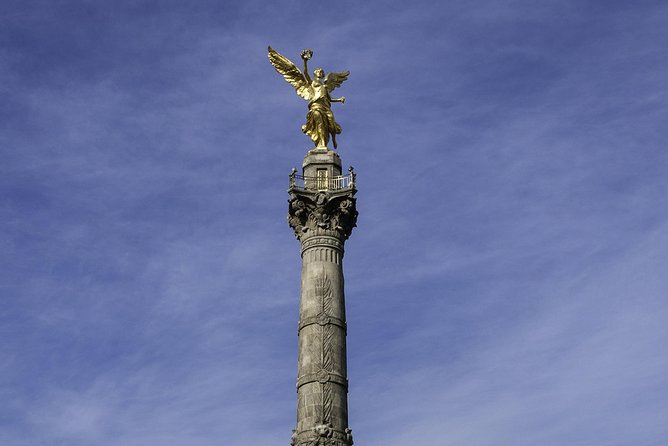
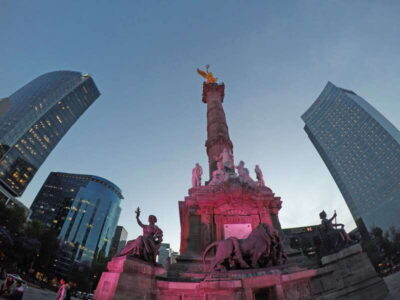
The bus route includes several memorable monuments along Paseo de la Reforma. El Ángel, officially the Monumento a la Independencia, is an honorary column at the meeting of Reforma with Río Tíber, Florencia, and related streets. It was inaugurated in 1910 to mark the centennial of the beginning of Mexico’s War of Independence.
The monument is one of the city’s most recognizable landmarks. From the bus, you can appreciate its position in the traffic circle and its place on one of Mexico City’s grandest avenues. The open upper deck is particularly helpful here because the monument is surrounded by traffic, making a roadside stop less simple than it may appear on a map.
The Fountain of Diana the Huntress is another Reforma highlight. The sculpture represents Artemis, or Diana in Roman mythology, and was originally called The Arrow of the North Stars. It gives the avenue a classical public monument with a distinctly Mexico City setting.
The Cibeles Fountain offers a different story. It is a replica of Madrid’s Cibeles Fountain, located at the intersection of Oaxaca, Durango, Medellín, and El Oro streets. It was placed there in 1980 as a symbol of friendship between Spanish and Mexican communities and remodeled in 2011.
These stops show why the bus works well as an orientation ride. You are not seeing only isolated monuments. You are following a route through civic symbols, public art, and major avenues that connect several parts of the capital.
Santa Fe, shopping, and how to use the 24-hour ticket
Santa Fe shopping mall is included as an option for a break, shopping, or a meal. Paseo de la Reforma also offers places to stop for food and souvenirs. The tour does not specify particular stores, restaurants, or admission benefits, so you should think of these as convenient areas rather than included activities.
The 24-hour ticket is most valuable when you use it strategically. A practical plan might look like this:
- Take an initial circuit to understand the route and listen to the commentary.
- Get off at Chapultepec if the National Museum of Anthropology or another museum is your priority.
- Continue to Polanco or Plaza Carso for museums, a meal, or shopping.
- Use a later bus to return toward the center or finish near the Zócalo.
You can also stay aboard for a shorter ride if you only want to see the monuments. The published duration of one to 11 hours reflects this flexibility. Your actual day depends on traffic, stop lengths, and how much time you spend exploring on foot.
The bus leaves regularly according to the tour description, which helps you build an independent schedule. Even so, do not assume that every bus will arrive at the exact minute you expect. Mexico City covers a large area, and traffic can affect any road-based tour.
Audio commentary, seating, and group size
The commentary is onboard and offered in English. That is helpful for identifying buildings and understanding why places such as El Ángel, Cibeles, Chapultepec, and Auditorio Nacional matter.
The open-top design gives you unobstructed views, but seating conditions can vary with weather and demand. Bring protection from strong sun or light rain if needed, since the upper deck is exposed. The lower deck is the more practical fallback when you want shelter, though the supplied information does not promise specific seating arrangements.
The maximum group size is 45 people. That is large enough to feel like a standard sightseeing bus rather than a small personal tour. In exchange, you get a simple format and a route covering much more ground than a walking group could manage.
The overall rating of 3 out of 5 from 127 reviews is worth taking seriously. It suggests an uneven experience rather than a clear recommendation for everyone. I would book it for the route coverage and convenience, not because I expect a high-touch service or a flawless timetable.
Who should book this Mexico City bus tour?
I would consider this tour if you are visiting Mexico City for the first time and want a broad overview before choosing where to spend your limited time. It also suits anyone who prefers to avoid arranging several separate rides between the historic center, Chapultepec, Polanco, and Reforma.
Families and mixed-interest groups may find the hop-on hop-off format useful because everyone can choose how long to stay at a stop. It also works for people who want a relaxed ride with commentary instead of a demanding walking day.
I would be more cautious if you have only a few hours and one fixed destination. Road traffic can make a large city route less predictable, and the 24-hour ticket has little value if you cannot use it more than once. I would also choose a different format if your main goal is detailed museum interpretation or personal questions for a live guide.
Booking confirmation is provided at the time of booking. The activity is near public transportation, and most people can participate. Free cancellation is available if you cancel at least 24 hours before the start time. Cancellations or changes made within 24 hours are not accepted for a refund.
Should you book it?
Book this bus if you want to get your bearings fast and see how Mexico City’s historic center, museum districts, major avenues, and modern Polanco fit together. The 24-hour ticket and open views are the strongest reasons to choose it.
Skip it if you want a tightly managed, deeply explained tour or if your schedule leaves no room for traffic and stop changes. With a 3 out of 5 rating, I would use it as a practical sightseeing framework, then spend your real time on foot at the museum, monument, or neighborhood that interests you most.
FAQ
Where does the Mexico City tourist bus tour start?
The listed starting point is Parada Capital Bus Zócalo, on Monte de Piedad in the Centro Histórico of Mexico City.
Where does the tour end?
The activity ends back at the meeting point.
How long does the tour last?
The approximate duration is listed as one to 11 hours. Your timing depends on how long you stay aboard and how often you hop off.
How long is the ticket valid?
The ticket is valid for 24 hours, allowing you to get off, explore independently, and board again during that period.
Is the commentary available in English?
Yes. The experience is offered in English through onboard audio commentary.
Is this an open-top bus?
Yes. The tour uses an open-top, double-decker bus with unobstructed views.
Which major museums are connected with the route?
The route includes access to the area around the National Museum of Anthropology, the Tamayo Museum, the Museum of Modern Art, Museo Soumaya, and Museo Jumex.
Does the tour stop at Chapultepec?
Yes. Bosque de Chapultepec is one of the listed stops, and the park contains several major Mexico City attractions.
How large can the group be?
The maximum group size is 45 people.
Can I cancel for a full refund?
Yes, if you cancel at least 24 hours before the experience begins. Cancellations or changes made less than 24 hours before the start time are not accepted and are not refunded.
More Evening Experiences in Mexico City





More City Tours in Mexico City
More Bus Tours & Passes in Mexico City


More tours in Mexico City we've reviewed






Bus Tours & Passes, compared.
 ★ 4.0Mexico City: Hop-on Hop-off Bus TourFrom $211 - 2 days
 ★ 4.1Mexico City: Hop-on Hop-off City Tour by Turibus 1-Day PassFrom $2010 hours
 ★ 3.0Turibus Hop On Hop Off Mexico City Tour3 hours (approx.)
 ★ 3.9Mexico City: Hop-On Hop-Off Bus City TourFrom $201 day
 ★ 3.4Mexico City: Night Bus TourFrom $11
 ★ 3.9Mexico City: Hop-on Hop-off City Tour with AttractionsFrom $231 day
 ★ 2.5Tourist Bus in Mexico City Night Tour or Hop-On Hop-Off Service1 hour 15 minutes (approx.)
 ★ 4.0Mexico City: Hop-on Hop-off City Tour by Turibus 2-Day PassFrom $25
The lists this tour appears in