
Reviewed · CHAPULTEPEC & MUSEUM TOURS
Private Mexico City Anthropology Museum Tour
Mexico City’s National Museum of Anthropology can feel like several museums in one. A private three-hour visit with Silvia gives you a clear path through its Olmec, Maya, Aztec, Zapotec, and Mixtec collections, with the Aztec Sun Stone and colossal Olmec heads as major highlights.
In This Article
- Key points to know before you book
- Why this museum benefits from a private guide
- Meeting Silvia at Chapultepec
- Olmec stone heads and Mexico’s earliest major cultures
- Maya signs, symbols, and the Aztec Sun Stone
- Zapotec and Mixtec collections add needed breadth
- A three-hour pace that works for most groups
- What the private format adds for families and small groups
- Is $110 per person a fair price?
- Practical details that shape the day
- Who should book this museum tour?
- Should you book the Private Mexico City Anthropology Museum Tour?
- FAQ
- How long does the tour last?
- Where does the tour begin?
- Where does the tour end?
- Is museum admission included?
- Is the tour private?
- Is the tour offered in English?
- Does the price include transportation?
- Are meals included?
- Can I cancel for a full refund?
I like the private format because your group can ask questions without waiting for a larger crowd, and I like that the guide may adjust the visit when you have a particular artifact in mind. Silvia brings an historian’s grasp of Mexico’s past and uses questions to get children and adults looking closely at the displays.
The main consideration is time. Three hours is enough for a strong overview, but not enough to see every gallery in a museum this large. At $110 per person, the tour makes the most sense if you value expert guidance and have a small group that wants a focused visit in English.
Key points to know before you book
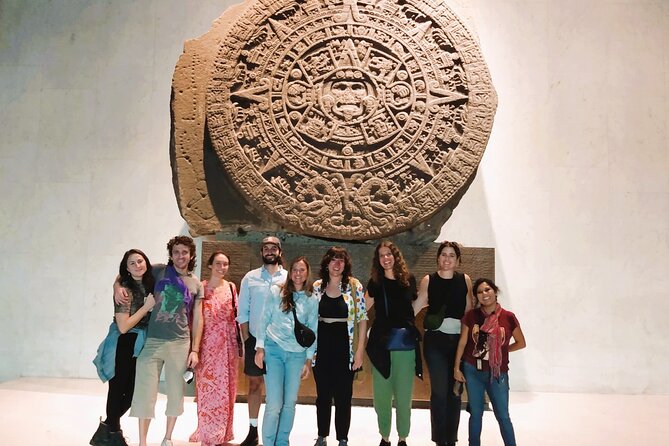
- A private visit for your group only: You are not folded into a large tour, so your questions can shape the experience.
- Silvia is the guide to request: Her approach combines historical context, clear explanations, and questions that involve the whole group.
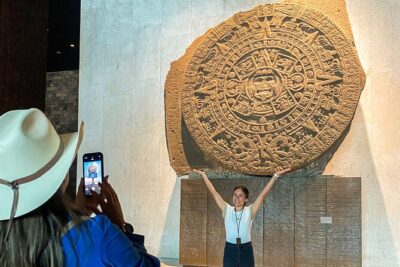
- The Aztec Sun Stone is a central highlight: You will see one of Mexico’s best-known archaeological objects while learning how it fits into the wider story.
- The route covers several major cultures: Expect attention to the Olmec, Maya, Aztec, Zapotec, and Mixtec peoples.
- Three hours gives you a useful overview: It offers structure without requiring a full day inside the museum.
- The meeting point is the museum itself: You make your own way to the National Museum of Anthropology in Chapultepec, and the tour ends there.
Why this museum benefits from a private guide
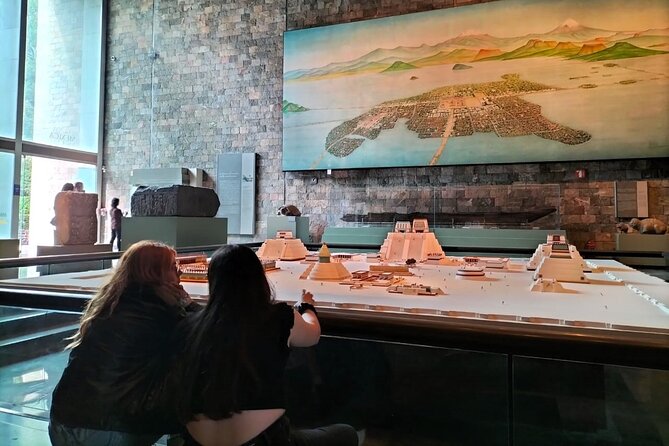
The National Museum of Anthropology is not a small stop you can absorb in a quick wander. Its galleries cover major civilizations and cultural traditions across Mexico, so the challenge is not finding something interesting. The challenge is deciding what deserves your attention and understanding how the pieces connect.
That is where a private guide earns the fee. Instead of reading isolated labels, you can ask why an object mattered, how one culture differed from another, or what a particular image represents. Silvia’s method, based on the available tour information, includes asking your group to describe what it sees before explaining the larger meaning.
I especially like that approach for families. Children can look for shapes, faces, animals, symbols, and clues in the objects rather than listening to a long lecture. Adults get the historical framework, while younger members of the group have a reason to stay involved.
The private format also gives you room to speak up. If one object catches your attention, you can ask about it without holding up a bus-sized group. One group requested a small detour to see a particular artifact, which is exactly the sort of flexibility that can make a museum visit feel personal rather than prepackaged.
A few more Mexico City tours and experiences worth a look
Meeting Silvia at Chapultepec
The tour begins at the Museo Nacional de Antropología, on Avenida Paseo de la Reforma in the Chapultepec area of Mexico City. There is no hotel pickup or drop-off, so you need to arrange your own way to the museum.
That arrangement keeps the tour focused on the museum itself. It also means you should allow enough time to reach the meeting point, particularly if you are coming from another part of Mexico City. The museum is near public transportation, which helps, but the experience does not include transport planning for you.
The booking information identifies the guide as Silvia, while some of the written comments spell her name Sylvia. Either way, the guide praised in the tour details is the same person described as an historian with a friendly, engaging style.
At the start, expect to spend a moment getting organized before moving into the galleries. Since this is a private activity, your group can establish its interests early. Tell Silvia if you care most about the Maya, want to focus on the Aztecs, or have a specific object you hope to see.
Olmec stone heads and Mexico’s earliest major cultures
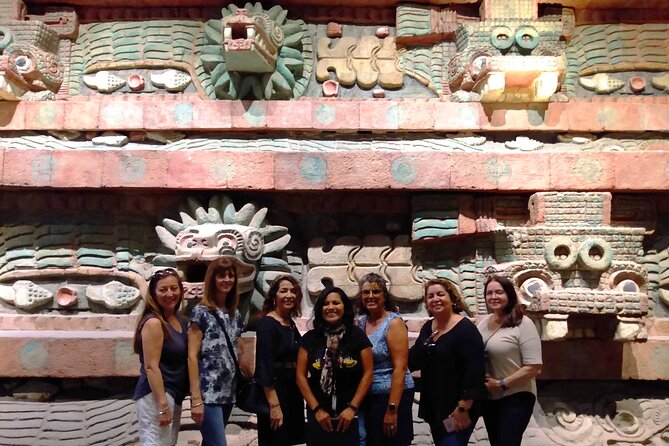
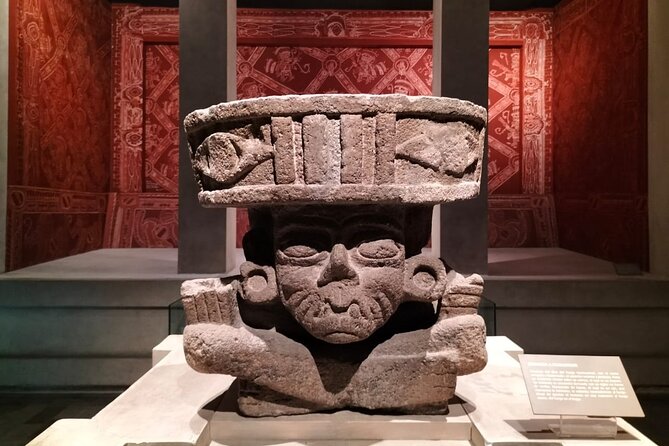
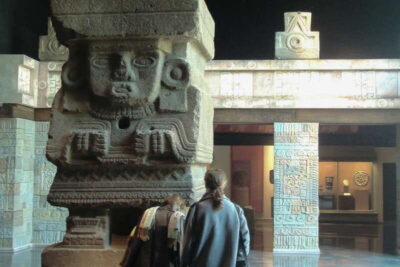
The Olmec galleries provide one of the tour’s most memorable visual moments. The colossal stone heads are hard to miss, but a guide can help you look beyond their size and recognize why they matter in the wider story of Mesoamerica.
You will also encounter material connected with other major cultural traditions. The point is not simply to collect famous names. A good explanation helps you see how the museum presents different peoples, periods, artistic styles, and religious ideas across Mexico.
Silvia’s role is especially useful here because the objects can otherwise blur together. Large sculptures grab your eye, while smaller pieces may carry equally important clues. A guide can slow you down at the right moments and explain what makes an object worth your time.
The museum’s English signage may not answer every question you have. That does not make an independent visit impossible, but it does make a fluent guide valuable if you want more than a quick look at the biggest pieces.
Maya signs, symbols, and the Aztec Sun Stone
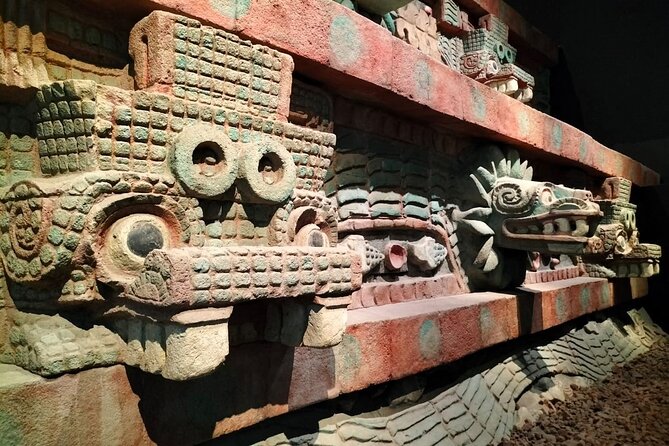
The Maya section gives you a chance to examine carved symbols and hieroglyphs. Without context, these marks can seem decorative. With an explanation, you can begin to see them as part of a system used to record meaning and communicate ideas.
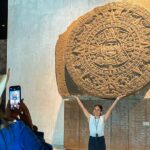
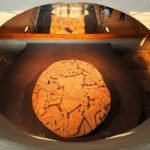
The tour also highlights the grandeur of the Aztec Sun Stone. This is one of the objects many people come to see, and a guide can place it within the larger Aztec story instead of treating it as an isolated icon.
I appreciate a route that moves between the famous and the less familiar. The Sun Stone provides the instant recognition, while the surrounding displays help you understand that Mexico’s past was not one single civilization. The museum’s collections ask you to compare cultures rather than flatten them into one broad label.
You should expect interpretation rather than a checklist of every object. Three hours requires choices. That is a fair trade if you want a coherent account of the museum, but it may disappoint you if your goal is to examine every gallery in detail.
Zapotec and Mixtec collections add needed breadth
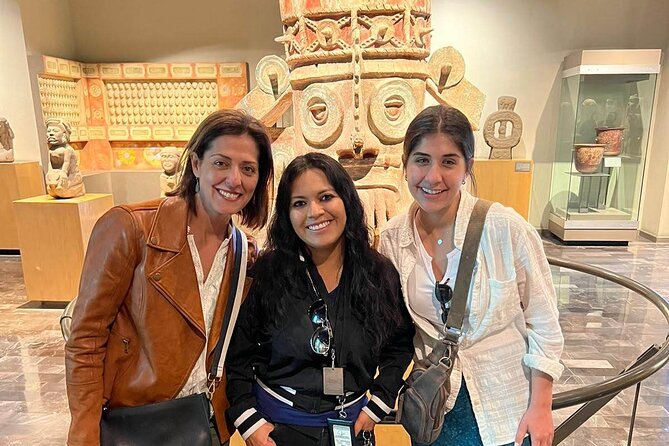
The visit is not limited to the Olmec, Maya, and Aztec peoples. It also includes the Zapotecs and Mixtecs, giving you a broader view of Mesoamerican culture.
That wider coverage matters because Mexico’s past cannot be reduced to the best-known names. A focused explanation of the Zapotec and Mixtec material helps you see the range of societies represented in the museum and gives the visit more balance.
You will not receive an equal amount of time with every culture. The guide has only about three hours, and the tour description puts special attention on the most recognizable highlights. Still, including these groups makes the overview more useful than a tour built only around the Aztec Sun Stone and Maya hieroglyphs.
If you already know which culture interests you most, tell Silvia at the beginning. The private setting may allow some adjustment, although the exact amount of time in each gallery will depend on the pace of your group.
Other city tours we've reviewed in Mexico City




A three-hour pace that works for most groups
Three hours is a sensible middle ground. It is long enough to give you a guided framework, but short enough to fit into a larger day of sightseeing in Mexico City.
I would treat this as an orientation tour rather than a final museum visit. You can see the major themes, ask questions, and identify galleries you may want to revisit on your own. Trying to cover everything would likely make the experience tiring and rushed.
The tour can suit adults who want serious historical context, families who need a guide to keep children involved, and first-time museum visitors who do not know where to begin. It also works well for a small group with mixed interests because the guide can respond to questions as they arise.
The pace may be less suitable if you prefer to linger silently over objects for long stretches. A guided visit naturally moves you along, and the three-hour limit encourages a broad route. You can still ask for clarification, but this is not designed as an unhurried full-day study of the collection.
What the private format adds for families and small groups
The strongest reason to choose this experience is the attention. Silvia is described as involving the whole group, including children, rather than speaking only to the most vocal adults.
That matters in a museum where young visitors can quickly lose interest. Asking them what they notice turns the objects into a visual puzzle. They may not remember every date, but they are more likely to remember a stone head, a symbol, or a question they helped answer.
A private tour also avoids the social friction of a large group. You do not need to worry about strangers waiting while you ask about an artifact, and you can discuss what you have just seen with your own companions.
The format has a practical benefit too. The guide has already adjusted the schedule for a group that could not make its original time, according to the booking details. That does not guarantee every change will be possible, but it suggests that direct communication with the provider can matter when plans shift.
Is $110 per person a fair price?
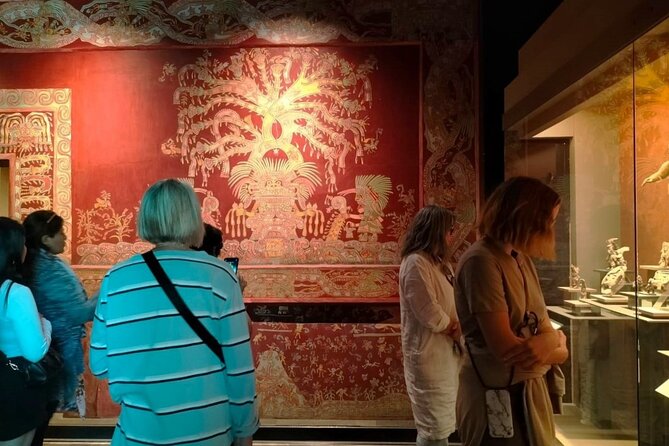
The price is $110 per person, with group discounts available. Admission is included, as is the guide service and the guided museum visit.
That is not the cheapest way to enter the museum. If you are comfortable reading the displays, planning your own route, and spending extra time with a map or guidebook, an independent visit may cost less.
The value improves if you are splitting the cost among a private group and want more than basic admission. You are paying for English-language interpretation, a planned route, answers to your own questions, and the chance to adjust attention toward a particular artifact.
I would see the price as reasonable for a group that might otherwise struggle to make sense of the museum. It is less compelling for a solo budget visitor focused mainly on seeing the famous objects. The group discount may also make the tour more attractive for families or friends booking together.
Since meals, insurance, tips, and transportation are not included, build those costs into your day. The tour begins and ends at the museum, so it does not function as a complete sightseeing package.
Practical details that shape the day
You receive confirmation at the time of booking, and a mobile ticket is offered. The activity is conducted in English.
Most people can participate, and the museum is near public transportation. The supplied information does not provide further detail about mobility arrangements inside the museum, so you should ask the provider directly if your group has a specific access need.
The activity is private, with only your group participating. That distinction is worth checking carefully when comparing prices, since a lower-cost museum tour may involve a larger shared group and a less flexible route.
Free cancellation is available if you cancel at least 24 hours before the local start time. Cancellations made inside that window are not refunded, and late changes are not accepted.
Who should book this museum tour?
I would recommend it most strongly to first-time visitors who want a clear introduction to Mexico’s major ancient cultures. You will get more from the museum if you can ask questions and hear how the objects fit together.
Families are another good match. Silvia’s style, with questions directed to the entire group, appears suited to keeping children involved without making the adults sit through a simplified talk.
Small groups of friends may also find the private arrangement worthwhile, especially if one person has a particular interest in the Maya, Aztec, Olmec, Zapotec, or Mixtec collections.
Independent museum readers may want to save the money. If you enjoy setting your own pace and do not mind piecing together the story from labels, a guide is not essential. The decision comes down to what you want from the visit: access to the building, or a guided interpretation of what you are seeing.
Should you book the Private Mexico City Anthropology Museum Tour?
Book it if you want the museum’s major cultures explained in clear English, prefer a private setting, and value a guide who can respond to your group. Silvia’s reported strengths are her enthusiasm, historical background, ability to involve children, and willingness to answer questions or make a small adjustment for a requested artifact.
Think twice if you want to see every room, spend long periods studying individual objects, or keep the cost as low as possible. Three hours gives you a well-shaped introduction, not an exhaustive examination.
For most first visits, I like the balance: famous objects, broader cultural coverage, and enough personal attention to turn a huge museum into a manageable experience. Meet at the museum, arrive ready with a few interests in mind, and let the private format do what it does best: make the route fit your group.
FAQ
How long does the tour last?
The tour lasts approximately three hours.
Where does the tour begin?
It begins at the Museo Nacional de Antropología on Avenida Paseo de la Reforma in the Chapultepec area of Mexico City.
Where does the tour end?
The activity ends back at the museum meeting point.
Is museum admission included?
Yes. The entrance fee and guided tour at the National Museum of Anthropology are included.
Is the tour private?
Yes. Only your group participates in this private activity.
Is the tour offered in English?
Yes. The experience is offered in English.
Does the price include transportation?
No. Pick-up and drop-off are not included. You make your own way to the museum.
Are meals included?
No. Meals are not included in the tour price.
Can I cancel for a full refund?
Yes, if you cancel at least 24 hours before the experience start time. Cancellations made less than 24 hours in advance are not refunded.
More Private Tours in Mexico City



More City Tours in Mexico City
More Chapultepec & Museum Tours in Mexico City


More tours in Mexico City we've reviewed





Chapultepec & Museum Tours, compared.
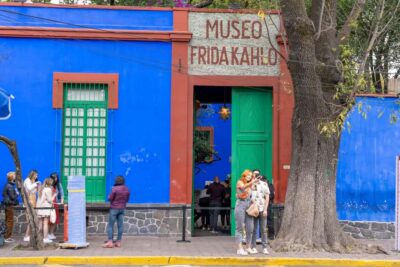 ★ 4.4CDMX: Xochimilco, Coyoacan, Frida Kahlo Museum & Murals TourFrom $89
 ★ 4.5Chapultepec Castle & Anthropology Museum TourFrom $795 hours (approx.)
 ★ 5.0Frida Kahlo VIP [Museum Tickets Included] Bike, Markets & ChurrosFrom $834 hours (approx.)
 ★ 4.5Anthropology Museum Guided TourFrom $392 hours 30 minutes (approx.)
 ★ 5.0Frida Kahlo VIP [Museum Tickets Included] Walk, Markets & ChurrosFrom $833 to 4 hours (approx.)
 ★ 5.0EXCLUSIVE TOUR Frida Kahlo Museum – SMALL GROUPSFrom $862 hours (approx.)
 ★ 4.4Mexico City: Anthropology Museum Guided VisitFrom $672.5 hours
 ★ 4.5Mexico City: Frida Kahlo Museum Entry Ticket w/Digital GuideFrom $34
The lists this tour appears in