
Reviewed · BIKE TOURS
The best of Mexico City Bike Experience EXPRESS
Mexico City reveals itself quickly from a bike. In about two hours, you can move from the Monument to the Revolution along Reforma, past the Angel of Independence, and into the Historic Center and Zócalo. It is a brisk look at a huge capital, with a guide adding stories that you might miss from a taxi window.
In This Article
- Key points to know before you ride
- A fast ride through Mexico City’s big story
- Starting at the Monument to the Revolution
- Riding Paseo de la Reforma
- Reading the symbols at the Angel of Independence
- The Trail of Light and the modern skyline
- Chapultepec, with an important route warning
- A possible turn into Guerrero and its murals
- Entering the Historic Center
- Finishing at the Zócalo
- What the $34.25 price really covers
- Group size, equipment, and comfort
- Timing and route expectations
- Who will get the most from this ride
- Should you book the Mexico City Bike Experience Express?
- FAQ
- How long does the Mexico City Bike Experience Express last?
- What time does the tour begin?
- Where does the bike tour meet and finish?
- What is included in the price?
- Is hotel pickup and drop-off included?
- How many people can join the tour?
I like the small group limit of 10, which makes street riding less awkward and gives you a better chance to ask questions. I also like that the price includes a bike, helmet, bottled water, and personal injury insurance. The main caution is route consistency: the planned stops include Chapultepec, but the route may instead include Guerrero murals and neighborhood history.
Key points to know before you ride
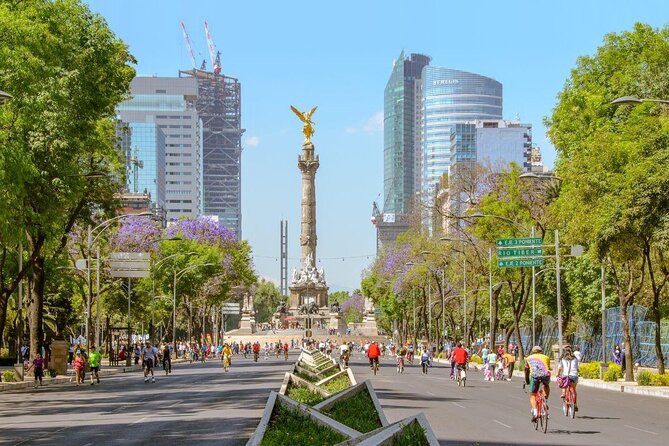
- Reforma gives you the tour’s best rhythm: You ride between major monuments instead of seeing them one at a time from a vehicle.
- The Angel of Independence has plenty to explain: Your guide points out meaning in the sculptures and connects the monument to city life.
- The route can change: Chapultepec is listed as a stop, but one reported outing visited Guerrero and its murals instead.
- A 10-person maximum matters: This is small enough for a more personal ride and easier street management.
- The Zócalo supplies the grand finish: The National Cathedral and National Palace frame Mexico City’s central square.
- The $34.25 price covers the basics: Bike, helmet, water, guide, and personal injury insurance are included, but hotel transport is not.
A fast ride through Mexico City’s big story
This Poray tour begins at 10:30 a.m. on Avenida Paseo de la Reforma 24, in the Centro area. You return to the same meeting point after roughly two hours, so plan your morning around a round trip rather than a one-way drop-off.
The route links several of Mexico City’s most recognizable places. That gives you a useful first look at the capital, especially if you have limited time or want to get your bearings before exploring on foot. You will not get a long museum visit or a slow neighborhood walk. Instead, you get movement, monuments, and a guide’s running explanation.
That pace is both the attraction and the limit. A bike lets you cover more ground than walking, but each stop is short. At the Monument to the Revolution, you have about 10 minutes. The Angel of Independence gets roughly 15 minutes. The Zócalo receives about 20 minutes, the longest stop on the route.
A few more Mexico City tours and experiences worth a look

Starting at the Monument to the Revolution
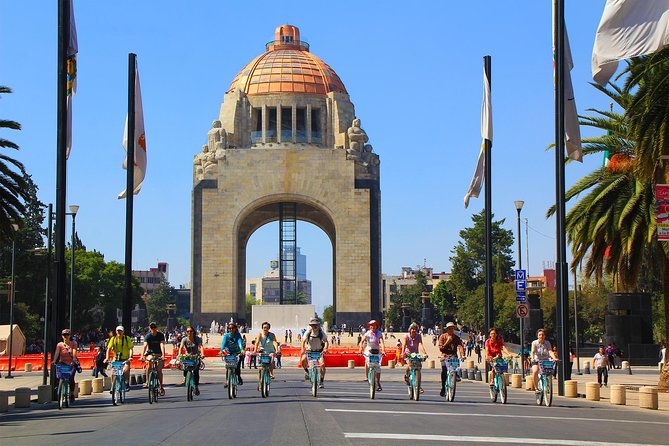
The Monument to the Revolution is a strong place to begin. Its broad structure and bold forms are easy to admire from the outside, but the guide’s role is to add the political story behind the iconography.
You will have about 10 minutes here. That is enough for an introduction, a look at the monument, and a few photographs. It is not enough for a full museum visit, so think of this as a visual and historical opening rather than a detailed stop.
I like starting here because it sets up the city’s central theme: Mexico City is not just a collection of old buildings. Its public spaces carry political memory, national symbols, and changing ideas about Mexican identity. A short explanation can make the next monuments along Reforma feel less like disconnected photo stops.
Riding Paseo de la Reforma
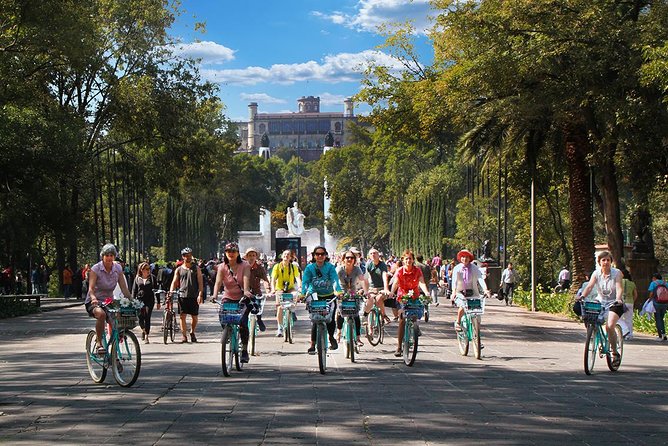
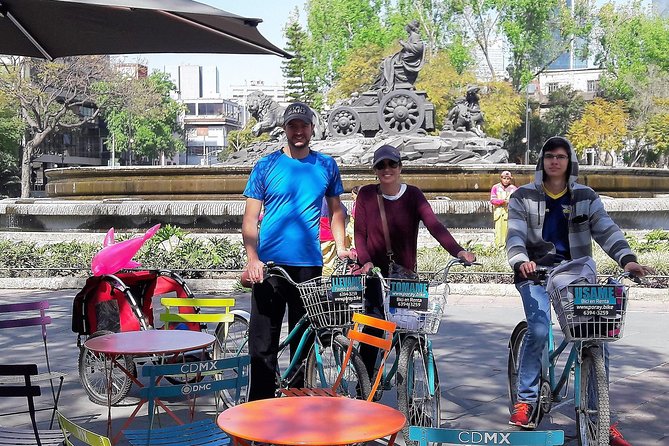
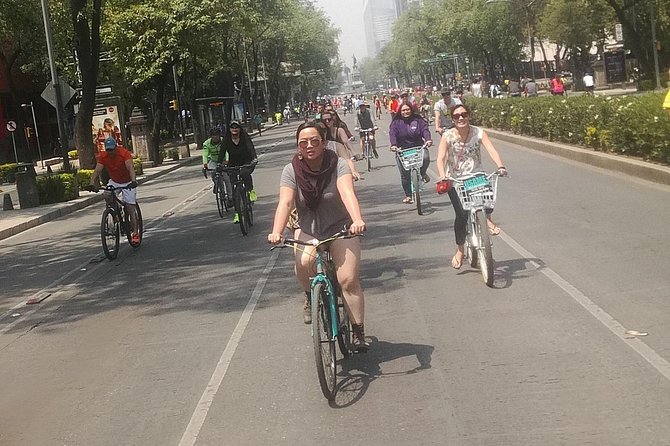
The ride along Reforma is the tour’s central thread. This is one of the city’s key avenues, and the experience uses its important bike lane to connect the monuments.
That matters for two reasons. First, you spend less time loading into a vehicle and more time seeing the city at street level. Second, a marked bike route gives the outing a clearer structure than simply weaving through random streets.
Your guide stops at major monuments and explains their place in city life. The route is not designed as a training ride or a long-distance cycling challenge. It is a sightseeing circuit with short pauses, so you can expect a steady ride mixed with brief talks.
You should still be comfortable riding a bicycle in an urban setting. The tour provides bikes and helmets, and the group is capped at 10, but the activity remains a city ride. If you rarely cycle, ask about the pace and route conditions before booking.
Reading the symbols at the Angel of Independence
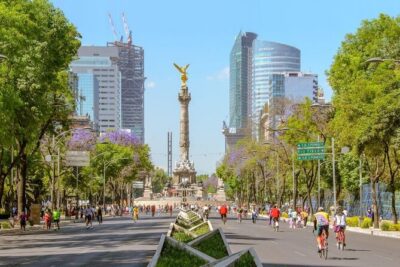
The Angel of Independence is one of Mexico City’s most familiar sights. The stop lasts about 15 minutes, which gives your guide time to point out details in the sculptures and explain why this monument is tied to so much of the city’s public life.
Look closely rather than treating it as a quick photo backdrop. The figures and decorative elements carry meaning, and the guide’s explanation is where this stop earns its place. The idea that major city events begin here also helps you understand why the monument is more than a golden figure on a column.
This is a good example of the tour’s value. You could reach the Angel independently and take a picture in a few minutes. The added benefit is having someone connect what you see to Mexico City’s civic traditions and important gatherings.
The Trail of Light and the modern skyline
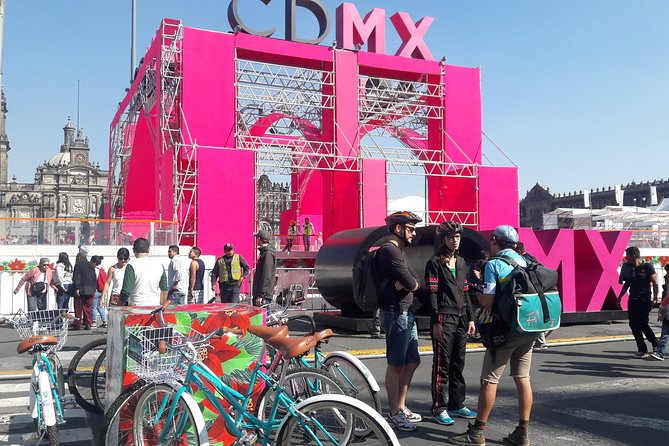
The Trail of Light is described as a newer monument along Reforma. The stop lasts about 15 minutes and offers a view toward the modern Mexico City skyline.
This balances the older monuments elsewhere on the route. Mexico City is not frozen in one historical period, and the changing skyline gives you a quick reminder that the capital continues to grow and reshape itself.
Do not expect a long architectural tour here. The stop is brief and mainly works as a viewpoint and a chance to discuss the newer side of the city. If you enjoy comparing old civic symbols with newer construction, this should be one of the more interesting pauses.
Other cycling tours in Mexico City


Chapultepec, with an important route warning
Bosque de Chapultepec is listed as a 20-minute stop. Mexico’s largest urban park is a major green space and an important part of the country’s story, so it would add a welcome change of pace after Reforma’s monuments.
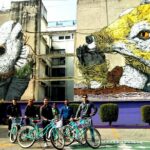
The practical issue is that the route may not always reach the park. One reported outing went to the Guerrero neighborhood instead, with stops to see murals and hear less familiar stories about how Mexico City developed. That change produced some valuable local context, but it also meant missing the park, which had been a major expectation.
You should treat Chapultepec as a possible part of the route rather than an absolute guarantee. If the park is essential to your plans, confirm the current route with Poray before you book. If you are open to a less expected neighborhood ride, Guerrero may offer a more grounded look at the city than another famous landmark.
A possible turn into Guerrero and its murals
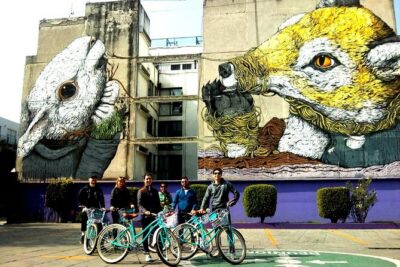
The Guerrero detour is worth considering on its own terms. A neighborhood filled with murals can show you a side of Mexico City that formal monuments do not. The guide may also discuss the city’s backstage, including historical changes and the forces that shaped the capital into what it is today.
This kind of route can feel more authentic because it moves beyond the standard postcard circuit. You may see ordinary streets, local artwork, and urban details that are easy to miss when you only follow the major avenues.
Still, this is where expectations matter. If you are choosing the tour mainly for Bosque de Chapultepec, a Guerrero route will feel like a substitution, not an improvement. If your priority is context and unexpected city stories, the detour may be a pleasant surprise.
Entering the Historic Center
The ride then heads into the Historic Center, described as Mexico’s heart. You spend about 15 minutes here, enough to shift from Reforma’s grand avenue to the older core of the capital.
The value of arriving by bike is that you feel the city change around you. You are not simply delivered to the center after a quiet vehicle ride. You travel into it, watching the architecture, street activity, and public spaces change as the route progresses.
This stop is still an introduction, not a full walking tour. The Historic Center deserves much more than a quarter hour, so use the bike ride to mark places you may want to revisit later. The tour gives you a useful first orientation, then leaves you free to return on foot at your own pace.
Finishing at the Zócalo
The Zócalo is the final major stop, with about 20 minutes to take in the square and its surrounding buildings. The National Cathedral and National Palace provide the main visual anchors.
Your guide frames the area through roughly seven centuries of history. That broad time span is important because the square represents more than colonial Mexico. It is a place where different periods of the city meet, and a short explanation can help you read the buildings and public space with greater context.
Twenty minutes is enough to look around, hear the main story, and take photographs. It is not enough to explore the National Palace or Cathedral in detail, and admission to those interiors is not presented as part of this cycling activity. If you want to visit either building properly, return separately after the tour.
Ending at the Zócalo also gives the ride a strong sense of place. You finish in the capital’s symbolic center, then cycle back to the original meeting point rather than ending at the square.
What the $34.25 price really covers
At $34.25 per person, this is a reasonable price for a guided urban ride if you value the equipment and short orientation. The fee includes the bicycle, helmet, local guide, bottled water, and personal injury insurance.
That package removes several small costs and decisions. You do not need to arrange a rental bike, find a helmet, or plan a route linking Reforma, the Historic Center, and the Zócalo. The guide also provides the historical layer that self-guided riders would need to research in advance.
The price does not include hotel pickup or drop-off. You must reach Avenida Paseo de la Reforma 24 yourself, and the activity returns there at the end. The meeting point is near public transportation, which helps, but you should allow enough time to arrive before the 10:30 a.m. start.
The value is strongest for a first visit, a short stay, or a morning when you want an active introduction. If you already know the city well and mainly want a long, relaxed ride, two hours may feel brief.
Group size, equipment, and comfort
A maximum of 10 participants is one of the better features here. A smaller group is easier to keep together, less likely to block public paths, and more manageable when the guide stops to explain a monument.
The supplied bike and helmet keep the outing simple. Bottled water is included, which is useful on a morning that combines cycling with several stops. Personal injury insurance is also included, though you should still ride within your comfort level and follow the guide’s instructions.
Most people can participate, and service animals are allowed. The available information does not specify bike sizes, step-through frames, child seats, or an exact fitness level, so ask Poray directly if any of those details affect your decision.
Timing and route expectations
The tour starts at 10:30 a.m. and lasts about two hours. That makes it easy to pair with an afternoon visit to the Historic Center, a museum, or another activity, though you should remember that the end point is the original meeting point.
The route description includes several stops and broad travel between them. Since the stop times add up to more than the advertised duration if treated as formal visits, some locations are clearly intended as brief roadside pauses or ride-by commentary. Expect a compact overview rather than a carefully timed visit at every named place.
The route can also shift. The reported Guerrero substitution shows that the actual ride may respond to local conditions or the guide’s preferred interpretation. That flexibility can produce better stories, but it makes the tour less suitable for anyone who needs every listed stop completed.
Confirmation arrives at booking, and free cancellation is available until 24 hours before the start time. Changes or cancellations inside that 24-hour window are not accepted for a refund, with the cut-off based on local time.
Who will get the most from this ride
I would recommend this tour to you if you want a quick, active introduction to Mexico City and prefer seeing several districts in one morning. It suits first-time visitors, solo participants, couples, and small groups who like history delivered in short, manageable sections.
It is also a good fit if you want more than famous monuments. The Guerrero murals and neighborhood stories show how the city can move beyond the usual sights, even if that route means missing Chapultepec.
You may want another option if your main goal is a long visit inside the park, detailed museum time, or a slow architecture tour. The cycling format keeps the group moving, and the route description does not guarantee that every named stop will receive the same treatment.
Should you book the Mexico City Bike Experience Express?
Book it if you want a compact city overview by bicycle, a small group, and practical inclusions for a fair $34.25. The strongest moments are the Reforma ride, the Angel of Independence, the approach to the Historic Center, and the final look at the Zócalo.
Before paying, confirm whether Bosque de Chapultepec is on the current route. That one question can decide whether this tour fits your plans. If you are happy with a flexible itinerary and enjoy hearing about murals, neighborhoods, and lesser-known city changes, the possible Guerrero route may add real value.
The tour earns its 4.8 rating from 22 reviews and is recommended by 95 percent of participants, but it is best understood as a fast introduction, not a full Mexico City survey. For a first morning in the capital, I think that is a useful role.
FAQ
How long does the Mexico City Bike Experience Express last?
The activity lasts approximately two hours.
What time does the tour begin?
The tour starts at 10:30 a.m.
Where does the bike tour meet and finish?
It begins at Avenida Paseo de la Reforma 24, Colonia Centro, Cuauhtémoc, Mexico City, and returns to the same meeting point.
What is included in the price?
The price includes use of a bicycle, helmet, bottled water, a dedicated local guide, and personal injury insurance.
Is hotel pickup and drop-off included?
No. Hotel pickup and drop-off are not included.
How many people can join the tour?
The group is limited to a maximum of 10 participants.
More City Tours in Mexico City


More Cycling Tours in Mexico City
More Bike Tours in Mexico City
More tours in Mexico City we've reviewed


Bike Tours, compared.
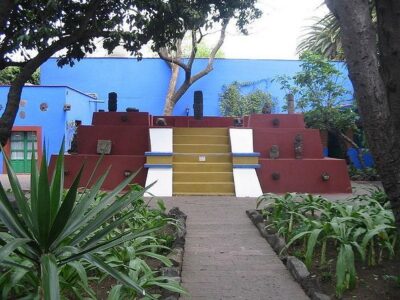 ★ 5.0Frida Kahlo VIP [Museum Tickets Included] Bike, Markets & ChurrosFrom $834 hours (approx.)
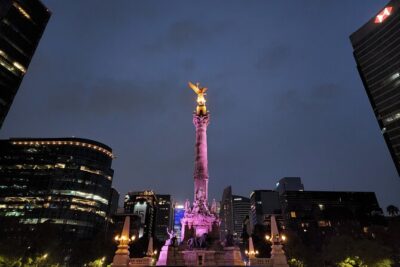 ★ 5.0Mexico City: 19 City Highlights Bicycle TourFrom $713 to 4 hours (approx.)
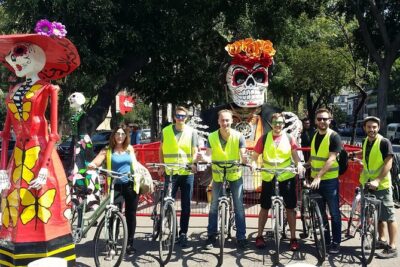 ★ 5.0Mexico bike tourFrom $704 hours (approx.)
★ 5.0Mexico City: 19 City Highlights Bicycle TourFrom $704 hours
★ 5.0Mexico bike tourFrom $704 hours (approx.)
★ 5.0Mexico City: 19 City Highlights Bicycle TourFrom $704 hours
 ★ 5.0Mexico City E-Bike Tour with a taco and churros stopFrom $704 hours (approx.)
 ★ 5.0Mexico City; ART NACO : Murals & Street Art Bike TourFrom $603 hours (approx.)
 ★ 5.0Mexico City Highlights E-Bike Tour With Foodie StopsFrom $524 hours (approx.)
 ★ 5.0Street Food Bike Tour / Mexico is not only Tacos / All InclusiveFrom $924 hours 30 minutes (approx.)
The lists this tour appears in