
Reviewed · CITY TOURS
THE REAL CDMX: Under the skin of the city
Mexico City is easiest to understand from the street, not from a tour bus. This small-group outing begins in working-class Guerrero with tamales and chocolate, then moves through a local market, a pulquería, street-food stalls, the Metro, and the historic center. It gives you a useful first look at how the city fits together.
In This Article
- Key points to know before booking
- Starting with tamales in Guerrero
- Reading the market through chiles, mole, and juice
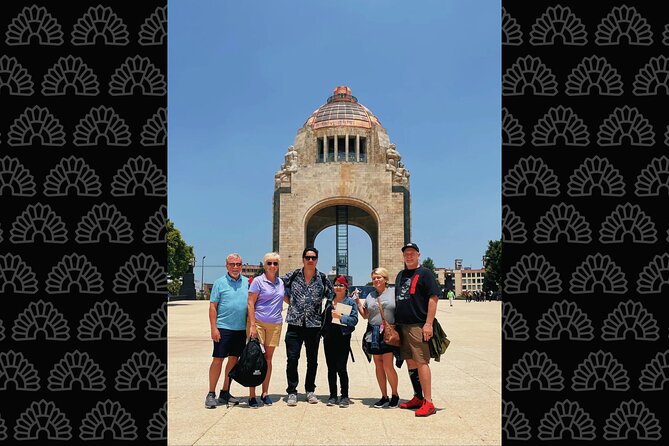
- Monumento a la Revolución and the stories between stops
- Taking the Metro like a local
- Pulque, quesadillas, and blue corn
- Tacos and the historic center
- Ending on a rooftop beside the Zócalo
- How much food and walking should you expect?
- Guide style and group experience
- Is $47.79 a fair price?
- Who should book this CDMX food walk?
- Should you book The Real CDMX?
- FAQ
- Where does the tour start?
- Where does the tour end?
- How long does the experience last?
- How many people can join?
- What food is included?
- Are vegetarian options available?
- Can I cancel for a refund?
I like two things in particular: the local food stops are part of daily life rather than a polished tasting menu, and the guides, including Olin and Fernando, mix city history with jokes, personal stories, and practical advice. The rooftop finish near the Zócalo is a smart way to end a long morning.
The main caution is the timing. Although advertised at about four hours, several outings have lasted five hours or more. Add heavy walking, a Metro ride, and repeated food stops, and you should avoid scheduling a flight or another fixed appointment soon afterward.
Key points to know before booking
- Starts in Guerrero: You begin away from the standard tourist circuit, with a family-prepared Oaxacan tamal and chocolate.
- A full food itinerary: Plan on four dishes, three drinks, and enough food that breakfast beforehand is usually a mistake.
- Local transport included: The Metro ride helps you cover ground and gives you a practical look at daily CDMX travel.
- History without a lecture: Stories at Monumento a la Revolución, Palacio de Bellas Artes, and Torre Latinoamericana keep the city context moving.
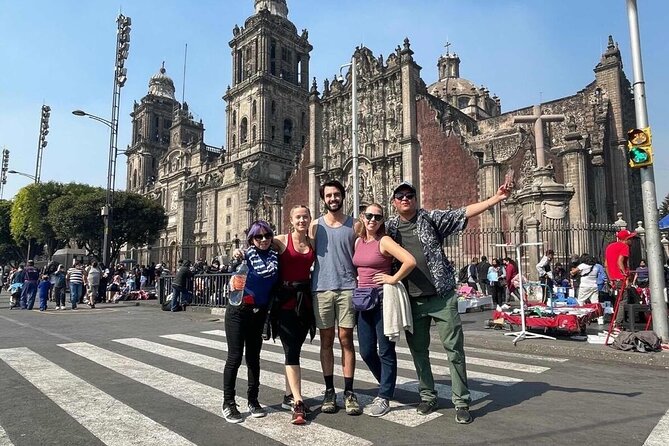
- Small group format: The maximum is 10 people, a useful size for food stalls and narrow local stops.
- Comfortable shoes matter: You will walk a lot, and the advertised four hours may stretch longer.
Starting with tamales in Guerrero
Meet at 9 a.m. on Lerdo 196 in Guerrero. This is not the polished face of Mexico City that most first-time visitors see, and that is precisely the point. The tour opens in a neighborhood where the food and street life feel tied to residents’ routines.
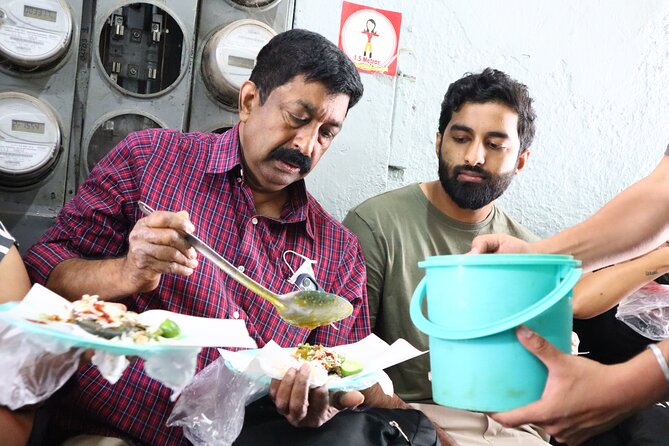
Your first dish is a tamal prepared by an Oaxacan family, served with chocolate. Some tours also describe an atole tasting at the opening stop, a warm, thick corn drink that pairs naturally with tamales. The exact food order can vary, but the idea is clear: start with a substantial local breakfast, not coffee and a pastry.
I would follow the guide’s advice and arrive hungry. You will eat several times over the morning, and the portions add up. If you are a very selective eater, bring a small backup snack, since the menu focuses on traditional foods rather than familiar international choices.
This beginning also sets the tone for the whole outing. You are not simply checking off famous buildings. You are learning how breakfast, markets, public transport, neighborhood businesses, and central Mexico City connect.
Other city tours we've reviewed in Mexico City

Reading the market through chiles, mole, and juice
The next stretch takes you through a local market. This is one of the more useful parts of the experience because a market can explain Mexican cooking faster than a formal museum display. You may see the ingredients behind the dishes you have just eaten, including chiles, mole, and blue corn.
A fresh green juice is another stop associated with the market portion. There is also time to look at food products and local goods, rather than rushing through for a single bite. One memorable area includes shops selling quinceañera clothing and jewelry, a good reminder that markets serve ordinary family occasions as much as they serve cooking.
This is where the guide’s role matters. Olin is described as taking time to explain what you are eating and how the ingredients fit into Mexican food culture. The strongest parts of this tour are not just the samples. They are the explanations that help you recognize foods later, when you order on your own.
You should also expect a sensory setting rather than a quiet classroom. Markets can be crowded, noisy, and informal. That is part of the value, but anyone who prefers carefully arranged tastings and seats at every stop may find this format rough around the edges.
Monumento a la Revolución and the stories between stops
After the market, the tour brings in Mexico City’s public history, including Monumento a la Revolución. The guide uses the city itself as the lesson, with stories about people, politics, culture, and local life that are not always found in a standard textbook account.
The history is intentionally broken into short pieces. You might hear an explanation at a monument, then walk, eat, and pick up another story a few minutes later. I think that works well for a food-and-city walk because you are not asked to stand still through a long lecture.
Guides such as Olin have also used humor and personal stories, including amusing tales about dating and failed romances, to keep the mood light. That style will suit you if you like a guide who talks with the group rather than recites a script. It may feel less formal than a traditional architecture tour, but it makes the information easier to remember.
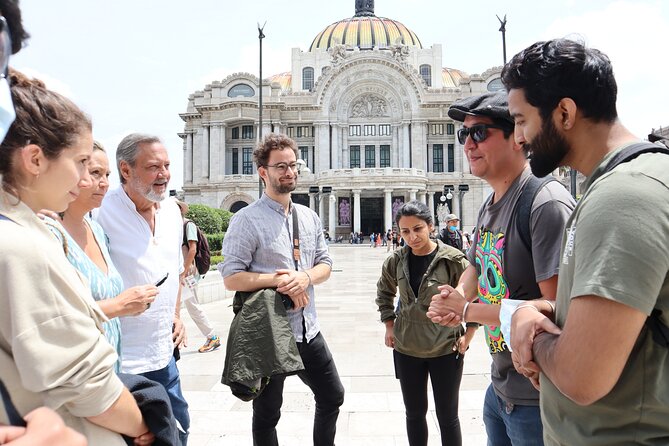
The route later passes Palacio de Bellas Artes and Torre Latinoamericana before reaching Centro Histórico. These are important orientation points. Even if you return to them independently, seeing how they relate to Guerrero and the central districts helps you plan the rest of your stay.
Taking the Metro like a local
The Metro ride is one of the tour’s most practical features. You do not just hear that Mexico City is large. You use its public transport to move between neighborhoods and see how residents cover the city.
For a first visit, this is useful orientation. You learn that the historic center is not an isolated postcard area. It connects to working neighborhoods, markets, food streets, and everyday transit routes. The ride also breaks up the walking, although it does not turn the outing into a low-effort activity.
The guide handles the group movement, but you should still wear secure footwear and keep your belongings close. The supplied information does not promise a private vehicle or a completely relaxed pace. The experience is designed around moving through the city as a small group, so stay attentive when boarding and leaving the Metro.
This portion suits anyone who wants a little more independence later. After seeing the route and hearing local tips, you may feel more ready to use the Metro or return to the historic center without a guide.
Pulque, quesadillas, and blue corn
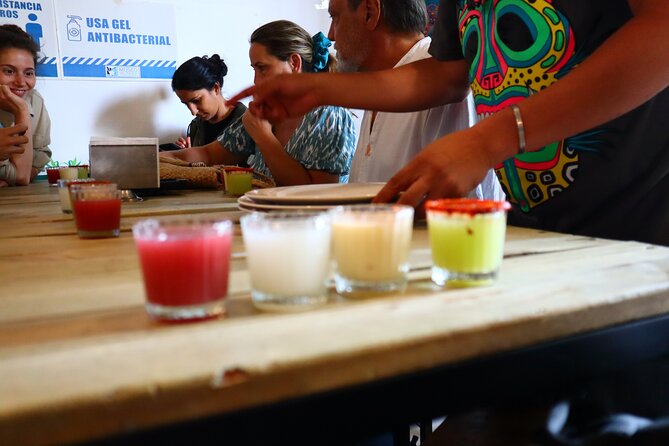
Food stops continue with a taste of pulque, an old fermented drink made from agave. For many visitors, this is the most unusual beverage on the route. It gives you a chance to try something with a long place in Mexican food culture instead of sticking only to beer or tequila.
The outing also includes a deep-fried quesadilla from a small street stand. In this context, quesadilla refers to a corn-dough preparation that may be filled and fried, not necessarily the flour-tortilla-and-melted-cheese version familiar to many North American diners.
A blue-corn tlacoyo filled with beans and cactus adds another useful lesson. Corn varieties and fillings are central to Mexican cooking, and this stop gives you a taste of that tradition in a simple street-food form.
Vegetarians have good reason to consider this tour. The experience specifically offers vegetarian choices, and the tlacoyo, beans, cactus, tamales, and quesadillas can provide alternatives. Still, you should tell the guide about your needs at the start. The food is selected from local stalls, so flexibility remains helpful.


Tacos and the historic center
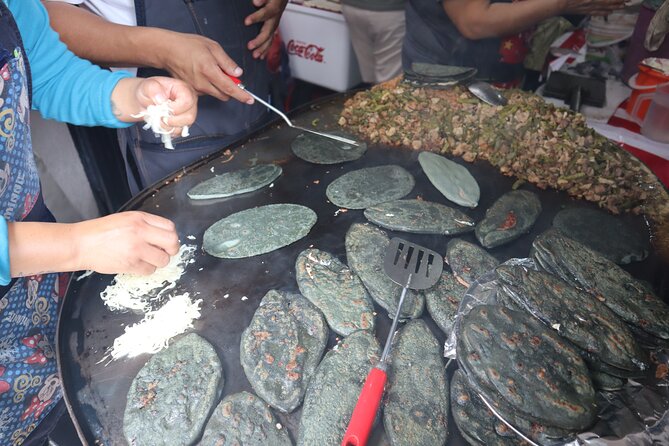
By the time you reach Centro Histórico, the tour turns to tacos. A featured stop is a long-running taquería in the local market, where you try a taco de cecina, made with salted, dried beef. This is not presented as a staged restaurant meal. It is a quick, direct taste of the food people order in the city.
The menu also uses the phrase vitamin T, a playful reference to tacos and other tortilla-based foods. Expect corn, meat, beans, cactus, fried dough, and other filling dishes across the morning. If you enjoy trying several small portions, the range is a strength. If you need a carefully controlled diet, ask questions before accepting each dish.
The route passes major sights such as Bellas Artes and Torre Latinoamericana on the way into the historic center. You may not get a full guided visit inside each building, since the focus is on orientation, food, and movement. Think of these landmarks as visual anchors and possible places to return to later.
That approach gives you a useful first-day plan. You see where the main square is, understand how the central streets connect, and collect suggestions from the guide about what deserves more of your time.
Ending on a rooftop beside the Zócalo
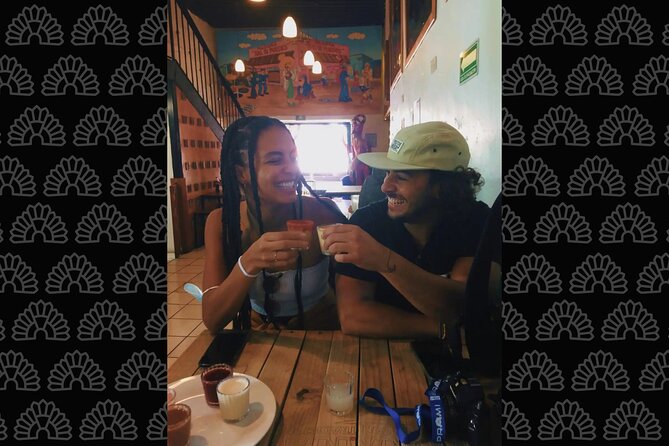
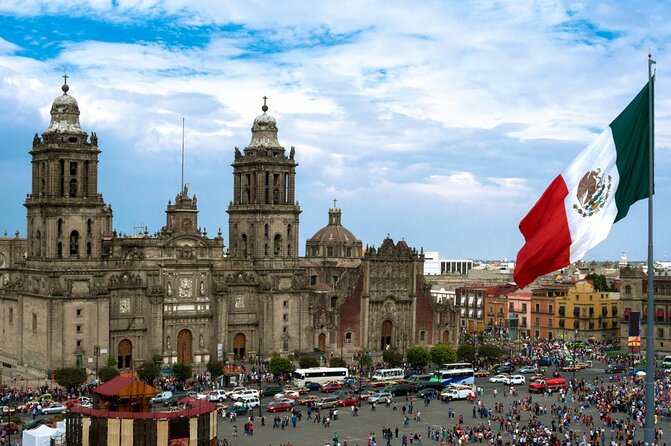
The tour ends at a terrace near the city’s main square, the Zócalo, at P.za de la Constitución 58. You finish with a drink and views over one of Mexico City’s most important public spaces.
This is a strong ending for two reasons. First, it gives you time to sit after several hours on foot. Second, it shifts your view from street level to the city’s historic center, helping you place the route you have just traveled.
The final terrace is also a practical starting point for your own afternoon. You can remain in Centro Histórico, visit nearby sights, or use the location to plan another part of the city. The tour ends here rather than returning you to Guerrero, so make sure that suits your plans.
How much food and walking should you expect?
The published plan calls for four dishes and three drinks. The sample menu includes tamales with chocolate, taco de cecina, a fried quesadilla, and a blue-corn tlacoyo with beans and cactus. Market juice and pulque are also part of the broader food and drink experience.
That is a lot for one morning. I would treat this as breakfast, lunch, and a city walk rolled together. Do not book it after a large hotel breakfast, and bring water. One account specifically noted that the tour ran beyond five hours, while another praised the amount of ground covered but warned about the long duration.
Most people can take part, but the route is not ideal for anyone who cannot walk for extended periods or manage uneven city streets. The guide has been praised for taking care of older participants and for working well with mixed-age groups, including a teenager and people in their seventies. Even so, the pace and length deserve an honest look before you reserve.
The small maximum of 10 people helps. A group that size can fit around a food stand, hear the guide, and make decisions without the drag of a large coach party. It also means you should arrive on time at the Guerrero meeting point.
Guide style and group experience
The guide is a major part of the value. Olin, also written as Ollin, Orlin, or Oliverdo in different descriptions, is associated with a friendly, interactive style. He asks questions, explains the food, offers recommendations, and links daily life with Mexican history and architecture.
Fernando and Alex have also led versions of the experience. The listing identifies Warrior Gastro-Tours as the provider, so the exact guide is not guaranteed. If the personal style of one named guide is the main reason you want to book, confirm who is scheduled before treating that as certain.
The best fit is someone who enjoys conversation and a little unpredictability. The experience has been running for more than four years and has earned a 4.9 rating from 111 ratings, with 98 percent recommending it. Those figures suggest dependable appeal, but they do not remove the need to understand the format: local stalls, public transport, lots of walking, and timing that may run long.
One serious operational failure is worth noting. A same-day booking made shortly before departure once resulted in the operator not appearing, followed by unanswered calls and messages. The provider explained that the booking came at 5:45 a.m. on a day the guide had off. This is not a reason to dismiss the tour, but I would avoid last-minute reservations and confirm the meeting details carefully.
Is $47.79 a fair price?
At $47.79 per person, the value depends on how you use the outing. You are paying for a small-group guide, several dishes, three drinks, neighborhood orientation, historical context, and a Metro ride. If you bought every item separately, you might spend less, but you would not get the route, explanations, or confidence to try these places on your own.
I see the strongest value for a first or second day in Mexico City. The tour gives you a map in your head. It shows you how Guerrero, the market district, the central landmarks, and the Zócalo connect, while also supplying food recommendations for the rest of your trip.
It is less useful if you already know CDMX well or want a focused museum, architecture, or fine-dining experience. The food is traditional and informal, not a polished restaurant progression. You also need to value the stories and access to everyday places, since those are what make the price worthwhile.
Bookings are often made about 27 days ahead, so popular dates may fill before your trip. Free cancellation is available up to 24 hours before the 9 a.m. start time. Inside that window, the payment is not refunded, and poor weather or failure to meet the minimum group size can lead to a different date or a full refund.
Who should book this CDMX food walk?
I would choose this tour if you want to:
- Try Mexican foods beyond the usual restaurant menu.
- Learn how to approach markets, taquerías, pulque, and street stands.
- Use the tour as a first-day orientation to the city center.
- Travel in a small group rather than on a large sightseeing bus.
- Hear history in short, lively sections instead of a formal lecture.
- Get local suggestions for what to do after the tour.
I would think twice if you dislike unfamiliar foods, cannot walk for several hours, need a fixed four-hour schedule, or prefer private transport. The vegetarian choices help, but picky eaters should plan ahead and speak up early.
Should you book The Real CDMX?
Yes, if your priority is food, local neighborhoods, and a practical introduction to Mexico City. The combination of Guerrero, the market, Metro, pulque, street snacks, central landmarks, tacos, and a Zócalo terrace gives you more than a standard sightseeing loop.
Book it near the start of your stay, wear comfortable shoes, skip breakfast, carry water, and leave your afternoon open. If you want a quiet, tightly timed tour with guaranteed guide continuity and polished restaurants, choose another format. If you want to understand CDMX through what people eat, how they move, and where they spend ordinary time, this is a strong value.
FAQ
Where does the tour start?
It starts at Lerdo 196, Guerrero, Cuauhtémoc, Mexico City, at 9 a.m.
Where does the tour end?
It ends at P.za de la Constitución 58 in Centro Histórico, beside the Zócalo. The final stop is a terrace overlooking or near the city’s main square.
How long does the experience last?
The advertised duration is about four hours, but the timing can run longer. Some outings have lasted more than five hours, so avoid booking a flight or another appointment immediately afterward.
How many people can join?
The maximum group size is 10 people.
What food is included?
The sample menu includes tamales with chocolate, taco de cecina, a fried quesadilla, and a blue-corn tlacoyo filled with beans and cactus. The broader experience includes four dishes and three drinks.
Are vegetarian options available?
Yes. Vegetarian options are available, and the experience specifically notes that there are plenty of choices for vegetarians.
Can I cancel for a refund?
You can cancel at least 24 hours before the start time for a full refund. Cancellations or changes made within 24 hours are not refunded or accepted. If poor weather or an insufficient minimum group causes cancellation, you can choose another date or receive a full refund.
More City Tours in Mexico City

More tours in Mexico City we've reviewed




City Tours, compared.
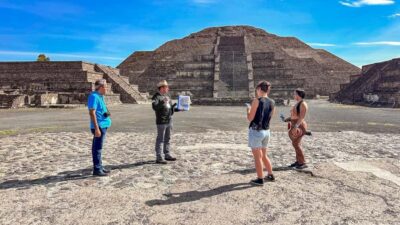 ★ 4.6Mexico City: Teotihuacan, Tlatelolco & Guadalupe Shrine TourFrom $49
 ★ 5.0Teotihuacan Hot Air Balloon Flight from Mexico City / VolareFrom $1553 to 9 hours (approx.)
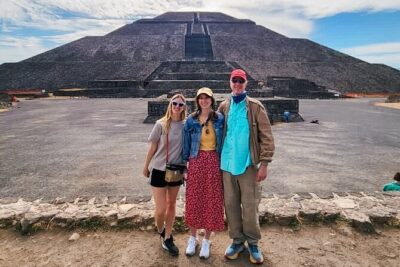 ★ 5.0Teotihuacan Private Tour from Mexico CityFrom $1401 to 5 hours (approx.)
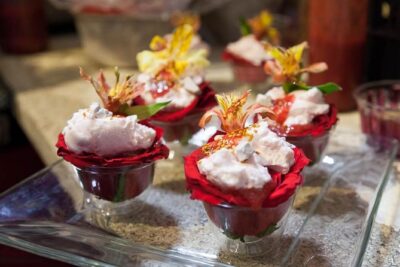 ★ 5.0Historic Center Food Tour in Mexico CityFrom $1155 hours (approx.)
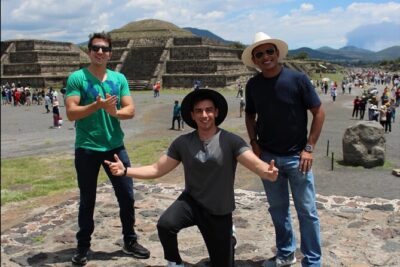 ★ 5.0The best tour to Teotihuacán from Mexico CityFrom $506 to 7 hours (approx.)
 ★ 4.3From Mexico City: Puebla, Cholula and Tonantzintla Day TripFrom $89
 ★ 4.0Mexico City: Hop-on Hop-off Bus TourFrom $211 - 2 days
 ★ 4.8Mexico City: Historic Downtown Walking TourFrom $263 hours