
Reviewed · CITY TOURS
Tour Women Muralists : Strokes that resist Mexico City
Mexico City’s mural story changes when you stop treating women as background figures and look for them as artists and creators. This 2-hour-30-minute tour follows that correction through grand museum halls, a working market, and less expected public spaces.
In This Article
- Key points to know before booking
- Why this mural tour offers a different view of Mexico City
- San Ildefonso: starting at the cradle of muralism
- Mercado Presidente Abelardo L. Rodriguez: murals in a working market
- Moving from famous names to overlooked artists
- Palacio de Bellas Artes and Rina Lazo’s place in the story
- Timing, group size, and what the price means
- Practical details that shape the day
- Who will get the most from this experience
- Should you book Women Muralists: Strokes That Resist Mexico City?
- FAQ
- Where does the tour begin?
- Where does the tour end?
- How long does the tour last?
- Is admission included?
- Is the tour offered in English?
- What happens if I need to cancel?
I like two things right away: the route puts famous art beside murals most people would miss, and the guides explain both the pictures and the social role of women who made them. The stops at Mercado Presidente Abelardo L. Rodriguez and a union site give the subject a useful jolt of real life.
The main drawback is the extra admission charge at Palacio de Bellas Artes, listed at $95 per person, while the first two stops include tickets. You also need enough interest in Mexican muralism to appreciate a tour built around context rather than quick photo stops.
Key points to know before booking
- Women take the lead in the story: The tour looks at women as muralists, not only as muses or figures inside men’s work.
- The route leaves the usual museum circuit: You visit a traditional market and see murals by the Greenwood sisters in a place many art-focused tours skip.
- Three major stops frame the subject: San Ildefonso opens the story, the market widens it, and Bellas Artes brings it to the present.
- Guiding is central to the experience: Jaime Morales, Jorge, and another guide identified in the tour material help connect art, Mexican history, and gender.
- The group is capped at 18 people: That is small enough for a more personal discussion, though not a private tour.
- Bellas Artes costs extra: The first two admissions are included, but the final museum admission is not.
Why this mural tour offers a different view of Mexico City
Mexican muralism is often presented through a familiar group of male names. This tour asks you to widen the frame. It looks at women who painted, shaped ideas, and worked in a field where their contributions were often overshadowed.
That focus gives the experience a clear purpose. You are not simply moving from one decorated building to another. You are learning how women appeared in Mexican art, how they made art themselves, and why some of their work receives less attention today.
I especially like the way the route joins formal art spaces with everyday public places. A museum can tell you what an institution chose to preserve. A market or union building can show you how murals lived among ordinary work and daily routines.
The tour is offered in English and uses a mobile ticket. It is priced at $56.49 per person, which is not a budget walk, so its value depends on your interest in the topic and the quality of the guide’s explanations. For someone already curious about art, women’s history, or Mexico City’s cultural politics, the narrow focus makes the price easier to justify.
Other city tours we've reviewed in Mexico City


San Ildefonso: starting at the cradle of muralism
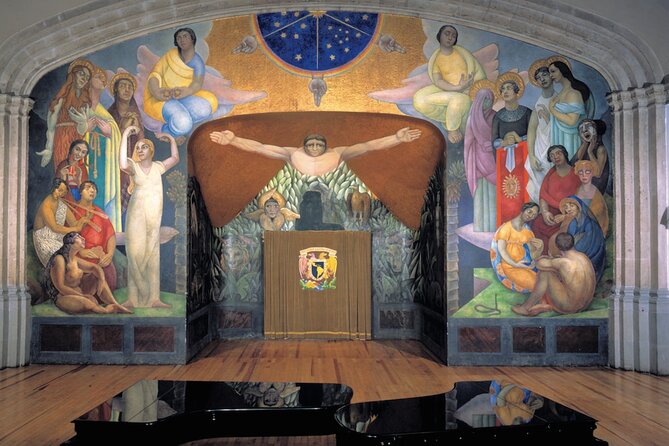
The meeting point is the Former College of San Ildefonso at Justo Sierra 16 in the Centro Histórico. This is a strong place to begin because the building is closely tied to the development of Mexican muralism.
You spend about 45 minutes here, with admission included. The guide uses the setting to explain why women matter to the mural story, both as subjects and as makers. That distinction is important. Women may appear throughout famous mural scenes, but being pictured is not the same as controlling the image or creating the work.
Expect this part to provide the basic vocabulary for the rest of the tour. You will look at how murals function as public statements, how artists addressed Mexican society, and how women’s artistic work can be missed when attention stays fixed on the best-known male muralists.
This is likely the most traditional museum-style stop on the route. If you have already spent a lot of time at San Ildefonso, some of the setting may feel familiar. The benefit is that the guide gives you a new question to carry through the rooms: Who made this, who is represented, and whose work has been left out of the standard account?
The 45-minute visit also helps keep the tour from becoming a rushed list of names. You have time to connect the building to the broader movement before moving to the less conventional stops.
Mercado Presidente Abelardo L. Rodriguez: murals in a working market
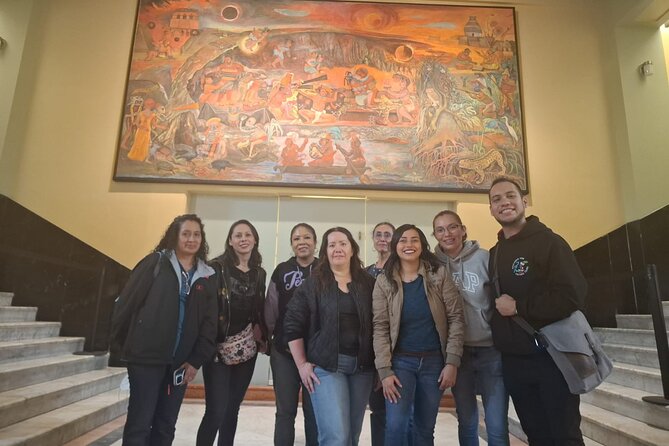
The second stop lasts about 40 minutes and takes you to Mercado Presidente Abelardo L. Rodriguez, an impressive market that remains part of the Centro Histórico’s everyday life. Admission is included.
This is where the tour’s subject becomes more concrete. Instead of viewing muralism only in a museum, you see murals in a place built for commerce and daily use. The setting matters because the art is not isolated from the public it was meant to reach.
The market also provides the route’s most unusual art connection. Here, the guide discusses early murals by foreign artists in Mexico, including the Greenwood sisters. Their work helps show that the story of mural painting in Mexico was not limited to one nationality or one group of famous men.
I like this stop for practical reasons. You can see how art occupies an ordinary civic space, and you get a better sense of how murals can carry political and social ideas outside formal collections. The tour material also points to art in places such as a union site, so the experience may include discussion of work that is not part of the standard museum route.
Do not expect a polished gallery atmosphere. A market is a working public place, and that is part of the point. You may find the surroundings less controlled than a museum, but you also get a more direct sense of how murals can sit beside routine city life.
This stop is especially useful if you have already visited Mexico City’s main art museums and want something less predictable. It also gives the guide room to discuss women’s work that is not frequently included in the usual tourist conversation.
Moving from famous names to overlooked artists
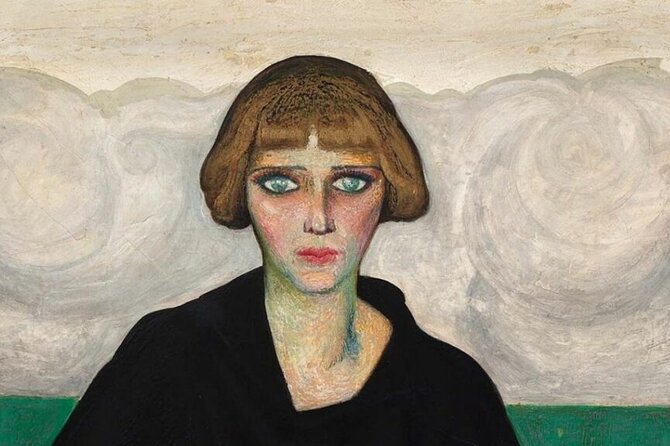
The strongest idea running through the tour is not simply that women painted murals. It is that women’s work has often been read through a male-centered account of Mexican art.
The guide Jaime Morales is described as offering detailed instruction on Mexican art and women’s role in it. Another guide name connected with the experience is Jorge, while one account identifies a guide named Delta. That suggests the exact guide may vary, but you should expect the discussion to be a major part of the experience.
This matters because the murals may not explain themselves. A scene on a wall can show a political event, a social conflict, or an idea about national identity, but a short label rarely gives you the full setting. The guide’s job is to connect the image to the period and to explain how women artists approached the problems of Mexico in their own way.
I would choose this tour for the conversation as much as for the buildings. If you only want a fast introduction to Mexico City’s most famous murals, a general city art tour may be a better fit. If you want a focused account of women’s artistic work and the ways it was overlooked, this route has a sharper purpose.
The experience also suits someone who enjoys seeing culture outside official institutions. The market and union setting make a useful point: art can be part of a neighborhood, a workplace, or a public gathering place, not only a ticketed museum.
Palacio de Bellas Artes and Rina Lazo’s place in the story
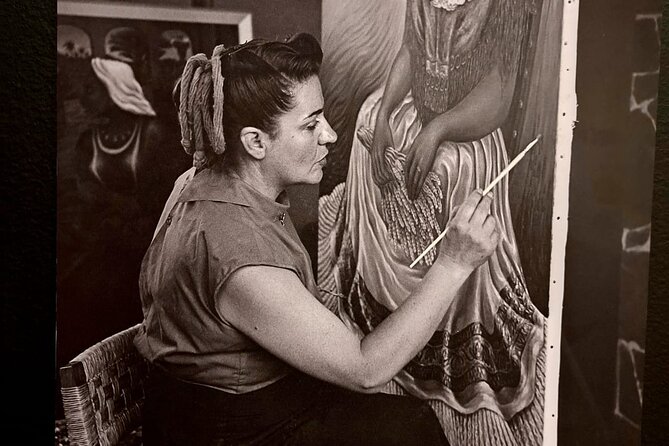
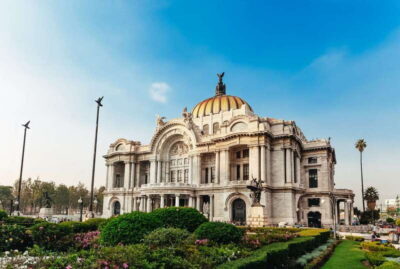
The tour ends at Palacio de Bellas Artes, on Avenida Juarez. The visit lasts about 30 minutes, and admission is not included. The listed cost is $95 per person. Students, teachers, and people aged 60 or older do not pay admission according to the provided tour details.
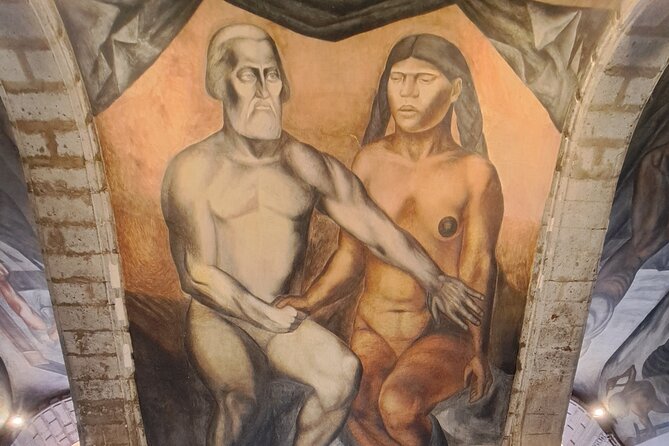
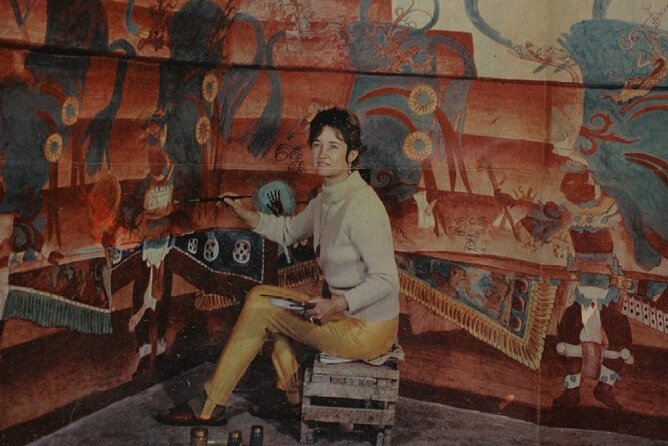
This final stop gives the tour a clear endpoint. After looking at women’s work in a former school and a market, you return to one of Mexico City’s major cultural institutions. The discussion centers on Rina Lazo, described as one of the important artists in the story and the creator of a newly placed mural in the museum.
The key detail is that this is presented as the first mural by a woman to enter the museum’s permanent collection. That gives the final stop present-day weight. The tour is not only about correcting an old record. It also shows how institutions continue to decide which artists receive lasting recognition.
You should budget for the extra admission before booking. Since the tour price is $56.49 and Bellas Artes is separate, the total cost is higher than the headline price. The added fee may feel worthwhile if you want to see the Rina Lazo discussion inside the museum itself, but it is a real consideration for anyone watching expenses.
The ending point is the Palacio de Bellas Artes esplanade. That is useful if you plan to continue sightseeing in the Centro Histórico, though the tour does not promise a return to the starting point. Plan your day around finishing there.




Timing, group size, and what the price means
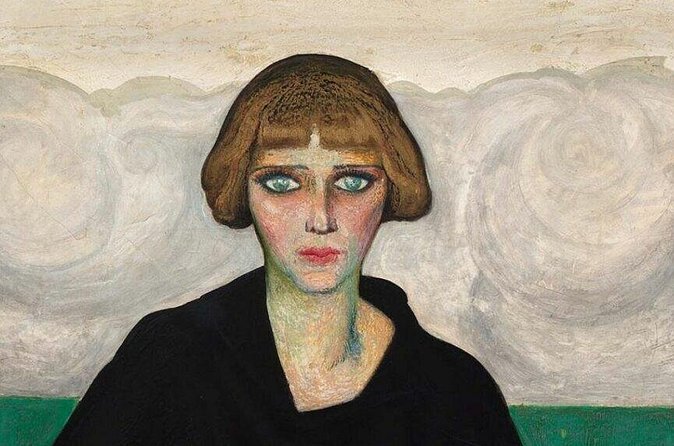
The tour lasts approximately 2 hours and 30 minutes. The three stated visits add up to about 1 hour and 55 minutes, leaving roughly 35 minutes for moving between locations and for additional explanation. That schedule gives the guide enough room to develop the topic without turning every stop into a long lecture.
The maximum group size is 18 people. This is not an intimate private outing, but it is small enough that you should have a better chance of hearing the guide than on a large coach excursion. Group size can still affect how easily you ask questions, especially inside a market or busy public area.
At $56.49 per person, the tour is a specialized cultural experience rather than a general orientation walk. The included tickets at San Ildefonso and the market add value, but the separate Bellas Artes admission means you should calculate the complete cost.
I see the price working best for three kinds of visitors:
- You care about women’s contributions to art and want a focused explanation.
- You have already seen the main Mexico City sights and want places beyond the standard route.
- You prefer a guided discussion with historical context over a self-guided mural hunt.
The price may be harder to defend if you want to see a large number of murals quickly, dislike museum-style discussion, or are mainly looking for a broad introduction to the city.
Practical details that shape the day
The meeting point is clearly given as the Former College of San Ildefonso, Justo Sierra 16, Centro Histórico de la Ciudad de México. The end point is Palacio de Bellas Artes, Av. Juarez S/N, in the historic center.
The tour is near public transportation, and most people can participate. Service animals are allowed. No special physical requirements are listed, but the route includes several locations in the city center, so comfortable shoes and attention to the meeting time are sensible choices.
Lunch is not included. The experience is only about two and a half hours, so you can place it before or after a meal, but you should not expect food to be part of the tour.
Tips are not included either. Keep that separate from the advertised price when planning your budget. Confirmation arrives at booking, and the mobile ticket makes the starting process straightforward.
Free cancellation is available if you cancel at least 24 hours before the start time. Cancellations or changes made within 24 hours are not refunded or accepted, using Mexico City local time for the cutoff.
Who will get the most from this experience
I would recommend this tour to anyone who wants a more specific view of Mexican art than the standard Diego Rivera and Frida Kahlo conversation. Its subject is narrow, but that is its strength. You leave with a clearer way to look at murals and ask who has been credited, remembered, or ignored.
It also suits returning visitors. The market stop and the discussion of murals in a union setting offer a side of Mexico City that a major museum-only route may not provide. You are still visiting important cultural sites, but the route keeps pulling you away from the familiar script.
Older visitors may appreciate the moderate length and the focus on explanation rather than constant movement. Students, teachers, and people over 60 also have a financial advantage at Bellas Artes because the listed museum admission does not apply to them.
I would be more cautious about booking if your main goal is photography. The tour is built around interpretation, and the market and museum environments may not be ideal for lingering over every image. It is also not the right choice if you want a private guide, since the group can include up to 18 people.
Should you book Women Muralists: Strokes That Resist Mexico City?
Book it if you want to understand how women moved from being represented in Mexican muralism to becoming recognized muralists themselves. The combination of San Ildefonso, Mercado Presidente Abelardo L. Rodriguez, and Bellas Artes gives the subject three useful settings, from a major art institution to a daily market and back to a national museum.
The tour earns its price through its focus and guiding, not through the number of sights. Jaime Morales, Jorge, or the assigned Educando con Cultura guide will be most valuable if you ask questions and give the discussion your full attention.
Skip it if you want a broad Mexico City highlights tour or if the additional Bellas Artes admission pushes the total beyond your budget. For an art-minded visitor who wants overlooked murals, women’s perspectives, and public spaces that are easy to miss, this is a thoughtful and unusual choice.
FAQ
Where does the tour begin?
It begins at the Former College of San Ildefonso, Justo Sierra 16, Centro Histórico de la Ciudad de México.
Where does the tour end?
It ends at Palacio de Bellas Artes on Avenida Juarez. The tour finishes on the esplanade of fine arts.
How long does the tour last?
The experience lasts approximately 2 hours and 30 minutes.
Is admission included?
Tickets are included at the Former College of San Ildefonso and Mercado Presidente Abelardo L. Rodriguez. Admission to Palacio de Bellas Artes is not included and is listed at $95 per person. Students, teachers, and people aged 60 or older do not pay admission according to the provided details.
Is the tour offered in English?
Yes. The tour is offered in English and uses a mobile ticket.
What happens if I need to cancel?
You can receive a full refund if you cancel at least 24 hours before the start time. Cancellations or changes made less than 24 hours before the experience are not accepted and are not refunded.
More City Tours in Mexico City



More tours in Mexico City we've reviewed





City Tours, compared.
 ★ 4.6Mexico City: Teotihuacan, Tlatelolco & Guadalupe Shrine TourFrom $49
 ★ 5.0Teotihuacan Hot Air Balloon Flight from Mexico City / VolareFrom $1553 to 9 hours (approx.)
 ★ 5.0Teotihuacan Private Tour from Mexico CityFrom $1401 to 5 hours (approx.)
 ★ 5.0Historic Center Food Tour in Mexico CityFrom $1155 hours (approx.)
 ★ 5.0The best tour to Teotihuacán from Mexico CityFrom $506 to 7 hours (approx.)
 ★ 4.3From Mexico City: Puebla, Cholula and Tonantzintla Day TripFrom $89
 ★ 4.0Mexico City: Hop-on Hop-off Bus TourFrom $211 - 2 days
 ★ 4.8Mexico City: Historic Downtown Walking TourFrom $263 hours